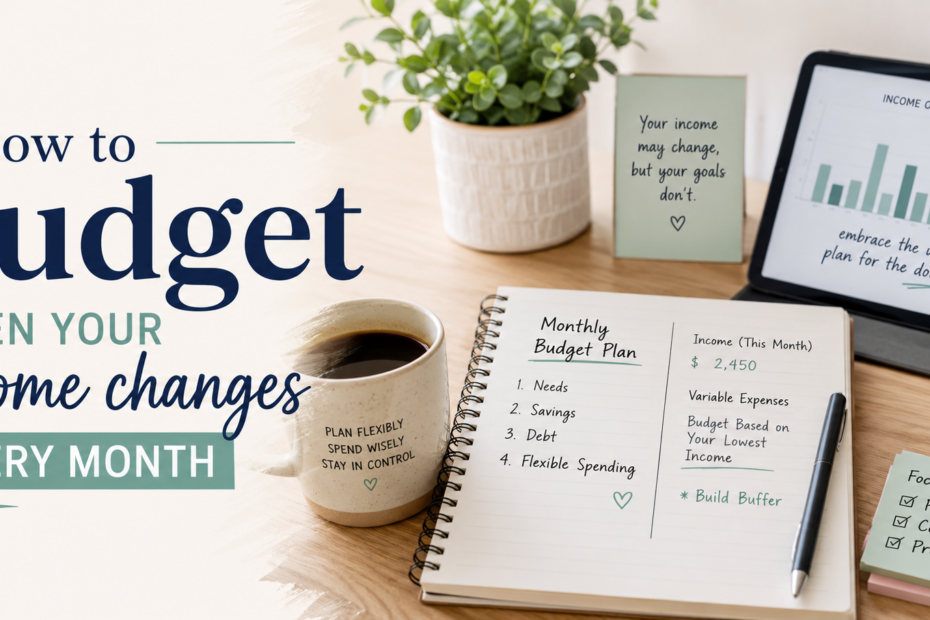
Budgeting with a fixed salary is very different from managing an income that changes every month. With a regular salary, you already know how much money will come in, making it easier to plan expenses and savings.
However, with variable income, earnings are unpredictable, and some months may be very high while others are extremely low.
This “feast and famine” cycle often creates emotional stress because you feel rich in one month and financially unstable in the next.
It can lead to overspending during good months and panic during low months. Traditional budgeting methods fail for freelancers, business owners, and self-employed individuals because they are designed for consistent income.
Instead of stability, variable income requires flexibility, discipline, and planning based on averages or minimum earnings to stay financially balanced throughout the year.
Calculate Your “Minimum Survival Budget”
To budget effectively with an irregular income, you must first know your “minimum survival budget.” This is the lowest amount of money you need to cover your basic monthly living expenses, no matter what happens.
Start by listing only essential costs such as rent or housing, food, transportation, utilities like electricity and water, and any basic family responsibilities you cannot avoid.
Be honest and avoid adding luxury or non-essential spending. Once you add all these items together, you will get the bare minimum amount required to survive each month.
This figure becomes the foundation of every financial decision you make. On high-income months, anything earned above this amount should be carefully allocated instead of being freely spent.
Knowing your survival budget helps you stay grounded, avoid overspending, and ensures you can still manage your life even during low-income months.
Use Your Lowest Monthly Income as Your Budget Baseline
One of the most effective strategies for managing irregular income is to base your budget on your lowest earning month within the past 6 to 12 months.
Instead of planning your expenses around your best or average income, you deliberately choose the lowest figure as your standard.
This approach may feel conservative, but it creates financial safety and stability. The reason it works is simple—it prevents overspending during high-income months and prepares you mentally and financially for slow periods.
When you budget with your lowest income, every extra earnings in better months becomes a surplus, not something you depend on.
This surplus can then be saved, invested, or used to support future low-income months. It also reduces stress because your lifestyle is always aligned with what you can realistically afford at your worst earning level.
Plan for Taxes and Unexpected Costs
When working with an irregular income, many people forget to prepare for important financial obligations like taxes and unexpected expenses.
If you are a freelancer, business owner, or self-employed, taxes are not optional—they must be planned for in advance.
In addition, life can bring sudden costs such as medical emergencies, car or home repairs, or urgent family responsibilities. Without preparation, these expenses can disrupt your entire budget.
A smart approach is to set aside a fixed percentage of every income you earn specifically for these purposes.
For example, you can allocate a portion for taxes and another portion for emergencies before you spend anything else. This ensures you are never caught off guard when these situations arise.
Treat this allocation as non-negotiable, just like rent or food. Over time, this habit builds financial resilience and protects you from debt or financial stress during unexpected events.
Create Multiple Income Streams
One of the smartest long-term strategies for people with irregular income is to create multiple income streams.
Relying on only one source of income can be risky, especially when earnings are unstable or seasonal. By adding additional streams, you reduce financial pressure and create more consistency over time.
Side hustles are one of the easiest ways to start. This could be part-time work, small trading, delivery services, or any activity that brings extra cash outside your main job.
Digital income is another powerful option, including blogging, freelancing, content creation, affiliate marketing, or online services that can earn money even while you sleep.
Small investments can also help grow your money gradually, such as saving in interest-bearing accounts or low-risk investment options that provide passive returns.
In addition, monetizing your skills is very effective—this means turning what you already know, like writing, design, teaching, or tech skills, into paid services.
Having multiple income streams reduces dependency on one unstable source and gives you more financial freedom, stability, and confidence, even when one stream slows down.
Common Mistakes to Avoid
When managing an irregular income, many financial problems come from avoidable mistakes rather than low earnings. One of the most common mistakes is spending too much during high-income months.
When money comes in abundantly, it can create a false sense of financial stability, leading to overspending and leaving nothing for low-income periods.
Another major mistake is not saving at all, which makes it difficult to survive during slow months or emergencies.
Many people also fail because they do not track their income and expenses. Without proper tracking, it becomes impossible to understand spending patterns or plan effectively for the future.
Another harmful habit is comparing your lifestyle with people who have fixed monthly salaries. This often leads to pressure to live beyond your means, even when your income is inconsistent.
Avoiding these mistakes is essential for building financial discipline. Once you focus on smart planning instead of emotional decisions or comparisons, managing irregular income becomes much easier and more stable over time.