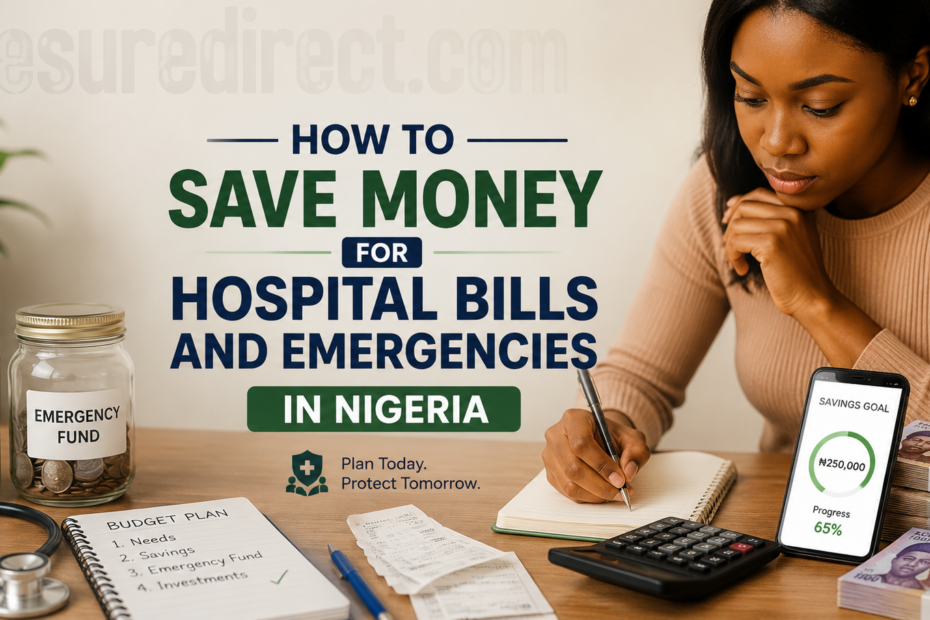
A health emergency can happen when least expected. You may wake up with severe pain, a child may develop a high fever at night, a parent may suddenly need urgent treatment, or an accident may occur on the way home.
In Nigeria, hospital bills can rise quickly when consultation fees, laboratory tests, drugs, transport, admission, and treatment costs are added together.
Many people delay going to the hospital because they do not have cash available, while others borrow from friends, take expensive loans, sell valuable belongings, or use money meant for rent, food, school fees, or business.
Saving money for hospital bills and emergencies can reduce this pressure. You do not need to earn a huge salary before you begin. Even small, regular savings can create a financial cushion when unexpected medical needs arise.
This article explains practical ways to build a medical emergency fund and protect yourself and your family from sudden health-related expenses.
Why Hospital Emergency Savings Matter
Medical bills can affect a person’s entire financial life, especially when the illness or emergency happens without warning. A simple visit to the hospital may involve consultation fees, tests, drugs, transport, and follow-up treatment.
If admission is required, the cost can rise even faster. For many Nigerians, these expenses come at a time when money has already been planned for rent, food, school fees, electricity, business needs, or other family responsibilities.
Without hospital emergency savings, people may be forced to borrow from friends and relatives, take high-interest loans, withdraw money meant for business, or sell important belongings.
These choices can create more financial pressure after the health problem has been treated. A trader who uses business capital for hospital bills may struggle to restock. A parent who uses school-fee money may face another urgent problem when school resumes.
A hospital savings fund provides a level of peace of mind because it is money set aside specifically for health-related emergencies. It helps a person seek treatment faster instead of waiting for someone to lend them money.
This fund is not only for major surgeries or long hospital stays. It can also cover unexpected drugs, laboratory tests, pregnancy complications, dental emergencies, accidents, sudden malaria treatment, child illness, or transport to a hospital. Having even a small amount saved can make a major difference during a difficult moment.
Define What Counts as a Medical Emergency
A medical emergency is an unexpected health situation that needs urgent attention and cannot reasonably wait until a person has extra money available.
It is important to understand this because a hospital emergency fund should be protected for serious or unplanned health needs. When every health-related expense is taken from the fund, it can become empty before a real emergency occurs.
Examples of medical emergencies include sudden illness, severe malaria symptoms, accidents, injuries, urgent laboratory tests, hospital admission, emergency drugs, pregnancy or childbirth complications, and treatment that must begin quickly to prevent the condition from getting worse.
The fund can also be used when a dependent needs urgent care, such as a child with a high fever, a spouse who becomes seriously ill, or an elderly parent who needs immediate treatment.
However, not every health expense should come from emergency savings. Regular costs such as routine vitamins, planned medical check-ups, scheduled dental cleaning, beauty treatments, cosmetic procedures, and non-urgent medications should be included in a normal monthly budget where possible.
This does not mean these expenses are unimportant, but they are usually predictable and can be planned for ahead of time.
Knowing the difference helps readers use their hospital savings wisely. It keeps the money available for genuine emergencies and reduces the risk of spending it carelessly on expenses that could have been budgeted for separately.
Set a Clear Hospital Emergency Savings Target
Saving for hospital bills becomes easier when you have a clear target. Instead of keeping money randomly whenever you remember, decide how much you want to build in your medical emergency fund and how long it may take to reach that amount.
Your target should depend on your income, family size, health needs, and where you live. Medical treatment may cost more in some cities, while a larger family may face more possible health expenses than someone living alone.
For example, a single person with no dependants may begin with a small target such as ₦30,000 or ₦50,000.
However, a person who supports children, a spouse, elderly parents, or relatives may need to work towards a larger fund because more people may depend on them during an emergency. Someone with a known health condition or frequent medical needs may also need to save more consistently.
The most important thing is to start with an amount that matches your current income. A low-income earner can save ₦500 daily or ₦2,000 weekly.
Over time, these small contributions can grow into useful support for drugs, tests, transport, or urgent treatment. A salary earner can decide to save between 5% and 10% of monthly income specifically for hospital emergencies.
Do not wait until you earn a perfect salary before you begin. Income may increase later, but the habit of saving should start now. Even a small medical fund is better than having nothing when an unexpected health problem occurs.
Keep Your Hospital Savings Separate From Daily Spending
How to Save for Hospital Bills From a Small Income
Saving for hospital bills may feel difficult when income is small or irregular, but it is still possible to build a useful emergency fund over time.
Workers, traders, students, freelancers, artisans, and small business owners do not need to wait until they earn a large amount before they begin. The key is to save a small amount consistently and treat it as an important responsibility.
If you earn daily income, consider saving a fixed amount from each day’s profit or payment. For example, a food vendor can put aside ₦300 from daily profit after buying ingredients and covering basic expenses.
A barber, tailor, mechanic, or POS operator may choose to save ₦200, ₦500, or more on days when business is good. Although these amounts may appear small, saving them regularly can grow into money that can cover drugs, transport, consultation fees, or urgent tests.
Freelancers and people with irregular income can save a percentage from every payment they receive. Instead of waiting until the end of the month, they may decide to save 5% or 10% immediately after receiving payment from a client. This method works well because income may not come at the same time every month.
Unexpected money can also help build a hospital emergency fund. Bonuses, gifts, overtime pay, refunds, extra profit from business, or money earned from a side hustle can be divided wisely. Rather than spending all of it, put a portion into your medical savings.
Small savings may not look impressive at the beginning, but consistency gives them strength. A person who saves ₦300 daily can build ₦9,000 in one month and ₦109,500 in one year.
That amount may not cover every medical emergency, but it can provide important support when urgent treatment is needed.
Reduce Health Costs Before Emergencies Happen
Health Insurance and Other Sources of Support
Health insurance can provide an extra layer of protection when unexpected medical bills arise. It may not replace a hospital emergency fund completely, but it can reduce the amount you need to pay from your pocket when you need treatment.
This can be especially helpful during hospital admission, surgery, maternity care, laboratory tests, emergency drugs, or treatment for a child or other family member.
Many people assume health insurance is only for wealthy individuals or workers in large companies, but there may be different options depending on your situation.
Some employers provide health plans for staff, while others may allow workers to add a spouse or children for an additional fee. Families can also explore private health insurance plans, cooperative health schemes, community-based support arrangements, or health plans offered through professional associations.
Before paying for any plan, take time to understand what it covers. Some plans may cover consultation and basic treatment but exclude certain drugs, specialist care, surgery, maternity services, dental treatment, laboratory tests, or hospital admission.
It is also important to check the hospitals and clinics included in the plan, because you may need to use approved healthcare providers before the insurance can pay.
A good approach is to combine health insurance with personal emergency savings.
Insurance can help reduce major treatment costs, while your savings can cover expenses that may not be included, such as transport, extra drugs, tests, or urgent care at a hospital outside your insurance network. This combination can make it easier to get treatment quickly without placing your finances under severe pressure.
When to Use Your Hospital Emergency Fund
A hospital emergency fund is most useful when it is protected with discipline.
The money should be used only for genuine and urgent health needs that cannot wait, such as sudden illness, accidents, emergency drugs, hospital admission, urgent laboratory tests, pregnancy complications, or immediate treatment for a child, spouse, parent, or other dependant.
It can be tempting to use the money when other financial pressures arise. A wedding, birthday celebration, rent deadline, clothing purchase, business loss, school fees, or unexpected social event may all feel urgent at the time.
However, these expenses should not come from money reserved for medical emergencies. Once the fund is used for non-health spending, there may be nothing available when someone suddenly needs treatment.
Before withdrawing from the fund, ask yourself whether the health issue is urgent, whether the expense was unexpected, and whether there is another part of your budget that can cover it. If the answer shows that it is a genuine medical need, using the fund is exactly what it was created for.
After using any amount from your hospital savings, make a plan to rebuild it gradually. You may return to your normal daily, weekly, or monthly contribution, or increase your savings slightly when you receive extra income, bonuses, gifts, or business profit.
Rebuilding the fund keeps it active and ensures that you are better prepared for the next unexpected health challenge.
Common Mistakes Nigerians Should Avoid When Saving for Hospital Bills
Many people understand that hospital bills can be expensive, yet they remain financially unprepared because of a few common mistakes.
One major mistake is waiting until sickness or an accident happens before thinking about how to pay for treatment. Medical emergencies often come without warning, so saving only after a problem begins can lead to panic, debt, and delayed care.
Another mistake is depending on loan apps for hospital bills. Quick loans may appear helpful during an emergency, but high interest charges, short repayment periods, and penalties can create another serious financial problem after treatment. Borrowing should be a last option, not the main plan for handling medical expenses.
Keeping all hospital savings at home can also be risky. Cash may be spent gradually, lost, stolen, or used by another family member without proper planning.
It is safer to keep part or all of the money in a separate bank account, savings wallet, cooperative account, or another secure option that can still be accessed during a genuine emergency.
Some people also use emergency savings for weddings, birthdays, clothing, festive spending, or other celebrations.
These occasions may be important, but they should not empty money meant for urgent health needs. Relying completely on family members can also be risky because they may be facing their own financial challenges when an emergency occurs.
Ignoring health insurance is another mistake. Even an affordable plan may reduce the amount paid for consultation, drugs, tests, hospital admission, or maternity care.
Finally, delaying treatment because of lack of money can make a health problem worse and more expensive. Building a hospital emergency fund early can help you seek care faster and protect your finances when unexpected health needs arise.
Conclusion
Nobody plans to fall sick, face an accident, or receive an unexpected call that a child, spouse, parent, or other loved one needs urgent medical care.
However, while health emergencies cannot always be prevented, financial preparation can reduce the stress they bring.
Saving for hospital bills gives you a better chance of getting treatment quickly without depending completely on loans, friends, relatives, or money meant for rent, food, school fees, and business.
You do not need a large salary before you begin building a medical emergency fund. What matters most is creating a separate place for the money, contributing consistently, protecting it from unnecessary spending, and rebuilding it whenever you use it for a genuine health need. Even ₦200, ₦500, or ₦1,000 saved regularly can grow into meaningful support over time.
A person who saves small amounts consistently may be better prepared to pay for drugs, tests, transport, consultation, or urgent treatment when an emergency happens.
This preparation can also protect family members from unnecessary financial pressure during difficult moments. Start with the amount you can afford today, remain consistent, and allow your hospital emergency fund to grow gradually. Your future self and the people who depend on you may benefit from the decision.
Frequently Asked Questions
What Is the 3–6–9 Rule for an Emergency Fund?
The 3–6–9 emergency fund rule is a simple guide that helps you decide how much money to keep aside for unexpected problems.
It means saving enough money to cover three, six, or nine months of your essential monthly expenses. Essential expenses include rent, food, transport, electricity, school needs, medicine, internet, debt repayments, and other bills you cannot easily avoid.
Three months of expenses may be suitable for someone with a stable salary, few responsibilities, and a reliable source of income.
For example, if your necessary monthly expenses are ₦100,000, a three-month emergency fund would be ₦300,000. This amount can help you survive a short job loss, medical issue, delayed salary, or urgent family problem without borrowing.
Six months of expenses is often a stronger target for many Nigerians because income can be unpredictable. It is useful for self-employed people, freelancers, business owners, commission workers, and people who support family members. Using the same ₦100,000 monthly expense example, a six-month emergency fund would be ₦600,000.
Nine months is best for people with unstable income, dependants, health concerns, or businesses that may experience slow periods. The purpose is not to save everything overnight.
Start with a smaller goal, such as ₦20,000, ₦50,000, or one month of expenses, then build it gradually. Keep emergency money in a safe and accessible savings account, not in risky investments or money meant for daily spending.
Deposit money in licensed Nigerian banks is protected up to specified limits by the Nigeria Deposit Insurance Corporation.
What Can You Invest ₦10,000 in Nigeria?
₦10,000 may look small, but it can become useful capital when invested carefully. At this level, the best investment is usually something that can produce income, teach you a skill, or help you begin a small business.
It is better to avoid people promising that ₦10,000 will quickly become ₦100,000 without effort, because many of those offers are scams or high-risk schemes.
One practical option is buying and reselling small everyday products. You can purchase items such as snacks, drinks, sweets, groundnuts, phone accessories, toiletries, perfume oils, hair products, or simple household items in small quantities and sell them to people around you. The profit may begin small, but reinvesting it can gradually increase your capital.
You can also use ₦10,000 to learn a marketable skill. For example, you may pay for affordable training materials, data subscriptions, or basic tools for graphic design, social media management, writing, video editing, baking, hair styling, or online freelancing.
A skill can earn you money repeatedly, unlike spending the entire amount on something that brings no return.
Another option is saving the ₦10,000 as the beginning of a larger investment fund. You can place it in a separate savings account while adding money weekly or monthly.
Once the amount grows, you may consider a small inventory business, cooperative savings, or low-risk regulated investment products after understanding the terms.
Do not use emergency money, rent money, or borrowed money for investment. Start small, keep records of every naira, and reinvest profit instead of spending it immediately.
What Are Seven Ways to Save Money?
Saving money becomes easier when it is treated as a regular habit instead of something you do only when you have extra cash. The first useful approach is to save before spending.
Once you receive salary, business profit, commission, or any income, move a small percentage into a separate savings account immediately. Even ₦500 daily or ₦2,000 weekly can grow over time.
Another way to save is to create a simple budget. Write down your income and divide it into important needs, savings, debt repayment, and personal spending.
A budget helps you see where your money is going and prevents you from spending blindly. It is especially useful when prices are rising and income is limited.
You can also save by tracking small daily expenses. Many people lose money through frequent snacks, unplanned transport, subscriptions, betting, data purchases, impulse buying, and unnecessary online shopping. Tracking your spending for one month can reveal habits that are quietly draining your money.
Cooking more meals at home is another effective saving method. Buying food outside every day can consume a large part of your income.
Planning meals, buying food items in bulk when possible, and carrying food to work can reduce expenses without reducing your quality of life.
Saving transport money is also important. Plan your movement, combine errands, use cheaper safe routes where practical, and avoid unnecessary trips.
You can further save by avoiding debt for non-essential purchases, comparing prices before buying, and setting clear financial goals. Saving is easier when you know what you are building toward, whether it is rent, school fees, business capital, an emergency fund, or a better future.
Which Bank Is Best for Saving Money in Nigeria?
There is no single bank that is best for every Nigerian because the right choice depends on your savings goal, access to branches or ATMs, mobile app reliability, customer service, charges, interest terms, and how easily you can avoid withdrawing the money.
A good savings bank should be licensed, secure, easy to use, and suitable for your personal financial habits.
For emergency savings, a major deposit money bank may be a practical choice because you can access your money quickly through an app, ATM, branch, or transfer.
Examples include Access Bank, GTCO, FirstBank, Zenith Bank, and UBA. Rather than choosing based only on popularity, check the current savings-account requirements, transfer charges, withdrawal rules, and interest conditions before opening an account.
For money you do not want to touch easily, a separate savings account can be more helpful than keeping everything in the same account you use for daily spending.
Some people also use regulated digital savings platforms, but they should first confirm the company’s licence, withdrawal rules, security measures, and where customer funds are held.
Safety should come before high interest promises. The NDIC insures eligible deposits up to ₦5 million per depositor in a deposit money bank and up to ₦2 million in a microfinance bank, subject to its rules. The best bank is therefore one that is licensed, convenient, secure, and helps you remain consistent with saving.
What Is the 7–7–7 Rule for Money?
The phrase “7–7–7 rule for money” does not have one widely accepted meaning in personal finance.
Unlike the 50–30–20 budget rule or the 3–6–9 emergency fund rule, different people use “7–7–7” in different ways. That means you should be careful when someone presents it as a guaranteed formula for becoming rich.
A practical version of the 7–7–7 money rule can mean reviewing your money every seven days, setting aside savings every seven days, and checking your financial progress every seven months. This creates a simple routine that can help people who struggle to stay consistent with budgeting and saving.
For example, every seven days, you can review how much you earned, how much you spent, and whether you wasted money on unnecessary things.
You can also transfer a fixed amount into savings every week, even if it is only ₦1,000 or ₦2,000. Weekly saving often feels easier than waiting until the end of the month, especially for people who earn daily or run small businesses.
Then, every seven months, you can assess your bigger progress. Check whether your emergency fund has grown, whether you have reduced debt, whether your income has improved, and whether your savings goal needs adjustment. This kind of review helps you avoid repeating the same financial mistakes for years.
The real value of any money rule is not the numbers themselves. It is the discipline behind them. A rule only works when it matches your income, responsibilities, and goals.
Focus on spending less than you earn, saving consistently, avoiding scams, building emergency money, and investing gradually in legitimate opportunities.
What Are 10 Things You Can Do to Save Money?
Saving money does not always require earning a higher salary. In many cases, it begins with making smarter financial decisions and developing habits that reduce unnecessary spending.
Whether you are a salary earner, business owner, student, or freelancer in Nigeria, small changes can make a significant difference over time.
One of the best things you can do is create a monthly budget that clearly shows your income and planned expenses. A budget helps you avoid spending blindly and ensures your money is allocated to important needs first.
Another effective habit is paying yourself first by transferring part of your income into savings immediately after you receive it. This reduces the temptation to spend everything before saving.
Tracking your daily expenses is equally important. Recording every purchase for at least one month can reveal spending patterns that you may not notice, such as frequent snacks, unnecessary transport, impulse shopping, or excessive subscriptions. Once you identify these habits, you can reduce or eliminate them.
Cooking meals at home instead of buying food regularly can save thousands of naira every month. Planning your shopping before going to the market also prevents unnecessary purchases.
Comparing prices before buying items, especially electronics or household goods, helps you get better value for your money.
Avoiding unnecessary debt is another smart financial habit. Borrow only for essential needs or investments that can improve your financial situation. You should also build an emergency fund so unexpected expenses do not force you into borrowing.
Setting clear savings goals makes it easier to stay motivated. Whether you are saving for rent, business capital, school fees, or a new car, having a target encourages consistency.
You can also increase your savings by finding additional sources of income through freelancing, side businesses, or part-time work.
Finally, review your finances regularly and adjust your spending whenever your income or responsibilities change. Consistency is far more important than saving large amounts occasionally.
Is OPay Richer Than Zenith Bank?
Comparing OPay and Zenith Bank based on who is “richer” is not straightforward because they operate under different business models and disclose different types of financial information.
Zenith Bank is a traditional commercial bank, while OPay is primarily a financial technology (fintech) company that provides digital payment and financial services through its licensed Nigerian operations.
Zenith Bank is one of Nigeria’s largest commercial banks, with hundreds of branches, millions of customers, substantial customer deposits, extensive lending activities, and publicly reported financial statements.
As a publicly listed company, it regularly publishes audited reports showing its assets, profits, shareholders’ funds, and other financial performance indicators.
OPay, on the other hand, has grown rapidly as a digital payment platform with millions of users and agents across Nigeria. It has received significant funding from international investors, which has given the company a high private valuation.
However, being highly valued by investors does not necessarily mean it has more assets, deposits, or profits than a major commercial bank.
If the comparison is based on banking assets, customer deposits, and overall balance sheet size, Zenith Bank is considerably larger than OPay’s Nigerian banking operation.
If the comparison is based on private investor valuation, OPay has achieved an impressive valuation as a fintech company, but this measures expected business value rather than the size of its banking assets.
Therefore, it would not be accurate to say that OPay is richer than Zenith Bank. They serve different roles in the financial sector, and the available financial information suggests that Zenith Bank remains one of Nigeria’s largest and strongest banking institutions.
Where Can I Put My Money to Earn the Most Interest?
The best place to put your money depends on how soon you may need it, your tolerance for risk, and whether your priority is safety or higher returns.
Generally, investments offering the highest potential returns also involve higher risks, while safer options usually provide lower but more predictable earnings.
If your priority is preserving your money while earning some interest, a savings account, fixed deposit, or money market fund can be suitable choices.
These options are designed for relatively low risk, although interest rates vary depending on market conditions and the financial institution.
For investors willing to lock their money away for a period, government securities such as Treasury Bills or Federal Government bonds may provide competitive returns with relatively low risk compared to many private investments.
Money market mutual funds are also popular because they invest in short-term, relatively low-risk financial instruments while providing easier access to your money than some long-term investments.
If you are prepared to accept more risk in exchange for potentially higher returns, you could consider diversified investments such as shares, equity mutual funds, or carefully selected businesses. However, these investments do not guarantee profits, and their value can rise or fall over time.
Be cautious of any individual or company promising extremely high guaranteed returns with little or no risk. Offers claiming you can double your money quickly are often associated with fraudulent investment schemes.
Before investing, confirm that the company or investment product is properly regulated, understand the risks involved, and never invest money you cannot afford to lose. Diversifying your investments instead of putting all your money into one opportunity is usually a wiser long-term strategy.
Where Can I Invest My Money and Get Monthly Income in Nigeria?
There are several legitimate ways to invest in Nigeria with the goal of receiving regular monthly income, but it is important to understand that monthly payments are not guaranteed for every investment.
The amount you earn depends on the investment type, prevailing market conditions, and the risks involved.
One option is a money market mutual fund. These funds invest in relatively low-risk short-term financial instruments and often allow investors to receive income distributions or withdraw earnings regularly, depending on the fund’s policies.
They are generally considered suitable for people seeking relatively stable returns while maintaining liquidity.
Dividend-paying shares can also provide income, although dividends are usually paid annually or semi-annually rather than monthly.
Real estate investments that generate rental income may produce regular cash flow, but they typically require much larger amounts of capital.
Some cooperative societies and fixed-income investment products may also offer periodic interest payments. Fixed deposits can generate interest, although the payment schedule depends on the agreement with the financial institution.
Government securities such as bonds may pay interest at scheduled intervals, but not necessarily every month.
If you own business skills or entrepreneurial experience, investing in a profitable small business may produce monthly income through profits. However, business income is never guaranteed and depends on good management, customer demand, and market conditions.
Before investing, identify your financial goals, determine how much risk you can comfortably take, verify that the investment provider is properly licensed, and read all terms carefully.
Avoid schemes promising unrealistic monthly returns with no risk, as these are common warning signs of investment fraud.
Which Country Owns OPay Bank?
OPay is not owned by the Nigerian government or any single country. It is a private financial technology company whose parent business originated in China through a company called Opera Group, which had Chinese ownership after being acquired by a Chinese consortium.
OPay has also received major investments from Chinese firms, including companies affiliated with major Chinese technology investors.
Although its origins are linked to Chinese ownership and investment, OPay operates independently in Nigeria through a licensed financial institution regulated by the Central Bank of Nigeria (CBN).
This means that while the company has Chinese roots and significant Chinese investment, its Nigerian operations must comply with Nigerian banking and financial regulations.
Today, Nigeria is OPay’s largest market, and the company has built an extensive network of customers, merchants, and agents across the country.
It offers services such as money transfers, bill payments, airtime purchases, merchant payments, and other digital financial services that have made it one of the most widely used fintech platforms in Nigeria.
Therefore, the most accurate answer is that OPay is a privately owned fintech company with Chinese origins and investors, but its Nigerian business operates under Nigerian financial regulations and oversight. It is not “owned” by China as a country, nor is it owned by the Nigerian government.