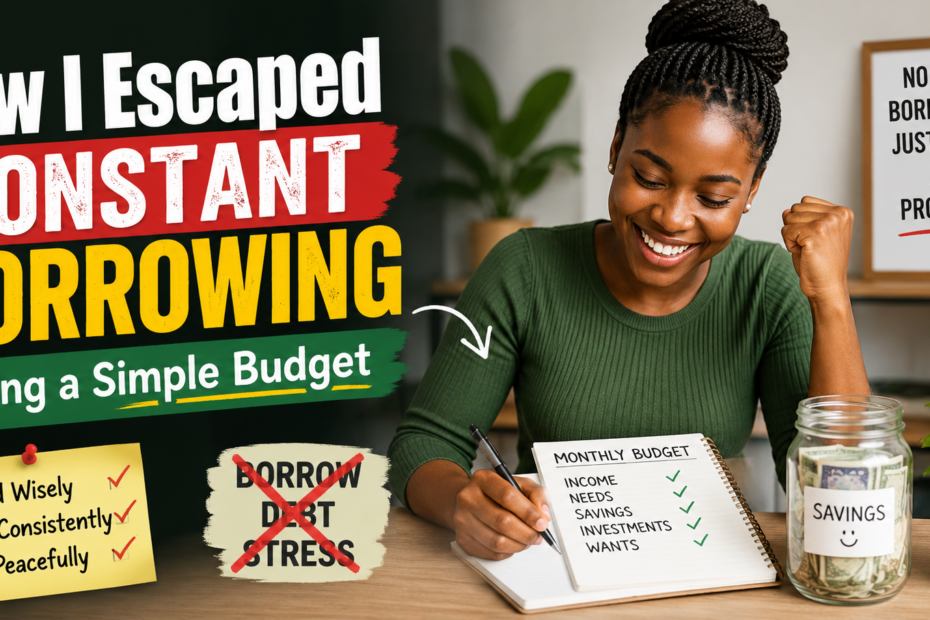
For a long time, borrowing money became a normal part of my life. Before the month ended, I was already asking friends, family members, or colleagues for help with transport, food, data, and other basic needs.
Each time I borrowed, I promised myself it would be the last time, but the same problem kept coming back. My income was not always the main issue.
The real problem was that I had no clear plan for how to manage the money I earned. I spent without tracking, handled emergencies without preparation, and used money meant for important needs on things that could wait.
Everything began to change when I started using a simple budget. It was not complicated, but it helped me take control of my money and gradually escape the stress of constant borrowing.
Why I Was Always Borrowing
For a long time, I believed I was always borrowing because I was not earning enough money. Although my income was not much, I later discovered that the bigger problem was how I managed the money I had.
I did not track my expenses, so I rarely knew where my money went. Once I received money, I spent freely without creating a plan for food, transport, bills, savings, or emergencies.
Small daily expenses were also draining my money faster than I realized. Buying food outside, paying for extra transport, subscribing for airtime and data repeatedly, and spending on things I did not truly need all added up.
I also sometimes bought clothes, attended social events, or contributed money because I felt pressured to impress people or avoid disappointing them.
At times, I used money meant for important needs on less urgent things. Then, when rent, food, electricity, transport, or an emergency came up, I had no choice but to borrow.
Constant borrowing was a clear warning sign that my income had no direction. I was spending first and thinking later, instead of planning my money before it disappeared.
The Simple Budget That Changed Things
The budget that helped me escape constant borrowing was not complicated. I did not need expensive financial tools, complicated spreadsheets, or a large income to begin.
I simply started giving every naira a job before I spent it. Whenever I received money, whether it was salary, business profit, a side hustle payment, or any other income, I divided it into important categories first.
The first category was my needs. This included food, transport, rent, electricity, airtime, data, and other essential bills.
Next, I set aside a small amount for savings before spending on anything else. Sometimes it was only ₦500 or ₦1,000, but saving something helped me begin building a small emergency fund.
I also created a category for debt repayment. Instead of ignoring the money I owed, I planned a small amount to repay gradually.
Finally, I kept a separate amount for personal spending, such as enjoyment, clothing, social events, or other non-essential expenses.
This simple budget was not about becoming perfect overnight or never spending money again. It was about being intentional.
Once I started planning my money before spending it, I stopped wondering where it went and began taking control of my finances.
Practical Steps I Took to Stop Borrowing
Creating a budget was an important first step, but I also had to change some of my daily habits. The first thing I did was start writing down every expense.
I recorded money spent on food, transport, airtime, data, and other small purchases. This helped me see the areas where my money was leaking without me noticing.
I also stopped depending on loan apps for every emergency. Loan apps may seem helpful at first, but borrowing repeatedly can create more pressure because repayment, interest, and late fees can reduce the money available for your next needs.
Instead, I started carrying food from home when possible, reducing unnecessary spending, and thinking carefully before buying things on impulse.
Another helpful step was setting a weekly spending limit. Rather than spending freely at the beginning of the month, I divided my money into smaller weekly amounts.
This made it easier to control my spending and avoid running out of money too quickly. I also started saving small amounts for emergencies. Even ₦500 or ₦1,000 saved regularly gave me something to fall back on when unexpected expenses came up.
To clear my debts, I wrote down every amount I owed and started with the smallest debt first. Paying off one small debt gave me confidence and encouraged me to continue.
I paid consistently, even when the amount was small, and avoided taking new loans while clearing the old ones. Most importantly, I learned to say no when money was not available.
I stopped trying to impress people, attend every event, or give money I could not afford to give. These small changes helped me gradually break free from the cycle of borrowing.
The Difficult Part of Following a Budget
Following a budget was not always easy. There were many times I wanted to spend money outside my plan, especially when I saw something I liked, received an invitation to a social event, or felt pressure to keep up with other people.
Sometimes friends wanted to hang out, contribute money for an occasion, or attend events that I could not truly afford. Saying no was difficult at first because I did not want people to think I was stingy or struggling financially.
There were also unexpected expenses. Prices increased, transport costs changed, food became more expensive, and emergencies sometimes came up when I least expected them.
On some months, my budget did not go exactly as planned. However, I learned that one difficult month did not mean I should give up and return to borrowing.
Instead, I adjusted my spending, reduced unnecessary expenses, and focused on the most important needs. I reminded myself that financial progress takes time.
Discipline did not mean I never made mistakes; it meant I kept returning to my budget whenever I made one. With patience and small changes, I gradually became better at managing my money and avoiding the pressure of borrowing.
The Lesson I Learned
Escaping constant borrowing taught me that financial freedom does not always begin with earning a huge salary. Of course, earning more money can help, but I first needed to understand how to manage the money already coming into my hands.
My problem was not only low income; it was spending without a clear plan and leaving myself unprepared for important needs and unexpected expenses.
The simple budget I started using did not make me rich overnight. However, it helped me stop living from one borrowed amount to another.
It taught me to plan before spending, save small amounts consistently, repay debts gradually, and avoid using money meant for important needs on things that could wait.
If you are always borrowing, do not feel discouraged. Start with the income you have, no matter how small it may be. Write down your expenses, create simple categories for your money, and make small changes one step at a time.
You may not see a major difference in one week, but consistent budgeting can slowly give you control over your money, reduce financial stress, and bring you greater peace of mind.
Frequently Asked Questions
What Is the Simplest Budgeting Method?
The simplest budgeting method is the 50/30/20 budget rule. It is easy because it divides your monthly income into only three parts.
You use 50% of your income for needs, 30% for wants, and 20% for savings, debt repayment, or investment. Needs include rent, food, transport, electricity, school fees, data, and other important bills.
Wants include eating out, buying clothes you do not urgently need, subscriptions, entertainment, and other non-essential spending.
For example, if you earn ₦100,000 monthly, you can use around ₦50,000 for your needs, ₦30,000 for wants, and ₦20,000 for saving or paying debt.
However, many Nigerians may find that their basic needs take more than 50% because of rent, food prices, transport, and family responsibilities.
In that case, the rule can be adjusted. You can use 70% for needs, 10% for wants, and 20% for savings or debt repayment.
The main purpose is not to follow the percentages perfectly. The goal is to know where your money is going and stop spending without a plan.
A simple budget works best when you write down your income, list your expenses, and decide what each naira should do before you start spending.
What Is the 3 6 9 Rule of Money?
The 3 6 9 rule of money is a simple financial guideline that helps people plan their savings and emergency fund.
The rule encourages you to save enough money to cover your expenses for three, six, or nine months, depending on your situation.
It is especially useful for people who want to prepare for job loss, illness, business problems, delayed salary, or unexpected emergencies.
Three months of expenses may be enough for someone with a stable job, low responsibilities, and a reliable source of income.
Six months of expenses is often better for people with families, loans, unstable jobs, or businesses that may not make money every month.
Nine months of expenses may be suitable for freelancers, self-employed people, business owners, or people whose income is highly unpredictable.
For example, if your important monthly expenses are ₦150,000, a three-month emergency fund would be ₦450,000.
A six-month emergency fund would be ₦900,000, while a nine-month emergency fund would be ₦1,350,000. You do not need to save everything at once. You can start by saving a small amount every month until you build your emergency fund gradually.
How to Make a Budget to Get Out of Debt
Making a budget to get out of debt starts with facing the full amount you owe. Write down every debt, including loans from banks, loan apps, friends, family members, cooperative societies, and credit purchases.
Include the total amount owed, interest rate if there is one, minimum payment, and due date. This helps you see the real situation and prevents you from forgetting important payments.
Next, calculate your monthly income and list all necessary expenses such as rent, food, transport, electricity, data, medication, school fees, and family needs.
After removing essential expenses, check how much money is left for debt repayment. You may need to reduce unnecessary spending temporarily, such as expensive outings, frequent online shopping, betting, subscriptions, or buying things on credit.
Choose a debt repayment method that you can follow consistently. The debt snowball method means paying the smallest debt first while making minimum payments on other debts.
This can motivate you because you see quick progress. The debt avalanche method means paying the debt with the highest interest first, which can save you money over time.
Whichever method you choose, avoid taking new loans to pay for lifestyle expenses.
If possible, find extra income through a side hustle, freelance work, selling unused items, or small business activities. Every extra naira should go toward reducing your debt.
What Are the 7 Steps in Good Budgeting?
Good budgeting begins with knowing your total income. This includes salary, business profit, side hustle income, allowances, rent income, and any other money you receive regularly.
It is important to use your actual income, not the amount you hope to earn. If your income changes every month, create your budget using the lowest amount you usually earn.
The next step is to list your essential expenses. These are the things you must pay for to live and work, including food, rent, transport, electricity, water, data, school needs, and healthcare.
After that, list your non-essential expenses, such as entertainment, eating out, unnecessary shopping, subscriptions, and impulse purchases.
Another important step is to set clear financial goals. Your goal may be to save ₦100,000, clear a loan, start a business, pay rent early, buy a phone without borrowing, or build an emergency fund.
Once you have a goal, assign part of your income to it every month. You should also include savings and debt repayment in your budget before spending money on wants.
Good budgeting also requires tracking your spending. You can use a notebook, phone notes, spreadsheet, or budgeting app. Record what you spend daily so you can identify where your money is leaking.
Finally, review your budget every month. Prices, income, and responsibilities can change, so your budget should be adjusted when necessary.
What Are the 4 Types of Budgets?
One common type of budget is a balanced budget. This means your income is equal to your expenses. For example, if you earn ₦200,000 and spend exactly ₦200,000, you have a balanced budget.
Although this may seem okay, it does not leave much room for emergencies, savings, or investment. A balanced budget can work for someone who is starting, but it is better to create space for saving.
The second type is a surplus budget. A surplus budget happens when your income is more than your expenses. For example, if you earn ₦200,000 but spend ₦160,000, you have a surplus of ₦40,000.
This is usually the best type of budget because the extra money can be used for savings, investment, debt repayment, emergency funds, or business opportunities.
The third type is a deficit budget. This happens when your expenses are higher than your income. If you earn ₦150,000 but spend ₦180,000, you have a deficit of ₦30,000.
Many people cover this gap by borrowing, using loan apps, asking friends for money, or buying items on credit. A deficit budget can lead to constant debt if it is not corrected quickly.
The fourth type is a zero-based budget. In this budget, every naira you earn is given a job. Your income minus expenses, savings, debt repayment, and investment should equal zero.
This does not mean you spend all your money carelessly. It means you plan where every amount will go, including money for savings and emergencies.
How to Save Money If You Have a Lot of Debt
Saving money while carrying a lot of debt can feel difficult, especially when most of your income already goes toward food, rent, transport, bills, and loan repayments.
However, saving is still important because emergencies can push you into taking even more loans. The best approach is to start small while focusing strongly on reducing your debt.
Begin by creating a list of every debt you owe. Include bank loans, loan apps, money borrowed from friends or family, cooperative loans, credit purchases, and unpaid bills.
Write the amount, interest rate, due date, and minimum payment. This helps you understand which debts are costing you the most. Focus on paying the highest-interest debt first while continuing to make minimum payments on other debts.
At the same time, create a small emergency savings fund. Even if you can only save ₦1,000, ₦2,000, or ₦5,000 weekly, it can help you handle small emergencies without borrowing again.
Keep this money in a separate account or wallet that is not easy to spend from. Your first goal can be to save enough for one week of essential expenses, then gradually increase it.
Reduce expenses that are not urgent for a period. This may include frequent eating out, expensive data plans, unnecessary subscriptions, impulse shopping, betting, or buying items to impress people.
If possible, increase your income through a side hustle, selling unused items, freelance work, weekend jobs, or a small business. Use extra income mainly for debt repayment and emergency savings until your financial situation improves.
What Are the 5 C’s of Debt?
The 5 C’s of debt are commonly used by lenders to assess whether a person is likely to repay a loan. They are character, capacity, capital, collateral, and conditions.
Understanding these factors can help you become a more responsible borrower and improve your chances of getting affordable credit.
Character refers to your financial reputation and repayment behavior. Lenders may check whether you have paid previous loans on time, whether you have unpaid debts, and whether you are trustworthy with money.
Capacity means your ability to repay the loan from your income. A lender wants to know if your salary, business income, or side hustle earnings are enough to cover the repayment after your normal living expenses.
Capital refers to the money or assets you already have invested in your goal. For example, if you want a business loan, a lender may want to see that you have contributed some of your own money.
Collateral is an asset that can support the loan, such as land, a vehicle, equipment, or another valuable item. Conditions refer to the purpose of the loan, the interest rate, the repayment period, and the economic situation.
Before taking any loan, use these same five ideas to assess yourself. Ask whether you truly have the income to repay, whether the loan is necessary, and whether the repayment terms are reasonable.
What Is the 50/30/20 Rule for Debt?
The 50/30/20 rule is a budgeting method that can help you manage debt while still covering your daily needs.
Under the traditional rule, 50% of your income goes to needs, 30% goes to wants, and 20% goes to savings, investments, or debt repayment.
If you have debt, the 20% category should be used mainly for debt repayment and building a small emergency fund.
For example, if your monthly income is ₦150,000, you may aim to use about ₦75,000 for needs such as food, rent, transport, electricity, data, and basic family expenses.
Around ₦45,000 can go to wants, while ₦30,000 goes toward debt repayment and savings. However, because living costs are high, you may need to adjust the percentages to fit your real situation.
A person with serious debt may use a version such as 70/10/20 or 75/5/20. This means more money goes toward needs, very little goes toward wants, and at least 20% is reserved for debt repayment and emergency savings.
If you can earn extra income, use most of it to clear debt faster rather than increasing your lifestyle.
The strength of this rule is that it gives your money a clear direction. It helps you avoid spending all your income on wants while ignoring debt. The percentages are only a guide, so adjust them based on your income, responsibilities, and debt level.
What Are the 4 Pillars of Budgeting?
The four pillars of budgeting are income awareness, expense control, savings, and regular review. These pillars work together to help you manage money with purpose instead of spending without direction.
Income awareness means knowing exactly how much money you earn each month. This includes salary, business profit, side hustle income, gifts, allowances, and any other regular earnings. You should budget based on the money you actually receive, not money you expect or hope to receive.
Expense control means knowing where your money goes and reducing waste. Separate your expenses into needs and wants.
Needs include food, housing, transport, electricity, healthcare, and school expenses. Wants include things you can delay or reduce, such as unnecessary shopping, entertainment, and expensive lifestyle habits.
Savings is another major pillar because it protects you from emergencies and future financial pressure. Your savings can be for rent, school fees, business, emergencies, travel, or investment. Even small savings matter when done consistently.
Regular review is the final pillar. A budget should not be written once and forgotten. Review it weekly or monthly to see whether you are overspending, earning less, or facing new responsibilities. Adjust your budget when prices change or your income changes.
What Are the 10 Principles of Budgeting?
Good budgeting starts with living below your income. This means spending less than you earn and avoiding a lifestyle that depends on borrowing.
Another important principle is to give every naira a job before spending it. Plan for food, rent, transport, bills, savings, debt repayment, and personal needs.
You should always separate needs from wants. Needs are necessary for survival and work, while wants are things you can reduce, delay, or avoid.
Tracking your spending is also important because it reveals where money is being wasted. A notebook, phone note, spreadsheet, or budgeting app can help you record daily expenses.
Savings should be included in every budget, even if the amount is small. Building an emergency fund reduces the need to borrow when unexpected expenses happen.
Debt repayment should also be treated as a priority, especially for loans with high interest rates.
Other key principles include setting clear financial goals, avoiding impulse purchases, planning for irregular expenses, reviewing your budget regularly, and adjusting your plan when income or prices change.
Irregular expenses may include school fees, rent, repairs, celebrations, medical needs, and family obligations.
A budget is not meant to make life difficult. It is meant to help you make better decisions with the money you have. When you follow these principles consistently, you can reduce debt, save more, and gain greater control over your financial future.