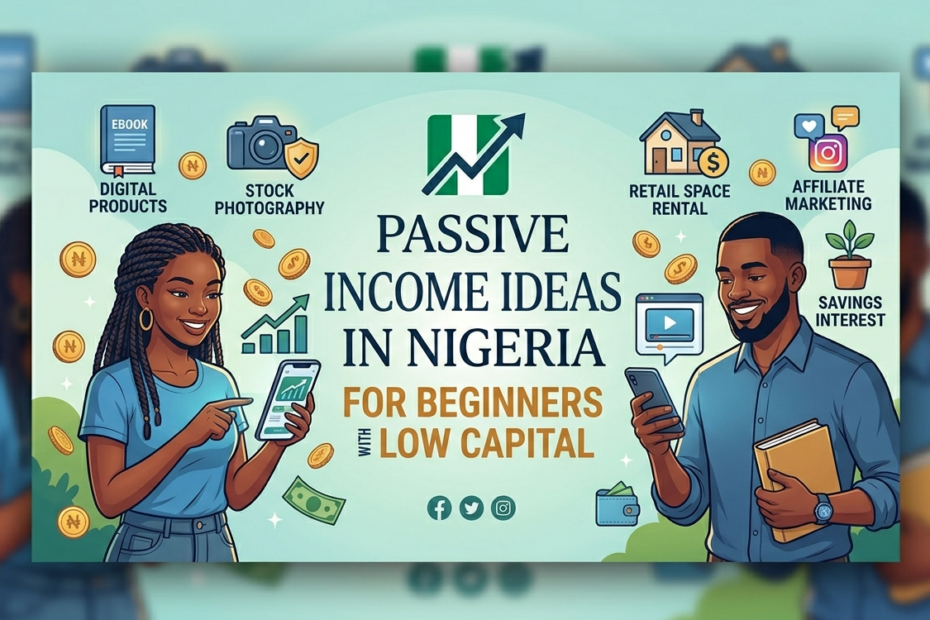
Passive income refers to money earned repeatedly over time with little to no ongoing daily effort after the initial setup. In simple terms, it is income that continues to flow even when you are not actively working every day.
In Nigeria today, building passive income streams is becoming more important due to rising living costs, economic uncertainty, inflation, and limited job opportunities. Many people can no longer rely on a single salary to survive comfortably, which makes alternative income sources essential.
However, it is important to set the right expectation from the beginning: “low capital” does not mean “zero effort.” Most passive income ideas still require time, planning, consistency, and sometimes initial hard work before they begin to generate steady returns.
In this guide, we will explore realistic passive income ideas in Nigeria that beginners can start with little capital and grow over time.
What Passive Income Really Means
To understand passive income properly, it is important to first compare it with active income. Active income is the money you earn by directly exchanging your time and energy for payment.
For example, a salary job, daily trading, freelancing, or any work where you must continuously show up and work before you get paid. If you stop working, the income stops immediately.
Passive income, on the other hand, is money earned from systems or assets that continue to generate income even when you are not actively working every day.
Examples include rental income, digital products, affiliate marketing, or investment returns. In passive income, you do the hard work once (or in stages), and then the system continues to pay you over time.
A very common misconception is that passive income means “quick money” or “no work at all.” This is not true. Many beginners in Nigeria fall into this misunderstanding and expect instant results, only to get discouraged when it doesn’t happen.
The real truth is that passive income requires setup effort first. You may need to build a skill, create a product, set up a platform, or invest time in learning how the system works. After this initial phase, the income becomes gradual and more consistent over time, often requiring less daily effort to maintain.
In summary, passive income is not magic money—it is delayed reward from smart work and structured systems.
Below are practical passive income ideas Nigerians can start with low capital. Each one requires some effort at the beginning, but can become more automatic over time when properly set up.
A. Affiliate Marketing
Affiliate marketing means promoting other people’s products and earning a commission when someone buys through your referral link. In Nigeria, you can promote products from platforms like Jumia, Konga, or digital products such as courses and software.
You don’t need a shop or inventory. All you need is a smartphone, internet connection, and active social media pages (WhatsApp, Instagram, TikTok, or Facebook). Once you learn how to create engaging posts or short videos, your content can continue to generate sales even while you are offline.
B. Blogging / Content Writing
Blogging involves creating a website where you publish useful content on topics like finance, lifestyle, tech, or relationships. Over time, as people visit your blog, you can earn money through Google ads, sponsored posts, and affiliate links.
It requires patience because traffic takes time to build, but once established, a blog can generate income for years with updated content and SEO.
C. YouTube Automation / Faceless Channel
This involves running a YouTube channel without showing your face. You can use voiceovers, stock videos, animations, or slideshows to create content.
Popular formats include storytelling, list videos, educational content, and tutorials. Once your channel is monetized, you earn from ads, sponsorships, and affiliate links—even while old videos continue to gain views.
D. Print-on-Demand / Digital Products
This model allows you to sell digital items like ebooks, templates, logos, or designs without physical stock. You only create the product once, then sell it repeatedly online.
For example, you can design CV templates, business planners, or social media templates and sell them on platforms like Selar or Gumroad. After setup, sales can run automatically.
E. Social Media Page Monetization
You can build pages on Instagram, TikTok, or Facebook around entertainment, education, or motivation. As your audience grows, brands will pay you for promotions, shoutouts, and collaborations.
The key is consistency in posting viral or valuable content. Once your page grows, income can become semi-passive because older content continues attracting engagement.
F. Mini Importation (Semi-Passive After Setup)
Mini importation involves buying cheap products in bulk from countries like China and reselling them in Nigeria at a profit. You can sell via WhatsApp, Instagram, or Jumia.
While it requires active effort at first, it becomes semi-passive when you hire agents, use delivery services, or automate orders.
G. Renting Assets (If Available)
If you own valuable items, you can rent them out for passive income. This includes cameras, speakers, laptops, phones, or even a spare room.
Short-term rental services or personal arrangements can generate steady income without selling your assets. The key is proper maintenance and trust-based transactions.
H. Cryptocurrency / Staking (Caution Section)
Some platforms allow you to earn passive income through staking or holding certain cryptocurrencies. This means locking your coins for a period and earning rewards.
However, this option is highly risky due to price volatility and scams. It should only be done with money you can afford to lose, and after proper research. It is not a guaranteed income source.
How to Choose the Right Idea
Choosing the right passive income idea is very important because not every option fits every person. The best choice depends on your skills, time, budget, and how much risk you can handle.
1. Your Skill Level
Start by looking at what you can already do or are willing to learn. Your skills will determine how fast you succeed.
- If you are good at writing, you can start blogging, affiliate marketing, or content writing.
- If you enjoy videos or editing, YouTube automation or social media content creation may suit you.
- If you understand online marketing or sales, affiliate marketing or mini importation can work well.
The easier the skill matches your ability, the faster you can start earning.
2. Time Available
Different passive income ideas require different levels of time commitment at the beginning.
- If you are a student or busy worker, choose ideas like affiliate marketing or social media pages that allow flexible work.
- If you have more free time, you can try blogging or YouTube, which require consistent content creation before becoming passive.
The key is consistency—small daily effort builds long-term income.
3. Starting Budget (₦5,000 – ₦50,000 Range)
Your budget will also affect your choice.
- With ₦5k–₦20k, you can start affiliate marketing, social media growth, or content creation tools.
- With ₦20k–₦50k, you can invest in blogging setup, ads, mini importation samples, or better equipment like a microphone or data subscription.
The goal is not to spend too much, but to start smart and grow gradually.
4. Risk Tolerance
Every passive income idea has some level of risk.
- Low risk: Blogging, affiliate marketing, social media pages, digital products.
- Medium risk: Mini importation, renting assets.
- High risk: Cryptocurrency and staking (prices can rise or fall quickly).
If you are a beginner, it is safer to start with low-risk options and only explore high-risk investments after gaining experience.
Common Mistakes Beginners Make
Many people in Nigeria start passive income journeys with high expectations, but they often fail because of avoidable mistakes. Understanding these early can help you stay on the right track and build something sustainable.
1. Expecting Instant Money
One of the biggest mistakes is believing passive income will start paying immediately. Many beginners think they will make money within days or weeks, but that is rarely the case. Most passive income systems—like blogging, affiliate marketing, or YouTube—take time to grow.
The truth is, you must first build content, audience, or systems before money starts coming in consistently. Without patience, people get frustrated and quit too early.
2. Jumping Between Too Many Ideas
Another common mistake is starting one idea today and switching to another tomorrow. For example, someone may start affiliate marketing today, then move to crypto next week, and later try YouTube.
This “shiny object syndrome” prevents real progress. Passive income requires focus and consistency. When you stick to one idea long enough, you improve faster and see results.
3. Not Building Audience First
Many beginners focus only on making money instead of building people who trust them. Whether it is blogging, social media, or affiliate marketing, audience is the foundation.
Without an audience, even the best product will not sell. But with a loyal audience, even simple offers can generate steady income. Building trust and visibility should come first.
4. Giving Up Too Early
Most passive income ideas take weeks or months before they start working. Unfortunately, many beginners quit just before they begin to see results.
Success in passive income is about persistence. Those who stay consistent, keep learning, and improve over time are the ones who eventually succeed.
Step-by-Step Start Guide
Starting passive income in Nigeria becomes easier when you follow a simple, structured process instead of guessing your way through. Below is a beginner-friendly step-by-step guide you can apply to almost any passive income idea.
1. Pick One Idea
The first step is to choose just one passive income idea that fits your skills, time, and budget. For example, you might choose affiliate marketing, blogging, or social media content creation.
Avoid trying to do everything at once. Focus is important because it helps you build momentum and avoid confusion. One idea done well is better than five ideas done poorly.
2. Learn Basic Skills
After choosing your idea, the next step is to learn the basics. You don’t need expensive training—there are free resources available online.
You can use YouTube tutorials, free online courses, blogs, and even social media tips to understand how the system works. For example, learn how to write content, edit simple videos, or promote affiliate links effectively.
3. Start Small (Content or Setup)
Once you understand the basics, take action immediately. Start small instead of waiting for perfection.
If it’s blogging, publish your first few articles. If it’s YouTube, upload your first videos. If it’s affiliate marketing, start sharing products on WhatsApp or Instagram. The goal is to begin, not to be perfect.
4. Grow Audience or Traffic
After starting, focus on attracting people. This could mean getting blog visitors, social media followers, or YouTube subscribers.
Consistency is key here. The more valuable and regular your content is, the more people will start to trust and follow you. This stage is where most of the growth happens.
5. Monetize Gradually
When you start building an audience or traffic, you can begin to monetize. This may include affiliate links, ads, sponsorships, digital products, or services.
Do not rush this step. Focus on value first, then income will follow naturally. Over time, your passive income can grow into a steady and reliable stream.