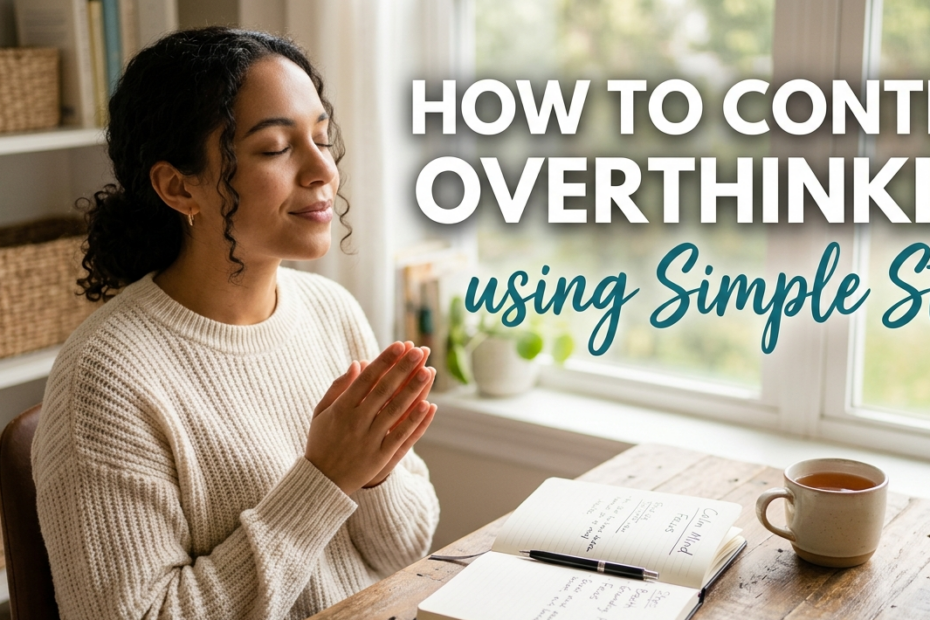
Do you often find yourself stuck in a loop of endless thoughts, replaying past mistakes or worrying about things beyond your control? Overthinking can feel like your mind is constantly racing, leaving you drained and unable to focus.
It doesn’t just affect your mental peace—it can increase stress, trigger anxiety, disrupt sleep, and even reduce productivity in daily life. The more you dwell on every detail, the harder it becomes to take action or make clear decisions.
The good news is that overthinking is something you can manage with simple, practical steps. In this post, we’ll explore easy techniques and strategies that can help you quiet your mind, regain focus, and regain control over your thoughts so you can lead a calmer, more productive life.
What is Overthinking?
Overthinking happens when your mind gets stuck analyzing situations, decisions, or past events repeatedly, often without reaching a solution. It goes beyond normal problem-solving and can create unnecessary stress and worry.
While thinking things through is productive, overthinking becomes harmful when it prevents action, drains your energy, and keeps you trapped in cycles of doubt or fear.
The key difference lies in outcomes: productive thinking leads to decisions and solutions, whereas harmful overthinking leads to mental exhaustion and indecision.
According to recent studies, over 73% of adults admit to overthinking daily, showing how common this challenge is—and why learning to manage it is so important for mental clarity and well-being.
Why Controlling Overthinking Matters
Controlling overthinking is not just about calming your mind—it has significant benefits for your overall well-being.
1. Mental Health Benefits: Reducing overthinking can lower anxiety levels, improve focus, and help you think more clearly. When your mind isn’t constantly racing, it’s easier to make decisions and approach challenges with confidence.
2. Physical Health Benefits: Persistent overthinking can take a toll on your body, leading to poor sleep, headaches, and increased stress. Managing your thoughts promotes better sleep, lowers stress hormones, and improves overall physical health.
3. Productivity Benefits: Overthinking often leads to indecision and procrastination. By learning to control it, you become more action-oriented, make better decisions, and accomplish tasks efficiently, boosting both personal and professional productivity.
Simple Steps to Control Overthinking
Overthinking can feel overwhelming, but taking small, intentional steps can help you regain control of your mind. Here are seven practical strategies you can start applying today:
Step 1: Identify Triggers
Recognizing what sparks your overthinking is the first step to breaking the cycle. Keep track of situations, people, or thoughts that lead to repetitive worrying. Once you know your triggers, you can address them consciously instead of letting them control your mind.
Step 2: Practice Mindfulness
Mindfulness helps you stay present and prevents your thoughts from spiraling. Simple techniques like deep breathing, guided meditation, or focusing on your senses for a few minutes daily can calm your mind and improve mental clarity.
Step 3: Set Time Limits
Give yourself a “worry window”—a short, fixed period to think about a problem. When the time is up, move on to another activity. This prevents constant rumination and helps train your brain to let go of unproductive thoughts.
Step 4: Focus on Solutions, Not Problems
Instead of dwelling on what went wrong, shift your attention to finding solutions. Actionable thinking reduces anxiety and empowers you to make progress, rather than getting stuck in repetitive worry loops.
Step 5: Journaling
Writing down your thoughts is a powerful way to process them outside your mind. Journaling allows you to reflect, release emotions, and gain perspective, making your worries easier to manage.
Step 6: Limit Exposure to Stressors
Constant exposure to social media, negative news, or toxic environments can fuel overthinking. Take breaks from these triggers to protect your mental space and reduce unnecessary stress.
Step 7: Physical Activity
Exercise isn’t just good for your body—it also helps your mind. Physical activity releases tension, reduces stress hormones, and boosts mood, making it easier to break free from cycles of overthinking.
Quick Tips and Tricks
In addition to the main steps, these simple tips can help you manage overthinking more effectively:
1. Use Affirmations
Positive affirmations can reframe your mindset and reduce negative thought patterns. Repeating statements like “I am capable of handling challenges” can calm your mind and build confidence.
2. Talk to a Friend or Therapist
Sharing your thoughts with someone you trust can provide perspective and reduce mental clutter. Professional therapists can also offer strategies to manage persistent overthinking.
3. Engage in Hobbies
Doing activities you enjoy—whether it’s reading, painting, or playing a sport—can distract your mind from repetitive thoughts. Hobbies refresh your brain, improve mood, and help you focus on the present moment.
Conclusion
Overthinking can take a serious toll on your mental and physical well-being, as well as your productivity. By identifying triggers, practicing mindfulness, setting time limits, focusing on solutions, journaling, limiting stressors, and staying active, you can regain control of your thoughts and reduce unnecessary worry.
Adding quick tips like using affirmations, talking to a friend or therapist, and engaging in hobbies can further strengthen your ability to manage overthinking.
The key is to take small, consistent steps. You don’t have to implement everything at once—choose one strategy today and practice it daily. Over time, these simple actions can help you quiet your mind, boost focus, and lead a calmer, more productive life. Start today and take the first step toward mental clarity and peace.