Skip to content
Home » How I saved ₦500,000 in 6 months on a low income in Nigeria

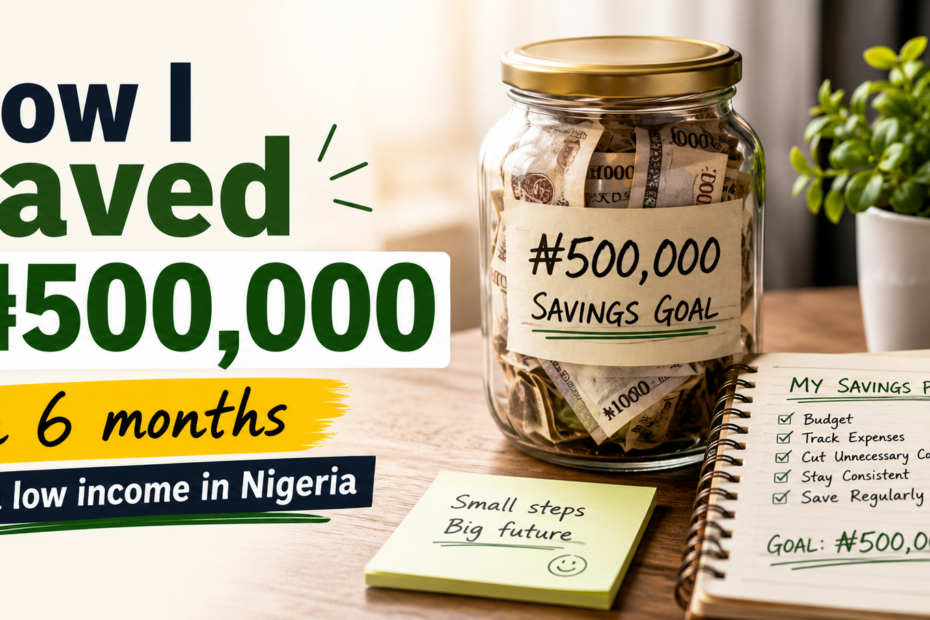
How I saved ₦500,000 in 6 months on a low income in Nigeria

    At the beginning, my financial situation was not easy. I was earning a low and unstable income that barely covered my basic needs each month.

    Living in Nigeria, the cost of transportation, food, electricity, and mobile data kept increasing, and rent pressure alone made saving feel like a luxury I could not afford. Most of my money was gone almost immediately after I received it.

    Honestly, saving money felt impossible at first. Anytime I tried to set something aside, an unexpected expense would come up and wipe it out. I had attempted saving before, but it never lasted beyond a few weeks.

    I would either dip into my savings or completely abandon it just to survive the month. At that point, I started believing saving ₦500,000 in 6 months was unrealistic for someone in my situation.

    The “Wake-Up Moment”

    My turning point came when reality hit me in a very uncomfortable way. One month, an unexpected emergency came up, and I had no backup savings at all.

    I had to borrow money just to handle basic responsibilities, and the stress of repayment made everything worse. That moment made me realize how financially vulnerable I was.

    Beyond that, I also started thinking seriously about my future goals. There were things I wanted—better stability, small investments, and the freedom to say yes to opportunities—but my income could not support any of it. It finally dawned on me that my salary was not just small, it was not stretching at all.

    That was when it clicked: if I didn’t take saving seriously, I would always be one step away from financial crisis. I needed a system, not just intentions.

    The Mindset Shift

    This was the real change that made everything possible. I had always believed the problem was my income—I kept telling myself, “I don’t earn enough to save.” But that thinking was exactly what kept me broke. I realized I was waiting for a “perfect amount” that was never going to come.

    So I changed my approach completely: I must save first, no matter how small the income is. Saving stopped being optional. It became something I had to do before anything else, just like paying rent or electricity bills.

    I started treating savings like a fixed bill that must be paid immediately I receive money. Even if it was ₦1,000 or ₦2,000, it went out first before any spending decisions. I also stopped giving excuses like “this month is hard” or “I’ll start next month.” That shift in mindset was what turned saving from an idea into a real discipline.

    How You Structured Your Income

    To make saving realistic on my low income, I had to stop depending on motivation and start using structure. The first thing I did was set a fixed percentage of my income for savings. No matter how small I earned, I committed to saving a consistent portion—usually between 10% and 20%—before anything else.

    Next, I opened a separate savings account so I wouldn’t easily touch the money. I used fintech platforms like PiggyVest, Kuda, or Opay savings features to keep my savings out of reach. This separation made it harder for me to “accidentally” spend what I was supposed to keep.

    I also automated the process. Once money entered my main account, a fixed amount was transferred immediately to savings without me thinking about it.

    On tougher days, I broke it down further into daily or weekly saving targets instead of waiting for month-end. This structure removed emotional spending and made saving consistent and predictable.

    The Budget System You Used

    To stay consistent with saving, I had to bring structure into how I spent money. I started by separating everything into needs and wants. Needs were the things I could not survive without—food, transport, data, and basic living costs. Wants were the things I could delay or completely remove without affecting my survival.

    I then created a simple monthly budget. A portion was assigned to food, another to transport for movement, data for communication and work, and most importantly, savings which was treated as a fixed category—not optional.

    I also created a small emergency portion to handle unexpected situations so I wouldn’t always break my savings.

    To make this system work, I had to cut out unnecessary spending. I reduced fast food, stopped impulsive buying, and avoided spending on things like betting or random entertainment that added no value. Once I became strict with my budget, I realized I had more control over my money than I thought.

    Practical Money-Saving Hacks in Nigeria

    To make my savings goal realistic, I had to adjust my daily lifestyle with practical habits that fit Nigeria’s economy. One of the biggest changes was cooking at home instead of eating out. It was cheaper, healthier, and helped me control how much I spent on food each week.

    I also switched to using public transport instead of ordering rides or convenience trips. Even though it was less comfortable, it significantly reduced my daily expenses. I started buying food items like rice, beans, garri, and oil in bulk, which helped me save more in the long run because prices were usually cheaper that way.

    I became more intentional with online spending by avoiding impulse purchases, especially things I didn’t plan for. I also reduced my data costs by using cheaper bundles, WiFi when available, and limiting unnecessary browsing.

    At the market, I learned to negotiate prices instead of accepting the first offer. All these small changes added up and made consistent saving possible.

    Side Income (If You Had Any)

    To make my goal of saving ₦500,000 in 6 months realistic, I knew my main income alone would not be enough. So I started looking for small side income opportunities to support my savings plan.

    I began doing small freelance work whenever I could—simple tasks like writing, social media support, or helping people with basic online jobs. It wasn’t always consistent, but it added extra money that I didn’t have before. I also tried small online hustles, like reselling basic products when I found good deals, and making a small profit from each sale.

    In some cases, I took advantage of mini business opportunities, like helping people run errands or selling small items in my environment. The income was not big, but the key was consistency and discipline in saving from every extra money I earned.

    Even though these side incomes were small, they played a very important role. They reduced pressure on my main income and made it easier to stay committed to my savings target.

    Challenges You Faced

    The journey was not smooth at all. There were months when I almost broke my savings because things became tight. Some expenses came up that I didn’t plan for, and I had to make a strong decision not to touch the money I had already set aside. It was not easy resisting that temptation.

    Family and friends also added pressure at times. There were situations where I was expected to contribute financially or “help out,” even when I was trying to protect my savings goal. Saying no wasn’t comfortable, but I had to learn it.

    Unexpected expenses were another major challenge. Things like health issues, transport increases, or urgent needs would suddenly appear and test my discipline. In those moments, I was constantly tempted to withdraw from my savings because it was the easiest option.

    But every time I felt like giving up, I reminded myself why I started. That reminder helped me stay consistent even when it was difficult.

    What Kept You Going

    What kept me consistent throughout the journey was having a clear goal. ₦500,000 was not just a random target—it had a purpose attached to it. Knowing exactly what I was saving for made it easier to resist unnecessary spending, even when things were tight.

    I also made it a habit to track my progress weekly and monthly. Seeing the numbers grow, no matter how slowly, gave me a sense of achievement and kept me motivated. It made the process feel real instead of just an idea in my head.

    To stay focused, I used simple reminders—sometimes notes on my phone or visual goals that kept me aware of why I started. This helped me avoid distractions and impulsive decisions.

    Most importantly, discipline became a daily habit. I didn’t rely on motivation alone. I followed routines, stuck to my savings plan, and treated it like a commitment I couldn’t break. That consistency was what carried me through.

    See also  How to budget for rent and bills in Nigeria effectively

    Breakdown of How ₦500,000 Was Achieved

    To make the goal feel realistic, I broke it down into simple, manageable targets instead of seeing it as a huge lump sum. I divided it by months and days so I could understand exactly what I needed to do consistently.

    Monthly target:

    500000/6≈83333

    This showed me that I needed to aim for about ₦83,000 every month through a combination of savings from my main income and side hustles.

    Daily target:

    500000/180≈2778

    This made it even clearer that I only needed to focus on small daily discipline instead of thinking about the full ₦500,000 at once.

    When I combined my salary, small side income, and strict spending discipline, these small amounts started to add up consistently. The goal became less intimidating and more like a daily system I could actually follow.

    Lessons Learned

    Looking back at the whole journey, the biggest lesson I learned is that you don’t actually need a big income to start saving. What matters more is how disciplined you are with whatever you already have. Even small amounts, when handled consistently, can grow into something meaningful over time.

    I also realized that consistency is more powerful than income size. There were months I earned more, and months I earned less, but the real difference came from how steady I stayed with my savings habit, not how much I earned.

    Another important lesson is that budgeting is more important than earnings. Once I understood where my money was going and controlled it properly, saving became easier without feeling like punishment.

    Finally, I learned that lifestyle inflation is the real enemy. Anytime I started spending more just because I earned a little extra, my savings suffered. Staying simple and disciplined was what kept my progress alive.

    Advice to You

    If you are trying to save money on a low income, the most important thing is to start small. Don’t wait until you have a big salary before you begin. Even ₦500–₦1,000 daily is enough to build the habit and grow something meaningful over time.

    Try to automate your savings as much as possible so you don’t have to rely on willpower every day. When the money moves out of your spending account automatically, it becomes easier to stay consistent.

    Also, track every expense, no matter how small. When you know exactly where your money is going, you gain control and reduce unnecessary spending without stress.

    Finally, avoid comparison. Everyone’s financial journey is different, and comparing yourself to others will only pressure you into poor decisions. Focus on your own progress, stay consistent, and trust the process.

    Frequently Asked Questions

    How to save money fast on a low income in Nigeria?

    Saving money quickly on a low income in Nigeria is very possible, but it requires discipline, structure, and a shift in mindset rather than a high salary.

    The first step is to understand your income clearly. Write down exactly how much you earn weekly or monthly and separate your needs from your wants. Many people struggle to save because they save “what is left,” but on a low income, you must save first before spending.

    A practical method is the “percentage-first saving rule.” Even if your income is small, commit to saving at least 5%–10% immediately you receive money. For example, if you earn ₦50,000 monthly, saving ₦2,500–₦5,000 consistently builds discipline and grows over time.

    Another important strategy is reducing daily unnecessary expenses like frequent snacks, impulsive rides instead of walking short distances, or buying items you don’t immediately need.

    You should also adopt a cash-stretching lifestyle. This means planning meals at home instead of eating out and buying in bulk from local markets instead of daily purchases. In Nigeria, transportation and food are two major areas where money disappears quickly, so controlling them has a big impact.

    Another powerful technique is using a separate savings account or a mobile wallet that is not easy to withdraw from. When money is out of reach, you are less likely to spend it impulsively.

    Finally, increase accountability by tracking every naira you spend daily. When you see where your money goes, you naturally begin to cut waste. Saving fast on a low income is not about how much you earn—it is about how controlled your spending habits are.

    How to save money fast on a low income?

    Saving money quickly on a low income requires intentional financial behavior and strict prioritization. The biggest mistake many people make is trying to save only when there is “extra money,” which rarely happens. Instead, you should treat saving as a non-negotiable expense, just like electricity or rent.

    Start by creating a very simple budget. Divide your income into three categories: survival needs (food, transport, rent), basic obligations, and savings.

    Even if your income is small, allocate a fixed amount to savings immediately after receiving income. This method is known as “paying yourself first,” and it is one of the most effective ways to build savings.

    Next, focus on reducing “silent expenses.” These are small daily costs that feel insignificant but accumulate over time—like soft drinks, unnecessary data subscriptions, impulse rides, or frequent small purchases. Cutting just a few of these can free up surprising amounts of money each month.

    Another important strategy is to adopt a minimalist lifestyle temporarily. This does not mean suffering; it means prioritizing needs over wants until your savings stabilize. Cook at home, reuse items when possible, and avoid lifestyle comparisons with others.

    You should also automate your savings if possible. Even setting a reminder or using a locked savings feature helps reduce temptation. When savings are automatic, you remove emotional decision-making from the process.

    Finally, track your spending daily. Awareness creates discipline. When you see exactly where your money goes, you naturally begin to adjust your habits. Saving on a low income is not about restriction—it is about control and consistency.

    How to save 1k in 30 days?

    Saving ₦1,000 in 30 days may sound small, but it is actually a powerful exercise in building financial discipline. The goal is not the amount itself, but the habit of consistency. To achieve this, you need to break the target into very small daily or weekly contributions that feel manageable.

    For example, ₦1,000 in 30 days equals about ₦33 per day. Instead of thinking about the full amount, focus on daily micro-saving. You can drop ₦50 or ₦100 into a savings container or mobile wallet every day, depending on what is realistic for you. The key is consistency, not pressure.

    Another method is the “challenge approach.” Choose a fixed routine such as saving every morning before spending anything. This helps you build discipline early in the day. You can also use physical methods like a savings box (kolo), where you drop coins or small notes daily without touching them.

    To make it easier, reduce one small expense per day. For example, skip one unnecessary snack, avoid one impulse purchase, or reduce transportation costs by walking short distances when safe. Redirecting these small savings into your ₦1,000 goal makes it easier to achieve without stress.

    You can also involve accountability. Tell a friend or family member about your goal so you feel motivated to complete it. Small goals like this build the foundation for bigger savings habits in the future.

    Ultimately, saving ₦1,000 in 30 days is not about money—it is about training your brain to prioritize saving consistently, even when income is low.

    How can I save money if my income is low?

    Saving money with a low income is challenging, but it becomes easier when you focus on structure rather than amount. The first thing to understand is that saving is not reserved for people with high income; it is a habit built through discipline and planning.

    Start by identifying your essential expenses. These are non-negotiable costs like food, rent, transport, and basic communication. Once these are clear, you can see where your income actually goes. Many people discover that they spend a lot on unnecessary items once they start tracking.

    Next, adopt a “small but consistent saving” approach. Even saving ₦500 or ₦1,000 regularly is powerful over time. The idea is not the size of the savings but the consistency. This builds financial discipline and prepares you for higher income levels in the future.

    See also  How to stick to a budget in Nigeria despite rising prices

    Another important step is reducing lifestyle pressure. Trying to live like others with higher income often destroys saving potential. Focus on your own financial reality and make decisions based on it. Cooking at home, avoiding unnecessary subscriptions, and limiting impulse spending are key.

    You should also create a simple savings system. This could be a separate account, a locked wallet, or even a physical savings container. The goal is to separate spending money from saving money so you are not tempted to mix them.

    Finally, try to increase small income streams over time. Even minor side activities like selling small items, freelancing, or offering services can support your savings goals. Saving on low income is not about perfection—it is about steady improvement and financial awareness.

    How to make money fast when you’re broke?

    Making money fast when you are broke requires focusing on immediate-value skills and opportunities rather than long-term investments. The first step is to identify what you can do right now that people are willing to pay for. This could be physical labor, digital skills, or small trading activities.

    One of the fastest ways is offering services in your immediate environment. This could include cleaning, washing clothes, running errands, helping with moving goods, or assisting small businesses. These tasks do not require capital but can generate quick cash.

    Another approach is leveraging digital platforms. If you have a smartphone, you can explore simple online tasks like freelance writing, basic graphic design, social media management, or selling digital services. Even basic skills like typing or editing can be monetized if marketed properly.

    You can also consider buying and reselling small items. For example, purchasing goods in small quantities and selling them at a slightly higher price locally. This works well with food items, phone accessories, or everyday essentials.

    Networking is also very important. Many opportunities come through people, not formal applications. Let friends, neighbors, and family know you are available for work. Visibility increases your chances of getting paid tasks quickly.

    Finally, focus on urgency but avoid desperation traps like scams or unrealistic promises. Fast money should still be legitimate and sustainable. The goal is to stabilize your situation first, then gradually build more reliable income streams.

    Leave a Reply

    Your email address will not be published. Required fields are marked *

    error: Content is protected !!