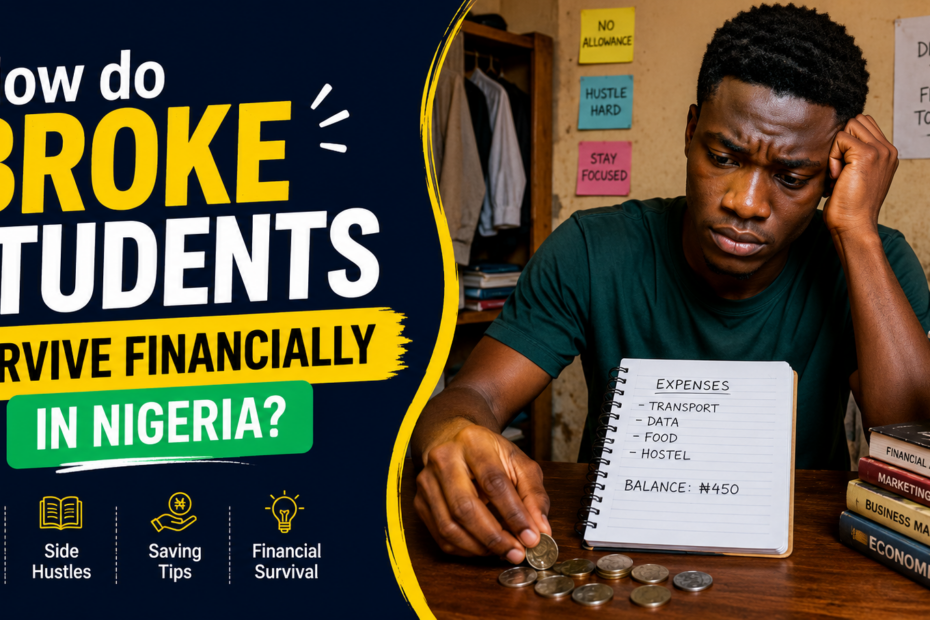
Being a student in Nigeria today comes with financial challenges that many people never fully appreciate until they experience them firsthand.
The rising cost of school fees, accommodation, transportation, textbooks, feeding, internet subscriptions, and other daily expenses has made it increasingly difficult for many students to make ends meet.
Inflation has only added to the pressure, reducing the value of allowances and making even basic necessities more expensive. As a result, countless students often find themselves broke before the end of the semester or even the month.
However, being financially broke as a student is more common than many people realize, and it does not mean your future is hopeless.
With smart budgeting, disciplined spending, practical money-saving habits, and legitimate ways to earn extra income, students can successfully navigate financial difficulties while staying focused on their education and building a stronger financial future.
Why Many Nigerian Students Are Always Broke
Many Nigerian students begin each semester with enough money to cover their essential needs, yet they often find themselves struggling financially before the semester ends. While the rising cost of living plays a significant role, it is rarely the only reason.
A combination of economic challenges, poor financial decisions, and unexpected expenses can quickly drain a student’s income. Understanding these common causes is the first step toward developing better money management habits and avoiding unnecessary financial stress.
Rising Cost of Living
The cost of living in Nigeria has increased significantly in recent years, making it more expensive for students to afford basic necessities.
Prices of food, transportation, accommodation, electricity, and internet subscriptions continue to rise, while the allowances many students receive remain unchanged.
This growing gap between income and expenses means that even students who budget carefully may struggle to make their money last throughout the semester.
Depending Entirely on Parents or Guardians
Many students rely solely on financial support from their parents or guardians. While there is nothing wrong with receiving assistance, it can become a challenge when the family experiences financial difficulties or when allowances are delayed.
Without an alternative source of income, students may find it difficult to pay for essential expenses, forcing them to borrow money or cut back on necessities.
Poor Budgeting Habits
One of the biggest reasons students run out of money is poor budgeting. Some spend a large portion of their allowance within the first few weeks on non-essential items, leaving little for important expenses later.
Without a clear spending plan, it becomes easy to lose track of daily expenses, leading to unnecessary financial pressure before the semester is over.
Peer Pressure and Unnecessary Spending
University life often comes with the desire to fit in with friends and classmates. Some students spend beyond their means to keep up with the latest fashion trends, expensive restaurants, social events, or luxury lifestyles they cannot comfortably afford.
Trying to impress others may provide temporary satisfaction, but it often results in financial hardship and unnecessary debt.
Lack of Financial Education
Many students enter higher institutions without learning basic money management skills. They may not know how to create a budget, prioritize expenses, save regularly, or distinguish between needs and wants.
Without financial literacy, it becomes easier to make poor spending decisions that leave them broke long before the next allowance arrives.
Buying Expensive Gadgets and Fashion Items
Although smartphones, laptops, and decent clothing can be important for student life, some students go beyond their financial capacity by purchasing expensive gadgets or designer fashion items simply for status.
Spending a large percentage of available funds on luxury products often leaves little money for feeding, transportation, study materials, and other essential needs.
Betting and Gambling
Sports betting and other forms of gambling have become increasingly popular among young people in Nigeria. Some students hope to multiply their money quickly, but the reality is that many end up losing more than they win.
Repeated gambling can consume funds meant for school expenses, creating even greater financial problems and emotional stress.
Frequent Outings and Parties
Regular outings, parties, clubbing, and other social activities can quietly consume a student’s budget. Transportation, food, drinks, and entertainment costs add up over time.
While enjoying campus life is important, making social activities a frequent habit without considering one’s financial situation often leads to avoidable money problems.
Unexpected Academic Expenses
Students also face expenses that are difficult to predict. Departmental dues, practical fees, project materials, field trips, printing assignments, textbooks, laboratory charges, and examination-related costs can arise at any time during the semester.
Without setting aside money for emergencies, these unexpected academic expenses can quickly exhaust a student’s budget and leave them financially stranded.
Challenges Broke Students Face
Living with little or no money can make student life extremely difficult. Beyond the obvious financial limitations, being broke can affect a student’s academic performance, physical health, emotional well-being, and social life.
Many Nigerian students face these challenges every day while trying to balance their studies and personal responsibilities. Understanding these realities highlights why proper financial planning and additional sources of income are so important during one’s academic journey.
Skipping Meals
One of the most common struggles broke students experience is skipping meals. When money is scarce, feeding often becomes the first expense to reduce.
Some students eat only once a day, while others survive on inexpensive snacks instead of balanced meals.
Although this may seem like a temporary solution, poor nutrition can weaken the body, reduce energy levels, and make it harder to stay active throughout the day.
Difficulty Paying Transport Fares
Transportation costs can quickly become a burden, especially for students who live far from their campuses. When there is not enough money for transport, some students are forced to walk long distances or miss important lectures altogether.
Constant transportation challenges can lead to lateness, fatigue, and reduced participation in academic activities.
Inability to Buy Handouts or Textbooks
Academic materials are essential for learning, but they are not always affordable. Broke students may struggle to buy recommended textbooks, departmental handouts, laboratory manuals, or other study materials.
As a result, they often depend on classmates to borrow notes or search for free resources online, which may not always provide complete or reliable information.
Poor Concentration Due to Hunger
Hunger can significantly affect a student’s ability to learn. Sitting through lectures or studying for examinations without adequate food makes it difficult to concentrate, remember information, and stay mentally alert.
Over time, poor concentration caused by hunger may negatively affect academic performance and reduce confidence in the classroom.
Borrowing Money Frequently
Students facing financial hardship often borrow money from friends, roommates, or relatives to meet their daily needs. While occasional borrowing may help during emergencies, relying on loans regularly can create financial dependence and strain relationships. It may also become difficult to repay borrowed money, especially when there is no steady source of income.
Missing Classes Because of Financial Issues
Financial difficulties sometimes prevent students from attending lectures, practical sessions, or group assignments.
Lack of money for transportation, course materials, or required academic fees can force students to stay away from class. Missing important lessons repeatedly may result in poor grades and make it harder to keep up with coursework.
Mental Stress and Anxiety
Constant financial pressure can take a serious toll on a student’s mental well-being. Worrying about how to pay for food, transportation, accommodation, or school expenses can lead to stress, anxiety, and emotional exhaustion.
If these concerns continue for a long time without support or practical solutions, they may affect motivation, productivity, and overall quality of life.
Low Self-Esteem Among Peers
Some broke students compare themselves with classmates who appear to have more financial freedom. They may feel embarrassed about wearing old clothes, using older gadgets, or declining invitations to social activities because they cannot afford them.
These experiences can lower self-esteem and make students feel isolated, even though many of their peers may be facing similar financial challenges.
Overcoming these challenges is not always easy, but they do not have to define a student’s future.
By adopting better financial habits, seeking legitimate income opportunities, managing available resources wisely, and asking for support when necessary, students can gradually improve their financial situation while remaining focused on achieving their educational goals.
Smart Ways Broke Students Survive Financially in Nigeria
Surviving financially as a student in Nigeria requires more than simply reducing expenses. It involves making intentional financial decisions, developing good money habits, and finding practical ways to stretch limited resources without sacrificing academic success.
Although every student’s financial situation is different, adopting smart strategies can make a significant difference. By managing money wisely and avoiding wasteful spending, students can meet their essential needs while reducing financial stress and preparing for a more stable future.
Create a Weekly Budget
One of the most effective ways to survive financially is by creating a realistic weekly budget. Instead of spending money without a plan, students should allocate specific amounts for feeding, transportation, internet subscriptions, study materials, and other necessities.
A weekly budget makes it easier to monitor spending, identify unnecessary expenses, and ensure that available funds last until the next allowance or source of income.
Track Every Expense
Many students underestimate how much they spend on small daily purchases. Buying snacks, drinks, airtime, or making impulse purchases may seem insignificant, but these expenses quickly add up.
Keeping a simple record of every expense in a notebook or budgeting app helps students understand where their money goes. Once spending patterns become clear, it becomes easier to cut unnecessary costs and improve financial discipline.
Prioritize Needs Over Wants
Financial survival often depends on making the right spending decisions. Essential needs such as food, accommodation, transportation, academic materials, and healthcare should always come before entertainment, luxury fashion, expensive gadgets, or unnecessary outings.
Learning to distinguish between needs and wants helps students avoid impulsive purchases that could leave them struggling later in the semester.
Cook Instead of Eating Outside
Regularly buying food from restaurants, cafeterias, or fast-food outlets can consume a large portion of a student’s budget. Whenever possible, preparing meals at home is a more affordable option.
Buying food items in bulk and cooking several meals at once can reduce daily feeding costs while also providing healthier meal choices. Even students living off campus with limited cooking facilities can save money by planning simple homemade meals.
Share Accommodation Expenses
Accommodation is one of the biggest expenses many students face. Sharing rent and utility bills with trustworthy roommates can significantly reduce financial pressure.
Beyond splitting rent, students can also share the costs of electricity, water, cooking gas, and certain household items. However, it is important to choose responsible roommates who respect shared financial responsibilities and living arrangements.
Buy Fairly Used Textbooks
Academic success does not always require purchasing brand-new textbooks. Many students sell their books after completing a semester, making fairly used copies available at much lower prices.
Students can also borrow books from friends, seniors, or campus libraries when possible. This approach reduces academic expenses while still providing access to the learning materials needed for success.
Use Free Online Learning Resources
The internet provides thousands of free educational resources that can help students reduce study costs. Free e-books, lecture notes, educational videos, research articles, and online courses are readily available on reputable learning platforms.
Taking advantage of these resources allows students to improve their knowledge without spending large amounts on additional study materials.
Walk Short Distances to Save Transport Costs
Transportation expenses can quickly accumulate, especially for students who travel daily. When destinations are safe and reasonably close, walking instead of using commercial transport can help save money over time.
Although this may not be practical in every situation, choosing to walk short distances occasionally can free up funds for more important academic or personal needs.
Save Small Amounts Regularly
Many students believe they need a large income before they can start saving, but developing the habit of saving small amounts consistently is more important than the amount saved.
Setting aside even a small portion of each allowance or income can create an emergency fund for unexpected expenses such as medical bills, academic fees, or transportation emergencies. Consistent saving also builds financial discipline that remains valuable long after graduation.
Avoid Unnecessary Loans
Borrowing money should be a last resort rather than a regular habit. Taking loans for non-essential purchases often creates additional financial pressure, especially when repayment deadlines approach.
Before borrowing, students should carefully consider whether the expense is truly necessary and explore other options, such as reducing unnecessary spending or finding temporary income opportunities. Avoiding unnecessary debt allows students to focus on their studies without the constant burden of repayment.
Developing these practical habits can help students make the most of limited financial resources while reducing unnecessary stress.
Although financial challenges may not disappear overnight, consistent budgeting, disciplined spending, and wise decision-making can greatly improve a student’s ability to survive and even thrive despite economic difficulties.
Small changes made today can lead to stronger financial stability throughout university and beyond.
Side Hustles Students Can Start
One of the best ways for students to reduce financial pressure is by creating an additional source of income. Instead of relying entirely on allowances from parents or guardians, students can start small businesses or offer services that fit around their academic schedules.
Many of these side hustles require little capital, while others only require existing skills, a smartphone, or a laptop. The key is to choose a business that matches your interests, available time, and budget so you can earn money without negatively affecting your studies.
Freelance Writing
Freelance writing is an excellent option for students who enjoy writing and have good communication skills. Businesses, blogs, and websites regularly hire writers to create articles, website content, product descriptions, and marketing materials.
With practice and a strong portfolio, students can earn a steady income while working from their hostels or homes. Since the work is mostly online, it offers flexibility that fits well with academic schedules.
Graphic Design
Students with creative skills can make money by designing logos, flyers, business cards, social media posts, banners, and other promotional materials.
Graphic design is in high demand among businesses, churches, schools, and entrepreneurs. Learning the basics through free online tutorials and using beginner-friendly design tools can help students start offering their services even before becoming experts.
Social Media Management
Many small businesses need help managing their social media accounts but cannot afford full-time employees.
Students who understand how platforms like Facebook, Instagram, TikTok, and X work can earn money by creating content, responding to messages, scheduling posts, and growing online communities for business owners.
This side hustle requires consistency and creativity rather than a large financial investment.
Selling Thrift Clothes
Selling quality thrift clothes, popularly known as okrika in Nigeria, is a profitable business that students can start with relatively little capital.
By sourcing clean and fashionable items at affordable prices, students can sell to classmates, friends, and customers through social media. Good customer service and attractive product photos can help build repeat customers and increase sales.
Mini Importation
Mini importation involves buying affordable products from international suppliers and reselling them locally at a profit.
Students can begin with popular items such as phone accessories, fashion products, beauty items, or household gadgets. Starting with a small inventory allows beginners to understand the market while minimizing financial risk.
POS Business
A Point of Sale (POS) business can provide a steady daily income, especially in areas with limited banking services.
Students living off campus or in busy neighborhoods may partner with licensed providers to offer cash withdrawals, deposits, transfers, and bill payment services.
Although this business requires some startup capital, it can generate consistent earnings when managed properly.
Data Resale
Internet access has become an essential part of student life, creating opportunities for data resale.
Students can register with trusted data vendors, purchase data in bulk, and sell affordable data bundles to fellow students and nearby residents.
Since demand for internet services remains high throughout the academic year, this business can provide regular income with relatively low startup costs.
Affiliate Marketing
Affiliate marketing allows students to earn commissions by promoting products or services online.
Instead of creating their own products, they simply recommend items through blogs, websites, social media pages, or messaging platforms using special referral links.
Each successful purchase made through those links earns a commission, making this an attractive option for students who enjoy digital marketing.
Tutoring Secondary School Students
Students who perform well academically can earn extra income by teaching secondary school students after classes or during weekends.
Subjects such as Mathematics, English, Physics, Chemistry, and Biology are always in demand. Tutoring not only generates income but also strengthens the tutor’s own knowledge and communication skills.
Photography
Photography can become a profitable side hustle for students who own a good camera or a high-quality smartphone and have an eye for creativity.
Campus events, birthdays, graduation ceremonies, and business promotions often require photography services. As experience grows, students can expand into photo editing and event coverage, increasing their earning potential.
Phone Accessories Business
Phone accessories such as chargers, earphones, phone cases, power banks, screen protectors, and USB cables are products with consistent demand among students.
Buying these items wholesale and selling them individually can produce attractive profit margins. This business requires relatively small startup capital and can be operated both online and offline.
Printing and Typing Services
Students regularly need assignments, project work, seminar papers, CVs, and other documents typed and printed.
Those with access to a computer and printer, or those who partner with nearby business centers, can earn money by offering typing, printing, photocopying, scanning, and document formatting services. Demand usually increases during examination periods and project submissions.
Laundry Services
Many students have busy schedules and prefer paying someone to wash and iron their clothes.
Offering affordable laundry services within hostels or nearby residential areas can become a reliable source of income. Maintaining cleanliness, punctual delivery, and quality service helps attract repeat customers through referrals.
Hairdressing or Barbering
Students with hairdressing or barbering skills can earn money throughout the academic year without needing a large shop. Offering services from hostels, rented spaces, or by making home visits can reduce startup costs.
Since students regularly need haircuts, braiding, hairstyling, and grooming services, this business can generate consistent income while allowing flexible working hours.
Baking Snacks
Baking snacks such as meat pies, doughnuts, chin chin, cupcakes, cookies, and small chops is another profitable business students can start.
Freshly baked snacks are always in demand on campuses, especially during lectures, meetings, and student events. Starting with a few products and maintaining good quality can gradually build a loyal customer base and increase daily sales.
Starting a side hustle as a student is not just about earning extra money—it is also an opportunity to develop valuable business, communication, and problem-solving skills that can remain useful after graduation.
By choosing a business with low startup costs, managing time effectively, and delivering quality products or services, students can improve their financial situation while successfully balancing their academic responsibilities.
Online Ways Students Can Make Money
The internet has created countless opportunities for students to earn money without leaving their hostels or classrooms.
With a smartphone, laptop, reliable internet connection, and the right skills, students can build legitimate online income streams while continuing their education.
Although some online businesses take time to become profitable, consistency, continuous learning, and patience can lead to steady earnings over time.
The best approach is to choose an online opportunity that matches your skills, interests, and available time so you can balance work with your academic responsibilities.
Content Writing
Content writing is one of the most accessible online jobs for students. Businesses, blogs, and digital marketing agencies regularly hire writers to create articles, product descriptions, website pages, and other written content.
Students with good grammar and research skills can start by building a portfolio and applying for freelance projects. As their experience grows, they can increase their rates and attract long-term clients.
Blogging
Blogging allows students to share valuable information on topics they enjoy while creating multiple income opportunities.
Although blogging requires patience because it takes time to attract readers, successful blogs can generate income through advertising, affiliate marketing, sponsored posts, and digital product sales.
Choosing a niche with consistent demand and publishing high-quality content regularly can gradually turn a blog into a profitable online business.
YouTube
Creating a YouTube channel is another excellent way for students to earn money online. Educational tutorials, campus life experiences, technology reviews, personal finance tips, entertainment, and lifestyle videos often attract viewers when they provide genuine value.
As the channel grows, students can earn through advertisements, brand partnerships, memberships, and affiliate marketing. While building an audience takes time, consistent uploads and engaging content can produce long-term rewards.
TikTok Content Creation
TikTok has become a powerful platform for content creators to reach large audiences. Students can create entertaining, educational, motivational, or informative videos based on their interests and expertise.
A growing audience can lead to brand collaborations, sponsored content, affiliate marketing opportunities, and other income streams. Success on TikTok depends on creativity, consistency, and understanding what resonates with viewers.
Virtual Assistance
Many entrepreneurs and small business owners hire virtual assistants to handle administrative tasks remotely.
Students can provide services such as managing emails, scheduling appointments, responding to customer inquiries, organizing documents, conducting research, or managing social media accounts.
Since most tasks can be completed online, virtual assistance offers flexible working hours that fit around lecture schedules.
Transcription
Transcription involves listening to audio or video recordings and converting them into written text. This online job is suitable for students with good listening skills, attention to detail, and fast typing speed.
Although beginners may take longer to complete assignments, improving accuracy and efficiency can increase earning potential over time.
Specialized transcription fields, such as legal or medical transcription, may also offer higher rates for experienced professionals.
Online Surveys
Some companies pay individuals to participate in online surveys, product testing, and market research.
While this option requires little experience, students should understand that earnings are generally modest and should not be considered a primary source of income.
It is also important to register only with reputable survey platforms to avoid scams and unrealistic promises of quick wealth.
Selling Digital Products
Creating and selling digital products allows students to earn income repeatedly from work completed once.
Popular digital products include e-books, templates, printable planners, study guides, graphic designs, online courses, and digital art.
Since digital products do not require physical inventory or shipping, they can become a scalable source of passive income as demand grows.
Online Coaching
Students who possess valuable knowledge or practical skills can earn money by coaching others online.
Coaching may focus on academic subjects, language learning, career guidance, fitness, music, business, or other specialized areas.
Through video calls, webinars, or online learning platforms, students can share their expertise while building a personal brand and generating consistent income.
Dropshipping
Dropshipping is an online business model where students sell products without keeping inventory. When a customer places an order, the supplier ships the product directly to the buyer.
This reduces startup costs because there is no need to purchase stock in advance. However, success in dropshipping depends on choosing profitable products, providing excellent customer service, and using effective digital marketing strategies to attract buyers.
Website Design
Students with website development skills can build websites for individuals, businesses, schools, churches, and nonprofit organizations.
As more businesses establish an online presence, the demand for professional website designers continues to grow. Learning website design through online courses and practicing with personal projects can help students build a strong portfolio and secure freelance clients locally and internationally.
The internet offers students numerous legitimate opportunities to earn money while gaining valuable skills that can benefit them after graduation.
Rather than searching for shortcuts or unrealistic “get-rich-quick” schemes, students should focus on developing marketable skills, delivering quality work, and remaining consistent.
Over time, these online income streams can reduce financial pressure, improve financial independence, and even grow into full-time careers.
Money Mistakes Students Should Avoid
Managing money wisely is just as important as earning it. Many students receive enough money to meet their basic needs but still struggle financially because of poor spending habits and avoidable mistakes.
These habits may seem harmless at first, but they can gradually lead to constant financial stress, unnecessary debt, and missed academic opportunities.
By recognizing and avoiding these common money mistakes, students can make better financial decisions and enjoy greater financial stability throughout their time in school.
Spending Before Budgeting
One of the biggest financial mistakes students make is spending money without first creating a budget.
After receiving an allowance or income, some immediately begin buying items without planning how much should go toward feeding, transportation, accommodation, internet subscriptions, and academic expenses.
This often results in running out of money before the next payment arrives. Creating a simple budget before spending helps students allocate funds wisely and avoid unnecessary financial pressure.
Trying to Impress Friends
The desire to fit in with friends can lead students to spend beyond their financial capacity. Some buy expensive clothes, the latest smartphones, luxury accessories, or regularly visit restaurants and entertainment spots simply to maintain a certain image.
While these purchases may provide temporary satisfaction, they often leave students struggling to pay for essential needs. True friendships should not depend on how much money someone spends or the lifestyle they display.
Excessive Betting
Many students see sports betting and gambling as quick ways to make money, but this habit often produces the opposite result.
Instead of generating consistent income, excessive betting can lead to repeated financial losses and create unrealistic expectations about wealth.
Students may even spend money meant for food, transportation, or school materials in the hope of winning bigger rewards. Focusing on legitimate income opportunities is a far safer and more sustainable approach.
Buying Things on Impulse
Impulse buying occurs when students purchase items simply because they look attractive or are offered at discounted prices, without considering whether they truly need them.
Frequent impulse purchases reduce the money available for important expenses and make budgeting more difficult. Before buying anything, students should ask themselves whether the item is necessary, affordable, and worth sacrificing other priorities.
Ignoring Savings
Many students believe saving money is only possible after graduation or when they begin earning a higher income. As a result, they spend every naira they receive without setting aside even a small amount.
Developing the habit of saving, regardless of income level, helps prepare for unexpected expenses such as medical emergencies, project costs, or transportation needs. Even small, regular savings can make a significant difference over time.
Borrowing for Non-Essential Items
Borrowing money for luxury items, entertainment, or unnecessary shopping can create long-term financial problems. Although loans may provide temporary relief, they eventually have to be repaid, often with added stress.
Students should reserve borrowing for genuine emergencies and avoid taking loans for expenses that do not contribute to their education, health, or essential living needs.
Living Above Their Income
Some students consistently spend more than they earn or receive from their parents or guardians.
This lifestyle may involve frequent outings, expensive shopping, unnecessary subscriptions, or maintaining habits they cannot comfortably afford.
Living above one’s income usually leads to constant borrowing and financial instability. Learning to live within available means is one of the most valuable financial habits a student can develop.
Not Learning a Profitable Skill
Relying solely on allowances without developing income-generating skills can limit a student’s financial opportunities.
Skills such as content writing, graphic design, website development, video editing, digital marketing, photography, and social media management can provide additional sources of income while still in school.
Investing time in learning a profitable skill not only helps students earn extra money but also improves their employability after graduation.
Avoiding these common money mistakes can greatly improve a student’s financial well-being. Good financial habits are built through discipline, planning, and consistent decision-making rather than the amount of money available.
Students who budget carefully, spend responsibly, save regularly, and invest in valuable skills are more likely to enjoy financial stability during their studies and build a solid foundation for long-term financial success.
Budgeting Tips for Students
Budgeting is one of the most effective financial skills every student should develop. It helps you stay in control of your money, avoid unnecessary spending, and ensure that your allowance or income lasts longer.
Regardless of how much money you receive each month, having a clear financial plan makes it easier to meet essential needs while preparing for unexpected expenses.
A good budget is not about restricting yourself from enjoying life; it is about making informed spending decisions that support your academic and financial goals.
Follow the 50-30-20 Rule (Adjust It to Your Income)
The 50-30-20 budgeting rule is a simple way to manage money. Traditionally, it suggests allocating 50% of your income to essential needs, 30% to personal wants, and 20% to savings or future goals.
However, many Nigerian students have limited allowances that barely cover their necessities. In such cases, the rule can be adjusted to suit your reality.
For example, you might spend 70% on essential needs, 20% on savings, and only 10% on non-essential wants. The goal is to prioritize important expenses while still building the habit of saving, no matter how small the amount.
Use an Expense-Tracking App or a Notebook
Many students lose money simply because they do not know where it goes.
Recording every expense, whether it is for food, transportation, airtime, internet subscriptions, or snacks, helps you identify spending patterns and areas where you can cut costs.
You can use a budgeting app on your smartphone or keep a small notebook dedicated to your daily expenses. Reviewing your records regularly allows you to make smarter financial decisions and avoid unnecessary purchases.
Plan Your Monthly Expenses Immediately After Receiving Your Allowance
A common mistake among students is spending money immediately after receiving their allowance without creating a financial plan.
Instead, take time to list all expected expenses for the month, including feeding, transportation, accommodation, study materials, internet subscriptions, and personal needs.
Allocate a specific amount to each category before spending anything. This simple habit reduces the chances of overspending and ensures that essential expenses are covered first.
Build an Emergency Fund
Unexpected expenses are part of student life. You may suddenly need money for medical treatment, project materials, departmental dues, transportation, or urgent repairs to your phone or laptop.
Having an emergency fund can prevent these situations from becoming financial crises. You do not need to save a large amount at once.
Setting aside a small portion of every allowance or income consistently can gradually build a fund that provides financial security when emergencies arise.
Compare Prices Before Buying
Prices for the same product often vary from one shop to another, especially on and around university campuses. Before making a purchase, take a few minutes to compare prices from different sellers or online marketplaces.
This simple habit can help you find better deals and save money over time. Students should also avoid buying items solely because they are popular or heavily advertised.
Choosing quality products at reasonable prices is a smarter financial decision than paying more for brand names alone.
Developing good budgeting habits while in school lays the foundation for long-term financial success.
Students who plan their expenses, monitor their spending, save consistently, and make thoughtful purchasing decisions are better equipped to handle financial challenges.
Over time, these habits become second nature, helping students not only survive financially during their studies but also manage money more effectively after graduation.
Free Resources That Can Help Students Save Money
Being financially responsible does not always mean earning more money—it also means finding smart ways to reduce unnecessary expenses.
Fortunately, many free or low-cost resources are available to help students learn, complete academic tasks, and improve their skills without spending large amounts of money.
Taking advantage of these opportunities can significantly reduce monthly expenses while supporting academic success and personal development.
Free Online Courses
Students can improve their knowledge and develop valuable skills through free online courses without paying expensive tuition fees.
Many reputable educational platforms offer courses in areas such as digital marketing, programming, graphic design, business, personal finance, communication, and data analysis.
These courses can help students gain practical skills that increase their chances of securing freelance work, internships, or part-time jobs while still in school.
Making use of free learning opportunities is an excellent way to invest in personal growth without adding financial pressure.
Take Advantage of Student Discounts
Although student discounts are not available everywhere in Nigeria, some businesses, software providers, online learning platforms, and service providers offer special discounts for students.
Before paying full price for a product or service, it is worth asking whether a student discount is available. Even small discounts on educational materials, software subscriptions, transportation, or technology products can lead to meaningful savings over time.
Use Public and Campus Libraries
Instead of purchasing every recommended textbook, students should make good use of public and campus libraries whenever possible.
Libraries provide access to textbooks, journals, research materials, newspapers, and other educational resources at little or no cost.
Studying in a library can also reduce distractions and create a better learning environment, helping students improve their academic performance while saving money on books and study materials.
Explore Free Educational Websites
The internet provides access to countless educational websites that offer free study materials, practice exercises, lecture notes, tutorials, research articles, and instructional videos.
These resources can supplement classroom learning and reduce the need to purchase expensive academic materials.
Students should, however, ensure they rely on credible and up-to-date educational sources to obtain accurate information for assignments and research projects.
Use Open-Source Software Instead of Paid Alternatives
Many students spend money on expensive software even when free alternatives can perform similar tasks.
Open-source software provides powerful tools for word processing, presentations, spreadsheets, graphic design, photo editing, coding, and other academic activities without requiring paid subscriptions.
Using these free applications helps students complete assignments efficiently while reducing technology-related expenses.
Making good use of free resources is one of the smartest ways students can stretch their limited budgets.
By choosing free educational tools, utilizing libraries, taking advantage of available discounts, and learning through reputable online platforms, students can lower their expenses without compromising the quality of their education.
These simple habits not only save money but also encourage resourcefulness, self-improvement, and better financial management throughout university life.
How Parents Can Help
Parents and guardians play an important role in shaping a student’s financial habits and overall well-being. While not every family is able to provide substantial financial support, guidance and encouragement can make a significant difference.
Beyond paying school fees or providing allowances, parents can help students develop responsible money management skills that will benefit them throughout their lives.
Open communication and practical financial lessons can prepare students to handle challenges more confidently while pursuing their education.
Teach Financial Discipline
One of the greatest gifts parents can give their children is financial discipline. Teaching students how to create a budget, distinguish between needs and wants, avoid unnecessary debt, and save regularly helps them develop healthy financial habits early in life.
Parents can also lead by example by demonstrating responsible spending and explaining the importance of making thoughtful financial decisions.
Encourage Legitimate Side Hustles
Parents should encourage students to learn valuable skills and engage in legitimate side hustles that do not interfere with their studies.
Whether it is freelance writing, graphic design, tutoring, baking, website design, or another profitable venture, earning extra income helps students become more financially independent.
Encouragement from parents can boost a student’s confidence and motivate them to develop skills that remain useful even after graduation.
Provide Emergency Support When Possible
Unexpected situations such as medical emergencies, project expenses, damaged study materials, or urgent transportation needs can arise during the academic session.
When financially possible, parents or guardians should provide emergency assistance to help students overcome these challenges without disrupting their education.
Even if immediate financial support is not available, helping students explore practical solutions or connecting them with available resources can reduce stress during difficult periods.
Discuss Budgeting Openly
Regular conversations about money can help students make better financial decisions. Parents should encourage open discussions about budgeting, spending habits, savings, and financial goals instead of treating money as a sensitive topic.
Talking about how to manage allowances, prepare for unexpected expenses, and prioritize essential needs enables students to build confidence in handling their finances responsibly.
These discussions also create opportunities for parents to offer advice based on their own experiences.
Although students must ultimately learn to manage their own finances, the guidance and support of parents or guardians can make that journey much easier.
By teaching financial discipline, encouraging productive side hustles, offering assistance during genuine emergencies, and maintaining open conversations about money, parents can help students develop lifelong financial skills.
These lessons not only improve a student’s ability to survive financially in school but also prepare them for greater financial independence after graduation.
Signs Your Financial Situation Is Improving
Improving your financial situation as a student does not necessarily mean becoming wealthy overnight. Instead, it means making steady progress toward better money management and greater financial stability.
Small improvements in your spending habits, saving culture, and income can have a significant impact over time. Recognizing these positive signs can motivate you to maintain good financial habits and continue working toward long-term financial independence.
Saving Consistently
One of the clearest signs of financial improvement is your ability to save money regularly.
Even if you can only set aside a small amount from your allowance or side hustle income, consistent saving shows that you are spending responsibly and planning for the future.
Over time, these savings can grow into an emergency fund that helps you handle unexpected expenses without disrupting your studies.
Borrowing Less
If you no longer need to borrow money frequently from friends, roommates, or family members to cover basic expenses, it is a strong indication that your finances are becoming more stable.
Depending less on loans means your income and spending are becoming more balanced. It also helps you maintain healthier relationships, as you are less likely to owe money or feel pressured by repayment deadlines.
Paying School-Related Expenses on Time
Another positive sign is being able to pay for academic expenses without unnecessary delays.
Whether it is buying textbooks, paying departmental dues, printing assignments, purchasing project materials, or covering examination-related costs, meeting these obligations on time shows that you are managing your finances more effectively.
It also allows you to focus on your studies instead of worrying about outstanding payments.
Having Multiple Income Sources
Students who earn money from more than one source are often in a stronger financial position than those who rely solely on allowances.
Combining support from parents or guardians with income from a side hustle, freelance work, or an online business provides greater financial security. Multiple income streams also reduce the risk of financial hardship if one source of income becomes unavailable.
Managing Emergencies Without Panic
Unexpected expenses are part of student life, but your response to them says a lot about your financial health.
If you can handle emergencies such as medical bills, transportation issues, urgent academic expenses, or minor gadget repairs without immediately borrowing money or becoming overwhelmed, it shows that your financial planning is working.
Having emergency savings and practicing disciplined spending gives you greater confidence when facing unexpected situations.
Financial improvement is a gradual process built on consistency rather than perfection.
Every positive step—whether it is saving regularly, reducing debt, paying expenses on time, earning income from different sources, or handling emergencies with confidence—brings you closer to financial independence.
By maintaining these healthy financial habits, students can enjoy greater peace of mind, perform better academically, and build a strong foundation for financial success after graduation.
Frequently Asked Questions
How Much Does a Student Need Monthly in Nigeria?
The amount a student needs every month in Nigeria depends on several factors, including the school location, whether the student lives on or off campus, lifestyle, transportation needs, feeding habits, and academic requirements.
Students studying in expensive cities such as Lagos, Abuja, or Port Harcourt generally spend more than those attending schools in smaller towns.
Expenses may include accommodation, food, transportation, internet subscription, study materials, toiletries, medical needs, and occasional social activities.
For many students living modestly, a monthly budget between ₦50,000 and ₦120,000 can cover basic necessities, although this varies widely.
Students who cook their meals, use public transportation, and manage their spending carefully often require less than those who frequently eat out or maintain expensive lifestyles.
Those living with relatives or in school hostels may also spend significantly less because accommodation costs are reduced.
It is important for students to create a realistic monthly budget based on their personal circumstances instead of comparing themselves with friends.
A simple budget helps track spending, reduce unnecessary expenses, and identify areas where money can be saved. Students should also set aside a small emergency fund for unexpected situations such as medical expenses, academic projects, or transportation emergencies.
Rather than focusing only on how much money is needed, students should develop strong financial habits.
Learning how to budget, save consistently, and earn extra income through legitimate side hustles can make student life much easier regardless of the monthly allowance they receive.
Can Students Survive Without Financial Support from Parents?
Yes, students can survive without financial support from their parents, although doing so requires determination, careful planning, and financial discipline.
Many Nigerian students successfully complete their education by combining scholarships, part-time jobs, online freelance work, small businesses, and prudent spending. While the journey may be more challenging, it is certainly achievable.
Students without parental support often learn valuable life skills such as budgeting, entrepreneurship, time management, and personal responsibility much earlier than their peers.
They become more intentional about their spending because every naira matters. Instead of relying on regular allowances, they actively seek opportunities to generate income while continuing their education.
However, surviving independently does not mean trying to do everything alone. Students should take advantage of scholarship opportunities, bursaries, educational grants, departmental financial assistance, and campus employment where available.
Building supportive relationships with mentors, lecturers, friends, and relatives can also provide encouragement and practical assistance during difficult periods.
Balancing school with income-generating activities requires discipline. Students should avoid jobs that interfere with lectures, assignments, or examinations. The goal is not merely to survive financially but also to graduate with good academic results.
Although financial independence during school can be stressful at times, many graduates later acknowledge that the experience taught them resilience, creativity, and problem-solving skills that benefited their careers.
With proper planning and consistent effort, students can successfully complete their education even without regular financial support from their parents.
What Side Hustle Pays Daily for Students?
Students looking for daily income have several legitimate side hustles available in Nigeria that require little capital and can fit around academic schedules. The best option depends on individual skills, available time, and access to customers.
Freelance writing allows students with good English skills to earn money from article writing, blog posts, and website content.
Graphic design, video editing, and social media management are also in high demand among businesses that need affordable digital services.
Students with smartphones can manage business pages, create promotional content, or assist small businesses with online marketing.
Offline opportunities can also generate daily income. Selling snacks, beverages, phone accessories, perfumes, thrift clothing, or academic materials on campus often provides quick cash because students buy these items regularly.
Hairdressing, makeup services, laundry, phone charging, printing, and photocopy services are additional examples of businesses that can produce daily earnings where demand exists.
Tutoring fellow students or secondary school pupils is another reliable option.
Students who excel in mathematics, sciences, or language subjects can earn money while reinforcing their own knowledge. Some also make daily income through food delivery, event ushering, or campus logistics services during weekends.
Whichever side hustle a student chooses, honesty, consistency, and excellent customer service are essential for long-term success.
Instead of chasing unrealistic “get-rich-quick” opportunities, students should focus on building skills that increase their earning potential over time.
A small, legitimate business that generates steady daily income is often more sustainable than risky schemes promising instant wealth.
Which Online Job Is Best for Nigerian Students?
The best online jobs for Nigerian students are those that offer flexibility, require minimal startup costs, and allow work to be completed around lecture schedules.
Online freelancing remains one of the most practical options because students can work from anywhere with a reliable internet connection.
Content writing is an excellent choice for students with strong writing skills. Many businesses, bloggers, and digital agencies hire freelance writers to produce articles, product descriptions, website pages, and marketing content.
Graphic design is another highly profitable online skill, especially for students who learn design software and create logos, social media graphics, and promotional materials.
Virtual assistance has also become increasingly popular. Businesses hire virtual assistants to manage emails, schedule appointments, conduct internet research, and perform administrative tasks remotely.
Students with good organizational skills can perform these duties without disrupting their studies.
Students interested in technology may consider web development, programming, data analysis, or UI/UX design. Although these skills require time to learn, they often provide higher earning potential and long-term career opportunities.
Social media management, video editing, voice-over work, and transcription services are additional online jobs that can generate consistent income.
Success in online work depends more on skill development than luck. Students should invest time in learning marketable digital skills, building a professional portfolio, and delivering quality work to clients.
As experience grows, they can charge higher rates and attract better-paying opportunities. Online jobs not only provide financial support during school but also help students gain valuable experience that improves their employability after graduation.
How Can Students Save Money While in School?
Saving money as a student begins with developing disciplined financial habits rather than earning a large income.
Even students receiving modest allowances can build savings if they consistently manage their money wisely and avoid unnecessary spending.
Creating a monthly budget is one of the most effective ways to save money. A budget helps students understand where their money goes and identify expenses that can be reduced.
Recording daily expenses also increases awareness of spending patterns and discourages impulse purchases.
Preparing meals instead of buying food frequently can significantly reduce monthly expenses. Purchasing groceries in bulk with roommates or classmates may further lower costs.
Students should also avoid buying unnecessary gadgets, expensive fashion items, or luxury products simply because friends own them. Living within one’s means is one of the strongest foundations of financial stability.
Students can increase savings by taking advantage of discounts, borrowing textbooks from libraries, sharing transportation costs when possible, and using free educational resources available online.
Developing a side hustle provides additional income that can be divided between current expenses and future savings.
Most importantly, students should cultivate the habit of saving immediately after receiving money instead of waiting until the end of the month.
Even small, consistent savings accumulate over time and provide financial security during emergencies. Financial discipline developed during school often becomes a lifelong habit that contributes to future financial success.
Is It Possible to Balance Work and Academics?
Yes, it is entirely possible to balance work and academics, provided students manage their time effectively and prioritize their education.
Many successful graduates worked part-time or operated small businesses throughout their university years while maintaining strong academic performance.
The key to achieving balance is choosing work that offers flexibility. Jobs with adjustable schedules allow students to attend lectures, complete assignments, prepare for examinations, and still earn income.
Online freelance work and campus-based businesses are particularly suitable because they often allow students to control their working hours.
Time management plays a critical role in maintaining this balance. Students should plan their weekly schedules carefully, allocating dedicated periods for classes, studying, work, rest, and personal activities.
Avoiding procrastination helps reduce academic pressure and prevents conflicts between work responsibilities and school obligations.
Students must also recognize their limits. Taking on excessive work simply to earn more money can lead to exhaustion, declining grades, and poor health.
Academic success should remain the primary objective because education provides long-term career opportunities that often outweigh short-term financial gains.
Maintaining good physical and mental health is equally important. Getting adequate sleep, eating nutritious meals, and taking occasional breaks improve concentration and productivity.
With realistic planning, disciplined scheduling, and wise career choices, students can successfully earn income while achieving excellent academic results.
What Business Can a Student Start with ₦5,000?
A student with ₦5,000 can still start a small business by focusing on products or services that require minimal capital and have consistent demand within the school environment.
The goal should be to begin small, reinvest profits, and gradually expand the business over time.
Selling snacks such as biscuits, chin chin, sweets, chewing gum, bottled water, soft drinks, or homemade pastries is one of the easiest businesses to start.
These products sell regularly because students often need affordable refreshments between lectures. Airtime and data reselling also require very little capital and can generate steady profits with consistent customers.
Students with creative skills can offer services instead of selling physical products. Graphic design, assignment typing, CV writing, phone software installation, photography, social media management, or tutoring require more skill than capital.
These service-based businesses often produce higher profit margins because they rely primarily on knowledge rather than inventory.
Fashion accessories, perfumes, thrift clothing, and phone accessories can also be purchased in small quantities and resold for profit.
As earnings increase, students can diversify into additional products or expand their customer base through social media marketing.
Starting with a small amount of money teaches valuable entrepreneurial lessons about customer service, financial management, and business growth.
Consistency, honesty, and excellent service are more important than the size of the initial investment. Many successful businesses today started with very modest capital and grew through patience and disciplined reinvestment of profits.
Should Students Take Loans?
Students should approach loans with caution and only consider borrowing when absolutely necessary and after carefully evaluating their ability to repay.
While loans can provide temporary financial relief for educational expenses, they also create future financial obligations that should not be ignored.
Borrowing money for tuition, essential academic materials, or unavoidable educational expenses may be reasonable when no better alternatives exist.
However, students should first explore scholarships, bursaries, grants, work-study opportunities, family assistance, and legitimate side hustles before deciding to borrow. These alternatives do not usually require repayment and reduce future financial pressure.
Students should avoid taking loans for non-essential spending such as expensive phones, luxury clothing, entertainment, vacations, or maintaining an unrealistic lifestyle. Borrowing for unnecessary expenses can lead to debt that becomes difficult to repay after graduation.
If a loan becomes unavoidable, students should fully understand the interest rate, repayment terms, penalties for late payment, and total amount that will eventually be repaid.
Borrowing from reputable financial institutions with transparent conditions is generally safer than relying on informal lenders who may charge excessive interest or use unfair collection practices.
Ultimately, a student loan should be viewed as a financial tool rather than free money.
Responsible borrowing, combined with disciplined budgeting and careful planning, can help students achieve their educational goals without creating overwhelming financial burdens after graduation. Whenever possible, minimizing debt during school provides greater financial freedom and peace of mind in the years that follow.
Conclusion
Being financially challenged as a student in Nigeria can be frustrating, but it does not have to determine your future.
Many successful professionals and entrepreneurs experienced financial difficulties during their school years, yet they overcame those challenges through discipline, determination, and smart financial decisions.
Your current financial situation is only temporary if you are willing to develop better money habits, manage your resources wisely, and remain focused on your long-term goals.
Rather than worrying about how little money you have today, concentrate on building habits that will improve your financial future.
Learn profitable skills, start a legitimate side hustle, create a realistic budget, save consistently, and avoid unnecessary spending. Even small improvements in the way you manage money can produce significant results over time.
The income you earn from freelancing, online jobs, or a small business can gradually reduce your dependence on allowances and give you greater financial confidence.
Most importantly, remember that financial discipline matters far more than the amount of money you currently have.
A student who manages ₦10,000 wisely is often better prepared for future financial success than someone who carelessly spends ₦100,000.
By making thoughtful financial decisions today, you are not only surviving your years in school but also building the knowledge, habits, and resilience needed to achieve lasting financial stability after graduation.