Skip to content
Home » How to budget for a wedding on a small budget in Nigeria

How to budget for a wedding on a small budget in Nigeria

    Before making any wedding plans, the first step is to decide the total amount you can realistically afford to spend.

    Many couples make the mistake of choosing a venue, inviting guests, or booking vendors before knowing their financial limit, which often leads to overspending.

    In Nigeria, it is important to sit down together and calculate available savings, expected contributions from both families, and any financial support already confirmed.

    Focus only on money that is truly available instead of depending on uncertain promises or future income.

    Creating a clear budget from the beginning helps you allocate funds to important areas such as venue, food, outfits, photography, and transportation.

    Avoid taking loans or borrowing heavily just to organize an expensive ceremony because wedding debt can create financial pressure after marriage. Start your marriage with a plan that protects your finances and supports your future goals.

    Prioritize What Matters Most

    One of the smartest ways to plan a wedding on a small budget in Nigeria is to identify what matters most to you as a couple. Not every part of the wedding needs to receive equal spending.

    Start by separating your plans into two categories: must-haves and nice-to-haves. Must-haves are the areas that will make your wedding feel meaningful and complete, while nice-to-haves are extras that can be reduced or removed if money becomes tight.

    For example, some couples may value good food and a comfortable venue because they want guests to enjoy the celebration.

    Others may prefer investing more in photography and videography to preserve memories for years. Some may prioritize outfits while keeping decorations simple.

    Once you decide your priorities, allocate more of your budget to those areas and reduce spending elsewhere.

    This approach helps eliminate unnecessary expenses, prevents impulse spending, and allows you to create a memorable wedding without exceeding your financial limit.

    Choose a Low-Cost but Meaningful Venue

    The venue is often one of the biggest wedding expenses in Nigeria, but choosing a meaningful location does not mean spending a huge amount of money.

    Couples planning a wedding on a small budget should consider affordable alternatives that still create a beautiful and memorable experience.

    Options such as family compounds, church halls, community centers, school halls, or small event spaces can significantly reduce costs compared to luxury hotels and expensive event centers.

    A smaller venue can also help control other expenses because fewer decorations, chairs, and logistics may be needed.

    When selecting a venue, think beyond appearance and focus on factors such as accessibility, guest capacity, available facilities, and convenience.

    If possible, choose a location that already requires minimal decoration to save more money.

    The goal is not to impress people with an expensive setting but to create a comfortable environment where family and friends can celebrate your special day together without putting financial pressure on your future.

    Limit Guest List to Close Family and Friends

    Keeping your guest list small is one of the most effective ways to reduce wedding expenses in Nigeria.

    Many wedding budgets increase quickly because every additional guest adds more costs for food, drinks, chairs, tables, canopies, souvenirs, and sometimes transportation and security arrangements.

    While inviting everyone may seem like a way to avoid disappointing people, it can place unnecessary financial pressure on the couple.

    Instead, focus on inviting close family members, genuine friends, and people who truly play an important role in your lives.

    A smaller guest list allows you to provide better comfort and hospitality without stretching your budget beyond what you can afford.

    It also creates a more intimate and meaningful atmosphere where you can spend quality time with the people who matter most.

    Remember that a successful wedding is not measured by the number of attendees but by celebrating your special day in a way that fits your financial reality and allows you to start married life with peace of mind.

    Budget-Friendly Traditional and White Wedding Planning

    Having both a traditional wedding and a white wedding is common in Nigeria, but organizing two separate large ceremonies can quickly increase expenses.

    Couples working with a small budget should look for practical ways to simplify both events without losing their meaning and beauty.

    One effective approach is reducing the number of outfit changes. Instead of wearing multiple expensive outfits throughout the day, choose one or two quality outfits that fit the occasion and budget.

    Another smart option is limiting the use of multiple aso-ebi styles. While aso-ebi adds color and unity, introducing different fabrics for different groups can become expensive for both the couple and guests.

    Keeping it simple or making aso-ebi optional can reduce pressure. Couples can also consider combining the traditional and white wedding into the same day or same weekend to save money on venue, decoration, logistics, and vendor costs.

    The goal is to celebrate both traditions in a meaningful way while avoiding unnecessary spending that could create financial stress after the wedding.

    Save Money on Food and Drinks

    Food and drinks usually take a large portion of a wedding budget in Nigeria because guests expect to be well entertained and satisfied.

    However, there are several practical ways to reduce costs without making guests feel uncomfortable.

    One effective option is home cooking, where trusted family members help prepare some of the meals. This can significantly reduce catering expenses while still maintaining good taste and quantity.

    Another budget-friendly approach is buffet-style serving instead of plated meals. A buffet allows better control of portions, reduces waste, and can be managed with fewer serving staff.

    Couples can also simplify the menu by focusing on affordable but filling Nigerian dishes instead of expensive or multiple-course meals.

    For example, choosing rice, jollof, and simple protein options instead of a wide variety of dishes helps cut costs.

    Drinks can also be managed by limiting expensive alcoholic options and focusing more on soft drinks, water, and a few selected beverages.

    The key is to balance affordability with satisfaction so guests enjoy the celebration without unnecessary financial pressure on the couple.

    Affordable Wedding Attire and Styling

    Wedding attire is often one of the most expensive parts of a Nigerian wedding, especially for brides who want multiple dresses and stylish looks.

    However, couples on a small budget can still look elegant without overspending by making smarter fashion choices.

    One of the best options is renting wedding outfits instead of buying expensive custom-made dresses or suits that will only be worn once. Renting can give access to high-quality designs at a fraction of the cost.

    Another affordable option is buying ready-made dresses instead of going through expensive bridal boutiques and designers. Many ready-to-wear options today are stylish, modern, and budget-friendly.

    Couples can also work with upcoming or local fashion designers who offer good quality work at lower prices compared to well-known brands.

    To reduce styling costs further, simple makeup, minimal accessories, and natural-looking hairstyles can still create a beautiful and classy appearance.

    The goal is not to spend excessively on appearance but to achieve a polished and elegant look while staying within budget.

    Cut Down Decoration Costs

    Decoration is another area where wedding expenses in Nigeria can quickly increase, but it is possible to create a beautiful setup without spending excessively.

    Instead of hiring very expensive decorators or going for luxurious imported designs, couples can choose simple but elegant décor styles that still look attractive.

    Using local flowers, affordable fabrics like ankara or chiffon, and basic balloon arrangements can significantly reduce costs while still creating a lovely atmosphere.

    DIY decorations are also a great way to save money. Friends and family can help with setting up centrepieces, chair decorations, and simple stage designs instead of paying for full professional packages.

    Another cost-saving idea is to focus decoration efforts only on key areas such as the couple’s table, photo backdrop, and entrance, rather than decorating every part of the venue extensively.

    When done creatively, simplicity often looks more elegant than over-decorated spaces.

    The goal is to create a warm and beautiful environment that reflects love and celebration without putting unnecessary pressure on your wedding budget.

    Use Local and Upcoming Vendors

    One effective way to reduce wedding costs in Nigeria is by hiring local and upcoming vendors instead of only going for already popular or high-end professionals.

    See also  How to make money from WhatsApp status in Nigeria

    Many upcoming photographers, makeup artists, MCs, DJs, and event planners are highly skilled but charge lower fees because they are still building their portfolio and reputation.

    This creates an opportunity for couples on a small budget to get quality services at more affordable prices.

    Working with these vendors can also give you more flexibility in negotiation and personalized service since they are often more willing to meet your specific needs.

    However, it is important to carefully review their past work, ask for samples, and if possible, get recommendations before making a decision.

    A trial session for makeup or a short pre-event shoot can also help ensure quality. By choosing talented but affordable professionals, couples can still enjoy a well-organized and beautiful wedding while keeping overall expenses under control.

    Plan Early and Compare Prices

    One of the most important ways to successfully manage a wedding on a small budget in Nigeria is to start planning early.

    Early planning gives you enough time to research different vendors, understand current market prices, and avoid last-minute expenses that are often more expensive.

    When you rush decisions, you are more likely to overspend because you have limited options and less time to negotiate.

    Planning ahead also allows you to compare prices from multiple vendors before making any payment.

    Instead of settling for the first option you see, take time to check at least three or more vendors for services like catering, decoration, photography, and venue rental.

    This helps you identify fair pricing and avoid overpriced deals. Early preparation also gives room for negotiation, discounts, and flexible payment plans.

    By planning ahead and carefully comparing prices, couples can make smarter financial decisions, reduce unnecessary costs, and stay within their wedding budget without stress.

    Avoid Unnecessary Wedding Pressure and Competition

    In Nigeria, wedding planning often comes with strong social and cultural pressure to “do big things” just to impress family, friends, and the public.

    Many couples end up spending far more than they can afford because they are trying to match what others have done or avoid negative comments.

    This kind of competition can easily lead to debt, stress, and financial struggles after the wedding.

    To avoid this, couples should focus on what truly matters to them rather than external expectations. Your wedding is not a competition, and it does not need to look like someone else’s celebration on social media.

    Set a clear budget early and stick to it, no matter the pressure from others. Learn to politely say no to unnecessary suggestions that increase costs, such as excessive guest lists, expensive venues, or multiple outfit changes.

    When you prioritize your financial comfort over public opinion, you create a wedding that is not only beautiful but also stress-free.

    A simple, well-planned celebration is far more valuable than an expensive one that leads to regret and financial hardship.

    Create a Detailed Wedding Checklist and Spreadsheet

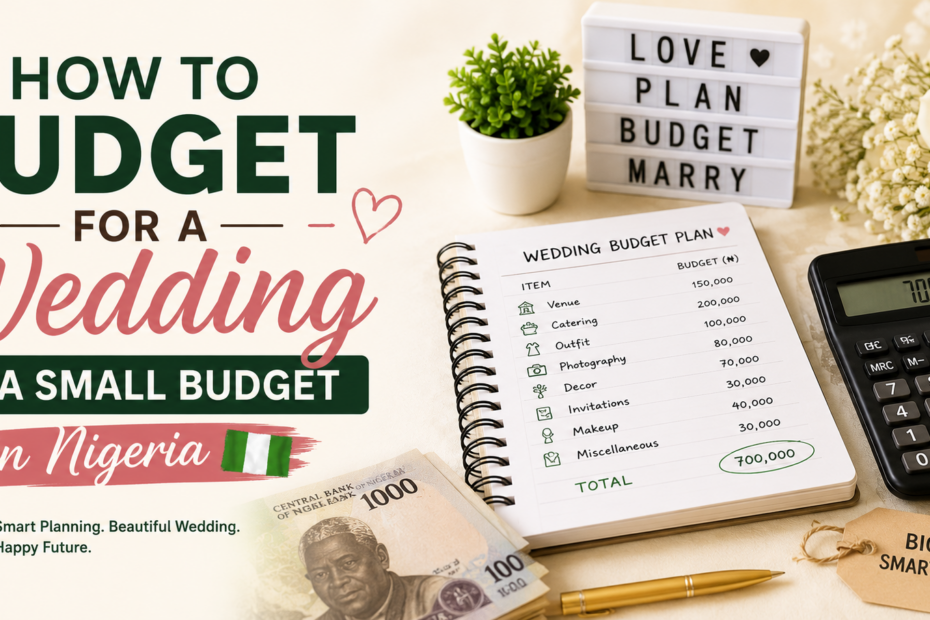
    One of the most effective ways to stay within budget when planning a wedding in Nigeria is to create a detailed checklist and a simple budget spreadsheet.

    This helps couples clearly see where their money is going and prevents unnecessary spending. Without proper tracking, it is very easy for small expenses like souvenirs, extra decorations, or transportation to accumulate and push the budget beyond its limit.

    A wedding checklist should include every major aspect of the event such as venue, food and drinks, attire, photography, decoration, music, and logistics.

    Once these items are listed, you can assign a budget estimate to each category based on your total wedding funds.

    A spreadsheet makes this even more effective because it allows you to compare estimated costs with actual spending in real time.

    As payments are made, you can update the spreadsheet to see what has been spent and what is remaining.

    This helps you adjust quickly if one area is going over budget. Tracking expenses in this way gives couples better control, reduces financial surprises, and ensures that the wedding stays within a realistic and manageable budget.

    Set Aside a Small Emergency Fund

    When planning a wedding on a small budget in Nigeria, it is important to always set aside a small emergency fund.

    No matter how carefully you plan, unexpected expenses often arise during wedding preparations and on the wedding day itself.

    These can include extra guests who were not originally accounted for, last-minute transportation issues, additional food or drinks, or urgent purchases for decoration, outfits, or logistics.

    Having an emergency fund helps you handle these surprises without disrupting your main budget or going into debt.

    It acts as a financial backup that keeps the wedding running smoothly even when small challenges occur. Ideally, this fund should be a small percentage of your total budget and should only be used when truly necessary.

    By preparing for the unexpected, couples can reduce stress, avoid panic spending, and ensure that the wedding day remains enjoyable and well-organized.

    A good emergency fund gives peace of mind and protects the overall financial plan from unexpected disruptions.

    Conclusion

    Planning a wedding in Nigeria does not have to drain your savings or put you in debt. With careful budgeting, prioritizing what truly matters, and making smart cost-saving decisions, couples can still have a beautiful and memorable celebration even on a small budget.

    The key is to focus on simplicity, avoid unnecessary pressure from society, and make use of affordable but reliable vendors and resources.

    Ultimately, a successful wedding is not measured by how expensive it is, but by the love shared and the beginning of a strong journey together.

    Frequently Asked Questions

    How much does a simple wedding cost in Nigeria?

    A simple wedding in Nigeria can cost anywhere from about ₦500,000 to ₦3,000,000 depending on the location, number of guests, and how minimalist the couple is willing to be.

    When people say “simple wedding,” they usually mean a small traditional engagement and a modest white wedding ceremony with limited guests, basic décor, and minimal entertainment.

    In cities like Lagos or Abuja, costs tend to be higher because venues, catering, and services are more expensive compared to smaller towns.

    A large portion of the budget typically goes to venue rental, food, and drinks. Even a small gathering of 50–100 guests can significantly increase costs because catering alone may take up 40–60% of the total budget.

    Photography and videography are also important expenses, often ranging from affordable beginner packages to more expensive professional services.

    Couples who want to reduce costs often choose community halls, family compounds, churches, or budget-friendly event spaces instead of luxury halls.

    Other costs include attire, makeup, rings, decorations, and transportation. Many couples save money by simplifying décor, using digital invitations instead of printed cards, and reducing the number of aso-ebi guests.

    The key to a simple wedding is prioritizing what truly matters to the couple while cutting out unnecessary social pressure and expectations.

    Overall, a simple wedding in Nigeria is achievable with proper planning and discipline. The final cost depends more on personal choices than fixed standards.

    A couple who is intentional can still have a beautiful and memorable wedding without spending millions, especially if they focus on intimacy, culture, and meaningful celebration rather than competition.

    How to do a wedding on a low budget?

    Doing a wedding on a low budget in Nigeria requires intentional planning, discipline, and the ability to resist social pressure.

    The first step is setting a realistic budget based on your income and savings, not based on what other people expect.

    Once the budget is set, every decision should align with it, especially guest list size, venue, and food arrangements.

    One of the most effective ways to reduce cost is by limiting the guest list to only close family and friends, because every extra guest increases expenses for food, seating, and logistics.

    Another key strategy is choosing affordable venues such as a church hall, school hall, or family compound instead of expensive event centers.

    These alternatives can reduce venue costs drastically. Couples can also cut costs by holding the traditional and white wedding on the same day or close dates to reduce rental and decoration expenses.

    Food is another major expense, so choosing simple menus instead of elaborate buffet options can help. Hiring local caterers or even trusted family members can also reduce costs significantly.

    For attire, renting outfits or buying ready-made but affordable options is a smart choice. Many couples also reuse or borrow wedding accessories to save money.

    Additionally, digital invitations instead of printed cards, minimal décor, and DIY decorations can significantly reduce expenses.

    It is also important to prioritize what truly matters, such as the ceremony itself, rather than expensive extras. A low-budget wedding does not mean a low-quality wedding; it simply means being smart with resources.

    Ultimately, successful low-budget weddings in Nigeria come from planning early, avoiding unnecessary comparison, and focusing on the purpose of marriage rather than the pressure of celebration.

    See also  How to Save Money when your Salary is Small

    What is the 80 20 rule for weddings?

    The 80/20 rule for weddings is a simple budgeting principle that suggests that 80% of wedding happiness and impact comes from 20% of the decisions you make.

    In other words, only a small portion of your wedding choices truly shapes the experience, while the rest of the spending often adds little real value.

    This concept helps couples avoid wasting money on unnecessary details and instead focus on what matters most.

    In a typical Nigerian wedding context, the 20% of decisions that matter most usually include the venue, food, guest experience, photography, and the ceremony itself.

    These are the elements that guests will remember and that will define how meaningful and enjoyable the day feels.

    On the other hand, items like overly expensive souvenirs, exaggerated decorations, or excessive aso-ebi variations often fall into the 80% of expenses that have less impact on overall satisfaction.

    Applying this rule helps couples prioritize spending wisely. Instead of spreading the budget thin across many unnecessary areas, they can invest more in quality food, a comfortable venue, and good photography while reducing spending on less essential details.

    It also helps reduce stress because couples can stop trying to make everything perfect and instead focus on what truly matters.

    The 80/20 rule is especially useful in Nigeria where wedding culture can be highly competitive and expensive.

    Many couples go into debt trying to impress guests, but this principle encourages them to think differently. A meaningful wedding is not about how much is spent but about how well the most important parts are executed.

    Where is the cheapest place to get married in Nigeria?

    The cheapest places to get married in Nigeria are usually not luxury event centers but rather simple, functional, and low-cost locations that still allow a meaningful celebration.

    One of the most affordable options is a church hall or mosque hall, where members often get discounted or even free access.

    These places are widely used because they already have seating, shelter, and sometimes basic decoration, which reduces additional expenses.

    Another budget-friendly option is a family compound or backyard wedding. This is very common in many parts of Nigeria, especially in rural areas or less urbanized cities.

    Using a compound eliminates venue rental costs entirely, and couples can focus their budget on food and basic seating arrangements.

    Community town halls or local government halls are also affordable alternatives, often costing significantly less than commercial event centers.

    Schools and community centers are another option, especially during weekends or holidays when they are not in use.

    These places usually charge minimal fees and provide large open spaces suitable for gatherings.

    In smaller towns and semi-urban areas across states like Ogun, Oyo, Osun, and parts of the South-South, venue costs are generally cheaper compared to Lagos or Abuja.

    The cheapest option depends heavily on location and planning flexibility. Couples who are willing to avoid luxury expectations and focus on simplicity can significantly reduce costs by choosing non-commercial venues.

    The key is ensuring the place is accessible, comfortable enough for guests, and allows basic wedding arrangements without unnecessary financial pressure.

    What is a normal wedding budget?

    A normal wedding budget in Nigeria varies widely depending on lifestyle, location, and guest expectations, but generally falls between ₦2,000,000 and ₦10,000,000 for an average middle-class wedding.

    This range typically covers both traditional and white wedding ceremonies. However, in major cities like Lagos and Abuja, the average can easily be higher due to increased costs of venues, catering, and vendors.

    A typical budget is usually divided into several key categories. Food and drinks often take the largest share because Nigerian weddings are known for hospitality and large guest lists.

    Venue rental is another significant cost, especially for couples choosing well-decorated event centers.

    Photography, videography, and entertainment also take a meaningful portion of the budget because couples want to capture memories and keep guests entertained.

    Other costs include attire for the couple, family outfits, decoration, makeup, rings, transportation, and sometimes accommodation for out-of-town guests.

    In many cases, unforeseen expenses also arise, which is why couples are often advised to set aside a contingency fund of about 10–15% of the total budget.

    A “normal” budget is not fixed because it depends heavily on personal choices and social expectations.

    Some couples manage meaningful weddings for under ₦2 million by keeping things simple, while others spend far more due to large guest lists and premium preferences.

    Ultimately, a normal wedding budget is one that matches the couple’s financial reality without causing debt or long-term financial stress after the celebration.

    What are the 5 things a bride needs checklist?

    A bride’s essential checklist for a wedding is not only about physical items but also about preparation, organization, and emotional readiness. The first important thing is the wedding attire.

    This includes the gown or traditional outfit, veil or head tie (gele), shoes, jewelry, and undergarments.

    These items should be finalized early to avoid last-minute stress, fittings issues, or unexpected costs. Many brides also prepare a backup outfit for comfort after the ceremony, especially for reception events that last long hours.

    The second important item is beauty and grooming preparation. This includes makeup artist booking, hairstyling, skincare preparation weeks before the wedding, and sometimes nail and spa treatments.

    Brides often schedule trials for makeup and hair to ensure they achieve the desired look on the wedding day. This step helps reduce anxiety and ensures confidence during the ceremony.

    The third necessity is documentation and wedding logistics. This includes marriage certificates, church or court requirements, vendor contracts, and confirmation of bookings such as venue and catering.

    Having these documents organized prevents confusion and ensures everything runs smoothly on the day.

    The fourth essential is personal emergency items. A bride should prepare a small emergency kit containing items like tissues, safety pins, makeup touch-up kits, perfume, pain relief tablets, and sanitary essentials. These small items can save the day in unexpected situations.

    The fifth and most important is mental and emotional preparation. Weddings can be stressful due to expectations and family pressure.

    A bride needs calmness, support from trusted friends or bridesmaids, and clear communication with her partner.

    Emotional readiness ensures she enjoys the day rather than feeling overwhelmed. A well-prepared bride checklist combines beauty, planning, and peace of mind for a memorable experience.

    How to do a simple wedding?

    A simple wedding is achievable when the couple focuses on meaning rather than excess. The first step is deciding on a realistic budget based on actual income and savings.

    This budget should guide every decision, from the number of guests to the type of venue and food.

    In places like Nigeria and especially busy cities like Lagos, weddings can become expensive due to social pressure, so intentional simplicity is very important.

    The next step is reducing the guest list significantly. A simple wedding usually involves close family and a few trusted friends rather than extended community invitations.

    Fewer guests automatically reduce costs for food, seating, and logistics. Another key step is choosing an affordable venue such as a church hall, family compound, or community center instead of luxury event halls.

    Food should also be kept simple. Instead of multiple buffet options, couples can choose one or two well-prepared meals served efficiently.

    Decoration should be minimal but elegant, focusing on clean design rather than expensive floral arrangements. Digital invitations instead of printed cards also help cut unnecessary costs.

    Another important factor is combining ceremonies where possible. Some couples hold traditional and white weddings on the same day or weekend to reduce repeated expenses.

    Hiring local vendors or trusted small businesses also helps manage costs while still maintaining quality.

    Ultimately, a simple wedding is not about lack but about intentional choices. It is about celebrating love without financial stress.

    When couples prioritize meaning, comfort, and peace over societal expectations, they can create a beautiful wedding experience without overspending.

    What is the cheapest option to get married?

    The cheapest option to get married depends on how flexible a couple is with tradition, location, and guest expectations.

    One of the most affordable ways is a court marriage or registry wedding. This involves legal documentation at a government registry with minimal ceremony.

    It eliminates the high costs of venue decoration, large catering, and entertainment. After the legal process, couples can choose to have a small private celebration at home with close family.

    Another very affordable option is a small church or mosque ceremony combined with a home reception.

    Many religious centers charge little or no fee for members, making it a budget-friendly alternative. Holding the reception in a family compound or backyard significantly reduces venue costs.

    See also  How to save money for school fees in Nigeria

    Eloping or having a very private ceremony with only witnesses is also among the cheapest options, although it may not be culturally acceptable for everyone in Nigeria. However, it remains the most cost-saving approach.

    In many parts of Nigeria, especially outside major cities like Lagos, community halls and local town halls are also very affordable.

    These spaces are often subsidized or rented at low rates, making them ideal for couples on tight budgets.

    The cheapest option ultimately depends on prioritization. Couples who focus on legal marriage, intimacy, and essential celebration rather than social display can drastically reduce costs.

    The key is understanding that marriage itself does not require expensive ceremonies; it only requires legal and emotional commitment.

    What is the 3-3-3 rule in marriage?

    The 3-3-3 rule in marriage is a modern relationship concept that helps couples manage expectations and understand emotional adjustment over time.

    It suggests that the first 3 months of marriage are a period of intense adjustment, the first 3 years are a phase of deeper understanding and stability building, and the first 3 major life transitions (such as career change, childbirth, or relocation) test the strength of the relationship.

    During the first 3 months, couples often experience excitement mixed with reality shock.

    Habits, communication styles, and daily routines become more visible, and small disagreements may arise as both partners adjust to shared living. This phase requires patience, communication, and willingness to compromise.

    The first 3 years are often about building a strong foundation. Couples learn how to manage finances together, handle family relationships, and create shared goals.

    This stage is critical because it determines long-term compatibility and emotional stability. Trust, respect, and teamwork become essential during this period.

    The third part of the rule refers to major life changes. Marriage is not static; it evolves through events such as having children, changing jobs, or relocating.

    Each of these transitions can either strengthen or challenge the relationship depending on how well couples communicate and support each other.

    In essence, the 3-3-3 rule is not a strict formula but a helpful reminder that marriage develops in stages.

    It encourages patience, understanding, and continuous effort rather than expecting perfection from the beginning. Couples who embrace this mindset tend to build stronger, more resilient relationships over time.

    How do I create a budget for my wedding?

    Creating a wedding budget requires honesty, planning, and prioritization. The first step is determining how much money is realistically available. This includes personal savings, family contributions, and any additional support.

    Once the total amount is known, the next step is dividing it into categories such as venue, food, attire, photography, decoration, and transportation.

    In countries like Nigeria, especially in busy cities like Lagos, food and venue often take the largest percentage of the budget because guest lists are usually large and event costs are higher.

    A good approach is to assign percentages to each category. For example, 40% for food and drinks, 20% for venue, 10–15% for attire, 10% for photography, and the rest for decoration, transport, and miscellaneous expenses.

    The next important step is researching actual prices from vendors. This helps avoid unrealistic budgeting and prevents last-minute financial stress.

    Couples should compare multiple vendors before making decisions. It is also wise to include a contingency fund of about 10% for unexpected expenses.

    Tracking expenses is another key part of budgeting. Using a simple spreadsheet or notebook helps monitor spending and ensures the couple does not exceed their limits. Every payment should be recorded immediately.

    Finally, prioritization is essential. Couples should focus on what truly matters and avoid unnecessary extras influenced by social pressure.

    A successful wedding budget is not about spending the most money but about spending wisely and staying within financial comfort.

    What is the rarest month to get married?

    The rarest month to get married generally depends on cultural trends, weather conditions, and financial timing, but in many parts of the world including Nigeria, the least popular months are usually May, June, and sometimes September.

    These months often fall into periods of heavy rainfall in many regions, especially in southern Nigeria, which discourages outdoor events and makes logistics more difficult.

    In cities like Lagos, heavy rains can disrupt transportation, damage décor setups, and reduce guest attendance, which is why couples tend to avoid these months.

    Another reason some months are rare for weddings is financial timing. Many couples prefer months after salary bonuses, festive seasons, or harvest periods when money circulation is higher.

    Months that fall immediately after major holidays or at the middle of the year may see fewer weddings because people are recovering financially from previous celebrations or expenses.

    Religious and cultural calendars also influence wedding timing. Some months are avoided due to fasting periods, religious observances, or traditional restrictions in certain communities. This further reduces the number of weddings in those periods.

    Interestingly, the “rarest” month can vary from year to year depending on weather patterns and economic conditions. However, the consistent trend is that months with heavy rain or low financial activity tend to have fewer weddings.

    Despite being less popular, rare wedding months can actually offer advantages. Venues may be cheaper, vendors more available, and there is less competition for bookings.

    Couples who choose these months often enjoy lower costs and more flexibility in planning. So while they are considered “rare,” they are not necessarily bad choices, especially for budget-conscious couples.

    What is the most expensive part of a wedding?

    The most expensive part of a wedding is usually the food and catering service. In most Nigerian weddings, especially in places like Nigeria and urban centers such as Lagos, food takes a very large portion of the budget because weddings are traditionally large gatherings where hospitality is very important.

    The cost of feeding guests increases quickly as the guest list grows, and many couples feel social pressure to invite extended family, friends, and community members.

    Catering expenses include not only the food itself but also drinks, serving staff, rentals for plates and utensils, and sometimes transportation for the caterers.

    Drinks alone can significantly increase costs, especially when soft drinks, water, wine alternatives, and other refreshments are added in large quantities.

    Another expensive part of a wedding is the venue. Renting a well-decorated event hall in a major city can take a large percentage of the budget.

    Premium venues often come with additional charges for lighting, chairs, air conditioning, and security. In Lagos, venue prices are especially high due to demand and limited space.

    Photography and videography also rank among the top expensive components. Couples want to preserve memories, so they invest in professional photographers, drone coverage, and edited highlight videos. Quality service in this area can be costly but is often seen as essential.

    Other costly elements include decoration, entertainment (such as DJs or live bands), and bridal attire.

    However, when all expenses are combined, catering almost always remains the largest single cost. This is why budget planning often starts with estimating food and guest numbers first before anything else.

    What is the cheapest month to get married?

    The cheapest month to get married is usually during the off-peak wedding seasons when demand for venues, vendors, and services is low.

    In many regions, including Nigeria, the most affordable months tend to be during the rainy season, especially June, July, and sometimes September.

    During these months, fewer couples are booking wedding services, which leads to lower prices and better negotiation opportunities.

    In cities like Lagos, vendors such as event planners, photographers, and caterers often reduce prices slightly during off-peak periods to attract clients.

    Venues may also offer discounts because they have fewer bookings. This makes it easier for couples with limited budgets to secure quality services at reduced rates.

    Another reason these months are cheaper is reduced competition. During peak wedding seasons, which often include December and festive months, prices rise due to high demand.

    But in rainy or mid-year months, vendors are more flexible and willing to negotiate. Couples can also get better deals on decoration, transportation, and even bridal outfits because businesses are less busy.

    However, choosing a cheaper month also comes with challenges. Rainy weather may affect outdoor ceremonies, photography sessions, and guest attendance. Couples must therefore plan carefully, often opting for indoor venues or covered spaces.

    Despite these challenges, the cheapest months are ideal for couples who prioritize budget over season popularity.

    With proper planning, indoor arrangements, and flexible scheduling, a wedding during these months can be just as beautiful as peak-season celebrations, but at a significantly lower cost.

    Leave a Reply

    Your email address will not be published. Required fields are marked *

    error: Content is protected !!