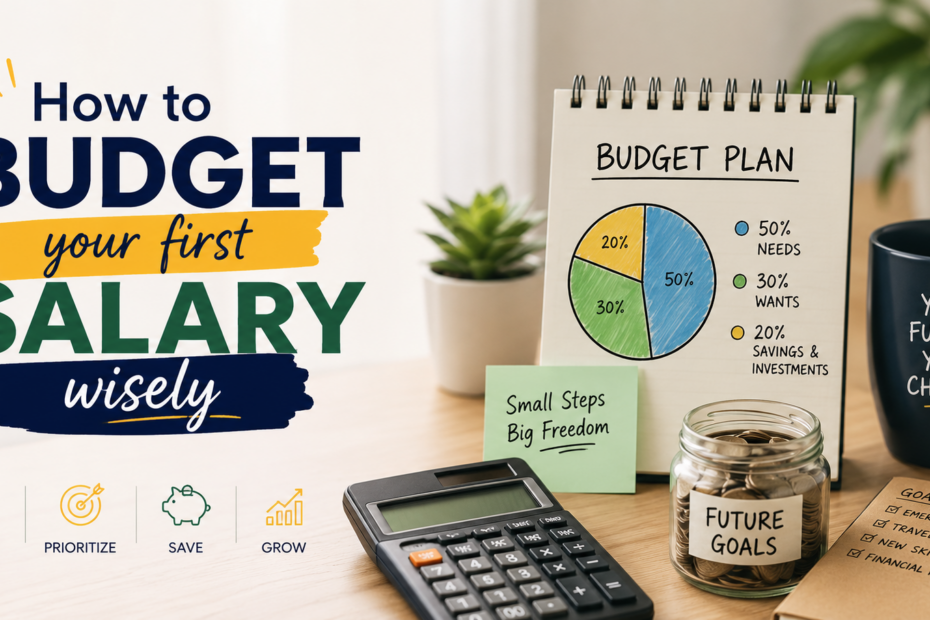
Why Your First Salary Matters More Than You Think
Your first salary is more than just money deposited into your account—it represents your first real step into financial independence and adulthood responsibility.
It is the moment where you begin to control your own income, make financial decisions, and experience the real value of money earned through effort and time.
Many people make mistakes at this stage because of excitement and lack of experience. Some overspend quickly on lifestyle upgrades, unnecessary luxuries, or social pressure, while others fail to plan at all.
This often leads to regret before the month even ends, as they struggle to manage basic expenses or save anything meaningful.
What makes the first salary even more important is that it sets the foundation for your financial habits. The way you manage your first income often influences how you handle money for years to come.
If you learn discipline early—such as budgeting, saving, and spending wisely—it becomes easier to maintain financial stability in the future. But if poor habits begin here, they can follow you for a long time.
This is why your first salary should be treated with intention, not emotion. It is not just about enjoyment, but about building strong financial discipline that will guide your future decisions and shape your long-term financial success.
Understanding Your Income Clearly
Before you start budgeting your first salary, it is very important to clearly understand what you actually earn.
Many people make the mistake of planning their budget based on their gross salary, which is the total amount stated in their offer letter before any deductions. However, this is not the real money you receive.
Your net salary, also known as take-home pay, is what remains after deductions such as taxes, pension contributions, health insurance, or other mandatory payments.
This is the actual amount that enters your bank account and should be the foundation of your budget.
A common mistake among beginners is building their entire financial plan around the gross salary.
This often leads to confusion, overspending, and financial stress because they end up expecting more money than they actually have. As a result, they struggle to cover basic needs or stick to their budget.
To avoid this, always base your budgeting on your net income. This gives you a realistic view of your financial situation and helps you make smarter decisions.
When you understand your true earnings, you can plan better, spend wisely, and avoid unnecessary financial pressure throughout the month.
The 50/30/20 Rule as a Simple Guide
The 50/30/20 rule is one of the simplest and most effective budgeting methods, especially for people managing their first salary.
It helps you divide your income into three clear categories so you can avoid confusion and overspending.
According to this rule, 50% of your income should go to needs such as rent, feeding, transportation, and basic utilities. These are essential expenses that keep your daily life running smoothly and must always come first.
The next 30% is allocated to wants. This includes entertainment, outings, fashion, subscriptions, and other lifestyle choices that improve your comfort but are not essential for survival. This portion allows you to enjoy your income without feeling restricted.
The remaining 20% should go into savings or debt repayment. This is the most important part because it builds your financial future, emergency fund, and long-term stability. Even if the amount seems small at first, consistency is what matters most.
However, this rule is flexible depending on your situation. For example, in high-cost cities like Lagos, your needs may take a larger portion of your income, meaning you may need to adjust the percentages slightly.
The key is to maintain balance, stay disciplined, and ensure you are always saving something regardless of your income level.
Prioritizing Essential Expenses First
Prioritizing essential expenses is a key step in managing your first salary wisely. Essential expenses are the basic needs you cannot avoid, such as rent, feeding, transportation, and basic utilities like electricity, water, and mobile data.
These are the foundation of your daily survival and stability, so they should always come before any other form of spending.
Many first-time earners make the mistake of spending on luxury items, fashion, or entertainment before properly sorting out their essential needs.
This often leads to financial stress later in the month when important bills are still unpaid. It may feel exciting to enjoy your first income, but without structure, that excitement quickly turns into regret.
A better approach is to list all your necessary expenses first and calculate how much they will cost. Once you have secured these essentials, you can then decide what remains for savings and personal wants.
This method helps you stay organized, reduces financial pressure, and ensures that your basic needs are always covered before any lifestyle spending.
The Importance of Saving from Day One
Saving from the very first day you receive your salary is one of the most important financial habits you can develop.
It sets the foundation for financial discipline and helps you build security early in your career.
Many people make the mistake of waiting until they “earn more” before they start saving, but in reality, the habit matters more than the amount.
Even if it is just 10% of your income, consistently saving it creates strong financial discipline over time.
One key reason for saving is to build an emergency fund. Life is unpredictable, and unexpected expenses such as medical bills, transportation issues, or urgent family needs can arise at any time.
Having savings ensures you are not forced into debt during these situations.
You can also save for short-term goals like buying essential items or planning small personal projects.
At the same time, long-term savings help you prepare for bigger financial goals such as education, business investment, or future stability.
By saving from day one, you are not just keeping money aside—you are building financial security, peace of mind, and a stronger future.
Avoiding Lifestyle Inflation
Lifestyle inflation happens when your spending increases immediately after you start earning more money, especially with your first salary or after a salary increase.
Many young professionals fall into this trap because they feel the need to “upgrade” their life as soon as income comes in. While improving your standard of living is not bad, doing it too quickly can destroy your financial stability.
One of the biggest causes of lifestyle inflation is peer pressure. Friends may start going out more, buying expensive clothes, or living a flashy lifestyle that you feel forced to match.
Social media also makes it worse by constantly showing luxury lifestyles, making you feel like you are behind. As a result, many people begin spending on things they don’t actually need just to “fit in.”
To avoid this, it is important to maintain a stable and realistic lifestyle even when your income increases.
Instead of upgrading everything at once, focus on gradually improving your quality of life while still prioritizing savings and essential expenses.
If you remain disciplined and consistent, you will enjoy long-term financial security instead of short-term satisfaction.
Setting Financial Goals Early
Setting financial goals early is one of the smartest steps you can take when managing your first salary.
It gives your money direction and helps you avoid spending without purpose. You can divide your goals into short-term and long-term plans.
Short-term goals may include buying essential items, paying for transportation, or saving for a specific need within a few months.
Long-term goals, on the other hand, could involve building an emergency fund, furthering your education, starting a small business, or investing for future growth.
When you clearly define what you are working toward, budgeting becomes much easier and more meaningful.
Instead of wondering where your money went, you begin to assign every naira a purpose. This sense of direction not only improves discipline but also motivates you to stay consistent with your financial plan over time.
Tracking Expenses and Staying Consistent
Tracking your expenses is one of the most powerful habits you can develop when managing your first salary.
It simply means recording every money you spend, whether daily or weekly, so you can clearly see where your income is going.
Many people struggle financially not because they don’t earn enough, but because they don’t know how they spend their money.
You can use a simple notebook, a spreadsheet, or mobile budgeting apps to monitor your spending habits. This practice helps you identify unnecessary expenses and make better financial decisions.
Consistency is very important—when you track regularly, you stay accountable and avoid careless spending.
Over time, you can review your records and adjust your budget based on real data, not guesswork. This will help you stay in control and build stronger financial discipline.
Conclusion
Budgeting your first salary is not about limiting your freedom but about gaining control over your financial life.
It is the foundation that shapes how you handle money in the future. When you make small, disciplined choices today—such as saving regularly, spending wisely, and planning ahead—you are building habits that lead to long-term financial stability.
Financial freedom does not happen overnight; it is the result of consistency, patience, and intentional decision-making.
Learn to respect every income you earn, no matter how small, and use it wisely. With time, these habits will grow into lasting financial confidence and independence.
Frequently Asked Questions
How to budget on a starting salary?
Budgeting on a starting salary begins with understanding your real income (your net or take-home pay) and then dividing it into clear categories.
Start by listing your essential needs such as rent, feeding, transportation, and utilities. After that, set aside a portion for savings, even if it is small, such as 10% or 20%.
Then allocate a reasonable amount for personal wants like entertainment or clothing. The key is to spend within limits, avoid unnecessary debt, and track every expense.
A simple method like the 50/30/20 rule can also help beginners stay organized and avoid overspending.
What is the 70-10-10-10 budget rule?
The 70-10-10-10 rule is a budgeting method where 70% of your income goes to living expenses such as food, rent, transport, and bills.
Then 10% goes to savings, 10% to investments, and another 10% to charity or personal development.
This method is flexible and helps you balance survival, growth, and generosity. It is especially useful for people who want a structured but simple way to manage money while still building financial discipline over time.
How to save 1k in 30 days?
Saving 1,000 in 30 days requires consistency and small daily discipline. You can break it down into daily or weekly targets, such as saving about 34 per day or 250 per week.
Reduce unnecessary spending like eating out, impulsive purchases, or transport wastage. You can also use a savings challenge jar or a separate savings account to avoid temptation.
The key is not how much you earn, but how consistently you commit to saving something every day until you reach your goal.
What is the 3 6 9 rule for money?
The 3-6-9 rule is a financial planning concept that focuses on time-based savings and discipline.
It suggests planning your finances in cycles: 3 months for short-term stability, 6 months for medium-term financial goals, and 9 months or more for long-term growth or investments.
It can also relate to building an emergency fund that covers 3 to 6 months of expenses while aiming for longer-term financial security.
The idea is to help you think beyond monthly survival and build sustainable financial strength over time.
What should I do in my first salary?
Your first salary should be managed carefully to set a strong financial foundation. Start by prioritizing your essential needs such as rent, feeding, and transportation.
Then set aside savings immediately, even if it is a small percentage. Avoid rushing into luxury spending or lifestyle upgrades.
It is also important to clear any urgent debts if you have them. After that, create a simple budget for the month and stick to it.
Most importantly, treat your first salary as a learning opportunity to build discipline, not just a chance to spend freely.
What are the 7 steps of budgeting?
The 7 steps of budgeting provide a simple structure for managing money effectively. First, you identify your total income, which is your actual take-home pay.
Second, you list all fixed expenses such as rent, transport, and utilities. Third, you estimate variable expenses like food, entertainment, and personal spending.
Fourth, you set clear financial goals, both short-term and long-term. Fifth, you allocate your income into each category based on priority.
Sixth, you track your spending regularly to ensure you are staying within limits. Finally, you review and adjust your budget monthly to improve accuracy.
These steps help you stay organized, avoid overspending, and build strong financial discipline over time.
What is the 777 rule for money?
The 777 rule for money is not a universally fixed financial standard, but it is often used in different personal finance interpretations.
In some cases, it refers to dividing income into percentages such as 70% for expenses, 20% for savings, and 10% for giving or investment.
In other interpretations, it is used as a mindset or spiritual-based money habit system focusing on discipline, consistency, and gratitude.
Because it is not a formal budgeting framework like the 50/30/20 rule, its meaning can vary depending on the source.
The important thing is to focus on a structure that helps you control spending, save regularly, and build financial stability.
What are the 9 words to attract money?
There is no scientifically proven or officially recognized set of “9 words to attract money” in financial planning or economics.
This idea is often found in motivational or mindset content rather than practical budgeting systems.
Some versions use positive affirmations such as “I am open to financial success and abundance,” but these are more about mindset and motivation than actual financial strategy.
While positive thinking can improve discipline and confidence, real financial growth comes from practical actions like budgeting, saving, investing, and managing expenses wisely.
What are the seven golden rules of money?
The seven golden rules of money are commonly used principles for building financial stability. First, always spend less than you earn.
Second, save regularly before spending on wants. Third, avoid unnecessary debt and manage existing debt wisely. Fourth, create and follow a budget consistently.
Fifth, build an emergency fund for unexpected expenses. Sixth, invest early to grow your wealth over time. Seventh, keep learning about money management to improve financial decisions.
These rules are simple but powerful when applied consistently, helping individuals achieve long-term financial security and independence.
What are the 3 M’s of money?
The 3 M’s of money generally refer to Money, Mindset, and Management. Money represents the income you earn and how you generate financial resources.
Mindset refers to your beliefs, discipline, and attitude toward money, which strongly influences your financial habits. Management is how you plan, budget, save, and invest your money effectively.
Without the right mindset, money is often wasted, and without proper management, even high income can lead to financial struggles.
Together, these three elements help create a balanced approach to building and sustaining wealth over time.
What are the 7 pillars of wealth?
The 7 pillars of wealth are foundational principles that support long-term financial success.
While different experts may present variations, they commonly include income generation, saving, investing, budgeting, financial education, discipline, and multiple income streams.
Income generation is the ability to earn money consistently, while saving ensures you retain part of what you earn. Investing helps your money grow over time.
Budgeting gives structure to your spending. Financial education improves decision-making.
Discipline keeps you consistent, and multiple income streams reduce financial risk. Together, these pillars create a stable system for building and sustaining wealth over time.
What is the biggest killer of credit scores?
The biggest killer of credit scores is missed or late payments. Payment history has the most significant impact on your credit rating, and even one missed payment can lower your score significantly.
Other major factors include high credit utilization (using too much of your available credit), defaulting on loans, and excessive debt accumulation.
Ignoring credit obligations or borrowing beyond your capacity creates a negative financial history that is difficult to repair.
To maintain a good credit score, it is important to pay bills on time, keep credit usage low, and manage loans responsibly.
What are the 7 habits of billionaires?
The 7 habits of billionaires often reflect disciplined financial and personal behaviors rather than luck.
These habits typically include living below their means, investing consistently, reading and learning continuously, setting clear long-term goals, surrounding themselves with successful and knowledgeable people, taking calculated risks, and focusing on building assets instead of liabilities.
Many billionaires also prioritize time management and productivity, treating time as a more valuable resource than money. These habits help them build, grow, and sustain wealth over long periods.
What creates 90% of billionaires?
A large percentage of billionaires are created through business ownership, investments, and entrepreneurship rather than traditional employment alone.
Studies show that building or owning businesses is one of the most common paths to extreme wealth because it allows income to scale beyond a fixed salary.
Investments in real estate, stocks, and other assets also play a major role in wealth creation.
Inheritance contributes to some cases, but the majority of self-made billionaires achieve wealth through creating value, solving problems, and scaling businesses that generate large profits over time.
What are the 6 laws of wealth?
The 6 laws of wealth are guiding principles for building financial success.
They often include earning money through value creation, spending less than you earn, saving consistently, investing wisely, protecting your wealth through risk management, and continuously improving financial knowledge.
Some versions also emphasize patience and long-term thinking as essential laws. These principles work together to ensure that wealth is not only created but also preserved and grown over time.
Following them consistently helps individuals build strong financial foundations and avoid common money mistakes.
What are the 7 secrets of wealth?
The 7 secrets of wealth are commonly taught principles that focus on long-term financial success rather than quick money.
They often include living below your means, saving consistently, investing early, avoiding bad debt, building multiple income streams, improving financial knowledge, and staying disciplined with money decisions.
These “secrets” are not shortcuts but habits that help individuals grow wealth steadily over time. The key idea is that wealth is built through consistency, patience, and smart financial behavior, not luck or sudden income.
What are the 5 sources of wealth for success?
The 5 main sources of wealth typically include earned income, business income, investment income, passive income, and capital gains.
Earned income comes from jobs or salaries, while business income comes from entrepreneurship.
Investment income is generated from assets like stocks or bonds, and passive income comes from rental properties, royalties, or automated businesses.
Capital gains refer to profits made from selling assets at a higher value than they were bought. Together, these sources create financial stability and reduce dependence on a single stream of income.
What is the 7 day money rule?
The 7-day money rule is a simple financial discipline technique that encourages delaying non-essential purchases for seven days before buying them.
The idea is to reduce impulse spending and give yourself time to decide whether the purchase is truly necessary.
If after seven days you still need the item and it fits your budget, you can buy it. If not, you avoid unnecessary spending.
This rule helps improve self-control, reduce financial regret, and encourage more intentional money decisions.
What are the 7 steps to becoming rich?
The 7 steps to becoming rich generally include setting clear financial goals, understanding your income and expenses, creating and following a budget, saving consistently, eliminating unnecessary debt, investing regularly, and building multiple income streams.
These steps focus on long-term discipline rather than quick wealth. Becoming rich is not only about earning more but also about managing money wisely and allowing it to grow over time through investments and smart financial planning.
What is the 3 rule money?
The “3 rule money” is often used in different ways, but one common interpretation is the 3-6-9 financial planning concept or simplified budgeting rule.
In some cases, it refers to dividing income into three categories: needs, wants, and savings/investments.
In other interpretations, it relates to planning money across short-term (3 months), medium-term (6 months), and long-term (9 months or more) financial goals.
The main idea behind any version of the 3 rule is to simplify money management and encourage balance between spending, saving, and planning for the future.
What are the 7 keys of successful people?
Successful people tend to share certain habits, mindsets, and behaviors that consistently set them apart, even across different cultures, industries, and backgrounds.
One of the strongest keys is having a clear sense of purpose, because people who understand why they are working hard are more focused and resilient when challenges appear.
Another important key is discipline, which helps them stay committed to daily actions even when motivation fades.
Successful individuals also practice continuous learning, always seeking new knowledge and skills that improve their personal and professional growth.
Another key is strong time management, as they understand that time is a limited resource and prioritize tasks that bring long-term value rather than short-term distraction.
Resilience is also essential, because failure is unavoidable, but successful people treat it as feedback rather than defeat.
In addition, surrounding oneself with positive and growth-oriented people plays a major role, since environment strongly influences mindset and decisions.
Lastly, consistent action ties everything together; success does not come from ideas alone but from repeated execution over time.
When these elements work together, they create a powerful foundation for achievement.
It is not just one habit or one decision that defines success, but a combination of mindset, discipline, learning, and environment shaping a person’s long-term direction in life.
What are 5 ways to be successful?
Becoming successful is less about luck and more about intentional habits practiced consistently over time. One of the most effective ways is setting clear and realistic goals.
When goals are well defined, they provide direction and help measure progress, which keeps a person focused and motivated.
Another important way is building strong discipline, because success often requires doing what is necessary even when it is uncomfortable or inconvenient.
Developing new skills regularly is another powerful path to success. In a fast-changing world, those who continue learning and improving themselves are more likely to stay relevant and competitive.
Managing time wisely is also crucial, as productivity depends not only on effort but on how effectively time is used. Prioritizing important tasks over distractions makes a significant difference in long-term achievement.
Finally, building the right mindset plays a major role. A positive and growth-oriented mindset helps individuals see challenges as opportunities instead of obstacles.
It also encourages persistence during difficult times. When these five approaches are combined—clear goals, discipline, skill development, time management, and strong mindset—they create a practical roadmap that can guide anyone toward meaningful and sustainable success in life.
What are the six rules of success?
The journey to success is often guided by certain principles that shape behavior and decisions over time. One of the most important rules is taking full responsibility for one’s life.
People who blame circumstances rarely grow, while those who accept responsibility are more likely to take action and improve their situation.
Another rule is consistency, because success is built through repeated effort rather than occasional bursts of hard work.
A third rule is staying focused on priorities. Many people fail not because they lack ability, but because they spend energy on too many unnecessary things.
Successful individuals learn to concentrate on what truly matters. Another essential rule is embracing failure as part of growth. Instead of seeing mistakes as the end, they use them as lessons that guide future improvement.
Self-discipline is also a key rule, as it ensures that actions align with long-term goals rather than short-term desires.
Lastly, patience is vital because success rarely happens overnight. It takes time for skills, opportunities, and results to fully develop.
When these six rules are applied together—responsibility, consistency, focus, acceptance of failure, discipline, and patience—they form a strong foundation for lasting success. They help individuals stay steady, even when progress feels slow or uncertain.
What are the 8 types of success?
Success is not limited to money or career achievements; it exists in different forms that contribute to a balanced and fulfilling life.
One major type is financial success, which involves achieving stability and the ability to meet personal needs comfortably.
Another type is career success, which relates to growth, recognition, and satisfaction in one’s professional life.
Personal success is also important, focusing on self-improvement, emotional growth, and becoming a better version of oneself.
Social success refers to the ability to build meaningful relationships and maintain a supportive network of family, friends, and colleagues.
Academic success is another form, often associated with educational achievements and intellectual development.
Health success is equally essential, as physical and mental well-being form the foundation for all other areas of life.
Spiritual success relates to inner peace, purpose, and alignment with personal values or beliefs. Lastly, impact success involves making a positive difference in the lives of others or contributing meaningfully to society.
These different types of success show that a truly successful life is balanced.
Focusing on only one area while neglecting others can lead to dissatisfaction. Real fulfillment often comes when multiple areas of success grow together in harmony.
What is the fastest way to become successful?
There is no shortcut that guarantees instant success, but there are ways to accelerate progress significantly.
The fastest way begins with choosing a clear direction and focusing intensely on one goal rather than spreading energy across many unrelated activities.
Clarity reduces wasted effort and increases productivity. Another important factor is learning high-value skills quickly. When someone develops skills that are in demand, opportunities tend to appear faster.
Taking massive, consistent action is also essential. Many people delay progress by overthinking, but those who act quickly and adjust along the way tend to grow faster.
Learning from mentors or successful individuals can also speed up success because it reduces trial and error. Their experience provides guidance that helps avoid common mistakes.
Another key element is removing distractions and focusing on priorities that produce real results.
Social media, unnecessary activities, and poor habits often slow down progress significantly. Finally, developing resilience helps maintain momentum, especially when challenges appear.
The fastest path to success is not about rushing, but about being intentional, focused, and disciplined. When clarity, skill development, action, mentorship, and focus come together, progress becomes much faster and more efficient.