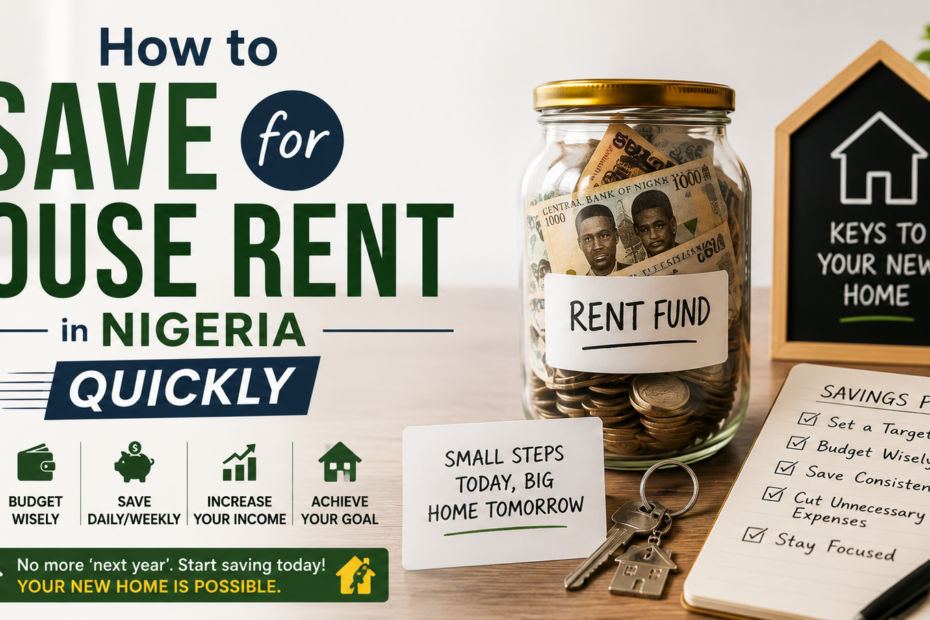
In Nigeria today, one of the biggest financial pressures people face is house rent. Whether you are living in Lagos, Abuja, Ibadan, or any other city, the cost of accommodation keeps rising while income often remains the same. For many people, rent payment is not just a bill—it is a yearly struggle that brings stress, borrowing, and sometimes embarrassment.
Most tenants find themselves rushing at the last minute, trying to beg friends, take loans, or sell personal belongings just to avoid being evicted. But the truth is, saving for rent does not have to be a painful or last-minute emergency.
With the right plan, discipline, and simple financial habits, you can gradually build your rent money without stress. In this guide, you will learn practical and realistic ways to save for house rent quickly in Nigeria—even if your income is small or irregular.
Why Rent Feels Hard in Nigeria
In Nigeria, paying house rent is one of the most stressful financial responsibilities for individuals and families. In major cities like Lagos, Abuja, Ibadan, and Port Harcourt, landlords often demand advance payments of one or two years, which immediately puts pressure on tenants to gather a large sum of money at once. For many people, this is not something that can be easily achieved with monthly income alone.
To make matters worse, inflation continues to reduce the value of money, meaning rent that was affordable a few years ago can suddenly become difficult to afford today. At the same time, many Nigerians are dealing with unstable income—some work daily or weekly jobs, while others depend on small businesses that do not guarantee steady cash flow.
On top of all this, unexpected family responsibilities such as school fees, medical bills, or helping relatives can easily disrupt any savings plan. As a result, rent payment often becomes a last-minute emergency rather than a planned financial goal, forcing many people into borrowing or struggling under pressure every rental cycle.
Use the “Rent Challenge” Saving System
Saving for rent becomes much easier when you turn it into a challenge instead of treating it like a burden. This is where the “Rent Challenge” system comes in—a simple but powerful way to stay consistent and motivated.
Instead of waiting for a large amount of money before saving, you challenge yourself to save small amounts regularly. For example, you can decide to save ₦500 to ₦2,000 daily, depending on your income. It may look small, but over weeks and months, it builds up into a significant rent fund without pressure.
If daily saving is difficult, you can switch to a weekly fixed savings plan. This means you choose a specific amount you must save every week no matter what happens. The key is consistency, not the size of the amount.
Another effective method is introducing “no spending days” once or twice a week. On these days, you avoid all unnecessary spending and direct whatever you would have spent into your rent savings instead. This helps you become more disciplined and aware of your spending habits.
The idea behind the Rent Challenge is simple: make saving feel like a game you are trying to win, not a punishment you are trying to survive. When you gamify your savings, you stay more focused, more motivated, and more likely to reach your rent goal faster without giving up halfway.
Join Savings Groups (Ajo/Esusu) Wisely
Another practical way many people in Nigeria successfully save for rent is by joining traditional savings groups, commonly known as ajo or esusu.
These systems work by contributing a fixed amount of money daily or weekly, which is then collected by members in turns. For people who struggle with self-discipline, this method helps because it removes the temptation to spend the money elsewhere.
There are also cooperative societies, especially in workplaces or communities, where members contribute regularly and can access their savings (and sometimes small loans) when needed. These groups can be very helpful for building rent money over time, especially when managed properly.
In addition, some people join trusted thrift collectors, who come around daily or weekly to collect savings and keep them safe until a fixed time.
However, while these systems can be very effective, you must be extremely careful. In Nigeria, there are cases of fraud, dishonest collectors, and fake savings groups that disappear with people’s money. Because of this, it is very important to only join groups or individuals you can verify and trust, preferably those with a strong reputation in your community or workplace.
The key is simple: savings groups can help you stay disciplined and consistent, but your safety depends on choosing the right and trusted system.
Negotiate and Plan Smarter Housing Choices
Saving for rent quickly is not only about how much you earn or how you budget—it is also about the type of housing decisions you make. Sometimes, a smarter choice in where and how you live can significantly reduce your rent burden and make saving much easier.
One practical option is to consider areas slightly outside the city center. In places like Lagos, Abuja, Ibadan, or Port Harcourt, rent is usually much higher in central or high-demand locations. Moving just a little further away can reduce your rent by a big margin, without necessarily affecting your daily activities if transport is well planned.
Another effective strategy is sharing an apartment with trusted roommates. When you split rent and utility costs with responsible people, your individual financial pressure reduces, making it easier to save consistently for future rent payments. The key here is choosing trustworthy and compatible people to avoid unnecessary conflict.
You can also benefit from negotiating better payment terms with landlords, such as asking for discounts when paying yearly instead of monthly or quarterly. In many cases, landlords prefer receiving a full payment at once and may offer slight reductions or flexibility for tenants who can pay upfront.
The main idea is simple: your housing choice directly affects your financial pressure. When you plan smarter and make flexible decisions, you reduce the amount you need to struggle for, and saving for rent becomes faster and more realistic.
Emergency Backup Plan
Even with the best savings plan, life in Nigeria can be unpredictable. Income may drop, expenses may increase suddenly, or unexpected family responsibilities may affect your progress. That is why it is important to always have an emergency backup plan for your rent.
If your savings fall short when rent is due, the first step is not panic. Instead, quickly review what you already have and see how much is missing. From there, you can explore safe and realistic support options.
One option is to seek help from trusted family members or close relatives. If you have a good relationship and a clear plan to repay, this can be a short-term solution to avoid eviction or unnecessary pressure.
You can also consider cooperative societies or savings groups you belong to, as some allow members to access small emergency loans based on their contributions. This can be a safer option compared to informal borrowing.
Another possibility is short-term loans, but this must be handled very carefully. Only consider loans with clear, low interest rates and realistic repayment plans. Avoid rushing into any agreement without understanding the full cost.
Most importantly, you must avoid high-interest debt traps, such as informal lenders or quick loans that charge very high daily or weekly interest. These types of debts can worsen your financial situation and make it even harder to save for future rent.
The goal of an emergency plan is not to encourage borrowing, but to ensure you have safe, controlled options when things don’t go as planned—so you don’t fall into deeper financial stress.
What Is the Longest You Can Go Without Paying Rent?
The longest time you can go without paying rent depends on your rental agreement, landlord policies, and local tenancy laws. In most cases, there is no “safe” or standard period you are allowed to stay without paying rent.
Rent is usually due monthly, quarterly, or yearly based on what was agreed in the tenancy contract. Once the due date passes without payment, you are technically in breach of agreement.
In Nigeria and many other countries, landlords often give a short grace period, commonly a few days to a couple of weeks, especially if the tenant communicates early. However, this is not guaranteed and depends entirely on the landlord’s discretion. After that, the landlord may issue reminders, warnings, or notices to quit depending on the situation.
If rent remains unpaid for a longer period, legal eviction processes may begin. These processes vary by state, but they usually involve formal notices and timeframes before a tenant can be asked to vacate the property.
The most important thing to understand is that staying without paying rent is not sustainable and can lead to financial, emotional, and legal stress. If you are unable to pay rent, it is always better to communicate early with your landlord to negotiate a payment plan or extension.
Ultimately, there is no fixed “safe longest time” to delay rent. The best approach is prevention through saving ahead and ensuring rent is planned as a priority expense every month.
What Is the 70-10-10-10 Budget Rule?
The 70-10-10-10 budget rule is a simple money management system that divides income into four parts to help people balance spending, saving, and financial growth. It is especially useful for individuals who want structure but find detailed budgeting difficult.
Under this rule, 70% of your income goes to living expenses. This includes rent, food, transportation, utilities, school fees, and other essential needs. It covers everything required for daily survival and basic comfort.
The next 10% is allocated to savings. This portion is set aside for emergencies, future goals, or large purchases. It helps build financial security over time and prepares you for unexpected expenses.
Another 10% goes to investments or income-building activities. This could include starting a small business, buying tools for work, learning a skill, or investing in opportunities that generate future income.
The final 10% is for personal enjoyment or giving. This may include entertainment, gifts, charity, or personal treats. It ensures that budgeting does not feel too strict or stressful.
This rule is flexible and can be adjusted depending on income level. For example, people with lower income may need to prioritize necessities more heavily. However, the key idea is balance between survival, savings, growth, and lifestyle.
Overall, the 70-10-10-10 rule helps people avoid overspending while still preparing for the future.
How Do I Make a Simple Monthly Budget?
Making a simple monthly budget starts with understanding how much money you earn and how you spend it. The first step is to calculate your total monthly income. This includes salary, business income, side hustles, or any other source of money you receive regularly.
Next, list your essential expenses. These are things you must pay for each month such as rent, food, transportation, school fees, utilities, and healthcare. These should always come first in your budget because they are necessary for survival.
After listing essentials, include non-essential expenses. These are things like entertainment, shopping, subscriptions, or eating out. While they are not necessary, they should still be planned so they do not disrupt your finances.
Once you have listed everything, subtract your expenses from your income. This will show whether you are living within your means or overspending.
If your expenses are higher than your income, you need to reduce spending or find ways to increase income. This may include cutting unnecessary costs or starting a side hustle.
A simple budget also includes savings. Even small amounts should be set aside regularly to build financial security.
The most important part of budgeting is consistency. Reviewing your budget every month helps you adjust and improve your financial habits over time.
What Is the Formula for Monthly Rent?
There is no single universal formula for calculating monthly rent, but there are practical budgeting formulas people use to determine what is affordable. One of the most common guidelines is that rent should not exceed 25% to 30% of your monthly income.
A simple formula is:
Monthly Income × 0.25 (or 0.30) = Maximum Affordable Rent
For example, if you earn ₦200,000 monthly, your ideal rent range would be between ₦50,000 and ₦60,000. This ensures you still have enough money for food, transportation, savings, and other needs.
Another useful approach is the “income balance formula,” where you divide income into needs, wants, and savings. In this case, rent falls under needs and should not dominate your budget.
Some people also calculate rent affordability based on yearly income. Ideally, annual rent should not exceed 30% of total yearly earnings.
It is important to remember that rent is just one part of financial planning. Choosing rent based on income helps prevent debt and financial stress. If rent is too high, it can affect your ability to save, invest, or manage daily expenses.
Ultimately, the smartest approach is choosing housing that fits comfortably within your income, not one that stretches your finances too thin.
What Are 5 Ways to Save Money?
There are many ways to save money, but five of the most effective methods are simple, practical, and easy to apply in daily life. The first way is budgeting. Creating a clear plan for your income helps you track spending and avoid unnecessary expenses.
The second way is saving before spending. This means setting aside a portion of your income as soon as you receive it, instead of saving what is left at the end of the month. This builds discipline and ensures consistent savings.
The third way is cutting unnecessary costs. Many people spend money on things they do not truly need, such as excessive entertainment, impulsive shopping, or expensive habits. Reducing these expenses increases your savings capacity.
The fourth way is buying in bulk. Purchasing food items and household essentials in larger quantities is often cheaper than buying small amounts frequently. This helps reduce long-term spending.
The fifth way is increasing income. Saving becomes easier when you earn more money. Side hustles, freelancing, or small businesses can provide extra income that can be saved directly.
Together, these five methods create a strong foundation for financial stability. Consistency is key, because small savings over time can grow into significant financial security.