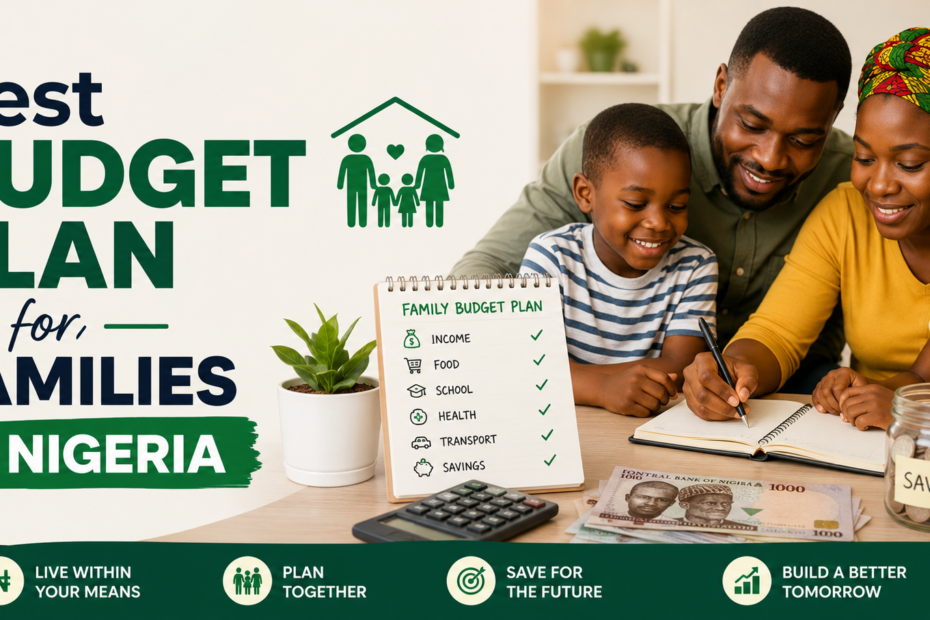
In Nigeria today, the cost of living keeps rising, making it harder for many families to manage daily expenses. Prices of food, fuel, rent, school fees, and transportation continue to increase, often without a matching rise in income.
On top of this, many households do not receive a steady monthly salary, as income can be irregular due to business fluctuations, freelance work, or small-scale trading.
Because of this financial uncertainty, many families end up spending money as it comes in, without a proper plan or structure. This approach often leads to shortages before the end of the month and unnecessary debt.
Family budgeting becomes very important because it helps households take control of their income, prioritize essential needs, and plan ahead. With a clear budget, families can reduce financial stress, avoid wasteful spending, and gradually build stability even in a challenging economy.
Prioritizing Essential Family Expenses
When managing a family budget in Nigeria, it is very important to clearly prioritize essential expenses because income is often limited while needs are many. The first and most important priority is feeding.
Food is a daily necessity, and with the current high inflation in Nigeria, families must plan carefully to ensure there is always enough for basic meals.
This may require buying in bulk from local markets, planning meals ahead, and avoiding wasteful food spending. The second priority is rent or housing, as having a safe and stable place to live is non-negotiable. Families should treat rent as a fixed obligation and plan ahead to avoid last-minute borrowing or eviction stress.
Next is school fees and children’s needs. Education is a long-term investment, and delaying or neglecting school-related expenses can affect a child’s future. This includes fees, uniforms, books, and transport to school.
After this comes transportation, which is essential for work, school, and daily movement. Families should look for cost-effective options where possible.
The key principle is simple: if money is not enough, cut wants—not needs. Needs must always come first because they sustain life, stability, and long-term progress, while wants can be adjusted or postponed.
Creating a Simple Family Budget Sheet
A family budget sheet is a simple but powerful tool that helps households understand, control, and direct their money properly. It can be written in a notebook, an Excel spreadsheet, or a mobile budgeting app depending on what is most convenient.
The goal is to clearly separate income, expenses, and savings so that every naira has a purpose. Below is how each section should be structured and understood.
1. Income
Income is the starting point of every family budget because you cannot plan spending without knowing how much money is available. In this section, all sources of money entering the household should be written clearly.
This includes salaries from formal jobs, profits from small businesses, income from side hustles, freelance work, and any regular financial support from relatives.
The most important rule here is to calculate total actual income, not expected or uncertain money. For example, if a business sometimes makes profit, only the average or confirmed monthly earnings should be included.
This helps avoid overestimating and overspending. Writing income in one place gives the family a clear financial picture and helps them make realistic decisions.
Whether using a notebook, Excel sheet, or budgeting app, this section should always be updated at the beginning of every month or week to reflect the true financial situation of the household.
2. Fixed Expenses
Fixed expenses are the regular and unavoidable costs that a family must pay every month, regardless of income changes. These expenses remain mostly constant and should be prioritized first when planning a budget.
Examples include house rent, school fees, electricity bills, water bills, internet subscriptions, and transport passes or regular commuting costs. Because these expenses are predictable, they help form the structure of the budget.
Once income is known, fixed expenses should be deducted immediately to avoid spending money that is already committed. Many families face financial stress because they do not separate fixed costs from other spending, leading to missed payments or debt.
In a proper budget sheet, each fixed expense should be listed with its exact amount and due date. This ensures nothing is forgotten or delayed. Whether recorded in a notebook or Excel sheet, tracking fixed expenses helps families stay organized, avoid penalties, and maintain stability throughout the month.
3. Variable Expenses
Variable expenses are costs that change from time to time depending on usage, lifestyle, and family needs. Unlike fixed expenses, they are flexible and can increase or decrease based on decisions made by the household.
Common examples include food, groceries, transportation fares, clothing, entertainment, mobile data, and occasional outings. In Nigeria, food is often the largest variable expense due to fluctuating market prices. This section of the budget requires careful monitoring because it is where most overspending usually happens.
Families should set a realistic limit for variable expenses and try not to exceed it. One effective strategy is to plan weekly shopping lists, cook at home more often, and reduce unnecessary purchases.
Tracking these expenses daily is also very important, especially when using cash transactions. Writing them down in a notebook or recording them in a mobile app helps identify spending patterns and waste. By controlling variable expenses, families can free up money for savings and emergencies.
4. Savings Goal
The savings goal section is one of the most important parts of a family budget sheet because it focuses on future financial security. This is where a family decides how much money to set aside regularly for emergencies, investments, or long-term goals such as building a house, education, or business expansion.
Savings should not be treated as leftover money but as a fixed priority, just like rent or food. A good practice is to decide a percentage of income—such as 10%, 20%, or even more depending on financial strength—and commit to it before spending on wants.
Even small amounts saved consistently can grow over time and provide protection during emergencies like medical issues or unexpected repairs.
Families can track savings separately in a notebook, Excel sheet, or dedicated mobile savings app to stay disciplined. Having a clear savings goal builds financial confidence, reduces stress, and helps families move from survival to long-term financial stability.
How to Reduce Expenses Without Suffering
Reducing expenses does not mean living a poor or uncomfortable life; it simply means spending wisely and avoiding waste. With rising costs in Nigeria, families must learn smart ways to manage money without sacrificing basic comfort. Below are practical strategies that can help households save money while still living well.
1. Buy Foodstuff in Bulk from Local Markets
One of the most effective ways to reduce household expenses is by buying foodstuff in bulk from local markets. In Nigeria, food prices often increase frequently, so buying in larger quantities helps families avoid paying higher prices repeatedly.
Items such as rice, beans, garri, yam, palm oil, and seasoning can be purchased in bulk when prices are relatively lower. This approach is especially useful for families who plan properly and have storage space at home. Buying in bulk also reduces the number of market trips, which helps save transport costs and time.
However, bulk buying must be done wisely. Families should avoid panic buying or purchasing more than they can store or consume before spoilage. It is also important to compare prices across different markets to get the best deals.
Cooperative buying—where families or neighbors contribute money to buy in bulk together—can also reduce costs further. When done properly, bulk purchasing helps stabilize food expenses and protects families from sudden price increases, making budgeting more predictable and manageable.
2. Reduce Unnecessary Subscriptions/Data Plans
Many families spend more money than necessary on mobile data, cable TV subscriptions, and streaming services without realizing it. Reducing these unnecessary subscriptions can significantly lower monthly expenses.
In Nigeria, data usage is often one of the hidden costs that quietly drains income, especially when multiple family members are subscribed to expensive plans without proper control. Families should first review all active subscriptions and identify those that are not essential.
For example, instead of paying for multiple streaming platforms, a family can choose just one affordable option or rely more on free entertainment sources.
Data usage can also be reduced by switching off automatic updates, limiting background app activity, and using Wi-Fi when available. It is also helpful to buy data plans that match actual usage instead of overpaying for unused bundles.
By consciously managing digital spending, families can free up money for more important needs like food, school fees, and savings. The goal is not to eliminate entertainment completely but to ensure that digital spending is controlled and intentional.
3. Cook at Home More Often (≈200 words)
Cooking at home is one of the simplest and most effective ways to save money in any household. Eating outside regularly—whether in restaurants, canteens, or roadside vendors—can quickly increase monthly expenses, especially for large families.
Home cooking allows families to control both cost and quality of meals. Ingredients bought from the market can be used to prepare multiple meals at a much lower cost compared to buying ready-made food every day.
In addition to saving money, cooking at home also helps reduce waste. Families can plan meals ahead of time and use leftovers efficiently, preventing food from being thrown away.
It also gives better control over nutrition and portion sizes, which is important for health. In Nigeria, where food inflation is high, home cooking provides flexibility to adjust meals based on what is affordable in the market at any time.
To make this habit easier, families can prepare weekly meal plans and cook in batches, especially for busy days. This reduces stress and saves time during the week. Overall, cooking at home is not just a cost-saving habit but also a healthier and more organized way of living.
4. Use Shared Transport When Possible
Transportation is one of the major daily expenses for many families, especially in urban areas. One effective way to reduce this cost is by using shared transport options whenever possible.
In Nigeria, options like buses, shared taxis (korope), and ride-sharing systems are usually more affordable than private or exclusive rides. Choosing these options can significantly reduce daily transport spending over time.
Families should also plan movement carefully to avoid unnecessary trips. Combining errands into a single outing helps save both money and energy.
For example, instead of making multiple trips to the market, bank, or school, all activities can be scheduled for one day. This reduces transport fares and fuel costs for those who own vehicles.
Where possible, families living in the same area can also coordinate shared rides or walk short distances together to cut costs further. While private transport may offer comfort and speed, it is important to balance comfort with financial reality.
Using shared transport is not about reducing dignity but about making smart financial choices that help the family stay within budget and save more money for important needs.
5. Plan Shopping List Before Going to Market
Planning a shopping list before going to the market is a simple but powerful way to control spending. Many families overspend because they go to the market without a clear plan and end up buying unnecessary items. A shopping list helps ensure that only essential items are purchased, reducing impulse buying and wasteful spending.
Before going out, families should check what is already available at home and list only what is needed. The list should be organized based on priority—food essentials first, followed by household items.
This helps prevent forgetting important items and reduces repeated trips to the market. It also makes bargaining easier because buyers know exactly what they want and how much they can afford.
In Nigeria’s markets, prices can be tempting or confusing, so having a list helps maintain discipline. It also allows families to compare prices properly and adjust purchases based on available money.
Over time, this habit builds financial control and reduces unnecessary spending significantly. A well-planned shopping list ensures that every naira spent is intentional and contributes to the family’s real needs rather than emotional or impulsive buying decisions.
Building an Emergency Fund (Very Important Section)
An emergency fund is one of the most important parts of a strong family financial plan, yet many households in Nigeria overlook it until a crisis happens.
Emergencies are very common in daily life and can come without warning. These include sudden medical bills, urgent school fee demands, unexpected house repairs, or even job loss or business slowdown.
When a family has no savings set aside, these situations often lead to borrowing money at high interest, selling valuable belongings, or falling into debt. This is why an emergency fund is not a luxury but a necessity for financial stability.
The good news is that building an emergency fund does not require a large income. Families can start small by saving as little as ₦500 to ₦2,000 daily or setting aside a fixed amount weekly or monthly.
What matters most is consistency, not the size of the contribution. Over time, these small amounts add up and become a reliable financial cushion.
The ideal goal is to build at least 1 to 3 months of total family expenses as an emergency fund. This means if a family spends ₦100,000 monthly, they should aim to save between ₦100,000 and ₦300,000 gradually.
Keeping this money separate from daily spending accounts is very important so it is only used for real emergencies. With a strong emergency fund, families can handle financial shocks with confidence and avoid unnecessary debt or stress.
Teaching Children Money Discipline
Teaching children how to manage money is an important part of building a financially stable family. When children learn money discipline early, they grow up with better spending habits and a stronger understanding of value.
One practical way to start is by giving allowance responsibly. Instead of giving money without guidance, parents should explain what the allowance is meant for and encourage children to plan how to spend or save it. This helps them learn that money is limited and must be used wisely.
Another important habit is teaching children to save from an early age. Parents can introduce simple savings methods like using a piggy bank, savings box, or even a small bank account.
Encouraging children to save a portion of their allowance helps them understand patience and delayed gratification. It also builds the mindset that saving is normal and important, not something done only when money is left over.
Involving children in simple budgeting decisions is also very effective. For example, parents can let children help plan small purchases like groceries or school supplies.
This gives them real-life experience in decision-making and prioritizing needs over wants. When children are included in financial discussions at a basic level, they become more responsible and aware of how money works in the household. Over time, these lessons shape disciplined adults who are better prepared to manage their own finances in the future.
Side Income Ideas for Nigerian Families
In today’s economy, relying on only one source of income is often not enough for many families in Nigeria. This is why having additional or side income is very important for financial stability and growth.
Side income does not always require huge capital; in many cases, it requires skills, consistency, and smart planning. One common option is starting small online businesses.
Families can sell products on social media platforms like WhatsApp, Facebook, or Instagram, such as clothing, shoes, cosmetics, or digital products. With good marketing and trust, these small online ventures can grow into steady income sources.
Food sales is another strong option, especially in local communities. Selling cooked meals, snacks, or foodstuff like rice, beans, or spices can generate daily cash flow.
Many families already have cooking skills, so turning that into a business can be very effective. Freelancing skills are also becoming more popular, especially for young people. Skills like writing, graphic design, data entry, and social media management can bring income from both local and international clients.
Mini-importation is another side income idea where families buy cheap goods from overseas markets and resell them locally for profit. Lastly, farming or small agricultural projects such as poultry, vegetable farming, or fish farming can provide both food and income. These side income ideas, when managed well, can reduce financial pressure and improve the overall quality of family life.
Conclusion: Consistency is the Real Secret
At the end of the day, budgeting is not about how rich a family is, but about how disciplined they are with the money they have. Many people think financial stability only comes when income is high, but in reality, even small income can go a long way when it is properly planned and managed.
A well-structured budget helps families control spending, prioritize needs, and slowly build savings over time, regardless of how much they earn.
The key to success in family budgeting is consistency. It is not enough to create a budget once; it must be followed and adjusted regularly as income and expenses change. Small, consistent actions like tracking expenses, saving a little every day, and avoiding unnecessary spending can produce big results over time.
Most importantly, families should not wait for “better money” before starting to budget. The best time to take control of your finances is now, with whatever you currently have.
Waiting for a perfect situation often leads to more financial pressure. Instead, start immediately, stay consistent, and allow discipline to guide your financial journey. With time, these habits will create stability, reduce stress, and build a stronger financial future for the entire family.
Frequently Asked Questions
What is the 70 10 10 10 Budget Rule?
The 70-10-10-10 budget rule is a simple money management system that divides income into four structured parts to ensure balance between spending, saving, investing, and personal or financial growth. It is widely used because it is easy to understand and helps people avoid overspending while still maintaining financial discipline.
The first 70% is allocated to essential and living expenses. This includes rent, food, transportation, utilities, and other basic needs required for daily survival.
The idea is that most of your income should responsibly cover your lifestyle without going beyond your means. If this portion is too high, it signals that your cost of living may need adjustment.
The first 10% is dedicated to savings. This is money set aside for emergencies or future needs. Even if income is small, consistently saving builds financial security over time and prevents dependence on loans during emergencies.
The second 10% is usually allocated to investments or debt repayment. This ensures that you are either building wealth or reducing financial obligations. It is a key part of long-term financial stability.
The final 10% is for personal use, charity, or self-development. This allows flexibility for enjoyment, learning, or giving without disrupting financial structure.
Overall, this rule works because it creates balance, discipline, and long-term financial awareness, making it suitable for both beginners and salaried individuals.
Which Type of Budget Is Good for a Family?
The best type of budget for a family is usually a combination of a zero-based budget and a flexible budget, depending on income stability. Families need a system that ensures every income is properly assigned while still allowing room for unexpected changes in expenses.
A zero-based budget is highly effective because it assigns every unit of income a specific purpose. This means income minus expenses equals zero, ensuring that no money is wasted or unaccounted for. It helps families prioritize essentials like food, housing, school fees, and healthcare before any discretionary spending.
However, because family expenses can change frequently, a flexible budget is also important. It allows adjustments based on changing income levels or unexpected costs like medical emergencies or school requirements. This makes it more realistic for real-life family situations.
The ideal family budgeting system also includes savings planning and emergency funds. Without savings, even small financial shocks can destabilize a household. Families benefit most when they combine structure with flexibility, ensuring both stability and adaptability.
In summary, the best family budget is one that is structured enough to control spending but flexible enough to handle real-life uncertainties.
Which Investment Has the Highest Return in Nigeria?
In Nigeria, investments with the highest returns usually come with higher risk levels. One of the highest-return opportunities is small and medium-scale business ownership.
Businesses such as food vending, retail trading, fashion, logistics, and agriculture can generate very high returns if properly managed and located in high-demand areas. However, they also require active involvement and strong management skills.
Another high-return area is real estate investment, especially land banking and property development. Over time, land in growing urban areas can appreciate significantly, offering strong long-term profits. Rental properties also provide steady income once established.
Foreign exchange trading and stock market investments can also offer high returns, but they come with high risk and require knowledge and experience. Many beginners lose money here due to lack of understanding and emotional decision-making.
Cryptocurrency is another high-return but highly volatile investment option. While some people have made significant profits, others have experienced losses due to market fluctuations.
Skill-based investments, such as tech skills, freelancing, and digital businesses, also offer some of the highest long-term returns because they increase your earning capacity rather than relying only on capital growth.
In general, the highest returns in Nigeria come from either high-risk financial markets or active business involvement, while safer investments typically offer lower but more stable returns.
What Are the 7 Types of Budgeting?
The seven main types of budgeting are incremental budgeting, zero-based budgeting, fixed budgeting, flexible budgeting, rolling budgeting, activity-based budgeting, and cash budgeting. Each serves a different purpose depending on financial goals and complexity.
Incremental budgeting uses the previous budget as a base and adjusts it slightly for the new period. It is simple but may not always eliminate wasteful spending.
Zero-based budgeting requires every expense to be justified from scratch. It ensures that every money spent has a clear purpose and is very effective for controlling waste.
Fixed budgeting assigns set amounts to each category and does not change easily. It works well for stable income situations.
Flexible budgeting adjusts according to changes in income or expenses, making it suitable for variable income earners.
Rolling budgeting is continuously updated by adding a new period as time passes, making it more dynamic and forward-looking.
Activity-based budgeting focuses on allocating money based on specific activities or goals, often used in businesses.
Cash budgeting tracks actual cash inflows and outflows to ensure liquidity and financial stability.
Together, these budgeting methods help individuals and organizations manage money more effectively depending on their financial situation.
What Are the 10 Basic Needs of a Family?
The 10 basic needs of a family represent the essential elements required for survival, stability, and overall well-being. The first and most important need is food, which provides nutrition and energy for daily life. Without adequate food, health and productivity decline.
The second need is shelter, which includes housing that protects the family from environmental conditions and provides safety. The third is clothing, which ensures protection, comfort, and dignity in daily life.
The fourth need is healthcare, which includes access to medical services, medicines, and preventive care. Good health is essential for a functioning family.
The fifth need is education, which supports learning, skill development, and future opportunities for children and adults.
The sixth need is transportation, which helps family members move for work, school, and essential activities.
The seventh need is clean water, which is necessary for drinking, cooking, and hygiene.
The eighth need is sanitation and hygiene facilities, which help prevent disease and maintain cleanliness.
The ninth need is communication, including phone or internet access, which is important for connection, education, and emergency communication.
The tenth need is security, which includes physical safety and financial stability.
Together, these needs form the foundation of a stable and healthy family life, ensuring both survival and long-term development.
What Are the Three Types of Family Budgets?
Family budgets are generally grouped into three main types based on how income is planned and controlled: balanced budget, surplus budget, and deficit budget. Each type reflects the financial behavior and stability of a household.
A balanced budget is when a family’s income is equal to their expenses. In this situation, every naira earned is carefully planned and spent without excess or shortage.
This type of budget is stable but requires discipline because there is no room for waste or financial error. It works best when income is predictable and expenses are well controlled.
A surplus budget happens when a family earns more than they spend. This is the healthiest financial position because it allows for savings, investments, and emergency funds. Families with surplus budgets have better financial security and can plan for future goals such as education, business, or property acquisition.
A deficit budget occurs when a family spends more than they earn. This is the most dangerous type because it often leads to debt and financial stress.
It usually happens due to poor budgeting, lifestyle inflation, or unexpected expenses not properly planned for. Families in this category often rely on loans or borrowing to survive.
In summary, the goal of any family should be to move from deficit to balanced, and ultimately to surplus budgeting for long-term stability.
How to Earn 5000 Naira Per Day in Nigeria?
Earning 5,000 naira daily in Nigeria is realistic, but it requires consistency, location, and choosing the right income activity. One of the most practical methods is small-scale trading.
This involves buying fast-moving goods like snacks, sachet water, phone accessories, or groceries in bulk and reselling them at a profit. In busy areas such as schools, markets, and motor parks, small daily profits can easily accumulate to 5,000 naira.
Service-based jobs are another strong option. Skills like laundry, barbering, hairdressing, cleaning, or home delivery services can generate steady daily income. These services are always in demand, especially in urban areas, and require more effort than capital.
Food vending is also a powerful daily income generator. Selling cooked meals, breakfast items, or drinks in high-traffic locations can produce consistent daily earnings because food is a daily necessity.
Digital skills can also help you reach this target. Freelancing in writing, design, social media management, or simple online services can generate daily or weekly income once you have clients.
The key to earning 5,000 daily is consistency and choosing a business or skill that fits your environment and demand.
Which Is Better, PiggyVest or Cowrywise?
PiggyVest and Cowrywise are both strong financial platforms in Nigeria, but they serve slightly different purposes. PiggyVest is generally better for savings discipline and short-term financial control. It allows users to save automatically, lock funds to avoid spending, and also invest through its investment feature. It is very beginner-friendly and focuses more on helping users build consistent saving habits.
Cowrywise, on the other hand, is more focused on investment growth. It provides access to professionally managed mutual funds, which allow users to grow their money over time based on market performance. It is better suited for long-term investors who are interested in wealth building rather than just saving.
In terms of safety, both platforms are considered secure and regulated within the Nigerian fintech space. However, the risk in Cowrywise depends on the type of investment chosen, while PiggyVest is generally more focused on saving discipline with lower risk exposure.
The best choice depends on your goal. If you want strict saving discipline, PiggyVest is ideal. If you want structured investment growth, Cowrywise is better. Many users combine both for balance.
What Are the Top 3 Safest Investments?
The top three safest investments are government securities, money market funds, and fixed deposits. These options are considered safe because they prioritize capital protection over high returns.
Government securities, such as treasury bills and bonds, are backed by the government and are highly secure. They provide predictable returns and are widely used for low-risk investing.
Money market funds are professionally managed investment funds that invest in short-term, low-risk instruments. They offer better returns than regular savings accounts while still maintaining stability and liquidity.
Fixed deposits are simple bank products where you lock your money for a fixed period in exchange for interest. They are safe, predictable, and suitable for conservative investors.
These three options are ideal for anyone who prioritizes safety over high risk.
What Are the 7 Basic Needs for Life?
The seven basic needs for life represent the essential things every human requires to survive and function properly in society. The first is food, which provides energy and nutrition needed for daily activities. Without food, survival is impossible.
The second is water, which is essential for hydration, digestion, and body function. Clean water is critical for health and survival.
The third is shelter, which provides protection from environmental conditions and ensures safety and stability.
The fourth is clothing, which protects the body and provides comfort and dignity.
The fifth is healthcare, which includes access to medical treatment, medicine, and preventive care to maintain good health.
The sixth is education, which enables learning, skill development, and future opportunities for personal and economic growth.
The seventh is security, which ensures safety from harm, violence, and financial instability.
Together, these seven needs form the foundation of human survival and well-being, ensuring that individuals can live a stable and productive life.