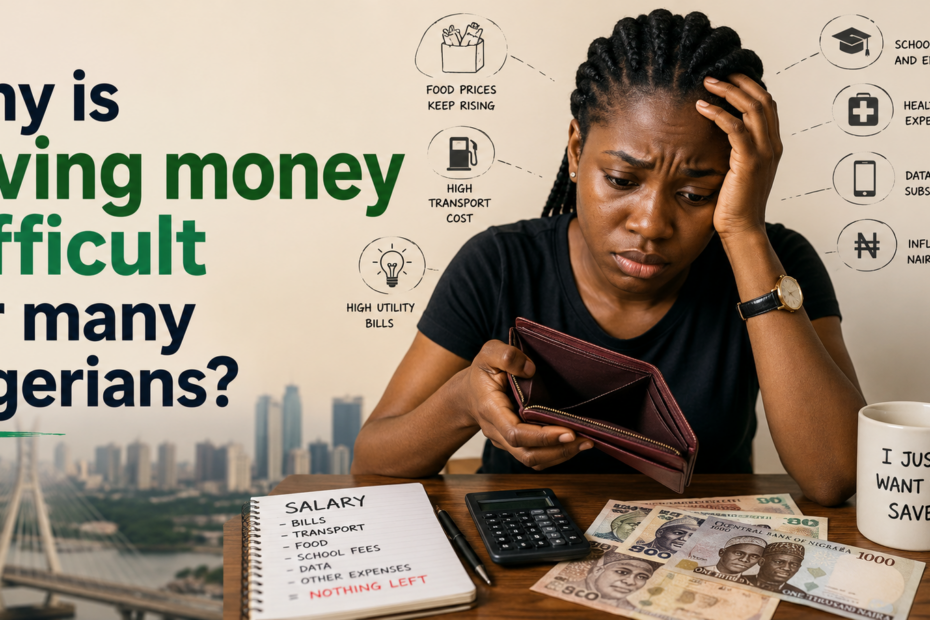
One of the biggest reasons saving money is difficult for many Nigerians is the unstable and often unpredictable nature of income.
A large portion of the population works in the informal sector, such as petty trading, transportation (like keke or motorcycle riders), freelancing, and daily wage labor.
In these roles, income is not fixed and can change from day to day depending on customers, demand, or even weather conditions.
This inconsistency makes financial planning very difficult because there is no guaranteed amount to set aside regularly.
Even among salaried workers, the situation is not always stable. Some employees experience delayed salaries, partial payments, or irregular job contracts that do not provide financial security.
Because of this, most people are forced to prioritize survival needs first. Expenses like food, transportation, rent, electricity, and supporting family members often consume whatever income comes in.
When money is uncertain, saving becomes less of a planned habit and more of a luxury that only happens when there is something left over. This reality does not reflect poor discipline, but rather the pressure of living in an environment where financial stability is not guaranteed.
The Pressure of High Cost of Living and Family Obligations
Another major reason saving money is difficult in Nigeria is the continuous rise in the cost of living. Inflation affects almost every aspect of daily life, from food items in the market to transportation, rent, electricity, and basic household needs.
Prices that were affordable a few months ago can suddenly increase, forcing people to adjust their spending without warning. Because of this, even individuals who manage to set aside some money often discover that its purchasing power reduces over time, making saving feel less rewarding or even discouraging.
Beyond inflation, family and cultural obligations also place a heavy financial burden on individuals. In many Nigerian households, financial responsibility is shared across extended family networks.
This means that earning individuals are often expected to contribute to school fees, medical bills, weddings, funerals, and emergency situations involving relatives.
These expectations are deeply rooted in cultural values of support and communal living, so refusing to contribute is rarely an option.
As a result, any attempt to save money is frequently interrupted by these social responsibilities. Savings are quickly redirected toward urgent family needs, leaving little room for long-term financial planning.
In such an environment, saving is not just about discipline; it becomes a constant balancing act between personal financial goals and unavoidable family duties.
Lack of Financial Education and Poor Money Management Habits
Another important factor that makes saving money difficult for many Nigerians is the lack of financial education. A large number of people were never formally taught how to manage personal finances, create a budget, or even track their daily spending.
As a result, money management is often based on guesswork rather than planning. Without a clear system, it becomes easy for income to disappear without a trace shortly after it is received.
In many cases, people struggle to differentiate between needs and wants. Essential expenses like food and transport get mixed with non-essential spending such as frequent data subscriptions, impulsive online purchases, eating out, or unnecessary social expenses.
These small daily costs may look harmless, but when added together, they significantly reduce the amount of money that could have been saved.
Another issue is the absence of structured financial tools and habits. Many individuals do not use budgeting apps, spreadsheets, or even simple written plans to guide their spending. Without this structure, financial decisions are made in the moment, often influenced by emotions or peer pressure.
Over time, this pattern creates a cycle where saving feels impossible, even when income is relatively enough. The problem is not always the amount earned, but the lack of a disciplined system to control and allocate it effectively.
Limited Access to Safe and Attractive Saving Systems
Another key reason saving money remains difficult for many Nigerians is the issue of trust and accessibility in formal financial systems. Although banks and digital financial platforms exist, not everyone fully trusts them or finds them easy to use.
This has led many people to rely on informal saving methods such as “ajo” (rotational savings) or thrift contributions, where groups of people contribute money and take turns collecting it. While these systems can be helpful, they are not always secure or structured for long-term financial growth.
For some individuals, keeping cash at home feels safer than depositing money in a bank or mobile app. However, this approach comes with its own risks, such as theft, misplacement, or impulsive spending.
When money is physically available, it becomes much easier to use it for unplanned expenses, especially during emergencies or emotional moments.
Another challenge is the ease of withdrawing money from formal savings platforms. Even when people attempt to save in banks or digital wallets, the temptation to withdraw funds when faced with sudden needs can weaken their savings discipline.
Without strong financial habits or restricted saving plans, the money rarely stays untouched for long.
Overall, accessibility, trust, and self-control all play a major role in whether people can successfully save or not. When these factors are weak, saving becomes inconsistent and difficult to maintain over time.
Psychological and Emotional Spending Patterns
Finally, one of the most overlooked reasons saving money is difficult for many Nigerians is emotional and psychological spending behaviour.
In many cases, money is not only spent based on needs, but also based on feelings, stress, and social pressure. After a long period of financial struggle or hard work, some individuals feel the need to “reward themselves” immediately after receiving income.
This often leads to spending on shopping, entertainment, food outings, or lifestyle upgrades that were not originally planned.
Social influence also plays a strong role in this pattern. Seeing friends or peers enjoy certain lifestyles on social media can create pressure to keep up, even when income does not fully support it.
This can lead to impulsive decisions, such as buying new clothes, gadgets, or going out frequently just to feel included or accepted. Over time, these small emotional decisions accumulate and significantly reduce the ability to save.
In addition, many people use spending as a form of emotional relief. Stress, financial pressure, or personal challenges can make spending feel like a temporary escape. However, this creates a cycle where money is quickly spent after payday, leaving little or nothing to save.
Because of these emotional triggers, saving becomes not just a financial issue but also a behavioural one. Without awareness and self-control, even a good income can disappear quickly, making consistent saving very difficult.
Frequently Asked Questions
Why is it difficult for people to save money?
Saving money is difficult for many people because income and expenses rarely arrive in a balanced way.
In places like Nigeria, where the cost of living continues to rise, most people are already using a large portion of their income on essential needs such as food, transportation, rent, and utilities.
When these basic needs consume most of what someone earns, very little is left to set aside. This creates a situation where saving feels more like a luxury than a habit.
Even when people genuinely want to save, emergencies such as medical bills, family support, or unexpected expenses often interrupt their plans and force them to spend what they had saved.
Another major reason is lack of financial structure. Many people do not have a clear budget that separates needs, wants, and savings. Without a system, money tends to “disappear” before the month ends.
Emotional spending also plays a strong role. Stress, social pressure, and the desire to enjoy life can push people to spend impulsively, especially after receiving salary or small business profits.
Social media also contributes by constantly exposing people to lifestyles that may not match their financial reality.
In addition, trust issues with financial systems affect saving behavior. Some individuals prefer keeping cash at home or using informal saving methods because they feel banks are complicated or not flexible enough.
This reduces consistency in saving habits. Over time, these combined factors make saving money feel difficult, even when the intention is strong.
What is the best way to save money in Nigeria?
The best way to save money in Nigeria is to combine discipline with simple financial systems that match everyday realities. The first step is to treat saving as a fixed obligation, not whatever is left after spending.
A practical approach is the “pay yourself first” method, where a percentage of income is moved into savings immediately after receiving money. This prevents the temptation of spending everything and ensures consistency regardless of lifestyle pressures.
Using structured financial platforms also helps a lot. Digital savings apps and banks such as Access Bank, Zenith Bank, and Guaranty Trust Bank provide savings accounts with interest options, while fintech platforms like Kuda Bank and PiggyVest offer automated savings features that lock funds for a period. These tools reduce the temptation to withdraw money impulsively.
Budgeting is another powerful strategy. When income is planned into categories like food, transport, bills, savings, and leisure, it becomes easier to control spending. Even small amounts saved consistently can grow over time, especially when discipline is maintained.
In Nigeria’s economic environment, flexibility is important, so people can start small—sometimes as little as 5–10% of income—and increase gradually as income improves.
Avoiding emotional spending is also crucial. Many people spend based on mood or peer pressure, which weakens saving ability.
By separating emotional needs from financial decisions, individuals can protect their savings. Ultimately, the best saving method is not about how much you earn, but how consistently you apply structure and discipline to what you already have.
Why do I struggle so much to save money?
Struggling to save money is often less about income and more about behavior, environment, and financial habits. One of the most common reasons is the absence of a clear money plan.
When income enters your hands without a structured allocation, it becomes easy for spending to happen randomly. This leads to a situation where money feels like it disappears quickly, even when earnings are steady.
Another important factor is lifestyle pressure. Many people compare themselves with friends, colleagues, or social media lifestyles and feel the need to match them.
This can lead to unnecessary spending on clothes, outings, gadgets, or experiences that are not aligned with actual financial capacity. Over time, this reduces the ability to save consistently.
Emotional triggers also play a strong role. Stress, boredom, or even celebration can cause impulsive financial decisions. Instead of saving or investing, money is often used for short-term comfort.
This cycle becomes harder to break when it repeats regularly. Additionally, lack of financial education contributes to the struggle. Without understanding budgeting or savings systems, it becomes difficult to build discipline.
Another hidden reason is unrealistic expectations. Some people expect to save large amounts immediately, and when they fail, they give up entirely.
In reality, saving is a gradual process that builds through consistency, even if the amount is small at the beginning. The key issue is not inability, but lack of a structured system that supports long-term discipline and removes temptation from easy access to money.
Why is Gen Z not saving money?
Gen Z faces unique financial challenges that make saving more difficult compared to earlier generations. One major reason is the digital lifestyle they live in.
With constant access to social media, online shopping, and entertainment platforms, spending opportunities are always one click away. This makes impulsive purchases more frequent, especially when trends change quickly and the pressure to “keep up” is strong.
Another factor is income instability. Many young people in Gen Z are either students, freelancers, or early in their careers, meaning their income is often irregular or low.
When money is unpredictable, saving becomes inconsistent. Even when they try to save, unexpected expenses or lifestyle demands quickly reduce what is set aside.
There is also a shift in financial mindset. Gen Z tends to prioritize experiences, flexibility, and enjoyment of life over long-term traditional saving habits.
While this mindset is not inherently bad, it often reduces the discipline required for structured savings. Many also lack exposure to financial education early in life, so they rely on trial and error when managing money.
Additionally, digital financial tools make spending feel less “real.” Using cards, apps, or online payments reduces the psychological impact of spending cash, making it easier to lose track of expenses.
However, it is important to note that Gen Z is not completely careless with money. Many are adopting modern savings methods through apps like PiggyVest and digital banks like Kuda Bank, showing that the issue is not refusal to save, but rather adapting to a fast-paced financial environment.
Which bank in Nigeria is best for savings?
The best bank for savings in Nigeria depends on what you value most—interest rates, accessibility, digital features, or discipline tools.
Traditional banks like Access Bank, Zenith Bank, and Guaranty Trust Bank are widely trusted and offer reliable savings accounts with strong security and nationwide branch access. They are ideal for people who prefer physical banking support and long-term financial stability.
However, modern digital banking has introduced more flexible savings options. Platforms like Kuda Bank offer zero or low fees and easy mobile-based savings tools that help users track spending and automate savings.
This makes it easier for people who struggle with discipline to build consistency.
Another strong option is PiggyVest, which is not a traditional bank but a savings and investment platform designed specifically to help users lock funds, build habits, and earn returns over time.
For strict savers, apps with locked savings features are often more effective than traditional accounts because they reduce the temptation to withdraw money frequently.
On the other hand, conventional banks are better for people who want full banking services such as loans, business accounts, and physical customer support.
Ultimately, the best savings option in Nigeria is not just about the institution but about how well it supports discipline, automation, and consistency in your financial behavior.
How to earn 5000 naira per day in Nigeria?
Earning ₦5,000 daily in Nigeria is realistic, but it usually requires either a small business, a skilled service, or consistent online/offline hustle rather than a single fixed job.
The most common way people achieve this level of daily income is through value-based services such as food sales, mini importation, digital work, or local errands.
For example, selling snacks, drinks, or fast-moving household items in a busy area can generate steady daily profit if location and pricing are right. The key is not just selling, but choosing products people need every day.
Another strong option is skill-based work. Skills like barbing, hairdressing, makeup, phone repair, or laundry services can easily generate ₦5,000 or more daily once you have regular customers.
Even simple digital skills such as graphic design, writing, or social media management can produce this income if you get consistent clients. Freelancing platforms and social media marketing also make it easier to reach customers beyond your immediate environment.
Online opportunities also contribute. Some people earn through affiliate marketing, content creation, and small-scale reselling on platforms like WhatsApp, Instagram, or Jumia/Konga vendor systems. However, online income requires consistency and patience before it becomes stable.
The most important factor is not the method alone but discipline and consistency. Many people start earning small amounts but fail to reinvest or scale their effort.
To reach ₦5,000 daily, you often need to combine strategies, such as selling a product while also offering a service. Location, visibility, and customer trust are also critical. In summary, it is achievable, but it requires treating your income source like a real business rather than a casual activity.
How do I force myself to save money?
Forcing yourself to save money is less about pressure and more about creating a system that removes temptation and makes saving automatic.
One of the most effective methods is “paying yourself first,” where you move a fixed percentage of your income into savings immediately after you receive money. This ensures you save before spending starts, rather than trying to save what is left at the end.
Another powerful strategy is using locked or automated savings platforms. Digital tools like PiggyVest and Kuda Bank help users lock money for a period, making it harder to withdraw impulsively. When money is not easily accessible, discipline becomes easier to maintain.
You can also create mental separation between spending money and savings money. For example, using different accounts for different purposes helps reduce confusion and temptation.
Some people even go as far as naming their savings goals, such as “rent,” “emergency fund,” or “investment,” which strengthens commitment.
Another important technique is limiting exposure to triggers. If social media or peer pressure causes unnecessary spending, reducing exposure can help you stay focused.
Budgeting also plays a big role. When you assign every naira a purpose, you reduce waste and increase control over your finances.
Finally, start small. Many people fail because they try to save too much at once. Even saving 5–10% consistently builds discipline over time. The goal is not just saving money, but building a habit that becomes automatic, even when income increases.
What are the causes of poor saving?
Poor saving habits are usually caused by a combination of financial behavior, environment, and lack of structure rather than income alone. One major cause is the absence of budgeting.
When people do not plan how their income should be spent, money tends to disappear through random and untracked expenses. This makes saving feel impossible even when income is stable.
Another major cause is emotional spending. Many individuals spend money based on mood, stress, or social influence.
For example, buying things to feel better after a stressful day or spending to fit into social groups reduces the ability to save consistently. Over time, these emotional decisions create financial instability.
Low financial literacy also plays a role. Without proper understanding of savings systems, interest, or budgeting methods, people often rely on trial and error.
This leads to inconsistency and discouragement. In addition, irregular income—common among freelancers, small business owners, and informal workers—makes saving difficult because earnings are unpredictable.
Lifestyle inflation is another hidden cause. As income increases, spending also increases instead of savings growing.
People upgrade their lifestyle immediately without building financial buffers. Social pressure also contributes heavily, especially in environments where appearance and status are valued.
Lastly, easy access to money without discipline reduces saving habits. When funds are always available for withdrawal, it becomes harder to maintain long-term goals. Overall, poor saving is not just about lack of money but lack of structure, discipline, and awareness of financial priorities.
What are 5 warning signs of financial trouble?
One of the first warning signs of financial trouble is consistently living from paycheck to paycheck.
When income arrives and disappears quickly without savings or surplus, it shows that spending is too close to or above earnings. This creates vulnerability to even small financial shocks.
Another sign is relying heavily on debt to survive daily life. When borrowing becomes a routine way to pay bills, buy food, or cover transport, it indicates that income is no longer enough to support basic needs. Over time, this can lead to a cycle of increasing debt and financial stress.
A third warning sign is the inability to save anything at all. Even small savings matter, and when someone cannot set aside money regardless of income level, it often means spending habits are not balanced.
This is especially concerning when income is stable but savings remain zero.
Frequent financial anxiety is also a major indicator. Constant worry about money, bills, or unexpected expenses shows that financial planning is weak. This stress often affects decision-making and leads to more impulsive financial behavior.
Lastly, ignoring bills or delaying payments is a serious red flag. When essential obligations like rent, utilities, or loans are consistently postponed, it signals deeper financial instability. Together, these signs show that financial habits need urgent adjustment before the situation worsens.
Is OPay richer than Zenith Bank?
Comparing whether OPay is richer than Zenith Bank is not straightforward because they operate in very different financial categories.
Zenith Bank is one of the largest traditional banks in Nigeria with decades of operations, a large asset base, extensive customer deposits, and strong profitability records.
It is publicly listed and regulated as a full commercial bank, which means its financial strength is measured through assets, capital reserves, and long-term financial performance.
OPay, on the other hand, is a fintech company focused on digital payments, mobile banking services, and financial technology solutions.
It has grown rapidly due to Nigeria’s increasing adoption of mobile money and digital transactions. However, fintech companies like OPay are typically evaluated differently from traditional banks.
Their value is often based on user base, transaction volume, and investor funding rather than long-established banking assets.
In terms of financial scale and institutional strength, Zenith Bank is significantly larger and more established. It holds more traditional financial power, regulatory backing, and asset value compared to OPay.
However, in terms of digital influence and transaction innovation, OPay has strong market penetration among mobile users, especially in everyday payment services.
So, instead of saying one is “richer,” it is more accurate to say they serve different financial roles.
Zenith Bank represents traditional banking strength and long-term financial stability, while OPay represents fast-growing digital finance innovation in Nigeria’s evolving financial ecosystem.
Where to invest 50k for 2 years?
Investing ₦50,000 for two years in Nigeria depends on your risk level, but the safest and most realistic option is a mix of savings and low-risk investment platforms.
If your goal is capital protection, you can use fixed savings or treasury-style products offered by digital platforms like PiggyVest or cooperative savings groups.
These options usually give steady but moderate returns while keeping your money secure. Some commercial banks also offer fixed deposit accounts where you lock your money for a specific period and earn interest.
If you are open to slightly higher returns, you can explore money market funds, which invest in government-backed securities and short-term instruments.
These are considered low-risk and often outperform regular savings accounts. However, returns are not fixed and may change depending on market conditions.
The key idea is matching your investment choice with your goal. If safety is your priority, go for fixed savings or bank deposits.
If you want growth, consider money market funds or diversified fintech investment plans. Avoid high-risk “quick profit” schemes, especially those promising unrealistic returns.
Which Nigerian bank pays the highest interest rate?
In Nigeria, interest rates on savings accounts are generally regulated and do not differ dramatically between banks.
However, some banks and digital platforms offer slightly better returns through specialized savings or fixed deposit products.
Traditional banks like Guaranty Trust Bank, Zenith Bank, and Access Bank typically offer competitive but similar interest rates for savings accounts.
Where you often see higher returns is not in standard savings accounts but in fixed deposits or money market-linked products. These products reward customers who lock funds for a period of time.
Digital savings platforms like Kuda Bank and PiggyVest also offer interest on locked savings, sometimes higher than traditional banks due to their structure and investment model.
It is important to understand that in Nigeria, “highest interest” should not be the only factor. Safety, accessibility, and withdrawal flexibility matter just as much.
A slightly lower interest rate in a stable bank is often better than chasing higher returns in risky or unregulated platforms. Always ensure the institution is licensed by the Central Bank of Nigeria before committing funds.
How to save 1k in 3 months?
Saving ₦1,000 in three months is very achievable, and the goal is more about building discipline than the amount itself. The simplest approach is breaking the target into smaller daily or weekly contributions.
For example, saving just ₦10–₦20 daily can easily help you reach the target without feeling financial pressure.
Another effective method is using physical or digital “micro-saving” systems. You can set aside coins or small notes immediately after every transaction.
Over time, these small amounts accumulate without affecting your daily expenses. Digital apps like Kuda Bank can also automate this process by rounding up transactions or moving small amounts into savings automatically.
The key to success is consistency, not intensity. Even if you miss a day, you can continue the next without guilt. The goal is to build a habit of saving, not just to reach ₦1,000. This method is especially useful for students or low-income earners who want to develop financial discipline gradually.
What are 7 ways to save money?
Saving money effectively requires combining discipline, structure, and awareness of spending habits.
One important method is paying yourself first, where you save a portion of your income immediately after receiving it. Another approach is budgeting, which helps you assign every naira a purpose and avoid unnecessary spending.
A third method is automated saving, where money is transferred automatically into a savings account or locked wallet using platforms like PiggyVest or Kuda Bank. Fourth, reducing impulse spending is crucial—this means avoiding emotional purchases driven by stress or social pressure.
Fifth, tracking expenses helps you understand where your money goes each month. Sixth, setting specific financial goals such as rent, emergency funds, or investment creates motivation to stay consistent. Finally, living below your means ensures that your lifestyle does not grow faster than your income.
When combined, these methods create a strong financial structure that makes saving easier and more natural over time.
How to have willpower to save money?
Building willpower to save money starts with changing how you think about money, not just your actions.
The strongest approach is to make saving automatic so you rely less on self-control. When money is moved into savings immediately, there is less temptation to spend it.
Another important step is setting clear goals. When you know exactly what you are saving for—whether it is emergency funds, education, or investment—it becomes easier to resist unnecessary spending. Emotional connection to goals strengthens discipline.
Avoiding triggers is also important. If certain environments, apps, or social circles encourage spending, reducing exposure helps protect your savings. Willpower is not just mental strength; it is also environmental control.
Finally, start small and build gradually. Many people fail because they try to save too aggressively at once. Small consistent savings build confidence and long-term discipline. Over time, saving becomes a habit rather than a struggle, and willpower is no longer the main driver—it becomes automatic behavior.