Living on a low income can make budgeting feel like an uphill battle. For many people, their monthly earnings are only enough to cover essential expenses such as rent, food, transportation, and utility bills, leaving little or nothing for savings.
As the cost of living continues to rise, even basic necessities become more expensive, making it harder to stay within budget. Unexpected expenses, such as medical bills, home repairs, or family emergencies, can quickly disrupt financial plans and force people to borrow money.
On top of that, repaying existing debts or loans often consumes a significant portion of their income, making it difficult to break the cycle of living from paycheck to paycheck.
These challenges are real, but choosing the right budgeting method can help low-income earners take control of their finances and make the most of every amount they earn.
What Is a Budgeting Method?
A budgeting method is a structured system for planning how you will earn, spend, save, and manage your money over a specific period, usually a month.
Instead of spending your income without a clear plan, a budgeting method helps you decide in advance how much money should go toward essential expenses, savings, debt repayments, and personal needs. This makes it easier to stay in control of your finances and avoid unnecessary spending.
There is no single budgeting method that works perfectly for everyone because people’s incomes, expenses, and financial goals differ. A budgeting strategy that suits someone with a high income may not be practical for someone living on a tight budget.
For low-income earners, the best budgeting methods are those that prioritize essential needs, encourage disciplined spending, and make it possible to save, even if the amount is small.
Choosing a method that matches your financial situation is more important than following a popular budgeting rule that may not fit your circumstances.
Popular Budgeting Methods to Consider
There are several budgeting methods available, each designed to help people manage their money in different ways. While no single approach is suitable for everyone, understanding the most common options can help you choose the one that best fits your income and financial goals.
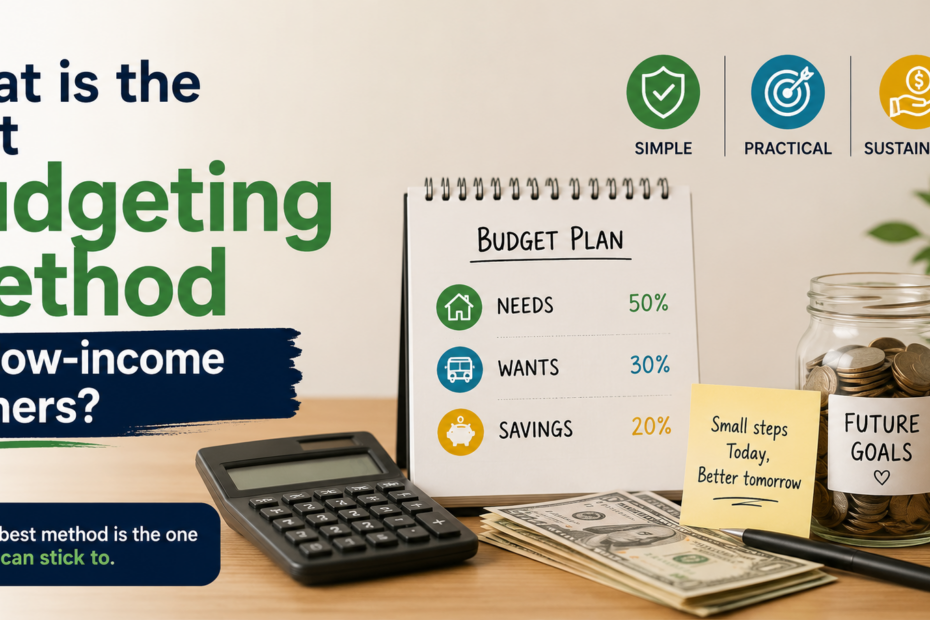
The 50/30/20 Budget Rule divides your income into three categories: 50% for essential needs, 30% for wants, and 20% for savings and debt repayment. It is simple to follow, but it may be difficult for low-income earners whose essential expenses already consume most of their income.
The Zero-Based Budget requires you to assign every amount of your income to a specific purpose, such as rent, food, transportation, savings, or debt payments. By the end of your budget, every naira or dollar has a designated job, helping you stay in control of your spending.
The Envelope Budgeting System involves setting aside cash for different spending categories in separate envelopes. Once an envelope is empty, you stop spending in that category until your next budgeting period. This method is especially useful for controlling overspending.
The Pay Yourself First Method encourages you to save a portion of your income before paying for other expenses. Even setting aside a small amount consistently can help build an emergency fund and develop a long-term saving habit.
With Percentage Budgeting, you allocate fixed percentages of your income to different categories, such as housing, food, transportation, savings, and entertainment. The percentages can be adjusted to match your financial situation and priorities.
Finally, the Cash-Only Budget limits spending by using physical cash instead of debit or credit cards. Since you can only spend the cash you have on hand, this method can reduce impulse purchases and help you stick to your budget.
Each of these budgeting methods has its own strengths and weaknesses. However, for people living on a limited income, some methods are more practical and effective than others. In the next section, we’ll explore which budgeting method is generally considered the best for low-income earners and why it stands out.
Why Zero-Based Budgeting Is the Best Method for Low-Income Earners
Among the many budgeting methods available, Zero-Based Budgeting is often the best choice for low-income earners because it gives you complete control over every amount of money you receive.
Rather than wondering where your income went at the end of the month, this method requires you to assign every naira to a specific purpose before you spend it.
Whether it’s for rent, food, transportation, savings, debt repayment, or emergencies, every naira has a job. The goal is not to spend all your money but to ensure every amount is accounted for, including the money you intend to save.
One of the biggest advantages of Zero-Based Budgeting is that it reduces unnecessary spending. When you have already planned how much to spend in each category, you’re less likely to make impulse purchases or waste money on things you don’t truly need.
This is especially important for people with limited incomes, where even small unnecessary expenses can have a significant impact on the monthly budget.
Another reason this budgeting method works so well is that it helps prevent you from running out of money before your next payday. Since your income is allocated in advance, you know exactly how much you can spend on groceries, transport, utilities, and other essential expenses.
This level of planning reduces the chances of overspending early in the month and struggling financially before your next paycheck arrives.
Zero-Based Budgeting also makes saving more achievable, even if your income is modest. Many people believe they need to earn a high salary before they can save, but this method proves otherwise.
By assigning a specific amount to savings at the beginning of the month—even if it’s just ₦1,000 or ₦2,000—you make saving part of your budget instead of treating it as an afterthought. Over time, these small, consistent contributions can grow into an emergency fund or help you reach other financial goals.
Perhaps the greatest strength of Zero-Based Budgeting is that it encourages intentional spending. Every financial decision is made with purpose rather than emotion or habit.
Before spending money, you ask yourself whether the purchase fits within your budget and aligns with your priorities. This mindset helps you focus on what truly matters while avoiding expenses that don’t add real value to your life.
For low-income earners, financial success isn’t always about earning more—it often starts with managing available income more effectively. Zero-Based Budgeting provides a practical framework for doing exactly that.
By giving every naira a purpose, reducing wasteful spending, planning ahead for essential expenses, and making room for consistent savings, it offers a simple yet powerful way to build better financial habits and achieve greater peace of mind.
How Zero-Based Budgeting Works
Zero-Based Budgeting is simple in principle: before the month begins, you assign every naira of your income to a specific purpose until your available income equals zero.
This doesn’t mean you spend all your money. Instead, it means every naira is accounted for, whether it’s used for bills, groceries, transportation, savings, or your emergency fund. By planning ahead, you know exactly where your money is going and avoid spending it without thinking.
Here’s an example of how someone earning ₦80,000 per month could use Zero-Based Budgeting:
| Category | Amount |
|---|---|
| Monthly Income | ₦80,000 |
| Rent | ₦20,000 |
| Food | ₦25,000 |
| Transportation | ₦10,000 |
| Utilities | ₦8,000 |
| Savings | ₦5,000 |
| Emergency Fund | ₦2,000 |
| Miscellaneous | ₦10,000 |
| Remaining Balance | ₦0 |
This example shows that every naira has been assigned a job before any money is spent.
Essential expenses such as rent, food, and transportation are covered first, while money is also set aside for savings and unexpected emergencies. Any remaining funds are allocated to miscellaneous expenses, ensuring the entire income has a clear purpose.
It’s important to understand that a remaining balance of ₦0 does not mean you’ve spent all your money. Instead, it means you’ve created a plan for every naira you earn.
The ₦5,000 allocated to savings and the ₦2,000 set aside for your emergency fund are still your money—they’ve simply been given a specific purpose rather than being left unplanned.
This proactive approach helps reduce financial stress because you know exactly how much you can afford to spend in each category.
It also minimizes impulse purchases, prevents overspending before payday, and encourages consistent saving, even when your income is limited. Over time, following this budgeting method can help you build stronger financial habits and gain greater control over your money.
How Zero-Based Budgeting Compares to Other Budgeting Methods
Choosing the right budgeting method can make a significant difference, especially if you’re living on a limited income. While several budgeting systems can help you manage your money, they are not equally effective for everyone.
Some methods are better suited to people with stable, higher incomes, while others are designed to help those who need to stretch every naira. The table below compares some of the most popular budgeting methods and explains why Zero-Based Budgeting often stands out as the best option for low-income earners.
| Budget Method | Good for Low-Income Earners? | Why |
|---|---|---|
| 50/30/20 Budget Rule | Sometimes | It works well for people with higher incomes, but many low-income earners spend more than 50% of their income on essential needs, making the rule difficult to follow. |
| Zero-Based Budgeting | Yes | Every naira is assigned a purpose before spending, giving you complete control over your income and helping prevent wasteful spending. |
| Envelope Budgeting System | Yes | Using cash envelopes for different spending categories helps limit overspending and makes it easier to stick to your budget. |
| Pay Yourself First Method | Good | Prioritizes saving by setting money aside before paying other expenses, helping you build a consistent saving habit over time. |
| Percentage Budgeting | Sometimes | Flexible percentage allocations can work well, but they may not reflect the reality of low-income households where essential expenses vary from month to month. |
| Cash-Only Budget | Good | Reduces impulse purchases and discourages unnecessary spending since you can only spend the cash you have available. |
When comparing these budgeting methods, Zero-Based Budgeting clearly offers the greatest level of control for people with limited incomes.
Rather than relying on fixed percentages or broad spending categories, it requires you to plan every naira before the month begins.
This approach ensures that essential expenses are covered first, savings are included in your plan, and every amount of money has a clear purpose.
Another advantage is its flexibility. If your income changes from one month to the next, you can simply create a new budget based on the money you actually have. This makes Zero-Based Budgeting especially useful for freelancers, small business owners, commission-based workers, and anyone with an irregular income.
Ultimately, while all of these budgeting methods have their strengths, Zero-Based Budgeting stands out because it helps low-income earners maximize every naira they receive.
By planning ahead, reducing unnecessary spending, and making room for consistent savings, it provides a practical and sustainable way to achieve better financial stability.
Tips for Making Any Budget Work
Choosing the right budgeting method is only the first step. To achieve lasting financial success, you also need consistent habits that help you stick to your plan.
Regardless of whether you use Zero-Based Budgeting, the Envelope System, or another budgeting method, the following practical tips can help you manage your money more effectively and make the most of your income.
Track Every Expense
One of the biggest reasons budgets fail is that people don’t know exactly where their money goes. Keep a record of every expense, no matter how small.
Whether you use a budgeting app, a notebook, or a spreadsheet, tracking your spending helps you identify unnecessary expenses and stay within your budget.
Separate Needs From Wants
Before making a purchase, ask yourself whether it’s a need or a want. Needs include essential expenses such as rent, food, transportation, utilities, and healthcare, while wants are non-essential items like entertainment, luxury purchases, or eating out frequently. Prioritizing your needs ensures your essential bills are paid before spending on extras.
Cook More Meals at Home
Preparing your meals at home is one of the easiest ways to reduce monthly expenses. Buying groceries and cooking in bulk is often much cheaper than eating at restaurants or ordering takeout regularly. The money you save can be redirected toward savings, debt repayment, or other financial goals.
Avoid Impulse Buying
Impulse purchases can quickly derail even the best budget. Before buying something that wasn’t part of your plan, give yourself time to think it over. Waiting 24 hours before making non-essential purchases can help you decide whether you truly need the item or if it’s simply a temporary desire.
Save Small Amounts Consistently
Many people believe saving is only possible with a high income, but consistency matters more than the amount. Even if you can only save ₦500, ₦1,000, or ₦2,000 each month, those small contributions add up over time. Treat savings as a regular expense by including it in your monthly budget.
Review Your Budget Every Month
Your financial situation can change from month to month due to changes in income, expenses, or personal circumstances. Reviewing your budget regularly allows you to make adjustments, identify areas where you’re overspending, and ensure your budget continues to reflect your current financial priorities.
Build an Emergency Fund Gradually
Unexpected expenses are a part of life, and having an emergency fund can prevent you from relying on loans or credit when they occur.
Start with a realistic goal, such as saving enough to cover a few days or weeks of expenses, and increase your emergency savings over time. Even small, regular contributions can provide valuable financial security.
No budgeting method works perfectly without commitment and discipline. By tracking your expenses, spending intentionally, saving consistently, and reviewing your financial plan regularly, you can make almost any budget successful.
Over time, these simple habits will help you gain greater control over your finances, reduce financial stress, and move closer to achieving your long-term financial goals.
Common Budgeting Mistakes to Avoid
Even the best budgeting method won’t produce the desired results if you make common financial mistakes. Many people start a budget with good intentions but struggle to stick with it because they overlook small details that have a big impact on their finances.
By recognizing these mistakes early, you can avoid unnecessary setbacks and keep your budget working effectively.
Not Tracking Your Expenses
One of the most common budgeting mistakes is failing to record where your money goes. Without tracking your expenses, it’s easy to underestimate how much you’re spending on everyday items.
Small purchases made throughout the month can quickly add up, leaving you wondering why your budget isn’t working. Recording every expense helps you identify spending patterns and make better financial decisions.
Forgetting Irregular Bills
Many people only budget for their monthly expenses and forget about costs that don’t occur every month.
Expenses such as school fees, insurance premiums, annual subscriptions, vehicle maintenance, festive celebrations, or home repairs can disrupt your finances if you haven’t planned for them.
Setting aside a small amount each month for these irregular bills makes them much easier to manage when they become due.
Setting Unrealistic Savings Goals
While saving money is important, setting goals that are too ambitious can leave you frustrated.
If your income is limited, trying to save a large percentage of your salary may force you to neglect essential expenses or abandon your budget altogether.
Instead, start with an amount you can comfortably afford and increase it gradually as your financial situation improves.
Ignoring Small Daily Purchases
It’s easy to overlook small daily expenses because they don’t seem significant on their own.
However, buying snacks, soft drinks, coffee, or making frequent impulse purchases can quietly consume a large portion of your income over time.
Paying attention to these seemingly minor expenses can help you identify opportunities to save more without making major lifestyle changes.
Not Adjusting Your Budget When Your Income Changes
A budget should never remain the same if your financial situation changes. Whether your income increases, decreases, or becomes irregular, your budget should be updated to reflect your current circumstances.
Failing to make adjustments can lead to overspending, missed savings goals, or difficulty paying essential bills. Reviewing your budget whenever your income changes helps you stay in control of your finances.
Avoiding these common budgeting mistakes can make a significant difference in your financial journey.
A successful budget isn’t just about creating a spending plan—it’s about reviewing it regularly, adapting it when necessary, and staying committed to your financial goals.
By tracking your expenses, planning for irregular costs, setting realistic savings targets, monitoring small purchases, and updating your budget as your income changes, you’ll be better equipped to manage your money and build long-term financial stability.
Best Budgeting Apps and Tools
Using the right budgeting tool can make it much easier to manage your money and stick to your financial plan. The good news is that you don’t need expensive software to create and maintain a budget.
Whether you prefer digital tools or traditional pen and paper, there are plenty of options that can help you track your income, monitor your expenses, and achieve your financial goals.
Google Sheets
Google Sheets is a free and flexible budgeting tool that allows you to create customized monthly budgets. You can organize your income, expenses, savings, and debt repayments in one place, and because it stores your files online, you can access your budget from any device with an internet connection.
Microsoft Excel
Microsoft Excel remains one of the most popular budgeting tools for individuals and families.
It offers ready-made budgeting templates as well as advanced features such as formulas and charts that help you analyze your spending habits. If you’re comfortable using spreadsheets, Excel is an excellent choice for managing your finances.
Notes App
If you prefer a simple approach, the Notes app on your smartphone can be surprisingly effective. You can quickly record your daily expenses, shopping lists, or monthly budget without needing any additional software. It’s a convenient option for beginners who want to start budgeting immediately.
Budget Notebook
Many people still prefer writing their budgets by hand. A dedicated budget notebook allows you to record your income, expenses, savings, and financial goals in one place. Writing things down can also make you more mindful of your spending and help you stay committed to your budget.
Money Manager Apps
Money Manager apps are designed to simplify personal finance by automatically organizing your income and expenses into different categories.
Many of these apps include features such as spending reports, budget reminders, and savings trackers, making it easier to monitor your financial progress throughout the month.
Wallet App
A Wallet app helps you keep track of your finances by recording transactions, creating budgets, and showing where your money is going.
Some wallet apps can even sync with your bank accounts, giving you a real-time overview of your spending and helping you make informed financial decisions.
Goodbudget
Goodbudget is a digital version of the traditional envelope budgeting system. Instead of using physical cash envelopes, you allocate money into virtual envelopes for categories such as groceries, transportation, rent, and entertainment. This approach helps control spending while making it easier to stay within your budget.
Choose the Tool That Works Best for You
The best budgeting tool is the one you’ll use consistently. Some people enjoy using mobile apps and spreadsheets, while others prefer the simplicity of writing everything in a notebook.
If you’re more comfortable with pen and paper, a simple notebook is more than enough to create and follow an effective budget. What matters most isn’t the tool you choose—it’s developing the habit of tracking your income, planning your expenses, and reviewing your budget regularly.
Is the 50/30/20 Rule Good for Low-Income Earners?
The 50/30/20 budgeting rule can be a helpful starting point, but it isn’t always the best choice for low-income earners.
The rule recommends allocating 50% of your income to essential needs, 30% to wants, and 20% to savings and debt repayment.
While this structure works well for many people with stable or higher incomes, it can be difficult to follow when you’re earning a modest salary.
Why the 50/30/20 Rule Can Be Challenging
For many low-income earners, essential expenses such as rent, food, transportation, utilities, and healthcare often consume much more than 50% of their monthly income.
In some cases, these necessities may account for 70% or even 80% of what they earn. This leaves very little room for discretionary spending or saving, making it unrealistic to stick to the traditional 50/30/20 percentages.
Trying to force your budget into these fixed categories can lead to frustration and may cause you to feel like you’re failing, even though the real issue is that your income simply doesn’t fit the rule.
A More Flexible Approach
Instead of following the 50/30/20 rule exactly, low-income earners may benefit from adjusting the percentages to match their financial reality.
For example, if your essential expenses take up a larger share of your income, it’s perfectly acceptable to reduce the amount allocated to wants and start with a smaller savings goal.
The key is to create a budget that reflects your actual income and necessary expenses rather than trying to fit into a rigid formula.
For many people, Zero-Based Budgeting is a more practical alternative because it doesn’t rely on fixed percentages. Instead, it allows you to assign every naira to a specific purpose based on your current financial situation.
This flexibility makes it easier to cover essential expenses, save what you can, and avoid unnecessary spending without feeling restricted by preset spending limits.
The Bottom Line
The 50/30/20 rule is a useful budgeting framework, but it isn’t ideal for everyone. If your income is low and your essential expenses already exceed 50% of your earnings, don’t feel pressured to follow it exactly.
A flexible budgeting method such as Zero-Based Budgeting is often a better option because it helps you plan every naira according to your priorities, making it easier to stay in control of your finances regardless of how much you earn.
Real-Life Example: How Zero-Based Budgeting Made a Difference
To see how Zero-Based Budgeting works in practice, consider the story of Tunde, a warehouse assistant who earned ₦70,000 per month. Although his salary covered his basic needs, he never seemed to have enough money by the end of the month.
He spent without a clear plan, often made impulse purchases, and regularly borrowed money from friends or took short-term loans just to get through the final week before payday.
Before Using Zero-Based Budgeting
Like many low-income earners, Tunde didn’t know exactly where his money was going. He paid his major bills first but spent the remaining money without setting limits for food, transportation, or personal expenses.
Small daily purchases, such as snacks, drinks, and unplanned shopping, gradually drained his income. Because he never included savings in his budget, unexpected expenses always forced him to borrow money.
What Changed?
After learning about Zero-Based Budgeting, Tunde decided to give every naira a purpose before the month began. He created a simple budget that covered his rent, food, transportation, utility bills, and debt repayments.
He also set aside ₦3,000 each month for savings and reduced unnecessary spending by avoiding impulse purchases and eating out less frequently.
Instead of wondering how much money he had left to spend, he followed the spending limits he had already planned. This gave him greater control over his finances and helped him avoid wasting money on things he didn’t truly need.
The Results After Six Months
By sticking to his budget consistently, Tunde no longer needed to borrow money before payday. His monthly savings of ₦3,000 gradually grew into an emergency fund that covered unexpected expenses, such as minor medical bills and household repairs.
Rather than relying on loans, he was able to pay these costs from his savings, reducing financial stress and avoiding additional debt.
Tunde’s story shows that improving your finances doesn’t always require a higher salary. Sometimes, the biggest change comes from managing your existing income more intentionally.
By assigning every naira a purpose, reducing unnecessary expenses, and saving consistently, Zero-Based Budgeting can help low-income earners build financial stability one month at a time.
Frequently Asked Questions
What Is the Easiest Budgeting Method for Beginners?
The easiest budgeting method for beginners is the 50/30/20 budgeting rule because it is simple to understand and does not require advanced financial knowledge.
This method divides your monthly income into three categories. Around 50% is used for essential expenses such as rent, food, transportation, electricity, and other bills.
About 30% is allocated to personal wants, including entertainment, dining out, or hobbies, while the remaining 20% is reserved for savings, investments, or paying off debts.
Many people choose this method because it helps them develop good money habits without creating a complicated budget.
Instead of tracking every single naira spent, you focus on keeping your spending within the three main categories. As your income or expenses change, you can adjust the percentages to suit your situation.
For people living on a very low income, the traditional 50/30/20 split may not always be realistic because necessities often consume a larger portion of earnings.
In such cases, you can modify the percentages while still maintaining the same principle of setting aside money for savings whenever possible. The goal is consistency rather than perfection.
If you eventually become more comfortable managing your finances, you can move on to more detailed budgeting methods like Zero-Based Budgeting.
However, for someone just starting their financial journey, the 50/30/20 rule provides a straightforward and stress-free way to take control of money and build lasting budgeting habits.
Can I Budget If My Income Changes Every Month?
Yes, you can absolutely budget even if your income changes every month. Many freelancers, business owners, commission-based workers, artisans, and self-employed individuals do not earn a fixed salary, yet they can still manage their finances successfully with the right budgeting approach.
The key is to build your budget around your lowest expected monthly income instead of assuming you will always earn your highest amount. This creates a safety margin and helps prevent overspending during months when your earnings are lower than expected.
Once your essential expenses such as rent, food, transportation, utilities, and debt payments are covered, any extra income can be directed toward savings, emergency funds, investments, or future business expenses.
Another effective strategy is to prioritize your expenses. Separate your needs from your wants and make sure essential bills are paid first.
During months when you earn more, resist the temptation to increase unnecessary spending. Instead, save the surplus so you have money available during slower months.
Keeping a record of your income over several months also helps you identify patterns. You may notice certain seasons or periods when your earnings increase or decrease, allowing you to plan ahead more effectively.
Budgeting with an irregular income requires a little more flexibility than budgeting with a fixed salary, but it is completely achievable.
The important thing is to review your budget every month, adjust it based on your actual income, and remain disciplined. Over time, this habit can provide greater financial stability even when your earnings fluctuate.
How Much Should I Save on a Low Income?
The amount you should save on a low income depends on your financial situation, but the most important principle is to save something consistently, regardless of how small the amount may seem.
Many people believe they must save large sums before it makes a difference, but regular saving habits are far more valuable than occasional large deposits.
If your income barely covers your basic expenses, aim to save between 5% and 10% of your earnings whenever possible. If even that feels difficult, start with a fixed amount such as ₦500, ₦1,000, or any amount you can comfortably set aside every week or month. Building the habit is more important than the amount in the beginning.
As your income grows or your expenses become more manageable, gradually increase your savings. Your first financial goal should be creating an emergency fund that can help cover unexpected expenses like medical bills, urgent repairs, or temporary loss of income.
Having even a small emergency fund reduces the need to borrow money during difficult times.
Automating your savings or setting the money aside immediately after receiving your income can also improve consistency. When savings become your first priority instead of what is left over after spending, you are more likely to achieve your financial goals.
Saving on a low income may require patience, but every contribution adds up over time. Small, consistent deposits can grow into a meaningful financial cushion that provides greater security and peace of mind.
Which Budgeting Method Is Best for Nigerians?
For many Nigerians, Zero-Based Budgeting is often considered the most effective budgeting method because it gives every naira a specific purpose before it is spent. Instead of wondering where your money went at the end of the month, you decide in advance how every part of your income will be used.
This approach works particularly well in Nigeria because many households deal with rising prices, fluctuating incomes, and unexpected expenses.
By assigning every naira to categories such as food, transportation, rent, school fees, savings, business, and emergencies, you reduce wasteful spending and gain better control over your finances.
Zero-Based Budgeting is also highly flexible. Whether you earn a monthly salary, run a business, work as a freelancer, or have multiple sources of income, you can adjust your budget whenever your income changes. This makes it suitable for both fixed-income earners and people with irregular earnings.
Another advantage is that it encourages intentional spending. Before buying anything, you already know whether that expense fits into your budget. This helps reduce impulse purchases and encourages saving, even when money is limited.
Although other budgeting methods such as the 50/30/20 rule are useful, Zero-Based Budgeting often provides greater control in an economy where careful financial planning is essential.
With discipline and regular monthly reviews, many Nigerians can use this method to reduce debt, increase savings, and achieve long-term financial stability.
Is Zero-Based Budgeting Difficult?
Zero-Based Budgeting may seem difficult at first, but it becomes much easier with practice. The main idea is simple: before you begin spending, every naira of your income is assigned a specific job.
By the time you finish planning, your income minus your planned expenses and savings equals zero. This does not mean your bank account is empty; it simply means every naira has already been allocated.
For beginners, creating the first budget may take some time because you need to list all your income and expected expenses.
You may also need to estimate irregular costs such as transportation, healthcare, or school-related expenses. However, once you have completed the first few budgets, updating them each month becomes much faster.
One of the biggest benefits of Zero-Based Budgeting is the awareness it creates. Many people are surprised to discover how much they spend on small, unnecessary purchases.
By identifying these spending patterns, they can redirect money toward savings, debt repayment, or other important financial goals.
The method also encourages flexibility. If an unexpected expense arises, you simply adjust other categories instead of abandoning your budget altogether. This makes it practical even when financial circumstances change.
Although Zero-Based Budgeting requires a little more attention than simpler budgeting methods, the additional effort often leads to better financial control and fewer money-related surprises. Most people find that after a few months of consistent use, budgeting becomes a normal part of their routine rather than a difficult task.
Can I Budget Without Using an App?
Yes, you can budget effectively without using a mobile app. In fact, many people successfully manage their finances using simple tools such as notebooks, printed budgeting sheets, spreadsheets, or even handwritten envelopes for different spending categories.
A notebook allows you to record your income, planned expenses, savings goals, and daily spending in one place.
This approach is inexpensive, easy to customize, and does not require internet access or technical knowledge. Some people find that physically writing down their expenses helps them become more aware of their spending habits.
You can also use a spreadsheet on your computer if you prefer digital records without downloading a budgeting application. Spreadsheets allow you to organize your finances, calculate totals automatically, and update your budget whenever your income or expenses change.
Another popular option is the envelope budgeting system. You divide your available cash into separate envelopes labeled for categories such as food, transport, household expenses, savings, and personal spending.
Once the money in an envelope is used up, you stop spending from that category until your next budgeting period.
The most important part of budgeting is not the tool you use but the consistency with which you track your income and expenses.
Whether you choose a notebook, spreadsheet, envelopes, or a budgeting app, success comes from reviewing your finances regularly and following the plan you have created. A simple, consistent budgeting system is often more effective than a sophisticated app that you rarely use.
Conclusion
Choosing the best budgeting method isn’t about finding a one-size-fits-all solution—it’s about finding a system you can follow consistently.
Every person’s financial situation is different, so the most effective budget is one that fits your income, covers your essential expenses, and helps you work toward your financial goals without feeling overwhelmed.
For most low-income earners, Zero-Based Budgeting is often the strongest choice because it ensures every naira is assigned a purpose before it’s spent.
This approach helps reduce unnecessary spending, prevents you from running out of money before payday, and makes it easier to save consistently, even if you can only set aside a small amount each month.
By planning every expense in advance, you gain greater control over your finances and make more intentional spending decisions.
Remember, successful budgeting isn’t determined by how much you earn—it’s determined by how well you manage what you have. Whether your monthly income is ₦50,000, ₦70,000, or ₦100,000, creating a realistic budget can help you avoid debt, prepare for emergencies, and gradually build financial security.
The most important step is to start today. Use your current income to create a simple budget, prioritize your essential needs, include savings as part of your plan, and review your budget at the end of each month.
As your income or expenses change, adjust your budget accordingly. With consistency, discipline, and the right budgeting method, you can take control of your finances and make steady progress toward a more secure financial future.