Skip to content
Home ยป How to stop living paycheck to paycheck in Nigeria

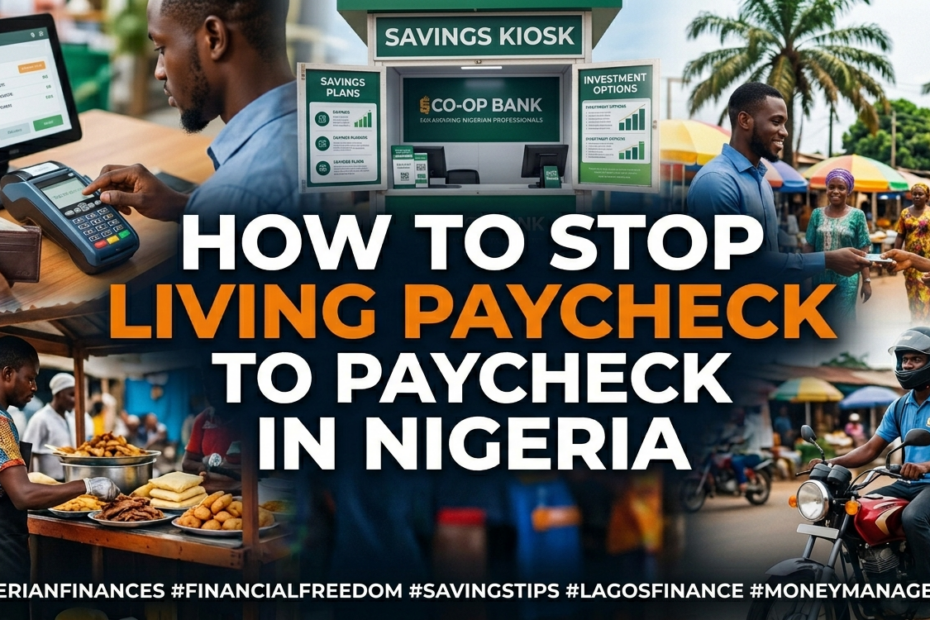
How to stop living paycheck to paycheck in Nigeria

    Many Nigerians earn a monthly salary, yet still find themselves struggling before the next payday arrives. It is a common experience: salary comes in, bills start piling up, transport and fuel costs rise unexpectedly, and before long, the money has already finished.

    This often leads to borrowing from friends, depending on loan apps with high interest, or stretching credit just to survive the remaining days of the month. What makes it more frustrating is that many people are actually working hard, yet they still cannot seem to build savings or financial stability.

    Unexpected expenses like electricity bills, medical emergencies, and daily transport costs make things even worse. However, living paycheck to paycheck is not only about low income; it is also about spending habits, lack of financial planning, and not having a clear money management strategy that fits real-life Nigerian economic challenges.

    Understand Why Youโ€™re Living Paycheck to Paycheck

    One of the first steps to breaking free from living paycheck to paycheck is understanding why it is happening in the first place. For many Nigerians, the biggest issue is the absence of a clear monthly budget. Money comes in, but there is no plan for how it should be spent, so it disappears quickly on random needs and wants.

    Another major cause is spending more than you earn. This often happens quietly through โ€œsmall-smallโ€ expenses like daily food deliveries, transport upgrades, data subscriptions, and entertainment.

    Over time, these small costs become bigger than expected. Lifestyle inflation also plays a big roleโ€”once income increases, expenses increase almost immediately to match it, leaving no room for savings.

    Debt is another trap. Many people rely on loan apps or borrow from friends to survive before month-end, which only creates a cycle of repayment stress. On top of that, depending on only one source of income makes financial stability very fragile, especially in an unstable economy.

    Impulse buying is also commonโ€”buying things not planned for just because they look attractive or feel urgent in the moment. Social media and peer pressure make it worse, as people try to โ€œkeep upโ€ with lifestyles they cannot actually afford.

    Until these root causes are identified and addressed honestly, it becomes very difficult to escape the cycle of living paycheck to paycheck.

    Create a Simple Nigerian Budget

    A major step toward stopping the cycle of living paycheck to paycheck is learning how to create a simple, realistic budget that fits Nigerian reality. Many people avoid budgeting because it feels complicated, but in truth, it is just telling your money where to go before it disappears.

    Start by listing your monthly income and dividing it into clear categories based on your actual lifestyle. In Nigeria, common spending areas include food, transport, rent, data subscription, electricity (NEPA bills), family support, and sometimes school fees or medical expenses. Once you can see everything on paper, it becomes easier to control your spending instead of guessing where the money went.

    Use the 50-30-20 Rule (Adjusted for Nigeria)

    A practical way to structure your budget is by using an adapted 50-30-20 rule:

    50% for needs:

    This covers essential survival expenses like food, transport, rent, electricity, and basic data for communication. These are non-negotiable expenses you must prioritize first.

    30% for responsibilities/family:

    In the Nigerian context, this includes family support, sending money home, school fees, debts, church/mosque contributions, and other social obligations. This category is very important because many people have financial responsibilities beyond just personal needs.

    20% for savings or investment:

    This is where financial growth begins. It includes savings, emergency funds, or small investments like side businesses, thrift (ajo/esusu), or low-risk investments. Even if income is small, this portion should be protected seriously.

    The goal is not perfection, but discipline. Once you consistently follow a budget, you begin to control your money instead of your money controlling you.

    Track Every Naira You Spend

    One of the fastest ways to stay stuck in the paycheck-to-paycheck cycle is not knowing exactly where your money goes. In Nigeria, it is often the small daily spending that silently destroys finances. It may not feel like much in the moment, but when added together at the end of the month, the damage becomes obvious.

    Think about it: taking unnecessary Bolt rides when you could use cheaper transport, buying shawarma, snacks, or drinks almost every day, or spending frequently on betting with the hope of quick profit.

    Even things like constant online shopping, impulsive Instagram purchases, or daily soft drinks and alcohol can drain a salary faster than expected. Another major hidden cost is excessive data usageโ€”subscribing to bundles every few days without tracking consumption.

    These expenses look small individually, but together they can consume a large portion of your income without you realizing it. That is why tracking every naira you spend is very important.

    You do not need anything complicated to start. A simple notebook where you write your daily expenses is enough. If you prefer digital tools, free apps like expense trackers or even your phoneโ€™s notes app can work perfectly. The key is consistency, not complexity.

    Once you start tracking, you begin to see patterns clearly. You will know what is necessary and what is wasteful. That awareness alone is powerful enough to help you start making better financial decisions and gradually break free from living paycheck to paycheck.

    Build an Emergency Fund

    An emergency fund is one of the most important financial tools for escaping the paycheck-to-paycheck cycle, especially in Nigeria where unexpected expenses happen frequently. Many people remain financially unstable not because they donโ€™t earn, but because every emergency forces them back to zero.

    Emergencies in Nigeria come in different forms. It could be sudden medical bills when someone falls sick, which often require immediate cash before treatment. It could also be fuel scarcity, where transport costs suddenly increase and disrupt your budget.

    Job loss or delayed salary payments are also common, leaving people stranded without backup funds. In many cases, unexpected family problemsโ€”such as urgent financial support for relatives, school fees, or community obligationsโ€”can quickly drain savings or salary.

    Without preparation, these situations push people into borrowing, using loan apps, or selling personal belongings just to survive. That is why an emergency fund is not optionalโ€”it is necessary.

    The good news is that you donโ€™t need a large income to start. The key is consistency, not amount. You can begin by saving as little as โ‚ฆ1,000 daily or โ‚ฆ5,000 weekly. Over time, this builds into a strong financial cushion that can cover at least basic emergencies for a few weeks or months.

    The goal is simple: when emergencies comeโ€”and they willโ€”you wonโ€™t have to panic or go into debt. Instead, youโ€™ll have a backup plan already waiting for you.

    Reduce Debt and Avoid Loan Apps

    Debt is one of the fastest ways people remain trapped in the paycheck-to-paycheck cycle, especially when it is not managed properly. In Nigeria today, many people rely heavily on high-interest loan apps just to survive or maintain their lifestyle, not realizing how quickly the repayment pressure builds up.

    The danger of these loan apps is that they are designed for short-term relief but long-term stress. A small loan can turn into a big problem because of daily or weekly interest charges.

    Before long, a large part of your next salary is already gone before it even arrives. This creates a cycle where you borrow again just to repay old debts.

    Another common mistake is borrowing to impress people. Some individuals take loans to attend parties, buy expensive clothes, or maintain a lifestyle that does not match their income. This kind of pressure from social media or peers can push people into unnecessary financial trouble.

    Buying things on credit is also risky, especially when it is not for essential needs. It creates the illusion of affordability, but the repayment always comes back to reduce your future income.

    A simple but powerful rule to follow is: โ€œStop borrowing for non-emergencies.โ€ If it is not a medical emergency, urgent survival need, or something critical, it should not be financed through debt.

    The goal is to break free from the habit of depending on borrowed money. Financial freedom starts when your salary is yoursโ€”not already spent before it arrives.

    See also  How to Use stockimg.ai / Designs.ai to Make Money

    Increase Your Income

    One of the most important steps to stop living paycheck to paycheck in Nigeria is to increase your income. The truth is, for many people, salary alone is no longer enough to meet rising living costs such as rent, food, transport, electricity, and family responsibilities.

    Even if you budget well, a low or fixed income can still limit your financial progress. That is why having extra sources of income is becoming more important.

    This is where side hustles come in. In Nigeria today, there are many realistic ways to earn extra money alongside your main job. You can start with freelancing, offering services like writing, graphic design, or programming online.

    POS business is also very common and profitable in busy areas, especially where banking services are limited. Affiliate marketing allows you to earn commission by promoting products online, while blogging and content creation can generate income over time through ads and sponsorships.

    Other options include mini importation, selling digital products like ebooks or templates, social media management for small businesses, and online tutoring for students. These do not always require huge capital, but they require consistency and effort.

    However, it is important to be careful with high-risk options like crypto and forex trading. Many people lose money because they treat it like a quick profit scheme instead of understanding the risks involved.

    One Salary Is No Longer Enough in Nigeria

    In todayโ€™s economy, relying on a single source of income is risky. Prices keep increasing, and expenses are unpredictable. That is why building multiple streams of income is no longer a luxuryโ€”it is a necessity. Even small side earnings can make a big difference when added to your main salary.

    The goal is simple: donโ€™t depend on one flow of money. Build additional income so that your financial life becomes more stable, flexible, and future-proof.

    Learn to Differentiate Needs From Wants

    One of the most powerful financial skills you can develop in Nigeria is learning how to clearly separate needs from wants. Many people struggle financially not because they donโ€™t earn enough, but because a large part of their income goes into things that are not truly necessary.

    Needs are the basic things you cannot live without. These include food, rent, transport to work or business, electricity, and basic communication like data for important calls and messages. Without these, daily life becomes difficult or even impossible. These expenses should always come first before anything else.

    On the other hand, wants are things that make life more enjoyable but are not essential for survival. Examples include buying the latest iPhone when your current phone is still working, spending heavily on expensive clothes just to impress others, or going on unnecessary outings every weekend.

    Many people also fall into the trap of maintaining a luxury lifestyle just for social media approval, even when their financial reality cannot support it.

    The painful truth is that most financial stress comes from confusing wants with needs. When every โ€œwantโ€ starts feeling like an โ€œurgent need,โ€ your salary will never be enough.

    This is why many Nigerians find themselves broke shortly after payday. Money that should cover essential needs gets diverted into lifestyle choices that only bring short-term satisfaction but long-term financial pressure.

    If you want to break free from living paycheck to paycheck, you must learn to pause before every purchase and ask yourself a simple question: โ€œDo I need this to survive, or do I just want it to feel good right now?โ€

    That small moment of honesty can completely change your financial future.

    Avoid Financial Pressure From Friends and Family

    In Nigeria, one of the most overlooked reasons people struggle financially is pressure from friends, family, and social expectations. Even when someone is trying to manage their money well, external pressure can quickly disrupt their plans and push them back into living paycheck to paycheck.

    A common example is โ€œowambe pressure.โ€ Weddings, parties, and social events are important in Nigerian culture, but they often come with financial expectationsโ€”new outfits, transportation, gifts, and cash contributions. Many people end up spending money they did not plan for, just to avoid embarrassment or to โ€œbelong.โ€

    Another major issue is contributing money you cannot afford. Whether it is for family emergencies, church/mosque support, or community projects, people sometimes give beyond their means. While helping others is good, consistently giving money that leaves you broke only creates personal financial stress.

    Lending money constantly is another silent trap. Some people are always the โ€œgo-toโ€ person for financial help, but rarely get repaid. Over time, this affects savings, budgeting, and even relationships when expectations are not met.

    There is also the pressure of trying to โ€œlook successful.โ€ Social media has made it easier for people to project a lifestyle that is not real. Expensive clothes, outings, gadgets, and fake luxury can push others into unnecessary spending just to keep up appearances.

    The truth is simple: you cannot build financial stability while trying to impress everyone around you. Real financial growth often requires setting boundaries and learning to say โ€œnoโ€ without guilt.

    If you want to stop living paycheck to paycheck, you must prioritize your financial health over social pressure. People may forget what you wore or where you went, but your financial decisions will affect your future for a long time.

    Invest Small Amounts Consistently

    Investing is often misunderstood in Nigeria as something only rich people can do, but that is not true. One of the most effective ways to break free from living paycheck to paycheck is to start investing small amounts consistently, even if your income is limited.

    The key is not the size of the money, but the habit of consistency. When you invest regularly, you slowly build financial discipline and begin to grow money outside your monthly salary.

    For beginners, there are simple and low-risk options available. Savings and investment platforms like PiggyVest and Cowrywise allow you to save and invest small amounts automatically over time. They help you develop discipline by locking away funds so you donโ€™t easily spend them.

    You can also consider government-backed options like treasury bills, which are low-risk investments that give you returns over a fixed period. Mutual funds are another option, where your money is pooled with others and managed by professionals who invest it in different assets to reduce risk.

    For those who understand business opportunities, small business investments can also grow income, such as supporting a trusted trader or starting a small side business.

    The most important rule is to start small. Even if it is โ‚ฆ1,000 or โ‚ฆ5,000, consistency matters more than amount. Over time, these small investments accumulate and begin to work for you.

    The goal is simple: donโ€™t just work for moneyโ€”make your money start working for you, even at a small level.

    Develop Financial Discipline

    Financial discipline is what separates people who are always broke from those who gradually build stability, even with the same level of income. In Nigeria, where expenses are constant and temptations are everywhere, discipline becomes more important than the amount you earn.

    One key habit is delayed gratification. This simply means learning to wait before making purchases. Instead of buying something immediately because you want it, you give yourself time to think if it is truly necessary. Many unnecessary expenses are avoided just by waiting a few hours or days.

    Another important habit is planning before spending. When you have a plan for your money, you reduce the chances of impulse decisions. You already know what your salary is meant for, so you are less likely to waste it on random spending.

    Saving before spending is also a powerful principle. Instead of spending first and saving whatever is left, you reverse itโ€”set aside your savings immediately after receiving income. This ensures you are always building financial security, no matter how small the amount.

    Learning to say โ€œnoโ€ is equally important. Not every request, invitation, or financial expectation must be accepted. Saying no politely protects your financial future.

    Finally, avoiding emotional spending is crucial. Many people in Nigeria spend money when they are stressed, excited, or influenced by others. This kind of spending is often regretful and unnecessary.

    Financial discipline is not about restricting yourself from enjoying life. It is about making intentional choices so that your money serves your long-term goals, not just your momentary feelings.

    Conclusion

    Escaping the paycheck-to-paycheck cycle in Nigeria is not something that happens overnight, and it is important to be honest about that. It is a gradual process that requires consistency, patience, and a real change in how you think about and manage money.

    See also  Top 10 Affordable Honeymoon Spots in Nigeria 2026

    There will be moments where it feels difficult to stick to a budget, resist pressure, or avoid unnecessary spending. However, every small step you takeโ€”whether it is tracking your expenses, saving a little each day, or building an extra source of incomeโ€”moves you closer to financial stability.

    The reality is that financial freedom is not only about how much you earn, but how well you manage what you already have. With discipline, better money habits, and the willingness to build multiple streams of income, it is possible to break free from constant financial stress.

    You may not become financially comfortable immediately, but over time, your decisions will start to show results. Less debt, more savings, and growing income opportunities are all achievable if you stay consistent.

    The goal is simple: donโ€™t just work for money your whole lifeโ€”learn to control it, grow it, and build a system that supports your future.

    Frequently Asked Questions

    How to quit living paycheck to paycheck?

    Quitting the cycle of living paycheck to paycheck requires more than just earning more moneyโ€”it requires a full shift in financial habits, discipline, and structure.

    This situation usually happens when income and expenses are almost equal, leaving no room for savings, emergencies, or investments. To break free from it, the first step is to track your money carefully.

    You need to know exactly where every naira is going each month. Many people underestimate small daily expenses like transport, snacks, subscriptions, or impulse purchases, but these add up quickly.

    The next step is budgeting with intention. A simple method is the 50/30/20 ruleโ€”50% for needs, 30% for wants, and 20% for savings or debt repayment.

    Even if your income is small, the principle still applies: allocate before you spend. You must also prioritize paying yourself first. This means setting aside savings immediately after receiving your salary, not waiting to see what is left.

    Another important step is building an emergency fund. Start smallโ€”maybe enough for one week of expenses, then build it to one month, and eventually three months. This prevents you from falling into debt when unexpected expenses arise.

    Additionally, increasing income is important. You can explore side hustles, freelance work, or small online businesses. In Nigeria, platforms like PiggyVest and Cowrywise help automate savings and discipline spending habits.

    Finally, you must reduce lifestyle inflationโ€”just because you earn more does not mean your expenses should increase at the same rate. With consistency and discipline, it is possible to break the paycheck-to-paycheck cycle over time.

    How to clear loan debt fast in Nigeria?

    Clearing loan debt quickly in Nigeria requires a combination of discipline, strategy, and sometimes sacrifice. The first step is to clearly list all your debts, including how much you owe, interest rates, repayment deadlines, and lenders.

    Many people struggle with debt because they avoid facing the full picture. Once everything is visible, you can prioritize which debt to clear first.

    A common strategy is the โ€œdebt avalancheโ€ method, where you focus on paying off the loan with the highest interest rate first while maintaining minimum payments on others.

    This reduces the total amount you lose to interest over time. Another method is the โ€œdebt snowball,โ€ where you start with the smallest debt first to build psychological motivation as you clear each one.

    Cutting unnecessary spending is also crucial. This may involve reducing entertainment expenses, eating out less, or temporarily pausing non-essential subscriptions. Every extra naira should be redirected toward repayment. In serious cases, you may need to sell unused items or assets to clear high-interest loans faster.

    It is also important to negotiate with lenders where possible. Some microfinance institutions or loan apps may offer restructuring or extended repayment plans if you communicate early. Avoid taking new loans to pay old ones, as this only deepens the cycle.

    Finally, consider increasing your income through side jobs, freelancing, or small trading. In Nigeriaโ€™s economic environment, relying on salary alone often makes debt repayment slow.

    Apps like PiggyVest and Cowrywise can also help you build discipline once you are debt-free so you donโ€™t fall back into borrowing habits. Consistency is keyโ€”fast debt clearance is not about speed alone, but about smart financial decisions.

    How to save 1k in 30 days?

    Saving 1,000 (assuming Nigerian naira or a small daily target) in 30 days is a simple but powerful habit-building exercise. While the amount may seem small, the real goal is to develop consistency and discipline in saving money regularly. To achieve this, you first need a clear plan that breaks the goal into daily or weekly targets.

    For example, saving 1,000 in 30 days could mean setting aside about 34 per day, or saving larger amounts on specific days like market days or salary days. The key is to make it automatic rather than emotional. If you rely on โ€œwhat is left,โ€ you will likely fail. Instead, treat savings like a fixed bill that must be paid daily or weekly.

    One effective method is using a savings jar, mobile wallet, or financial apps like PiggyVest or Cowrywise, which help automate small savings. Automation removes temptation and reduces the chance of spending the money impulsively.

    You can also apply spending cuts during the 30-day challenge. For example, reduce unnecessary transportation costs, limit food purchases outside, or avoid impulse buying. Redirect those small savings into your target fund.

    Another helpful approach is the โ€œround-up method,โ€ where every time you spend money, you round it up and save the difference. For instance, if you spend 450, you save 50 automatically.

    The most important part is mindset. You should treat this as a habit-building exercise, not just about the money. Once you successfully save 1,000 in 30 days, you can scale it to 10,000 or more. Small financial discipline today builds stronger money habits for the future.

    Is it possible to not live paycheck to paycheck?

    Yes, it is absolutely possible to stop living paycheck to paycheck, but it depends on your financial habits, income structure, and discipline. Many people believe it is only about earning more money, but in reality, poor money management is often the main cause. Even high-income earners can live paycheck to paycheck if their spending rises with their income.

    To escape this cycle, you must first develop financial awareness. This means understanding your income, fixed expenses, variable expenses, and debt obligations.

    Without clarity, it is impossible to control your finances effectively. Once you understand your financial flow, you can create a realistic budget that prioritizes essentials, savings, and debt repayment.

    Another key factor is building savings, even if it starts very small. Having an emergency fund creates financial stability and prevents you from borrowing whenever unexpected expenses arise. Over time, this cushion reduces financial stress significantly.

    Income growth also plays a role, but it must be matched with discipline. If your income increases but your spending increases equally, nothing changes. You must intentionally keep your lifestyle below your earning capacity and direct the difference into savings or investments.

    In Nigeria, tools like PiggyVest, Cowrywise, and even Treasury bill investments through financial institutions can help build structured savings habits. However, the real solution is consistency and self-control.

    So yes, it is possibleโ€”but not overnight. It requires changing habits, reducing unnecessary spending, building multiple income streams, and committing to long-term financial discipline.

    What is the 3 6 9 rule of money?

    The 3-6-9 rule of money is a simple financial planning concept used to guide savings, budgeting, and financial security goals over time. While interpretations may vary, it is generally used to represent stages of financial stability and planning.

    The โ€œ3โ€ typically represents building an emergency fund that can cover at least 3 months of living expenses. This is the first stage of financial safety. It ensures that if you lose your job or face unexpected financial pressure, you can survive without immediately going into debt.

    The โ€œ6โ€ represents 6 months of financial stability or mid-term planning. At this stage, your financial habits should be strong enough that you are not only surviving emergencies but also planning ahead for medium-term goals like business expansion, relocation, or major purchases without borrowing.

    The โ€œ9โ€ represents long-term financial security and independence. This is where investments, savings, and income sources are structured in a way that your financial life becomes stable and less dependent on monthly salary alone. It often includes building passive income streams, investments, or business income.

    See also  How to start a conversation with confidence

    In practical terms, the rule encourages progression: first secure your immediate survival (3 months), then build stability (6 months), and finally aim for long-term independence (9-level financial strength). It is not a strict formula but a guiding principle to help people structure their financial journey.

    In Nigeriaโ€™s economic environment, where income instability and unexpected expenses are common, this rule helps individuals build resilience and avoid debt traps.

    What to do if youโ€™re living paycheck to paycheck?

    If you are living paycheck to paycheck, the first thing to understand is that the problem is not just lack of moneyโ€”it is usually lack of structure. Many people in this situation earn something but have no clear system for how the money is spent, saved, or protected.

    The first practical step is to track every expense for at least 7 to 14 days. This includes transport, food, airtime, subscriptions, casual spending, and even small โ€œemergencyโ€ spending. You cannot fix what you cannot see.

    Next, create a very simple budget. You do not need something complicated. Divide your income into three parts: needs (rent, food, transport), savings, and wants. Even if your income is small, try to assign at least a tiny percentageโ€”like 5% or 10%โ€”to savings. The goal is consistency, not size.

    Another important step is to reduce financial leaks. These are unnecessary or emotional expenses like impulsive shopping, frequent takeout meals, or unnecessary data subscriptions. In Nigeria, small daily spending like โ‚ฆ500โ€“โ‚ฆ2,000 adds up quickly over a month and silently drains income.

    You should also try to build at least a small emergency buffer. Even โ‚ฆ1,000โ€“โ‚ฆ5,000 saved consistently can prevent borrowing when unexpected expenses arise. Platforms like PiggyVest or Cowrywise can help automate savings so you donโ€™t rely on willpower.

    Finally, focus on increasing income gradually. This could be side hustles, freelancing, small trading, or learning digital skills. Living paycheck to paycheck is not only an income problemโ€”it is a combination of income and habits. With discipline and consistency, it is possible to slowly break the cycle.

    Can someone be jailed for debt in Nigeria?

    In Nigeria, a person is generally not jailed simply for owing money. Debt is considered a civil matter, not a criminal one. This means that if you borrow money from a bank, loan app, or individual and fail to repay, the lenderโ€™s main legal option is to pursue recovery through civil courts, not imprisonment. The Nigerian Constitution protects individuals from being imprisoned solely for inability to pay a debt.

    However, there are important exceptions. A person can face legal trouble if the debt involves fraud, false identity, or intentional deception.

    For example, if someone used fake documents to obtain a loan or deliberately committed fraud with no intention of repayment, that becomes a criminal case and can lead to arrest and prosecution. Also, issuing a bad cheque under certain conditions can lead to legal consequences.

    Some loan apps in Nigeria may use aggressive recovery tactics such as constant calls, messages, or contacting emergency contacts, but these actions do not equal lawful imprisonment. If a lender threatens jail for a simple unpaid loan, it is often a form of intimidation rather than legal reality.

    That said, unpaid debts can still have serious consequences. They can affect your credit score, limit future access to loans, lead to court summons, or result in asset seizure if a court rules against you. Financial reputation is very important in formal banking systems.

    So, while you cannot be jailed just for owing money in Nigeria, ignoring debt completely is still dangerous. The best approach is to communicate with lenders, negotiate repayment plans, and avoid borrowing beyond your capacity.

    What happens after 7 years of not paying debt?

    What happens after 7 years of not paying debt depends on the type of debt, the lender, and whether legal action was taken. In some countries, there is something called a โ€œstatute of limitations,โ€ which means debts become legally unenforceable after a certain period if no court action is taken.

    However, in Nigeria, debt laws are more complex and do not work in a simple automatic โ€œexpirationโ€ way.

    If you do not pay a debt for many years, the first thing that usually happens is that the lender may write off the debt internally as a โ€œbad debt.โ€ This does not mean the debt disappearsโ€”it means the company has accepted it may not recover the money easily. However, they may still attempt recovery or sell the debt to collection agencies.

    In some cases, if the lender has already taken legal action within the allowed time, the debt can still be enforced even after many years. A court judgment can remain valid and enforceable for a long time depending on the circumstances.

    Another important impact is on your financial record. Even if years pass, your credit history may still reflect default, making it difficult to access formal loans from banks or financial institutions in the future. This can affect your ability to get mortgages, business loans, or even certain financial services.

    Practically, after many years of non-payment, some lenders may stop active pursuit, but that does not mean the debt is โ€œlegally erased.โ€ It is more like it becomes harder to enforce, not impossible in all cases.

    The best approach is not to wait for debt to disappear but to negotiate settlement early, restructure repayment, or gradually clear it. Ignoring debt for years usually creates long-term financial limitations.

    Which app gives loans with bad credit history?

    In Nigeria, several digital lending platforms offer loans even to people with poor or limited credit history, but approval is usually based on alternative data such as phone usage, income flow, transaction history, and repayment behaviorโ€”not just traditional credit scores.

    Some popular loan apps include FairMoney, Carbon, PalmPay, Branch, Kuda, KashNow, and Okash (availability and terms may vary over time).

    These platforms often provide quick loans with minimal documentation, but interest rates can be higher compared to traditional banks, especially for users with low credit scores or no repayment history.

    For people with bad credit history, the loan amount is usually small at first. The system is designed to test repayment behavior. If you repay on time, your loan limit gradually increases. If you default, your access becomes more restricted.

    It is important to be careful when using these apps. Some charge high interest rates or short repayment periods, which can lead to a debt cycle if not managed properly. Always read the repayment terms before accepting any loan offer.

    Another option is using fintech platforms like PiggyVest or Cowrywise to build savings and reduce dependency on loans. While they do not give loans directly, they help improve financial discipline, which indirectly improves creditworthiness over time.

    The key point is that no app gives โ€œunlimited loansโ€ regardless of credit history. Even apps that accept bad credit users still evaluate risk. The safest strategy is to borrow only what you can repay quickly and use loans as a short-term tool, not a lifestyle.

    How to stop living week to week?

    Living week to week is a financial cycle where income disappears shortly after it is received, leaving no room for savings or planning. To stop this, you need to introduce structure, discipline, and intentional financial habits.

    The first step is to shift from weekly thinking to monthly planning. Even if you earn weekly, try to treat your income as part of a larger monthly system. Write down your fixed expenses such as food, transport, rent, and utilities. This gives you a clear picture of where your money should go before spending it.

    Next, enforce the โ€œpay yourself firstโ€ rule. This means setting aside savings immediately when you receive money, not after spending. Even if it is smallโ€”like 5% or 10%โ€”it creates financial stability over time.

    Another key strategy is reducing unnecessary weekly spending. Many people spend small amounts daily without tracking them, such as fast food, impulse purchases, or frequent transportation changes. These small leaks often cause the week-to-week cycle.

    You should also try to build a buffer fund. Even a small emergency reserve of โ‚ฆ5,000โ€“โ‚ฆ20,000 can break the cycle of borrowing or waiting for the next income before surviving.

    Increasing income also helps, but it must be paired with discipline. Without control, higher income still leads to the same problem. Side hustles, freelancing, or skill-based work can help create extra financial breathing room.

    Finally, consistency is key. Breaking the weekly survival cycle is not instantโ€”it happens when saving, budgeting, and discipline become habits rather than occasional efforts.

    Leave a Reply

    Your email address will not be published. Required fields are marked *

    error: Content is protected !!