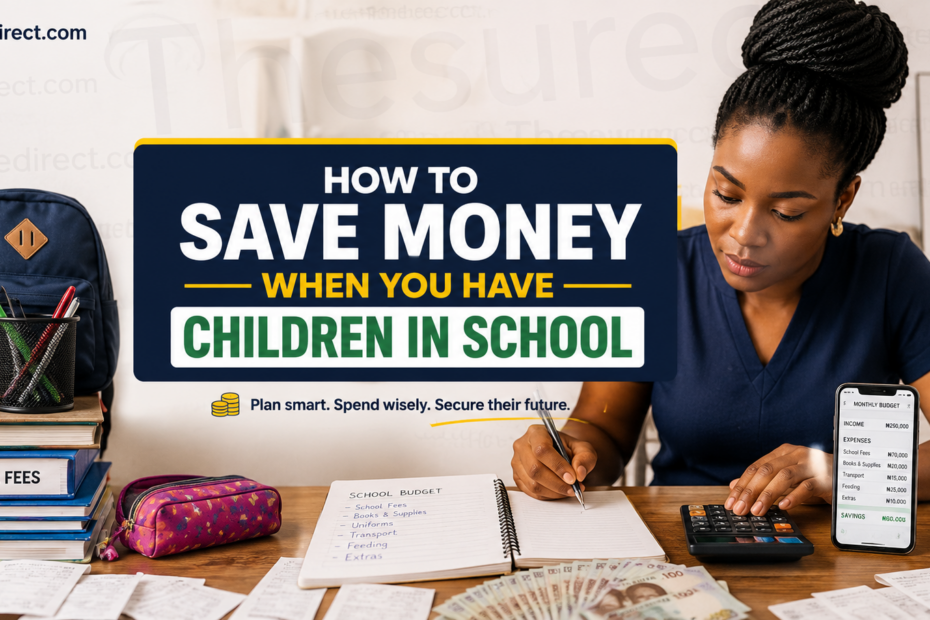
Raising children is rewarding, but it can also place serious pressure on a family’s finances, especially when they are in school.
School fees, uniforms, textbooks, notebooks, transport, lunch money, lessons, examination fees, and unexpected school demands can arrive at the same time.
For many parents in Nigeria, these expenses must be managed alongside rent, food, electricity, medical bills, business costs, and other daily responsibilities.
This is why saving money can feel difficult when you have children in school. It is not always because a parent is careless with money.
In many cases, the income available is simply being stretched across too many important needs. However, saving for school expenses is still possible when parents create a simple plan and begin early.
You do not need to wait until you have a large salary or a big business before you start saving. Small and consistent savings can make a major difference when school resumption approaches.
Saving ₦500 daily, ₦2,000 weekly, or a small percentage of every income can gradually reduce the stress of paying school-related bills.
The key is to plan ahead, separate school money from daily spending, reduce unnecessary expenses, and avoid waiting until the last minute before preparing for a new term.
This article shares practical ways parents can save money, manage school expenses wisely, and give their children the education they need without placing too much pressure on the family budget.
Start Saving for School Fees Before the New Term
One of the best ways to reduce the pressure of school fees is to start saving long before a new term begins.
Many parents wait until school resumption is close before trying to find the full amount, which can lead to borrowing, selling important items, or using money meant for rent, food, or business. Planning early makes the cost feel less overwhelming.
Begin by finding out the total school fees and other expected charges for each child. Then divide the amount by the number of months, weeks, or days left before the next term.
For example, if your child’s school fees are ₦90,000 and there are three months before resumption, saving ₦30,000 every month may be easier than searching for ₦90,000 at once. If monthly saving is difficult, you can break it down further into weekly or daily amounts.
It is also important to keep school-fee savings separate from your everyday money. You can use a different bank account, savings wallet, cooperative contribution, or a trusted savings platform.
When school money is mixed with money for food, transport, and other daily needs, it is easier to spend it without noticing. Separating it helps you stay focused and makes it clear that the money already has a purpose.
Create a School Expenses Budget
Buy School Items Early and Compare Prices
Buying school items early is one practical way parents can reduce the cost of preparing children for a new term.
Prices of uniforms, school bags, sandals, socks, textbooks, notebooks, and stationery often increase when resumption is close because many parents are shopping at the same time.
Waiting until the last few days can also make parents feel pressured to buy whatever is available, even when the price is too high.
Instead of buying everything at once, parents can start purchasing school items gradually during the holiday period. For example, you may buy notebooks and pens one week, school socks and sandals another week, then uniforms or bags later.
This spreads the cost over time and makes school preparation easier on the family budget.
Buying early also gives parents enough time to compare prices from different markets, shops, and online sellers. A school bag that is expensive in one shop may be more affordable elsewhere.
Asking other parents, checking local markets, and looking out for discounts can help you find better deals without sacrificing quality.
It is also important to avoid buying expensive items simply because they look attractive or fashionable. Children may want branded bags, trendy shoes, or colourful lunch boxes, but a durable and affordable item can serve the same purpose.
Focus on quality, comfort, and usefulness rather than unnecessary luxury. This helps parents save money while still giving their children the school items they need.
Reuse Items That Are Still in Good Condition
Before buying new school items, parents should take time to check what their children already have at home. Many school materials may still be useful after a term or even after a full school session.
Uniforms that still fit properly, school bags without serious damage, water bottles, shoes, sandals, textbooks, and some stationery items may not need to be replaced immediately. Reusing these items can save parents a meaningful amount of money, especially when there are several children in the family.
It is easy to feel pressured to buy everything new at the beginning of a school term, but this is not always necessary. A uniform may only need washing, ironing, or a small repair.
A school bag may need a zip fixed or a loose strap sewn back. Shoes may only need polishing or minor repairs. These small actions can help parents avoid spending money on items that are still in good condition.
Parents should also teach children to care for their school belongings. Children need to understand that bags, books, uniforms, shoes, and lunch boxes cost money and should not be treated carelessly.
Encourage them to keep their books neat, avoid losing pencils and rulers, store their bags properly, and return home with all their belongings.
When children learn responsibility early, parents spend less on replacing lost or damaged school items. Reusing what is still useful is not a sign of lack; it is a smart money habit that helps families manage school expenses better.
Reduce Daily School Spending
Daily school expenses may look small, but they can gradually take a large amount of money from a parent’s budget.
Giving children money for food, snacks, drinks, and other small purchases every school day can become expensive when calculated over a full week or month.
One practical way to reduce this cost is to prepare lunch or snacks from home whenever possible. Simple meals such as rice, bread and egg, noodles, fruits, beans, homemade snacks, or leftovers packed neatly can help children eat well without relying on daily spending at school.
Parents do not need to prepare expensive meals every day. The goal is to create a simple food plan that is affordable, filling, and easy to prepare.
Buying food items in bulk and planning meals ahead can also reduce waste and make morning preparation easier. Older children can be taught to carry their lunch responsibly and avoid spending extra money on unnecessary snacks.
Transport is another daily expense that can affect a family’s finances. Parents should consider the safest and most affordable option for their child’s school journey.
Depending on the distance and family schedule, this may include using a school bus, sharing transport with trusted neighbours, joining a carpool arrangement with other parents, or allowing older children to walk where it is safe and practical.
The best transport choice will depend on distance, safety, traffic, and the child’s age. However, comparing available options can help parents avoid overspending while ensuring that children get to school safely and on time.
Teach Children Basic Money Habits
Teaching children basic money habits can make a real difference in how a family manages school expenses. Children do not need to understand every detail of the family budget, but they can learn early that money is earned, planned, and used carefully.
Parents can explain the difference between needs and wants in simple terms. School books, uniforms, transport, and meals are needs, while a new fashionable bag, expensive snacks, or a toy may be wants. This helps children understand why every request cannot be granted immediately.
Parents should also encourage children to take proper care of their school items. Losing pencils, rulers, water bottles, textbooks, lunch boxes, and school bags may seem small, but replacing them repeatedly can become costly.
Children should learn to write their names on important belongings, keep their items in one place, and check their bags before leaving school or coming home.
Older children can begin learning simple saving habits with their allowance or pocket money. They can be encouraged to keep a small part instead of spending everything at once.
Parents can also teach them to avoid buying unnecessary snacks or items at school simply because their friends are buying them.
Before requesting new supplies, children can make a list of what they truly need and check whether similar items are still available at home.
These lessons can reduce pressure on parents while helping children grow into adults who understand responsibility, saving, and wise spending.
Build an Emergency School Fund
Unexpected school expenses can happen at any time, even when parents have already paid school fees and bought the necessary items for a new term.
A child may suddenly need a replacement uniform, an extra textbook, money for a class project, medical attention, examination materials, a school trip payment, or a contribution that was not included in the original budget.
When there is no money set aside for these surprises, parents may be forced to borrow, use money meant for rent or food, or withdraw money from a small business.
Building an emergency school fund can help reduce this pressure. This is a small amount of money kept aside specifically for unplanned school-related expenses.
It does not have to be a large amount before it becomes useful. Saving ₦500, ₦1,000, or ₦2,000 every week can gradually build a fund that supports the family when an urgent need appears.
Parents can keep this money in a separate savings wallet, bank account, cooperative contribution, or another secure place that is not easily used for daily spending. The most important thing is to treat it as money meant only for genuine school emergencies.
An emergency school fund can give parents more confidence during the term because they know that a surprise expense will not automatically create a financial crisis.
Small, regular savings can protect the family from unnecessary borrowing and help parents manage their children’s education with less stress.
Avoid Borrowing for Every School Expense
Conclusion
Saving money when you have children in school is not about being perfect, earning a huge salary, or having everything figured out.
It is about making small and practical financial decisions that help your family prepare for school expenses without too much stress.
School fees, uniforms, books, transport, food, and unexpected demands can feel overwhelming when they all arrive at once, but early planning can make them easier to manage.
Parents can reduce pressure by saving for school fees before a new term begins, creating a clear school expenses budget, buying items early, reusing materials that are still in good condition, and reducing unnecessary daily spending.
Even small steps, such as saving ₦500 or ₦1,000 regularly, packing lunch from home, or keeping school money in a separate account, can make a meaningful difference over time.
It is also important to teach children how to care for their belongings and understand the value of money. When children learn to avoid waste, protect their school items, and make responsible choices, parents spend less on replacing lost or damaged materials.
The goal is not to do everything at once. Start with the amount you can afford and build the habit gradually.
A parent who saves little by little throughout the year may be more prepared than someone who waits until school resumption before searching for money.
With planning, discipline, and wise spending, parents can support their children’s education while protecting the family budget.
Frequently Asked Questions
How to Save Money While Having Kids?
Saving money while raising children can feel difficult because children come with regular expenses such as food, school fees, clothing, transport, healthcare, and unexpected needs.
However, parents can still save money by creating a simple plan and reducing unnecessary spending. The first step is to know where your money goes every month.
Write down your income and list important family expenses such as rent, feeding, school needs, electricity, transport, and medical costs. This helps you identify areas where money is being wasted.
Parents can save more by planning meals instead of buying food outside every day. Cooking larger portions at home, buying food items in bulk when possible, and reducing waste can lower feeding expenses.
It is also helpful to avoid buying every new toy, clothing item, or gadget children request. Children grow quickly, so parents should focus on buying useful and durable items instead of expensive things that may not last.
Creating a separate savings account for family emergencies is important. Even if you can only save ₦500, ₦1,000, or ₦2,000 weekly, consistent saving can become useful when school fees, hospital bills, or urgent repairs arise.
Parents can also teach children about money by giving them small savings goals. When children understand that money must be planned, they may become more responsible with their own spending.
Saving while raising kids is not about denying your family every good thing. It is about making better choices, preparing ahead, and avoiding financial pressure when unexpected expenses come.
How to Save Money When You Are in School?
Saving money as a student can be challenging because school expenses often include tuition, textbooks, transport, food, data subscriptions, accommodation, assignments, and social activities.
Many students also have limited income or depend on parents, guardians, scholarships, or small side hustles. However, saving is still possible when a student learns how to manage money carefully.
A good starting point is to create a weekly or monthly budget. Write down the money you receive and separate it into important categories such as food, transport, school materials, data, and personal needs.
This helps you avoid spending everything within a few days. Students should also avoid buying things because friends are buying them.
Expensive clothes, unnecessary outings, frequent online shopping, and impulse purchases can quickly finish money meant for important needs.
Students can save money by preparing food when possible instead of eating outside every day. Carrying water, snacks, or lunch to school can reduce daily spending.
It is also wise to borrow textbooks from the library, buy fairly used books, share materials with classmates, or use free online learning resources when available.
Even small savings can make a difference. A student who saves ₦200 or ₦500 regularly may have money for printing, transport, emergency school expenses, or project materials.
The habit of saving during school can also prepare a student for adulthood, work, business, and future responsibilities.
What Is the 50/30/20 Rule for Kids?
The 50/30/20 rule is a simple budgeting method that can help children understand how to manage money. It teaches them that money should not be spent on only one thing.
Instead, they can divide money into three parts: needs, wants, and savings. For children, this rule can be adjusted in a simple and practical way.
The first 50 percent can be used for needs. These are important things a child may need, such as school supplies, transport money, lunch, notebooks, or other necessary items.
Parents may handle most major needs, but children can still learn the difference between something important and something they simply desire.
The next 30 percent can be used for wants. Wants are things that are enjoyable but not necessary. Examples include snacks, toys, games, treats, extra airtime, or small accessories.
Teaching children to limit spending on wants helps them understand that they cannot buy everything they see.
The final 20 percent should go into savings. This money can be kept in a piggy bank, savings box, bank account, or digital wallet supervised by a parent. A child can save toward a bicycle, school bag, special toy, birthday gift, or future school need.
The 50/30/20 rule helps children develop patience, discipline, and responsibility. It also teaches them that saving does not mean they cannot enjoy money. It means they learn to enjoy some money while keeping part of it for future goals.
What Are 7 Ways to Save Money?
One effective way to save money is to create a budget. A budget helps you understand your income and expenses, making it easier to see where money is going.
When you know what you spend on food, transport, data, clothing, and other needs, you can reduce waste and make better financial decisions.
Another useful method is to save first before spending. Once you receive money, set aside a small amount immediately. This could be daily, weekly, or monthly. Saving what remains after spending often does not work because there may be nothing left.
Reducing impulse buying is also important. Before purchasing something, ask yourself whether it is necessary or whether you can wait for a few days. Many people spend money on items they do not truly need because of emotions, peer pressure, discounts, or social media.
Planning meals and reducing food waste can also help. Buying food outside every day can become expensive, especially for workers, students, and families. Cooking at home and buying food items wisely can save a significant amount over time.
Using a separate account or savings box can make saving easier. When savings are mixed with spending money, it becomes tempting to withdraw them. Keeping savings separate protects your progress.
You can also save money by cutting unnecessary subscriptions and bills. Review your data plans, streaming services, app subscriptions, and regular expenses. Cancel what you do not use.
Finally, setting a clear goal makes saving more motivating. Whether you are saving for rent, school fees, business capital, an emergency fund, or a new phone, having a reason helps you stay consistent.
What Are 5 Tips for Saving Money?
The first tip for saving money is to start small. Many people delay saving because they believe they need a large income before they can begin.
In reality, saving ₦500, ₦1,000, or any amount regularly can build a strong habit. The most important thing is consistency, not the size of the first amount.
The second tip is to track your spending. Keep a record of what you spend daily or weekly. You may discover that small expenses such as snacks, transport, airtime, online shopping, and food outside are taking more money than expected. Once you see these patterns, you can make changes.
The third tip is to avoid borrowing for unnecessary things. Borrowing money for wants can create financial stress and make it harder to save. If something is not urgent, consider waiting until you can afford it without debt.
The fourth tip is to separate savings from spending money. Open a different bank account, use a savings wallet, or keep your savings in a secure place. This makes it less likely that you will spend the money carelessly.
The fifth tip is to set a realistic savings goal. Instead of saying you want to save money generally, decide exactly what you are saving for and how much you need. A clear goal gives you direction and helps you measure progress.