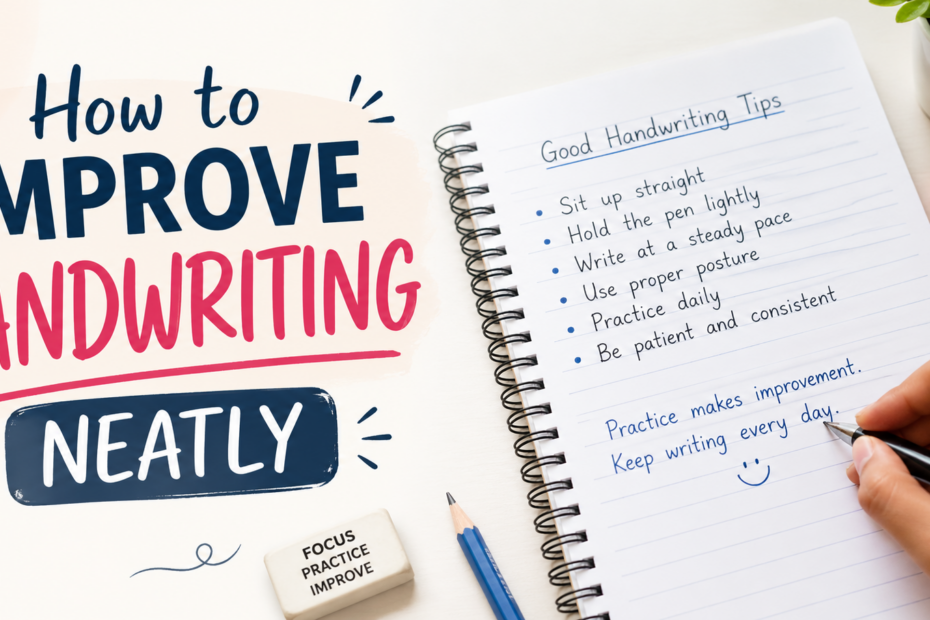
Whether you’re a student aiming for better grades, a professional wanting to leave a lasting impression, or someone who enjoys journaling, having neat handwriting makes a noticeable difference.
Clear and well-formed writing not only improves readability but also reflects your attention to detail and personal discipline. The good news is that neat handwriting isn’t an innate talent—it can be learned and refined with consistent practice.
By focusing on the right techniques, posture, and exercises, anyone can gradually improve handwriting neatly, turning messy or rushed writing into elegant, legible letters that stand out for all the right reasons.
Understand Your Current Handwriting Style
Before you can improve handwriting neatly, it’s essential to analyze your current writing style. Understanding your strengths and weaknesses helps you target the areas that need the most attention.
Start by examining your letters, words, and overall consistency. Are your letters uneven in size? Is the spacing between words irregular? Do your letters slant in different directions or have inconsistent shapes?
Identifying these problem areas allows you to focus your practice effectively. One practical tip is to write a short paragraph and save it as a reference. Over time, you can compare new samples to see your progress.
This self-assessment not only motivates you but also provides clear insight into what exercises or techniques will help you gradually improve handwriting neatly.
Correct Posture and Grip
Proper posture and pen grip are fundamental to neat handwriting. Sitting with your back straight, feet flat on the floor, and shoulders relaxed creates a stable foundation for smooth, controlled writing. Slouching or tensing your shoulders can lead to uneven letters and fatigue, making it harder to write neatly over time.
Equally important is the way you hold your pen or pencil. The tripod grip—holding the pen between your thumb, index, and middle fingers—is widely considered the most comfortable and effective for control.
A loose, relaxed grip allows for fluid movements, while gripping too tightly can cause shakiness and slow your writing. By combining correct posture with a proper grip, you set yourself up for greater consistency and gradually improve handwriting neatly.
Choose the Right Tools
Using the right tools can make a significant difference when learning to improve handwriting neatly. Start with your writing instrument: gel pens, fountain pens, or smooth pencils often provide better control and allow for more precise strokes compared to standard ballpoint pens.
Equally important is your choice of paper. Lined notebooks help maintain consistent letter size and spacing, making it easier to write neatly. For additional guidance, consider using handwriting practice sheets or templates, which can provide structure and help you perfect letter formation.
Selecting the right combination of pen and paper creates a comfortable writing experience, enabling you to focus on technique rather than struggling with your tools. Over time, this simple adjustment can lead to noticeable improvements in your handwriting.
Practice Basic Strokes and Letters
A key step to improve handwriting neatly is practicing basic strokes and letters. Start with simple exercises such as drawing vertical lines, circles, curves, and loops. These fundamental shapes form the building blocks of all letters and help you gain better control over your pen or pencil.
Once you feel comfortable with these strokes, focus on individual letters. Write each letter slowly and deliberately, paying attention to shape, size, and consistency. After mastering letters, progress to writing words and complete sentences.
The most important factor is to write mindfully and at a controlled pace. Slow, intentional practice strengthens your hand muscles and develops muscle memory, allowing neat handwriting to become natural over time.
Consistency and Spacing
Maintaining proper spacing is essential to improve handwriting neatly. Pay attention to the gaps between letters, words, and lines—uneven spacing can make even well-formed letters look messy. Aim for uniformity to enhance readability and overall presentation.
Using grid or graph paper can be particularly helpful during practice. The lines provide visual guidance, making it easier to keep letters and words evenly spaced.
Remember, achieving consistent spacing doesn’t happen overnight. Regular, focused practice helps train your hand to naturally maintain uniformity, gradually turning neat handwriting into a habit that lasts.
Frequently Asked Questions
What is the fastest way to improve your handwriting?
The fastest way to improve handwriting is not by trying to completely change your writing style overnight, but by correcting the core habits that control how your handwriting looks. Handwriting is a physical skill, so improvement comes from repetition, muscle control, and awareness of how you form letters.
The first step is to slow down intentionally. Many people write quickly out of habit, which leads to messy, inconsistent letters. When you slow down, your brain and hand coordinate better, allowing you to focus on shape, spacing, and alignment. Even a small reduction in writing speed can produce immediate visual improvement.
Next, choose a simple and consistent writing style. You do not need a fancy calligraphy style; instead, pick a clean print or semi-cursive style and stick to it. Consistency is more important than decoration. Once you decide how each letter should look, practice repeating the alphabet slowly and deliberately.
Grip and posture also matter. Holding your pen too tightly creates tension, which reduces control. A relaxed grip allows smoother movement. Sit with your feet flat and your paper slightly tilted to match your natural writing angle.
Another fast improvement technique is using lined or grid paper. These guides help you control letter height and spacing, which immediately makes writing look more structured.
Finally, short daily practice sessions (10–20 minutes) are more effective than long irregular ones. Write sentences you use often so your brain builds familiarity.
In summary, the fastest improvement comes from slowing down, choosing a consistent style, correcting grip, and practicing deliberately with structure. You will often see visible improvement within a few days if you apply these consistently.
Can neuropathy affect your handwriting?
Yes, neuropathy can affect handwriting because it impacts the nerves responsible for sensation, coordination, and muscle control in the hands. Neuropathy is a condition where nerves become damaged, often leading to symptoms such as numbness, tingling, weakness, or pain. When these symptoms affect the hands and fingers, writing becomes more difficult and less controlled.
Handwriting requires fine motor skills, which depend on precise communication between the brain, nerves, and muscles. If nerve signals are disrupted, the hand may not respond accurately to movement instructions. This can lead to shaky writing, uneven pressure on the pen, difficulty forming letters, or fatigue while writing.
In some cases, people with neuropathy may also experience reduced sensation in their fingertips. This makes it harder to feel the pen or judge how hard they are pressing on the paper. As a result, writing may appear faint, inconsistent, or overly heavy in some areas.
The severity of handwriting changes depends on the type and progression of neuropathy. For example, diabetic neuropathy is one common form that can affect hand function over time. In more advanced cases, coordination issues may resemble tremors or clumsiness.
However, it is important to note that not all handwriting problems are caused by neuropathy. Stress, aging, lack of practice, or neurological conditions can also contribute. That is why a proper medical evaluation is necessary if handwriting changes suddenly or worsens over time.
Management typically focuses on treating the underlying cause of neuropathy, improving nerve health, and sometimes using occupational therapy to strengthen hand coordination. Simple handwriting exercises can also help maintain fine motor control.
How do you make your handwriting neater?
Making your handwriting neater is mostly about improving control, consistency, and spacing rather than completely changing your writing style. Many people assume neat handwriting is a talent, but it is actually a skill that can be trained with practice and awareness.
Start by focusing on letter formation. Each letter should follow a consistent shape every time you write it. Instead of rushing through words, practice writing the alphabet slowly, paying attention to how each stroke is formed. This builds muscle memory, which naturally improves neatness over time.
Spacing is another major factor. Neat handwriting requires balanced spacing between letters and words. If letters are too close, writing looks crowded; if too far apart, it becomes disjointed. A good rule is to leave a small, consistent gap between letters and a slightly larger gap between words.
Line control is also important. Using ruled paper helps keep your writing straight and aligned. Without guidelines, letters tend to drift up or down, making the text look messy. Over time, you can practice maintaining straight lines without assistance.
Your writing speed should be moderate. Writing too fast reduces precision, while writing too slowly may feel unnatural. The goal is controlled speed—steady but deliberate.
Pen choice also matters. A pen that flows smoothly reduces strain and helps maintain consistent strokes. Similarly, a relaxed grip prevents hand fatigue and improves control.
Finally, daily practice is key. Writing short paragraphs, copying well-written text, or journaling can significantly improve neatness over time. With consistent effort, noticeable improvement often appears within a few weeks.
Can I improve my handwriting in 7 days?
Yes, you can improve your handwriting in 7 days, but the improvement will be noticeable rather than perfect. Handwriting is a motor skill, and while major transformation takes longer, a focused one-week routine can significantly enhance clarity, consistency, and neatness.
The key is structured daily practice. On day one, focus on identifying your main handwriting problems—such as inconsistent letter size, poor spacing, or rushed writing. Awareness helps you target specific weaknesses instead of practicing randomly.
From days two to four, concentrate on slow writing exercises. Write the alphabet repeatedly, form simple words, and focus on uniform letter shapes. This stage is about retraining your hand to move more precisely. Writing slowly may feel uncomfortable at first, but it is essential for control.
On days five and six, begin practicing full sentences and short paragraphs. Maintain the improvements you developed earlier, especially spacing and alignment. Try copying neatly written text, as this helps your brain adapt to structured writing styles.
On day seven, combine speed and neatness. Write naturally but apply everything you have learned. Compare your writing from day one to day seven to see progress.
However, it is important to be realistic. Seven days is enough to improve clarity and discipline, but not enough to completely transform handwriting style. Long-term consistency is what leads to lasting results.
In summary, you can definitely improve handwriting in 7 days by practicing deliberately, slowing down, and focusing on structure, but continued practice beyond that week is necessary for permanent improvement.
What is the disease that causes bad handwriting?
Several medical conditions can lead to changes in handwriting, but one of the most well-known is Parkinson’s disease. Parkinson’s affects movement control due to changes in the brain that reduce dopamine levels.
One common symptom is micrographia, which causes handwriting to become unusually small, cramped, and difficult to read. As the condition progresses, writing may also become shaky or inconsistent.
Another condition that can affect handwriting is essential tremor. This neurological disorder causes involuntary shaking, especially in the hands, which can make writing appear unsteady or uneven. Unlike Parkinson’s, essential tremor does not always involve other movement problems, but it can still significantly impact fine motor tasks like writing.
Peripheral neuropathy can also contribute to poor handwriting. As discussed earlier, nerve damage in the hands can reduce sensation and control, making it difficult to form consistent letters.
Stroke is another medical event that may affect handwriting. Depending on the area of the brain affected, a stroke can weaken one side of the body, impair coordination, or reduce fine motor skills, all of which can impact writing ability.
It is important to understand that not all bad handwriting is caused by disease. Stress, fatigue, aging, lack of practice, or poor writing habits are much more common causes.
If handwriting suddenly changes, becomes consistently smaller, shakier, or more difficult to control, it is advisable to seek medical evaluation. Early diagnosis of underlying neurological conditions can be important for treatment and management.
In summary, diseases like Parkinson’s, essential tremor, neuropathy, and stroke can affect handwriting, but lifestyle and habit-related factors are often more common causes.
What organ is affected by neuropathy?
Neuropathy primarily affects the nervous system, especially the peripheral nerves, which are the long nerves that connect the brain and spinal cord to the rest of the body.
These nerves act like communication cables, carrying signals that control movement, sensation, and automatic body functions. When they are damaged, the communication between the brain and the body becomes disrupted.
Although neuropathy is often discussed as a single condition, it is actually a group of disorders with different causes, such as diabetes, infections, injuries, autoimmune diseases, or exposure to toxins.
The most commonly affected “area” is not a single organ but the network of peripheral nerves, particularly those in the hands and feet. This is why many people experience tingling, numbness, burning sensations, or weakness in these regions first.
When neuropathy affects the hands, it can influence fine motor skills like writing, buttoning clothes, or holding objects. When it affects the feet, it may lead to balance issues and difficulty walking. In more severe cases, autonomic nerves can also be involved, affecting organs like the heart, bladder, and digestive system.
So, while neuropathy does not target a single organ like the liver or lungs, it mainly damages the peripheral nervous system, which plays a vital role in controlling nearly every movement and sensation in the body.
What is poor handwriting a symptom of?
Poor handwriting can be a symptom of several underlying issues, but in many cases, it is not caused by a medical condition at all. More often, it results from habits, lack of practice, or poor writing technique. However, when handwriting changes suddenly or worsens over time, it may point to deeper neurological or physical concerns.
One possible cause is neurological conditions, such as Parkinson’s disease, where handwriting often becomes small, cramped, and difficult to control. Another is essential tremor, which causes shaking in the hands and leads to shaky or uneven writing. Conditions like stroke or brain injury can also affect motor control, resulting in noticeable handwriting changes.
Peripheral neuropathy can also contribute by reducing sensation and coordination in the fingers, making it harder to form clear letters. In children, poor handwriting is sometimes linked to developmental coordination disorder (DCD), which affects fine motor skills.
However, in everyday situations, poor handwriting is often linked to non-medical factors such as rushing while writing, improper pen grip, lack of practice, or using the wrong writing tools. Stress, fatigue, and concentration problems can also temporarily affect handwriting quality.
The key difference is whether the change is gradual or sudden. Long-term poor handwriting is usually habit-related, while sudden deterioration may require medical attention.
What tools can improve handwriting?
Improving handwriting is not only about practice—it also depends on using the right tools that support better control, comfort, and consistency. The right tools can make writing easier and help train your hand to form neater letters naturally.
One of the most important tools is a smooth-flowing pen. Pens with consistent ink flow reduce strain and allow cleaner strokes. Gel pens or fine-tip ballpoint pens are often preferred because they produce clear, controlled lines without requiring too much pressure.
Ruled or grid paper is another helpful tool. These guides help maintain straight lines, consistent letter height, and proper spacing. Beginners especially benefit from structured paper because it reduces visual inconsistency while learning.
A handwriting practice notebook can also be useful. These notebooks often include traceable letters or guided spacing exercises that help build muscle memory.
For people who struggle with grip, a pen grip holder can improve finger positioning and reduce tension. This helps maintain control during longer writing sessions.
Digital tools like tablet styluses with handwriting apps can also be used for practice. They allow repetition without wasting paper and sometimes provide instant feedback on letter shape.
Finally, a comfortable writing environment matters. A proper desk height, good lighting, and a relaxed seating position all contribute to better handwriting control.
When combined with consistent practice, these tools can significantly improve handwriting quality over time.
Is there a connection between handwriting and the brain?
Yes, there is a strong and well-established connection between handwriting and the brain. Writing is not just a physical activity—it is a complex process that involves coordination between multiple brain regions responsible for movement, language, memory, and visual processing.
When you write, the motor cortex controls the movement of your hand and fingers. At the same time, the language centers of the brain help you choose words and structure sentences. The visual system monitors spacing, alignment, and letter formation to ensure readability. This coordination happens very quickly and continuously while writing.
Handwriting also strengthens learning and memory. Studies in cognitive science suggest that writing by hand helps the brain process and retain information more effectively than typing. This is because handwriting activates more sensory and motor pathways, creating stronger neural connections.
There is also evidence that handwriting reflects brain health. Conditions that affect the brain, such as Parkinson’s disease or stroke, often show early signs in handwriting changes. For example, writing may become smaller, shaky, or inconsistent when motor control pathways are affected.
In children, handwriting development is closely linked to brain development, especially fine motor skills and cognitive organization. Poor handwriting can sometimes indicate delays in coordination, though it is not always a cause for concern.
In summary, handwriting is deeply connected to brain function, involving multiple systems working together. It is both a tool for expression and a reflection of neurological health.
When to worry about handwriting?
Handwriting changes are not always a cause for concern, but there are certain situations where they may indicate an underlying problem that should not be ignored.
You should pay attention if handwriting suddenly becomes noticeably worse without any clear reason, such as fatigue or lack of practice. Sudden changes in letter size, spacing, or control may suggest neurological or physical issues that need evaluation.
Another warning sign is progressive worsening. If handwriting gradually becomes smaller, shakier, or more difficult to control over time, it could be linked to conditions affecting the nervous system, such as Parkinson’s disease or peripheral neuropathy.
You should also be concerned if handwriting changes come with other symptoms, such as hand tremors, numbness, weakness, pain, or difficulty performing other fine motor tasks like buttoning clothes or holding objects. These additional signs often indicate a broader issue affecting nerve or brain function.
In children, handwriting problems are more common and often related to learning or motor skill development. However, if a child struggles significantly despite practice, it may be worth assessing for developmental coordination issues.
In adults, temporary handwriting decline due to stress, tiredness, or lack of practice is usually not serious. The key difference is consistency and progression.
If handwriting changes are persistent, worsening, or accompanied by other neurological symptoms, it is advisable to seek medical evaluation. Early assessment can help identify and manage potential conditions more effectively.
In short, worry is justified when handwriting changes are sudden, progressive, or linked with other physical or neurological symptoms.
What part of the brain controls writing and spelling?
Writing and spelling are controlled by a network of brain regions, rather than a single “writing center.” These areas work together to coordinate language, memory, motor control, and visual processing. The most important regions include the frontal lobe, parietal lobe, and parts of the temporal lobe.
One key area involved in writing is Exner’s area, located in the frontal lobe near the motor cortex. This region is strongly associated with the planning of handwriting movements. It helps translate thoughts into coordinated hand actions, essentially organizing how letters are formed before your hand actually moves.
Another important region is Broca’s area, which is also in the frontal lobe. This area is primarily responsible for language production. It helps structure sentences and supports the grammatical aspects of writing. When you write a sentence, Broca’s area helps ensure the words are arranged correctly.
The parietal lobe, especially the angular gyrus, plays a major role in spelling and word recognition. It helps connect spoken language with written symbols. This region is essential for converting sounds into written letters and ensuring correct spelling.
The temporal lobe supports vocabulary and memory retrieval, helping you recall words and their meanings while writing.
Finally, the motor cortex controls the physical movement of the hand and fingers, while the cerebellum helps with coordination and smoothness of writing.
In summary, writing and spelling are complex skills that rely on multiple brain regions working together. Damage or dysfunction in any of these areas can affect handwriting quality, spelling accuracy, or writing speed.
What are the red flags in handwriting?
Red flags in handwriting are signs that suggest an underlying issue may be affecting a person’s motor control, neurological function, or cognitive processing. While poor handwriting is often harmless and related to habits or lack of practice, certain patterns of change should be taken more seriously.
One major red flag is a sudden change in handwriting quality. If someone who previously had stable handwriting suddenly develops messy, shaky, or inconsistent writing without an obvious reason like fatigue or stress, it may indicate a neurological issue.
Another warning sign is progressively shrinking handwriting, known as micrographia. Letters gradually become smaller and more cramped, which can sometimes be associated with movement disorders.
Shaky or tremor-like writing is also a concern, especially if it appears consistently. This may indicate problems with motor control or nerve function.
Loss of spacing control is another red flag. If words begin to run together or spacing becomes extremely uneven, it may reflect difficulties in visual-motor coordination or cognitive processing.
You should also pay attention to hand fatigue or pain during writing, especially if it develops quickly or worsens over time. This can be linked to nerve issues or muscle disorders.
In children, red flags include persistent difficulty learning to write despite practice, inability to form letters correctly, or writing that is far below expected developmental levels.
Importantly, red flags are more concerning when they appear alongside other symptoms such as weakness, numbness, tremors, or difficulty with other fine motor tasks.
In summary, handwriting red flags are not just about messy writing—they are about sudden changes, progressive decline, and accompanying physical or neurological symptoms.
At what age does handwriting stop improving?
Handwriting does not completely “stop improving” at a fixed age, but it typically becomes more stable during the teenage years. Most children develop basic handwriting skills between ages 6 and 12, as they learn letter formation, spacing, and writing fluency in school. During this stage, improvement is rapid because the brain and motor skills are still developing.
By the time a person reaches adolescence, around 13 to 18 years old, handwriting usually becomes more consistent. At this stage, individuals often develop a personal writing style. While major structural changes slow down, refinement and neatness can still improve with practice.
In adulthood, handwriting tends to remain relatively stable, but it is still adaptable. Adults can improve handwriting through conscious effort, especially if they focus on slowing down, improving grip, or changing writing habits. This means handwriting does not truly stop improving—it just becomes less naturally changeable and more dependent on intentional practice.
Interestingly, handwriting can also change later in life due to lifestyle factors. For example, frequent typing may reduce handwriting practice, making it less neat over time. On the other hand, regular writing habits can maintain or even improve legibility.
It is also important to note that neurological or physical conditions can affect handwriting at any age, sometimes making it worse rather than better.
In summary, handwriting stabilizes in the late teenage years, but improvement is possible at any age with practice. The key difference is that younger learners improve naturally, while adults improve through deliberate effort.
What does psychology say about people with bad handwriting?
Psychology generally does not support the idea that bad handwriting reveals a person’s personality traits, intelligence, or moral character. While there is a popular belief that handwriting can reflect personality—known as graphology—modern psychological research does not consider it scientifically reliable.
Studies show that handwriting quality is influenced more by motor skills, education, practice, and neurological factors than by personality. For example, someone with poor fine motor coordination may naturally have messy handwriting regardless of intelligence or behavior.
Similarly, individuals who write quickly to keep up with thoughts may produce less neat writing without it reflecting anything about their personality.
Psychologists also emphasize that handwriting can be affected by stress, fatigue, attention levels, and environmental conditions. A person may have neat handwriting in calm situations but messy handwriting when rushed or anxious. This reflects temporary mental states rather than stable personality traits.
Another important point is that handwriting is shaped by learning experience. Teaching methods, writing tools, and early practice all influence handwriting style. People from different educational backgrounds may develop very different writing patterns.
While some psychological studies explore handwriting as part of motor behavior or cognitive processing, there is no strong evidence linking bad handwriting to traits like laziness, intelligence level, or honesty.
In summary, psychology views handwriting as a motor and cognitive skill, not a personality indicator. Bad handwriting is usually the result of practical and neurological factors, not psychological character.
What are the four factors influencing handwriting?
Handwriting is influenced by a combination of physical, cognitive, environmental, and educational factors. These four areas interact to determine how clear, fast, and consistent a person’s writing appears.
The first factor is motor control and physical ability. This includes fine motor skills, muscle strength, hand-eye coordination, and nerve function. If a person has weak motor control or conditions affecting the nervous system, their handwriting may appear shaky, uneven, or difficult to control.
The second factor is cognitive ability and language processing. Writing requires the brain to quickly retrieve vocabulary, structure sentences, and translate thoughts into written form. Difficulties in attention, memory, or language processing can affect handwriting fluency and clarity.
The third factor is environmental influence. This includes writing tools, posture, seating comfort, and writing surface. A smooth pen, proper desk height, and good lighting can significantly improve handwriting quality. On the other hand, poor conditions can make writing messy or uncomfortable.
The fourth factor is learning and practice history. Handwriting is a skill developed over time. Early education, repetition, and writing habits strongly shape handwriting style. People who practice regularly tend to have more consistent and legible handwriting, while those who rarely write by hand may experience decline in neatness.
In summary, handwriting is not controlled by a single cause. It is the result of physical ability, brain processing, environment, and practice, all working together.
How do I check if my handwriting is good or bad?
Checking whether your handwriting is “good” or “bad” is not about perfection—it is about readability, consistency, and comfort. The most important standard is whether another person can easily read what you write without struggling. If your handwriting is clear, evenly spaced, and understandable most of the time, it is generally considered good, even if it is not highly stylish.
Start by evaluating readability. Write a short paragraph and ask someone else to read it. If they can understand it without confusion, your handwriting is functioning well. If they struggle often, then clarity needs improvement.
Next, look at consistency. Good handwriting usually has letters that are similar in size, shape, and slant. If some letters are large while others are small, or if spacing between words is irregular, your handwriting may appear messy.
Another important factor is spacing and alignment. Words should not be too crowded or too far apart, and sentences should stay aligned with the writing line. Writing that drifts up or down the page can reduce neatness.
You should also assess writing speed and comfort. If writing feels painful, overly slow, or causes hand fatigue, your technique may need adjustment, even if it looks neat.
Finally, compare your handwriting over time. Improvement is a better goal than labeling it as simply “bad” or “good.”
In summary, handwriting is considered good if it is readable, consistent, well-spaced, and comfortable to produce. It is more of a functional skill than a fixed rating.
What do they say about people who have bad handwriting?
There are many common beliefs about people with bad handwriting, but most of them are misconceptions rather than facts. In reality, handwriting quality is influenced more by motor skills, practice, and writing habits than by personality or intelligence.
One popular but incorrect belief is that people with bad handwriting are less intelligent or less organized. Psychology does not support this idea. Many highly intelligent and successful individuals have poor handwriting simply because they think faster than they can write or because they do not focus on neatness when writing quickly.
Another stereotype is that bad handwriting means a person is careless or lazy. In truth, messy handwriting is often caused by rushing, lack of practice, or poor fine motor coordination—not attitude or effort level.
Some people also assume that handwriting reflects personality traits, such as creativity or emotional state. While graphology (the study of handwriting and personality) exists, it is not scientifically reliable.
However, there are practical observations. For example, people in professions that require frequent writing practice—such as teachers or designers—may develop neater handwriting due to repetition. Meanwhile, people who mostly type may lose handwriting consistency over time.
In summary, what “they say” about bad handwriting is often based on myths. Handwriting is a skill, not a measure of intelligence or character. It reflects training, speed, and motor control far more than personality.
What are the four types of handwriting?
Handwriting is generally classified into four common styles, each with its own structure and purpose. These styles are not strict categories but rather widely recognized forms of written expression.
The first type is print handwriting. This style uses separate, clearly formed letters that do not connect. It is often taught in early education because it is easy to read and helps learners understand letter shapes. Print handwriting is commonly used in official documents, forms, and situations where clarity is important.
The second type is cursive handwriting. In cursive, letters are connected in a flowing manner. This style allows faster writing and is often more smooth and continuous. However, it can sometimes be harder to read if not written carefully.
The third type is manuscript handwriting, which is very similar to print but often more refined and structured. It is commonly used in professional or academic settings where neatness is required.
The fourth type is calligraphic or decorative handwriting. This style focuses on artistic expression and visual beauty rather than speed or everyday practicality. It is often used in invitations, artwork, and design projects.
Each handwriting type serves a different purpose. Print is best for clarity, cursive for speed, manuscript for professional neatness, and calligraphy for artistic expression. Many people naturally develop a combination of these styles depending on context.
What is autism handwriting?
“Autism handwriting” is not a medical diagnosis or official category, but the term is sometimes used informally to describe handwriting patterns seen in some individuals on the autism spectrum. It is important to understand that handwriting in autistic individuals varies widely—there is no single style or pattern that applies to everyone.
Some individuals with autism may have very neat, structured handwriting due to strong attention to detail and preference for order. Others may have messy or inconsistent handwriting due to challenges with fine motor coordination, sensory processing, or motor planning (known as dyspraxia, which can co-occur with autism).
Common handwriting characteristics that may sometimes be observed include uneven spacing, irregular letter size, difficulty maintaining alignment, or slow writing speed. However, these are not universal traits and cannot be used to identify autism.
Sensory sensitivities may also affect handwriting. For example, discomfort with pen pressure, paper texture, or writing speed can influence how writing looks.
Importantly, handwriting differences are not indicators of intelligence or ability. Many autistic individuals have excellent writing skills, while others may struggle due to motor or sensory differences.
In summary, “autism handwriting” is not a clinical concept but a general observation of variability in writing styles among autistic individuals. Handwriting differences are influenced by motor skills and sensory experiences, not autism alone.
What are the 5 stages of writing?
The writing process is commonly divided into five stages that help explain how ideas are developed into complete written work. These stages are widely used in education and professional writing.
The first stage is prewriting. This is where ideas are generated and organized. It may include brainstorming, researching, outlining, or planning what you want to write. This stage is important because it sets the foundation for clear and structured writing.
The second stage is drafting. In this stage, you turn your ideas into full sentences and paragraphs. The focus is on expressing thoughts freely without worrying too much about grammar or perfection.
The third stage is revising. Here, you improve the content by reorganizing ideas, adding missing information, or removing unnecessary parts. This stage focuses on clarity, logic, and flow.
The fourth stage is editing. Editing involves correcting grammar, spelling, punctuation, and sentence structure. It is about refining the technical accuracy of the writing.
The fifth stage is publishing or presenting. This is the final stage where the work is shared, submitted, or published. It represents the completed version of the writing process.
These five stages help writers produce clear, organized, and polished content. While not every piece of writing goes through each stage formally, following this structure generally improves quality and communication.
Is Gen Z losing handwriting?
There is a growing discussion that Gen Z is “losing handwriting,” but a more accurate way to put it is that handwriting is becoming less frequently used and less practiced, not completely disappearing.
Gen Z grew up in a digital-first environment where typing on phones, laptops, and tablets is often more common than writing by hand. Because of this, many young people simply get less daily handwriting practice compared to older generations.
When a skill is not used regularly, it naturally becomes less fluent. This is why some educators report that students may write more slowly, with less consistency, or with reduced neatness compared to previous generations. However, this does not mean Gen Z cannot write—it means the skill is becoming more context-dependent rather than routine.
At the same time, handwriting is still taught in schools, and many students can write clearly when they focus. The difference is that they may not maintain high-speed, long-form handwriting fluency because they rely more on digital tools for assignments, notes, and communication.
Interestingly, some Gen Z individuals develop strong typing and digital communication skills instead, which are becoming equally important in modern work environments. So rather than “losing” handwriting, it is more accurate to say that writing habits are shifting from paper-based to screen-based communication.
In summary, Gen Z is not losing handwriting completely, but the frequency of use has decreased, which can affect speed and consistency. Like any skill, handwriting improves with regular practice.
Which generation can’t read cursive?
It is often said that younger generations, especially Gen Z and late Millennials, struggle more with reading cursive handwriting. This is mainly because cursive writing has become less emphasized in modern school curricula compared to earlier generations.
In the past, cursive was a core part of primary education in many countries. Students were trained to both write and read connected handwriting from an early age. However, as digital communication increased, many education systems reduced or removed formal cursive instruction to make room for typing skills, digital literacy, and other modern subjects.
As a result, many younger people today may find cursive writing less familiar. They are often more comfortable reading printed text or digital fonts, which are clearer and more standardized. This does not mean they are unable to learn cursive—it simply means they have had less exposure to it.
Older generations, such as Baby Boomers and Gen X, are generally more fluent in cursive because they were taught it extensively in school. For them, cursive reading is automatic and natural.
However, it is important not to generalize too strongly. Many Gen Z individuals can still read cursive, especially if they have been exposed to it through family members, historical documents, or personal interest.
In summary, no generation is completely unable to read cursive, but younger generations tend to be less familiar with it due to reduced teaching and practice in modern education systems.
Which letters should not be joined?
In cursive handwriting, most letters are designed to flow together, but there are certain situations where joining letters can reduce readability or create confusion. There is no strict universal rule, but there are practical guidelines used in handwriting instruction.
One common guideline is to avoid awkward joins that distort letter shapes. For example, letters like “r,” “s,” “x,” “z,” and “v” can sometimes become unclear when overly connected in certain cursive styles. Teachers often recommend lifting the pen slightly before these letters in specific combinations to maintain clarity.
Another situation where joining may be avoided is when it creates confusion between similar-looking words. For example, overly connected letters in combinations like “rn” can sometimes look like “m” if not written carefully.
Capital letters are also generally not joined to lowercase letters in standard cursive writing. For example, in a name like “Alice,” the “A” is usually written separately from the rest of the word.
Additionally, when writing for clarity—such as in exams, official documents, or forms—it is often better to separate letters if joining reduces legibility.
However, modern cursive is flexible. Many people develop personal styles where most letters are connected smoothly. The key principle is readability over strict rules.
In summary, no letters are strictly forbidden from being joined, but some combinations are often separated to improve clarity and prevent confusion.
Why does Gen Z stare so much?
The idea that Gen Z “stares a lot” is more of a social observation than a proven behavioral trait, and it can be explained by modern lifestyle changes rather than personality differences.
One major reason is screen exposure and digital habits. Gen Z spends a significant amount of time on smartphones, laptops, and social media. These environments involve frequent passive viewing—scrolling, watching videos, and observing content—rather than active face-to-face interaction. This can influence how they behave in real-world social settings, sometimes appearing more observant or quiet.
Another factor is social awareness and self-consciousness. Many young people today are highly aware of social perception due to constant exposure to online content and comparison. This can make them more hesitant in unfamiliar social environments, leading to moments where they observe rather than immediately engage.
In some cases, what is interpreted as “staring” may simply be focused thinking or distraction. People may be mentally processing information or daydreaming while looking in a fixed direction, which can be misread as intentional staring.
It is also important to consider that every generation has had similar stereotypes. Older generations were once described in different ways based on their communication habits, so this is not unique to Gen Z.
In summary, the idea that Gen Z “stares more” is influenced by digital habits, social behavior changes, and perception differences rather than any biological or generational trait.
What is cursive called now?
Cursive writing is still called “cursive” in most educational and linguistic contexts, but in modern usage, it is sometimes referred to in different ways depending on region, teaching method, or style evolution.
In schools today, especially where cursive is still taught, it is usually labeled simply as cursive handwriting or joined handwriting. In some curricula, it may also be called script writing.
In a broader sense, cursive is sometimes grouped under the term handwriting styles, alongside print (block letters) and manuscript writing. This reflects how writing instruction has become more flexible rather than strictly focused on one style.
In design and typography, cursive-inspired fonts are often categorized as script fonts. These are digital typefaces that mimic flowing, connected handwriting but are used in graphic design, branding, and invitations.
In modern education systems where cursive is less emphasized, the term may appear less frequently, but it has not been replaced by a new official name. Instead, it has simply become less central in teaching compared to print handwriting and keyboard skills.
In summary, cursive is still called cursive, but it is also commonly referred to as joined handwriting or script writing, depending on context.
What skill is Gen Z losing?
It is more accurate to say Gen Z is not “losing” skills in a strict sense, but rather shifting away from certain traditional, manual, and analog skills due to heavy reliance on digital tools.
One of the most commonly discussed skills is long-form handwriting fluency. Because most communication, note-taking, and writing tasks are now done on phones or computers, many young people simply practice handwriting less frequently. As with any skill, reduced practice can lead to slower writing speed, less consistency, and weaker letter formation over time.
Another skill often mentioned is mental arithmetic. With calculators and smartphones always available, fewer people rely on doing calculations manually. This does not mean Gen Z cannot do math, but rather that they are less likely to practice fast mental calculation in everyday life.
Some also point to reduced navigation skills, since GPS apps have replaced the need to memorize routes or read physical maps. Similarly, memorization habits may be weaker because information is instantly accessible online, reducing the need to store large amounts of information internally.
However, it is important to balance this view. Gen Z is not simply “losing skills”—they are also gaining new ones. These include digital literacy, fast information processing, multitasking across platforms, content creation, and online communication skills that older generations did not develop at the same scale.
So, the real change is not skill loss, but skill transformation. Society is moving from analog, memory-based abilities toward digital, tool-assisted intelligence. Whether this is good or bad depends on context, but it is a shift rather than a decline.
Is it better for your brain to write in cursive?
Writing in cursive can be beneficial for the brain in certain ways, but it is not universally “better” than print writing or typing. The key advantage of cursive lies in how it engages fine motor skills, coordination, and cognitive processing at the same time.
When you write in cursive, your hand performs continuous, flowing movements. This requires the brain to coordinate motor planning more smoothly than printing individual letters. Because letters are connected, cursive can encourage faster writing and more fluid thinking, which may help some people keep up with their thoughts more effectively.
Research in education and cognitive science suggests that handwriting in general—whether cursive or print—can support memory retention and learning better than typing.
This is because writing by hand activates multiple brain regions involved in language, movement, and visual processing. Cursive may slightly increase this effect due to its continuous motion, but the difference is not dramatic enough to make it superior in all cases.
However, cursive is not automatically better for everyone. For some people, especially those with motor coordination difficulties or learning challenges, print handwriting may be clearer and more practical. Clarity and usability are often more important than writing style.
In modern education, cursive is less emphasized not because it lacks value, but because digital skills have become more essential. Still, learning cursive can be a useful cognitive exercise and a way to improve handwriting fluency.
In summary, cursive can support brain engagement and coordination, but it is not inherently superior. The best writing method is the one that balances clarity, speed, and comfort for the individual.
What kills brain cells the most?
The idea that specific activities “kill brain cells” is often oversimplified. In reality, the brain is a highly adaptive organ, and most everyday behaviors do not directly destroy brain cells in the way people imagine. However, certain factors can damage brain health, impair neuron function, or reduce cognitive performance over time.
One of the most harmful factors is chronic alcohol abuse. Excessive long-term alcohol consumption can damage brain tissue, affect memory, and reduce cognitive function. It can also interfere with the communication between neurons.
Another major risk is lack of oxygen to the brain, which can occur during severe medical conditions like stroke, cardiac arrest, or respiratory failure. Brain cells are extremely sensitive to oxygen deprivation, and damage can begin within minutes.
Chronic stress is also harmful. While it does not directly “kill” brain cells in a simple way, long-term stress increases cortisol levels, which can negatively affect memory, learning, and emotional regulation, especially in the hippocampus region of the brain.
Sleep deprivation is another important factor. Consistently poor sleep disrupts brain repair processes, memory consolidation, and mental clarity.
Substance abuse, including drugs that alter brain chemistry, can also lead to long-term neurological damage.
On the other hand, common activities like thinking hard, studying, or using technology do not kill brain cells. In fact, mental stimulation helps maintain brain health.
In summary, the biggest threats to brain health are severe oxygen loss, long-term substance abuse, chronic stress, and poor sleep, not normal daily thinking or cognitive effort.
Did Einstein write in cursive?
Yes, Albert Einstein wrote extensively by hand, and much of his handwritten work appears in a flowing, cursive-style script, especially in his native German.
During Einstein’s time (late 19th and early 20th century), cursive handwriting was a standard and essential part of education, so it was natural for him to use it in daily writing, scientific notes, and personal correspondence.
Einstein’s handwritten documents, including letters and early drafts of scientific ideas, show that he often used a connected, handwritten script typical of educated Europeans of his era.
However, it is important to note that his handwriting was not always neat or highly stylized. Like many thinkers who focus more on ideas than presentation, his writing could be messy or rushed at times.
There is also a popular misconception that famous scientists or intellectuals must have perfect handwriting. In reality, Einstein prioritized thinking and problem-solving over neat presentation. His manuscripts were meant for personal use, so clarity for others was not always his primary concern.
It is also worth noting that cursive writing was not optional in his education—it was the dominant writing system at the time. Therefore, his use of cursive reflects the historical writing norms more than a personal preference alone.
In summary, Einstein did write in cursive-style handwriting, but like many great thinkers, his writing varied in neatness and was shaped more by practicality and speed of thought than aesthetics.
What is a psychopath’s handwriting style?
There is no scientifically valid or reliable handwriting style that identifies a “psychopath.” This is a common myth influenced by popular media, but psychology and neuroscience do not support the idea that personality disorders can be diagnosed through handwriting.
Psychopathy is a complex psychological condition related to personality traits such as lack of empathy, impulsivity, and antisocial behavior. It is diagnosed through behavioral assessments, interviews, and clinical evaluation—not handwriting analysis.
The study of handwriting as a way to detect personality traits, known as graphology, has been widely discredited in modern psychology. Research has shown that handwriting is influenced by factors such as motor skills, education, writing speed, fatigue, and neurological conditions—not personality disorders.
People with psychopathic traits can have neat handwriting, messy handwriting, or anything in between. There is no consistent pattern that links handwriting style to psychopathy.
What sometimes causes confusion is that media portrayals may exaggerate or invent visual cues to represent “dangerous” characters, including stylized handwriting. However, these are fictional choices, not scientific indicators.
In real forensic psychology, handwriting may sometimes be analyzed for authenticity (for example, verifying a signature), but not for diagnosing personality disorders.
In summary, there is no “psychopath handwriting style.” Handwriting reflects physical and cognitive factors, not moral character or psychological labels.
Related