Skip to content
Home ยป How to create a simple budget plan for beginners in Nigeria

How to create a simple budget plan for beginners in Nigeria

    One of the most common financial questions many Nigerians ask at the end of the month is: โ€œWhere did my money go?โ€ Despite earning an income, it often feels like the money disappears too quickly without any clear explanation. This situation is frustrating and stressful, especially when there are still bills and responsibilities to handle.

    The reality is that the rising cost of living, combined with limited or fixed income, has made financial management more difficult for many people. Prices of food, transport, rent, and basic needs continue to increase, while income does not always grow at the same rate. This creates constant pressure on individuals and families trying to survive month to month.

    In most cases, the main problem is not necessarily low income, but the lack of a proper budgeting system. Without a plan for how money should be spent, it becomes easy to overspend on small things, forget important expenses, and lose track of where money is going. Over time, this leads to financial stress, debt, and inability to save.

    This is why budgeting is so important. A simple budget gives you control over your money by helping you plan your income, manage your expenses, and set aside savings intentionally. Instead of guessing or reacting to financial situations, you begin to take charge of your finances with clarity and structure.

    In this guide, you will learn how to create a simple budget plan as a beginner in Nigeria, even if you have never done it before.

    What is a Budget Plan?

    A budget plan is a simple financial tool that helps you decide how to use your money before you spend it. In basic terms, it is a way of telling your money where to go instead of wondering where it went.

    At its core, budgeting is about income versus expenses planning. Your income is all the money you earn within a period (such as salary, business profit, or side hustle earnings). Your expenses are everything you spend money on, including food, transport, rent, data, bills, and other personal needs. A budget helps you match your income with your expenses so you donโ€™t spend more than you earn.

    For beginners, a budget plan is especially important because it brings structure and clarity to your finances. Without a budget, it is easy to overspend on small things, forget important bills, and end up with no savings at the end of the month. But with a budget, every naira has a purpose, which reduces financial stress and improves control.

    In simple terms, a budget plan is like a guide that helps you manage your money wisely. It does not require complicated toolsโ€”just a clear understanding of what you earn, what you spend, and what you want to save. For anyone starting out, it is the foundation of good financial habits and long-term stability.

    Why You Need a Budget in Nigeria

    In Nigeriaโ€™s current economic situation, having a budget is not just helpfulโ€”it is necessary for financial survival and stability. Without a clear plan for your money, it becomes very easy to lose control of your spending.

    One major reason is inflation and unstable prices. The cost of goods and services changes frequently, especially for food, transport, and basic household needs. This makes it difficult to predict expenses from month to month. A budget helps you adjust and plan ahead even when prices are unpredictable.

    Another important factor is the reality of low income versus high expenses. Many people earn a fixed or limited income, but their financial responsibilities are much higher. Rent, school fees, feeding, and transportation can quickly consume most of what is earned. A budget helps you prioritize spending so that essential needs are covered first before anything else.

    A budget also plays a key role in preventing overspending and debt. Without limits, it is easy to spend money on unnecessary items or make impulse purchases. Over time, this leads to financial stress and sometimes borrowing money to survive. A proper budget helps you stay within your income and avoid living beyond your means.

    In simple terms, budgeting gives you control in an unstable economy. It helps you manage limited income wisely, reduce financial stress, and avoid unnecessary debt while staying financially organized.

    Step 1: Calculate Your Total Monthly Income

    The first step in creating a simple budget plan is to clearly understand how much money you actually earn in a month. Many people struggle with budgeting because they underestimate or overestimate their real income.

    Start by identifying all your sources of income. This includes your salary, business income, and side hustles. If you receive money from multiple places, make sure you include everything so your calculation is accurate.

    Next, you should combine all income sources into one total figure. For example, if you earn a salary plus some extra money from a side hustle, add them together to get your full monthly earning power. This gives you a realistic view of your financial situation.

    Knowing your real income is very important because it helps you avoid spending based on assumptions. Many people think they earn more than they actually do, which leads to overspending and poor financial planning.

    In simple terms, this step helps you understand exactly how much money you have to work with each month. Once you know your total income, it becomes easier to plan your expenses, set limits, and create a budget that actually works.

    Step 2: List All Your Expenses

    After calculating your total income, the next step is to clearly identify where your money goes each month. This helps you understand your spending patterns and prevents money from disappearing without explanation.

    Start by listing your fixed expenses. These are regular payments that stay mostly the same every month, such as rent, school fees, transport fares, and other fixed obligations. These expenses are usually non-negotiable and must be planned for first because they are essential for your basic living.

    Next, identify your variable expenses. These are costs that change from month to month, such as food, data subscriptions, electricity bills, and water or utility payments. Since these expenses can increase or decrease depending on usage, they need to be carefully monitored to avoid overspending.

    You should also include small daily expenses. These are often ignored but can have a big impact over time. Things like snacks, small transport changes, airtime, and impulse purchases may seem minor, but when added together, they can take a significant portion of your income.

    In simple terms, listing all your expenses gives you a full picture of your spending habits. It helps you see exactly where your money is going and makes it easier to control unnecessary spending when creating your budget.

    Step 3: Separate Needs, Wants, and Savings

    Once you have listed your income and expenses, the next step is to organize your money into clear categories. This helps you prioritize spending and avoid wasting money on things that are not necessary.

    Start with needs first (survival expenses). These are the most important costs you must cover to live and function properly. They include food, rent, transport, school fees, and basic utilities. Without these, daily life becomes difficult, so they must always come first in your budget.

    Next are wants (lifestyle control). These are not essential for survival but improve comfort and enjoyment. Examples include entertainment, eating out, fashion items, subscriptions, and social activities. While wants are not bad, they should be controlled carefully so they do not interfere with your essential needs or financial stability.

    See also  How to get to Ajah from Iyana Ipaja

    Finally, you should prioritize savings (priority). Even if the amount is small, savings should be included in your budget from the beginning, not as an afterthought. This helps you build financial discipline and prepare for emergencies or future goals.

    In simple terms, separating needs, wants, and savings helps you take control of your money. It ensures that your most important expenses are covered first, while still allowing room for enjoyment and future financial security.

    Step 4: Choose a Simple Budget Rule

    After separating your needs, wants, and savings, the next step is to apply a simple budgeting rule that guides how you distribute your income each month. This makes budgeting easier and more structured, especially for beginners.

    One popular option is the 50/30/20 rule (adapted for Nigeria). In this system, about 50% of your income goes to needs (like rent, food, and transport), 30% goes to wants (like lifestyle spending and entertainment), and 20% goes to savings or debt repayment. However, in Nigeriaโ€™s current economic situation, this ratio can be adjusted depending on your income levelโ€”for example, reducing wants and increasing needs or savings when necessary.

    If this structure feels too rigid, you can also create a custom beginner-friendly budget plan. For example, you might allocate a higher percentage to needs, a smaller portion to wants, and whatever you can comfortably afford to savings. The key is to design a system that fits your real financial situation, not an ideal one.

    The most important thing is to keep it simple and realistic. A budget that is too complicated or strict is difficult to follow and often fails. A simple structure that you can maintain consistently is far more effective than a perfect plan you cannot stick to.

    In simple terms, choosing a budget rule gives your money direction. It helps you control spending, stay organized, and build financial discipline over time.

    Step 5: Track Your Spending Weekly

    Creating a budget is not enoughโ€”you also need to monitor how you actually spend your money. Tracking your spending weekly helps you stay accountable and prevents your budget from falling apart without you noticing.

    You can do this using a simple notebook or mobile apps. Write down every expense or record it digitally so you can see exactly where your money goes. It does not have to be complicated; consistency is more important than the method you choose.

    As you track your spending, you will begin to identify spending leaks. These are small or unnecessary expenses that quietly reduce your money, such as frequent snacks, impulse purchases, extra transport costs, or unplanned subscriptions. Once you notice these patterns, it becomes easier to control them.

    Tracking also helps you adjust your budget when necessary. Life is not always predictable, especially in Nigeria where prices and needs can change. If you notice that your budget categories are not realistic, you can make small adjustments to keep your finances balanced and practical.

    In simple terms, weekly tracking keeps your budget alive and effective. It helps you stay aware, correct mistakes early, and improve your financial discipline over time.

    Step 6: Avoid Common Budgeting Mistakes

    Even with a good budget plan, many beginners still struggle because of simple but costly mistakes. Avoiding these errors will make your budgeting more effective and realistic.

    One major mistake is no tracking. Some people create a budget but never follow up on their actual spending. Without tracking, it becomes impossible to know whether you are staying within limits or overspending. Over time, the budget becomes useless because there is no accountability.

    Another common issue is unrealistic budgeting. This happens when people set spending limits that do not match their real income or cost of living. For example, underestimating food, transport, or rent expenses can cause constant shortages and frustration. A good budget must reflect reality, not wishful thinking.

    A third mistake is ignoring small expenses. Many people focus only on big costs like rent or school fees while overlooking daily spending such as snacks, airtime, transport changes, and impulse purchases. These small expenses may seem harmless, but they add up quickly and can disrupt your entire budget.

    In simple terms, these mistakes happen when budgeting is not followed properly or is not realistic. By tracking your spending, setting practical limits, and paying attention to small expenses, you can make your budget more effective and reliable.

    Step 7: Stick to Your Budget Consistently

    Creating a budget is only the first stepโ€”sticking to it is what truly makes the difference. Many people fail financially not because they donโ€™t earn enough, but because they cannot maintain discipline with their money habits.

    The most important principle is discipline over income size. Whether you earn a small or large income, your ability to manage it wisely matters more than the amount. A well-disciplined person with a small income can often be more financially stable than someone with a higher income but no control over spending.

    You should also be flexible enough to adjust your budget when income changes. In Nigeria, income is not always stableโ€”business may fluctuate, salaries may delay, or side hustle earnings may vary. When this happens, your budget should be updated to reflect reality instead of forcing unrealistic spending plans.

    Finally, the key to long-term success is to stay consistent monthly. Budgeting is not a one-time activity; it is a continuous habit. The more consistently you follow your plan, the more control you gain over your finances, and the easier it becomes to save and avoid debt.

    In simple terms, sticking to your budget consistently builds financial stability over time. It turns money management into a habit rather than a struggle, helping you stay in control regardless of income changes.

    Conclusionย 

    At the core of financial stability is one simple habitโ€”budgeting. When you take control of your income and expenses, you stop guessing where your money goes and start directing it with purpose. This is what gives you real financial control, even in a challenging economy like Nigeriaโ€™s.

    The truth is, small planning leads to big financial relief. You donโ€™t need complex tools or high income to manage your money better. A simple budget helps you reduce waste, avoid unnecessary debt, and create space for savings, no matter how small your income is. Over time, these small decisions build strong financial discipline.

    What matters most is consistency. Budgeting is not about perfectionโ€”it is about awareness and steady improvement. The more you practice it, the easier it becomes to make smarter financial decisions and stay in control of your money.

    Now itโ€™s time to take action. Donโ€™t just read and move on. Your challenge is simple: create your first simple budget this week using the steps youโ€™ve learned. Start small, stay consistent, and build better financial habits one step at a time.

    Frequently Asked Questions

    How to do a budget plan for beginners?

    Creating a budget plan as a beginner starts with understanding your money flow. The first step is to calculate your total monthly income, including salary, allowance, or side earnings. This gives you a clear starting point.

    Next, list all your expenses. Break them into fixed expenses like rent and utilities, and variable expenses like food, transport, and entertainment. This helps you see where your money goes.

    Then, separate needs from wants. Needs are essential for survival, while wants are optional. Prioritizing needs ensures you donโ€™t run into financial trouble.

    After that, decide how much to save each month. Even if itโ€™s small, consistency is key. Treat savings as a compulsory expense.

    See also  How to get to Ikeja gra from Ojota

    You can then choose a simple budgeting method like the 50/30/20 rule or a zero-based budget to assign your money properly.

    Finally, track your spending and review your budget regularly. Adjust it when your income or expenses change. The goal is to stay in control and avoid overspending.

    What are the 7 steps for preparing a budget?

    Preparing a budget involves a structured process that helps you manage your finances effectively. The first step is setting clear financial goals, such as saving, investing, or reducing debt.

    The second step is identifying all sources of income, so you know exactly how much money you have available.

    The third step is listing all expenses, including both fixed and variable costs. This gives you a complete picture of your spending.

    The fourth step is categorizing and prioritizing expenses, ensuring essentials come before non-essential items.

    The fifth step is creating the budget plan, where you allocate your income to different categories.

    The sixth step is tracking your spending, which helps you stay within your budget and avoid overspending.

    The seventh and final step is reviewing and adjusting your budget regularly. This keeps your plan realistic and adaptable to changes.

    What are the 4 types of budget?

    There are several types of budgets, but four common ones are widely used. The first is the zero-based budget, where every unit of income is assigned a purpose until nothing is left unallocated.

    The second is the incremental budget, which is based on previous budgets with small adjustments. It is simple but may carry forward unnecessary expenses.

    The third is the flexible budget, which adjusts based on changes in income or activity levels. It is useful for people with irregular income.

    The fourth is the static budget, which remains fixed regardless of changes in income or expenses. It is often used for planning but may lack flexibility.

    Each type serves a different purpose, and the best choice depends on your financial situation and goals.

    What are the 5 basic elements of a budget?

    Every effective budget is built on five key elements. The first is income, which includes all the money you earn. This forms the foundation of your budget.

    The second is expenses, covering all your spending. These include both fixed and variable costs.

    The third is prioritization, where you separate needs from wants to ensure essential expenses are covered first.

    The fourth is savings, which should be treated as a necessary part of your budget. This helps you prepare for emergencies and future goals.

    The fifth is tracking and review, which involves monitoring your spending and adjusting your budget when necessary.

    These elements work together to create a balanced and effective financial plan.

    What are the first 5 things you should list in a budget?

    When creating a budget, the first five things you should list help you build a strong foundation. The first is your total income, which tells you how much money you have to work with.

    The second is housing costs, such as rent or accommodation fees. This is usually the largest expense and should be prioritized.

    The third is food and groceries, which are essential for daily living.

    The fourth is transportation costs, including fuel, public transport, or commuting expenses.

    The fifth is utilities and bills, such as electricity, water, internet, and phone subscriptions.

    These categories represent your core needs and should always be accounted for first before adding savings or discretionary spending. Starting with these ensures your budget is practical and realistic.

    What are the first 5 things you should list in a budget?

    When creating a budget, the first five items you list should focus on your most important financial priorities. The first is your total income, which includes salary, allowance, or any side earnings. This sets the foundation for everything else.

    The second is housing costs, such as rent or accommodation. This is usually the largest expense and must be planned first to avoid financial stress.

    The third is food and groceries, which are essential for daily living. Without proper planning, food expenses can easily exceed expectations.

    The fourth is transportation, including fuel, public transport, or commuting costs. This is especially important for work or school.

    The fifth is utilities and bills, such as electricity, water, internet, and phone subscriptions. These recurring expenses must be accounted for to avoid service interruptions.

    Starting with these five ensures your basic needs are covered before moving on to savings and discretionary spending.

    What is a good budget example?

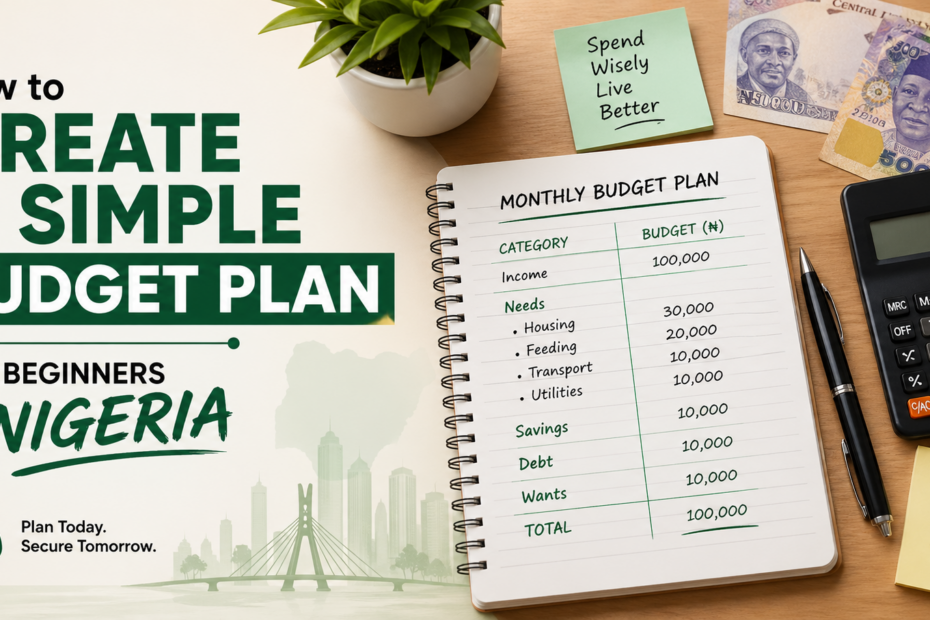
    A good budget example clearly shows how income is allocated across different categories. For instance, if someone earns โ‚ฆ200,000 monthly, a simple budget could look like this:

    โ‚ฆ80,000 for rent and housing
    โ‚ฆ40,000 for food and groceries
    โ‚ฆ20,000 for transport
    โ‚ฆ15,000 for utilities and bills
    โ‚ฆ25,000 for savings and investments
    โ‚ฆ10,000 for emergency fund
    โ‚ฆ10,000 for personal spending

    This type of budget works because every naira is assigned a purpose. It also balances essential expenses with savings and lifestyle spending.

    A good budget should be realistic, flexible, and aligned with your income level. It should also leave room for unexpected expenses while still prioritizing savings.

    How to create a budget in 5 simple steps?

    Creating a budget can be simple if you follow a clear process. The first step is to calculate your total income, including all sources of money.

    The second step is to list all your expenses, both fixed and variable. This helps you understand where your money goes.

    The third step is to separate needs from wants. Needs are essential, while wants are optional. This helps you prioritize spending.

    The fourth step is to assign your money to categories, such as housing, food, transport, savings, and entertainment. You can use a method like the 50/30/20 rule.

    The fifth step is to track and adjust your budget regularly. Monitor your spending and make changes when necessary.

    Following these steps makes budgeting easier and helps you stay in control of your finances.

    What is the best budgeting method?

    The best budgeting method depends on your income level, lifestyle, and financial goals, but one of the most effective and widely used is the 50/30/20 rule.

    This method divides your income into three categories: 50% for needs, 30% for wants, and 20% for savings or debt repayment. It is simple, flexible, and easy to follow, making it ideal for beginners.

    However, for people who want stricter control, the zero-based budget is often considered the best. It ensures that every naira is assigned a purpose, leaving no room for waste.

    If your income is irregular, a flexible budgeting system may be more suitable because it adjusts based on what you earn each month.

    Ultimately, the best budgeting method is the one you can stick to consistently. Simplicity, discipline, and regular tracking matter more than the specific method you choose.

    What are the 4 pillars of a budget?

    The four pillars of a budget are the key principles that support effective financial management. The first pillar is income, which represents all the money you earn. Without knowing your income, budgeting is impossible.

    The second pillar is expenses, which includes all your spending. Understanding your expenses helps you control where your money goes.

    The third pillar is savings, which ensures you set aside money for future needs and emergencies. This is essential for financial security.

    The fourth pillar is tracking and control, which involves monitoring your spending and adjusting your budget when necessary. This keeps your finances on track.

    These four pillars work together to create a strong financial system that promotes stability, discipline, and long-term financial growth.

    How is the Nigerian budget prepared?

    The Nigerian budget is prepared through a structured process led by the executive arm of government. It begins with the Medium-Term Expenditure Framework (MTEF), which outlines economic projections, revenue expectations, and spending priorities for the next three years. This framework guides ministries, departments, and agencies (MDAs) in preparing their budget proposals.

    See also  20 Proven Ways to Make Quick Money in Nigeria Without Borrowing

    Each MDA then submits its estimates based on national priorities such as infrastructure, education, healthcare, and security. These proposals are reviewed and consolidated by the Federal Ministry of Finance and Budget Office to ensure alignment with government goals and available resources.

    After consolidation, the President presents the proposed budget (Appropriation Bill) to the National Assembly. The legislature debates, reviews, and may adjust allocations before approving it.

    Once passed, the budget is signed into law and implemented by relevant agencies. Throughout the year, there is monitoring and evaluation to ensure funds are used properly.

    This process ensures planning, accountability, and alignment with national development goals.

    What are 7 essential items you need in your budget?

    A good budget must include key items that cover both survival and financial growth. The first is income, which shows how much money you have available.

    The second is housing, including rent or accommodation costs, which is usually the largest expense.

    The third is food and groceries, essential for daily living.

    The fourth is transportation, covering commuting or travel costs.

    The fifth is utilities and bills, such as electricity, water, and internet.

    The sixth is savings, which should include emergency funds and future goals.

    The seventh is debt repayment or financial obligations, if applicable.

    Including these items ensures your budget is complete and balanced, covering both present needs and future security.

    How to budget for beginners?

    Budgeting for beginners starts with understanding your financial situation. First, calculate your total income from all sources.

    Next, list all your expenses, including fixed costs like rent and variable costs like food. This helps you see where your money goes.

    Then, separate your expenses into needs and wants. Needs are essential, while wants are optional.

    After that, set a saving goal and treat savings as a priority, not an afterthought.

    Choose a simple method like the 50/30/20 rule or a zero-based budget to structure your spending.

    Finally, track your spending and review your budget regularly. Adjust when necessary to stay on track.

    The key is consistency. Start simple and improve over time.

    What are the 10 principles of budgeting?

    Budgeting is guided by key principles that help ensure effectiveness. First is clarity of income, knowing exactly how much you earn. Second is goal setting, defining what you want to achieve financially.

    Third is prioritization, focusing on essential needs before wants. Fourth is realism, creating a budget you can actually follow.

    Fifth is discipline, sticking to your plan consistently. Sixth is flexibility, adjusting your budget when circumstances change.

    Seventh is tracking, monitoring where your money goes. Eighth is accountability, taking responsibility for your financial decisions.

    Ninth is saving consistently, regardless of income level. Tenth is long-term thinking, planning beyond immediate needs.

    These principles help create a sustainable and effective budgeting system.

    What is a budget checklist?

    A budget checklist is a simple tool that ensures you donโ€™t miss any important steps when creating or reviewing your budget. It acts as a guide to keep your finances organized.

    A typical budget checklist includes confirming your total income, listing all fixed and variable expenses, and identifying essential vs non-essential spending.

    It also includes checking whether you have allocated money for savings and emergency funds, as well as debt repayment if needed.

    Another key part is ensuring every naira has a purpose, especially if you are using a zero-based budget.

    Finally, the checklist reminds you to track your spending and review your budget regularly.

    Using a checklist helps you stay consistent, avoid mistakes, and maintain control over your finances.

    What are the biggest budgeting mistakes?

    One of the biggest budgeting mistakes is not tracking expenses. Many people create a budget but never monitor their actual spending, which leads to overspending without realizing it. Another common mistake is setting unrealistic limits. If your budget is too strict, it becomes difficult to follow, and you may abandon it entirely.

    A third mistake is ignoring savings. Treating savings as optional instead of essential leaves you unprepared for emergencies. Similarly, not having an emergency fund can force you into debt when unexpected expenses arise.

    Another major error is failing to adjust the budget. Income and expenses change over time, and a budget that is not updated becomes ineffective. People also make the mistake of confusing wants with needs, which leads to unnecessary spending.

    Lastly, not planning for irregular expenses like medical bills, school fees, or repairs can disrupt your financial stability. Avoiding these mistakes helps you build a more effective and sustainable budget.

    What are the six types of budgets?

    There are several budgeting types, but six commonly used ones include different approaches to managing money. The first is the zero-based budget, where every unit of income is assigned a purpose.

    The second is the incremental budget, which is based on previous budgets with slight adjustments. It is simple but may carry forward inefficiencies.

    The third is the flexible budget, which changes based on income or activity levels. It is useful for people with irregular income.

    The fourth is the static budget, which remains fixed regardless of changes in income or expenses.

    The fifth is the cash budget, which focuses on tracking cash inflows and outflows to ensure liquidity.

    The sixth is the activity-based budget, which allocates money based on specific activities or operations.

    Each type serves different needs depending on your financial situation.

    What are the 4 stages of budgeting?

    Budgeting typically follows four key stages. The first stage is planning, where you identify your income, expenses, and financial goals. This stage sets the foundation for your budget.

    The second stage is development, where you create the actual budget by allocating your income to different categories such as needs, wants, and savings.

    The third stage is implementation, where you start following the budget in your daily spending. This is where discipline is required to stick to your plan.

    The fourth stage is evaluation and control, where you review your spending, compare it with your budget, and make adjustments if necessary.

    These stages ensure that budgeting is not just a one-time activity but an ongoing process that improves financial management.

    What are the five types of budgets?

    Five common types of budgets include different methods suited for various financial situations. The first is the zero-based budget, which assigns every naira a job.

    The second is the 50/30/20 budget, which divides income into needs, wants, and savings.

    The third is the envelope budget, where cash is divided into categories and placed in envelopes to control spending.

    The fourth is the flexible budget, which adjusts based on income changes.

    The fifth is the incremental budget, which builds on previous budgets with small changes.

    Each type offers a different level of control and flexibility, allowing individuals to choose what works best for them.

    How to create a new budget?

    Creating a new budget starts with understanding your financial situation. First, calculate your total income, including all sources of money.

    Next, list all your expenses, both fixed (rent, utilities) and variable (food, transport). This helps you see your spending pattern.

    Then, categorize your expenses into needs and wants so you can prioritize essential spending.

    After that, allocate a portion of your income to savings and financial goals. Treat this as a priority, not an afterthought.

    Choose a budgeting method that suits you, such as the 50/30/20 rule or a zero-based budget.

    Finally, track your spending and review your budget regularly. Adjust it when your income or expenses change.

    Consistency is the key to making your budget effective and sustainable.
    Leave a Reply

    Your email address will not be published. Required fields are marked *

    error: Content is protected !!