Skip to content
Home ยป How to change Naira to Cedi safely at Seme border

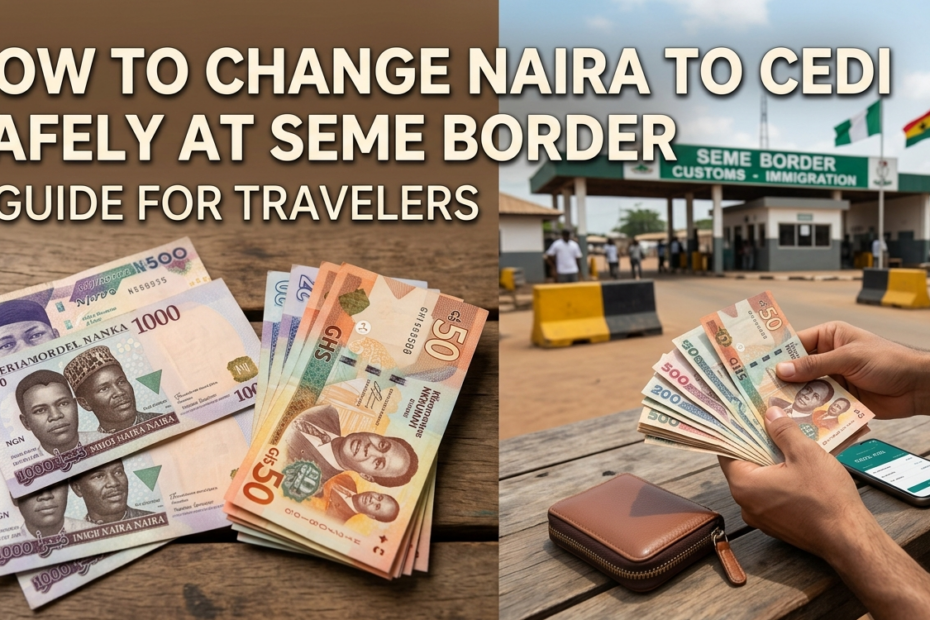
How to change Naira to Cedi safely at Seme border

    For many travelers, traders, and businesspeople moving between Nigeria and Ghana, knowing how to change Naira to Cedi safely at Seme border is essential. The Seme border serves as a major entry and exit point, attracting thousands of people who need local currency for trade, shopping, or travel expenses.

    Whether youโ€™re a commuter, a trader carrying goods, or a tourist, exchanging your Naira for Cedi efficiently and securely can save you time, money, and potential risks. In this guide, weโ€™ll show you the safest methods to convert your currency while avoiding scams and getting fair rates.

    Why Safety Matters When Changing Currency

    Exchanging money might seem straightforward, but at busy border posts like Seme, itโ€™s important to prioritize safety. Knowing how to change Naira to Cedi safely at Seme border isnโ€™t just about getting a good rateโ€”itโ€™s about protecting your money and avoiding common risks.

    Risks of Unsafe Currency Exchange at Seme Border

    1. Scams and Fraudulent Agents
      Not all money changers are licensed or trustworthy. Some may try to shortchange you, use sleight-of-hand tricks, or offer unofficial rates that seem attractive but are unfair.

    2. Counterfeit Notes
      Fake currency is a real threat. Receiving counterfeit Cedi or Naira can lead to significant financial loss and difficulty reporting the issue to authorities.

    3. Poor Exchange Rates
      Street vendors or unverified agents may offer rates far below the market value. Without comparing rates or using licensed bureaux, you could lose a substantial amount on your transaction.

    4. Unsafe Locations
      Crowded or poorly lit exchange spots increase the risk of theft or pickpocketing. Being careless in such areas can make you a target.

    By understanding these risks, travelers and traders can take the necessary precautions to ensure that their money exchange at Seme border is both safe and efficient.

    Step-by-Step Guide to Change Naira to Cedi Safely

    Exchanging currency at the Seme border can be straightforward if you follow these safety steps. By knowing how to change Naira to Cedi safely at Seme border, you can avoid scams, get fair rates, and complete your transactions stress-free.

    Step 1: Research Official or Licensed Forex Bureaux

    Before you cross the border, identify licensed and reputable forex bureaux. Official bureaux are regulated and provide secure transactions, reducing the risk of fraud or counterfeit notes.

    Step 2: Compare Exchange Rates Before Crossing

    Check the current Naira to Cedi exchange rates online or through trusted apps. Knowing the prevailing rate helps you spot unfair offers and ensures you get the best value for your money.

    Step 3: Avoid Street Vendors or Unlicensed Money Changers

    Street vendors may offer seemingly attractive rates, but they often carry high risks, including fake currency and scams. Always transact with authorized bureaux to stay safe.

    Step 4: Count Your Money Carefully Before Leaving the Counter

    Never leave the counter until you have verified the amount of Cedi you received. Counting your money in front of the cashier ensures you catch errors or discrepancies immediately.

    Step 5: Keep Transaction Receipts for Safety

    Receipts serve as proof of your exchange and can be crucial if any disputes arise. Always request a receipt and store it safely until you complete your trip.

    By following these steps, you can confidently exchange Naira to Cedi at Seme border without unnecessary risk, ensuring a smooth and secure transaction.

    Tips to Get the Best Rates for Naira to Cedi Exchange

    Getting the most value when you change Naira to Cedi safely at Seme border requires more than just finding a licensed bureauโ€”it also involves timing, research, and a bit of strategy. Here are some practical tips to help you secure the best rates for Naira to Cedi exchange:

    1. Check Online Rates Before You Travel

    Stay updated on the current Naira to Cedi exchange rate using trusted online platforms or forex apps. Knowing the market rate helps you identify bureaux offering fair rates and avoid being shortchanged.

    2. Consider Timing Your Exchange

    Exchange rates can fluctuate during the week. Weekdays, especially early mornings, often provide more stable and competitive rates compared to weekends or peak travel times when demand is higher.

    3. Compare Multiple Bureaux

    Donโ€™t settle for the first exchange point you find. Visiting 2โ€“3 licensed bureaux allows you to compare rates and choose the one that offers the best value for your Naira.

    4. Negotiate Politely

    Some bureaux may offer slightly flexible rates, especially if youโ€™re exchanging a large sum. Approach negotiations politely and with knowledge of the prevailing rates.

    5. Avoid Urgency-Based Decisions

    Rushing to exchange money in crowded areas can lead to poor rates or mistakes. Take your time to ensure a safe and favorable transaction.

    By following these tips, you can maximize your value while staying secure, ensuring that your currency exchange experience at Seme border is both profitable and safe.

    Precautions and Safety Tips When Changing Naira to Cedi at Seme Border

    Even when you follow all the steps and tips for a safe exchange, taking extra precautions ensures your money remains secure. Hereโ€™s how to protect yourself while changing Naira to Cedi safely at Seme border:

    1. Keep Your Money Secure

    Always store your cash in a secure wallet or money pouch. Avoid carrying large amounts of money loosely, as this increases the risk of theft.

    2. Avoid Exchanging Large Sums in Public

    Exchanging significant amounts of money in crowded areas can make you a target for pickpockets or scammers. If possible, make transactions inside licensed bureaux or bank offices where security is higher.

    3. Use Digital Payments or Bank Transfers When Possible

    Where available, consider using digital payment platforms or bank transfers to reduce the need for carrying cash. This minimizes risk and often offers more transparency in transactions.

    4. Stay Alert and Aware of Your Surroundings

    Be mindful of suspicious behavior around exchange points. Trust your instinctsโ€”if something feels off, wait or choose another licensed bureau.

    By taking these precautions, you can ensure your currency exchange experience is safe, efficient, and stress-free, giving you peace of mind while traveling or trading between Nigeria and Ghana.

    Conclusion

    Exchanging currency at the Seme border doesnโ€™t have to be stressful or risky. By prioritizing safety, using licensed and trusted exchange points, and following practical tips for securing the best rates for Naira to Cedi exchange, you can protect your money and enjoy a smooth transaction.

    Always stay alert, verify your cash, and avoid shortcuts that compromise security. Follow these tips to change Naira to Cedi safely at Seme border without stress or risk, and make your travel or trade experience seamless and secure.

    Frequently Asked Questions

    Can I use my NIN to travel to Ghana?

    No, you cannot use your National Identification Number (NIN) alone to travel to Ghana. The NIN is primarily a domestic identification tool issued by the National Identity Management Commission (NIMC) in Nigeria for purposes such as bank verification, SIM card registration, and accessing government services. While it serves as proof of identity within Nigeria, it is not recognized as a valid travel document internationally.

    See also  How to prevent breakouts from happening frequently

    To travel to Ghana, you need a valid international travel document, typically a passport issued by the Nigerian Immigration Service. Additionally, Ghana requires that travelers have the appropriate visa or entry clearance unless they are from countries with visa exemption arrangements.

    For Nigerians, entry into Ghana can be facilitated under the ECOWAS protocol, which allows citizens of member states to travel freely within West Africa for short stays. Even under this arrangement, a valid passport or a recognized travel document is still mandatory.

    It is important to note that border officials at Seme or any other entry point will not accept a NIN as a replacement for a passport. Attempting to travel with only your NIN can lead to delays, denial of entry, or complications with immigration authorities.

    In addition to a passport, it is wise to ensure that your personal details match the information on your travel documents, as discrepancies can also result in denied boarding or entry.

    In summary, while your NIN is a crucial identification document within Nigeria, it cannot replace the passport or visa requirements needed for international travel to Ghana. Always ensure that you carry all required travel documents when crossing the border to comply with immigration regulations and avoid unnecessary complications.

    How much to stamp a passport at the Seme Border?

    The cost of stamping a passport at Seme Border depends on the type of entry and the duration of stay permitted in Ghana. Generally, travelers entering Ghana from Nigeria under the ECOWAS protocol may be subject to a nominal border fee for processing entry documents.

    For standard ECOWAS entry, the passport stamping fee usually ranges between 5 to 10 US dollars, though the exact amount can vary depending on border procedures and official rates at the time of travel.

    When paying for the stamp, it is important to ensure that the payment is made at the official immigration desk. Avoid paying unofficial agents or individuals who may approach travelers with offers to expedite the process, as these are often scams.

    The stamp in your passport serves as proof of legal entry into Ghana and includes details such as the date of entry, type of entry, and duration of stay allowed.

    The stamping process also involves checking your passport for validity, confirming travel documents, and sometimes verifying other documents like vaccination certificates or visas if required. Having all necessary documents ready before reaching the counter can speed up the process and reduce waiting time.

    For travelers who are entering Ghana for business, tourism, or longer stays, additional documentation may be required, and fees could vary accordingly. It is advisable to carry small denominations in US dollars or Ghana cedis to facilitate smooth payment. Always request an official receipt after payment to avoid disputes.

    In summary, the cost to stamp a passport at Seme Border is generally nominal but must be paid through official channels. Being prepared and cautious ensures a smooth entry experience and avoids unnecessary delays or fraudulent transactions.

    How much is the ticket from Nigeria to Ghana by road?

    The cost of traveling from Nigeria to Ghana by road varies based on the city of departure, the mode of transport, and the type of bus service chosen. On average, a one-way bus ticket from Lagos to Accra can range from 30,000 to 60,000 Naira for standard bus services.

    Premium or luxury bus services with added amenities such as air conditioning, reclining seats, and onboard refreshments may cost between 60,000 and 80,000 Naira.

    Tickets can be purchased online through travel agency websites, mobile apps, or directly at bus terminals. Prices may fluctuate depending on demand, season, and fuel costs, with higher rates often observed during holidays or peak travel periods. Some travel companies also offer discounts for early bookings or group travel, so planning in advance can reduce costs.

    It is important to consider that road travel from Nigeria to Ghana may include border fees, passport stamping costs, and other minor charges along the route. The ticket price generally covers the bus fare and sometimes includes insurance for passengers, but travelers should confirm what is included before making payment.

    Travelers are advised to select reputable bus companies for safety and reliability. Well-known companies ensure regular stops for meals and restroom breaks, adhere to border regulations, and provide documentation assistance at the Seme border. Poorly managed or unlicensed operators may offer cheaper tickets but pose higher risks regarding safety and timely border processing.

    In summary, the price of a road ticket from Nigeria to Ghana depends on the service class and operator, ranging from 30,000 to 80,000 Naira. Choosing reputable bus companies and planning ahead ensures a comfortable, safe, and cost-effective journey.

    What documents are required to travel from Nigeria to Ghana?

    To travel from Nigeria to Ghana, several key documents are required to comply with immigration and border regulations. First and foremost, a valid Nigerian passport is mandatory.

    The passport must have at least six months of validity remaining from the date of travel to avoid entry denial. While the NIN is a domestic identification tool, it is not acceptable as a travel document.

    Nigerian citizens traveling to Ghana under the ECOWAS protocol benefit from visa-free entry for short stays, typically up to 90 days. However, travelers must present proof of citizenship, which is usually verified through the passport. Non-Nigerian citizens may require a Ghanaian visa or residence permit, depending on their nationality.

    Other important documents include: proof of COVID-19 vaccination if required by health authorities, travel itinerary, and sufficient funds to cover your stay. In some cases, border officials may request evidence of accommodation or return tickets to confirm that travelers do not intend to overstay.

    Passport stamping is done at the Seme border, which serves as an official record of entry. Travelers should also keep any receipts from payment of border fees or stamps as proof of legal entry. For minors traveling without parents, additional documents such as birth certificates or consent letters from guardians may be required.

    In summary, essential documents include a valid passport, any applicable visas, vaccination certificates if required, proof of funds, and supporting documents for minors. Being fully prepared ensures a smooth crossing at Seme border and reduces the risk of delays or entry refusal.

    How many hours from Seme to Ghana?

    The travel time from Seme border to major cities in Ghana, such as Accra, depends on road conditions, traffic, and the mode of transport.

    On average, the distance from Seme to Accra is approximately 450 to 500 kilometers, and it typically takes between 8 to 12 hours by road under normal conditions. Travel time can vary significantly depending on the efficiency of border processing and stops along the way.

    Buses and private vehicles traveling from Seme often stop at various checkpoints, rest areas, and sometimes for meals or fuel. Traffic congestion around major cities or border areas can add extra hours to the journey.

    Luxury or express bus services tend to be faster as they make fewer stops and maintain consistent speeds, whereas standard buses may take longer due to additional passenger pickups or local delays.

    It is also important to account for potential delays at the Seme border, especially during peak travel times such as holidays or weekends. Efficient travelers often plan to cross the border early in the day to reduce waiting times and reach their destination in daylight hours for safety.

    See also  Online Tutoring in Nigeria 2026: How to Teach and Earn Money from Home

    In summary, traveling from Seme border to Ghana generally takes 8 to 12 hours by road, depending on the mode of transport, traffic, and border processing times. Planning ahead and choosing reliable transport options ensures a safer and more predictable journey.

    How much does it cost to get a visa to go to Ghana?

    For Nigerian citizens, you generally do not need a visa to enter Ghana. Both Nigeria and Ghana are members of the Economic Community of West African States, which allows visa-free travel between member countries for short stays (usually up to 90 days).

    However, this does not mean entry is completely automatic. At the border or airport, you will still need to present key documents such as a valid international passport, yellow fever vaccination card, and sometimes proof of return travel or accommodation.

    If you are a non-ECOWAS citizen traveling to Ghana from Nigeria, then visa fees apply and can vary depending on nationality and processing type (single-entry or multiple-entry visa).

    So in simple terms:

    • Nigerians โ†’ No visa fee (visa-free entry)
    • Non-ECOWAS travelers โ†’ Visa fees apply depending on embassy rules

    Which month is the cheapest to fly to Ghana?

    The cheapest months to fly from Nigeria to Ghana are usually off-peak travel periods, especially:

    • May to June
    • September to early November

    During these months, demand is lower because there are fewer holidays, school breaks, or festive travel rushes. Airlines often reduce prices to fill seats.

    On the other hand, flight prices increase during:

    • December (Christmas/New Year travel peak)
    • Easter period
    • August holidays

    Since Lagos to Accra is a short regional route (about 1 hour flight), prices are heavily influenced by demand and timing rather than distance. Booking early (2โ€“6 weeks ahead) also helps you get cheaper tickets.

    What documents do I need to travel from Nigeria to Ghana by road?

    To travel from Nigeria to Ghana by road, you need several important documents because the journey passes through multiple ECOWAS countries like Benin and Togo.

    Key documents include:

    • International passport (most important travel document)
    • Yellow fever vaccination card (strictly checked at borders)
    • Valid ID (NIN, voterโ€™s card, or driverโ€™s license as backup identification)
    • Travel itinerary or bus ticket (from companies like ABC Transport or GUO)
    • Proof of accommodation (optional but recommended)

    The road route involves multiple border crossings, so having complete documents helps you avoid delays or extra questioning.

    How much is the ABC bus from Lagos to Ghana?

    The price of ABC Transport from Lagos to Accra varies depending on seat type and travel season. On average:

    • Economy class: about โ‚ฆ60,000 โ€“ โ‚ฆ75,000
    • Executive/VIP class: about โ‚ฆ80,000 โ€“ โ‚ฆ98,000

    These buses usually offer comfort features like air-conditioning, rest stops, and sometimes meals during the journey.

    Prices may rise during festive periods like December or Easter due to high demand. Booking early is usually cheaper and ensures seat availability.

    How many hours is it from Lagos to Ghana by road?

    The road trip from Lagos, Nigeria to Accra, Ghana typically takes about 9 to 15 hours under normal conditions. However, in some cases, it can extend to 18โ€“24 hours depending on:

    • Border delays (Nigeriaโ€“Beninโ€“Togoโ€“Ghana checkpoints)
    • Traffic conditions
    • Weather and road conditions

    The route covers several West African countries and includes multiple stops, which is why timing is not always fixed. Most travelers start early in the morning to arrive in Accra by evening or the next day.

    In summary, flying is faster (about 1 hour), while road travel is longer but more affordable and adventurous.

    How much does a ticket to Ghana cost?

    The cost of a flight ticket from Nigeria (especially Lagos) to Ghana (Accra) depends on the airline, season, and how early you book. On average, a one-way economy ticket typically ranges between โ‚ฆ200,000 and โ‚ฆ500,000, though it can sometimes be slightly lower or higher depending on demand.

    For example, during low-demand months, fares can drop to around $130โ€“$280 (about โ‚ฆ200,000โ€“โ‚ฆ435,000), while in peak periods like December, prices can rise to $320โ€“$520 (about โ‚ฆ495,000โ€“โ‚ฆ805,000).

    The Lagos to Accra route is very short (about 1 hour flight), but prices are influenced more by demand than distance. Booking earlyโ€”usually 2 to 6 weeks in advanceโ€”can help you secure cheaper fares. Some airlines operating this route include Air Peace, Africa World Airlines, and Ibom Air.

    In summary, expect to pay around โ‚ฆ200,000 to โ‚ฆ800,000 depending on timing, with off-peak travel being the cheapest option.

    Is there a train from Lagos to Accra?

    No, there is currently no direct train service between Lagos, Nigeria and Accra, Ghana. While both countries are part of West Africa and discussions have been made about improving regional rail connections, there is still no operational international railway linking the two cities.

    Travel between Lagos and Accra is mainly done by:

    • Air travel (fastest option โ€“ about 1 hour)
    • Road transport (buses or private vehicles โ€“ about 10 to 15 hours or more depending on borders)

    A rail system connecting Nigeria, Benin, Togo, and Ghana has been proposed under regional integration plans, but it is still in planning or development stages and not yet functional for passenger travel.

    So, if you are planning your trip today, your realistic options remain flight or road travel, with flying being the most convenient and road travel being the cheapest.

    What is the cheapest time to go to Ghana?

    The cheapest time to travel to Ghana is during low or off-peak travel seasons, when fewer people are flying and demand is lower. For flights from Nigeria to Ghana, the most affordable months are usually:

    • March to May
    • September to early November

    During these months, ticket prices are generally lower because there are fewer holidays and less travel demand. Airline pricing data shows that fares can drop significantly in these periods compared to peak months.

    On the other hand, the most expensive times to travel include:

    • December (Christmas and New Year period)
    • Easter holidays
    • School vacation months (Julyโ€“August)

    Booking early also plays a major role. Even during cheap months, last-minute bookings can still be expensive.

    In summary, if you want to save money, travel in Marchโ€“May or Septemberโ€“November and book early.

    Do Nigerians need a visa to Ghana?

    No, Nigerians do not need a visa to travel to Ghana for short visits. Both Nigeria and Ghana are members of the Economic Community of West African States, which allows visa-free movement between member countries.

    This means Nigerian citizens can enter Ghana without applying for a visa in advance. However, you still need to carry important travel documents such as:

    • A valid international passport
    • Yellow fever vaccination card
    • Proof of accommodation or return travel (sometimes requested)

    At the border or airport, immigration officers may still check your documents, but you will not be required to go through a visa application process.

    Typically, visa-free stays are allowed for up to 90 days, depending on immigration rules at entry.

    In summary, travel between Nigeria and Ghana is relatively easy because of regional agreements that support free movement within West Africa.

    How much cash should I bring to Ghana?

    The amount of cash you should bring to Ghana depends on your travel style, duration of stay, and spending habits. On average, a budget traveler should consider carrying around โ‚ต1,000 to โ‚ต3,000 Ghanaian cedis per week, while mid-range travelers may need more.

    See also  What account should I open for an emergency fund?

    It is important to combine both cash and digital payments. In cities like Accra, mobile money (MoMo), bank cards, and POS payments are widely accepted. However, cash is still essential for:

    • Street food
    • Local transport (taxis, tro-tro)
    • Small markets and informal shops

    A practical approach is to carry a moderate amount of cash (โ‚ต500โ€“โ‚ต1,000 initially) and withdraw more from ATMs as needed. This reduces the risk of carrying too much money at once.

    Safety is also importantโ€”avoid displaying large amounts of cash in public and keep it securely stored.

    In summary, you donโ€™t need to carry excessive cash; instead, use a balanced mix of cash and electronic payment methods for convenience and safety.

    How much is the cheapest transport from Nigeria to Ghana?

    The cheapest transport from Nigeria to Ghana is usually by road using public buses or shared transport services, and this is significantly cheaper than flying.

    On average, the lowest possible cost for road travel can range from about โ‚ฆ50,000 to โ‚ฆ80,000, depending on the transport company, seating class, and season. Some budget operators or shared cross-border vehicles may offer slightly lower fares, but comfort and travel time may vary.

    Companies like ABC Transport, GUO Transport, and other interstate services provide structured trips from cities such as Lagos to Accra. These buses usually pass through multiple countries including Benin and Togo, since there is no direct border between Nigeria and Ghana. The journey includes immigration stops at each border, which is part of the travel experience.

    The reason road transport is the cheapest option is because it avoids high aviation taxes and airline pricing fluctuations. However, it takes much longerโ€”usually 10 to 15 hours or more depending on delays at border checkpoints and road conditions.

    For travelers on a tight budget, road transport remains the most affordable way to move between both countries. But if comfort, speed, and convenience are priorities, flying may be better even though it is more expensive.

    In summary, the cheapest transport option between Nigeria and Ghana is road travel, typically starting from around โ‚ฆ50,000โ€“โ‚ฆ80,000, depending on timing and service provider.

    Which city never sleeps in Nigeria?

    In Nigeria, the phrase โ€œcity that never sleepsโ€ is most commonly used to describe Lagos, the countryโ€™s largest and most active commercial hub. Lagos is widely known for its constant movement, busy streets, nightlife, and round-the-clock economic activities.

    Unlike many cities where business slows down at night, Lagos remains active almost 24/7. Areas like Victoria Island, Lekki, Ikeja, and Surulere are filled with restaurants, clubs, transport activity, and small businesses operating late into the night. This is why it is often compared to global cities like New York in terms of energy and lifestyle pace.

    Lagos is also Nigeriaโ€™s financial center, home to major industries such as entertainment, banking, technology, and trade. Because of this, people are constantly working, commuting, and engaging in business activities at all hours.

    However, it is important to understand that while Lagos is very active, not every part of the city is equally busy at night. Some residential areas become quiet after certain hours, while commercial zones remain lively.

    Other Nigerian cities like Abuja and Port Harcourt also have active nightlife, but Lagos stands out as the most consistently busy city overall.

    In summary, Lagos earns the reputation of being the Nigerian city that never sleeps because of its nonstop economic activity, entertainment culture, and fast-paced urban lifestyle.

    How much is a road trip from Lagos to Ghana?

    A road trip from Lagos, Nigeria to Accra, Ghana is generally more affordable than flying, but the cost varies depending on transport company, comfort level, and timing. On average, the price ranges from about โ‚ฆ60,000 to โ‚ฆ100,000 per person.

    Budget options may be slightly lower, especially for shared buses or economy seats, while VIP or executive buses can cost more due to added comfort, air conditioning, better seating, and sometimes meals. Popular transport companies such as ABC Transport and GUO Transport operate on this route.

    The journey is long, usually taking 10 to 15 hours or more, depending on border delays at Nigeriaโ€“Beninโ€“Togoโ€“Ghana checkpoints. These stops are mandatory because passengers must go through immigration checks in each country along the route.

    Road trips are popular because they allow travelers to save money while also experiencing West African scenery and cross-border culture. However, they require patience due to travel time and possible delays.

    In summary, a road trip from Lagos to Ghana typically costs between โ‚ฆ60,000 and โ‚ฆ100,000, making it the cheapest practical way to travel between the two countries.

    Who is the 9 year old billionaire in Nigeria?

    There is no verified or officially recognized 9-year-old billionaire in Nigeria. Claims about extremely young billionaires are often circulated on social media, but they are usually exaggerated, misunderstood, or not supported by credible financial records.

    In Nigeria, wealth rankings are tracked by financial institutions, business reports, and global organizations, and no credible source has confirmed a child of that age holding billionaire status.

    Most of the individuals referred to in viral posts are either children of wealthy entrepreneurs or young influencers whose estimated โ€œwealthโ€ is not actual personal net worth.

    It is important to separate net worth from family wealth. Many wealthy Nigerian families are led by successful businesspeople in industries such as oil, real estate, and technology. Their children may live privileged lifestyles, but that does not make them billionaires in a personal or legal financial sense.

    Nigeria does have young entrepreneurs and successful teenagers in business, fashion, and tech, but billionaire status typically requires large-scale verified assets, investments, or company ownershipโ€”something extremely rare at a very young age.

    In summary, the idea of a 9-year-old billionaire in Nigeria is not supported by verified financial data and should be treated as misinformation or social media exaggeration unless proven otherwise by credible sources.

    What sells very fast in Nigeria?

    In Nigeria, products that sell very fast are usually everyday essential goods and high-demand consumer items. These are products people need regularly or cannot easily go without.

    One of the fastest-selling categories is food items, such as rice, garri, noodles, cooking oil, and beverages. Because food is a daily necessity, demand remains consistently high across all income levels.

    Another fast-moving category is fashion and clothing, especially affordable ready-to-wear outfits, shoes, and accessories. Nigeria has a strong fashion culture, and people frequently buy clothes for events, church, work, and social gatherings.

    Mobile phones and accessories also sell quickly due to the countryโ€™s large and active youth population. Items like chargers, earbuds, and data subscriptions are always in demand.

    In addition, beauty and personal care products such as skincare items, hair extensions, and cosmetics move quickly, especially in urban areas.

    Small-scale businesses also thrive on household essentials like soap, detergents, and toiletries because they are used daily in every home.

    In summary, products that sell very fast in Nigeria are those that meet daily needs, lifestyle preferences, and basic survival demands, making food, fashion, tech accessories, and personal care items some of the most profitable and fast-moving goods in the market.

    Leave a Reply

    Your email address will not be published. Required fields are marked *

    error: Content is protected !!