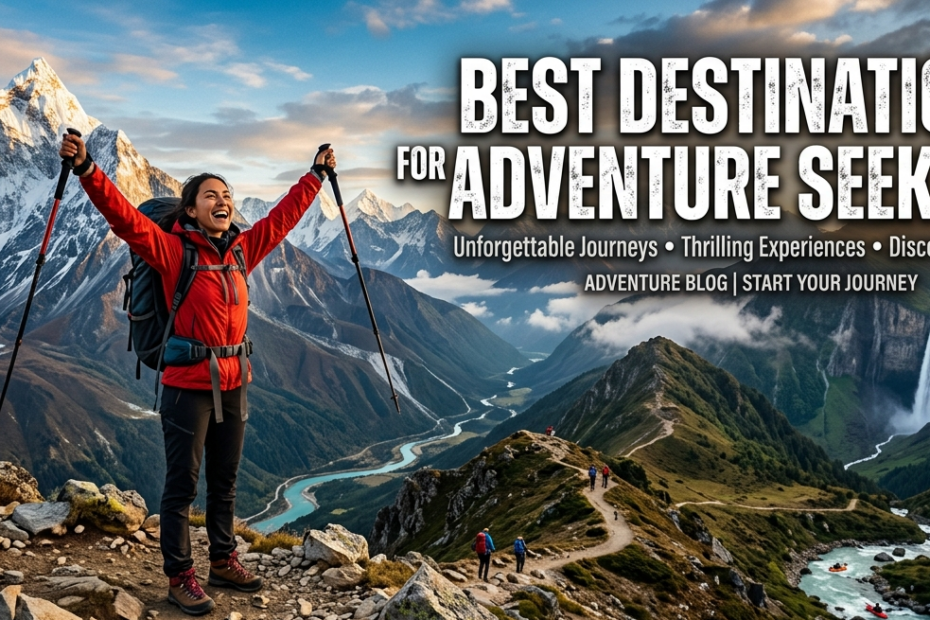
Do you crave the rush of adrenaline when you travel? Are you the kind of explorer who prefers mountain peaks to city streets and roaring rapids to calm beaches? If your idea of the perfect getaway includes heart-pounding moments and breathtaking landscapes, you’re in the right place.
Adventure travel isn’t just a trend — it’s a lifestyle for those who seek to push boundaries, embrace challenges, and create unforgettable memories in the world’s most exhilarating locations.
In this guide, we explore the best adventure travel destinations for 2026 that every thrill seeker should experience. From skydiving over the golden dunes of Dubai to trekking the icy trails of Patagonia, these destinations offer more than just excitement — they promise transformation. Each spot has been handpicked for its unique blend of natural beauty, cultural depth, and pure adrenaline.
Whether you’re a seasoned adventurer looking for your next big challenge or a first-time explorer ready to step out of your comfort zone, this list has something for you. Get ready to uncover the planet’s wildest playgrounds, where every moment tests your limits and rewards your courage. Pack your gear, fuel your wanderlust, and prepare for the ultimate adventure of a lifetime.
Why Adventure Travel Is Trending
In recent years, adventure travel has shifted from a niche pursuit to one of the fastest-growing sectors in global tourism. According to data from the Adventure Travel Trade Association (ATTA), adventure tourism is expanding at an annual rate of over 15%, driven by travelers seeking experiences that go beyond typical sightseeing. Modern explorers are no longer satisfied with just visiting a destination — they want to live it, feel it, and conquer it.
So, what’s fueling this surge in popularity? One reason is the growing desire for authentic, transformative experiences. After years of digital overload and routine living, people are chasing moments that challenge them physically and mentally — from hiking volcanic trails in Iceland to scuba diving with manta rays in Indonesia. Adventure travel offers the perfect balance between thrill and mindfulness, helping travelers reconnect with nature and themselves.
Beyond the rush of adrenaline, the benefits of adventure travel are profound. Physically, it enhances fitness, stamina, and resilience. Mentally, it reduces stress, boosts confidence, and promotes mental clarity through exposure to nature and new challenges. Perhaps most importantly, it creates unforgettable memories and life-changing stories — the kind that photos alone can’t capture.
As we move into 2026, more travelers are prioritizing adventure, sustainability, and self-discovery. The world is calling — and for those who dare to answer, the rewards are endless.
Top 10 Adventure Destinations Around the World
1. Queenstown, New Zealand – The Adventure Capital
Activities: Bungee jumping, skydiving, jet boating, white-water rafting.
Queenstown is often called the “Adventure Capital of the World,” and for good reason. Surrounded by snow-capped mountains and crystal-clear lakes, it offers endless thrills for adrenaline seekers. Whether you’re leaping off the Kawarau Bridge or racing across Lake Wakatipu, every moment here is electrifying.
Best time to visit: December to February for summer adventures, or June to August for winter sports.
2. Patagonia, Chile & Argentina – A Trekker’s Paradise
Activities: Glacier hiking, mountain climbing, kayaking, and wildlife spotting.
Patagonia’s rugged wilderness is a dream come true for adventure lovers. Towering peaks, blue glaciers, and vast grasslands offer some of the most breathtaking landscapes on Earth. The Torres del Paine National Park is a must-visit for hikers.
Best time to visit: November to March for mild weather and clear trails.
3. Interlaken, Switzerland – The Heart of Alpine Adventure
Activities: Paragliding, canyoning, skiing, skydiving.
Nestled between Lake Thun and Lake Brienz, Interlaken is a haven for mountain thrill-seekers. The stunning Swiss Alps provide the perfect backdrop for both summer and winter sports.
Best time to visit: June to September for paragliding and hiking; December to March for snow adventures.
4. Moab, Utah, USA – The Desert Playground
Activities: Rock climbing, mountain biking, off-road driving, hiking.
Moab’s dramatic red rock formations and canyons make it one of the best adventure travel destinations in North America. The Arches and Canyonlands National Parks are filled with epic trails and natural wonders.
Best time to visit: March to May and September to November for comfortable temperatures.
5. Bali, Indonesia – The Island of Adventure and Serenity
Activities: Surfing, scuba diving, jungle trekking, white-water rafting.
Beyond its beaches and temples, Bali is a hotspot for adventure. Ride the waves in Uluwatu, dive among coral reefs in Nusa Penida, or hike to the top of Mount Batur at sunrise for spectacular views.
Best time to visit: April to October during the dry season.
6. Chamonix, France – Europe’s Extreme Playground
Activities: Mountaineering, paragliding, skiing, ice climbing.
Located at the base of Mont Blanc, Chamonix attracts thrill seekers from around the globe. Whether it’s scaling icy peaks or skiing down world-class slopes, adventure never stops here.
Best time to visit: December to April for snow sports, or June to September for hiking.
7. Cape Town, South Africa – Where Ocean Meets Adventure
Activities: Shark cage diving, paragliding, hiking, surfing.
Cape Town is a fusion of natural beauty and adrenaline. Brave the deep with great white sharks, paraglide from Signal Hill, or conquer Table Mountain for panoramic views of the coast.
Best time to visit: November to March for ideal weather conditions.
8. Costa Rica – The Rainforest Adventure Haven
Activities: Zip-lining, volcano hiking, white-water rafting, surfing.
Costa Rica is a paradise for eco-adventure enthusiasts. With lush rainforests, volcanoes, and pristine beaches, it offers endless opportunities for exploration and sustainable tourism.
Best time to visit: December to April during the dry season.
9. Dubai, UAE – Desert Adventures in Luxury
Activities: Dune bashing, skydiving, sandboarding, desert camping.
Dubai combines luxury with adventure. From skydiving over Palm Jumeirah to exploring vast desert dunes, this futuristic city offers high-octane thrills in a truly unique setting.
Best time to visit: November to March for cooler desert conditions.
10. Nepal – Gateway to the Himalayas
Activities: Trekking, mountain climbing, white-water rafting, paragliding.
Home to Mount Everest, Nepal is a bucket-list destination for adventurers worldwide. Whether you’re trekking the Annapurna Circuit or rafting down the Trishuli River, every journey here is epic.
Best time to visit: October to December or March to May for clear skies and mild temperatures.
How to Choose the Right Adventure Destination
Choosing the right adventure travel destination can make the difference between a trip of a lifetime and one filled with frustration. With so many thrilling places around the world, it’s essential to find a destination that matches your budget, experience level, safety needs, and seasonal conditions.
1. Budget:
Start by setting a realistic budget. Adventure activities like skydiving, scuba diving, or mountain climbing can vary greatly in cost depending on location. Countries in Asia and South America often offer world-class adventures at more affordable prices, while destinations in Europe or New Zealand tend to be pricier.
2. Experience Level:
Be honest about your skill level. Beginners should choose guided tours or introductory experiences, such as zip-lining in Costa Rica or easy treks in Nepal. Seasoned adventurers may prefer more challenging expeditions like climbing Mount Kilimanjaro or skiing off-piste in Chamonix.
3. Safety and Health:
Always research local safety conditions and ensure your chosen activities are operated by certified professionals. Pack appropriate gear, check insurance coverage, and know the emergency procedures for your destination.
4. Season and Weather:
Timing is crucial. Some adventures, like hiking in Patagonia or diving in Bali, are highly seasonal. Traveling during the right months ensures better weather, safer conditions, and a more enjoyable experience.
Ultimately, the best adventure travel destination is one that fits your personal goals, comfort zone, and curiosity. Whether you’re chasing snow, waves, or summits, thoughtful planning ensures every adventure is both thrilling and rewarding.
Travel Tips for Adventure Seekers
Before you set off to conquer the world’s best adventure travel destinations, it’s essential to plan wisely. Adventure travel is thrilling, but preparation can make the difference between an unforgettable experience and an unnecessary risk. Here are key travel tips for adventure seekers to help you stay safe, comfortable, and ready for anything.
1. Prioritize Safety Gear:
Invest in high-quality gear suited to your chosen activity. From sturdy hiking boots and helmets to waterproof jackets and harnesses, reliable equipment keeps you safe and enhances performance. If you’re renting gear, always check for damage or proper certification before use.
2. Get the Right Insurance:
Regular travel insurance isn’t always enough for adventure trips. Choose a policy that covers extreme sports, medical emergencies, and evacuation if necessary. This gives you peace of mind while exploring remote or high-risk areas.
3. Consider Guided Tours:
For complex or high-risk activities like glacier hiking, scuba diving, or mountain climbing, joining a guided tour can greatly increase your safety and enjoyment. Certified guides not only provide expert instruction but also share local knowledge and ensure environmental responsibility.
4. Pack Smart and Light:
Every adventure requires specific essentials — a first-aid kit, sunscreen, quick-dry clothing, reusable water bottle, and navigation tools. Avoid overpacking, but never skip safety or survival items, especially for remote destinations.
5. Respect Nature and Local Cultures:
Adventure travel thrives on nature’s beauty and cultural diversity. Always follow “leave no trace” principles, respect wildlife, and engage respectfully with local communities.
Preparation and awareness are your greatest allies. With the right mindset and gear, every trip becomes an empowering journey filled with discovery and unforgettable moments.
Conclusion
Whether you’re diving in the Great Barrier Reef or hiking the Himalayas, the world is full of thrilling adventures waiting for you. The beauty of adventure travel lies not just in the destinations you explore, but in the courage it awakens and the memories it creates. Each journey challenges you to step outside your comfort zone, embrace the unknown, and discover just how capable you truly are.
As you plan your next escape, consider what excites your spirit most — towering peaks, deep oceans, vast deserts, or lush jungles. The best adventure travel destinations offer more than breathtaking views; they offer transformation. Every climb, dive, or trek connects you more deeply with nature, local cultures, and yourself.
Adventure isn’t reserved for the fearless; it’s for anyone willing to try something new, to trade routine for discovery. So pack your bag, lace up your boots, and chase the thrill that sets your heart racing. The world is waiting — and your greatest adventure is just one decision away.
Frequently Asked Questions
Which country is best for adventure activities?
New Zealand is widely regarded as the best country for adventure activities due to its dramatic landscapes, diverse climate, and culture that celebrates outdoor thrill-seeking. The country offers a perfect blend of mountains, lakes, rivers, and coastlines, making it ideal for both land and water-based adventures.
Visitors can engage in world-class activities like bungee jumping, skydiving, white-water rafting, hiking, and skiing. Queenstown, in particular, is known as the heart of adventure, offering an array of adrenaline-pumping sports year-round.
Apart from its thrill factor, New Zealand’s well-developed tourism infrastructure ensures safety and accessibility for travelers of all levels. The Southern Alps provide excellent opportunities for mountaineering and snowboarding, while the Fiordland region offers kayaking through breathtaking fjords.
The country’s Maori culture also adds a unique dimension, allowing visitors to experience not only physical adventure but also cultural immersion. What truly sets New Zealand apart is its emphasis on preserving nature and promoting eco-friendly tourism.
Whether you’re trekking the Tongariro Alpine Crossing or exploring glowworm caves in Waitomo, every experience is infused with natural beauty and sustainability. Therefore, for anyone seeking a destination where adventure and nature unite seamlessly, New Zealand stands out as the best country for adventure activities.
Where is the most adventurous place to travel?
The most adventurous place to travel in the world is Patagonia, a remote region shared by Argentina and Chile in South America. Known for its rugged terrain, towering peaks, vast glaciers, and unpredictable weather, Patagonia is a dream destination for true adventure seekers.
The region’s dramatic landscapes invite travelers to hike, climb, kayak, and camp in some of the most untouched environments on Earth. Torres del Paine National Park in Chile and Los Glaciares National Park in Argentina are two of the most famous adventure spots in the area.
Activities such as glacier trekking on Perito Moreno Glacier or hiking the W Trek route challenge visitors physically while rewarding them with jaw-dropping views. Patagonia’s isolation also adds to its charm, as travelers can go days without seeing another person, fostering a sense of freedom and connection with nature.
Wildlife enthusiasts can spot guanacos, condors, and even pumas roaming the plains. Despite its remoteness, Patagonia remains accessible with well-established eco-lodges and guided tours for those who want a balance between comfort and exploration.
Overall, Patagonia’s combination of raw beauty, thrilling challenges, and sense of solitude makes it the most adventurous place to travel for those craving an extraordinary experience.
Which country is full of adventure?
Costa Rica is a country brimming with adventure at every corner, making it a top destination for adrenaline enthusiasts. Despite its small size, Costa Rica offers an incredible diversity of natural environments—volcanoes, rainforests, rivers, and coastlines—all packed with opportunities for outdoor excitement.
Tourists can enjoy canopy zip-lining above the treetops of Monteverde Cloud Forest, white-water rafting down the Pacuare River, surfing along the Pacific coast, or exploring volcanic landscapes in Arenal National Park.
The country’s strong emphasis on conservation also means that adventure activities are designed to protect and respect the environment. Travelers can hike through lush jungles, encounter exotic wildlife like sloths and toucans, or even take night walks to witness active volcanoes glowing in the dark.
The warm hospitality of locals, known as “Ticos,” enhances the experience, making visitors feel welcome as they explore the wild side of Central America. Additionally, Costa Rica’s well-developed ecotourism industry ensures safety, organization, and comfort even during high-intensity activities. Whether you are a thrill-seeker or a nature lover, Costa Rica provides endless opportunities to connect with the outdoors in an adventurous yet sustainable way.
Where is the best place to go on an adventure holiday?
Queenstown, New Zealand, stands out as the best place in the world for an adventure holiday. Nestled on the shores of Lake Wakatipu and surrounded by the Southern Alps, Queenstown is often called the “Adventure Capital of the World.” It’s where commercial bungee jumping was born, and today, it offers countless activities for thrill-seekers of all levels.
Visitors can skydive from 15,000 feet, race through narrow canyons on a jet boat, or take scenic helicopter rides to remote peaks for snowboarding or hiking. During winter, the nearby Remarkables and Coronet Peak mountains transform into world-class ski destinations, while summer brings mountain biking and paragliding opportunities.
Queenstown also offers a lively social scene with restaurants, bars, and lakeside relaxation for when adventurers need to unwind.
The town’s compact layout makes it easy to access multiple activities within a short distance. Whether you want heart-pounding excitement or scenic exploration, Queenstown offers a perfect balance. Moreover, its friendly locals, breathtaking scenery, and adventure-driven culture make it the ideal spot for an unforgettable adventure holiday.
What is the adventure capital of the world?
Queenstown, New Zealand, proudly holds the title of the Adventure Capital of the World. This small yet vibrant town attracts millions of visitors each year who come to experience its unmatched variety of outdoor adventures. The combination of natural beauty, accessibility, and innovation in adventure tourism makes Queenstown unparalleled in this regard.
It’s the birthplace of commercial bungee jumping, pioneered by AJ Hackett in the 1980s, and remains a global icon for adrenaline-pumping sports. Beyond bungee jumping, Queenstown offers skydiving, jet boating, white-water rafting, paragliding, and mountain biking, all set against the stunning backdrop of mountains and lakes.
The town also provides opportunities for more serene adventures such as scenic flights, wine tours, and lake cruises for those seeking balance. What sets Queenstown apart is how adventure is woven into everyday life—it’s not just a destination but a lifestyle.
With its safe, well-regulated tourism industry and commitment to sustainability, Queenstown continues to evolve as a hub for innovation in adventure travel. For anyone seeking a place that captures the true spirit of adventure, Queenstown remains the undisputed adventure capital of the world.
What is the most fun country to go to?
Japan is one of the most fun countries to visit because it perfectly combines culture, technology, entertainment, and adventure. Every region in Japan offers a different kind of fun, from traditional tea ceremonies in Kyoto to high-tech amusement in Tokyo. Tokyo, in particular, is a hub of excitement, featuring futuristic attractions, anime culture, themed cafés, and the famous Shibuya Crossing, where thousands of people cross simultaneously.
For those who enjoy thrill rides, Japan is home to world-class amusement parks like Universal Studios Japan in Osaka and Fuji-Q Highland near Mount Fuji, which is known for some of the fastest roller coasters in the world. Beyond urban entertainment, Japan also offers fun in the form of nature and tradition—soaking in an onsen (hot spring), hiking Mount Fuji, or attending colorful festivals such as Hanami (cherry blossom viewing) and Gion Matsuri.
The country’s safety, efficient transport system, and welcoming locals make it easy for travelers to explore and enjoy. The food culture adds to the fun, as visitors can try sushi, ramen, and street foods like takoyaki or okonomiyaki in lively night markets. Whether you’re fascinated by pop culture, history, or nature, Japan offers a unique blend of modern fun and timeless charm, making it one of the most enjoyable countries in the world.
Which place is best for adventure?
Nepal is widely recognized as one of the best places in the world for adventure. The country’s dramatic geography, dominated by the towering peaks of the Himalayas, provides endless opportunities for thrilling experiences. The most famous adventure in Nepal is trekking to Everest Base Camp, a journey that allows travelers to walk in the footsteps of legendary mountaineers while experiencing breathtaking scenery and Sherpa hospitality.
Beyond Everest, the Annapurna Circuit offers diverse landscapes, from lush forests to high-altitude deserts. For those who prefer water-based adventures, white-water rafting on the Trishuli or Bhote Koshi rivers provides an exhilarating challenge. Paragliding over the lakeside city of Pokhara offers unmatched views of the Annapurna range, while jungle safaris in Chitwan National Park give adventurers the chance to spot rhinos, elephants, and even Bengal tigers.
What makes Nepal exceptional is how accessible adventure is to everyone, whether you’re a seasoned climber or a curious traveler. The country’s spiritual atmosphere also enhances the experience, making adventures feel more meaningful and transformative. Affordable, friendly, and naturally breathtaking, Nepal is the ultimate destination for anyone seeking authentic adventure in one of the world’s most inspiring landscapes.
What is the prettiest place to travel in the world?
Switzerland is often considered the prettiest place to travel in the world, thanks to its postcard-perfect scenery, clean environment, and charming alpine villages. Every corner of the country looks like it belongs in a painting, with snow-capped mountains, crystal-clear lakes, and lush green meadows. The Swiss Alps dominate the landscape and attract travelers year-round for skiing, hiking, and sightseeing.
Lake Geneva, Lake Lucerne, and Lake Zurich are popular spots for boating and relaxing, while the Matterhorn—a symbol of Switzerland—offers one of the most breathtaking views in Europe. The country’s cities, such as Lucerne and Interlaken, blend old-world charm with modern comfort. Visitors can ride scenic trains like the Glacier Express, which passes through tunnels, valleys, and mountains, offering unforgettable views along the way.
Switzerland’s cleanliness, organization, and hospitality make traveling a pleasure, while its natural beauty creates a sense of serenity and wonder. Whether exploring the Swiss countryside, tasting local chocolates and cheeses, or walking through cobblestone streets lined with flowers, Switzerland embodies beauty at its purest form. It’s a place where every moment feels like a glimpse into paradise.
Is adventure tourism safe for beginners?
Adventure tourism can be very safe for beginners if approached with proper preparation, guidance, and respect for safety rules. Most adventure destinations around the world offer beginner-friendly activities that prioritize safety without compromising excitement. Reputable tour operators provide professional guides, high-quality equipment, and thorough safety briefings before any activity begins.
For example, activities like zip-lining, beginner scuba diving, hiking, or kayaking often have entry-level options designed for those with little or no experience. It’s important for beginners to start slowly, understand their physical limits, and choose activities that match their fitness levels. Many adventure destinations, such as New Zealand, Costa Rica, and Canada, have strict safety regulations to protect tourists.
Wearing proper gear, following instructions, and traveling with certified guides significantly reduce risks. Additionally, investing in travel insurance that covers adventure activities adds another layer of security.
Beginners should also conduct research beforehand to understand the level of difficulty and any health or environmental conditions that might affect their experience. With the right mindset and precautions, adventure tourism can be both safe and incredibly rewarding. It not only builds confidence but also opens the door to new passions and unforgettable memories.
Which is the most magical country in the world?
Iceland is often described as the most magical country in the world, and for good reason. Its otherworldly landscapes make visitors feel as if they’ve stepped onto another planet. From steaming geysers and powerful waterfalls to ice caves and black-sand beaches, Iceland’s scenery is both surreal and breathtaking. The country’s most enchanting feature is the Northern Lights, a dazzling natural light show that dances across the Arctic sky during winter.
Visitors can also relax in geothermal hot springs like the Blue Lagoon, explore volcanic craters, and walk between two continental plates at Thingvellir National Park. Every part of Iceland feels infused with mystery, from its folklore about elves and hidden people to its dramatic natural phenomena.
The midnight sun during summer adds to its charm, offering endless daylight for exploration. Adventure lovers can go glacier hiking, whale watching, or even drive through lava fields on scenic routes like the Golden Circle. Despite its rugged terrain, Iceland is known for its safety, cleanliness, and warm hospitality. The combination of natural wonder, cultural richness, and tranquility gives Iceland an almost mythical aura, making it truly the most magical country in the world.
Where is the adventure capital of Europe?
Interlaken, Switzerland, holds the title of the adventure capital of Europe, attracting thrill-seekers from around the world. Nestled between Lake Thun and Lake Brienz, with the stunning Bernese Alps as a backdrop, Interlaken offers an incredible range of adventure activities suitable for all levels. The region is particularly famous for skydiving, paragliding, and bungee jumping, where participants can enjoy breathtaking aerial views of snow-capped peaks and turquoise lakes.
In winter, Interlaken transforms into a hub for skiing, snowboarding, and ice climbing, while summer brings opportunities for hiking, canyoning, and kayaking. The nearby Jungfrau region, with attractions such as the Jungfraujoch—the “Top of Europe”—adds to the excitement, offering both scenic and adrenaline-filled experiences. What sets Interlaken apart is not only the variety of activities but also its accessibility and professionalism.
Swiss precision ensures that all adventure sports are conducted under the highest safety standards, making it ideal even for beginners. The town itself is picturesque, filled with cozy chalets, cafes, and gear shops that cater to outdoor enthusiasts. Whether you’re gliding over alpine valleys or exploring hidden waterfalls, Interlaken embodies the perfect blend of natural beauty and heart-pounding excitement, making it the true adventure capital of Europe.
Where is overseas adventure travel located?
Overseas Adventure Travel (O.A.T.) is headquartered in Boston, Massachusetts, in the United States. It is a well-established travel company that specializes in small group adventures and cultural trips across the globe. O.A.T. is known for creating immersive experiences that focus on local connections, sustainability, and off-the-beaten-path exploration.
The company operates tours across continents, including Africa, Asia, South America, Europe, and the Middle East, offering travelers a chance to experience authentic destinations beyond typical tourist spots. Their itineraries often include homestays, village visits, and community interactions that allow travelers to engage deeply with local cultures. O.A.T. emphasizes responsible tourism by supporting local businesses, employing regional guides, and promoting environmental conservation.
Founded as part of the Grand Circle Corporation, it caters primarily to mature travelers seeking meaningful adventures rather than luxury vacations. The company’s Boston base serves as the operational center for coordinating tours, customer service, and logistics.
Over the years, O.A.T. has earned a reputation for providing enriching, well-organized journeys that combine comfort with cultural discovery. Whether exploring the Amazon rainforest, trekking through Moroccan deserts, or navigating the streets of Vietnam, O.A.T. continues to set a high standard in global adventure travel experiences.
What makes New Zealand a top adventure destination?
New Zealand is a top adventure destination because it offers an extraordinary combination of landscapes, activities, and accessibility, all within a relatively small area. Known for its breathtaking scenery, the country features everything from snow-covered mountains to lush rainforests, volcanic plateaus, and pristine coastlines. This diversity allows for a wide range of adventure sports, including skydiving, bungee jumping, white-water rafting, jet boating, and skiing.
Queenstown, in particular, has earned international fame as the “Adventure Capital of the World.” What makes New Zealand exceptional is its spirit of adventure and innovation—many of the world’s most iconic extreme sports were developed or popularized there. Beyond adrenaline activities, the country offers hiking trails like the Tongariro Alpine Crossing and the Milford Track, which provide spectacular views and opportunities to connect with nature.
The country’s strong safety standards and welcoming tourism infrastructure make it suitable for travelers of all experience levels. Additionally, the Maori culture enriches the adventure experience by blending physical exploration with spiritual discovery. Every journey in New Zealand feels like a cinematic adventure, enhanced by friendly locals and a deep respect for nature. This perfect balance of thrill, beauty, and culture cements New Zealand’s status as a top adventure destination globally.
Why is adventure tourism becoming more popular?
Adventure tourism is becoming more popular due to the growing desire for authentic, experiential travel that goes beyond traditional sightseeing. Modern travelers, especially millennials and Gen Z, are seeking meaningful experiences that challenge them physically and mentally while connecting them with nature and local cultures. Unlike conventional vacations, adventure tourism provides opportunities for personal growth, self-discovery, and a sense of accomplishment.
Advances in technology and global connectivity have made remote destinations more accessible, encouraging people to explore new terrains and try new activities. Social media also plays a huge role in fueling this trend, as travelers share breathtaking photos and stories that inspire others to follow suit. Moreover, as people become more health-conscious, adventure travel appeals to those seeking active lifestyles and outdoor fitness.
Environmental awareness has also contributed, with many adventurers preferring eco-friendly destinations that promote sustainability. Governments and tourism boards are investing heavily in adventure infrastructure, offering safe and organized experiences for all levels. Whether it’s trekking, diving, or paragliding, adventure tourism provides excitement, education, and emotional fulfillment. In essence, it satisfies humanity’s timeless urge for exploration and connection, making it one of the fastest-growing segments in the global travel industry.
How can travelers stay safe during adventure activities?
Staying safe during adventure activities requires a combination of preparation, awareness, and adherence to safety protocols. Before embarking on any adventure, travelers should research the activity, assess their fitness level, and choose reputable operators with certified guides and safety records. Proper training or orientation sessions are essential, especially for high-risk sports like diving, climbing, or skydiving. Wearing the correct gear, such as helmets, harnesses, or life jackets, significantly reduces injury risks.
It’s also important to listen carefully to instructions and never attempt to push beyond one’s comfort or experience level. Checking weather conditions and understanding the environment—such as altitude, terrain, or water currents—can prevent many accidents. Travelers should also ensure they have adequate travel insurance that covers adventure sports.
Staying hydrated, maintaining physical stamina, and carrying basic first aid supplies are equally important. In group activities, maintaining communication and following the guide’s pace enhances safety for everyone involved. Most importantly, responsible behavior—avoiding alcohol before activities and respecting local regulations—goes a long way in preventing mishaps. By combining preparation with mindfulness, adventurers can enjoy thrilling experiences while minimizing risks and ensuring a safe, unforgettable journey.
What country has the best adventure tourism?
New Zealand is often considered the country with the best adventure tourism due to its outstanding natural landscapes and diverse range of outdoor activities. Known as the world’s ultimate playground for thrill-seekers, New Zealand offers everything from bungee jumping and skydiving to white-water rafting, glacier hiking, and mountain biking. The country’s unique geography, with towering mountains, rolling hills, volcanoes, fjords, and pristine beaches, provides countless opportunities for exploration.
Queenstown, dubbed the “Adventure Capital of the World,” is a haven for adrenaline lovers, while Rotorua offers geothermal wonders and cultural immersion with the Maori people. The South Island’s Fiordland National Park and the North Island’s Tongariro Alpine Crossing are popular for hiking and nature-based adventure. Beyond physical activities, New Zealand emphasizes eco-tourism and sustainability, ensuring that adventure tourism supports environmental conservation.
The country’s strong safety standards, friendly locals, and world-class infrastructure make it ideal for beginners and experts alike. Whether it’s jet boating through canyons, skiing in the Southern Alps, or kayaking in crystal-clear waters, every experience in New Zealand blends excitement with breathtaking beauty. This perfect mix of adventure, accessibility, and environmental stewardship solidifies New Zealand’s position as the best country for adventure tourism.
Do wild things make better adventures?
Yes, wild things often make better adventures because they push individuals out of their comfort zones and foster a deep connection with nature and personal courage. Adventures involving wild experiences—like camping in remote forests, climbing rugged mountains, or kayaking through untamed rivers—create stronger emotional and physical engagement. The unpredictability of wild environments enhances the thrill, forcing adventurers to rely on adaptability, teamwork, and resourcefulness.
Unlike structured or urban adventures, wild experiences allow people to disconnect from technology and reconnect with the natural world. This type of adventure often brings a sense of humility and appreciation for life’s simplicity. Moreover, facing natural elements such as wind, water, and terrain provides a genuine challenge that builds resilience and self-confidence. Studies in outdoor psychology show that exposure to wild settings reduces stress, improves creativity, and enhances overall well-being.
Wild adventures also tend to create unforgettable memories because they involve overcoming real obstacles and witnessing untouched beauty. While they come with greater risks, proper planning and guidance can make them safe and deeply rewarding. In essence, wild things make adventures more authentic, meaningful, and transformative, offering experiences that stay with travelers for a lifetime.
How do adventures affect mental health?
Adventures have a profoundly positive effect on mental health by reducing stress, boosting mood, and promoting emotional resilience. Engaging in adventurous activities releases endorphins—the body’s natural “feel-good” hormones—which help combat anxiety and depression. Spending time outdoors, especially in natural environments, also lowers cortisol levels and improves mental clarity.
Adventures challenge individuals to face fears, make quick decisions, and adapt to new situations, which strengthens problem-solving skills and self-confidence. The sense of accomplishment after completing an adventure, whether it’s climbing a mountain or scuba diving for the first time, fosters self-belief and satisfaction. Social adventures, such as group hiking or rafting, also enhance interpersonal connections and combat loneliness.
For many people, adventures act as a reset button, offering a break from digital overload and daily stressors. Exposure to new places and cultures stimulates creativity and curiosity, helping the brain stay active and engaged. Even micro-adventures—short, local escapades—can improve mood and foster gratitude. Overall, adventure is a natural therapy for the mind, providing balance, mindfulness, and purpose. It reminds individuals that life is meant to be explored, not endured, making it a cornerstone of emotional and psychological well-being.
Which city is nicknamed the capital of the world?
New York City is famously nicknamed the “Capital of the World,” a title it has earned through its global influence in finance, culture, art, media, and diplomacy. As home to the United Nations Headquarters, New York plays a vital role in international politics and peacekeeping efforts. The city’s diverse population—representing virtually every country—makes it a microcosm of the world itself.
From the financial power of Wall Street to the creative energy of Broadway and the art scene in Manhattan, New York stands as a beacon of ambition and opportunity. It is also a hub for major industries including technology, fashion, and entertainment, attracting innovators and dreamers from around the globe. The city’s landmarks, such as Times Square, Central Park, and the Statue of Liberty, symbolize freedom, diversity, and progress.
New York’s dynamic pace and cultural vibrancy give it a sense of global unity unmatched by any other city. Whether one visits for business, art, or tourism, the city’s energy is both overwhelming and inspiring. This blend of influence, diversity, and cultural significance rightfully earns New York its nickname as the “Capital of the World.”
Why go to Queenstown, NZ?
Queenstown, New Zealand, is a must-visit destination because it offers the perfect blend of adventure, natural beauty, and relaxation. Known globally as the “Adventure Capital of the World,” Queenstown provides countless adrenaline-filled experiences such as bungee jumping, skydiving, jet boating, and mountain biking—all set against stunning alpine scenery. Located on the shores of Lake Wakatipu and surrounded by the Remarkables mountain range, the town’s landscape looks like it’s straight out of a movie.
In fact, Queenstown gained additional fame as one of the main filming locations for “The Lord of the Rings” trilogy. Beyond adventure, Queenstown is also a haven for nature lovers, offering scenic hikes, lake cruises, and wine tours through nearby vineyards.
In winter, the region transforms into a top skiing and snowboarding destination with world-class slopes. The town’s vibrant nightlife, gourmet dining, and welcoming atmosphere ensure that there’s something for everyone. What truly sets Queenstown apart is its spirit—an energy that encourages visitors to push boundaries and embrace new experiences. Whether you’re chasing thrills, tranquility, or breathtaking views, Queenstown delivers it all, making it a must-see destination for any traveler seeking adventure and inspiration.
Where is the birthplace of adventure?
The birthplace of adventure is often considered to be Queenstown, New Zealand. This picturesque town, surrounded by the majestic Remarkables mountain range and located beside Lake Wakatipu, is where modern adventure tourism truly began. In the 1980s, Queenstown gained international fame when AJ Hackett introduced the world’s first commercial bungee jumping from the Kawarau Bridge.
This single event transformed Queenstown into a global symbol of adrenaline-fueled excitement. Since then, it has evolved into the epicenter of adventure activities such as skydiving, white-water rafting, paragliding, jet boating, mountain biking, and skiing. What makes Queenstown unique as the birthplace of adventure is its combination of stunning natural beauty and pioneering spirit.
The local tourism industry emphasizes safety, innovation, and sustainability, ensuring that both thrill-seekers and nature lovers can experience adventure responsibly. Over time, Queenstown has inspired the development of adventure tourism worldwide, setting a standard for how destinations can balance risk, excitement, and environmental respect. Whether it’s your first bungee jump or a multi-day hiking expedition, Queenstown embodies the essence of adventure—freedom, courage, and discovery—making it the true birthplace of modern adventure tourism.
What’s the prettiest country to visit?
Italy is often regarded as the prettiest country to visit due to its breathtaking combination of natural beauty, artistic heritage, and cultural richness. From the snow-capped Alps in the north to the sun-kissed beaches of Sicily in the south, Italy offers a stunning variety of landscapes. Visitors are captivated by the rolling hills of Tuscany, the romantic canals of Venice, and the colorful cliffside villages of the Amalfi Coast.
Cities like Florence, Rome, and Milan are open-air museums, filled with masterpieces of Renaissance art, ancient ruins, and architectural wonders. Beyond its iconic landmarks, Italy’s countryside radiates charm, with olive groves, vineyards, and medieval towns that feel frozen in time. The country’s coastline, stretching along the Mediterranean and Adriatic Seas, adds another layer of allure with crystal-clear waters and picturesque harbors.
Italian cuisine and hospitality further enhance the beauty of travel, offering unforgettable sensory experiences. Every region has its own character, dialect, and traditions, creating a mosaic of experiences that make Italy endlessly fascinating. Whether exploring art, nature, or gastronomy, Italy’s elegance and timeless appeal make it one of the prettiest and most beloved destinations in the world.
Which countries are safest for solo travel?
Several countries are consistently ranked among the safest for solo travel, including Japan, Iceland, Switzerland, New Zealand, and Canada. These nations stand out for their low crime rates, political stability, friendly locals, and excellent infrastructure. Japan is particularly ideal for solo travelers because of its clean environment, efficient transport, and culture of respect and courtesy. Iceland is another favorite, where visitors can explore glaciers, waterfalls, and volcanoes without worrying about personal safety.
In Switzerland, the combination of scenic beauty, punctual public transport, and well-organized tourism makes solo exploration effortless and secure. New Zealand’s welcoming atmosphere and adventure-friendly environment also provide peace of mind for solo adventurers, with locals often going out of their way to assist travelers. Canada, known for its politeness and natural splendor, offers vast opportunities for hiking, skiing, and city exploration in a safe setting.
In all these countries, travelers can confidently walk alone, use public transport, and engage with locals without fear. The key to a great solo trip, however, is also personal awareness—staying informed, following local guidelines, and keeping valuables secure. Together, these destinations exemplify how safety and adventure can coexist, offering freedom and tranquility for solo travelers.
What is the cleanest country in the world?
Switzerland is widely recognized as the cleanest country in the world, a reputation it has earned through strict environmental policies, efficient waste management systems, and a deep cultural commitment to cleanliness. The Swiss government enforces rigorous environmental protection laws that ensure air, water, and land remain pristine. The country’s recycling program is one of the most advanced globally, with citizens actively participating in separating waste and reducing plastic use.
Public spaces in Switzerland are impeccably maintained, from its city streets to mountain trails. The quality of tap water is so high that it rivals bottled water, sourced from natural springs and glacier-fed rivers. Switzerland also invests heavily in renewable energy, particularly hydropower, which supplies most of the country’s electricity.
The Swiss mindset values order, discipline, and respect for nature, and this cultural attitude translates into everyday cleanliness and environmental responsibility. Even major cities like Zurich, Geneva, and Bern maintain spotless streets and pure air. With breathtaking landscapes and a national dedication to sustainability, Switzerland stands as a global model of how a country can balance modern development with environmental purity and cleanliness.
What is the safest country to visit?
Iceland consistently ranks as the safest country in the world to visit, according to the Global Peace Index. The nation’s extremely low crime rate, stable government, and small, close-knit population make it a secure destination for travelers. Violent crime is nearly nonexistent, and even petty theft is rare. Icelandic society values honesty, equality, and mutual respect, creating a peaceful environment for both residents and visitors.
Tourists can walk around Reykjavik, the capital city, at any time of day without fear. Moreover, Iceland’s infrastructure and emergency services are top-notch, ensuring quick response times and reliable support for travelers. The country’s remote natural settings—geysers, glaciers, volcanoes, and waterfalls—are well-maintained and accessible, with clear safety guidelines provided for all outdoor activities.
The locals are friendly and fluent in English, further reducing potential challenges for foreign visitors. Natural hazards, such as unpredictable weather or slippery terrain, are the only real concerns, but these can be easily managed with proper planning. With its mix of safety, beauty, and tranquility, Iceland is the ultimate destination for those seeking peace of mind while exploring one of the most stunning environments on Earth.
What is the coolest place to travel to?
Norway is often considered one of the coolest places to travel to because of its extraordinary natural beauty, vibrant culture, and opportunities for adventure in both summer and winter. The country’s dramatic landscapes—filled with deep fjords, towering mountains, and pristine lakes—create an almost magical atmosphere that feels straight out of a fairytale.
The Northern Lights are one of Norway’s most mesmerizing attractions, visible in the Arctic regions like Tromsø during the winter months. Meanwhile, the summer months bring the Midnight Sun, where daylight lasts nearly 24 hours, allowing travelers to hike, kayak, and sightsee without time limits. Cities like Oslo and Bergen offer a balance of modern design, history, and culinary innovation.
Visitors can explore Viking heritage sites, take scenic train rides such as the Flåm Railway, or cruise along the Geirangerfjord, one of the most beautiful fjords in the world. Norway is also known for being environmentally conscious, with a focus on sustainable tourism and electric transport. For adventure seekers, there are endless opportunities—dog sledding, ice climbing, and glacier trekking, to name a few. Its blend of natural wonder, safety, and sophistication makes Norway an undeniably cool destination for travelers seeking awe and inspiration.
Where is the most naturally beautiful place in the world?
The most naturally beautiful place in the world is often considered to be Banff National Park in Canada. Located in the heart of the Canadian Rockies in Alberta, Banff is a masterpiece of natural splendor, featuring turquoise lakes, snow-capped peaks, dense pine forests, and abundant wildlife. The park’s iconic Lake Louise and Moraine Lake are renowned for their vivid blue waters, framed by towering mountains that look almost unreal.
In winter, Banff transforms into a snowy wonderland perfect for skiing, snowboarding, and ice skating, while summer offers opportunities for hiking, canoeing, and wildlife photography. The surrounding town of Banff combines rustic charm with modern comfort, offering cozy lodges, spas, and world-class dining. What makes Banff truly special is its accessibility—visitors can experience unspoiled wilderness without sacrificing convenience.
The park is also a UNESCO World Heritage Site, ensuring that its pristine ecosystems are protected for generations to come. Beyond its physical beauty, Banff evokes a sense of peace and connection with nature that few places can match. Whether you’re admiring the sunrise over Moraine Lake or hiking through alpine meadows, Banff National Park stands as the ultimate symbol of natural beauty in the world.
Why is adventure important in life?
Adventure is important in life because it challenges individuals to grow, discover, and truly live beyond comfort zones. Engaging in adventurous activities—whether traveling, exploring new hobbies, or facing fears—helps build resilience and confidence. Adventure nurtures curiosity and keeps the mind active by encouraging people to experience the unknown. It fosters creativity, adaptability, and problem-solving skills, as each adventure requires quick thinking and emotional strength.
On a psychological level, adventure releases endorphins and dopamine, which improve mood and reduce stress. It also provides perspective by exposing individuals to different cultures, environments, and lifestyles. Adventure isn’t limited to extreme sports; it can be as simple as exploring a new city or hiking a local trail.
The sense of achievement that comes from completing an adventure strengthens self-esteem and teaches valuable lessons about perseverance and courage. Moreover, shared adventures create lasting memories and deepen human connections. In a world often dominated by routine and technology, adventure reminds us of the beauty of spontaneity and the power of nature. It rekindles the human spirit of exploration, helping individuals lead richer, more fulfilling lives filled with purpose and excitement.
How does nature enhance adventure experiences?
Nature enhances adventure experiences by providing a raw, unpredictable, and awe-inspiring backdrop that amplifies every emotion and sensation. The beauty and diversity of natural environments—from mountains and oceans to deserts and forests—add depth and authenticity to every adventure. Unlike artificial settings, nature offers dynamic challenges such as weather shifts, terrain variations, and wildlife encounters that keep each experience unique.
The sensory elements of nature—the sound of rushing rivers, the scent of pine forests, the feel of crisp mountain air—create a full-body connection that heightens mindfulness and joy. Being in nature also has proven mental and physical health benefits, such as lowering stress levels, improving focus, and enhancing overall well-being. Nature-based adventures, like hiking, kayaking, or rock climbing, promote physical fitness while fostering respect for the environment.
They encourage self-reliance and adaptability, teaching valuable survival and problem-solving skills. Additionally, the solitude found in natural settings allows for introspection and emotional healing. Many travelers describe outdoor adventures as spiritual experiences that renew their appreciation for life. Ultimately, nature transforms ordinary activities into extraordinary adventures, offering both thrill and tranquility in perfect harmony.
What motivates people to seek adventure?
People are motivated to seek adventure for a variety of psychological, emotional, and personal reasons. At its core, adventure fulfills the human desire for discovery and challenge. Many individuals crave the excitement and adrenaline that come from stepping into the unknown, which provides a break from the monotony of daily routines. Adventure stimulates the mind and body, awakening a sense of curiosity and wonder.
It also serves as a means of self-discovery—by facing risks or challenges, people learn their true strengths and limitations. For others, adventure represents freedom and independence, allowing them to escape societal expectations and reconnect with nature or themselves. Social motivations also play a role; adventurers often seek shared experiences that create strong bonds and unforgettable memories.
Furthermore, modern society’s focus on comfort has led many to yearn for more authentic, raw experiences that test endurance and courage. The satisfaction of conquering fears or achieving something extraordinary provides a deep sense of fulfillment. Ultimately, adventure motivates people because it speaks to an innate human instinct—to explore, to grow, and to live passionately rather than passively. It transforms life into a journey of meaning, discovery, and endless possibility.
What are the negatives of adventure tourism?
While adventure tourism offers excitement, personal growth, and unforgettable memories, it also comes with several potential negatives that travelers and operators must consider. One of the primary concerns is environmental impact. Many adventure activities take place in fragile ecosystems—such as mountains, forests, and coral reefs—where increased human presence can lead to pollution, erosion, and habitat disruption.
For instance, over-tourism in popular trekking routes like Mount Everest has caused waste accumulation and ecological strain. Another drawback is the risk of physical injury or accidents, especially when safety guidelines are ignored or when untrained travelers participate in high-risk activities like paragliding or scuba diving. Adventure tourism can also strain local communities if not managed responsibly; cultural exploitation or commercialization may occur when traditions are turned into attractions.
Additionally, adventure trips can be expensive, making them less accessible to budget travelers. In remote regions, lack of medical facilities and infrastructure can complicate emergencies. Climate conditions, political instability, or unexpected natural hazards may also pose risks. Lastly, the growing popularity of adventure tourism sometimes leads to commercialization, which can dilute the authenticity of the experience. Despite these challenges, when conducted sustainably and with proper safety measures, adventure tourism remains a valuable and enriching form of travel.
Where to start when travelling?
Starting a travel journey requires careful planning and research to ensure a safe, enjoyable, and organized experience. The first step is deciding on a destination that matches your interests, budget, and comfort level. Beginners should start with countries that have strong tourism infrastructures, clear safety standards, and welcoming cultures—such as Thailand, Italy, Japan, or Portugal.
Once a destination is chosen, research is key: learn about visa requirements, currency exchange, local customs, and weather conditions. Setting a realistic budget is crucial, as it determines your choice of accommodation, transportation, and daily spending. Creating a flexible itinerary helps you make the most of your trip without feeling rushed. Booking flights early often saves money, and choosing accommodations near key attractions reduces transit stress. Travel insurance is essential, especially for international trips, as it covers unexpected medical or logistical issues.
Before departure, pack appropriately for the climate and activities planned, ensuring essentials like identification, first aid, and electronics are included. Finally, keep an open mind—travel is as much about discovery as it is about preparation. By starting with curiosity, organization, and flexibility, even first-time travelers can embark on memorable adventures with confidence and ease.
What is the perfect age to go on an adventure?
There is no single “perfect age” for adventure, as it depends more on mindset, health, and enthusiasm than on a specific number. However, each stage of life offers unique advantages when it comes to adventurous experiences. Young adults, typically in their 20s and 30s, often have the physical stamina and freedom to engage in more physically demanding activities such as mountain climbing, backpacking, or extreme sports.
This age group also tends to be more open to spontaneous travel and adapting to new cultures. Middle-aged travelers, in their 40s and 50s, often have the financial stability and life experience to plan more meaningful and comfortable adventures—such as cultural expeditions, safaris, or long-distance hikes.
For older adults, adventure doesn’t stop; it simply changes form. Many people in their 60s and beyond enjoy cruises, wildlife photography, scenic road trips, or eco-tours that balance excitement with relaxation. The key is not the number of years but the spirit of exploration. Maintaining good health, curiosity, and a willingness to learn keeps adventure alive at any age. In essence, the perfect age to go on an adventure is whenever your heart feels ready to embrace new experiences.
What is the friendliest country to visit?
New Zealand consistently ranks as one of the friendliest countries in the world to visit, renowned for its warm hospitality and welcoming culture. The locals, known as “Kiwis,” are famous for their laid-back attitude, kindness, and willingness to help visitors. Travelers often find that strangers will offer directions, share stories, or even invite them for a home-cooked meal.
This friendliness extends beyond urban centers to small towns and rural communities, where people take pride in making visitors feel comfortable. The country’s Maori culture also emphasizes community, respect, and inclusivity, which adds depth to the hospitality experience. Moreover, New Zealand’s safe environment and well-organized tourism industry contribute to a sense of ease for travelers.
Whether you’re exploring the bustling streets of Auckland, the serene landscapes of the South Island, or the cultural heart of Rotorua, you’ll encounter genuine warmth everywhere you go. The friendliness of New Zealanders, combined with their love for nature and adventure, creates a travel atmosphere that’s both inviting and unforgettable. For solo travelers or families alike, New Zealand stands as a shining example of how friendliness can transform a trip into a lifelong memory.
Which is the secret country in the world?
Bhutan is often referred to as the “secret country” of the world, thanks to its isolation, mystique, and deep-rooted spiritual culture. Nestled in the Himalayas between India and China, Bhutan remained largely closed to outsiders until the 1970s, preserving its ancient traditions and pristine environment. Even today, tourism is highly regulated to maintain its cultural purity and ecological balance.
Bhutan’s philosophy of Gross National Happiness reflects its commitment to well-being over economic growth, making it a truly unique nation. Visitors are captivated by its dramatic monasteries perched on cliffs, such as the iconic Tiger’s Nest Monastery, and its breathtaking mountain landscapes. Bhutan’s limited access policy means that only a small number of tourists are allowed each year, creating an air of exclusivity and authenticity.
The country’s unspoiled nature, friendly people, and emphasis on spirituality give it an almost otherworldly charm. In a world where globalization has made most places easily accessible, Bhutan stands as a hidden gem—a secret kingdom where ancient wisdom and natural beauty coexist harmoniously. For travelers seeking mystery, peace, and authenticity, Bhutan remains the world’s best-kept secret.
What is the most beautiful country in Africa?
South Africa is often regarded as the most beautiful country in Africa due to its incredible diversity of landscapes, wildlife, and cultures. From the majestic Table Mountain in Cape Town to the sprawling savannas of Kruger National Park, South Africa offers an unmatched variety of natural wonders. Its coastlines, stretching along both the Atlantic and Indian Oceans, are home to some of the world’s most stunning beaches and marine life.
The Garden Route, a scenic drive along the southern coast, showcases lush forests, cliffs, and lagoons that leave travelers in awe. The country’s wildlife is another major attraction—safaris in Kruger or Addo Elephant National Park allow visitors to see the “Big Five” (lion, leopard, elephant, rhino, and buffalo) in their natural habitats. Beyond nature, South Africa’s cultural diversity adds to its beauty.
The nation is a melting pot of languages, traditions, and cuisines, earning it the nickname “Rainbow Nation.” Cape Town, Johannesburg, and Durban each offer a unique blend of history, art, and modernity. Whether exploring vineyards, mountain trails, or coastal towns, travelers are constantly surrounded by breathtaking scenery. South Africa’s combination of natural beauty, adventure, and cultural richness makes it the crown jewel of Africa’s travel destinations.
What is the adventure capital of Switzerland?
Interlaken is widely known as the adventure capital of Switzerland, and for good reason. Nestled between Lake Thun and Lake Brienz and surrounded by the towering peaks of the Eiger, Mönch, and Jungfrau mountains, Interlaken is a paradise for thrill-seekers. This small town has built its reputation on offering an incredible range of adventure activities in both summer and winter.
Travelers can enjoy skydiving over the Alps, paragliding with panoramic mountain views, canyoning through crystal-clear streams, or white-water rafting in powerful rivers. In the winter months, skiing, snowboarding, and ice climbing dominate the scene. What makes Interlaken truly special is its accessibility—tourists can easily reach some of Switzerland’s most scenic spots, such as Lauterbrunnen Valley, Grindelwald, and Jungfraujoch.
The combination of pristine landscapes and world-class infrastructure makes it one of the safest and most organized adventure destinations in the world. Even for those who prefer milder experiences, Interlaken offers breathtaking hiking trails, serene lake cruises, and cozy mountain lodges. Its perfect blend of adrenaline, beauty, and Swiss hospitality ensures that every visitor leaves with a sense of awe and accomplishment.
Which is the most desirable country for adventure?
New Zealand stands as the most desirable country for adventure, known for its spectacular landscapes and endless outdoor activities. The country’s unique geography—featuring volcanoes, glaciers, fjords, and beaches—creates an adventure playground like no other. It’s a destination where you can bungee jump in Queenstown, hike through Middle-earth landscapes in Tongariro National Park, or kayak through the tranquil waters of Milford Sound.
New Zealand’s adventure tourism industry is world-class, emphasizing safety, sustainability, and inclusivity. What makes it even more desirable is how accessible nature is; within a few hours, travelers can move from mountains to coastlines or forests to cities. The friendly Kiwi culture also enhances the experience, making visitors feel at home while they explore.
From skydiving and zip-lining to glacier trekking and cave diving, the country caters to every level of adventurer. Beyond the thrills, New Zealand’s breathtaking beauty and commitment to environmental preservation make every experience deeply rewarding. Its combination of natural wonders, adrenaline-pumping activities, and a peaceful atmosphere solidifies its reputation as the ultimate adventure destination for travelers seeking excitement and serenity alike.
Where is the best adventure holiday?
The best adventure holiday destination in the world is Costa Rica, a Central American gem celebrated for its biodiversity and thrilling outdoor experiences. The country offers an unmatched variety of adventure activities, including zip-lining through cloud forests, white-water rafting on the Pacuare River, surfing on the Pacific coast, and hiking up active volcanoes like Arenal.
Costa Rica’s landscapes—ranging from tropical rainforests to pristine beaches—provide the perfect backdrop for both adrenaline and relaxation. What sets Costa Rica apart is its strong commitment to eco-tourism and sustainability. Over 25% of its land is protected as national parks or reserves, allowing travelers to enjoy adventures that also support conservation efforts.
Wildlife encounters are frequent; it’s not unusual to see monkeys, toucans, or sloths during outdoor excursions. The country’s well-developed tourism infrastructure, friendly locals, and focus on safety make it ideal for families, solo travelers, and couples alike. Moreover, Costa Rica’s “Pura Vida” lifestyle, meaning “pure life,” reflects a national philosophy of happiness, health, and harmony with nature. For travelers seeking adventure blended with tranquility, Costa Rica offers the perfect holiday experience.
Is overseas adventure travel for old people?
Overseas adventure travel is not just for old people—it’s for anyone with a passion for exploration, cultural discovery, and meaningful experiences. However, the misconception exists because many adventure travel companies, such as Overseas Adventure Travel (O.A.T.), cater to older adults or retirees who have the time and financial freedom to travel extensively.
These tours often emphasize comfort, safety, and cultural immersion over extreme physical challenges. While older travelers may dominate this segment, the essence of adventure knows no age limit. Adventure travel can be tailored to all fitness levels and interests—whether it’s gentle hiking, wildlife safaris, or kayaking expeditions. Many older travelers find this type of travel empowering, as it allows them to stay active, make new friends, and experience new cultures at a comfortable pace.
On the other hand, younger travelers can benefit from similar programs designed for more intense physical activities or spontaneous exploration. Ultimately, adventure travel is about spirit, not age. It welcomes anyone who seeks excitement, growth, and connection with the world around them. Whether you’re 25 or 75, the world’s adventures are waiting for you to take part.
At what age is it hard to travel?
The difficulty of traveling often increases with age, typically becoming more noticeable after the age of 70. However, this doesn’t mean people can’t or shouldn’t travel past this age—it simply means there are more factors to consider. As individuals grow older, mobility can decrease, and health issues such as joint pain, fatigue, or chronic conditions can make long journeys or physically demanding adventures more challenging.
Long flights, irregular sleep schedules, and changes in diet can also have a stronger impact on older travelers. Accessibility can become a concern too—some destinations may lack elevators, ramps, or adequate medical facilities. Nonetheless, age alone doesn’t define one’s ability to travel. Many seniors in excellent health continue exploring the world well into their 80s, thanks to modern medicine, improved travel infrastructure, and senior-friendly tours.
The key is preparation: choosing destinations with reliable healthcare, manageable climates, and accessible attractions. Travel insurance becomes even more essential at this stage, offering peace of mind in case of medical emergencies. Ultimately, it’s not age but physical readiness and mindset that determine how easy or hard travel becomes. Staying active, planning ahead, and maintaining a sense of adventure can make travel rewarding at any stage of life.
What’s the age range for Adventure Time?
Adventure Time, the beloved animated television series created by Pendleton Ward, was originally targeted at children aged 10 to 14, but its creative storytelling and deeper themes have made it popular among viewers of all ages. The show, which follows the adventures of Finn the Human and Jake the Dog in the post-apocalyptic Land of Ooo, combines humor, fantasy, and emotional depth in a way that resonates with both kids and adults.
Younger audiences enjoy its colorful animation, quirky characters, and imaginative world, while older viewers appreciate its philosophical undertones, emotional story arcs, and occasional dark humor. In fact, many fans are adults who grew up watching it or discovered it later because of its complex storytelling and nostalgia. The age range of Adventure Time fans now spans from children as young as 7 to adults in their 30s and beyond.
The show’s universal themes of friendship, courage, growth, and self-discovery make it timeless. Its appeal lies in how it adapts to the viewer’s perspective—fun and lighthearted for kids, yet thought-provoking and meaningful for adults. Thus, Adventure Time transcends age, making it one of the most inclusive animated series ever created.
What is a good age to travel the world?
The best age to travel the world largely depends on one’s personal goals, finances, and responsibilities, but many experts consider the 20s and 30s to be the most ideal time. During these years, individuals often have fewer obligations, more physical energy, and greater flexibility to explore different cultures and environments. Traveling at a younger age allows people to gain a broader worldview, develop independence, and learn essential life skills through real-world experiences.
Backpacking across continents, studying abroad, or taking working holidays can be life-changing opportunities during this stage. However, that doesn’t mean travel loses value later in life. In your 40s and 50s, travel often becomes more intentional and comfortable, with a focus on quality experiences, cultural depth, and relaxation.
For retirees, travel can be a fulfilling reward for years of hard work, offering time to explore at a slower pace. The truth is, there’s no “wrong” age to travel the world—it depends on one’s mindset, health, and willingness to step outside of their comfort zone. Whether young or old, every stage of life offers a unique perspective that makes world travel an enriching and transformative experience.
Who is the rarest country in the world?
Tuvalu is often considered the rarest country in the world, both in terms of tourism and global recognition. Located in the Pacific Ocean between Hawaii and Australia, Tuvalu is one of the smallest and least visited nations on Earth. With a population of around 12,000 people and only nine islands, it’s a remote paradise that remains untouched by mass tourism. Because of its isolation and limited flight access—typically only one or two weekly flights from Fiji—Tuvalu sees fewer than 3,000 tourists per year.
Its rarity also comes from its unique cultural identity, preserved traditions, and language that few outsiders have experienced. Sadly, Tuvalu’s rarity is also tied to its vulnerability. Rising sea levels due to climate change threaten to submerge the islands within the next century, making it one of the most endangered nations on the planet. This sense of fragility adds to its mystique.
For travelers seeking an off-the-grid experience, Tuvalu offers unspoiled beaches, warm hospitality, and a glimpse into a way of life that remains largely unchanged by modernity. In every sense, Tuvalu is the rarest and most elusive gem of global travel.
Who is the most free country?
According to global freedom indices, Finland is consistently ranked as one of the most free countries in the world. The nation excels in political rights, civil liberties, freedom of expression, and transparency. Finland’s democratic government, strong rule of law, and low corruption levels contribute to a society where citizens enjoy equal opportunities and a high quality of life.
Freedom of the press is deeply valued—Finland often ranks at the top of the World Press Freedom Index. Additionally, the country guarantees freedom of religion, association, and speech, allowing its citizens to participate actively in decision-making processes. Beyond political freedom, Finland also emphasizes personal autonomy and social welfare, ensuring that citizens have access to education, healthcare, and environmental protection.
The Finnish lifestyle promotes equality and safety, creating an environment where people can truly live without fear or oppression. Its progressive policies on gender equality and LGBTQ+ rights further enhance its global reputation. Ultimately, Finland represents not just freedom in a political sense but also in personal fulfillment—its people are free to live authentically, speak openly, and pursue happiness in one of the most stable and transparent nations on Earth.
Which country has no security in the world?
Somalia is often cited as one of the countries with the least security in the world due to ongoing conflict, political instability, and weak governance. Decades of civil war and the absence of a strong central government have led to widespread insecurity, making parts of the country extremely dangerous for both citizens and visitors.
Armed militias, terrorist organizations like al-Shabaab, and rampant piracy along the coast have contributed to its reputation as a high-risk area. In many regions, law enforcement and public services are limited or nonexistent, leaving people vulnerable to violence, theft, and corruption. Humanitarian organizations working in Somalia operate under strict security measures, and most foreign governments advise against travel to the country.
Despite these challenges, it’s important to note that not all of Somalia is unsafe. Some cities, such as Hargeisa in Somaliland, are relatively stable and developing economically. However, until political reconciliation and effective governance are achieved nationwide, Somalia will continue to face serious security issues. The country’s struggle serves as a reminder of the importance of peace, stability, and international support in rebuilding fragile nations.
What is the nickname of Switzerland in English?
Switzerland is often nicknamed “The Land of the Alps” because of its breathtaking mountain landscapes that dominate the country’s geography and identity. The Swiss Alps are not only a natural wonder but also a symbol of national pride, drawing millions of tourists every year for skiing, hiking, and scenic exploration. Another popular nickname is “The Land of Watches and Chocolate,” reflecting Switzerland’s global reputation for precision craftsmanship and fine confectionery.
These industries have become cultural icons, representing Swiss quality, reliability, and attention to detail. Additionally, Switzerland is sometimes called “The Neutral Nation,” highlighting its long-standing policy of political neutrality that dates back centuries.
The country has avoided major conflicts since the early 19th century and is home to numerous international organizations, including the Red Cross and parts of the United Nations. This neutrality, combined with peace, prosperity, and beauty, has earned Switzerland an image of stability and harmony. Altogether, the nicknames “The Land of the Alps” and “The Neutral Nation” perfectly capture Switzerland’s spirit—a place of majestic landscapes, innovation, and enduring peace.
Why is Interlaken famous?
Interlaken is famous as Switzerland’s premier adventure destination, attracting travelers from all over the world for its stunning natural scenery and adrenaline-filled activities. Nestled between two crystal-clear lakes—Lake Thun and Lake Brienz—and surrounded by the towering peaks of the Eiger, Mönch, and Jungfrau mountains, Interlaken offers breathtaking views and endless opportunities for outdoor recreation.
The town has earned the title of the “Adventure Capital of Switzerland” because of its wide range of activities such as paragliding, skydiving, canyoning, hiking, and skiing. Its unique geography, situated in the heart of the Bernese Oberland region, makes it an ideal base for exploring nearby mountain villages like Grindelwald, Lauterbrunnen, and Wengen.
Beyond its adventure appeal, Interlaken is also known for its charming Swiss culture, with picturesque chalets, alpine traditions, and excellent hospitality. Tourists can enjoy scenic cruises on the lakes, explore ancient castles, or take train rides to Jungfraujoch, famously known as the “Top of Europe.” Interlaken’s blend of natural beauty, thrill-seeking activities, and cultural authenticity make it one of the most memorable and beloved destinations in the world.
Where is the adventure capital of Europe?
Chamonix, France, is widely considered the adventure capital of Europe. Nestled at the base of Mont Blanc—the highest mountain in Western Europe—Chamonix offers a year-round haven for thrill-seekers and nature lovers alike. The town gained fame in 1924 as the host of the first Winter Olympics and has since become a symbol of mountain adventure.
During the winter months, it’s a paradise for skiing, snowboarding, and ice climbing, while summer brings opportunities for hiking, rock climbing, paragliding, and mountain biking. The diversity of terrain in Chamonix attracts professional athletes as well as casual adventurers, making it one of the most versatile destinations in Europe. The breathtaking alpine views, combined with a rich cultural scene, add to its charm.
Visitors can also take the Aiguille du Midi cable car, which offers panoramic views of Mont Blanc and even glimpses into neighboring Switzerland and Italy. Chamonix’s combination of natural beauty, world-class facilities, and a global community of adventure enthusiasts firmly establishes it as Europe’s ultimate adventure capital.
What country has the best adventure tourism?
New Zealand is often regarded as the country with the best adventure tourism in the world. Known for its breathtaking landscapes and strong spirit of exploration, New Zealand offers everything from extreme sports to eco-friendly outdoor experiences. The country’s South Island, especially Queenstown, is known as the “Adventure Capital of the World” due to its wide range of activities such as bungee jumping, skydiving, white-water rafting, and jet boating.
The North Island, with its volcanic regions and lush forests, provides opportunities for hiking, caving, and surfing. What sets New Zealand apart is how seamlessly adventure blends with natural beauty—the scenery itself becomes part of the thrill. Moreover, the country has an excellent safety record, professional guides, and a tourism infrastructure designed to support all levels of adventure enthusiasts.
The Maori culture adds depth to the experience, offering travelers insight into ancient traditions and respect for nature. Whether you’re exploring glaciers, kayaking through fjords, or trekking across dramatic mountain trails, New Zealand provides a perfect mix of excitement, safety, and serenity.
Is 40 too old to travel the world?
Absolutely not—40 is far from too old to travel the world. In fact, many people find that their 40s are the perfect time for global exploration. At this age, most individuals have a clearer sense of purpose, financial stability, and life experience that make travel more meaningful. Unlike the rushed backpacking trips of youth, traveling at 40 often focuses on quality rather than quantity—immersing in cultures, savoring local cuisines, and connecting with people in more profound ways.
Additionally, advances in technology and travel accessibility make it easier than ever to explore safely and comfortably at any age. Physical fitness can still support active adventures like hiking, scuba diving, or skiing, especially with proper preparation. Emotional maturity also allows travelers to appreciate the beauty of slow travel—choosing destinations based on curiosity and personal growth rather than trends.
Moreover, traveling in your 40s can be a rejuvenating experience, offering a break from routine and a chance to rediscover passion and purpose. Ultimately, age is not a barrier to travel—it’s a reminder to embrace every opportunity to see the world while you can.
What is the golden age of travel?
The “golden age of travel” typically refers to the mid-20th century, particularly the 1950s and 1960s, when commercial air travel became accessible and glamorous. During this period, flying was considered an elite experience—passengers dressed elegantly, service was personalized, and the journey itself was as important as the destination. Airlines like Pan American World Airways (Pan Am) symbolized sophistication, offering luxurious seating, gourmet meals, and first-class service.
The rise of jet aircraft, such as the Boeing 707, revolutionized travel by significantly reducing flight times, making international destinations more accessible to the middle class. This era also marked a cultural shift, as global tourism began to expand and exotic locations like Hawaii, Paris, and Rome became dream destinations.
Beyond aviation, the “golden age of travel” can also describe the broader post-war era of optimism, innovation, and discovery when people embraced the idea of exploring the world. While modern travel is faster and more affordable, many still look back on this period as the most romantic and stylish time in travel history—a true celebration of adventure, elegance, and wonder.
Related