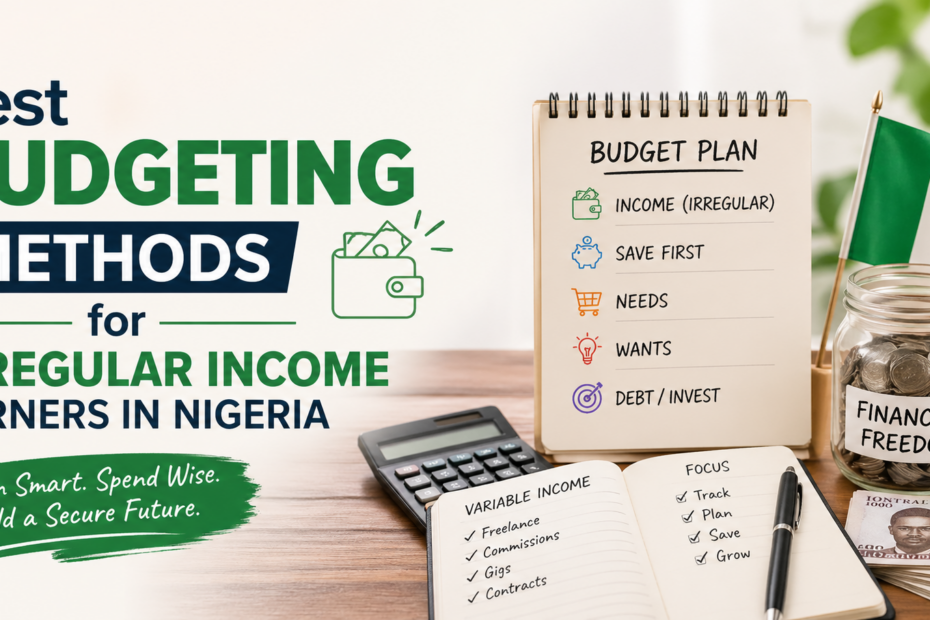
In Nigeria, not everyone earns a fixed monthly salary. A large number of people depend on irregular income sources such as freelancing, trading, ride-hailing, small business profits, and gig work. While these jobs can be rewarding, they also come with a major challenge—income is not stable or predictable.
Some months may bring in good money, especially when business is booming or contracts come through. Other months, however, can be very slow, with little or no income at all. This constant fluctuation makes financial planning difficult and stressful, even for people who are hardworking and disciplined.
Because of this unpredictability, many irregular income earners experience financial stress. It becomes hard to know how much to spend, how much to save, or how to plan for future expenses. In some cases, people overspend during high-income months and struggle during low-income periods.
This is why traditional budgeting methods often do not work well for irregular earners. Instead, there is a need for special budgeting methods designed for fluctuating income. These approaches help you stay stable, manage your money wisely, and prepare for both good and difficult financial months.
In this guide, you will learn practical budgeting methods that can help you take control of your income, no matter how unpredictable it is.
Why Irregular Income is Hard to Manage
Managing money becomes more challenging when income is not fixed or predictable. Unlike salaried workers who know exactly how much they will earn each month, irregular income earners must deal with constant changes in their financial situation.
One major challenge is the lack of a fixed salary. Freelancers, traders, and gig workers may earn different amounts every month depending on demand, clients, or sales. This makes it difficult to create a stable financial plan because income is never guaranteed.
Another issue is the difficulty in planning monthly expenses. Rent, food, transport, and bills still need to be paid regularly, even when income is inconsistent. This creates pressure because expenses remain the same while earnings fluctuate.
There is also the risk of overspending during high-income months. When money comes in abundance, it is easy to assume the good times will continue and spend freely. Unfortunately, this often leads to financial struggles in the following months when income drops.
Finally, irregular income creates financial uncertainty. It becomes hard to predict future earnings, save consistently, or plan long-term goals. This uncertainty can lead to stress and poor money decisions if there is no proper budgeting system in place.
In simple terms, irregular income is hard to manage because it lacks stability. Without the right budgeting methods, it becomes easy to overspend, under-save, and experience financial pressure during low-income periods.
Method 1: Base Income Budgeting
One of the most effective ways to manage irregular income is by using base income budgeting. This method helps you stay financially stable even when your earnings fluctuate from month to month.
Start by using your lowest expected income as a baseline. Instead of planning your budget based on your best or average month, focus on the minimum amount you realistically earn. This ensures that you are always prepared for slow months and not overestimating your financial capacity.
Next, you should plan your expenses conservatively. Prioritize only your essential needs such as food, rent, transport, and basic utilities. By keeping your spending aligned with your lowest income, you reduce the risk of financial shortfalls when income drops unexpectedly.
It is also important to avoid relying on high-income months when making financial decisions. While good months may bring extra money, they are not always guaranteed. Instead of increasing your lifestyle spending during these periods, it is better to save the excess or use it to cover future low-income months.
In simple terms, base income budgeting helps you build financial stability by preparing for your worst-case income scenario. It ensures that you can meet your basic needs consistently, regardless of how much you earn each month.
Method 2: Percentage-Based Budgeting
Another effective approach for managing irregular income is percentage-based budgeting. Instead of planning with fixed amounts, this method allows you to divide your income into percentages, making it flexible and easier to adjust in different earning months.
Start by assigning your income into three main categories: needs, savings, and wants. For example, you might decide that a certain percentage goes to essential needs like food, rent, and transport, another portion goes into savings or emergency funds, and the remaining percentage is used for personal wants or lifestyle spending.
The major advantage of this method is that it is flexible for changing income. Whether you earn more in a good month or less in a slow month, the percentages remain the same. This means your budget automatically adjusts to your income without needing a complete redesign every time.
This approach works especially well for freelancers, traders, and small business owners whose income is not fixed. It helps maintain balance because you are always saving and spending proportionally, no matter how much you earn.
In simple terms, percentage-based budgeting gives you structure without rigidity. It ensures that every income level is managed wisely, helping you stay consistent with saving, spending, and financial planning throughout the year.
Method 3: Priority-Based Budgeting
Priority-based budgeting is a simple but powerful method for people with irregular income because it focuses on what truly matters first. Instead of trying to allocate fixed amounts to every category, you arrange your expenses in order of importance.
Start by ranking your expenses by importance. This means listing everything you usually spend on and arranging them from most essential to least essential. For example, survival needs like food, rent, transport, and basic utilities come first, while things like entertainment, shopping, and leisure activities come later in the list.
Next, always pay essentials first as soon as you receive any income. This ensures that your most important needs are covered immediately, even if your income for that month is lower than expected. Once the essentials are sorted, you can then move to other expenses based on what is left.
This method also creates a flexible spending system. Since income is not fixed, you adjust your lower-priority spending depending on how much you earn. In high-income months, you may cover more wants and savings. In low-income months, you focus strictly on survival needs.
In simple terms, priority-based budgeting helps you stay financially stable by making sure the most important expenses are always covered first. It reduces stress and helps you adapt easily to changing income levels without losing control of your finances.
Method 4: Split Account Method
The split account method is a practical way to manage irregular income by dividing your money into different “purposes” as soon as you receive it. Instead of keeping everything in one place, you separate your funds so it becomes easier to control spending.
Start by creating or using separate accounts for different goals such as bills, savings, and spending. For example, one account can be strictly for essential bills like rent, transport, and utilities, another for savings or emergency funds, and a third for daily or lifestyle spending.
This system helps you control money flow because each account has a specific purpose. Once money is allocated, you already know what it is meant for, which reduces confusion and poor financial decisions. It also gives you a clearer picture of how much you truly have available for spending.
Another major advantage is that it reduces impulse spending. When all your money is in one account, it is easy to spend without thinking. But when your funds are separated, you are less likely to touch money meant for bills or savings, which helps you stay disciplined even during high-income months.
In simple terms, the split account method helps you organize your money in a structured way. It improves discipline, reduces unnecessary spending, and ensures that your essential needs and savings are always protected, no matter how irregular your income is.
Method 5: Pay Yourself First Strategy
The “pay yourself first” strategy is one of the most effective ways to build financial discipline, especially for people with irregular income. Instead of spending first and saving whatever is left, you reverse the process and prioritize saving immediately you receive money.
Start by saving first before spending. As soon as income comes in, set aside a portion for savings or investments before paying bills or making any purchases. This ensures that saving is treated as a priority, not an afterthought.
Next, you should set aside a fixed percentage immediately. For example, you can decide to save 10%–30% of every income you earn, depending on your financial situation. The key is consistency—no matter how small or large the income is, you always save first.
This method is powerful because it helps you build financial discipline over time. It trains your mind to treat savings as a non-negotiable part of your income. Over time, it reduces unnecessary spending and helps you build a strong financial cushion even when your income is unstable.
In simple terms, the pay yourself first strategy ensures that your future is always protected before your present expenses. It is a simple but powerful habit that helps irregular income earners stay financially stable and consistent.
How to Manage High and Low Income Months
For irregular income earners, financial stability depends on how well you manage both good and bad earning periods. Since income is not consistent, your strategy must adapt to different situations instead of staying fixed.
During high-income months, your priority should be to save the surplus instead of increasing your lifestyle. When you earn more than usual, it can be tempting to spend freely, but this is the best time to build your financial cushion. Setting aside extra money helps you prepare for future low-income periods and reduces financial pressure later.
In low-income months, the focus should shift to cutting expenses. This means prioritizing only essential needs like food, rent, transport, and basic utilities. Non-essential spending such as entertainment, shopping, or unnecessary outings should be reduced or paused until income improves.
It is also very important to avoid lifestyle inflation. This happens when you upgrade your spending habits just because you had a good income month. Instead of increasing expenses, it is better to maintain a stable lifestyle and use extra income to strengthen your savings or cover future needs.
In simple terms, managing high and low income months is about balance and discipline. Good months should be used to prepare for difficult ones, while low months should focus on survival and careful spending. This approach helps you stay financially stable throughout the year, regardless of income fluctuations.
Common Mistakes to Avoid
Even with the best budgeting methods, irregular income earners in Nigeria often make mistakes that can quickly destabilize their finances. Avoiding these errors is key to maintaining long-term financial stability.
One major mistake is overspending in high-income months. When money flows in more than usual, it can create a false sense of financial security. Many people increase their spending, upgrade their lifestyle, or make unnecessary purchases instead of saving the extra income. This often leads to financial stress when income drops again.
Another common issue is having no savings during low-income months. Some people focus only on survival during difficult months and completely ignore saving, even in small amounts. Over time, this makes it harder to build an emergency fund or prepare for future financial challenges.
A third mistake is not having a financial tracking system. Without tracking income and expenses, it becomes difficult to understand spending patterns or identify where money is being wasted. This lack of awareness often leads to poor financial decisions and repeated money problems.
In simple terms, these mistakes happen when there is no consistency or planning. Avoiding them helps you stay disciplined, manage income fluctuations better, and build stronger financial control over time.
Conclusion
Irregular income does not mean financial instability—it only means you need a better system to manage your money. With the right approach, freelancers, traders, and gig workers in Nigeria can still achieve financial control, savings, and even long-term growth.
The most important factors are discipline and structure. When you consistently apply budgeting methods, avoid lifestyle inflation, and prepare for both high and low income months, your finances become more predictable and less stressful over time. It is not about how much you earn in a single month, but how well you manage what you earn across several months.
Once you build these habits, you begin to see your income differently. Instead of reacting to money as it comes, you start planning ahead, saving during good months, and protecting yourself during slow periods.
Now it’s time to take action. Don’t just learn—apply. Your challenge is simple: try one budgeting method this month and stick to it consistently. Whether it is base income budgeting, percentage-based planning, or the pay yourself first strategy, start small and stay consistent.
Frequently Asked Questions
How to budget with an irregular income?
Budgeting with an irregular income requires a flexible but structured approach because your earnings are not the same every month. The first step is to calculate your average monthly income based on several past months.
This gives you a realistic baseline for planning. If your income fluctuates heavily, it is safer to use your lowest earning month as your budgeting reference to avoid overspending.
Next, prioritize your expenses by dividing them into essential and non-essential categories. Essentials include rent, food, transport, and utilities, while non-essentials include entertainment and luxury spending. Always cover essentials first before allocating money to wants. This ensures that your basic needs are protected even during low-income months.
A key strategy is to create a buffer or income smoothing fund. During high-income months, set aside extra money to support low-income periods. This helps stabilize cash flow and reduces financial stress when income drops unexpectedly.
It is also important to use a zero-based or flexible budget system, where every naira is assigned a job based on actual income received. Instead of planning for a fixed salary, you adjust your budget each time money comes in.
Finally, track your income and expenses closely. This helps you understand patterns, reduce waste, and improve financial decision-making. With discipline and planning, irregular income can still be managed effectively without financial instability.
What is the 70-10-10-10 budget rule?
The 70-10-10-10 budget rule is a simple financial allocation method that helps individuals manage income in a structured way. It divides income into four parts: 70% for living expenses, 10% for savings, 10% for investments or debt repayment, and 10% for giving or personal development. The goal is to balance spending, saving, and financial growth while maintaining discipline.
The largest portion, 70%, covers essential and lifestyle expenses such as rent, food, transportation, utilities, and daily needs. This ensures that all basic living requirements are met comfortably without overspending.
The first 10% is dedicated to savings. This includes emergency funds or short-term financial goals. It helps build financial security and prepares you for unexpected expenses.
The second 10% is used for investments or debt repayment. This may involve investing in business opportunities, stocks, or paying off loans. It supports long-term financial growth and reduces financial burdens.
The final 10% is often allocated to giving, donations, or personal development. This can include charity, learning new skills, or self-improvement activities that enhance future earning potential.
Overall, the 70-10-10-10 rule promotes balance by ensuring that income is not only spent on daily needs but also directed toward savings, growth, and meaningful contributions. It is especially useful for people who want a structured but flexible budgeting system.
What is the 3 6 9 rule in finance?
The 3-6-9 rule in finance is a simple planning guideline used to structure savings and financial security over time. It is commonly associated with emergency funds and financial preparedness. The rule suggests having financial coverage for 3 months, 6 months, and 9 months of expenses depending on your level of financial stability and risk exposure.
The first level, 3 months of expenses, is considered the minimum emergency fund. It is suitable for individuals with stable jobs or low financial risk. This amount helps cover basic needs like rent, food, and transport in case of short-term income disruption.
The second level, 6 months of expenses, is a more secure buffer. It is recommended for people with moderate income instability, such as freelancers or small business owners. It provides more financial breathing room during job loss or reduced income.
The third level, 9 months of expenses, is the highest level of security. It is ideal for individuals with highly irregular income or high financial responsibilities. This ensures long-term stability even during extended periods of unemployment or economic uncertainty.
Overall, the 3-6-9 rule helps individuals gradually build financial resilience. It encourages disciplined saving and reduces dependence on credit during emergencies, making it a practical strategy for long-term financial safety.
What is the correct order for managing an irregular income budget effectively?
Managing an irregular income budget effectively requires a clear and disciplined order of financial priorities. The first step is to identify and track all income sources. Since income is inconsistent, you must record every amount earned to understand your financial flow.
The second step is to set aside taxes and essential deductions first. This ensures you are not caught off guard by obligations later. Treating taxes as non-negotiable prevents financial stress.
The third step is to cover basic living expenses. These include rent, food, transportation, utilities, and other survival needs. These should always be prioritized before any discretionary spending.
The fourth step is to build or contribute to an emergency buffer fund. This fund helps stabilize income fluctuations and provides support during low-earning periods.
The fifth step is to allocate money for debt repayment and savings goals. Paying down debt reduces financial pressure, while savings improve long-term stability.
The final step is to allocate remaining funds to lifestyle spending and wants. This includes entertainment, shopping, or leisure activities.
This order ensures that financial survival, stability, and growth are prioritized before lifestyle spending. It also creates a structured system that helps people manage unpredictable income more confidently and responsibly.
How to deal with inconsistent income?
Dealing with inconsistent income requires strong financial planning, discipline, and adaptability. The first step is to create a baseline budget using your lowest monthly income. This ensures that your essential needs are always covered, even during low-earning months.
Next, separate your expenses into fixed and flexible categories. Fixed expenses include rent and utilities, while flexible expenses include entertainment and non-essential purchases. During low-income periods, flexible expenses should be reduced or paused.
Building an emergency fund is also essential. This fund acts as a financial cushion during months when income is low or absent. Ideally, it should cover at least 3–6 months of living expenses.
Another important strategy is income smoothing, where you save extra money during high-income months to support low-income months. This helps stabilize your cash flow over time.
It is also useful to adopt a zero-based budgeting system, where every income is assigned a purpose immediately. This prevents overspending and ensures intentional financial planning.
Finally, consider developing multiple income streams to reduce dependence on a single source. This could include freelance work, side businesses, or investments. With consistency and discipline, inconsistent income becomes easier to manage, leading to better financial stability and reduced stress over time.
How to budget when you don’t have a fixed income?
Budgeting without a fixed income requires flexibility and careful planning because your earnings change from month to month. The first step is to calculate your average income over the last 3–6 months. This helps you understand your earning pattern and create a realistic baseline. However, instead of using the average, it is safer to budget using your lowest monthly income to avoid overspending.
Next, prioritize essential expenses such as rent, food, transport, and utilities. These must always be covered first before any discretionary spending. Non-essential expenses like entertainment should only be included if income allows.
A very effective method is to build a buffer fund during high-income months. This extra money acts as support during low-income periods, helping to stabilize your finances. Think of it as “saving for your future self.”
It is also important to use a zero-based or flexible budgeting system, where every income received is immediately assigned a purpose. This prevents money from being wasted or spent impulsively.
Finally, track your income and expenses regularly. This helps you adjust your budget quickly when income changes. Over time, this system creates stability even when earnings are unpredictable.
What is the 777 rule in finance?
The 777 rule in finance is a simplified budgeting guideline that divides income into structured categories to encourage better money management. Although interpretations may vary, it generally follows a percentage-based allocation system similar to other budgeting rules.
In many versions, the first “7” represents 70% of income for living expenses. This includes rent, food, transport, utilities, and daily needs. It ensures that basic survival and lifestyle costs are fully covered.
The second “7” often represents 20% for savings and investments. This portion is used to build financial security through emergency funds, savings accounts, or investment opportunities like businesses or stocks.
The final “7” represents 10% for debt repayment, charity, or personal development. This helps reduce financial burdens, support others, or invest in self-improvement such as learning new skills.
The main purpose of the 777 rule is simplicity. It helps individuals avoid overthinking budgeting while still maintaining a balanced financial structure. It also encourages discipline by ensuring money is not spent randomly but divided into meaningful financial goals.
What are the biggest budgeting mistakes?
One of the biggest budgeting mistakes is not tracking expenses. Many people know their income but fail to monitor where their money actually goes. This leads to overspending without awareness.
Another common mistake is setting unrealistic budgets. When budgets are too strict, people often abandon them quickly. A good budget should be practical and flexible enough to handle real-life situations.
A third mistake is ignoring savings and emergency funds. Many individuals focus only on spending and forget to plan for the future. This creates financial vulnerability during emergencies.
Another major error is not adjusting the budget regularly. Income and expenses change over time, and a fixed budget that is never reviewed becomes ineffective.
Lastly, many people make the mistake of mixing needs with wants. Treating luxury spending as essential leads to poor financial control and debt accumulation.
Avoiding these mistakes helps improve financial discipline, increase savings, and create long-term financial stability.
What is Warren Buffett’s 90/10 rule?
Warren Buffett’s 90/10 rule is an investment strategy that suggests allocating 90% of investments into a low-cost S&P 500 index fund and the remaining 10% into short-term government bonds or cash equivalents. This rule is based on Buffett’s belief in long-term, passive investing rather than active stock picking.
The 90% portion invested in index funds provides broad market exposure, meaning your money grows with the overall performance of the stock market. Historically, this approach has delivered strong returns over long periods with relatively low risk compared to individual stock selection.
The remaining 10% in bonds or cash provides stability and reduces overall portfolio volatility. It acts as a safety cushion during market downturns.
Buffett often recommends this strategy for average investors because it is simple, low-cost, and effective. It removes the need for constant market timing or stock selection, which many investors struggle with.
Overall, the 90/10 rule emphasizes long-term growth, diversification, and simplicity in investing, making it suitable for people who want steady wealth building without complex strategies.
What is the easiest budget method?
The easiest budget method is the 50/30/20 rule because it is simple, structured, and easy to remember. It divides income into three categories: 50% for needs, 30% for wants, and 20% for savings or debt repayment.
The 50% portion covers essential expenses such as rent, food, transport, and utilities. These are necessary costs required for daily living.
The 30% portion is for wants, which include entertainment, dining out, shopping, and hobbies. This allows for flexibility and enjoyment without affecting financial stability.
The 20% portion is dedicated to savings, investments, or paying off debt. This helps build long-term financial security and reduces financial stress.
The reason this method is considered the easiest is because it does not require complex calculations or constant tracking. It provides a clear structure that anyone can follow, even beginners in personal finance.
It also offers flexibility, allowing individuals to adjust categories slightly based on income level or personal priorities. Overall, the 50/30/20 rule is a practical and beginner-friendly budgeting method that encourages balance between spending and saving.