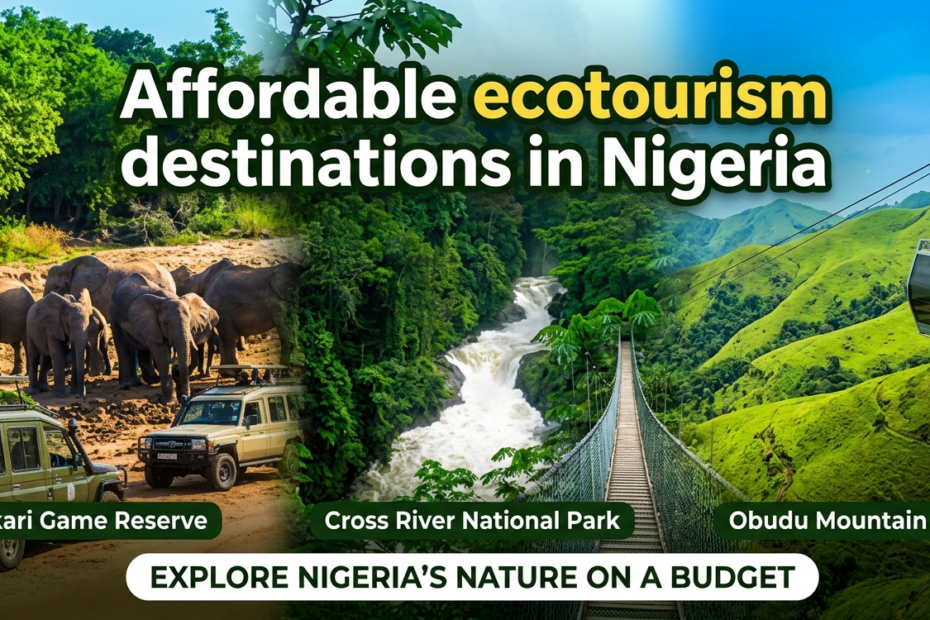
Nigeria is a treasure trove of breathtaking landscapes, lush forests, cascading waterfalls, and diverse wildlife. For travelers seeking adventure without stretching their budget, the country offers a wealth of affordable ecotourism destinations in Nigeria that combine natural beauty with eco-friendly experiences.
From serene waterfalls to vibrant national parks, these destinations allow you to explore the heart of Nigeria’s wilderness while supporting sustainable tourism and local communities.
Why Ecotourism in Nigeria Matters
Ecotourism is more than just a travel trend — it’s a movement that promotes responsible and eco-friendly travel while preserving the beauty of our natural environment.
In Nigeria, sustainable tourism is playing an increasingly important role in protecting wildlife, conserving natural habitats, and empowering local communities that depend on these resources for their livelihoods.
By visiting eco-destinations across the country, travelers not only enjoy unforgettable adventures but also contribute directly to the preservation of Nigeria’s rich biodiversity. Local guides, artisans, and small businesses benefit from tourism revenue, creating a positive ripple effect that supports community growth and environmental awareness.
For those who love budget travel in Nigeria, ecotourism offers a perfect balance — affordable exploration that leaves a minimal carbon footprint while providing authentic cultural and natural experiences. Choosing to explore responsibly ensures that Nigeria’s pristine landscapes and wildlife remain intact for generations to come.
Top Affordable Ecotourism Destinations in Nigeria
If you’re looking to explore nature without spending too much, Nigeria offers a variety of stunning and affordable ecotourism destinations that promise unforgettable experiences. From mountain resorts to serene waterfalls, here are some of the best eco-friendly spots to add to your travel list.
1. Obudu Mountain Resort (Cross River State)
Nestled high in the lush mountains of Cross River, Obudu Mountain Resort is one of Nigeria’s most iconic natural retreats. With its breathtaking scenery, cable car rides, and cool climate, it’s a paradise for nature lovers. The resort offers budget-friendly lodges and eco-cabins, making it ideal for affordable getaways.
-
Best time to visit: October to February (cool and misty weather).
-
Approximate cost: ₦15,000–₦30,000 per night for lodges.
-
Image alt text: “Affordable ecotourism destinations in Nigeria – Obudu Mountain Resort.”
2. Awhum Waterfall (Enugu State)
Tucked away in the hills of Enugu, Awhum Waterfall is a hidden gem that offers tranquility and adventure in one destination. The waterfall cascades down a massive rock formation surrounded by lush greenery — a perfect spot for hiking, meditation, and photography.
-
Best time to visit: During the rainy season (April–October) for the strongest flow.
-
Approximate cost: ₦500–₦1,000 entry fee.
-
Image alt text: “Affordable ecotourism destinations in Nigeria – Awhum Waterfall.”
3. Yankari National Park (Bauchi State)
For wildlife enthusiasts, Yankari National Park is Nigeria’s premier safari destination. The park is home to elephants, baboons, antelopes, and a variety of bird species. Visitors can explore the Wikki Warm Springs, enjoy game drives, and camp overnight for a truly natural experience.
-
Best time to visit: November to April (dry season for easy wildlife spotting).
-
Approximate cost: ₦3,000–₦5,000 entry fee; budget lodges from ₦10,000 per night.
-
Image alt text: “Affordable ecotourism destinations in Nigeria – Yankari National Park.”
4. Ikogosi Warm Springs (Ekiti State)
Ikogosi Warm Springs is a unique natural wonder where warm and cold springs flow side by side without mixing. It’s surrounded by dense forests and calm trails, offering a perfect escape for relaxation and light adventure. The resort area also features affordable accommodations for visitors.
-
Best time to visit: All year round, though the dry season (Nov–March) is most comfortable.
-
Approximate cost: ₦1,000–₦2,000 entry; ₦10,000–₦20,000 for lodging.
-
Image alt text: “Affordable ecotourism destinations in Nigeria – Ikogosi Warm Springs.”
5. Okomu National Park (Edo State)
Located in the dense rainforest of Edo State, Okomu National Park offers a glimpse into Nigeria’s incredible biodiversity. It’s home to rare species like white-throated monkeys, forest elephants, and colorful birds. The park provides guided eco-tours, birdwatching, and affordable eco-lodge stays for nature lovers.
-
Best time to visit: November to March (dry season).
-
Approximate cost: ₦2,000–₦5,000 entry; ₦10,000–₦15,000 for lodging.
-
Image alt text: “Affordable ecotourism destinations in Nigeria – Okomu National Park.”
Each of these affordable ecotourism destinations in Nigeria offers something unique — from mountain peaks and warm springs to lush forests and vibrant wildlife. They prove that you don’t have to spend a fortune to experience the best of eco-friendly travel in Nigeria.
Tips for Budget-Friendly Ecotourism in Nigeria
Exploring Nigeria’s natural wonders doesn’t have to be expensive. With the right planning and mindset, travelers can enjoy unforgettable adventures while supporting local communities and protecting the environment. Here are some practical tips for budget travel in Nigeria that make your next eco-adventure affordable and meaningful.
1. Travel During Off-Peak Seasons
Avoiding peak travel times — such as festive periods and public holidays — can significantly reduce your costs on transportation and accommodation. Off-peak seasons often mean fewer crowds, lower prices, and a more peaceful connection with nature.
2. Hire Local Guides
Choosing local guides not only enhances your experience with authentic stories and insider knowledge but also supports the local economy. They often charge reasonable fees, making this a win-win for both travelers and communities involved in cheap ecotourism in Nigeria.
3. Stay in Eco-Lodges or Community-Run Accommodations
Instead of luxury hotels, opt for eco-lodges, hostels, or homestays managed by local communities. These places are usually budget-friendly and designed to minimize environmental impact — offering a more immersive and sustainable experience.
4. Travel in Groups
Group travel can help reduce costs on accommodation, transportation, and guided tours. Many parks and resorts offer group discounts, making it easier to enjoy more destinations for less.
5. Pack Smart and Responsibly
Bring reusable items like water bottles, utensils, and eco-friendly toiletries. This not only saves money but also helps reduce plastic waste and supports the core principles of sustainable tourism in Nigeria.
With these simple yet effective strategies, you can experience the best of Nigeria’s eco-paradises without overspending. Budget-conscious travel doesn’t mean compromising quality — it means exploring smarter, greener, and more sustainably.
Conclusion
Nigeria’s natural beauty offers endless opportunities for adventure, reflection, and connection with the environment. From mountain resorts to tranquil waterfalls and wildlife parks, the many affordable ecotourism destinations in Nigeria prove that you don’t need to spend a fortune to experience the country’s breathtaking wonders.
By choosing eco-friendly travel options, staying in community-run lodges, and supporting local guides, travelers contribute to the growth of sustainable tourism in Nigeria — preserving nature for future generations while uplifting local communities.
So, as you plan your next getaway, consider exploring one of these incredible eco-destinations. Travel responsibly, tread lightly, and share your experiences to inspire others to embrace cheap ecotourism in Nigeria. Together, we can make tourism both affordable and sustainable.
Frequently Asked Questions
Where is the cheapest place to travel to from Nigeria?
When looking for the cheapest place to travel to from Nigeria, Ghana consistently ranks among the top choices for Nigerian travelers seeking affordability, accessibility, and cultural richness. Located just across Nigeria’s western border, Ghana is an ideal destination for those who want an international travel experience without the high expenses of long-distance trips. The country offers a welcoming atmosphere, low-cost transportation options, and a variety of accommodation types that fit different budgets.
One of the major reasons Ghana is a budget-friendly destination is its close proximity. You can travel from Lagos or other southwestern states to Accra or Kumasi by road in less than 12 hours, depending on the route. Several bus companies, such as ABC Transport and GUO, offer comfortable and affordable international services. The cost of a one-way bus ticket ranges from ₦25,000 to ₦40,000, making it much cheaper than most international flights.
Accommodation in Ghana is also inexpensive, with budget hotels and guesthouses available in most major cities. You can find decent lodging for as low as ₦10,000 per night, and food prices are quite reasonable, especially if you enjoy street food or local dishes like jollof rice, banku, and grilled fish.
For sightseeing, Ghana offers plenty of free or low-cost attractions. You can explore the Cape Coast Castle, Kakum National Park’s canopy walk, and the beautiful beaches of Accra and Busua without spending too much. The country’s visa process for Nigerians is straightforward since both countries are ECOWAS members, allowing visa-free entry for up to 90 days.
In addition to Ghana, nearby West African countries such as Benin Republic and Togo are also affordable travel options. These destinations are easily accessible by road, and travelers can experience rich cultural traditions, local cuisine, and unique eco-friendly sites. For instance, Togo’s Kpalimé region offers lush forests and waterfalls ideal for nature lovers.
In summary, Ghana remains the cheapest and most convenient country to travel to from Nigeria, offering cultural depth, safety, and affordability. Whether you’re traveling for leisure, business, or educational purposes, you can enjoy a memorable trip without straining your budget. Its warm hospitality and shared cultural similarities with Nigeria make it an excellent destination for affordable travel.
What are the 4 C’s of ecotourism?
The concept of the 4 C’s of ecotourism serves as a guiding framework for developing and promoting sustainable tourism practices worldwide. These four pillars — Conservation, Community, Culture, and Commerce — are designed to ensure that tourism benefits both the environment and local populations. Each “C” plays a vital role in maintaining balance between environmental preservation and economic development.
1. Conservation:
This aspect focuses on protecting natural resources, wildlife, and ecosystems. Ecotourism encourages travelers to engage in environmentally responsible behavior that minimizes harm to the environment. Activities such as wildlife viewing, forest trekking, and beach clean-ups promote awareness and appreciation of nature.
In Nigeria, conservation-based ecotourism can be seen in places like Yankari National Park and Okomu National Park, where efforts are made to protect endangered species while allowing tourists to enjoy nature responsibly.
2. Community:
Community involvement is one of the strongest pillars of successful ecotourism. It ensures that local people benefit directly from tourism activities through job creation, skill development, and income generation. In many Nigerian eco-destinations, local communities serve as guides, artisans, or hosts in eco-lodges, which helps sustain the area’s economy and discourages harmful practices like poaching or deforestation.
3. Culture:
Cultural preservation is another crucial component of ecotourism. Tourists are encouraged to learn about and respect the traditions, customs, and heritage of the communities they visit. In Nigeria, cultural experiences often include traditional dances, art exhibitions, and visits to heritage sites. This fosters mutual understanding and cultural pride while ensuring that traditional knowledge is passed down to future generations.
4. Commerce:
The commercial aspect ensures that ecotourism remains economically viable while benefiting both operators and host communities. Sustainable commerce means balancing profit with responsibility — offering fair wages, maintaining ethical business practices, and reinvesting in conservation projects. For example, eco-lodges that use solar power and locally sourced materials contribute to both economic growth and environmental sustainability.
Together, these 4 C’s — Conservation, Community, Culture, and Commerce — form the foundation of responsible ecotourism. They guide tourism operators, travelers, and policymakers in creating a system where economic development supports rather than harms the environment and society. When applied properly, they transform tourism into a powerful tool for sustainable progress.
Where abouts is most tourism in Nigeria?
Most tourism in Nigeria is concentrated in regions with rich cultural heritage, diverse landscapes, and well-developed infrastructure that can support both domestic and international visitors. The majority of tourism activities occur in the southern and central parts of the country, where attractions are more accessible and security conditions are relatively stable.
1. Lagos State:
Lagos stands out as Nigeria’s tourism capital. It offers beaches, entertainment, nightlife, and cultural centers that attract visitors year-round. Places like Tarkwa Bay Beach, Nike Art Gallery, and Lekki Conservation Centre are top attractions for eco and leisure travelers. Lagos is also home to numerous festivals, music concerts, and shopping destinations that make it the country’s most visited city.
2. Cross River State:
Cross River is one of Nigeria’s leading ecotourism hubs. It boasts Obudu Mountain Resort, Agbokim Waterfalls, and Cross River National Park, all of which showcase the state’s natural beauty and biodiversity. The annual Calabar Carnival also draws thousands of visitors, making it one of Africa’s largest street festivals.
3. Abuja (Federal Capital Territory):
As Nigeria’s capital, Abuja attracts tourists for both business and leisure. The city’s clean environment, modern infrastructure, and natural attractions such as Zuma Rock and Jabi Lake make it appealing. It’s also a gateway to nearby eco-destinations like Gurara Waterfalls in Niger State.
4. Ogun and Ekiti States:
These southwestern states are known for heritage and nature-based tourism. Ogun State features the Olumo Rock and heritage museums, while Ekiti is famous for the Ikogosi Warm Springs and Arinta Waterfalls. These destinations attract eco-travelers interested in affordable and relaxing getaways.
5. Bauchi and Taraba States:
In northern Nigeria, Yankari National Park in Bauchi is the most popular wildlife reserve, offering visitors an authentic safari experience. Taraba State’s Gashaka Gumti National Park also stands out as one of West Africa’s largest conservation areas.
Overall, tourism in Nigeria thrives in areas that combine accessibility, safety, and natural or cultural appeal. Southern states like Lagos, Cross River, and Ogun lead the way, while northern states continue to grow their potential in eco and adventure tourism. This regional diversity makes Nigeria one of Africa’s most promising destinations for travelers seeking cultural depth and natural beauty.
Which place is famous for ecotourism?
Globally, Costa Rica is considered one of the most famous countries for ecotourism, but within Nigeria, Cross River State stands out as the nation’s leading destination for eco-friendly travel. The state has successfully combined conservation, community development, and adventure tourism, making it the heart of Nigerian ecotourism.
At the center of Cross River’s ecotourism appeal is the Cross River National Park, one of Africa’s richest biodiversity zones. The park is home to endangered species like gorillas, forest elephants, and rare birds. Visitors can enjoy guided nature walks, canopy tours, and wildlife photography while learning about conservation efforts.
Another iconic site is the Obudu Mountain Resort, perched high in the Sankwala Mountains. Known for its cool climate, rolling hills, and scenic cable cars, Obudu is a top destination for both domestic and international travelers. The resort also promotes sustainable practices through local employment and nature conservation programs.
Agbokim Waterfalls and Kwa Falls are other natural wonders within the state that attract eco-lovers. These sites offer picturesque landscapes ideal for hiking, picnicking, and nature photography. Local communities play an active role in managing and preserving these areas, reinforcing the principles of sustainable tourism.
Beyond Cross River, other parts of Nigeria such as Yankari National Park (Bauchi) and Okomu National Park (Edo) are growing in popularity among eco-tourists. Yankari offers safari experiences with elephants and baboons, while Okomu features dense rainforests ideal for birdwatching and nature exploration.
Cross River’s success in ecotourism lies in its focus on environmental protection and cultural preservation. The government and local NGOs have worked together to develop policies that encourage responsible tourism while safeguarding the environment. Visitors often participate in community-based projects, making their trips both educational and impactful.
In essence, Cross River State has become Nigeria’s symbol of ecotourism excellence. It offers a harmonious blend of adventure, culture, and conservation that reflects what true sustainable tourism should be. Whether you’re hiking the mountain trails of Obudu or exploring the lush forests of Cross River National Park, you’ll experience an environment where nature and people thrive together.
What is the easiest country to travel to from Nigeria?
The easiest country to travel to from Nigeria is Benin Republic, due to its close proximity, visa-free access, and low travel costs. Located just west of Nigeria, Benin shares a direct land border, making it an ideal destination for short vacations, cultural trips, and eco-friendly exploration. Nigerians can enter Benin Republic without a visa for up to 90 days under the ECOWAS agreement, which promotes free movement among West African nations.
Traveling to Benin Republic from Nigeria is both affordable and convenient. Many people use road transport from Lagos, Ogun, or Oyo State through border posts such as Seme or Idiroko. The road trip from Lagos to Cotonou, Benin’s largest city, takes about 3 to 5 hours depending on border traffic. Major transport companies operate daily buses to Cotonou at costs ranging from ₦10,000 to ₦20,000, making it one of the cheapest international routes available.
Cotonou and its surrounding areas offer a blend of beaches, markets, and cultural attractions. The city’s Fidjrosse Beach and Ganhi Market are popular spots for relaxation and shopping. For ecotourism lovers, Benin Republic’s Pendjari National Park offers an affordable safari experience similar to East Africa’s famous parks, with opportunities to see elephants, lions, and hippos in their natural habitat.
Accommodation and food are also affordable in Benin. Budget travelers can find comfortable guesthouses or Airbnb options for ₦8,000 to ₦15,000 per night. Local meals like grilled fish, plantain, and rice dishes are available at modest prices, allowing visitors to enjoy authentic West African cuisine without overspending.
Another reason Benin Republic is the easiest country to visit is its cultural and linguistic similarity to Nigeria. Many people in border towns speak Yoruba, making communication smoother for Nigerian visitors. Additionally, the use of the CFA Franc is easily manageable as many money changers operate along the borders.
In summary, Benin Republic offers Nigerian travelers the perfect combination of accessibility, affordability, and cultural enrichment. Its visa-free entry, short distance, and welcoming environment make it the easiest country to explore from Nigeria, whether for leisure, business, or eco-adventure. It’s a nearby gem for those seeking a quick international getaway without the hassle of flights or expensive visa procedures.