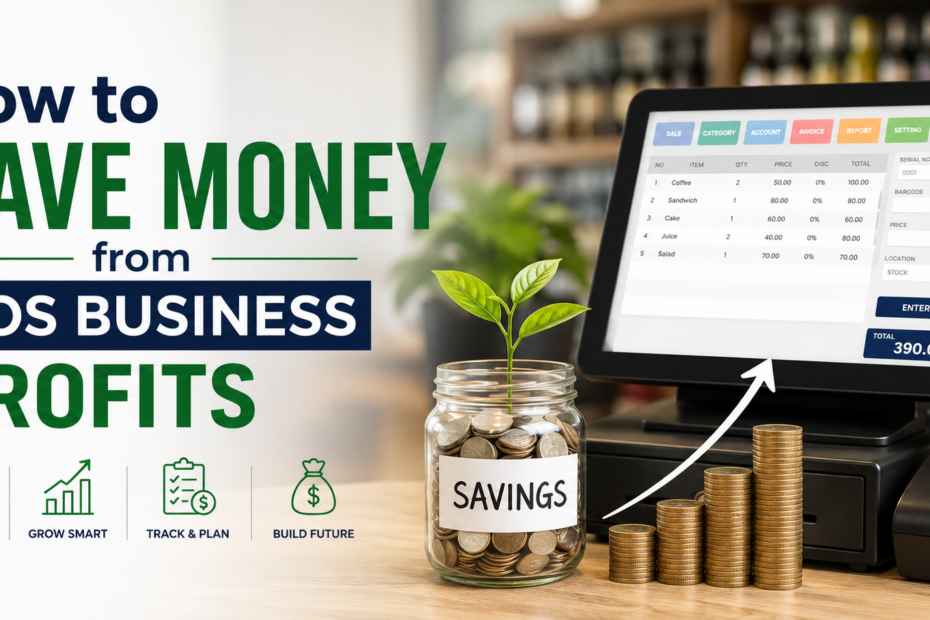
Many POS operators in Nigeria handle a high volume of daily transactions and may even see thousands of naira in commissions coming in every day. However, despite this steady cash flow, many still struggle to save money or see real financial growth.
The main reason is that making money and keeping money are two very different skills. While earning comes from providing POS services like withdrawals, transfers, and deposits, keeping money requires discipline, planning, and proper financial management.
A lot of POS operators mix business money with personal spending, withdraw from capital without tracking, or fail to separate profit from operational costs. Over time, these habits reduce real profit and make it seem like the business is not profitable. Without a clear savings system, even a busy POS business can leave the owner financially stagnant.
Understand the Difference Between Revenue and Profit
Many POS operators often make the mistake of thinking that all the money that passes through their POS machine belongs to them. In reality, this is not true.
The total daily cash processed is called revenue, and it is not your personal money. Revenue simply means all the transactions you handle for customers in a day, which may include withdrawals, transfers, and deposits.
However, only a small portion of this money is actually yours. That portion is what we call profit. Profit is the real income you earn after removing all business-related expenses from your revenue. Understanding this difference is very important if you want to grow financially in the POS business.
Profit is calculated using a simple formula: Profit = Charges Earned − Expenses. Your charges earned include commissions from transactions, while your expenses include things like network charges, transportation costs, cash sourcing fees, and shop or rent expenses.
For example, if you earn ₦8,000 in commission but spend ₦3,000 on transport, network issues, and other costs, your real profit is ₦5,000. Without tracking these properly, you may think you are making money when in reality, most of it is already spent.
Pay Yourself First
One of the smartest financial habits a POS operator can adopt is the principle of “pay yourself first.” This simply means that once you calculate your daily or weekly profit, you should immediately set aside a portion of it as savings before thinking about any other spending.
Many POS business owners make the mistake of waiting until the end of the month to save whatever is left, but most times, nothing is left because the money has already been spent on small daily needs or untracked expenses. By prioritizing savings first, you ensure that your business is consistently building financial strength instead of just surviving day to day.
A practical way to apply this is to decide on a fixed percentage of your profit to save, such as 10% to 30% weekly. For example, if your POS business makes a weekly profit of ₦50,000, you can automatically save ₦5,000 to ₦15,000 before using the rest for personal needs or reinvestment.
This habit builds discipline and helps you accumulate capital over time without feeling financial pressure. Even when profits are small, saving first ensures consistency and long-term financial growth.
Separate Business Money from Personal Money
One of the biggest reasons many POS businesses fail to grow financially is the mixing of business money with personal expenses. When POS capital is not clearly separated from personal funds, it becomes very easy to spend business money on family needs, emergencies, or personal desires without tracking it.
This gradually reduces working capital and makes the business look less profitable than it actually is. To build a sustainable POS business, it is important to treat the business as a separate entity from your personal life.
A practical step is to use separate accounts or wallets for business transactions and personal spending. All POS income and commissions should go into the business account, while personal expenses should come from a separate source.
This helps you clearly see how much profit the business is truly generating. It is also important to avoid using POS capital for family expenses, no matter how small it seems, because these small withdrawals often accumulate into major financial losses over time.
In addition, always track every withdrawal you make from the business. Writing it down or using a simple app will help you understand where your money is going and improve your financial discipline.
Create a Fixed Savings Percentage
To build financial stability in a POS business, it is important to stop saving randomly and instead adopt a fixed savings percentage system. This means you decide in advance what portion of your profit you will always save, regardless of how much you earn.
Saving by percentage is more effective than saving a fixed amount because it automatically adjusts to your income. For example, if business is good, your savings increase, and if business is slow, you still maintain the habit of saving something.
A good approach is to set aside a consistent percentage of your weekly or monthly profit, such as 10%, 20%, or even 30%, depending on your financial goals. For instance, if you make ₦40,000 profit in a good week and you use a 25% savings rule, you will save ₦10,000.
In a slower week where you only make ₦20,000, you can still save ₦5,000 instead of stopping completely. This method builds discipline and ensures continuous growth, even when income fluctuates. Over time, this habit helps you accumulate capital, expand your POS business, and improve your financial security.
Keep a Daily Profit Record
Keeping a daily profit record is one of the most powerful habits for any POS business owner who wants to save money consistently. Many operators lose track of their real earnings because they do not document their daily activities.
Without records, it becomes difficult to know whether the business is truly profitable or just busy. A simple daily record helps you understand exactly how your money moves and makes it easier to control spending and increase savings.
Each day, you should record important details such as the total number of transactions handled, the charges earned from those transactions, and all expenses incurred during the day.
These expenses may include network charges, transportation, cash sourcing costs, and any unexpected costs. After subtracting expenses from your earnings, you calculate your net profit, which is the real amount your business made for that day.
From this net profit, you should also record how much you were able to save immediately. By consistently tracking these five areas—transactions, charges earned, expenses, net profit, and savings—you gain full control of your business finances.
Over time, this habit helps you identify leaks in your income, improve decision-making, and build a stronger savings culture.
Build an Emergency Fund for the POS Business
Every POS business, no matter how small or large, faces unexpected challenges that can affect daily operations. This is why building an emergency fund is very important.
An emergency fund is a separate amount of money saved specifically to handle sudden business problems without disrupting your main capital or profit. Instead of relying on borrowing or using personal money when issues arise, you can depend on this reserved fund to keep your business running smoothly.
You should save specifically for situations like network downtime, which can stop transactions and affect customer trust, as well as machine repairs when your POS device develops faults.
It is also important to prepare for cash shortages, especially when demand is high but available float is low. In addition, unexpected expenses such as urgent transport, service fees, or security issues can come up at any time.
By consistently setting aside a small portion of your profit, you create a safety net that protects your business from financial shock. Over time, this emergency fund helps you maintain stability, avoid debt, and ensure your POS business continues operating even during difficult periods.
Use Savings Goals Instead of Random Saving
One of the reasons many POS operators struggle to save money is because they save without a clear purpose. When saving is random, it becomes easy to withdraw the money for unnecessary expenses.
However, when you save with specific goals in mind, you become more disciplined and motivated to stay consistent. Savings goals give your money direction and make your financial progress more measurable.
For example, you can set a goal to save towards buying a new POS terminal so you can serve more customers or upgrade your services. You may also save for shop expansion, which could help you attract more customers and increase daily transactions.
Another useful goal is building extra cash float, which ensures you never run out of money during peak business hours. You can also plan for bigger ambitions like opening another POS location, which helps you grow from a small operator to a multi-branch business owner.
When every saving has a clear purpose, it becomes easier to stay committed, avoid unnecessary withdrawals, and build long-term financial growth.
Avoid Lifestyle Inflation
One common mistake many POS operators make is increasing their spending as soon as business starts doing well. This is known as lifestyle inflation, and it can silently destroy financial growth.
Just because you are making more money does not mean your expenses should automatically increase. Many people begin to upgrade their lifestyle—buying more expensive clothes, eating out more often, or taking on unnecessary financial responsibilities—without first securing their savings and business stability.
To build long-term financial success, it is important to keep your expenses controlled, no matter how much profit you are making. Instead of spending more when income increases, focus on strengthening your savings, increasing your cash float, and reinvesting into the POS business.
A disciplined operator treats extra income as an opportunity to grow, not an excuse to spend more. By maintaining a simple lifestyle and avoiding pressure to “show success,” you give your business the chance to expand steadily. Over time, this discipline creates real financial freedom rather than temporary comfort.
Save During Peak Seasons
In the POS business, income is not always stable—some periods are naturally more profitable than others. These high-earning periods are known as peak seasons, and they present a great opportunity to increase your savings.
Instead of spending more during these times, you should take advantage of the higher transaction volume to build your financial reserves. Saving during peak seasons helps balance out slower periods when business is not moving as fast.
For example, at the end of the month, many salary earners withdraw cash, leading to more POS transactions and higher commissions. Similarly, during salary payment periods, especially in public and private sectors, customer traffic increases significantly.
Festive periods like Christmas, Eid, and New Year also bring heavy spending and more cash movement, which boosts POS income. During these times, instead of increasing personal expenses, you should deliberately save a larger portion of your profit.
By doing this consistently, you create a strong financial cushion that supports your business during low seasons and ensures steady long-term growth.
Automate Savings if Possible
One of the easiest ways to stay consistent with saving money from your POS business profits is to automate the process as much as possible. When savings depend only on memory or willpower, it becomes easy to forget, delay, or spend the money instead.
Automation removes this temptation and helps you build discipline without stress. It ensures that saving becomes a fixed habit rather than an occasional decision.
You can start by setting transfer reminders on your phone for daily, weekly, or monthly savings. These reminders help you stay consistent and ensure that saving is always a priority after calculating your profit.
Even better, if you use a bank account or digital wallet, you can set up a system where a fixed amount of your POS profit is automatically moved into a savings account.
This way, as soon as money enters, a portion is saved without you needing to think about it. Over time, this simple system helps you build savings steadily, reduces the risk of spending impulsively, and strengthens your financial discipline as a POS operator.
Reinvest Part of the Profit
A smart POS business owner does not only focus on saving money but also understands the importance of reinvesting part of the profit back into the business.
Reinvestment means using a portion of your earnings to improve or grow your POS operation instead of spending everything personally. This strategy helps your business become stronger, more stable, and more profitable over time.
One key area to reinvest in is increasing cash availability. When you have more float, you can serve more customers without delay, especially during busy periods, which leads to higher daily profits.
You can also reinvest in improving customer service, such as upgrading your POS machine, improving your shop setup, or ensuring faster transaction processing. Good service attracts more customers and builds trust, which directly increases income.
Additionally, reinvesting allows you to expand your business gradually, such as opening another POS point or adding more machines in different locations. Instead of withdrawing all profits for personal use, consistently reinvesting a portion helps your business grow steadily and creates a stronger financial future.
Common Mistakes POS Operators Make
Many POS operators struggle to grow financially not because the business is not profitable, but because of poor money habits and financial mistakes. These mistakes slowly reduce profits and make it difficult to save or expand the business, even when daily transactions are high.
One major mistake is spending from business capital. Instead of separating profit from working capital, many operators use the money meant for transactions to handle personal needs, which reduces cash flow and affects daily operations.
Another common issue is not keeping records. Without tracking daily transactions, charges, and expenses, it becomes difficult to know the real profit, leading to confusion and poor financial decisions.
Another harmful habit is saving only when there is excess cash. This makes saving irregular and unreliable, because most days there may not feel like “extra” money.
Lastly, many operators make the mistake of borrowing from the business without accountability, treating the POS cash like personal funds. Over time, these habits weaken the business and prevent growth. Avoiding these mistakes is key to building a stable and profitable POS operation.
Sample Savings Plan for a POS Operator
Having a clear savings plan helps a POS operator manage profit wisely instead of spending randomly. Once you understand your weekly or monthly profit, the next step is to divide it into savings, reinvestment, and personal use. This simple structure brings discipline and ensures that your business continues to grow while you also take care of your daily needs.
For example, if your POS business makes a weekly profit of ₦50,000, you can organize it in a smart way. You may decide to save ₦10,000, which represents 20% of your profit, and set it aside immediately for future financial security or emergency needs.
Then, you can reinvest ₦15,000 back into the business to increase your cash float, improve services, or expand operations. Finally, you can use ₦25,000 for personal spending, covering your daily needs while still keeping the business stable.
This kind of structured plan helps you avoid overspending, builds consistency in saving, and ensures that your POS business grows steadily over time instead of remaining stagnant.
Conclusion
Saving money from POS business profits is not about how busy your machine is or how much cash passes through your hands daily. It is about discipline, structure, and consistency in managing what you earn. Many POS operators make good income, but only those who learn how to control spending, separate business money, and save intentionally are able to grow financially in the long run.
When you apply habits like setting savings goals, keeping proper records, avoiding unnecessary lifestyle upgrades, and reinvesting part of your profit, your POS business becomes more stable and scalable. Over time, these small financial decisions compound into real wealth and business expansion.
Always remember: “A successful POS business is not measured by how much cash passes through your hands—but by how much profit you keep and grow.”
Frequently Asked Questions
How much can I make from POS business in a month?
The amount you can make from a POS business in Nigeria varies widely depending on your location, customer base, transaction volume, and how well you manage your charges and expenses.
On average, a small to medium POS operator in a busy area can make between ₦100,000 to ₦300,000 monthly as net profit. However, in very high-traffic locations like markets, motor parks, busy street corners, or densely populated neighborhoods in Lagos, earnings can go higher, sometimes reaching ₦400,000 or more per month.
Your income is mainly based on commissions earned from withdrawals, deposits, transfers, and bill payments. For example, if you make ₦100–₦300 per transaction and handle 100–200 transactions daily, your daily profit can add up quickly.
But this is not just “free money”—you must subtract costs like bank charges, cash handling risks, rent for shop space, electricity, and sometimes network downtime losses.
Also, consistency matters. A POS business does not give equal income every day; some days are very busy, while others are slow. Operators who succeed usually reinvest part of their profit to expand their float and improve liquidity.
In summary, with good location and proper management, POS business can provide a stable monthly income that can comfortably support personal needs and even allow for business growth over time.
How much does a POS agent make a day?
A POS agent in Nigeria can typically make between ₦3,000 to ₦15,000 per day, depending on location, customer flow, and available cash float.
In very busy areas such as Lagos markets, bus stops, or densely populated residential zones, daily profit can even rise above ₦20,000 on peak days. However, in less busy or rural areas, earnings may drop to around ₦1,500 to ₦5,000 daily.
The income comes from small commissions charged on each transaction. For example, a withdrawal might give ₦100 to ₦300 profit, while transfers and deposits may add smaller margins. The key factor is transaction volume. A POS agent who completes 80–150 transactions daily will naturally earn more than someone handling only 20–40 transactions.
It is also important to understand that POS income is not always stable every day. Some days are very active, especially weekends, salary payment periods, or festive seasons, while other days may be slow. Successful agents usually maximize earnings by choosing a strategic location and ensuring constant cash availability so they do not lose customers.
Expenses such as bank network charges, agent fees, and occasional cash shortages can also reduce daily profit. Still, with good planning and consistent traffic, POS remains one of the small-scale businesses that can generate daily cash flow in Nigeria.
Is POS a profitable business in Nigeria?
Yes, POS (Point of Sale) business is generally profitable in Nigeria, especially due to the country’s high demand for cash transactions and limited access to banking services in many areas.
Many people rely on POS agents for withdrawals, deposits, and transfers because bank branches are often far or overcrowded. This constant demand creates a steady flow of customers for POS operators.
Profitability depends heavily on three major factors: location, capital, and management. A good location such as a busy street, market area, transport hub, or residential cluster significantly increases customer traffic.
Capital is also important because you need enough cash (float) to serve customers continuously. The more liquidity you have, the more transactions you can handle, which increases your earnings.
On average, POS operators can make reasonable daily and monthly profits if properly managed. However, it is not a “get rich quick” business. It requires discipline, proper record keeping, and careful handling of cash to avoid losses. Issues like network failure, fraud attempts, or cash shortages can affect earnings if not managed properly.
Despite the challenges, POS remains one of the most accessible small businesses in Nigeria because it has low startup barriers and high demand. With consistency and smart management, it can become a stable source of income and even grow into a larger financial service hub over time.
What sells very fast in Nigeria?
In Nigeria, products that sell very fast are usually essential, affordable, and frequently needed items. Food-related products are at the top of the list because they are daily necessities.
Items like rice, garri, noodles, bread, vegetable oil, and frozen foods move quickly in both urban and rural areas. Small food businesses such as snacks, bottled water, and soft drinks also sell rapidly due to constant demand.
Another fast-moving category is personal care and household items. Products like soap, detergent, toothpaste, sanitary pads, tissue paper, and baby products are always in demand because people use them regularly. These items are considered “repeat purchase goods,” meaning customers come back often to buy them again.
In addition, phone accessories and small gadgets also sell quickly in urban areas. Items like chargers, earphones, power banks, and data cables are popular because of high mobile phone usage across Nigeria. Fashion items such as simple T-shirts, slippers, and affordable ready-to-wear clothes also move fast, especially in busy markets.
Drinks and refreshments are another strong category due to Nigeria’s hot climate. Pure water, soft drinks, and energy drinks sell consistently throughout the day.
In summary, the fastest-selling products in Nigeria are everyday essentials, low-cost items, and products with constant demand. Businesses that focus on these categories tend to have quicker turnover and more stable cash flow.
What are 7 sources of income?
Sources of income refer to different ways a person can earn money instead of relying on only one stream. Having multiple income sources is important because it reduces financial risk and increases stability.
One common source is salary income, which comes from working a regular job and receiving monthly or weekly wages. This is the most traditional form of income.
Another source is business income, where individuals earn profits from selling goods or services, such as POS operations, retail shops, or online businesses. Investment income is also important and comes from putting money into assets like stocks, real estate, or savings that generate returns over time.
Freelancing or service-based income is another source, where people earn money by offering skills like writing, design, programming, or consulting. Rental income is generated when you own property, land, or equipment that you lease out to others.
There is also commission-based income, where earnings come from sales or referrals, such as insurance agents or real estate agents who earn based on deals closed. Digital income is becoming more popular and includes earnings from social media, content creation, affiliate marketing, and online courses.
Lastly, passive income refers to money earned with minimal ongoing effort, such as royalties, dividends, or automated online businesses.
In total, combining multiple income streams helps build financial security and reduces dependence on a single source, which is important for long-term stability.
How to earn 5000 naira daily in Nigeria?
Earning ₦5,000 daily in Nigeria is realistic, but it depends on the type of activity you choose, your consistency, and your location. One of the most common ways is through small-scale trading businesses such as selling food items, snacks, or fast-moving consumer goods.
For example, selling items like bread, sachet water, soft drinks, or cooked food in a busy area can easily generate daily profit if there is steady customer flow.
Another way is through POS business, where you earn commissions on transactions. If you are in a good location, completing 50–100 transactions daily can give you around ₦5,000 or more depending on your charges and customer volume.
Freelancing or digital work is also a strong option, especially for people with skills in writing, graphic design, or social media management.
Mini importation, reselling products online, or offering services like barbing, hairdressing, or phone charging stations can also generate ₦5,000 daily profit with proper setup. The key factor is not just the business itself but the demand around your area.
To succeed, you must focus on consistency, reinvesting profits, and choosing businesses with daily demand. Many people fail not because the opportunity is not there, but because they lack discipline and proper planning. With the right approach, ₦5,000 daily income is achievable and can grow over time into a more stable monthly income source.
What is the disadvantage of POS?
While POS business in Nigeria is profitable, it also comes with several disadvantages that operators must understand before starting. One of the biggest challenges is network failure. Banks often experience downtime, which can delay transactions, frustrate customers, and lead to loss of trust or income for the agent.
Another disadvantage is cash shortage. POS business requires constant availability of cash (float). If you run out of cash, you lose customers to competitors, which directly reduces your income. This makes cash management very important and sometimes stressful.
There is also the issue of fraud and scams. POS agents are often exposed to fake alerts, dishonest customers, or mistakes in transactions. If care is not taken, the agent may end up losing money from personal funds.
Security risk is another major concern. POS agents handle large amounts of cash daily, making them targets for robbery or theft, especially in isolated or poorly secured locations.
Additionally, profit margins per transaction are small, so you must depend on high volume to make meaningful income. This means long working hours and standing in busy environments.
Finally, competition is increasing, especially in urban areas, which can reduce customer flow if there are many POS operators nearby. Despite these disadvantages, proper management and good location can help reduce risks and improve profitability.
Is OPay POS better than Moniepoint?
Both OPay POS and Moniepoint Inc. POS are popular in Nigeria, and each has its strengths depending on the user’s needs. Choosing between them depends on factors like transaction speed, network stability, charges, and customer support.
Moniepoint is widely known for its strong network reliability and stable performance. Many agents prefer it because it experiences fewer downtimes, which helps maintain customer trust. It also has a solid reputation in handling high transaction volumes, making it suitable for busy locations.
On the other hand, OPay POS is popular for its wide usage among customers because many Nigerians already use the OPay mobile app. This makes transactions smooth and familiar for users. It is also relatively easy to set up, which is attractive for beginners.
In terms of profitability, both platforms offer competitive commission structures, so earnings are often similar. The real difference usually comes from stability and customer experience rather than profit rate.
However, Moniepoint is often considered more business-focused, while OPay has a stronger consumer ecosystem. Many POS operators even use both systems to avoid downtime risk and maximize customer satisfaction.
In conclusion, neither is absolutely “better” than the other. The best choice depends on your location, customer behavior, and whether you prioritize stability or flexibility.
What business can I do with 300,000 naira?
With ₦300,000 in Nigeria, you can start several profitable small and medium-scale businesses depending on your skills and location. One of the most common options is POS business, which requires capital for both equipment and cash float. With proper location, it can generate steady daily income.
Another good option is food-related business such as selling cooked meals, snacks, or starting a small restaurant or food stand. Food sells daily, making it one of the most reliable businesses in Nigeria.
You can also consider mini importation, where you buy goods like fashion items, accessories, or electronics in bulk from suppliers and resell them at a profit. This works well if you can market products online or through social media.
Fashion retail is another strong option. With ₦300,000, you can start selling clothes, shoes, or thrift (okrika) items in a physical market or online store. Phone accessories and gadget sales are also profitable due to high demand.
Additionally, you can invest in services like barbing salons, small laundry services, or phone repair shops if you have the skills or can hire someone experienced.
The key to success is not just the business you choose but your location, consistency, and customer service. With proper planning, ₦300,000 can become a solid foundation for a growing and sustainable business in Nigeria.
Can I start a POS business with 50k?
Yes, you can start a POS business in Nigeria with ₦50,000, but it will be very limited in scale. The major challenge is that POS business requires two main things: the POS machine and enough cash (float) to serve customers. With ₦50,000, you may be able to get a basic POS terminal through some agents or fintech partners, but your working capital will be very small.
This means you will only be able to handle low-volume transactions at the beginning. For example, you might start with small withdrawals and deposits from nearby customers while gradually building trust and expanding your float. However, your earnings will also be limited because you cannot serve many customers at once.
Another challenge is competition. In most areas, especially in cities like Lagos, many POS operators already have strong capital and can serve customers faster and in larger amounts. This makes it harder for a small starter to compete unless they are in a very strategic location with less competition.
However, starting with ₦50,000 is still possible if you treat it as a stepping stone. The key is to reinvest your profits daily or weekly to grow your cash base. Over time, as your capital increases, your income will also grow.
In summary, ₦50,000 is enough to start small, but not enough for a strong or highly competitive POS operation unless you are disciplined and focused on gradual growth.
What business can I do with 70k?
With ₦70,000 in Nigeria, you can start several small but profitable businesses if you focus on fast-moving goods or services with daily demand. One strong option is a mini food business such as selling snacks like puff-puff, buns, egg rolls, or small chops. These items require low startup capital, and you can sell in busy areas like bus stops, schools, or markets where daily turnover is high.
Another option is reselling fast-moving items like phone accessories, slippers, perfume oils, or small household products. These items are affordable, easy to source, and have quick customer turnover. You can also combine physical sales with WhatsApp or Instagram marketing to increase reach.
You may also consider POS business on a very small scale, although ₦70k will limit your cash float. However, if you already have a small POS machine arrangement, you can start and gradually reinvest profits to grow your liquidity.
Other ideas include barbing clipper services (mobile barbering), laundry pickup service, or small drinks business where you sell sachet water, soft drinks, and energy drinks in high-traffic areas.
The key with ₦70,000 is not trying to do too much at once. Focus on one simple business that sells daily, reinvest your profit, and grow gradually. Many successful businesses in Nigeria started from small capital like this but expanded through consistency, good location, and discipline in managing money.
Which business gives daily income in Nigeria?
Businesses that give daily income in Nigeria are usually those that deal with everyday needs or services people cannot avoid. One of the most common is POS business, where agents earn commissions from withdrawals, transfers, and deposits every single day. In busy areas, this can generate consistent cash flow.
Another strong daily-income business is food sales. Whether it is cooked food, snacks, or roadside meals, people eat every day, making food one of the most reliable sources of daily earnings. Street food vendors in Lagos often make money from morning to night.
Retail trading of fast-moving goods also brings daily income. Items like bread, pure water, soft drinks, toiletries, and household essentials sell quickly and are replenished regularly by customers.
Transportation-related services such as keke (tricycle) operations or motorcycle delivery services also generate daily cash, although they require higher capital or equipment.
Small service businesses like barbing, hairdressing, laundry, and phone charging stations also produce daily income because people use them frequently.
In modern Nigeria, digital services such as freelance work or online reselling can also bring daily income if there is consistent demand.
The most important factor is location and demand. Even a small business can generate daily income if it is placed where people need it most, such as markets, schools, bus stops, or residential communities.
What are the top 10 most sold items?
In Nigeria, the top-selling items are usually everyday essentials that people buy repeatedly. First is rice, which is a staple food consumed across households. Second is garri, another affordable and widely used food product. Third is bread, which is a daily breakfast item for many families.
Fourth is pure water (sachet water), one of the fastest-moving products due to constant thirst and hot weather. Fifth is soft drinks and beverages, which sell quickly in shops and roadside kiosks. Sixth is cooking oil, especially vegetable oil, which is used in almost every home.
Seventh is noodles, a quick meal option popular among students and workers. Eighth is toiletries such as soap, toothpaste, and detergent, which are essential household items with constant demand.
Ninth is phone accessories like chargers, earphones, and data cables, driven by Nigeria’s high mobile phone usage. Tenth is clothing essentials such as T-shirts, underwear, and slippers, which are frequently replaced due to wear and tear.
These items sell fast because they are either consumables or daily-use necessities. Businesses that focus on them usually experience steady customer flow and faster inventory turnover compared to luxury goods.
What can I use 10,000 naira to invest in?
With ₦10,000 in Nigeria, you can start very small but realistic investment or micro-business activities. One of the best options is buying and reselling fast-moving items such as snacks, pure water, airtime, or small household goods. You can start by selling in your neighborhood or school environment.
Another option is recharge card or data reselling. With a smartphone, you can start digital airtime or data sales using small platforms or apps, making small profit per transaction that adds up over time.
You can also invest in food items like raw ingredients for small snack production, such as puff-puff or buns, and start selling in your area. Even small capital can produce daily turnover if managed properly.
Additionally, ₦10,000 can be used for digital skill learning investment, such as learning graphics design, social media management, or copywriting using free or low-cost online resources. This may not bring instant cash but builds long-term income potential.
Some people also use ₦10,000 to join cooperative savings or thrift contributions (ajo/esusu), which helps build discipline and future capital.
The key is to understand that ₦10,000 is not enough for a big business, but it is enough to start a small cycle of buying and selling that can grow through reinvestment.
How to make 1000 naira per day?
Making ₦1,000 per day in Nigeria is achievable if you focus on small but consistent income activities. One simple method is resale of small goods like snacks, bottled water, or sachet drinks. For example, selling items with ₦100–₦200 profit per unit can help you reach ₦1,000 after a few sales daily.
Another option is POS business, where even small transaction volumes can generate ₦1,000 or more daily if you are in a good location. A few withdrawals or transfers can easily add up to that amount.
You can also offer small services such as phone charging, laundry, or helping people send or receive money for a small fee. These services are always needed in busy neighborhoods.
Digital methods like reselling airtime or data bundles can also generate small but steady daily profit if you have regular customers.
In addition, simple freelance tasks like writing, social media posting, or assisting small businesses online can help you reach ₦1,000 daily once you build experience and clients.
The most important factor is consistency. ₦1,000 per day may look small, but it builds discipline and can grow into ₦30,000 per month or more when scaled. Many successful businesses started from this level of daily earnings before expanding.