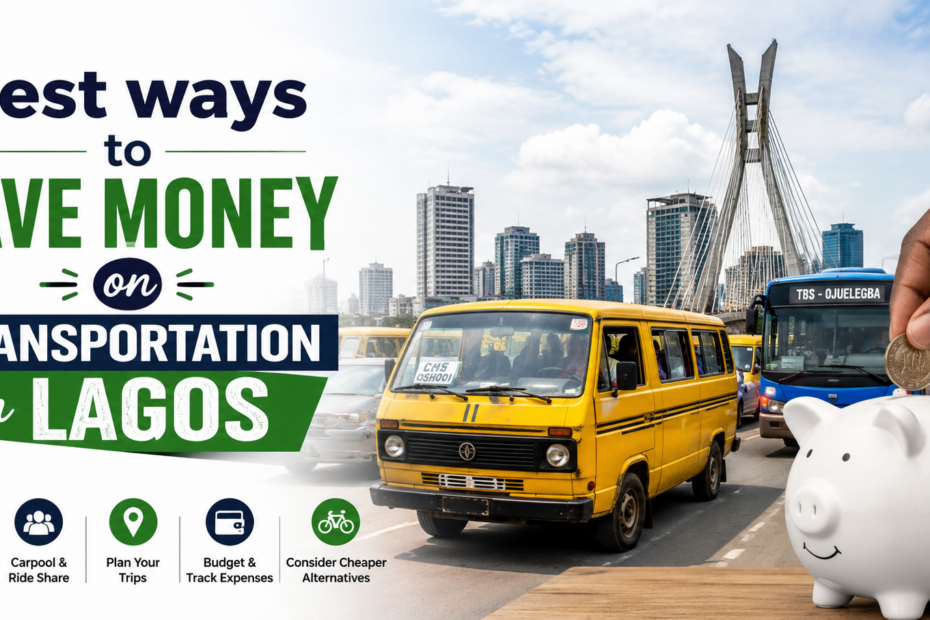
If you live in Lagos, you already know transport can eat up a big part of your daily income. Whether you are going to work, school, running a business, or just trying to move around the city, transportation costs keep rising almost every week.
From increasing fuel prices to higher Uber and Bolt fares, and even the constant hike in danfo and keke prices, moving from one place to another has become one of the biggest daily expenses for many residents. In some cases, people spend more on transport in a month than on food or savings.
But the good news is that there are practical and smart ways to reduce these costs without sacrificing your daily activities or comfort. In this article, you will learn simple, realistic strategies to save money on transportation while living in Lagos.
Understand Your Transport Spending First
Before you can truly save money on transportation in Lagos, you need to first understand where your money is going. Saving starts with awareness, because you cannot fix what you don’t measure. Many people only complain about transport being expensive, but they rarely track how much they actually spend daily or weekly.
Start by writing down your daily transport expenses for at least one week. Include everything—work trips, school runs, business movements, and even small short-distance rides. At the end of the week, calculate the total and multiply it to estimate your monthly spending.
Also, it helps to separate your transport costs into categories such as work, school, and personal errands. This makes it easier to see which area is draining your money the most.
You may be surprised to discover that you are spending anywhere from ₦20,000 to ₦80,000 or more every month just on transportation alone. Once you see the real numbers, it becomes easier to make smarter decisions and reduce unnecessary trips.
Use Public Transport Smartly (Danfo, BRT, Trains)
One of the easiest ways to reduce transport expenses in Lagos is to make better use of public transportation instead of relying only on taxis or ride-hailing services. While convenience is important, consistently choosing expensive options can quickly drain your monthly budget.
The BRT buses are a good alternative because they are more organized, safer, and generally cheaper than regular danfo or private taxis on many routes. If your daily movement aligns with BRT lanes, you can save a significant amount over time.
You should also take advantage of the Lagos Blue Line Rail where it is available. It is still expanding, but for people living or working along its route, it offers a faster and more cost-effective way to move across busy areas.
Another smart strategy is combining different transport modes. For example, you can take a bus to a major junction and then use a cheaper means like keke or short walk to your final destination instead of taking a taxi all the way.
Most importantly, try to avoid the “short-distance Uber mindset,” where every small movement feels like it must be done with a ride-hailing app. These small trips may look harmless, but they add up quickly and become a major expense by the end of the month.
Plan Your Routes Before Leaving Home
Another simple but powerful way to save money on transportation in Lagos is to plan your routes before stepping out. Many people spend extra money not because transport is expensive, but because they move around without a clear plan.
You can use tools like Google Maps or even rely on local knowledge to understand the best and cheapest routes to your destination. Sometimes, a slightly longer route can actually be cheaper and less stressful than a “short” route stuck in heavy traffic or high-demand areas.
It is also important to avoid peak traffic routes whenever possible. During rush hours, transport fares often increase due to demand, and you may end up paying more for the same journey.
Another smart habit is combining errands into one trip. Instead of going out multiple times in a day or week, try to plan your activities together—such as banking, shopping, and visiting offices in one movement. This reduces the number of trips you make and automatically lowers your total transport cost.
With better planning, you don’t just save money—you also save time and energy in the busy Lagos environment.
Avoid Peak Hours When Possible
In Lagos, timing can greatly affect how much you spend on transportation. One of the biggest reasons people pay more than necessary is because they travel during peak hours when demand is very high.
The busiest periods are usually in the morning between 6:30am and 9:00am, and in the evening from 4:30pm to 8:00pm. During these hours, roads are congested, movement is slower, and transport fares often increase due to high demand.
This is especially common with ride-hailing services like Uber and Bolt, as well as keke and bike operators who adjust prices based on traffic conditions.
To save money, try leaving earlier than the rush hour or waiting until the traffic has reduced in the morning or evening. Even shifting your schedule by 30 minutes to 1 hour can make a noticeable difference in what you spend.
Whenever possible, plan your activities in a way that allows you to travel outside these peak periods. Not only will you pay less, but your journey will also be faster and less stressful.
Consider Ride-Sharing and Pooling
Another smart way to reduce transport costs in Lagos is to take advantage of ride-sharing and pooling options. Instead of paying for a full ride alone every time, you can share the cost with others going in the same direction.
Some ride-hailing apps like Bolt and Uber sometimes offer pool or shared ride options, where passengers heading the same route split the fare. This can significantly reduce what you spend compared to a private ride.
You can also arrange informal ride-sharing with colleagues, friends, or neighbors. For example, if you work in the same area or along the same route, you can agree to travel together on certain days and split the transport cost.
Students and workers can benefit a lot from this approach, especially for daily routines like school runs or office commutes. Even if the savings seem small per trip, they add up quickly over weeks and months.
By simply sharing rides instead of traveling alone every time, you reduce expenses while also making your daily movement more efficient.
Live Closer to Work or Strategic Locations
One of the most effective long-term ways to save money on transportation in Lagos is to live closer to your workplace or in a more strategic location. While it may seem cheaper to rent a house far from work, the daily transport costs often cancel out any savings on rent.
Renting closer to your office, school, or business area can drastically reduce how much you spend on commuting every day. It also reduces stress, travel time, and the risk of spending extra money during traffic delays or peak hours.
Many people make the mistake of choosing cheaper rent in distant areas, only to realize they spend a large portion of their income on daily transportation. Over time, this “cheap rent but expensive movement” situation becomes more costly than living closer.
When planning your accommodation, always consider transport expenses as part of your monthly budget. In many cases, paying slightly higher rent in a strategic location can actually save you more money overall and improve your quality of life.
Use Monthly Transport Budgeting
A simple but powerful way to control your transport expenses in Lagos is to set a monthly transport budget. Without a clear limit, it becomes very easy to overspend because every movement feels necessary at the moment.
Start by deciding how much you can realistically spend on transportation each month based on your income. For example, you can set a limit like ₦30,000 for the month, depending on your lifestyle and daily movement.
Once you set this budget, try to track your spending daily so you always know how much you have left. This helps you become more conscious of unnecessary trips and encourages better decisions.
The most important part is discipline. Once your transport budget is exhausted before the end of the month, you must switch to cheaper alternatives such as public transport, walking short distances, or reducing non-essential trips.
By managing your transport like a fixed expense instead of random spending, you gain better control of your finances and avoid ending the month broke due to uncontrolled movement.
Walk Short Distances
One of the easiest and most overlooked ways to save money on transportation in Lagos is simply walking short distances. Many people immediately jump into a bike or keke for trips that are only 5 to 10 minutes away, without realizing how much those small fares add up over time.
If your destination is close enough and the weather or environment is safe, consider walking instead of paying for a ride. These short trips may seem cheap individually, but when repeated daily, they become a noticeable monthly expense.
For example, entering keke or bike for every short movement—like going to a nearby shop, junction, or office—can quietly increase your transport spending without you noticing. By choosing to walk these short distances, you gradually reduce unnecessary costs.
Beyond saving money, walking also has health benefits. It keeps you active, improves circulation, and helps reduce stress from Lagos traffic.
In the long run, small walking decisions can make a big difference in both your finances and your overall well-being.
Take Advantage of Discounts & Passes
A smart but often ignored way to reduce transport costs in Lagos is to take advantage of available discounts and travel passes. Many people pay full fare every time simply because they are not aware of cheaper options.
For example, some BRT routes offer discount cards or prepaid systems that allow regular commuters to pay less per trip compared to cash payments. If you use the same route daily, this can lead to meaningful savings over time.
Ride-hailing platforms like Bolt and Uber also frequently provide promo codes, discounts, and special offers for users. These can reduce the cost of occasional rides, especially when you’re traveling during off-peak periods or longer distances.
In addition, some schools, companies, or organizations have transport schemes for students and staff. These arrangements may include subsidized buses or reduced fares for group movement, helping members save money on daily commuting.
The key is to stay informed and always look out for these opportunities. Small discounts may seem minor, but when used consistently, they can significantly reduce your monthly transport expenses in Lagos.
Common Mistakes That Increase Transport Costs
Many people in Lagos unknowingly spend more on transportation because of simple mistakes they repeat every day. Avoiding these habits can make a big difference in how much you spend monthly.
One major mistake is entering “one chance” or expensive routes without confirming the fare or direction properly. This often leads to paying more than necessary, especially when you are in a hurry or unfamiliar with the route.
Another common issue is not negotiating keke or bike fares. In many areas, fares are not always fixed, and failing to ask or confirm the price before entering can result in overpaying.
Lack of planning is also a big problem. When you move without a clear plan, you end up making multiple trips instead of combining errands, which increases your total transport cost.
Finally, always choosing comfort over cost can quickly drain your money. While convenience is important, consistently picking the most expensive option for every short trip adds up significantly over time.
By avoiding these mistakes, you can take better control of your transport spending and save more money in the long run.
Conclusion
Saving money on transportation in Lagos is not about suffering or making life uncomfortable—it is about smart planning and making better daily choices. When you understand your spending habits and apply simple strategies like planning your routes, using public transport wisely, and avoiding unnecessary trips, you begin to see real changes in your monthly expenses.
The truth is, small changes can lead to big savings over time. Even reducing just a few transport trips or switching to cheaper alternatives can significantly lower how much you spend every month.
You don’t have to do everything at once. Start by picking at least 2–3 tips from this guide and apply them immediately. With consistency, you will notice that you are spending less on transport and keeping more money in your pocket.
Frequently Asked Questions
What is the cheapest option for transportation?
The cheapest option for transportation depends largely on distance, location, and available infrastructure, but in most urban and developing environments such as Nigeria, the most affordable options are typically walking and public transport systems.
Walking is completely free and is the most cost-effective method for very short distances, especially when destinations are within the same neighborhood. However, when longer distances are involved, public transportation becomes the cheapest alternative.
In Nigeria, especially in cities like Lagos, options such as buses (often called “danfo”), minibuses (“korope”), shared tricycles (“keke napep”), and motorcycles (“okada”) are commonly used because they operate on shared-cost systems.
This means passengers split the cost, making each trip significantly cheaper compared to private transport or ride-hailing services. For example, a danfo bus ride can cost a fraction of what a Bolt or Uber trip would cost for the same route.
Another cheap option is mass transit systems such as Bus Rapid Transit (BRT), which offers structured and relatively low-cost fares for longer city routes. Although slightly more expensive than regular buses, BRT is still affordable and more comfortable.
Overall, the cheapest transportation option is a combination of walking for very short distances and shared public transport for longer journeys. The key factor is not luxury or speed but cost-sharing and accessibility, which makes public transport the most economical choice for the majority of people.
What are some ways to reduce transportation costs?
Reducing transportation costs requires a combination of planning, smart choices, and consistency in travel habits. One of the most effective methods is route planning. When you plan your trips ahead of time, you can combine multiple errands into a single journey instead of making separate trips. This reduces fuel or fare expenses significantly over time.
Another important strategy is using public transportation instead of private or ride-hailing services. Shared transport systems like buses, tricycles, and trains distribute costs among passengers, making each trip cheaper. In cities like Lagos, using BRT lanes instead of taking multiple taxis can save a substantial amount of money monthly.
Walking or cycling for short distances is another effective way to cut costs. Many people spend money on short trips that could easily be walked, especially distances under 1–2 kilometers. Over time, these small savings add up.
Using discount programs and promo codes from ride-hailing companies such as Uber and Bolt can also help reduce costs when private rides are unavoidable. Additionally, traveling during off-peak hours can sometimes reduce fares because of lower demand.
Carpooling with friends, colleagues, or neighbors is another cost-saving strategy. Sharing fuel or transport fares divides the cost among several people, making it more affordable for everyone.
Finally, budgeting your transportation expenses monthly helps you stay aware of spending patterns and encourages smarter decisions. By combining these approaches, transportation costs can be reduced significantly without sacrificing convenience or mobility.
Which transport company is the cheapest in Nigeria?
In Nigeria, the cheapest transport option is not a single company but a combination of ride-hailing services and public transport operators, depending on location and distance. However, among ride-hailing platforms, some services are generally more affordable than others due to pricing models and competition.
One of the most commonly used budget-friendly ride-hailing platforms is inDrive. inDrive is often considered cheaper because it allows passengers to negotiate fares directly with drivers instead of relying on fixed pricing algorithms. This flexibility can lead to lower costs, especially in cities like Lagos and Abuja.
Another popular option is Bolt, which is widely used in Nigeria and often offers competitive pricing, especially during off-peak hours or with promotional discounts. Bolt is known for being slightly cheaper than some competitors in many cases, although prices fluctuate based on demand.
Uber is also available in major Nigerian cities, but it is often perceived as slightly more expensive than Bolt due to its pricing structure and premium positioning. However, Uber frequently offers discounts and promotions that can reduce costs.
In addition to these apps, local government-backed services like Lagos ride-hailing initiatives (for example, state-supported taxi services) sometimes offer subsidized rates, although availability may be limited.
Despite these options, the absolute cheapest transportation in Nigeria remains public transport such as buses, keke napep, and shared taxis, which are far less expensive than ride-hailing apps. Therefore, the “cheapest transport company” depends on whether you are comparing digital ride services or traditional public transport systems.
Which method gives the least transportation cost?
The method that gives the least transportation cost is typically walking, followed closely by cycling in areas where it is safe and practical. Walking is completely free and requires no fuel, fare, or maintenance expenses. It is the most economical form of transportation for short distances, usually within a neighborhood, campus, or local market area.
For slightly longer distances, cycling becomes one of the cheapest methods. Although bicycles require a one-time purchase and occasional maintenance, the ongoing cost is extremely low compared to motorized transport. There is no fuel requirement, and repairs are generally inexpensive.
In terms of paid transportation, shared public transport methods offer the lowest cost. This includes buses, minibuses, tricycles (keke), and shared taxis. Because passengers split the cost, fares remain low even when fuel prices increase. In cities like Lagos, these shared systems are the backbone of affordable mobility for millions of people.
Among organized transport systems, mass transit options like Bus Rapid Transit (BRT) also provide relatively low-cost travel for longer routes, making them cheaper than private cars or ride-hailing services.
Private transportation methods, such as owning a car or using ride-hailing apps exclusively, are significantly more expensive due to fuel, maintenance, and fluctuating fares.
Overall, the ranking from cheapest to most expensive is generally: walking → cycling → shared public transport → mass transit → ride-hailing → private car ownership. The key factor influencing cost is whether expenses are shared or individually borne, making shared and non-motorized transport the most economical options.
What are the 4 types of transportation?
Transportation is commonly classified into four main types based on the medium through which movement occurs. These are road transportation, rail transportation, water transportation, and air transportation. Each type serves different purposes depending on distance, cost, speed, and accessibility.
Road transportation is the most common and widely used type, especially in countries like Nigeria. It includes cars, buses, motorcycles, tricycles, bicycles, and trucks.
Road transport is flexible because it allows movement almost anywhere, from rural villages to urban cities. It is also essential for short and medium-distance travel and plays a major role in daily commuting and goods delivery.
Rail transportation involves trains that run on tracks. It is efficient for moving large numbers of passengers or heavy goods over long distances at relatively low cost. Rail systems are less common in some developing regions but remain one of the safest and most efficient transportation methods globally.
Water transportation includes ships, boats, ferries, and canoes. It is mainly used for transporting goods and passengers across rivers, seas, and oceans. Although slower than other methods, it is highly cost-effective for bulk cargo and international trade.
Air transportation is the fastest but most expensive mode of transport. It includes airplanes and helicopters and is used for long-distance travel, urgent deliveries, and international connections. Despite its high cost, it saves significant time compared to other modes.
Together, these four types form the foundation of global transportation systems, each serving unique roles depending on speed, cost, and geography.
How to reduce commuting costs?
Reducing commuting costs is mainly about making smarter decisions around distance, timing, and mode of transport. One of the most effective strategies is choosing where you live in relation to your workplace or school.
The closer your residence is to your daily destination, the less you spend on transport. Even reducing travel distance by a few kilometers can significantly cut monthly expenses, especially in busy cities like Lagos where daily commuting adds up quickly.
Another important approach is using shared public transportation instead of private options. In Nigeria, buses, minibuses, tricycles (keke napep), and motorcycles are much cheaper because costs are divided among passengers. This makes them more economical than ride-hailing services such as Bolt or Uber, which charge per trip based on distance and demand.
Planning your trips is also very important. Instead of making multiple small trips in a day, combining errands into one journey reduces the number of fares you pay. This simple habit can cut transportation expenses by 20–40% over time.
Another useful method is avoiding peak hours when fares are often higher due to traffic congestion and demand. Traveling earlier or slightly later than rush hours can help you pay less and also reduce time spent in traffic.
Carpooling with colleagues or friends is another effective strategy. Sharing fuel or transport costs spreads expenses across multiple people, making each trip cheaper.
Finally, walking short distances instead of hiring transport is one of the most underrated ways to save money. Many people spend money on trips that could easily be walked in 10–20 minutes. Over time, these small savings become significant monthly reductions in commuting costs.
What are the 7 pillars of logistics?
The 7 pillars of logistics are commonly known as the “7 R’s of logistics,” and they represent the key principles that ensure efficient movement of goods and services from one point to another. These principles are essential in supply chain management, transportation planning, and business operations.
The first pillar is the Right Product, which means delivering exactly what the customer ordered without errors or substitutions. The second is the Right Quantity, ensuring that the correct amount of goods is delivered, avoiding shortages or excess supply.
The third pillar is the Right Condition, which emphasizes that goods must arrive in good quality, without damage or defects. This is especially important for fragile or perishable items.
The fourth is the Right Place, meaning goods must be delivered to the correct destination. Misdelivery increases cost and reduces customer satisfaction. The fifth pillar is the Right Time, which ensures timely delivery. Delays can disrupt business operations and reduce trust.
The sixth pillar is the Right Customer, which ensures that goods reach the intended recipient without mix-ups or misallocation. This is particularly important in large distribution networks.
The seventh and final pillar is the Right Cost, which focuses on delivering goods at the lowest possible cost while maintaining quality and efficiency. If logistics becomes too expensive, it affects profitability and competitiveness.
Together, these principles guide efficient logistics operations worldwide. In modern supply chains, companies also use digital tracking systems, automation, and real-time data to ensure these seven pillars are consistently achieved.
When properly applied, they reduce waste, improve customer satisfaction, and increase operational efficiency across transportation and distribution networks.
How to spend less on public transport?
Spending less on public transport requires a combination of strategic planning, awareness of fare systems, and lifestyle adjustments. One of the most effective ways is to rely heavily on shared transport systems such as buses, minibuses, and tricycles instead of private ride-hailing services. In cities like Lagos, public buses (“danfo”) are significantly cheaper than apps like Uber or Bolt.
Another key strategy is route optimization. Many commuters spend more money because they take indirect routes or multiple vehicles to reach a destination. Learning the most direct and affordable routes can reduce unnecessary transfers and extra fares.
Travel timing also plays a role. During peak hours, traffic congestion can increase both travel time and cost, especially in shared taxis or motorcycles. Traveling earlier in the morning or later in the evening can sometimes reduce fares and improve efficiency.
Using monthly transport budgeting is another smart method. When you allocate a fixed transport budget, you become more conscious of how often you travel and can reduce unnecessary trips.
Walking short distances is another highly effective way to reduce spending. Many people pay for transport over very short distances that could be walked in less than 15 minutes. Over time, avoiding these short paid trips leads to significant savings.
Carpooling with friends or coworkers is also useful, especially for regular routes like office commutes. Sharing fuel or transport costs reduces the burden on individuals.
Finally, staying informed about transport discounts, seasonal promotions, or subsidized routes (such as BRT systems in Lagos) can help you consistently pay less while maintaining mobility.
Which car can 2 million naira buy in Nigeria?
With a budget of around 2 million naira in Nigeria, you are mostly looking at fairly used (Tokunbo or Nigerian-used) small cars or older models. At this price range, buyers typically focus on fuel efficiency, maintenance cost, and availability of spare parts rather than luxury or advanced features.
Common cars within this budget include older versions of Toyota models such as Toyota Corolla (1998–2003 models), Toyota Camry “small body” (1997–2001 models), and sometimes Toyota Tercel. These cars are popular because they are durable and have relatively cheap spare parts in Nigeria.
Other options include Honda Civic (early 2000s models), Honda Accord “Baby Boy” (1998–2002 models), and Nissan Almera or Nissan Sunny models. These vehicles are also known for reliability, although maintenance history plays a big role in their condition.
At this price point, you may also find compact cars like Peugeot 406 or 307 models, though they are less common due to higher maintenance costs compared to Toyota and Honda.
When buying a car in this range, condition is more important than brand. A well-maintained Honda or Toyota will often perform better than a neglected newer model. It is also important to inspect the engine, transmission, and body condition carefully, as repair costs can quickly exceed the purchase price if the car is in poor shape.
Overall, 2 million naira can still get you a functional and reliable vehicle in Nigeria, but it requires careful inspection and realistic expectations.
Which city never sleeps in Nigeria?
The city that is most commonly referred to as the “city that never sleeps” in Nigeria is Lagos. Lagos is the country’s largest and most active economic hub, and its energy continues almost 24 hours a day. From business districts like Victoria Island and Ikeja to busy transport routes such as Oshodi and Lekki, activities rarely stop completely.
Lagos is known for its constant movement, heavy traffic, active nightlife, and round-the-clock commercial activities. Markets open very early in the morning and often remain active late into the night. In some areas, especially around food vendors, transport hubs, and entertainment centers, operations continue well into midnight.
The city’s nightlife is another reason for its “never sleeps” reputation. Clubs, lounges, restaurants, and beach spots remain active late into the night, especially on weekends. This makes Lagos a center for entertainment and social life in West Africa.
Economically, Lagos also plays a major role. Many businesses operate extended hours to meet demand, and logistics, transport, and delivery services often run beyond standard working hours. Ride-hailing services like Bolt and Uber operate continuously, supporting movement at all times.
Compared to other Nigerian cities, Lagos stands out because of its population density, economic activity, and cultural diversity. Cities like Abuja and Port Harcourt are also active, but Lagos remains unmatched in terms of nonstop movement and energy.
For these reasons, Lagos is widely recognized as the true “city that never sleeps” in Nigeria.
What are the top 5 transportation companies?
The top transportation companies in the world are large logistics and mobility organizations that operate across countries and continents, moving people, goods, and services efficiently. These companies are usually ranked based on revenue, global reach, fleet size, and operational efficiency.
One of the biggest names is DHL. DHL is widely recognized for international shipping, express delivery, and supply chain services. It operates in almost every country and is especially strong in parcel delivery and global freight forwarding.
Another major company is FedEx. FedEx is famous for fast international shipping and overnight delivery services. It plays a key role in global e-commerce logistics and time-sensitive shipments.
In the maritime shipping industry, Maersk stands out as one of the largest container shipping companies in the world. It handles a significant percentage of global sea freight and is essential in international trade supply chains.
In road and freight logistics, companies like UPS are also among the top players. UPS is known for its brown delivery trucks and extensive logistics network, especially in North America and Europe.
Finally, in the aviation and logistics sector, companies such as DB Schenker and other global freight operators also rank highly, though UPS and FedEx dominate air cargo logistics in many regions.
Together, these companies form the backbone of global transportation systems, ensuring that goods move efficiently across air, land, and sea. Their operations support e-commerce, manufacturing, healthcare, and international trade on a massive scale.
What are the five names of transport?
The five names of transport generally refer to the main modes or categories used to move people and goods from one place to another. These include road transport, rail transport, water transport, air transport, and pipeline transport.
Road transport is the most common and widely used, especially in countries like Nigeria. It includes cars, buses, motorcycles, bicycles, tricycles, and trucks. It is flexible and allows movement almost anywhere where roads exist.
Rail transport involves trains running on tracks. It is efficient for long-distance travel and transporting heavy goods. Rail systems are cost-effective for bulk movement and are widely used in countries with developed railway infrastructure.
Water transport includes ships, boats, ferries, and barges. It is mainly used for international trade and transporting heavy goods across seas, rivers, and oceans. Although slow, it is very economical for large-scale shipping.
Air transport refers to airplanes and helicopters. It is the fastest mode of transport and is mainly used for long-distance travel, urgent deliveries, and international flights. However, it is the most expensive.
Pipeline transport is used mainly for moving liquids and gases such as oil, petroleum, and natural gas. It is a specialized form of transport that operates continuously and is very efficient for energy distribution.
These five transport types form the foundation of global movement systems. Each one serves a different purpose depending on cost, speed, distance, and the type of goods or passengers being moved.
Which type of transport is the safest?
The safest type of transport is generally considered to be air transport, specifically commercial aviation. Statistically, airplanes have the lowest accident and fatality rates compared to other forms of transportation. This is because aviation is highly regulated, technologically advanced, and operated under strict international safety standards.
Modern aircraft are built with multiple backup systems, meaning that if one system fails, another can take over. Pilots also undergo extensive training, and flights are continuously monitored by air traffic control systems. These factors make air travel extremely reliable and safe, especially for long-distance journeys.
However, safety can also be viewed in terms of everyday exposure. While air transport is statistically safest per trip, rail transport is also considered very safe, especially in countries with advanced railway systems. Trains operate on fixed tracks, reducing the chances of collisions, and they are less affected by human error compared to road transport.
Road transport, on the other hand, is the most dangerous due to factors such as traffic congestion, reckless driving, poor road conditions, and lack of strict enforcement in some regions. Motorcycles and small vehicles are particularly risk-prone in many developing countries.
Water transport is relatively safe but can be affected by weather conditions, accidents, or poor vessel maintenance. Pipeline transport is safe in terms of passenger risk but can experience environmental hazards if leaks occur.
Overall, while air transport is statistically the safest for passengers, rail transport is also highly safe, and both are significantly safer than road transport when comparing accident rates globally.
What are the six main methods of transportation?
The six main methods of transportation are road, rail, air, water, pipeline, and space transport. These categories represent the major systems used to move people, goods, and resources across different environments.
Road transport is the most widely used method. It includes vehicles such as cars, buses, trucks, motorcycles, and bicycles. It is flexible and allows door-to-door movement, making it essential for daily commuting and local deliveries.
Rail transport uses trains that run on fixed tracks. It is highly efficient for moving large quantities of goods and passengers over long distances. Rail systems are cost-effective and environmentally friendly compared to road transport.
Air transport involves airplanes and helicopters. It is the fastest method of transportation and is mainly used for international travel, emergency services, and high-value goods. Despite its speed, it is the most expensive form of transport.
Water transport includes ships, ferries, boats, and cargo vessels. It is mainly used for international trade and bulk cargo movement. Although slow, it is very economical for transporting large volumes of goods across seas and oceans.
Pipeline transport is used for liquids and gases such as crude oil, natural gas, and water. It is a continuous and efficient system that reduces the need for trucks or ships in energy distribution.
Space transport is the newest and most advanced method, involving spacecraft used for satellite deployment, space exploration, and scientific research. It is still developing but represents the future of transportation technology.
Together, these six methods form a complete global transport system that supports trade, travel, and economic development across the world.
What are the 6 rules of logistics?
The 6 rules of logistics are principles that guide the efficient movement and management of goods from the point of origin to the final consumer. These rules ensure that supply chains operate smoothly, efficiently, and cost-effectively.
The first rule is the Right Product, which means delivering exactly what the customer ordered. Accuracy in product selection reduces errors and increases customer satisfaction.
The second rule is the Right Quantity, ensuring that the correct number of goods is delivered. Delivering too much or too little can cause operational problems and financial loss.
The third rule is the Right Condition, which means goods must arrive undamaged and in good quality. Proper packaging and handling are essential to maintain product integrity.
The fourth rule is the Right Place, which ensures that goods are delivered to the correct destination. Misdelivery can cause delays, extra costs, and customer dissatisfaction.
The fifth rule is the Right Time, meaning goods must be delivered within the expected timeframe. Timely delivery is critical in industries like retail, manufacturing, and healthcare.
The sixth rule is the Right Cost, which focuses on minimizing transportation and logistics expenses while maintaining quality and efficiency. Cost control is essential for profitability and competitiveness.
These six rules are sometimes expanded from the broader “7 R’s of logistics,” but they remain the core principles of effective logistics management. When applied correctly, they improve efficiency, reduce waste, and strengthen supply chain performance across industries.