Skip to content
Home ยป Top 50 Best Savings Habits for Young Adults in Nigeria

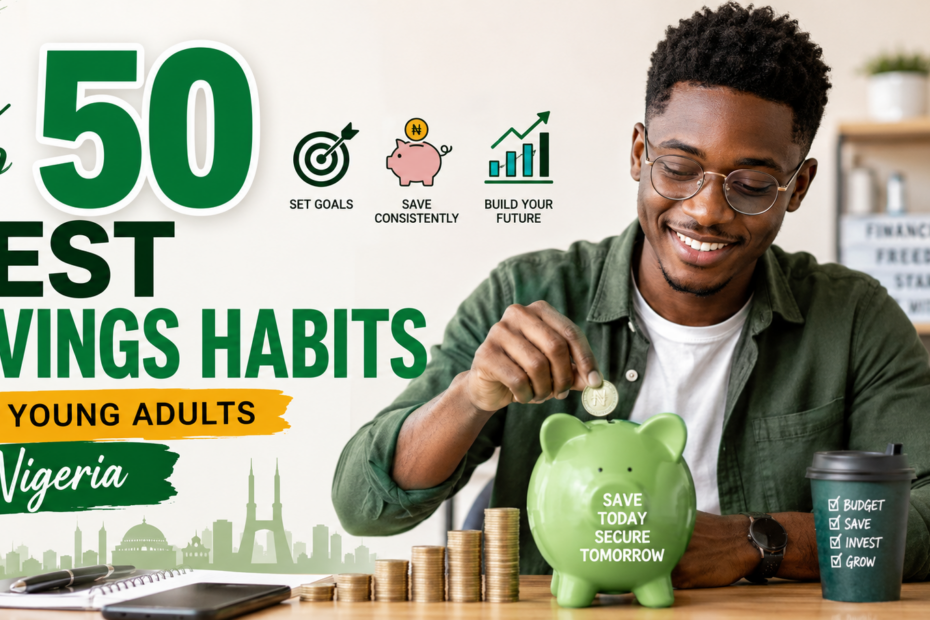
Top 50 Best Savings Habits for Young Adults in Nigeria

    As a result, many young Nigerians struggle financially, even when they earn a salary or run a small business. However, the truth is that saving money is not only for rich people.

    Even with a low income, small and consistent savings habits can make a huge difference over time. The little financial decisions you make daily can help you avoid debt, reduce stress, and gradually build long-term financial stability and wealth.

    50 Savings Habits

    A. Daily Money Discipline Habits

    These are simple habits that young adults can start immediately without needing a higher income. They focus on controlling daily spending and building consistency.

    Save Before Spending

    This means setting aside money first before using the rest. It works because it forces discipline and ensures savings happen automatically.

    For example, a Nigerian student or salary earner can save part of their allowance or salary immediately it arrives. A common mistake is waiting to โ€œsee what is left,โ€ which usually results in no savings at all.

    Stop Impulse Buying

    This habit means avoiding unplanned purchases driven by emotions or pressure. It works because most financial mistakes come from spontaneous spending.

    In Nigeria, this could include buying unnecessary snacks, online items, or extra airtime. A mistake to avoid is shopping when hungry, bored, or stressed.

    Track Every Naira Spent

    This means recording all expenses, no matter how small. It works because it reveals where money is actually going. Many Nigerians realize they spend too much on data, transport, or daily food when they start tracking. The mistake is ignoring small expenses, thinking they are irrelevant.

    Cook More at Home

    This habit reduces spending on expensive fast food and daily eating out. It works because home-cooked meals are significantly cheaper. A Nigerian example is preparing food before going to school or work instead of buying lunch outside. The mistake is assuming cooking is stressful without planning ahead.

    Avoid Unnecessary Online Shopping

    This means buying only what is needed online, not what is trending. It works because it reduces emotional spending. A mistake is falling for discounts or โ€œflash salesโ€ that lead to unnecessary purchases.

    Reduce Betting and Gambling

    This habit helps prevent financial loss from risky betting behavior. It works because gambling is unpredictable and often leads to losses. The mistake is believing in โ€œsure winsโ€ or chasing lost money.

    Carry Homemade Lunch

    This means preparing food from home instead of buying outside daily. It works because it saves a significant amount monthly. The mistake is underestimating small daily food costs.

    Use Public Transport Wisely

    This habit encourages choosing affordable transport options when possible. It works because transport costs can drain income quickly in cities like Lagos. The mistake is always choosing comfort over cost.

    Avoid Daily Soft Drinks and Snacks Spending

    This means reducing frequent spending on non-essential items. It works because small purchases add up over time. The mistake is thinking โ€œitโ€™s just โ‚ฆ500โ€ without calculating monthly totals.

    Set Weekly Spending Limits

    This habit involves planning how much to spend each week and sticking to it. It works because it prevents overspending before the month ends. The mistake is not reviewing or adjusting limits based on real expenses.

    Overall, these daily habits may look small, but when practiced consistently, they create strong financial discipline and long-term savings growth for young adults in Nigeria

    B. Banking & Digital Savings Habits

    In todayโ€™s Nigeria, many young adults are no longer relying only on traditional saving methods. Fintech apps and digital banking have made saving easier, faster, and more structured. These habits are especially powerful because they remove the stress of manual discipline and help automate financial growth.

    Use Automatic Savings Apps

    This habit means using apps that automatically deduct and save money at set intervals. It works because it removes the temptation to spend first and save later. A good Nigerian example is setting a daily or weekly auto-save from your account. The mistake to avoid is disabling the auto-save feature when money feels tight.

    Open a Separate Savings Account

    This means having a dedicated account strictly for savings, not everyday spending. It works because it creates a mental barrier between spending money and savings money. The mistake many people make is linking it directly to their debit card for easy withdrawal.

    Save with Fintech Platforms (PiggyVest, Cowrywise)

    Platforms like PiggyVest and Cowrywise help users save, invest, and lock funds. They work because they encourage discipline through โ€œlockโ€ features that prevent impulsive withdrawals. The mistake is withdrawing locked savings too early for non-emergencies.

    Lock Savings to Avoid Temptation

    This habit involves fixing your money for a period where you cannot easily access it. It works because it builds long-term discipline. A Nigerian example is locking money for rent or future goals. The mistake is locking all your funds without keeping emergency cash.

    Use Transfer Charges Wisely

    This means reducing unnecessary bank transfers that attract fees. It works because small charges accumulate over time. Many people ignore this and lose thousands yearly on repeated transfers.

    Avoid Unnecessary POS Withdrawals

    This habit encourages withdrawing money only when necessary. It works because frequent POS withdrawals often come with extra charges and impulsive spending risks. The mistake is withdrawing cash daily instead of planning spending.

    Save Small Amounts Daily

    This means consistently saving small amounts like โ‚ฆ200โ€“โ‚ฆ1,000 daily. It works because consistency matters more than size. For example, saving โ‚ฆ500 daily becomes over โ‚ฆ180,000 yearly. The mistake is believing small amounts are useless, which leads to inconsistency.

    Overall, digital savings habits make it easier for young Nigerians to stay disciplined, automate savings, and build long-term financial stability without relying solely on willpower.

    C. Lifestyle Savings Habits

    This section focuses on how everyday lifestyle choices affect your ability to save money. Many young adults in Nigeria do not struggle because they donโ€™t earn at all, but because their lifestyle spending is too high compared to their income.

    These habits are highly relatable and can make a big difference when practiced consistently.

    Stop Trying to Impress People

    This means avoiding spending money just to look rich or gain approval from others. It works because a large portion of unnecessary spending comes from peer pressure.

    For example, buying expensive clothes or gadgets just to โ€œbelongโ€ can drain income quickly. The mistake to avoid is measuring your worth by what people think of you.

    Avoid Unnecessary Fashion Competition

    This habit involves not chasing every new trend or designer item. It works because fashion trends change quickly, making constant upgrading expensive.

    A Nigerian example is avoiding the pressure to always wear new outfits for every event. The mistake is thinking repetition of clothes reduces your value.

    Limit Expensive Outings

    This means reducing how often you attend costly parties, restaurants, or social events. It works because outings in Nigeria often come with transport, food, drinks, and appearance costs. The mistake is attending every invitation without considering your budget.

    Unfollow Influencers That Pressure Your Lifestyle

    This habit involves reducing exposure to social media content that pushes unrealistic lifestyles. It works because comparison is one of the biggest causes of overspending. A mistake to avoid is thinking social media reflects real financial life.

    Buy Quality Instead of Cheap Repeated Items

    This means investing in durable items instead of repeatedly buying cheap alternatives. It works because it reduces long-term replacement costs. For example, buying a strong pair of shoes instead of replacing cheap ones frequently. The mistake is focusing only on short-term savings.

    Learn to Say โ€œI Canโ€™t Afford It Yetโ€

    This habit teaches financial honesty and discipline. It works because it helps you prioritize needs over wants without guilt. A Nigerian example is politely declining expensive plans with friends. The mistake is saying yes to everything and later regretting it.

    Overall, lifestyle savings habits help young adults gain control over emotional and social spending, which is often the biggest hidden drain on income. When these habits are practiced, saving becomes easier without feeling like punishment.

    D. Income Improvement Habits

    One of the most effective ways to improve savings is not only by cutting expenses but also by increasing income. For many young adults in Nigeria, financial pressure becomes easier to manage when additional sources of income are created. These habits focus on building earning power alongside saving discipline.

    Learn a Side Hustle

    This means developing an extra source of income outside your main job or studies. It works because it increases cash flow, making it easier to save consistently. A Nigerian example could be freelancing, mini importation, or food vending. The mistake to avoid is depending only on one income stream.

    Sell Unused Items

    This habit involves turning unused possessions into cash. It works because it helps declutter while generating extra income. For example, selling old phones, clothes, or gadgets you no longer use. The mistake is holding on to items you no longer need for emotional reasons.

    Monetize Skills Online

    This means using your skills to earn money through digital platforms. It works because the internet provides access to global opportunities. Examples include writing, graphic design, or video editing. The mistake is underpricing your skills or not marketing yourself properly.

    Use Weekends Productively

    This habit encourages using free time to earn or learn instead of being idle. It works because weekends offer opportunities for part-time work or skill development. A Nigerian example is doing weekend deliveries or attending skill workshops. The mistake is wasting weekends without any financial or personal growth activity.

    Learn Digital Skills

    This involves acquiring high-demand online skills such as digital marketing, coding, or content creation. It works because digital skills increase earning potential significantly. The mistake is jumping between too many skills without mastering one.

    Start a Small Business with Little Capital

    This means beginning a simple business with available funds, no matter how small. It works because it builds entrepreneurship experience and income. A Nigerian example could be reselling food items or thrift clothing. The mistake is expecting instant profit without patience.

    Save Part of Every Extra Income

    This habit ensures that any additional earnings are not fully spent. It works because extra income can quickly disappear without planning. A mistake is treating bonuses or side hustle income as โ€œfree moneyโ€ for spending only.

    See also  How to improve your morning routine

    Overall, income improvement habits help young adults in Nigeria strengthen their financial base. When earning increases and is combined with disciplined saving, financial stability becomes much easier to achieve.

    E. Emergency & Future Planning Habits

    Emergency and future planning habits are some of the most important financial practices for young adults in Nigeria. They help you stay financially stable during unexpected situations and reduce the pressure of sudden expenses that can destroy your savings progress. Without proper planning, even a good income can quickly disappear when emergencies arise.

    Build an Emergency Fund

    This means setting aside money strictly for unexpected situations like illness, job loss, or urgent repairs. It works because it prevents you from borrowing or using your main savings when problems arise.

    A Nigerian example is keeping a separate account or locked savings for emergencies. The mistake to avoid is using emergency funds for regular spending.

    Save for Rent Early

    This habit involves planning and saving for house rent months before it is due. It works because rent is one of the biggest yearly expenses for many young adults.

    For example, setting aside a portion of income monthly to avoid last-minute stress. The mistake is waiting until the rent deadline before starting to save.

    Save for December Expenses

    This means preparing financially for the high spending season in December, including travel, food, and celebrations. It works because December expenses in Nigeria are usually higher than normal months. The mistake is overspending in December without prior planning.

    Save Before School Fees Are Due

    This habit applies to students and parents who pay tuition. It works because it reduces the pressure of raising large sums at once. A Nigerian example is dividing school fees into monthly savings. The mistake is depending on loans or last-minute borrowing.

    Prepare for Fuel Price Increases

    This means anticipating increases in transportation and fuel costs and adjusting your budget early. It works because fuel price changes directly affect daily living expenses. The mistake is ignoring economic trends until they affect your budget.

    Avoid Borrowing for Lifestyle

    This habit means not taking loans or borrowing money for non-essential spending like fashion, outings, or luxury items. It works because it prevents debt accumulation. A mistake to avoid is borrowing just to maintain appearances or social pressure.

    Overall, emergency and future planning habits protect young adults from financial shock and help maintain stability even when unexpected expenses occur.

    When combined with daily discipline and income growth habits, they create a strong foundation for long-term financial security.

    Nigerian Realities That Make Saving Difficult

    To truly understand savings habits in Nigeria, we must also look at the everyday financial pressures young adults face. These challenges are part of real life and often make saving money feel difficult, even when income exists.

    Many young Nigerians struggle with aso ebi pressure, where they feel forced to buy expensive outfits just to attend weddings and avoid embarrassment. Others spend heavily on owambe parties, where transportation, clothes, food, and drinks combine to drain their monthly budget.

    At the same time, issues like betting addiction, constant data subscriptions, and rising transport fares quietly reduce the amount people can save each month. Even lifestyle pressure, such as buying every trending phone or keeping up with social media standards, makes financial discipline harder.

    For some, responsibilities go beyond personal spending. Sending money to family members, managing NYSC allowance, or dealing with the problem of salary finishing before month-end are very common struggles.

    These realities show one thing clearly: saving money in Nigeria is not just about discipline, but also about understanding your environment. When you recognize these pressures, you can plan better, control spending, and build stronger financial habits that actually work in real life.

    Realistic Examples of Savings in Nigeria

    Readers often understand savings better when they see real-life numbers and practical scenarios. In Nigeriaโ€™s current economy, even small and consistent habits can lead to significant financial progress over time.

    For example, if a young adult saves โ‚ฆ1,000 daily instead of spending it on unnecessary snacks, drinks, or impulse purchases, that adds up to about โ‚ฆ365,000 in one year. This is a simple habit, but it shows how small daily discipline can lead to meaningful long-term savings.

    Another example is a young adult earning โ‚ฆ80,000 monthly. Even with living expenses, saving just 10% consistently (โ‚ฆ8,000 monthly) means they can still build financial stability over time. The key is not how much you earn, but how consistent you are with saving a portion of it.

    These examples show that savings is not only for high-income earners. With discipline, planning, and consistency, anyone can build a strong financial future regardless of income level.

    Beginner-Friendly Savings Challenges

    To make savings habits more practical and engaging, beginners can start with simple challenges that build discipline step by step. These challenges help young adults in Nigeria develop strong money habits without feeling overwhelmed.

    Instead of trying to change everything at once, small structured challenges make it easier to stay consistent and track progress.

    30-Day No Impulse Buying Challenge

    This challenge means avoiding all unplanned purchases for 30 days. It works because it helps you control emotional spending and learn patience.

    For example, instead of buying snacks, clothes, or gadgets on impulse, you only buy what is planned in your budget. The mistake to avoid is giving in to โ€œjust this one timeโ€ purchases.

    Save Every โ‚ฆ200 Note Challenge

    This habit involves saving every โ‚ฆ200 note you receive instead of spending it. It works because small amounts add up quickly over time. A common mistake is thinking small money does not matter, when in reality it builds discipline and consistency.

    No Betting Challenge

    This challenge requires staying away from sports betting and gambling completely for a set period. It works because it helps break addiction and prevents unnecessary financial losses. The mistake to avoid is replacing betting with other impulsive spending habits.

    Weekly Meal Prep Challenge

    This means preparing meals ahead of time instead of buying food daily. It works because it reduces food expenses significantly. A Nigerian example is cooking on weekends and storing meals for work or school days. The mistake is failing to plan meals properly, leading to waste or food spoilage.

    โ‚ฆ500 Daily Savings Challenge

    This challenge involves saving โ‚ฆ500 every day consistently. It works because it builds strong financial discipline and long-term savings habits. For example, โ‚ฆ500 daily becomes about โ‚ฆ15,000 monthly and โ‚ฆ180,000 yearly. The mistake is skipping days without commitment, which breaks consistency.

    Overall, these beginner-friendly challenges make savings feel achievable and fun while building the foundation for long-term financial discipline.

    Tips for Better Saving Discipline

    To make your savings journey more effective, it helps to follow proven financial principles that guide how money is managed. These expert-like tips are simple but powerful, and they can significantly improve how young adults in Nigeria handle their finances.

    Use Budgeting Rules Like 50/30/20

    This rule means dividing your income into 50% for needs, 30% for wants, and 20% for savings. It works because it creates structure and balance in your spending.

    For example, rent, food, and transport fall under needs, while entertainment and shopping fall under wants. The mistake to avoid is treating all expenses as โ€œneeds,โ€ which destroys budgeting discipline.

    Save Immediately After Salary Enters

    This habit means saving first before spending on anything else. It works because it removes the temptation to spend money before saving it.

    A Nigerian example is transferring your savings to a separate account as soon as salary or allowance is received. The mistake is waiting until the end of the month to save, when money has already been spent.

    Avoid Lifestyle Inflation

    This means not increasing your spending just because your income increases. It works because it helps you grow savings instead of expenses. For example, someone earning more should not immediately upgrade their lifestyle unnecessarily. The mistake is using every salary increase to upgrade fashion, gadgets, or social life.

    Focus on Consistency, Not Amount

    This habit emphasizes saving regularly, even if the amount is small. It works because consistency builds discipline and long-term financial growth. A Nigerian example is saving โ‚ฆ200โ€“โ‚ฆ1,000 daily instead of waiting to save large amounts. The mistake is believing small savings are meaningless.

    Build Habits Before Investments

    This means developing strong saving discipline before jumping into investments. It works because good habits protect you from financial mistakes and losses. A common mistake is rushing into risky investments without basic financial control.

    Overall, these expert tips help young adults build a strong financial foundation, making saving easier, more structured, and sustainable over time.

    Conclusion

    Saving money in Nigeria is not easy, especially with the rising cost of living, transport fares, food prices, and daily financial pressure. Many young adults also face peer pressure, social expectations, and lifestyle demands that make it even harder to keep money aside.

    However, financial freedom does not come from earning a lot aloneโ€”it comes from how well you manage what you already have.

    The truth is that small daily habits can completely change your financial future. Whether it is saving a little every day, avoiding impulse spending, or planning ahead for future expenses, consistency is what matters most.

    You may not become rich overnight, but with discipline and patience, you can build stability, avoid unnecessary debt, and reduce financial stress.

    Start small, stay consistent, and improve step by step. Over time, these simple habits will grow into a strong financial foundation that supports your goals and future.

    Frequently Asked Questions

    How to make 5000 naira daily in Nigeria?

    Making โ‚ฆ5,000 daily in Nigeria is realistic, but it depends on your skills, location, consistency, and willingness to start small and grow. The key idea is not looking for โ€œquick money,โ€ but building small daily income streams that add up.

    One of the most common methods is buying and reselling goods. For example, you can buy food items like bread, sachet water, soft drinks, or snacks in bulk and resell them in a busy area such as schools, motor parks, or office environments. Even a โ‚ฆ200โ€“โ‚ฆ500 profit per item can accumulate to โ‚ฆ5,000 daily if your location is good.

    Another strong option is digital freelancing or online services. Skills like graphic design, writing, social media management, or simple data entry can bring daily income if you consistently find clients. Even managing small Instagram or WhatsApp business pages for local vendors can pay daily or weekly.

    You can also explore transport and delivery services, such as bike riding (Okada where legal), Bolt/Uber driving, or local dispatch delivery using motorcycles or bicycles. Daily earnings in busy cities can exceed โ‚ฆ5,000 depending on demand.

    Another underrated method is small-scale food business, such as selling akara, puff-puff, noodles, or homemade drinks. Food sells daily because it is a basic need.

    Finally, consistency is the real secret. โ‚ฆ5,000 daily is not about one big opportunity but multiple small, steady streams. Combining two or more methodsโ€”like reselling and online servicesโ€”can make your target easier to achieve.

    See also  How to Set Personal Goals and Stick to Them

    How to save money as a young adult?

    Saving money as a young adult in Nigeria can be challenging due to rising living costs, peer pressure, and irregular income.

    However, building strong saving habits early is one of the most important financial decisions you can make. The first step is to understand that saving is not about how much you earn, but how well you manage what you have.

    A powerful method is the โ€œpay yourself firstโ€ rule. This means that once you receive moneyโ€”salary, allowance, or profitโ€”you immediately set aside a fixed percentage (for example, 10%โ€“30%) before spending anything else. Treat savings like a bill you must pay, not what is left over.

    Another important strategy is budgeting. Write down your income and divide it into needs, wants, and savings. A simple approach is the 50/30/20 rule: 50% for needs, 30% for wants, and 20% for savings. Even if your income is small, the principle still works when adjusted.

    You should also reduce unnecessary spending. Small habits like daily impulsive buying, frequent eating out, or unnecessary subscriptions can quietly drain your money. Tracking your spending helps you see where your money actually goes.

    Using a separate savings account is also effective. When savings are mixed with spending money, it becomes easier to use them. Keeping it separate reduces temptation.

    Finally, set clear goals. Saving without purpose is difficult. Whether it is for school fees, emergency funds, or starting a business, having a goal motivates discipline.

    In summary, saving as a young adult requires discipline, planning, and consistency, not high income.

    What is the 3 6 9 rule of money?

    The 3-6-9 rule of money is a simple financial strategy used to guide saving, planning, and long-term financial discipline. While interpretations can vary slightly, the general idea focuses on time-based financial structure that helps individuals build stability and avoid financial stress.

    The โ€œ3โ€ in the rule often refers to having 3 months of emergency savings. This means you should aim to save enough money to cover at least three months of your basic living expenses.

    This emergency fund helps you survive unexpected situations like job loss, medical emergencies, or sudden financial needs without going into debt.

    The โ€œ6โ€ represents 6 months of financial planning or stability goals. At this stage, you should be actively managing your income and expenses in a structured way. It also means building consistency in saving and possibly starting small investments or side income streams that can support your financial growth.

    The โ€œ9โ€ is often linked to 9 months to 1 year of financial growth planning, where you focus on long-term wealth building. This includes investing, expanding income sources, or building skills that increase your earning capacity. It is the stage where money is not just saved but actively working for you.

    The purpose of the 3-6-9 rule is to encourage gradual financial discipline rather than sudden wealth expectations. It teaches stability first, then growth, then expansion.

    In simple terms, it moves you from survival (3 months), to stability (6 months), to financial progress (9 months and beyond). It is not a rigid law but a guideline to help young people structure their financial journey in a realistic way.

    What are the 4 money mindsets?

    The 4 money mindsets describe the different ways people think about and relate to money, and they strongly influence financial success or struggle. Understanding these mindsets helps you identify where you are and how to improve your financial behavior.

    The first mindset is the scarcity mindset. People in this category believe money is never enough. They often think in fear, avoid risks, and focus on lack instead of opportunities. This mindset leads to poor financial decisions like panic spending or avoiding investment opportunities.

    The second is the survival mindset. Here, individuals focus only on meeting basic needs such as food, rent, and transportation. They are often stuck in a cycle of earning and spending without planning for the future. While it is a step above scarcity, it still limits financial growth.

    The third is the security mindset. People with this mindset start saving and planning. They look for stability, build emergency funds, and avoid unnecessary risks. This is a healthier mindset because it introduces discipline and financial awareness.

    The fourth is the abundance or growth mindset. This is the most advanced financial mindset. People here believe money can be created through value, skills, and opportunities. They invest, start businesses, learn financial skills, and think long-term. Instead of fearing money loss, they focus on how to multiply money.

    To grow financially, the goal is to move from scarcity or survival into security and finally abundance. This shift does not happen overnightโ€”it requires education, discipline, and exposure to better financial habits.

    What are the 4 major investments?

    The 4 major types of investments generally refer to the most common and important asset categories people use to grow wealth over time. Understanding them helps individuals make better financial decisions and diversify their income sources.

    The first major investment is stocks (equities). When you buy stocks, you are purchasing a small ownership share in a company. If the company grows, your investment increases in value. Stocks can provide high returns but also come with risks due to market fluctuations.

    The second is bonds (fixed income investments). Bonds are essentially loans you give to governments or companies in exchange for regular interest payments. They are considered safer than stocks but usually offer lower returns. Bonds are good for stability and preserving capital.

    The third is real estate. This involves buying land, houses, or commercial properties. Real estate is popular because it can generate rental income and increase in value over time. However, it requires higher capital and careful location selection.

    The fourth is cash or cash equivalents. This includes savings accounts, fixed deposits, and money market funds. While they do not generate high returns, they provide liquidity and safety. Cash investments are important for emergency funds and short-term goals.

    Together, these four investments balance risk and reward. Stocks offer growth, bonds offer stability, real estate offers long-term wealth, and cash provides security. A smart investor usually combines all four to reduce risk and build steady financial progress over time.

    How to make 1k per day?

    Making โ‚ฆ1,000 per day in Nigeria is one of the most realistic financial goals for beginners because it does not require huge capital or advanced skills. The key is to focus on small, repeatable income activities that generate consistent cash flow rather than chasing big profits.

    One simple method is reselling small goods. You can buy items like sachet water, snacks, airtime, or phone accessories in bulk and resell them in busy areas such as schools, bus stops, or markets. Even a โ‚ฆ50โ€“โ‚ฆ200 profit per item can quickly add up to โ‚ฆ1,000 daily.

    Another option is simple labor or services. Tasks like washing clothes, cleaning compounds, helping with errands, or assisting small shop owners can earn daily pay. Many people overlook these opportunities, but they are always in demand.

    You can also explore digital micro-tasks, such as social media engagement, WhatsApp marketing for small businesses, or posting ads for local vendors. Some small business owners pay daily or weekly for help in getting customers.

    Food-related micro-businesses also work well. Selling puff-puff, akara, boiled eggs, or small drinks in the morning or evening can easily generate โ‚ฆ1,000 profit daily with good location and consistency.

    The most important factor is not the idea but execution. โ‚ฆ1,000 daily becomes โ‚ฆ30,000 monthly, which can grow into bigger opportunities if reinvested. The secret is to start small, stay consistent, and gradually scale your income source.

    What should a 25 year old have saved?

    There is no strict universal amount a 25-year-old should have saved because financial situations vary based on income, education, location, and responsibilities. However, there are healthy financial benchmarks that can guide young adults toward stability.

    At age 25, a financially disciplined person should ideally have at least 3 to 6 months of living expenses saved as an emergency fund.

    This means if your monthly expenses are โ‚ฆ100,000, you should aim to have โ‚ฆ300,000 to โ‚ฆ600,000 set aside. This fund protects you from unexpected events like job loss, medical emergencies, or sudden financial shocks.

    Beyond emergency savings, a 25-year-old should also have started building long-term savings or investments, even if small. This could include savings in cooperative societies, mutual funds, or small business investments. The key is not the amount but the habit of consistent saving.

    Many financial experts suggest that by age 25, a person should aim to have saved at least 25% to 50% of their annual income if possible. However, this is flexible depending on income level and responsibilities such as school loans or family support.

    More importantly than the exact figure is the financial behavior. A 25-year-old should already understand budgeting, avoid unnecessary debt, and have at least one active savings plan.

    In summary, at 25, you may not be rich, but you should have financial discipline, emergency savings, and a growing habit of investing for the future.

    Why is Gen Z struggling financially?

    Gen Z is often seen as financially struggling due to a combination of economic, social, and lifestyle factors. One major reason is the high cost of living compared to income growth.

    In many countries, including Nigeria, wages have not increased at the same pace as inflation, making it harder for young people to afford basic needs while saving money.

    Another key factor is unemployment and underemployment. Many Gen Z individuals are either jobless or working in low-paying, unstable jobs. Even those with degrees often struggle to find opportunities that match their qualifications, leading to financial frustration and dependence on side hustles.

    Social media also plays a role. Constant exposure to luxury lifestyles creates pressure to spend beyond means. This leads to comparison-driven spending, where young people try to โ€œlook successfulโ€ even when they are financially unstable.

    Additionally, many Gen Z individuals lack formal financial education. Schools often do not teach budgeting, investing, or debt management properly, so young adults learn through trial and error, which can be costly.

    There is also the issue of instant gratification culture. Many young people prefer short-term enjoyment over long-term financial planning, which affects saving and investment habits.

    Lastly, global economic instability, rising housing costs, and digital lifestyle demands (data, gadgets, subscriptions) all add extra pressure.

    In summary, Gen Z struggles financially not because of lack of effort, but because of a combination of economic challenges, social pressure, and limited financial education.

    What are 5 tips for saving money?

    Saving money effectively requires discipline, structure, and consistency. One of the most important tips is to pay yourself first. This means that as soon as you receive money, you immediately set aside a portion for savings before spending anything. Even saving 10% regularly can make a big difference over time.

    The second tip is to create a budget and stick to it. A budget helps you track income and expenses so you know exactly where your money is going. Without a budget, it is easy to overspend without realizing it.

    See also  How to budget money in nigeria properly

    Third, you should separate savings from spending money. Keeping savings in a different account or digital wallet reduces the temptation to spend it. If it is too accessible, it becomes easier to misuse.

    Fourth, reduce unnecessary expenses. Many people spend money on things they do not truly need, such as frequent takeout meals, impulsive shopping, or unused subscriptions. Cutting these small expenses can significantly increase your savings.

    Fifth, set clear financial goals. Saving becomes easier when you have a purpose, such as school fees, starting a business, or emergency funds. Goals give motivation and direction.

    In addition, consistency matters more than amount. Even small savings done regularly are more powerful than large but irregular savings. Over time, discipline builds financial stability and reduces stress.

    What are the 7 secrets of wealth?

    The 7 secrets of wealth are principles that guide long-term financial success, not quick money-making schemes. The first secret is earning more than you spend. Wealth begins when your income consistently exceeds your expenses, allowing you to save and invest.

    The second secret is living below your means. Many wealthy individuals are not those who earn the most, but those who manage their lifestyle wisely and avoid unnecessary expenses.

    The third secret is consistent saving and investing. Wealth grows when money is not only saved but also invested in assets like businesses, stocks, or real estate that generate returns over time.

    The fourth secret is multiple income streams. Relying on one source of income is risky. Wealthy individuals often have side businesses, investments, or passive income sources.

    The fifth secret is financial discipline. This includes budgeting, avoiding debt traps, and making intentional spending decisions rather than emotional ones.

    The sixth secret is continuous learning. Wealthy people constantly learn new skills, understand financial systems, and adapt to economic changes.

    The seventh secret is patience and long-term thinking. Wealth is not built overnight. It requires time, consistency, and the ability to delay gratification.

    Together, these principles form the foundation of real financial success. Wealth is less about luck and more about habits, mindset, and consistent action over time.

    What are the 3 Mโ€™s of money?

    The 3 Mโ€™s of money are Mindset, Management, and Multiplication, and they describe the core foundation of financial success. These three principles explain how people should think about money, handle money, and grow money over time.

    The first M is Mindset. This refers to how you think about money. If you believe money is always scarce, you will make fearful and limiting financial decisions.

    But if you develop a growth mindset, you start seeing money as something you can earn, manage, and expand through value creation. A strong money mindset helps you avoid emotional spending and focus on long-term goals.

    The second M is Management. This is about how you handle the money you already have. Many people earn money but struggle financially because they lack proper money management.

    This includes budgeting, tracking expenses, avoiding unnecessary debt, and ensuring your spending does not exceed your income. Good management is what keeps financial stability alive.

    The third M is Multiplication. This is where wealth building happens. Instead of just saving money, you invest it in assets such as businesses, stocks, real estate, or skills that increase your earning ability. Multiplication turns money into more money over time.

    Together, the 3 Mโ€™s show a clear financial path: think correctly about money, manage it wisely, and grow it strategically. Without all three, financial progress becomes difficult to sustain.

    What is the 7 3 2 rule?

    The 7-3-2 rule of money is a financial guideline that helps individuals balance spending, saving, and investing in a structured way. While interpretations may vary slightly, the most common version is designed to promote discipline and long-term financial growth.

    The โ€œ7โ€ represents 70% of your income for living expenses. This includes essentials like food, rent, transportation, data, clothing, and other daily needs. The idea is to control lifestyle spending so it does not exceed a reasonable limit of your income.

    The โ€œ3โ€ represents 30% of your income for savings and investments combined. This portion is very important because it helps you build financial security. A part of it can go into savings for emergencies, while another part can be invested in business, stocks, or other income-generating opportunities.

    The โ€œ2โ€ is sometimes used to emphasize long-term wealth growth or giving, depending on the interpretation. In some versions, it represents charitable giving or reinvestment into personal development such as education, skills, or business expansion.

    The main purpose of the 7-3-2 rule is to ensure balance. It prevents overspending while encouraging consistent saving and investing habits. Instead of living paycheck to paycheck, it helps individuals create structure in how money flows.

    In simple terms, it teaches discipline: spend wisely, save consistently, and invest for the future.

    Which generation is most educated?

    The most educated generation in modern history is widely considered to be Generation Z, although this can depend on region, access to education, and measurement criteria. Gen Z generally includes people born from the mid-to-late 1990s to the early 2010s.

    One major reason Gen Z is seen as the most educated is their access to digital learning resources. Unlike previous generations, they grew up with the internet, smartphones, and online education platforms. This makes it easier for them to access information, tutorials, courses, and global knowledge instantly.

    Another factor is the higher global school enrollment rate compared to older generations. In many countries, education systems have expanded, and more young people are completing secondary and tertiary education than before.

    Gen Z is also more likely to pursue diverse forms of education, including vocational training, online certifications, and self-taught skills like coding, digital marketing, and design. This broad learning approach increases their overall knowledge base.

    However, being โ€œmost educatedโ€ does not always mean being the most financially successful or experienced. Older generations like Millennials and Gen X often have more real-world experience and financial stability despite having less access to digital education in their youth.

    In summary, Gen Z is considered highly educated due to technology access and expanded learning opportunities, but education alone does not guarantee financial success or life experience.

    What are the top 3 things Gen Z spends their money on?

    The spending habits of Gen Z are strongly influenced by technology, lifestyle, and social media culture. The top three areas where Gen Z typically spends their money are technology and digital services, lifestyle and entertainment, and personal appearance or self-expression.

    The first major spending category is technology and digital services. This includes smartphones, data subscriptions, apps, streaming platforms like Netflix or Spotify, and gaming. Since Gen Z grew up in a digital world, they rely heavily on technology for communication, entertainment, and education.

    The second category is lifestyle and entertainment. This includes eating out, fast food, concerts, travel experiences, social outings, and online entertainment. Gen Z values experiences more than possessions, so they often spend money on activities that provide enjoyment or social connection.

    The third category is personal appearance and self-expression. This includes fashion, skincare, beauty products, accessories, and sometimes fitness-related spending. Social media platforms like Instagram and TikTok influence trends heavily, making appearance and style a significant spending area.

    In addition to these, impulse spending driven by online shopping and influencer marketing is also common among Gen Z. Many purchase items based on trends rather than long-term need.

    Overall, Gen Z spending is shaped by digital life, social influence, and experience-driven priorities rather than traditional long-term asset building.

    What are 10 things you can do to save money?

    Saving money requires discipline and consistent habits. One important step is to create a budget and track every expense so you know where your money is going. Without a budget, saving becomes random and ineffective.

    Second, pay yourself first by saving a fixed percentage immediately after receiving income. Third, avoid impulse buying by waiting 24 hours before making non-essential purchases.

    Fourth, cook at home more often instead of eating out frequently, as food expenses can drain income quickly. Fifth, use public transport or cost-effective travel options when possible to reduce daily expenses.

    Sixth, set clear financial goals, such as saving for emergency funds or business capital, because goals increase motivation. Seventh, separate savings from spending money using a different account or wallet.

    Eighth, buy in bulk when it is cheaper, especially for household items. Ninth, reduce subscriptions and unnecessary services that you rarely use. Tenth, increase your income sources, because saving becomes easier when you earn more.

    Together, these habits build strong financial discipline over time and help you grow stability even with a small income.

    How to stop wasting money?

    Stopping money waste begins with awareness. The first step is to track your spending. Many people waste money without realizing it because they do not monitor where it goes. Once you track expenses, you can clearly identify unnecessary spending patterns.

    The second step is to differentiate needs from wants. Needs are essential things like food, rent, and transportation, while wants are things like luxury items, impulse shopping, or frequent entertainment. Learning to prioritize needs helps reduce waste.

    Third, avoid emotional spending. Many people spend money when they are bored, stressed, or influenced by social media. Recognizing emotional triggers helps you control unnecessary purchases.

    Fourth, set a spending limit for daily or weekly expenses. When you have a fixed limit, you naturally become more disciplined with your money choices.

    Fifth, delay purchases by at least 24 to 48 hours. This helps you avoid impulsive decisions and gives time to reconsider whether the item is truly necessary.

    Finally, surround yourself with financially disciplined habits and people. Your environment influences your spending behavior more than you think.

    In summary, stopping money waste requires awareness, discipline, and intentional decision-making.

    How to aggressively save money?

    Aggressive saving means intentionally setting aside a large portion of your income with strict discipline and minimal unnecessary spending. It requires a strong mindset and clear financial goals.

    The first step is to set a high savings target, such as 30% to 70% of your income, depending on your situation. This forces you to live more simply and prioritize financial growth.

    Second, cut non-essential expenses completely or drastically reduce them. This includes eating out, entertainment spending, unnecessary subscriptions, and impulse shopping.

    Third, automate your savings so that money is transferred to a savings account immediately after income arrives. This removes temptation.

    Fourth, adopt a minimalist lifestyle, focusing only on essential needs and avoiding lifestyle inflation. The less you need, the more you can save.

    Fifth, increase your income while maintaining your spending level. Any extra income should go directly into savings or investment.

    Finally, set a strong financial purpose, such as starting a business, emergency fund, or investment capital. Clear goals make aggressive saving easier to sustain.

    Aggressive saving is not about sufferingโ€”it is about temporary discipline for long-term financial freedom.

    Leave a Reply

    Your email address will not be published. Required fields are marked *

    error: Content is protected !!