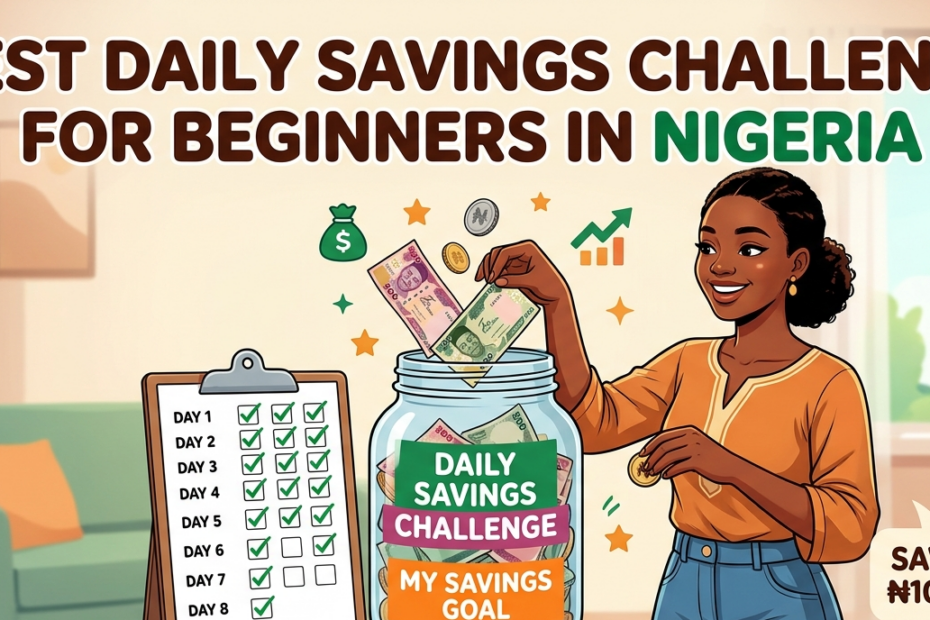
Saving money in Nigeria can feel surprisingly difficult, especially for beginners. Prices keep rising, daily expenses never seem to stop, and even small income can disappear quickly on food, transport, data, and unexpected needs. For many people, the idea of saving money consistently sounds good in theory, but in reality, it rarely happens.
One of the biggest reasons beginners struggle with saving is not that they don’t want to save, but that they don’t have a system. Most people try to save whatever is “left over” at the end of the day or month. The problem is that there is usually nothing left. Once spending starts without structure, saving becomes inconsistent and easily forgotten.
Another issue is mindset. Many beginners believe saving only works when you earn a lot of money. Because of this, they wait for “bigger income” before they start. But in truth, saving is less about how much you earn and more about how regularly you can set something aside, no matter how small.
This is where the small daily income mindset becomes powerful. Instead of focusing on large, overwhelming amounts, you focus on small, daily actions. Even tiny savings done consistently can grow into something meaningful over time. The key is not intensity, but consistency.
To solve this problem, daily savings challenges offer a simple and practical approach. They turn saving into a habit rather than a struggle. Instead of waiting for motivation or a perfect moment, you follow a clear daily structure that helps you build discipline step by step.
In this guide, you’ll learn the best daily savings challenges for beginners in Nigeria that are simple, realistic, and easy to stick to—even if you are starting from zero.
Why Daily Savings Challenges Work
Daily savings challenges are one of the most effective ways for beginners in Nigeria to build strong financial habits, especially when income is small or inconsistent. Unlike traditional saving methods that focus on monthly targets, daily challenges break saving into smaller, more manageable actions that are easier to maintain.
First, they build consistency and discipline. Saving a small amount every day trains your mind to treat saving as a routine, not an occasional activity. Over time, this repetition becomes a habit, making it easier to stay committed even when money is tight or motivation is low.
Second, daily saving is easier than monthly saving. A monthly saving plan often feels overwhelming because it requires discipline over a long period. Many people start strong but lose control halfway through the month. Daily saving removes that pressure by focusing only on today’s small target, making the process more realistic and less stressful.
Another important benefit is that it reduces spending impulses. When you commit to saving daily, you naturally become more mindful of how you spend money throughout the day. You start thinking twice before making unnecessary purchases because you already have a saving goal to meet.
Finally, daily savings challenges work very well for low-income earners. You don’t need a large salary or big financial support to start. Even small amounts, when saved consistently, can add up over time. This makes it a practical method for students, beginners, and anyone trying to improve their financial discipline.
In simple terms, daily savings challenges work because they make saving simple, realistic, and achievable—no matter your income level.
Challenge 1: ₦100 Daily Savings Challenge
The ₦100 daily savings challenge is one of the simplest and most beginner-friendly ways to start saving money in Nigeria. It is designed for people who feel like they don’t have enough income to save consistently. The idea is not to pressure yourself, but to build a habit through very small, manageable steps.
With this challenge, you save just ₦100 every day. At first, it may look too small to matter, but the power of this method is in consistency. When you multiply it over time, it becomes meaningful. For example, ₦100 daily for 30 days equals ₦3,000 in a month. That is money you probably would have spent on small, untracked expenses without noticing.
What makes this challenge effective is that it is easy to start and easy to maintain. There is no financial stress involved, which is why beginners are more likely to stick with it. Even on days when money is tight, ₦100 is still a realistic amount for most people, making it a practical starting point for building discipline.
This challenge also helps you develop a habit-building mindset. Instead of waiting for large amounts before saving, you train yourself to save consistently, no matter how small the amount is. Over time, this habit becomes part of your routine, and saving starts to feel natural rather than forced.
The ₦100 daily savings challenge is not about the amount—it is about proving to yourself that you can save every day. Once you master this, it becomes much easier to move on to bigger challenges and higher savings goals.
Challenge 2: ₦200 Increment Challenge
The ₦200 increment challenge is a step up from the basic daily savings method and is designed for beginners who want to build stronger financial discipline over time. Instead of saving a fixed amount every day, this challenge encourages gradual growth in your saving habit.
The idea is simple: you start small and increase your daily savings as you progress. For example, you might begin with ₦100 on the first few days, then increase to ₦200, and later move to ₦300 as you become more comfortable. This gradual increase helps your mind adjust to saving larger amounts without feeling pressured.
What makes this challenge effective is that it trains you to adapt. Many people struggle with saving because they feel stuck at one level. But when you slowly increase the amount, you learn how to manage your spending while still committing to saving more over time. It creates a sense of progress, which is very important for motivation.
Another advantage is that it builds gradual discipline. Instead of forcing yourself to save a large amount immediately, you ease into it step by step. This reduces the chances of quitting early because the challenge grows with your ability.
Over time, the ₦200 increment challenge helps you become more confident with money management. You begin to see saving not as a burden, but as a flexible habit that can grow with your income and discipline.
In simple terms, this challenge is about starting small, increasing gradually, and building strong saving habits without stress.
Challenge 3: No-Spend + Save Combo
The No-Spend + Save Combo is a powerful daily savings challenge that helps beginners in Nigeria become more aware of their spending habits while still building savings. Unlike fixed daily saving methods, this challenge focuses on controlling spending first, then turning the “saved” money into actual savings.
The idea is simple: you choose 2 to 3 days every week where you do not spend any money unless it is absolutely necessary. On these no-spend days, you avoid buying food outside, unnecessary transport trips, snacks, or impulse items. You rely on what you already have planned for that day.
The real benefit of this challenge is what you do with the money you didn’t spend. Instead of letting it disappear into other expenses, you transfer or set it aside as savings. For example, if you usually spend ₦500–₦1,000 on certain days, you save that amount instead. Over a week, this can add up to a meaningful savings boost.
This method is especially powerful because it builds financial awareness. Many people spend money automatically without realizing how often small purchases add up. No-spend days force you to think carefully before spending and help you identify unnecessary habits.
It also reduces emotional spending. On no-spend days, you become more intentional and learn how to manage cravings, peer pressure, and impulse buying. Over time, this improves your overall discipline with money.
In simple terms, the No-Spend + Save Combo helps you save money indirectly by cutting unnecessary spending and turning discipline into real savings. It is a practical and realistic challenge for beginners who want better control over their finances.
Challenge 4: “Leftover Money” Rule (Controlled Version)
The “leftover money” idea is something many beginners already use—but most people use it the wrong way. They spend first and then try to save whatever is left. In reality, this approach rarely works because there is usually nothing meaningful left at the end of the day. That is why this challenge introduces a controlled version of the leftover rule.
Instead of saving random leftovers, you set a fixed minimum savings amount first. This means that before you spend anything, you already decide the smallest amount you must save daily—no negotiation. Even if it is ₦100, ₦200, or ₦500, it becomes a non-negotiable part of your money plan.
After setting aside this fixed savings, you can then spend the remaining money on your daily needs and wants. This simple change turns saving from an afterthought into a priority. It ensures that you are always building your savings, even on days when expenses are high.
This method also helps you avoid emotional spending. Many financial mistakes happen in the moment—when you feel hungry, stressed, bored, or pressured by friends. Without a structure, it becomes easy to spend money you didn’t plan to spend. But when your savings are already separated first, you naturally become more careful with what remains.
Over time, this challenge builds discipline and consistency. You stop relying on “whatever is left” and start actively controlling your money decisions. It may feel small at the beginning, but the habit of prioritizing savings first is what leads to long-term financial stability.
In simple terms, the controlled leftover rule teaches you to save with intention, not chance—and that is what makes it powerful.
How to Stay Consistent
Starting a savings challenge is easy, but the real challenge is staying consistent over time. Many beginners in Nigeria start strong for a few days or weeks, then slowly stop when motivation drops or expenses come up. That is why you need simple systems that help you stay on track.
One effective method is to use a piggy bank or savings apps like PiggyVest or Kuda. A physical piggy bank makes saving visible, while digital apps help you automate and protect your savings. Some apps even allow you to lock your money so you are not tempted to spend it impulsively. The goal is to make saving harder to break and easier to maintain.
Another important habit is to track your daily progress. This can be done with a simple notebook or notes app on your phone. Each day you save, mark it down. Watching your progress grow over time keeps you motivated and reminds you that your effort is adding up, even if the amounts are small.
You should also set reminders. In a busy environment, it is easy to forget your savings goals. A daily alarm or notification can help you stay consistent and make saving part of your routine. Over time, it becomes a habit you no longer need to think about.
Staying consistent is not about perfection—it is about persistence. Even if you miss a day, you continue the next day without giving up. With the right tools and discipline, your daily savings challenge becomes easier to maintain and much more effective in the long run.
Common Mistakes to Avoid
Even with the best daily savings challenge, many beginners in Nigeria still struggle because of a few simple but damaging mistakes. These mistakes don’t seem serious at first, but they can completely break your saving habit if you are not careful.
One major mistake is skipping days. When you miss a day and don’t save, it becomes easier to miss the next day, and before you know it, the habit breaks. Daily saving works best when it is consistent, not occasional. Even small amounts matter more when they are done regularly.
Another common mistake is saving only when you feel motivated. Motivation is unreliable—it comes and goes. If you depend on how you feel before saving, you will not be consistent. Successful saving is not emotional; it is a disciplined routine. You save because it is part of your plan, not because you feel like it.
The third mistake is breaking the challenge for small expenses. Many beginners start well but easily dip into their savings for “small needs” like snacks, transport, or random spending. These small withdrawals may not seem important, but they slowly destroy your progress and weaken your discipline over time.
Avoiding these mistakes is just as important as following the challenge itself. The goal is not perfection, but consistency. Even if you save small amounts, what matters most is sticking to the habit and not giving up when things get difficult.
In simple terms, successful saving is about showing up every day, staying disciplined, and protecting your progress from unnecessary distractions.
Best Apps/Tools for Daily Saving
If you want to succeed with daily savings challenges, using the right tools makes a big difference. The goal is to make saving easy, consistent, and hard to break. Whether you prefer digital tools or simple offline methods, there are good options for every beginner.
One of the most popular choices in Nigeria is PiggyVest. This app helps you save money automatically on a daily, weekly, or monthly basis. You can also lock your savings so you don’t easily withdraw them, which is very useful for building discipline. It is designed specifically to help users stay consistent with saving habits.
Another strong option is Kuda. This is a digital bank that allows you to save money easily while also managing your everyday spending. It gives you a clear view of your finances and helps you separate spending money from savings, which is important for daily saving discipline.
For beginners who prefer something very simple, the notebook method still works very well. This involves writing down your daily savings manually in a small book or journal. It may look basic, but it is effective because it keeps you aware of your progress and builds accountability without any technology.
The most important thing is not the tool itself, but consistency. Whether you use an app or a notebook, what matters is that you save daily and track your progress without skipping.
In simple terms, the best tools for daily saving are the ones you will actually use consistently.
Conclusion
At the end of the day, building financial discipline through a daily savings challenge is not about how much you start with—it is about how consistent you can be. Many beginners in Nigeria overthink saving and believe they need a high income before they can start. In reality, consistency will always matter more than the amount itself.
Even small savings, when done daily, can grow into something meaningful over time. What separates people who succeed with saving from those who don’t is not income level, but the willingness to stay committed to a simple system every day. Once saving becomes a habit, it becomes easier to manage larger amounts in the future.
The good thing is that anyone can start, regardless of their financial situation. You don’t need a big salary or extra income to begin building better money habits. All you need is discipline and a simple plan you can follow consistently.
Now it’s time to take action. Don’t just read and move on—start immediately with a simple challenge: save ₦100 daily for 7 days without skipping. It may look small, but it is powerful enough to help you build the mindset and discipline needed for long-term financial success.
If you can stay consistent for just one week, you are already on your way to becoming more intentional with your money.
Frequently Asked Questions
What is the best money saving challenge?
The best money saving challenge is one that is simple, realistic, and easy to sustain over time without putting pressure on your daily life. There is no single “perfect” challenge for everyone, but some of the most effective ones are those that build discipline gradually while encouraging consistency.
One of the most popular is the 52-week money challenge, where you save a small amount in the first week (for example ₦500 or ₦1,000) and gradually increase it each week. By the end of the year, you would have saved a significant amount without feeling financial stress at the beginning.
Another effective option is the no-spend challenge, where you limit spending on non-essential items for a set period, such as a week or a month. During this time, you only spend on essentials like food, transport, and rent. This helps you identify unnecessary expenses and build control over impulse buying.
There is also the daily savings challenge, where you save a fixed amount every day, such as ₦200 or ₦500. This method is powerful because it builds a habit of saving consistently.
The best challenge for you depends on your income and discipline level. If you earn irregular income, a flexible challenge works better. If your income is stable, structured weekly or monthly challenges may be more effective.
Ultimately, the best money saving challenge is not the one that looks impressive, but the one you can actually complete. Consistency is more important than intensity when it comes to saving money.
What are 7 ways to save money?
Saving money successfully is about building habits that reduce waste and improve financial discipline. Here are seven practical and evergreen ways to save money effectively:
- Create a budget and follow it strictly
A budget helps you track income and expenses. Without it, money tends to disappear without explanation. - Save before you spend
Set aside a portion of your income immediately after receiving it. This ensures saving becomes a priority, not an afterthought. - Reduce unnecessary spending
Identify and cut off non-essential expenses like excessive snacks, subscriptions, or impulse purchases. - Cook at home more often
Eating out frequently increases spending. Home cooking is cheaper, healthier, and easier to control financially. - Buy in bulk when possible
Staple items like rice, beans, and oil are cheaper when bought in larger quantities. - Avoid impulse buying
Always delay non-essential purchases. Giving yourself time helps you decide if you truly need the item. - Track your spending daily or weekly
When you monitor where your money goes, you become more aware and more disciplined.
These seven methods work best when combined. Saving money is not a one-time action but a lifestyle built on consistent decisions.
What is the 100 day challenge to save money?
The 100-day saving challenge is a structured financial discipline method where you save money consistently every day for 100 days. The idea is to build a strong savings habit over a short but focused period, making saving feel like a daily routine rather than a burden.
There are different versions of the challenge, but the most common approach is to save a fixed amount daily, such as ₦100, ₦200, ₦500, or any amount that fits your income level. At the end of 100 days, you would have saved a meaningful amount depending on your daily contribution.
For example, if you save ₦500 daily for 100 days, you will save ₦50,000. This makes the challenge flexible and scalable based on personal income.
The main purpose of the 100-day challenge is not just the money saved, but the discipline it builds. Many people struggle with saving because they lack consistency. This challenge forces you to develop a habit of setting money aside every single day.
To succeed, it is important to keep your savings in a separate account or container so you are not tempted to spend it. You can also track your progress using a notebook or mobile app to stay motivated.
The challenge also helps you identify spending leaks. When you commit to saving daily, you naturally become more aware of unnecessary expenses and start making better financial decisions.
In summary, the 100-day savings challenge is a simple but powerful way to build discipline, grow savings, and develop long-term financial habits through daily consistency.
How to save 10k in 3 months?
Saving ₦10,000 in 3 months may seem small, but it is a great starting point for building financial discipline, especially for beginners or low-income earners. The goal is not the amount itself, but the habit of consistent saving.
To achieve this, first calculate the timeframe. Three months is roughly 90 days. To save ₦10,000 in that period, you only need to save about ₦110–₦120 per day or around ₦800–₦900 per week. Breaking it down makes the goal feel more realistic and less stressful.
The next step is to set up a dedicated savings method. This could be a savings account, a piggy bank, or a mobile savings app. The key is to separate the money from your daily spending.
You should also cut small unnecessary expenses. For example, reducing daily snacks, limiting data overuse, or avoiding impulse purchases can free up small amounts that can be redirected into savings.
Another helpful strategy is daily or weekly saving discipline. Instead of waiting for a large amount, save small amounts consistently. Even ₦100 daily can help you reach your goal before 3 months.
You can also use side income or extra earnings. If you receive any small extra money from errands, gifts, or small jobs, immediately save a portion of it instead of spending it.
Finally, track your progress. Seeing how far you’ve gone motivates you to continue.
In conclusion, saving ₦10,000 in 3 months is achievable through consistency, small sacrifices, and discipline. It is less about income size and more about habit formation.
How to start a savings challenge?
Starting a savings challenge is a simple but powerful way to build financial discipline. The first step is to choose a challenge that matches your income level and lifestyle. There are many options, such as daily saving challenges, weekly saving challenges, or structured ones like the 52-week or 100-day challenge.
The second step is to set a clear goal. Ask yourself what you are saving for—this could be emergency funds, business capital, school fees, or personal goals. Having a clear purpose increases motivation and consistency.
Next, decide on the amount you want to save. It should be realistic. Starting too high can lead to failure, while starting too low may not be motivating. The key is balance.
After that, choose a safe place to store your savings. This could be a separate bank account, a fintech savings platform, or even a physical savings container. The important thing is that it is not easily accessible for daily spending.
Then, create a routine. Whether daily or weekly, make saving part of your habit. For example, you can save immediately after receiving money instead of waiting until the end of the day or week.
It is also helpful to track your progress. Writing it down or using an app helps you stay motivated and accountable.
Finally, stay consistent even when it feels difficult. The biggest success factor in any savings challenge is not the method, but discipline.
In summary, starting a savings challenge involves choosing a method, setting a goal, deciding an amount, creating a system, and staying consistent. Over time, small savings grow into meaningful financial progress.
What are 10 ways to save money?
Saving money is not about earning a huge income, but about developing smart financial habits that help you control spending and build consistency over time. Here are 10 practical and evergreen ways to save money effectively:
- Create a budget
A budget helps you track how much you earn and spend. Without it, money often disappears without clear direction. - Pay yourself first
Always set aside savings immediately after receiving income before spending on anything else. - Cook at home more often
Eating out regularly is expensive. Home cooking is cheaper, healthier, and easier to control financially. - Avoid impulse buying
Give yourself time before making non-essential purchases. This reduces emotional spending. - Buy in bulk
Staple foods and household items are cheaper when purchased in larger quantities. - Track your expenses
Monitoring where your money goes helps you identify wasteful spending habits. - Use public transport when possible
Reducing transport costs can save a significant amount over time. - Set savings goals
Having a clear target (e.g., emergency fund or business capital) increases motivation. - Limit subscriptions and unnecessary services
Cancel services you don’t regularly use to reduce monthly expenses. - Shop with a list
Always go shopping with a prepared list to avoid buying unnecessary items.
When combined, these 10 methods create a strong financial discipline system that helps you save consistently regardless of income level.
How to save money every day?
Saving money every day is about building small, consistent habits that gradually grow into meaningful financial progress. It does not require a large income, but it does require discipline and awareness of spending habits.
The first step is to set a daily saving target. This can be as small as ₦100, ₦200, or ₦500 depending on your income. The key is consistency, not amount. Even small daily savings accumulate significantly over time.
Second, save immediately after receiving money. Whether it is allowance, salary, or business income, take out your savings first before spending anything. This prevents the temptation to use all your money.
Third, reduce small unnecessary daily expenses. Items like snacks, soft drinks, or impulse purchases may seem small but add up quickly. Redirecting that money into savings makes a big difference over time.
Fourth, use a separate savings container or account. Keeping savings apart from your spending money reduces the chance of accidental spending.
Fifth, track your progress daily. Writing down your savings or using an app helps you stay motivated and accountable.
Finally, turn saving into a habit, not a decision. When saving becomes part of your routine, it feels natural instead of forced.
In summary, saving money every day is about consistency, discipline, and small sacrifices. Over time, these small actions build strong financial security.
What is the 3 6 9 rule of money?
The 3-6-9 rule of money is a simple financial guideline used to help people prepare for emergencies and manage financial security. It is based on how many months of living expenses you should have saved depending on your financial stability and risk level.
The “3” rule means you should save at least 3 months of essential expenses. This is usually recommended for people with stable jobs or multiple income sources. It provides a basic safety cushion in case of short-term emergencies.
The “6” rule suggests saving 6 months of expenses, which is the most commonly recommended level. It is ideal for people with moderate income stability, freelancers, or small business owners. It gives a stronger buffer against job loss or income disruption.
The “9” rule refers to saving 9 months of expenses, which is for people with unstable income or higher financial risk. This level provides maximum protection and peace of mind during long periods of uncertainty.
To apply this rule, you first calculate your monthly essential expenses (food, rent, transport, utilities), then multiply by 3, 6, or 9 depending on your goal.
The main idea behind the 3-6-9 rule is financial preparedness. It ensures you are not financially vulnerable when emergencies happen. Instead of relying on loans or borrowing, you have a backup fund to survive comfortably.
In summary, the 3-6-9 rule is a flexible savings strategy that helps you build financial security based on your personal situation and income stability.
How to save 5k in 3 months?
Saving ₦5,000 in 3 months is a simple but powerful way to start building financial discipline. Even though the amount is small, the habit you build is more important than the money itself.
To achieve this, first break it down. Three months is about 90 days. This means you only need to save about ₦55–₦60 per day or roughly ₦400 per week. Breaking it into small amounts makes it easier to achieve.
Next, choose a safe place to store your savings. This could be a savings box, a separate bank account, or a mobile savings app. The key is to keep it away from daily spending money.
You should also reduce small daily expenses. For example, skipping one snack or soft drink occasionally can free up enough money to save without stress.
Another strategy is to save immediately when you receive money. Whether it is pocket money, gift money, or small income, set aside a portion instantly instead of waiting.
Consistency is very important. Even if you miss a day, continue the next day without giving up. The goal is progress, not perfection.
Finally, track your progress weekly. Seeing your savings grow will motivate you to continue until you reach your ₦5,000 goal.
In conclusion, saving ₦5,000 in 3 months is achievable through small daily discipline, consistent saving habits, and minor spending adjustments.
What are 5 tips for saving money?
Saving money successfully depends on simple but powerful habits that reduce waste and improve financial discipline. Here are 5 practical tips that work for anyone regardless of income level:
- Always budget your money
A budget helps you control spending and understand where your money goes. Without it, saving becomes difficult. - Save first, spend later
Treat savings like a bill. Set aside money immediately after receiving income before spending on anything else. - Avoid unnecessary spending
Identify and cut out non-essential purchases like excessive snacks, impulse shopping, or luxury items. - Cook your meals at home
Home cooking is significantly cheaper than eating out and helps you control your expenses better. - Set clear savings goals
Whether it is emergency funds, business capital, or personal goals, having a target increases motivation and consistency.
These five tips work best when applied together. Saving money is not about one big action but about consistent small habits that build financial strength over time.
How to immediately start saving money?
Starting to save money immediately is less about having a high income and more about making quick, intentional decisions with whatever money you already have. The first step is to decide on a fixed amount right now, even if it is small. You can start with ₦100, ₦500, or any amount you can comfortably set aside. The key is to begin immediately, not later.
Next, separate your savings from your spending money instantly. If you have cash, remove your savings portion and keep it in a different place—this could be a separate envelope, box, or better still, a bank or savings app. If your money is digital, transfer the savings portion immediately to another account so you are not tempted to spend it.
Another important step is to identify one unnecessary expense you can cut today. It could be snacks, data bundles, or impulse purchases. Redirect that small amount into savings immediately.
You should also set a clear reason for saving. When your savings have a purpose—such as emergency fund, school fees, or business capital—you are more likely to stay consistent.
Finally, make saving automatic in your behavior. For example, decide that every time you receive money, you will save at least 10% immediately before anything else.
The most important idea is this: don’t wait for a “perfect time.” Start with what you have today. Immediate action builds the foundation for long-term financial discipline.
What is the biggest challenge to saving money?
The biggest challenge to saving money is lack of discipline caused by lifestyle pressure and impulse spending. Many people struggle not because they don’t earn enough, but because they find it difficult to control how they spend what they earn.
One major factor is impulse buying. People often spend money on things they did not plan for, such as snacks, fashion items, or social activities. These small decisions add up and reduce the ability to save consistently.
Another major challenge is peer and social pressure. In many environments, there is pressure to “keep up” with friends or social trends, which leads to unnecessary spending beyond one’s budget.
Low financial awareness is also a big problem. Many people do not track their income or expenses, so they don’t realize how much money is wasted daily on non-essential items.
Irregular income can also make saving difficult. When income is unpredictable, people tend to prioritize immediate needs instead of long-term savings.
Lastly, lack of clear goals is a major barrier. When people don’t have a specific reason for saving, it becomes easy to delay or abandon the habit.
In summary, the biggest challenge to saving money is not income level, but behavioral habits—especially spending discipline, emotional decisions, and lack of planning. Overcoming these challenges requires awareness, structure, and consistent financial habits.
What are some easy money challenges?
Easy money challenges are simple savings activities designed to help people build discipline without feeling financial pressure. They are especially useful for beginners or people trying to develop consistent saving habits.
One of the easiest is the daily savings challenge, where you save a small fixed amount every day, such as ₦100 or ₦500. It is simple and builds consistency over time.
Another popular one is the no-spend challenge, where you avoid all unnecessary spending for a set period, such as 7 days or 30 days. During this time, you only spend on essentials like food and transport.
The 52-week challenge is also widely used. You start by saving a small amount in the first week and gradually increase it each week. By the end of the year, you would have saved a significant amount.
The round-up challenge is another easy method. Every time you spend money, you round it up to the nearest hundred or thousand and save the difference.
There is also the weekend savings challenge, where you save a fixed amount only on weekends. This is useful for people who find daily saving difficult.
Finally, the spare change challenge involves saving all small leftover money from daily spending, such as coins or small cash balance.
These challenges are effective because they are simple, flexible, and easy to maintain. The goal is not the amount saved, but building a consistent saving habit.
What are 5 ways to save?
Saving money successfully requires simple and practical habits that can be applied daily. Here are five effective ways to save money consistently:
- Create a personal budget
A budget helps you plan how your money is spent. It ensures you don’t overspend and helps you allocate money for savings first. - Pay yourself first
Before spending on anything, set aside a portion of your income for savings. This ensures saving becomes a priority. - Reduce unnecessary expenses
Cut down on non-essential spending like frequent snacks, impulse shopping, or luxury items that are not needed. - Cook at home instead of eating out
Home-cooked meals are significantly cheaper and help you control your food expenses better. - Track your spending regularly
Monitoring your expenses daily or weekly helps you identify where your money is going and where you can save more.
When these five methods are applied consistently, they create strong financial discipline. Saving money becomes easier because your spending becomes more intentional and controlled.
What is the 7 rule for savings?
The “7 rule for savings” is not a single globally standardized financial rule, but it is often used in personal finance discussions as a simple guideline for building strong saving habits and financial discipline. It is commonly interpreted in different ways depending on the context, but the most practical version focuses on seven key principles of saving money effectively.
- Save at least 10–20% of your income regularly
This builds consistency and long-term financial growth. - Save before you spend
Always set aside savings first before any other expense. - Have at least 3–6 months of emergency savings
This protects you from unexpected financial shocks. - Separate savings from spending money
Keeping them apart reduces the temptation to spend. - Avoid unnecessary debt
Debt reduces your ability to save and builds financial pressure. - Automate your savings if possible
Automatic transfers make saving easier and more consistent. - Set clear financial goals
Saving becomes easier when you know exactly what you are saving for.
The core idea of the 7 rule is discipline and structure. It helps individuals build strong financial habits that reduce wasteful spending and encourage long-term financial security.
In summary, the 7 rule for savings is a combination of practical saving principles that guide people toward consistency, discipline, and financial stability over time.