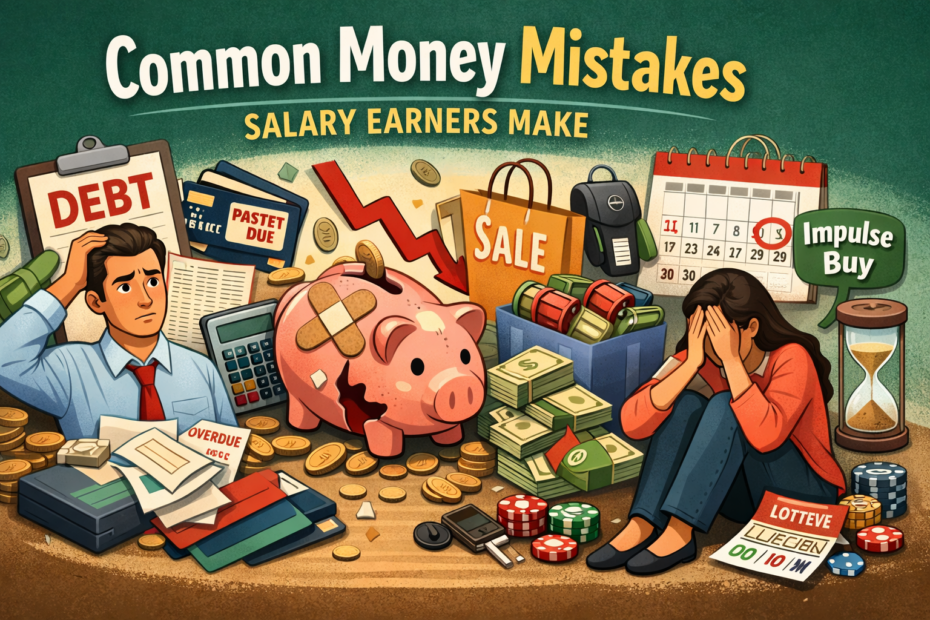
For many salary earners, receiving a steady paycheck brings a sense of security and stability. Yet, despite this regular income, a surprising number still struggle to build savings, manage expenses, or achieve long-term financial goals.
The problem is often not how much they earn, but how they manage what they earn. From living without a clear budget to spending beyond their means, these common money mistakes can quietly undermine financial progress over time.
In today’s fast-paced world, where expenses are constantly rising and social pressures influence spending habits, it is easy to fall into unhealthy financial patterns.
Many individuals prioritize immediate comfort over future security, leaving themselves vulnerable to unexpected financial challenges. Without proper planning and discipline, even a good salary can disappear quickly.
This article explores some of the most common money mistakes salary earners make and offers insights on how to avoid them, helping individuals take better control of their financial future.
Common Money Mistakes Salary Earners Make
1. Living Without a Budget
One of the most common financial mistakes salary earners make is living without a clear budget. While earning a steady income provides a sense of comfort, many people fail to track how that money is actually spent.
Without a system to monitor income and expenses, it becomes easy to overspend on non-essential items. At the end of the month, this often leads to the familiar frustration of wondering, “Where did all my money go?”
The absence of a budget creates a lack of financial awareness and control. Small, frequent expenses—like eating out, subscriptions, or impulse purchases—gradually add up and consume a large portion of income.
Over time, this habit prevents individuals from saving, investing, or preparing for emergencies. Even high earners can find themselves financially strained simply because they do not manage their cash flow effectively.
Creating a budget does not have to be complicated. It simply means giving every naira a purpose before it is spent. One popular and easy method is the 50/30/20 rule, where 50% of income goes to needs, 30% to wants, and 20% to savings or investments. This approach helps maintain balance while encouraging financial discipline.
Practical Tips to Fix This:
Track your income and expenses weekly or monthly
Use budgeting apps or a simple notebook to monitor spending
Apply the 50/30/20 rule as a starting guide
Set spending limits for non-essential items
Review and adjust your budget regularly
By maintaining a budget, salary earners can gain better control over their finances and make more intentional financial decisions.
2. Spending Everything You Earn
Another common mistake salary earners make is spending everything they earn, especially as their income increases. This is often driven by lifestyle inflation—the tendency to upgrade one’s lifestyle whenever there is a salary raise or new source of income.
Instead of using the extra money to build savings or investments, many people increase their spending on better gadgets, more expensive clothes, dining out, or a more luxurious lifestyle. While these upgrades may feel rewarding in the moment, they can quietly prevent long-term financial growth.
The danger of this habit is that it creates an illusion of progress without actual financial stability. Even with a higher salary, there may be little or nothing left at the end of the month.
Over time, this leaves individuals unprepared for emergencies and unable to take advantage of investment opportunities. Essentially, income grows, but financial security does not.
A key principle to break this cycle is “pay yourself first.” This means setting aside a portion of your income for savings or investments immediately after receiving your salary—before spending on anything else. By doing this consistently, you ensure that your future financial needs are prioritized over present wants.
Practical Tips to Fix This:
Automatically transfer a fixed percentage of your salary to savings as soon as you’re paid
Increase your savings rate whenever your income rises
Avoid unnecessary lifestyle upgrades after every raise
Set clear financial goals to stay motivated
Differentiate between needs and wants before spending
By controlling lifestyle inflation and prioritizing savings, salary earners can turn increased income into real financial progress rather than temporary comfort.
3. Not Having an Emergency Fund
Many salary earners overlook the importance of having an emergency fund, often assuming their monthly income will always cover their needs. However, life is unpredictable.
Unexpected expenses such as medical bills, job loss, urgent repairs, or family emergencies can arise at any time. Without a financial safety net, these situations can quickly turn into serious financial crises.
An emergency fund is money set aside specifically to handle unforeseen circumstances without disrupting your daily life or long-term goals. Financial experts commonly recommend saving at least three to six months’ worth of living expenses.
This cushion provides enough support to cover essential needs like rent, food, and transportation if your income is suddenly interrupted. Without it, many people are forced to borrow money, rely on high-interest loans, or sell valuable assets just to stay afloat.
The real-life consequences of not having an emergency fund can be severe. A single unexpected event can wipe out savings, push individuals into debt, or create long-term financial instability.
It can also lead to stress and anxiety, affecting both personal well-being and productivity at work. In contrast, having an emergency fund provides peace of mind and greater financial confidence, knowing you are prepared for the unexpected.
Practical Tips to Fix This
:Start small by saving a portion of your income regularly
Aim to build at least 3–6 months of essential expenses over time
Keep your emergency fund in a separate, easily accessible account
Avoid using the fund for non-emergencies
Replenish the fund immediately after using it
Building an emergency fund may take time, but it is one of the most important steps toward achieving financial stability and security.
4. Misusing Credit (or Borrowing Too Much)
Access to credit can be helpful, but when misused, it becomes a major financial trap for many salary earners. It often starts with small, convenient options like salary advances, personal loans, or credit purchases.
Over time, this can turn into a habit of relying on borrowed money to meet regular expenses. Instead of using credit as a tool, many people begin to depend on it for survival.
The biggest issue with excessive borrowing is the cost of interest. Every time money is borrowed, it usually comes with added charges that increase the total amount to be repaid.
This means you are not only spending future income but also losing a portion of it to interest payments. As debts accumulate, a significant part of your salary may go toward repayments, leaving little room for savings or essential expenses.
Living on borrowed money creates a dangerous cycle. You take a loan to solve a current problem, then need another loan to cover previous debts or ongoing needs.
Over time, this can lead to financial stress, damaged credit reputation, and limited financial freedom. What once felt like a quick solution becomes a long-term burden.
Practical Tips to Fix This:
Borrow only when absolutely necessary, not for lifestyle expenses
Understand the full cost of any loan, including interest and fees
Avoid taking multiple loans at the same time
Create a repayment plan and prioritize clearing existing debts
Build an emergency fund to reduce reliance on borrowing
By using credit wisely and limiting unnecessary borrowing, salary earners can avoid debt traps and maintain better control over their financial future.
5. Not Investing Early
One major mistake many salary earners make is delaying investment and keeping all their money in a regular savings account. While saving is important, it is not enough to build long-term wealth.
Savings alone often earn little or no meaningful returns, especially when compared to the rising cost of living. As a result, money kept idle gradually loses its value over time.
The biggest disadvantage of not investing early is missing out on the power of compound growth. Compounding allows your money to grow not only on the initial amount you invest but also on the returns it generates over time.
The earlier you start, the more time your money has to grow. Delaying even by a few years can significantly reduce the potential value of your investments in the future.
Many people avoid investing because they believe it is complicated or risky. However, there are simple and beginner-friendly options available.
Investments such as stocks, mutual funds, or index funds allow individuals to grow their wealth gradually over time.
With proper knowledge and a long-term mindset, investing can become a powerful tool for financial security.
Practical Tips to Fix This:
Start investing as early as possible, even with small amounts
Learn the basics of investment options like stocks and mutual funds
Diversify your investments to reduce risk
Be consistent—invest regularly, not just occasionally
Focus on long-term growth rather than quick profits
By starting early and staying consistent, salary earners can take full advantage of compound growth and build a stronger financial future.
6. Impulse Buying & Poor Spending Habits
Impulse buying is a common challenge for many salary earners, often driven by emotions, social pressure, or convenience. It involves making unplanned purchases without carefully thinking about their necessity or long-term impact.
With the rise of online shopping, flash sales, and targeted advertisements, it has become even easier to spend money instantly with just a few clicks. Many people also feel pressured to keep up with friends, trends, or social media lifestyles, leading them to buy things they do not truly need.
While a single impulsive purchase may seem harmless, the real problem lies in the accumulation of these “small small” expenses. Frequent spending on snacks, subscriptions, ride-hailing, or random online deals can quietly drain a large portion of income.
Over time, these habits reduce the ability to save or invest, even when income is stable. Worse still, many of these purchases provide only temporary satisfaction, leaving behind financial regret.
Poor spending habits often reflect a lack of discipline and awareness. When money is spent based on feelings rather than priorities, it becomes difficult to achieve meaningful financial goals.
Controlling impulse buying is not about depriving yourself, but about making more intentional and thoughtful decisions with your money.
Practical Tips to Fix This:
Practice the “24-hour rule” before making non-essential purchases
Create a shopping list and stick to it
Avoid browsing shopping apps or websites unnecessarily
Set a monthly limit for discretionary spending
Track small expenses to see how much they add up over time
By becoming more mindful of spending habits, salary earners can reduce wasteful expenses and direct their money toward more important financial goals.
7. Ignoring Financial Planning
A common mistake many salary earners make is ignoring financial planning altogether. Without clear goals, income often becomes a cycle of earning and spending with no direction or purpose.
People may focus solely on meeting immediate needs or desires, neglecting larger objectives such as buying a home, preparing for retirement, or starting a business. Over time, this lack of planning can lead to missed opportunities and financial stress.
Financial planning is not just about saving money—it is about setting both short-term and long-term goals, understanding how much money you need to achieve them, and creating a realistic roadmap to get there.
Short-term goals, such as clearing debts, building an emergency fund, or saving for a vacation, provide motivation and financial discipline.
Long-term goals, like purchasing property, funding children’s education, or securing a comfortable retirement, require consistent planning and investment. Ignoring these can leave you financially vulnerable and unprepared for life’s milestones.
Without a plan, it is easy to fall into bad habits such as overspending, relying on credit, or delaying investments.
Conversely, having a well-thought-out financial plan provides direction, clarity, and confidence. It allows you to make intentional decisions rather than reacting to circumstances, giving your money purpose and meaning.
Practical Tips to Fix This:
Set clear financial goals, both short-term (0–2 years) and long-term (5+ years)
Break down each goal into actionable steps with timelines
Track progress regularly and adjust your plan when necessary
Use tools like budgeting apps, spreadsheets, or financial advisors for guidance
Prioritize goals based on urgency and importance
By actively planning your finances, salary earners can turn income into a tool for growth, security, and achieving life ambitions.
8. Not Having Insurance
Many salary earners overlook the importance of insurance, seeing it as an unnecessary expense rather than a critical financial safety net. This includes health insurance, life insurance, or other forms of coverage that protect against unexpected risks.
Without insurance, a single unforeseen event—such as a serious illness, accident, or even the loss of a loved one—can quickly wipe out years of savings, leaving families financially vulnerable.
Insurance serves as a form of risk protection, transferring potential financial burdens from an individual to an insurance provider. Health insurance, for example, ensures that medical bills are covered in case of illness or injury, preventing catastrophic out-of-pocket costs.
Life insurance protects dependents in the event of the policyholder’s death, helping cover expenses like mortgages, education, or daily living costs. Essentially, insurance acts as a safety net that safeguards both your present and future financial stability.
The problem is that many people delay getting coverage because premiums are seen as a recurring expense.
They underestimate the potential impact of emergencies or believe such events “won’t happen to me.” Unfortunately, this mindset often leads to financial distress when unexpected situations arise.
Practical Tips to Fix This:
Assess your personal and family risks to determine the type of insurance you need
Prioritize essential coverage: health and life insurance
Compare different insurance plans to find affordable premiums and sufficient benefits
Review and update your policies as your life circumstances change
Treat insurance premiums as non-negotiable expenses, just like rent or utilities
By having the right insurance coverage, salary earners can protect their savings, reduce financial stress, and ensure they are prepared for life’s uncertainties.
9. Trying to Impress Others
A subtle but damaging mistake many salary earners make is spending money to impress others. Whether it’s buying the latest smartphone, wearing designer clothes, or maintaining a lifestyle that appears “luxurious” on social media, the pressure to keep up with peers can be overwhelming.
This desire to project success often comes at the expense of financial stability. People focus on outward appearances rather than their actual financial health, falling into what is sometimes called the “soft life” trap—living comfortably on the surface but without long-term security.
Social pressure and comparison are powerful motivators. Seeing friends, colleagues, or influencers showcase expensive purchases can trigger a feeling of inadequacy, leading individuals to spend beyond their means.
The result is often debt accumulation, depletion of savings, and a sense of financial anxiety. While appearing successful may provide short-term satisfaction or social validation, it rarely contributes to true wealth or independence.
Breaking free from this pattern requires conscious awareness and intentional spending. Financial decisions should be guided by personal goals rather than external expectations. Learning to prioritize needs over wants is crucial, as is understanding the long-term impact of every purchase.
Practical Tips to Fix This:
Focus on your financial goals, not the lifestyles of others
Practice gratitude for what you already have
Avoid keeping up with social media trends that encourage unnecessary spending
Set limits for discretionary spending and stick to them
Celebrate financial milestones privately rather than through costly displays
By resisting the urge to impress others, salary earners can redirect money toward savings, investments, and experiences that genuinely add value, rather than temporary social approval.
10. Delaying Retirement Planning
One of the most common mistakes salary earners make is postponing retirement planning, often believing it’s something to think about later in life. Many assume that retirement is far off and that their current income and savings are sufficient.
However, delaying even by a few years can significantly reduce the benefits of long-term growth, making it harder to achieve financial security in retirement.
The key advantage of starting early lies in the power of compound growth. When you invest even a small amount consistently over a long period, the returns begin to generate earnings of their own, gradually building substantial wealth.
For example, someone who starts saving a modest sum in their twenties can accumulate significantly more by retirement than someone who starts much later—even if the later saver contributes larger amounts. Time is the most powerful ally when it comes to building a comfortable retirement fund.
Neglecting retirement planning can lead to unpleasant consequences: financial dependence on family, reduced lifestyle quality in later years, or the need to work longer than desired.
Early planning ensures that you maintain independence, enjoy a comfortable lifestyle, and have resources for emergencies without stress.
Practical Tips to Fix This:
Start contributing to retirement accounts as early as possible, even with small amounts
Take advantage of employer pension plans or retirement schemes
Consider investment options like mutual funds, stocks, or government bonds to grow retirement savings
Increase contributions gradually as your salary rises
Review your retirement plan annually and adjust it to meet your future goals
By taking action now, salary earners can turn small early contributions into a secure and comfortable retirement, avoiding the financial strain of starting too late.
11. Relying on One Source of Income
Many salary earners make the mistake of depending solely on their monthly paycheck, believing that a stable job is enough to secure their financial future.
While having a regular income provides comfort, relying entirely on one source of earnings is risky. Unexpected events—such as job loss, company downsizing, or economic downturns—can disrupt this income stream and leave individuals financially vulnerable.
The salary-only mindset also limits wealth-building opportunities. Earning a single income means growth is often capped by promotions, raises, or overtime.
Without alternative income streams, it becomes difficult to save aggressively, invest meaningfully, or achieve larger financial goals like starting a business, purchasing property, or building substantial retirement funds. In today’s dynamic economy, multiple streams of income are not just advantageous—they are increasingly necessary.
Developing additional income sources doesn’t require abandoning your full-time job. Side hustles, freelance work, passive income through investments, or small business ventures can supplement your salary and provide extra financial security. Diversifying income reduces dependence on one source and offers a buffer against unexpected financial shocks.
Practical Tips to Fix This:
Identify skills or hobbies that can generate extra income outside your job
Explore passive income options like dividend-paying stocks, rental property, or online businesses
Start small to test what works before scaling up
Allocate additional earnings toward savings and investments
Regularly review income sources and adjust strategies to maintain growth
By diversifying income, salary earners can reduce financial risk, increase wealth potential, and gain greater independence, ensuring that they are not left stranded if their primary salary is disrupted.
12. Lack of Financial Education
One of the most overlooked mistakes salary earners make is neglecting financial education. Many assume that simply earning a salary is enough to manage money effectively.
However, without understanding basic principles of budgeting, saving, investing, and debt management, it’s easy to make poor financial decisions—even with a decent income.
This lack of knowledge can lead to overspending, accumulating unnecessary debt, missing investment opportunities, and failing to plan for the future.
Financial literacy is not just about knowing how to make money—it’s about making your money work for you. Understanding concepts like compound interest, risk management, asset allocation, and tax planning allows individuals to make informed decisions and avoid costly mistakes. Those who ignore this often rely on trial and error, learning hard lessons only after experiencing financial setbacks.
Fortunately, financial education is accessible to anyone willing to take the initiative. Books, online courses, podcasts, blogs, and mentorship programs provide practical knowledge that can be applied immediately.
Learning from experts and those who have successfully managed their finances helps avoid common pitfalls and accelerates financial growth.
Practical Tips to Fix This:
Commit to reading at least one personal finance book or article per month
Take online courses or attend workshops on budgeting, investing, and wealth management
Follow trusted financial blogs or podcasts to stay updated
Seek mentorship from financially knowledgeable individuals
Apply learned concepts consistently and review your progress regularly
By investing in financial education, salary earners can make smarter decisions, avoid common money mistakes, and build a secure and prosperous financial future.
Conclusion
Avoiding common money mistakes is essential for achieving financial stability and long-term wealth.
Salary earners who budget wisely, save consistently, invest early, and protect themselves with insurance are better equipped to handle life’s uncertainties.
By resisting the urge to overspend, rely solely on credit, or chase appearances, individuals can make their money work for them rather than the other way around.
Building financial knowledge, setting clear goals, and planning for the future empower people to take control of their finances.
Developing these habits today ensures security, independence, and the ability to achieve both short-term and long-term financial aspirations.