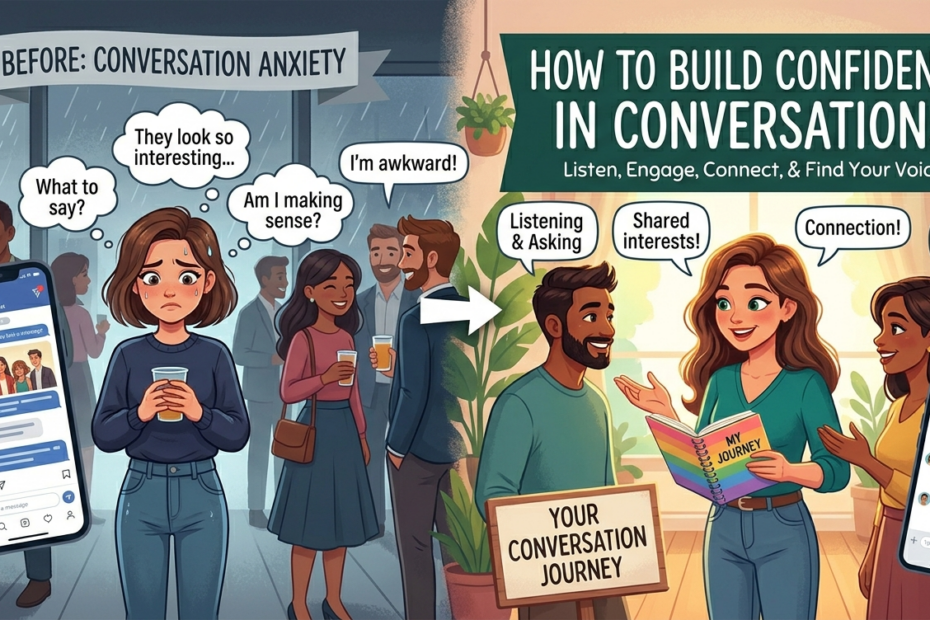
Have you ever found yourself freezing mid-sentence, stumbling over words, or wishing you could just disappear during a conversation? You’re not alone.
Many people feel nervous or tongue-tied when talking to new people, colleagues, or even friends. This anxiety can make social interactions stressful and sometimes lead to missed opportunities, both personally and professionally.
The good news is that confidence in conversations is not an innate talent—it’s a skill that can be developed. When you learn how to build confidence in conversations, you unlock a range of benefits: smoother interactions, stronger relationships, better networking opportunities, and even enhanced career growth.
Confident communicators are often perceived as trustworthy, competent, and approachable, which can positively impact both personal and professional life.
The key lies in understanding the causes of your anxiety, practicing effective communication techniques, and cultivating a positive mindset. With consistent effort and the right strategies, anyone can speak clearly, assertively, and comfortably, transforming even the most intimidating conversations into opportunities to connect and impress.
Understand the Root of Your Conversation Anxiety
Feeling nervous during conversations is more common than you might think. Most people experience this anxiety due to a combination of factors such as fear of judgment, past negative experiences, or self-doubt.
You might worry about saying the wrong thing, being misunderstood, or appearing awkward, which can make even simple interactions feel stressful. Understanding why you feel this way is the first step to overcoming it.
Self-reflection exercises can help uncover the root causes of your anxiety. Start by asking yourself questions like:
-
What specific situations make me feel most nervous?
-
Are there past experiences that influence my current reactions?
-
What negative thoughts come to mind before or during conversations?
Keeping a journal of your thoughts and experiences during conversations can reveal patterns and triggers. Once you identify these factors, you can work on targeted strategies to overcome conversation anxiety and gradually build your confidence.
Recognizing why people feel nervous talking is empowering—it turns vague discomfort into actionable insight, giving you a foundation to improve your communication skills.
Improve Your Communication Skills
Building confidence in conversations isn’t just about overcoming nerves—it’s also about how effectively you communicate. By honing key communication skills, you can make interactions smoother, more engaging, and more confident. Here are some essential areas to focus on:
-
Active Listening: Pay full attention to the person speaking instead of thinking about your response while they talk. Nod, give verbal acknowledgments, and ask clarifying questions. Active listening not only makes the conversation flow naturally but also demonstrates respect and interest.
-
Body Language: Non-verbal cues speak louder than words. Maintain good eye contact, stand or sit upright, and use natural gestures. Avoid crossing your arms or looking away too often, as these can signal disinterest or insecurity.
-
Tone and Pace: Speak clearly and at a moderate pace. Avoid rushing your words, mumbling, or using a monotone voice. A calm, controlled tone helps you appear more confident and makes it easier for others to understand you.
Mastering these communication skills gradually reduces anxiety and reinforces your ability to build confidence in conversations, making each interaction feel more natural and rewarding.
Practice Makes Perfect
One of the most effective ways to build confidence in conversations is consistent practice. Like any skill, communication improves the more you do it, so starting small can make a big difference.
-
Start Small: Begin by talking to friends, family, or colleagues in low-pressure situations. Casual conversations allow you to experiment with new techniques and build comfort gradually.
-
Role-Playing and Mirror Practice: Practicing conversations through role-playing exercises can prepare you for real-life scenarios. You can also practice in front of a mirror to observe your body language, tone, and facial expressions, helping you fine-tune your delivery.
-
Join Public Speaking Clubs: Organizations like Toastmasters provide a supportive environment to practice speaking in front of groups, receive constructive feedback, and develop confidence in social interactions.
By consistently practicing, you can reduce anxiety, improve your communication skills, and gradually gain confidence in social interactions. Over time, even previously intimidating conversations can feel manageable and natural.
Positive Mindset and Self-Talk
Developing a positive mindset is a crucial step in learning how to build confidence in conversations. Your thoughts play a powerful role in shaping how you feel and act during interactions. By replacing negative self-talk with encouraging and constructive thoughts, you can reduce anxiety and approach conversations with assurance.
-
Replace Negative Thoughts: Notice when self-doubt or fear creeps in, and consciously replace statements like “I’ll mess this up” with “I can handle this conversation.”
-
Visualization: Spend a few minutes each day imagining successful conversations. Picture yourself speaking clearly, listening actively, and responding confidently. Visualization helps train your mind for real-life scenarios.
-
Daily Affirmations: Use positive affirmations to reinforce self-esteem. Simple statements such as “I am a confident communicator” or “I express myself clearly and calmly” can gradually shift your mindset over time.
By consistently practicing these techniques, you’ll find that conversations become less intimidating, and your confidence grows naturally, making interactions more enjoyable and effective.
Use Conversation Starters and Questions
A simple way to build confidence in conversations is to prepare engaging conversation starters. These help reduce awkward pauses and make interactions flow more smoothly. People naturally enjoy talking about themselves, so showing genuine curiosity can make any conversation more comfortable and rewarding.
-
Start with Open-Ended Questions: Instead of yes/no questions, ask questions that encourage elaboration. Examples include:
-
“What’s the most exciting thing you did this week?”
-
“How did you get interested in your hobby?”
-
“What’s something you’re proud of accomplishing recently?”
-
-
Show Curiosity and Listen Actively: Follow up on their answers with related questions or comments. This not only keeps the conversation going but also demonstrates that you value their perspective.
Using thoughtful conversation starters and expressing genuine curiosity helps you feel more in control during interactions. Over time, these techniques strengthen your communication skills and naturally boost your confidence in social situations.
Handling Awkward Moments Gracefully
Even the most confident communicators experience awkward moments. Pauses, slip-ups, or unexpected questions are natural parts of any conversation. The key is not to let these moments undermine your confidence. By handling them gracefully, you can maintain composure and continue the interaction smoothly.
-
Don’t Overthink Mistakes: Everyone makes errors or hesitates occasionally. Accepting this as normal helps reduce anxiety and prevents overreacting.
-
Use Humor: A light-hearted joke or playful comment can diffuse tension and show that you’re comfortable, even when things don’t go perfectly.
-
Acknowledge and Move On: If you stumble over words or lose your train of thought, a simple acknowledgment like “Sorry, let me rephrase that” works well. Then steer the conversation back on track.
-
Change the Topic if Needed: Smoothly transition to another subject to keep the conversation flowing and maintain engagement.
By applying these techniques, you can transform potentially stressful situations into opportunities to demonstrate poise and confidence, reinforcing your ability to build confidence in conversations over time.
Conclusion
Building confidence in conversations is a skill anyone can develop with the right approach. By focusing on a positive mindset, practicing regularly, and refining your communication skills—including active listening, body language, and tone—you can gradually transform nervous interactions into confident, engaging conversations.
Starting small, such as speaking with friends or practicing in front of a mirror, allows you to gain comfort and experience before tackling more challenging social situations.
Remember, every conversation is an opportunity to grow. By applying these strategies consistently, you can reduce anxiety, handle awkward moments gracefully, and strengthen your overall confidence. With time and persistence, anyone can build confidence in conversations, making social interactions more enjoyable, rewarding, and impactful.