Skip to content
Home » How to Build Emotional Intelligence Gradually

How to Build Emotional Intelligence Gradually

    Emotional intelligence (EI) is the ability to recognize, understand, and manage your own emotions while also perceiving and influencing the emotions of others. It plays a crucial role in building strong relationships, making thoughtful decisions, and handling life’s challenges with resilience.

    Unlike technical skills or knowledge that can be learned quickly, developing emotional intelligence is a gradual process that requires consistent practice and self-reflection.

    Trying to rush this growth often leads to frustration or superficial results. Learning how to build emotional intelligence gradually allows you to cultivate self-awareness, empathy, and emotional regulation in manageable steps, making the changes more sustainable and meaningful.

    By taking small, intentional actions each day, you can steadily enhance your emotional skills and experience long-term personal and professional growth.

    Understand Your Current Emotional Intelligence

    The first step in improving emotional intelligence is understanding your starting point. Self-assessment helps you identify your strengths and areas that need improvement, setting the stage for gradual, meaningful growth. By evaluating how you respond to emotions—both your own and others’—you can gain valuable insights into your emotional patterns and triggers.

    Several tools can help with this self-assessment. Online emotional intelligence quizzes provide a structured way to measure your EI across key areas like self-awareness, empathy, and social skills.

    Journaling your daily emotions is another effective method. By consistently recording how you feel in different situations and reflecting on your reactions, you can increase your emotional awareness over time.

    This initial step is crucial because it transforms abstract ideas about emotions into actionable insights. Understanding where you currently stand enables you to focus on practical strategies, helping you make steady progress on how to build emotional intelligence gradually. Regular self-reflection ensures that your growth is intentional and sustainable.

    Start With Self-Awareness

    Developing self-awareness is the foundation of emotional intelligence. It involves recognizing your emotions as they arise and understanding how they influence your thoughts and actions.

    By practicing self-awareness consistently, you can respond to situations more thoughtfully rather than reacting impulsively. Here are practical techniques to help you cultivate this essential skill:

    • Mindfulness: Spend a few minutes each day observing your thoughts and emotions without judgment. Mindfulness meditation can help you become more present and aware of subtle emotional shifts.

    • Daily Reflection: Set aside time each evening to review your day. Ask yourself questions like: “What emotions did I experience today?” or “How did I respond to challenging situations?”

    • Mood Tracking: Keep a simple journal or use apps to record your emotions throughout the day. Tracking patterns over time helps you identify triggers and recurring emotional responses.

    By integrating these practices into your routine, you can gradually enhance your emotional awareness, a key step in learning how to build emotional intelligence gradually.

    Practice Self-Regulation

    Once you have developed self-awareness, the next step is learning to manage your emotions effectively. Self-regulation allows you to respond to situations thoughtfully rather than reacting impulsively, which is essential for personal and professional growth. Gradually improving this skill ensures lasting change without overwhelming yourself.

    Here are practical strategies to gradually improve emotional regulation:

    • Pause Before Responding: When faced with a strong emotion, take a moment before reacting. This brief pause can prevent hasty decisions and reduce conflict.

    • Breathing Exercises: Deep, controlled breathing helps calm your nervous system and bring clarity to your thoughts, making it easier to manage intense emotions.

    • Reframe Your Thoughts: Shift your perspective by focusing on solutions instead of dwelling on negative emotions. Ask yourself, “What can I learn from this situation?”

    By practicing these techniques consistently, you can slowly build the ability to regulate emotions in any scenario, reinforcing your journey on how to build emotional intelligence gradually.

    Develop Empathy

    Empathy is the ability to understand and share the feelings of others, a key component of emotional intelligence. Developing empathy takes time, as it requires observing, listening, and genuinely connecting with people’s experiences. By practicing empathy gradually, you can strengthen your relationships and enhance your emotional awareness.

    Here are effective ways to cultivate empathy over time:

    • Listen Actively: Give your full attention when someone is speaking. Avoid interrupting, and reflect back what you hear to ensure understanding.

    • Observe Body Language: Pay attention to non-verbal cues like facial expressions, posture, and tone of voice. These often reveal emotions that words alone may not express.

    • Ask Open Questions: Encourage others to share more about their feelings by asking questions like, “How did that situation make you feel?”

    For example, imagine a colleague seems unusually quiet during a team meeting. Instead of assuming disinterest, you could ask, “I noticed you’ve been quiet today—how are you feeling?” This simple act demonstrates empathy and builds trust over time.

    Practicing these strategies consistently helps you gradually improve emotional intelligence, particularly in understanding and connecting with others.

    Strengthen Social Skills Gradually

    Strong social skills are essential for building meaningful relationships and navigating personal and professional interactions effectively. Developing these skills takes time, and gradual improvement ensures that your communication becomes natural and impactful.

    Here are practical strategies to strengthen your social skills step by step:

    • Take Small Steps in Teamwork: Start by contributing ideas in group settings or offering help on small tasks. Gradual participation builds confidence and strengthens collaboration skills.

    • Give Constructive Feedback: Practice offering feedback in a positive, solution-focused way. Highlight strengths before addressing areas for improvement to maintain trust and respect.

    • Engage in Networking: Attend events or online communities and start by making small connections. Focus on active listening and genuine curiosity rather than quantity.

    By consistently applying these techniques, you can enhance your ability to communicate, collaborate, and resolve conflicts effectively. Over time, these small, intentional actions contribute significantly to gradually improving emotional intelligence.

    Practice Emotional Intelligence Daily

    Consistent practice is key to developing emotional intelligence. By incorporating small, daily exercises into your routine, you can reinforce self-awareness, empathy, and emotional regulation over time. The goal is steady, sustainable growth rather than rapid changes.

    Here are simple exercises to practice daily:

    • Journaling: Write down your emotions, thoughts, and reactions to daily events. Reflecting on these entries helps you identify patterns and triggers.

    • Reflecting on Interactions: At the end of each day, consider how your interactions went. Ask yourself what went well and what could be improved in managing your emotions.

    • Practicing Gratitude: Take a moment each day to note things you are grateful for. Gratitude enhances positivity and emotional resilience.

    By committing to these small, consistent habits, you can see noticeable improvements in your emotional skills over time. Learning how to build emotional intelligence gradually ensures that your growth is meaningful, sustainable, and deeply integrated into your daily life.

    Monitor Your Progress

    Tracking your growth is essential to ensure that your efforts in developing emotional intelligence are effective. Revisiting your initial self-assessment after a few months allows you to see how far you’ve come and identify areas that still need improvement.

    Here are ways to monitor your progress effectively:

    • Reassess Your Emotional Intelligence: Take the same EI quizzes or journaling exercises you used at the beginning. Compare your results to identify growth in self-awareness, empathy, and emotional regulation.

    • Celebrate Small Improvements: Recognize and appreciate even minor advancements. Whether it’s handling a difficult conversation better or responding more calmly to stress, acknowledging progress reinforces positive habits.

    See also  How to make passive income in Nigeria in 2026

    By consistently monitoring and celebrating your progress, you reinforce the practices that contribute to lasting change. This reflection ensures that your journey on how to build emotional intelligence gradually is both measurable and motivating, helping you stay committed to personal growth.

    Conclusion

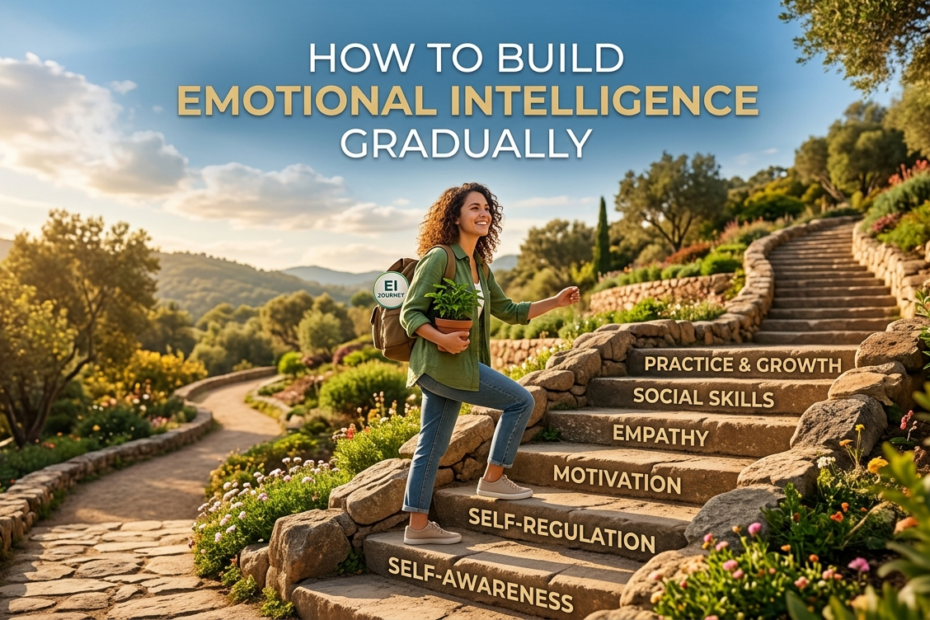
    Building emotional intelligence is a journey that requires patience, self-reflection, and consistent effort. By starting with self-awareness, practicing self-regulation, developing empathy, strengthening social skills, and incorporating daily exercises, you can gradually enhance your ability to understand and manage emotions. Monitoring your progress and celebrating small improvements ensures that your growth is meaningful and sustainable.

    Remember, emotional intelligence isn’t developed overnight. Each small step you take contributes to long-term personal and professional success. Start today, and see how gradually building emotional intelligence transforms your relationships and personal growth. By committing to these strategies, you can cultivate stronger connections, make better decisions, and navigate life with greater confidence and resilience.

    Frequently Asked Questions

    How to slowly develop emotional intelligence?

    Emotional intelligence develops gradually through self-awareness, practice, and reflection, not overnight. The first step is learning to notice your emotions in real time. Many people react automatically without understanding what they are feeling. Start by pausing during emotional moments and asking yourself, “What exactly am I feeling right now, and why?”

    Next, practice naming your emotions accurately. Instead of just saying “I’m upset,” try identifying whether you are frustrated, disappointed, anxious, or overwhelmed. This helps you understand yourself better and respond more thoughtfully.

    Another important step is improving self-control in reactions. Emotional intelligence grows when you learn to pause before reacting. Even a few seconds of delay can help you respond more calmly instead of impulsively.

    You should also work on understanding other people’s perspectives. Try to listen more and judge less. When someone speaks, focus on their feelings and intentions, not just their words.

    Reflection is also key. At the end of the day, think about emotional situations you experienced and how you handled them. Ask yourself what you could improve next time.

    Over time, emotional intelligence becomes stronger through daily habits like mindfulness, better communication, and emotional awareness. It is not about suppressing emotions, but understanding and managing them effectively.

    What are 7 signs of low emotional intelligence?

    Low emotional intelligence shows up in how a person thinks, reacts, and interacts with others. One common sign is frequent emotional outbursts, where small issues lead to strong or uncontrolled reactions.

    Another sign is difficulty understanding other people’s feelings. People with low emotional intelligence often struggle with empathy and may dismiss or misunderstand others’ emotions.

    A third sign is blaming others instead of taking responsibility. They may avoid accountability and find it hard to admit mistakes.

    Fourth is poor communication skills, especially during conflicts. They may become defensive, aggressive, or shut down instead of expressing themselves clearly.

    Fifth, there is often lack of self-awareness. Such individuals may not recognize how their behavior affects others.

    Sixth is difficulty handling criticism. Even constructive feedback may be taken personally and lead to anger or frustration.

    Seventh is impulsive decision-making, where actions are driven by emotion rather than logic.

    These signs do not mean a person cannot improve. Emotional intelligence is a skill that can be developed with awareness and practice over time.

    What are the 4 skills of emotional intelligence?

    Emotional intelligence is built on four core skills: self-awareness, self-management, social awareness, and relationship management.

    Self-awareness is the ability to recognize and understand your own emotions. It involves knowing how you feel and how those feelings influence your thoughts and behavior.

    Self-management is the ability to control your emotional reactions. It helps you stay calm under pressure, avoid impulsive actions, and handle stress effectively.

    Social awareness involves understanding the emotions of others. This includes empathy—being able to recognize what other people are feeling even if they don’t say it directly.

    Relationship management is the ability to build healthy interactions with others. It includes communication, conflict resolution, teamwork, and maintaining strong relationships.

    Together, these four skills help a person navigate both personal and social situations effectively. Developing them leads to better communication, stronger relationships, and improved decision-making in everyday life.

    What are 5 signs of someone that is emotionally intelligent?

    Emotionally intelligent people display consistent behaviors that show awareness, control, and understanding of emotions.

    1. They stay calm under pressure.
    Instead of reacting impulsively, they think before responding, even in stressful situations.

    2. They are good listeners.
    They focus on understanding others instead of just waiting for their turn to speak.

    3. They handle criticism well.
    Instead of becoming defensive, they view feedback as an opportunity to improve.

    4. They show empathy.
    They can understand and relate to other people’s emotions, even if they don’t agree with them.

    5. They communicate clearly and respectfully.
    They express their thoughts in a way that is honest but not hurtful.

    These signs reflect strong emotional control and awareness. Emotionally intelligent people are not emotionless—they simply understand and manage emotions better than others.

    What are 5 things a person can do to increase their emotional intelligence?

    Emotional intelligence can be developed through consistent practice and self-improvement. One important step is practicing self-awareness, which involves regularly checking your emotions and understanding what triggers them.

    Second, improve active listening skills. Instead of thinking about your response while someone is speaking, focus fully on understanding their message and feelings.

    Third, develop emotional regulation techniques such as deep breathing, pausing before reacting, or stepping away from stressful situations. This helps you avoid impulsive decisions.

    Fourth, practice empathy daily. Try to see situations from other people’s perspectives. Ask yourself how they might be feeling and why.

    Fifth, engage in self-reflection. At the end of each day, think about your emotional reactions and how you handled them. Identify what you did well and what you can improve.

    Over time, these habits strengthen emotional intelligence. It is not a fixed trait—it is a skill that grows with awareness, patience, and consistent practice.

    Which is stronger, EQ or IQ?

    IQ (Intelligence Quotient) and EQ (Emotional Quotient) measure different kinds of abilities, so saying one is absolutely “stronger” than the other is not entirely accurate. However, in real-life success, EQ is often more influential than IQ.

    IQ mainly measures cognitive abilities like logical reasoning, problem-solving, memory, and analytical thinking. It is very important in academics, exams, and technical careers where structured thinking is required.

    EQ, on the other hand, measures how well you understand, manage, and respond to emotions—both your own and other people’s. It affects communication, relationships, leadership, stress management, and decision-making under pressure.

    In school or exams, IQ may play a bigger role. But in life, work, and relationships, EQ often becomes more important. For example, a highly intelligent person may struggle in teamwork or leadership if they cannot manage emotions or communicate well.

    The most successful individuals usually have a balance of both—IQ helps them solve problems, while EQ helps them work with people, handle stress, and make better decisions.

    See also  How to Sell Beauty and Skincare Products Online in Nigeria: A Complete Guide

    In simple terms, IQ may help you get opportunities, but EQ helps you succeed in those opportunities.

    How to tell if someone has no emotional intelligence?

    A person with very low emotional intelligence usually shows clear patterns in how they behave and interact with others. One major sign is frequent overreaction to small situations. They may get angry, defensive, or upset easily without controlling their emotions.

    Another sign is lack of empathy. They struggle to understand how others feel and may dismiss or ignore other people’s emotions completely.

    They also often have poor communication skills, especially during conflict. Instead of discussing issues calmly, they may argue, blame, or shut down conversations.

    Another strong indicator is difficulty accepting feedback. Even constructive criticism is often taken personally, leading to frustration or anger.

    They may also show poor self-awareness, meaning they don’t recognize how their actions affect others.

    Additionally, such individuals often struggle with maintaining healthy relationships, because emotional misunderstandings occur frequently.

    It is important to note that low emotional intelligence is not permanent. With awareness and practice, anyone can improve these skills over time.

    What are all 27 emotions?

    Psychologists often describe emotions in different models, but one widely referenced framework identifies 27 core emotions. These are not always universally agreed upon, but they help explain the complexity of human feelings.

    The 27 emotions include: admiration, adoration, aesthetic appreciation, amusement, anger, anxiety, awe, awkwardness, boredom, calmness, confusion, craving, disgust, empathic pain, entrancement, excitement, fear, horror, interest, joy, nostalgia, relief, romance, sadness, satisfaction, sexual desire, surprise, and triumph.

    These emotions show that human feelings are not simple—they exist in layers and combinations. For example, what we call “stress” may actually be a mix of anxiety, fear, and confusion.

    Understanding emotions in detail helps improve emotional intelligence because it allows you to identify exactly what you are feeling instead of using vague labels like “good” or “bad.”

    What are 5 ways to manage emotions?

    Managing emotions effectively is a key part of emotional intelligence. One important method is self-awareness, which involves recognizing what you are feeling before reacting. Simply naming your emotion can reduce its intensity.

    Second, use deep breathing techniques. Slow breathing helps calm the nervous system and reduces emotional intensity, especially in stressful situations.

    Third, practice delayed reaction. Instead of responding immediately when emotional, pause for a few seconds or minutes. This prevents impulsive decisions.

    Fourth, use reframing. This means changing how you interpret a situation. For example, instead of thinking “I failed,” you can think “I learned what to improve.”

    Fifth, engage in physical activity or movement. Exercise helps release built-up emotional energy and improves mental clarity.

    These methods help you stay in control of emotions rather than being controlled by them. Emotional management is a skill that improves with consistent practice.

    Do emotionally intelligent people apologize?

    Yes, emotionally intelligent people do apologize—and they often do it better than others. Apologizing is actually a strong sign of emotional intelligence, not weakness.

    People with high emotional intelligence understand their actions and how those actions affect others. When they make a mistake, they are more likely to recognize it, take responsibility, and offer a sincere apology.

    However, their apologies are usually genuine and specific, not forced or defensive. Instead of saying “I’m sorry if you felt bad,” they say things like “I’m sorry for what I said, it was wrong and I understand how it affected you.”

    Emotionally intelligent people also don’t apologize just to avoid conflict—they apologize when they truly understand they were wrong. At the same time, they avoid over-apologizing for things that are not their responsibility.

    Apologizing helps maintain healthy relationships, builds trust, and shows emotional maturity. In fact, the ability to apologize sincerely is one of the strongest indicators of emotional intelligence.

    What are the 5 pillars of emotional intelligence?

    The 5 pillars of emotional intelligence explain the core abilities that shape how we understand and manage emotions in ourselves and others. These pillars are often used in psychology and personal development to describe emotional maturity in a structured way.

    The first pillar is self-awareness, which means recognizing your own emotions, thoughts, and triggers. It is the foundation of emotional intelligence because you cannot manage what you do not understand.

    The second pillar is self-regulation, which is your ability to control emotional reactions. Instead of reacting impulsively, you pause, think, and respond in a more balanced way.

    The third pillar is motivation, which refers to your inner drive to achieve goals beyond external rewards. Emotionally intelligent people are often self-motivated and persistent even during setbacks.

    The fourth pillar is empathy, which is the ability to understand and feel what others are experiencing. It helps in building strong relationships and improving communication.

    The fifth pillar is social skills, which include communication, teamwork, conflict resolution, and building healthy relationships. This pillar focuses on how well you interact with others in daily life.

    Together, these five pillars form the structure of emotional intelligence. Improving them gradually leads to better decision-making, stronger relationships, and greater emotional balance in life.

    How to be emotionally strong?

    Being emotionally strong means having the ability to stay stable, calm, and clear-headed even during stressful or painful situations. It does not mean ignoring emotions, but rather managing them effectively.

    One key step is accepting your emotions instead of fighting them. Emotional strength starts when you allow yourself to feel sadness, anger, or frustration without judgment, then choose how to respond wisely.

    Another important habit is developing self-control. This means pausing before reacting, especially in emotionally charged situations. Even a short pause can prevent regretful decisions.

    Building emotional strength also requires healthy thinking patterns. Instead of focusing on failure or negativity, emotionally strong people look for lessons and solutions in difficult situations.

    Surrounding yourself with supportive and positive people is also important. Toxic environments weaken emotional stability, while supportive ones help you grow stronger.

    Finally, emotional strength comes from experience. Facing challenges, learning from mistakes, and continuing forward builds resilience over time.

    In short, emotional strength is built through awareness, control, mindset, and life experience.

    What is the secret to emotional intelligence?

    The secret to emotional intelligence is surprisingly simple: awareness before reaction. Most people react emotionally without understanding what they are feeling or why they are feeling it. Emotionally intelligent people pause, observe, and then respond.

    This small gap between emotion and reaction is powerful. It allows you to choose your behavior instead of being controlled by it.

    Another secret is understanding rather than judging emotions. Emotionally intelligent people do not label feelings as “good” or “bad.” Instead, they see emotions as signals that provide information.

    For example, anger may signal unfair treatment, while anxiety may signal uncertainty. When you understand emotions, you gain control over them.

    A third secret is practice through everyday situations. Emotional intelligence is not learned from theory alone; it develops through real-life interactions, mistakes, and reflection.

    Finally, emotional intelligence grows when you focus on listening more than speaking. Understanding others deeply is one of the strongest signs of emotional maturity.

    So the real secret is not complexity—it is consistent awareness, reflection, and intentional response.

    See also  How to control overthinking using simple steps

    How do you upgrade your EQ?

    Upgrading your emotional intelligence (EQ) is a gradual process that requires practice and self-reflection. The first step is to improve self-awareness. You can do this by regularly checking in with your emotions and asking yourself what you are feeling and why.

    Next, practice emotional labeling. Instead of saying “I feel bad,” try identifying whether you feel disappointed, stressed, frustrated, or anxious. This improves emotional clarity and control.

    Another powerful method is active listening. When interacting with others, focus fully on understanding their emotions instead of planning your response while they are speaking.

    You should also work on impulse control. Before reacting in emotional situations, pause for a few seconds. This simple habit prevents many misunderstandings and regrets.

    Additionally, practice empathy daily. Try to see situations from other people’s perspectives, even if you disagree with them.

    Finally, reflect on your behavior at the end of each day. Ask yourself how you handled emotional situations and what you can improve.

    Upgrading EQ is not about perfection—it is about consistent improvement in how you understand and manage emotions.

    What causes low emotional intelligence?

    Low emotional intelligence is usually caused by a combination of habits, environment, and lack of emotional awareness. One major cause is lack of self-awareness. If a person does not reflect on their emotions, they may not understand why they react the way they do.

    Another cause is poor emotional control habits, such as reacting impulsively, shouting during conflicts, or avoiding emotional responsibility. Over time, these habits weaken emotional maturity.

    Unhealthy environments can also contribute. Growing up or living in places where emotions are ignored, dismissed, or poorly managed can limit emotional development.

    A lack of communication skills is another factor. If a person does not practice expressing feelings clearly, misunderstandings become frequent, reducing emotional growth.

    Additionally, high stress and unresolved trauma can affect emotional intelligence. When someone is overwhelmed, they may focus more on survival than emotional understanding.

    Finally, lack of reflection and learning prevents improvement. Emotional intelligence grows through experience and reflection, and without it, emotional patterns remain unchanged.

    The good news is that low emotional intelligence is not permanent. With awareness, practice, and effort, anyone can improve their EQ over time.

    What do people with low emotional intelligence say?

    People with low emotional intelligence often reveal their thinking patterns through the way they speak, especially during conflict or emotional situations. One common pattern is blaming language, such as “It’s all your fault” or “You made me do this.” This shows difficulty taking responsibility for their own emotions or actions.

    Another type of phrase is dismissive statements, like “You’re too sensitive” or “It’s not a big deal.” These responses ignore or minimize other people’s feelings instead of trying to understand them.

    They may also use defensive phrases, such as “I didn’t do anything wrong” even when evidence suggests otherwise. This reflects difficulty accepting feedback or criticism.

    Some people with low emotional intelligence also use absolute statements, like “You always ruin everything” or “You never listen.” These exaggerations often escalate conflict instead of solving it.

    Another common trait is lack of emotional awareness in speech, where they struggle to express what they feel clearly, often replacing it with anger or sarcasm.

    Overall, their language often focuses more on defending themselves than understanding others, which creates communication breakdowns.

    What 12 phrases do emotionally immature people use?

    Emotionally immature individuals often use recurring phrases that reflect poor emotional awareness and weak responsibility. Here are 12 common ones:

    1. “It’s not my fault.”
    2. “You’re overreacting.”
    3. “I don’t care.”
    4. “Whatever.”
    5. “That’s just how I am.”
    6. “You always do this.”
    7. “You never understand me.”
    8. “I was just joking.” (after hurting someone)
    9. “Stop being so sensitive.”
    10. “Everyone else agrees with me.”
    11. “You made me do it.”
    12. “I don’t need to explain myself.”

    These phrases often show avoidance of responsibility, lack of empathy, and difficulty managing emotions. While occasional use doesn’t define a person, frequent patterns suggest emotional immaturity. Emotional growth involves replacing these phrases with more thoughtful communication, like expressing feelings clearly and taking responsibility.

    What causes a low IQ?

    Low IQ (Intelligence Quotient) is influenced by a combination of genetic, environmental, and developmental factors. It is important to understand that IQ is not fixed in a simple way, and many factors contribute to cognitive development.

    One major factor is early childhood development. Proper nutrition, stimulation, and learning experiences during early years play a significant role in brain development.

    Another factor is malnutrition, especially deficiencies in essential nutrients like iodine, iron, and protein, which are important for brain function.

    Lack of education or learning opportunities can also affect cognitive development. When the brain is not regularly challenged with learning, problem-solving, and critical thinking, development may be limited.

    Chronic stress and trauma can negatively impact brain function over time, especially in children.

    Certain medical conditions or genetic disorders can also influence cognitive ability.

    However, it is important to note that IQ is not the only measure of intelligence. Skills like emotional intelligence, creativity, and practical problem-solving are equally important in real-life success.

    How to spot someone with low emotional intelligence?

    A person with low emotional intelligence often shows consistent behavioral patterns rather than one-time actions. One clear sign is difficulty handling criticism. They may become defensive, angry, or shut down when receiving feedback.

    Another sign is lack of empathy. They struggle to understand or care about how others feel in emotional situations.

    They may also show frequent emotional outbursts, reacting strongly to small problems without control.

    Poor communication is another indicator. They may interrupt others, misunderstand conversations, or escalate conflicts instead of resolving them.

    Additionally, they often struggle with taking responsibility, frequently blaming others for mistakes or circumstances.

    Another sign is inability to manage stress or pressure, leading to impulsive decisions or emotional breakdowns.

    It is important to remember that emotional intelligence is a skill. Someone may show these behaviors but still improve with awareness and effort.

    How to let things go that bother you?

    Letting go of things that bother you is a mental skill that improves emotional peace and reduces stress. The first step is acknowledging your emotions instead of suppressing them. Accept that it is okay to feel hurt, angry, or disappointed.

    Next, practice separating what you can control from what you cannot. Many people stay stressed over things outside their control, which only increases frustration. Focus your energy only on what you can change.

    Another powerful method is reframing the situation. Instead of seeing an event as purely negative, try to find a lesson or growth opportunity in it.

    You should also avoid overthinking. Replaying events repeatedly in your mind increases emotional attachment. When thoughts come back, gently redirect your attention to something productive.

    Practicing forgiveness also helps—not necessarily for others, but for your own peace of mind. Forgiveness reduces emotional weight and allows you to move forward.

    Finally, engage in healthy distractions like exercise, hobbies, or meaningful work. These activities help your mind release emotional tension naturally.

    Letting go is not about forgetting—it is about choosing peace over emotional burden.

    Leave a Reply

    Your email address will not be published. Required fields are marked *

    error: Content is protected !!