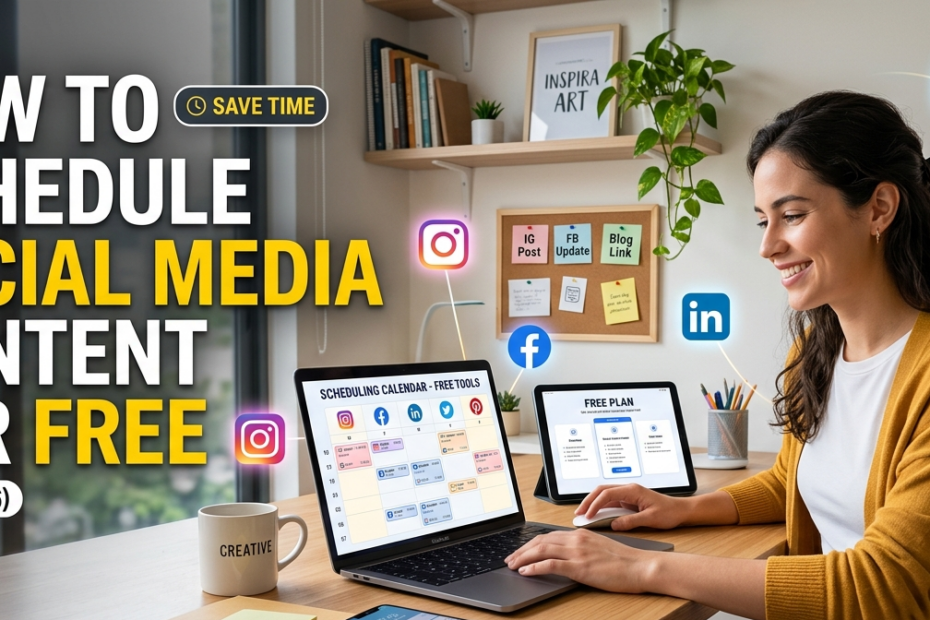
Managing multiple social media accounts can quickly become overwhelming. Between creating posts, tracking engagement, and posting at the right times, it’s easy to spend hours every week just trying to stay consistent. For many small businesses, creators, and marketers, this can lead to burnout and inconsistent posting, which ultimately affects online growth.
The good news is that you don’t have to do everything manually. You can schedule social media content for free, allowing you to plan your posts in advance, maintain a steady presence, and save hours of valuable time each week. With the right tools and strategies, even beginners can automate their posting schedule without spending a dime.
In this guide, we’ll walk you through practical tips, step-by-step methods, and the best free tools to make scheduling social media content simple and efficient. By the end, you’ll be able to streamline your social media workflow, stay organized, and focus on creating content that truly engages your audience.
Benefits of Scheduling Social Media Content
Scheduling social media content for free comes with a host of benefits that make managing multiple platforms much easier. One of the biggest advantages is that it saves time.
Instead of posting in real-time throughout the day, you can create and schedule your content in batches, freeing up hours for other important tasks like engaging with your audience or creating high-quality posts.
Consistency is another major benefit. Social media algorithms favor accounts that post regularly, and scheduling ensures your content goes out on time, every time. This keeps your audience engaged and builds trust in your brand.
Additionally, scheduling allows you to analyze performance more effectively. By planning posts ahead, you can track engagement, test different types of content, and make informed decisions to improve future posts.
Lastly, it significantly reduces last-minute stress. No more scrambling to come up with content at the last minute or worrying about forgetting a post. With a proper schedule, you can plan ahead, stay organized, and maintain a professional social media presence effortlessly.
How to Schedule Social Media Content for Free
Scheduling social media content for free doesn’t have to be complicated. By following a few strategic steps, you can plan, create, and post content efficiently across multiple platforms. Here’s a step-by-step guide:
1. Choose the Right Free Tools
Several free tools make scheduling social media content easy:
-
Buffer Free Plan
-
Pros: Simple interface, supports multiple social platforms, basic analytics.
-
Cons: Limited number of posts per month and accounts.
-
-
Hootsuite Free Plan
-
Pros: Supports multiple platforms, easy to manage all accounts from one dashboard.
-
Cons: Free plan allows only a small number of scheduled posts.
-
-
Later (Free Plan)
-
Pros: Visual content calendar, Instagram-focused, supports link-in-bio feature.
-
Cons: Limited posts per month and fewer platforms supported on free tier.
-
-
Canva Content Planner
-
Pros: Design and schedule posts in one tool, easy-to-use templates.
-
Cons: Limited analytics, mostly for visual content.
-
2. Create a Content Calendar
Planning is key to staying consistent:
-
Decide on weekly or monthly schedules for each platform.
-
Include a variety of post types: images, videos, stories, reels, carousels, or text-based posts.
-
Assign dates and times for each post to avoid last-minute rushes.
3. Batch Content Creation
Creating multiple posts at once saves time and keeps your content cohesive:
-
Design graphics, write captions, and prepare hashtags in batches.
-
Ensure all content aligns with your brand voice and goals.
4. Schedule Posts Strategically
Timing matters for engagement:
-
Research the best posting times for each platform to maximize reach.
-
Use free analytics from your scheduling tool to determine when your audience is most active.
-
Spread out content to maintain a consistent presence without overwhelming followers.
5. Review and Optimize
Regular evaluation ensures your strategy stays effective:
-
Track engagement metrics such as likes, comments, shares, and click-through rates.
-
Identify high-performing posts and replicate their success.
-
Adjust posting frequency or content type based on audience behavior and insights.
By following these steps, you can easily schedule social media content for free, save time, and maintain a consistent, engaging online presence. Using the right tools and strategies allows even small creators and businesses to compete effectively without spending a dime.
Tips to Maximize Free Scheduling Tools
Using free scheduling tools effectively can make a huge difference in your social media strategy. One of the easiest ways to get more value is to reuse evergreen content. Posts that remain relevant over time, such as tips, tutorials, or guides, can be reshared periodically to save time and maintain engagement.
Take full advantage of free analytics offered by tools like Buffer, Hootsuite, or Later. Even basic metrics like likes, shares, and comments can help you identify what content resonates most with your audience, allowing you to refine your posting schedule and strategy.
Whenever possible, connect multiple platforms to a single scheduling tool. This lets you manage Facebook, Instagram, Twitter, LinkedIn, and more from one dashboard, saving time and maintaining consistent messaging across channels.
Finally, always plan for trending topics. Incorporating relevant trends or seasonal content can boost visibility and engagement, even if your main content is pre-scheduled.
By combining evergreen posts, analytics insights, multi-platform management, and trending content, you can make the most of your free scheduling tools and achieve a strong, consistent social media presence.
Conclusion
Scheduling social media content for free is a powerful way to save time, maintain consistency, reduce stress, and boost engagement. By using the right tools, planning a content calendar, and optimizing posts based on analytics, you can streamline your social media workflow and focus on creating content that truly resonates with your audience. Start scheduling your content for free today and see your engagement grow.
Frequently Asked Questions
Where can I schedule social media posts for free?
Scheduling social media posts for free has become increasingly accessible thanks to the variety of platforms designed to help individuals and businesses maintain a consistent online presence.
Free social media scheduling tools allow you to plan and automate content across multiple platforms, reducing the need to manually post in real time and helping maintain engagement with your audience.
One popular option is Buffer, which offers a free plan allowing users to schedule up to 10 posts per social media account. It supports multiple platforms including Twitter, Facebook, Instagram, LinkedIn, and Pinterest.
Buffer also provides basic analytics, so you can see how your posts perform over time. Another option is Hootsuite, which has a free plan for up to two social media accounts and allows you to schedule up to 5 posts. Its dashboard simplifies managing different platforms from one place.
For Instagram-specific scheduling, Later is widely used. Its free plan supports up to 30 scheduled posts per month for Instagram and also allows scheduling for Facebook, Twitter, and Pinterest.
Later provides a visual content calendar, which makes it easy to organize posts, drag-and-drop content, and plan stories. Similarly, Zoho Social offers a free plan for individuals and small businesses with basic scheduling features, allowing users to post content at optimal times.
Other notable free tools include TweetDeck for Twitter management and SocialBee for limited scheduling needs. Even Google Workspace users can leverage Google Calendar or Google Sheets in creative ways to organize and plan posts, though these require manual posting unless combined with automation tools like Zapier.
While free plans typically come with restrictions such as the number of posts, accounts, or access to analytics, they are perfect for small businesses, content creators, or anyone just starting out.
Consistently scheduling posts helps maintain a steady online presence, engage followers at optimal times, and free up time to focus on content creation. Combining these tools with a content calendar ensures that your social media strategy remains organized and effective without any financial investment.
What is the 5 5 5 rule for social media?
The 5 5 5 rule for social media is a content strategy designed to balance different types of posts for better engagement and audience growth.
This rule suggests dividing your content into three categories: five posts that educate, five posts that entertain, and five posts that inspire, typically within a set period, like a month. The goal is to create a well-rounded social media presence that appeals to different aspects of your audience’s interests and emotions.
Educational posts provide value by teaching your audience something relevant, whether it’s a tip, tutorial, or industry insight. These posts establish your authority and credibility, encouraging followers to trust your expertise.
Entertaining posts, on the other hand, are designed to capture attention and make your audience engage through humor, creativity, or relatable content. Inspirational posts aim to motivate or emotionally connect with your audience, encouraging shares, saves, and positive engagement.
By following the 5 5 5 rule, social media managers ensure variety, preventing content from becoming repetitive while maintaining a balance between value and entertainment. This approach also makes planning easier because it sets clear targets for each type of post.
Ultimately, the 5 5 5 rule helps create a more dynamic and engaging social media strategy, fostering stronger relationships with your audience and improving your reach over time.
What is the 30 30 30 rule for social media?
The 30 30 30 rule is another content strategy often used by marketers to maintain balance and effectiveness across social media posts. This rule recommends that roughly 30% of your content should be promotional, 30% curated from other sources, and 30% original and value-driven, with the remaining 10% left flexible for experimentation or trending content.
Promotional content focuses on selling your products or services, announcing launches, or showcasing features. Curated content involves sharing posts from other creators or industry leaders, which can provide additional value to your audience and demonstrate thought leadership. Original, value-driven content is designed to educate, entertain, or inspire your followers in a way unique to your brand.
The 30 30 30 rule encourages consistency while preventing your social media feed from becoming overly sales-focused, which can turn followers away. It also ensures that your audience benefits from diverse content types, fostering engagement and trust. By planning posts according to this structure, marketers can maintain a steady flow of content that balances self-promotion with value and connection.
What is the 70/20/10 rule for social media?
The 70/20/10 rule is a social media content strategy that divides your posts into three categories for a balanced and effective marketing approach. According to this rule, 70% of your content should provide value to your audience, such as educational, entertaining, or inspirational posts. These posts are designed to engage followers without overtly promoting your brand.
Next, 20% of your content should involve sharing or curating from other sources. This includes industry news, relevant content from influencers, or collaborative posts that enhance your credibility and diversify your feed. Finally, 10% of your content can be directly promotional, focusing on selling products, services, or encouraging sign-ups and conversions.
The 70/20/10 rule helps marketers maintain a healthy content mix, avoiding the mistake of over-promotion that can alienate followers. It ensures that most posts add value, fostering engagement, loyalty, and long-term growth. Implementing this rule can also guide content planning and scheduling, making it easier to maintain a consistent posting strategy across platforms.
What is the best free scheduling app?
Determining the “best” free scheduling app depends on your needs, but Buffer and Later are often considered top choices. Buffer offers a simple interface, supports multiple platforms, and allows up to 10 scheduled posts per account on its free plan, making it ideal for beginners.
Later stands out for Instagram users because of its visual content calendar, drag-and-drop post scheduling, and ability to plan Instagram stories alongside standard posts.
Other strong options include Hootsuite, which allows limited free scheduling for up to two accounts, and Zoho Social, which is ideal for small businesses seeking an easy way to organize posts. The best app is ultimately the one that fits your workflow, supported platforms, and content strategy while allowing you to schedule consistently without extra cost.
Which tool is best for scheduling social media posts?
Choosing the best tool for scheduling social media posts depends largely on your goals, the platforms you use, and the level of automation or analytics you require.
Scheduling tools are designed to help creators and businesses maintain consistency, save time, and improve audience engagement without manually posting in real time. Some tools are free with basic functionality, while others offer advanced analytics and multi-platform management for a subscription fee.
Buffer is widely regarded as one of the most beginner-friendly options. Its interface is clean and intuitive, and it allows you to schedule up to 10 posts per account on the free plan.
Buffer supports platforms like Twitter, Facebook, LinkedIn, and Instagram. It also provides basic analytics that help you monitor which posts perform best, allowing you to refine your content strategy over time.
Hootsuite is another top choice, especially for businesses managing multiple accounts. Even its free plan allows scheduling and monitoring for two social media accounts. Hootsuite also offers a more comprehensive dashboard for tracking mentions, comments, and engagement, which is valuable for larger teams or more data-driven campaigns.
For Instagram-focused scheduling, Later stands out. It provides a visual content calendar that makes it easy to plan your feed aesthetically. Later supports Instagram, Facebook, Twitter, and Pinterest, and its free plan includes up to 30 posts per month per platform. Its drag-and-drop interface simplifies organizing posts, especially for visually driven content creators or brands.
Other notable tools include Zoho Social, which is ideal for small businesses, and TweetDeck, which is specifically optimized for Twitter. Ultimately, the best tool depends on your priorities.
If you are managing multiple platforms with detailed analytics, Hootsuite may be preferable. For simplicity and ease of scheduling, Buffer or Later are excellent.
Free plans are often sufficient for small creators, while growing channels may benefit from premium features to schedule more posts, access analytics, and automate content. Consistency is key, and the best tool is one that fits your workflow and allows you to post regularly without extra stress.
What are 5 things you should not share on social media?
Social media is a powerful platform for connection and expression, but it requires careful consideration about what you share. Oversharing or posting sensitive information can have personal, professional, or security consequences. Here are five things you should avoid sharing:
- Personal Identification Information: This includes your home address, phone number, full date of birth, or financial details. Sharing these can put you at risk of identity theft or scams.
- Work-Related Confidential Information: Sharing sensitive data about your workplace, clients, or proprietary projects can violate company policies and may have legal consequences. Even casual posts about workplace frustrations can damage your professional reputation.
- Location in Real Time: Broadcasting your current location can make you vulnerable to theft or stalking. Consider sharing location updates after you have left a place rather than in real time.
- Inappropriate or Offensive Content: Content that is offensive, discriminatory, or inflammatory can hurt your online reputation and relationships. Remember that what you post online is often permanent and searchable.
- Private Conversations or Photos: Avoid posting private messages, images, or videos of others without their consent. Respecting privacy helps maintain trust and prevents potential legal or social issues.
Being mindful of these boundaries helps protect your safety, reputation, and personal relationships while allowing you to use social media effectively for connection and engagement.
What are the 7 C’s of social media?
The 7 C’s of social media are a framework for creating effective, engaging, and user-focused content. They are:
- Content – Share valuable, relevant, and high-quality posts that provide useful information, entertainment, or insight to your audience.
- Context – Ensure your content fits the platform and the audience. What works on Instagram may not work on LinkedIn.
- Community – Engage with your audience and foster interaction, comments, and discussions to build a loyal following.
- Conversation – Encourage two-way communication rather than broadcasting only; respond to comments and questions.
- Connection – Build relationships with influencers, partners, and users to expand your reach and credibility.
- Consistency – Post regularly to maintain visibility and reliability in the eyes of your audience.
- Customer-Centricity – Focus on what your audience values, addressing their needs, problems, or interests.
Applying these principles ensures your social media presence is engaging, professional, and meaningful.
What is the rule of 7 in media?
The rule of 7 is a marketing principle that suggests a prospect needs to encounter your message at least seven times before taking action, such as subscribing, purchasing, or engaging.
It emphasizes repetition and consistent messaging across multiple channels. On social media, this means that content should be repeatedly shared through posts, ads, emails, and other media to increase recognition and trust.
By the seventh exposure, people are more likely to remember your brand and respond favorably. This rule highlights the importance of persistence, frequency, and a multi-channel approach in digital marketing strategies.
What are the 3 C’s of social media?
The 3 C’s of social media focus on the foundational elements of effective social media strategy:
- Content – The core of your social media presence. High-quality, relevant content attracts and retains your audience.
- Community – Building and nurturing relationships with followers, influencers, and brand advocates. Engagement and loyalty come from active community management.
- Consistency – Maintaining a regular posting schedule, tone, and style across all platforms helps establish trust and recognition.
These three principles provide a simple yet effective approach for creating a strong social media presence that drives engagement, awareness, and growth.
What are the 7 P’s of social marketing
The 7 P’s of social marketing are an adaptation of the traditional marketing mix, designed to guide businesses and social media marketers in effectively promoting products, services, or ideas online. These elements help ensure that campaigns are strategically planned and consistently executed to meet audience needs while achieving marketing goals.
- Product – In social marketing, the product isn’t always physical; it can be a service, idea, or brand value. The product should solve a problem or meet a need for your target audience. Understanding your product’s unique value is critical before promoting it on social media.
- Price – Price in social marketing goes beyond monetary cost. It includes the perceived value, effort, and time your audience invests in engaging with your content, purchasing a product, or adopting an idea. Effective campaigns often emphasize value while minimizing perceived barriers.
- Place – Place refers to the channels or platforms where your audience interacts with your content. Social media marketers need to identify whether Instagram, LinkedIn, TikTok, or YouTube is best suited for their target demographic and ensure content is optimized for those platforms.
- Promotion – Promotion encompasses all methods used to reach your audience, including posts, ads, collaborations, influencer marketing, and campaigns. The focus should be on creating attention-grabbing, shareable content while aligning messaging with audience interests.
- People – People refer to both the target audience and those delivering the message. Understanding your audience’s preferences, behaviors, and pain points ensures messaging resonates. Additionally, engaging team members or brand advocates can amplify reach and credibility.
- Process – Process involves the systems and workflows that ensure smooth delivery of your social marketing strategy. This includes scheduling content, responding to comments, monitoring analytics, and optimizing campaigns for better performance.
- Physical Evidence – Physical evidence may seem abstract for social media, but it refers to the tangible elements that support credibility. This includes branding, testimonials, case studies, reviews, and the visual style of your content. Strong physical evidence builds trust and enhances perceived quality.
By considering all seven P’s, marketers can create holistic campaigns that resonate with audiences, reinforce brand identity, and drive meaningful engagement and conversions.
What is the 40 40 20 rule for social media
The 40 40 20 rule is a framework often applied in marketing to optimize campaigns and improve results. It suggests that 40% of success comes from the audience targeted, 40% from the offer or content itself, and 20% from the creative presentation.
In the context of social media, the first 40% emphasizes identifying the right audience. Reaching people who are genuinely interested in your content or product is critical; even high-quality content will fail if delivered to the wrong group. The second 40% focuses on your offer—what you are providing, whether it’s a product, service, or valuable content. The final 20% is the creative element, including visuals, captions, and overall design. While creativity is important, this rule highlights that audience targeting and value delivery are the primary drivers of success.
What are the 10 types of social media
Social media can be categorized into ten main types based on function, audience interaction, and content style:
- Social Networks – Platforms like Facebook and LinkedIn, focused on connecting people and networking.
- Microblogging – Platforms such as Twitter/X for sharing short updates and news.
- Photo Sharing – Instagram and Pinterest emphasize visual content.
- Video Sharing – YouTube, TikTok, and Vimeo allow long- or short-form video content.
- Discussion Forums – Reddit and Quora, where communities engage in topic-specific discussions.
- Bookmarking Sites – Platforms like Pocket and Flipboard that allow saving and sharing content.
- Review Sites – Yelp and TripAdvisor, focused on consumer reviews and recommendations.
- Social Messaging – WhatsApp, Messenger, and Telegram, for private communication and group chats.
- Live Streaming – Twitch, YouTube Live, and Facebook Live, allowing real-time content interaction.
- Collaborative Projects – Wikipedia and open-source communities where users co-create content or resources.
Understanding these types helps marketers select the right channels for their audience and strategy.
How many hours a day should we spend on social media
The amount of time spent on social media depends on personal and professional goals. For general users, experts recommend limiting usage to 1–2 hours per day to maintain mental health and productivity. Excessive use can contribute to stress, anxiety, and reduced attention spans.
For social media professionals, marketers, or content creators, time may extend to 4–6 hours a day, including content creation, engagement, analytics monitoring, and scheduling. Even in professional contexts, setting boundaries is important to prevent burnout and maintain a work-life balance.
A practical approach is to schedule specific periods for social media, track your usage, and use tools for scheduling posts, so active management doesn’t consume excessive time. Quality engagement and strategic posting often matter more than hours spent scrolling.