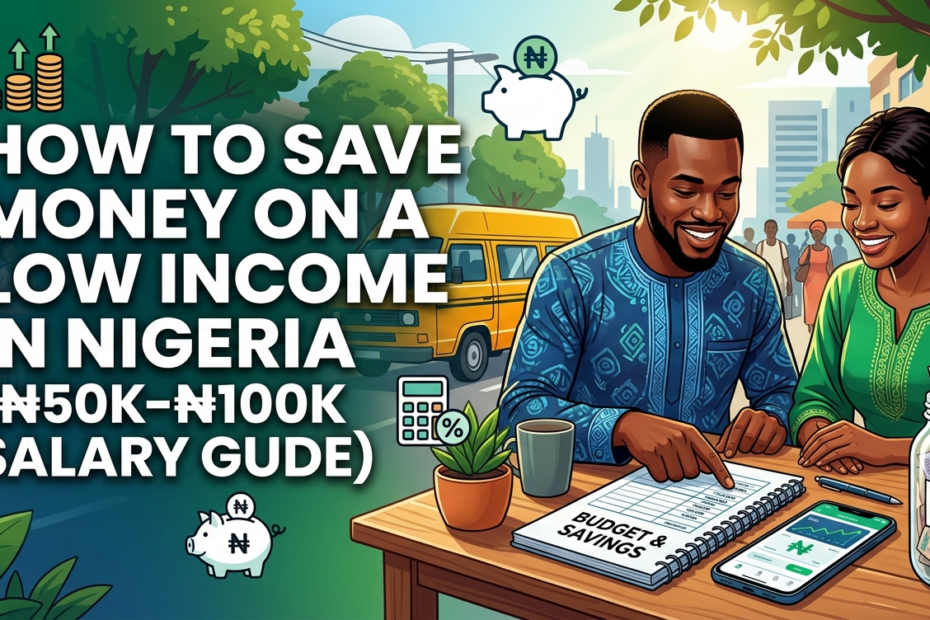
Earning a ₦50,000 to ₦100,000 salary in Nigeria can feel like a constant financial struggle. At the beginning of the month, there is a sense of relief when money comes in, but that feeling often disappears quickly as bills, transport, food, and other daily expenses start to pile up. Before long, many people find themselves wondering how their income finished so fast, with little or nothing left to show for it.
For many low-income earners, saving money feels almost impossible. After handling basic needs, there is often very little room left for savings, and any unexpected expense can completely disrupt the plan. This leads to frustration and the belief that saving is only for people who earn higher salaries. Over time, this mindset makes it even harder to build any form of financial stability.
However, the reality is that saving is not about how much you earn, but how well you manage what you have. Even with a ₦50k–₦100k income, it is possible to save if you apply the right strategies and build better money habits.
In this guide, you will learn practical, step-by-step methods on how to save money on a low income in Nigeria, helping you take control of your finances and start building a more stable financial future.
1. Understand Your Real Income First
One of the most important steps in learning how to save money on a low income in Nigeria is understanding your real income. A lot of people make the mistake of overestimating what they actually earn. They focus on their “salary amount” without considering deductions, irregular income, or extra costs that reduce what they truly take home.
The problem with overestimating your earnings is that it leads to poor financial planning. You may create a budget based on money you think you have, rather than the actual amount available.
This often results in overspending, borrowing, or running out of money before the month ends. When your expectations are higher than reality, saving becomes very difficult.
The fix is to calculate your true take-home income. This means clearly identifying the exact amount you receive after all deductions and only budgeting with what is reliably available. If your income is irregular, it is safer to base your budget on the lowest amount you typically earn rather than the highest.
When you understand your real income, your financial decisions become more realistic and stable. It gives you a clear foundation to plan your expenses properly, avoid financial surprises, and start building consistent savings, even with a low income.
2. Track Every Expense
Another important step in learning how to save money on a low income in Nigeria is tracking every expense. Many people struggle financially because they don’t have a clear record of how their money is spent. At the end of the month, it often feels like money has disappeared without explanation, even though they were sure they were being careful.
The problem is that without tracking, there is no visibility. Small daily expenses like transport, snacks, airtime, data, and random purchases are easily forgotten. Individually, they seem unimportant, but together they can take a large portion of your income. When you don’t record these expenses, it becomes impossible to identify spending habits or understand why saving is difficult.
The fix is to record your daily spending consistently. This means writing down every expense, no matter how small it is. You can use a notebook, phone notes, or a simple budgeting app. The goal is not perfection, but awareness and honesty about where your money goes.
When you track every expense, you gain clarity and control over your finances. It becomes easier to spot unnecessary spending, adjust your habits, and make better decisions. This simple habit is one of the strongest foundations for saving money, especially when your income is low.
3. Use the 50/30/20 or Simple Needs System
A key strategy for how to save money on a low income in Nigeria is using a clear budgeting structure like the 50/30/20 rule or a simpler needs-based system. Many people struggle to save because their money is not divided into clear categories, so everything is spent randomly without priorities.
The problem is lack of structure. When income comes in, expenses like food, transport, data, entertainment, and personal wants are all handled from the same pool of money. This makes it easy to overspend on non-essentials while ignoring savings. Without a clear system, it becomes difficult to control spending or stay consistent with saving goals.
The fix is to organize your money into three simple categories: needs, wants, and savings. Needs include essential expenses like food, rent, transport, and basic utilities. Wants cover non-essential spending such as entertainment, shopping, or eating out. Savings should be treated as a fixed and intentional portion of your income, not something optional.
You can also use a simple version of the 50/30/20 rule as a guide, adjusting it based on your income level. The key is not the exact percentage, but having a structure that directs your money before you spend it.
When you follow a clear system, your spending becomes more controlled and intentional. This helps you reduce waste, prioritize essentials, and build consistent savings even on a low income.
4. Start Saving Even ₦500–₦1,000
One of the biggest reasons people fail to save money on a low income in Nigeria is the belief that saving only makes sense when you have a “good salary.” Many people wait until they start earning more before they begin saving, thinking that small amounts are not worth it. This mindset delays financial progress and keeps them stuck in the same cycle.
The problem is waiting for “big money” before taking action. When you believe savings must be large to be meaningful, you ignore small opportunities to build the habit. As a result, even when you earn a little extra, it gets spent quickly instead of being saved. Over time, this makes saving feel difficult or impossible.
The fix is to start saving even very small amounts like ₦500 or ₦1,000 regularly. What matters most is not the size of the amount, but the consistency of the habit. When you train yourself to save small amounts, you build discipline and create a strong financial routine that can grow over time.
When you start small, saving becomes easier and less stressful. It also helps you develop confidence in managing money. Over time, these small contributions add up and prepare you for larger savings when your income increases.
5. Cut Unnecessary Daily Spending
A very practical way to save money on a low income in Nigeria is to reduce unnecessary daily spending. Many people don’t realize that their biggest financial leaks are not large expenses, but small repeated purchases made every day. These include snacks, extra data usage, soft drinks, impulse airtime purchases, and avoidable transport costs.
The problem is that these small expenses feel harmless in the moment. Spending a little on snacks or topping up data does not seem like a big deal, so it is often ignored in budgeting.
However, when these habits repeat daily, they quietly consume a large portion of your income. By the end of the month, a significant amount has been spent without clear benefit or planning.
The fix is to consciously identify and reduce these daily leaks. You don’t have to remove all comfort, but you should be intentional. For example, you can plan your data usage better, reduce unnecessary outings, prepare snacks or meals at home, and avoid repeated small purchases that are not essential.
When you control these daily spending habits, you automatically free up more money for savings. Over time, these small adjustments make a big difference and help you manage your low income more effectively and sustainably.
6. Cook More, Eat Out Less
A very effective way to save money on a low income in Nigeria is to control how much you spend on food. Many people underestimate how much eating out affects their monthly budget. Buying food from restaurants, canteens, or roadside vendors may seem convenient, but it is often much more expensive than preparing meals at home.
The problem is that frequent eating out quietly drains income. Even simple meals purchased outside can cost significantly more over time compared to cooking the same food yourself.
When this becomes a regular habit, a large portion of your income goes into food expenses instead of savings or other important needs. This is especially difficult for people earning ₦50k–₦100k, where every naira matters.
The fix is to cook more meals at home and reduce how often you eat out. Home cooking gives you better control over your food budget because you can buy ingredients in bulk, plan meals ahead, and avoid unnecessary spending on expensive outside food. Even preparing simple local meals at home can lead to noticeable savings over time.
When you reduce eating out and focus on cooking at home, you free up extra money that can be redirected into savings. This small lifestyle change plays a big role in helping you manage a low income more efficiently and build financial stability.
7. Avoid Emotional Spending
Another important step in learning how to save money on a low income in Nigeria is controlling emotional spending. Many people don’t spend money only based on needs—they also spend based on feelings, moods, or pressure from their environment. This includes buying things when you are stressed, bored, happy, or trying to impress others.
The problem with emotional or impulse spending is that it is unplanned and often unnecessary. You may see something online, feel pressured by friends, or simply decide to “treat yourself” without considering your budget. These decisions may seem small at the time, but they add up quickly and reduce the money available for savings and essential needs.
The fix is to build impulse control by following a clear spending plan. Before making any purchase, especially non-essential ones, pause and ask yourself if it is really needed or if it can wait. When your money already has a purpose—needs, wants, and savings—it becomes easier to avoid random spending decisions.
When you control emotional spending, you take back control of your finances. This helps you stay disciplined, reduce wasteful expenses, and make your income last longer. Over time, this habit becomes one of the strongest tools for building consistent savings on a low income.
8. Build Emergency Fund Slowly
A very important part of learning how to save money on a low income in Nigeria is building an emergency fund, even if it is small. Many people struggle financially because they have no backup when unexpected expenses arise. Things like medical bills, urgent transport, family needs, or sudden repairs can quickly disrupt their entire budget.
The problem is not just the emergency itself, but the lack of preparation for it. Without any emergency savings, every unexpected situation forces you to use money meant for food, rent, or other essentials. This often leads to borrowing, debt, or completely breaking your financial plan, which makes saving feel impossible over time.
The fix is to build an emergency fund slowly using small, consistent savings. You don’t need a large amount to start. Even saving a little every week or month can gradually grow into a useful financial cushion. The key is consistency, not speed. Over time, these small contributions add up and create a safety net you can rely on.
When you have an emergency fund, you gain financial stability and peace of mind. Unexpected expenses no longer destroy your entire budget, and you can continue saving and managing your money more confidently, even with a low income.
9. Use a Separate Savings Account
A practical way to save money on a low income in Nigeria is to separate your savings from your spending money. Many people struggle to save because they keep everything in one account or wallet, which makes it very easy to spend money meant for savings without even realizing it. Over time, this habit slowly destroys any effort to build financial discipline.
The problem is mixing funds. When your savings and daily spending money are stored together, there is no clear boundary between what can be spent and what should be protected.
As expenses come up during the month, it becomes tempting to dip into savings “just this once,” which eventually becomes a repeated habit. This is one of the main reasons many people find it difficult to maintain consistent savings.
The fix is to use a separate savings account or wallet that is different from your spending account. This creates a mental and physical barrier between your savings and your daily money. The less accessible your savings are, the harder it becomes to spend them impulsively.
When you separate your savings, you improve discipline and reduce temptation. This simple step helps you protect your money, stay consistent, and gradually build financial stability even when your income is low.
10. Stay Consistent, Not Perfect
One of the most important lessons in how to save money on a low income in Nigeria is understanding that consistency matters more than perfection. Many people start with strong motivation to save money, but once they miss a target or face unexpected expenses, they feel discouraged and give up completely. This “all-or-nothing” mindset is one of the biggest reasons saving efforts fail.
The problem is expecting perfect financial behavior every month. Life is unpredictable, especially with a low income. Some months will be difficult, expenses will come up unexpectedly, and you may not be able to save as much as planned. When you treat these moments as failure, you lose momentum and abandon the habit entirely.
The fix is to focus on consistency, not perfection. Saving money is a long-term habit, not a one-time achievement. Even if you save small amounts or fall short of your goal, what matters is that you continue the habit instead of stopping. Small, repeated actions build stronger results over time than occasional perfect efforts.
When you stay consistent, your financial discipline improves gradually. Over time, these small savings, careful spending habits, and steady routines compound into real financial progress, helping you build stability even on a low income.