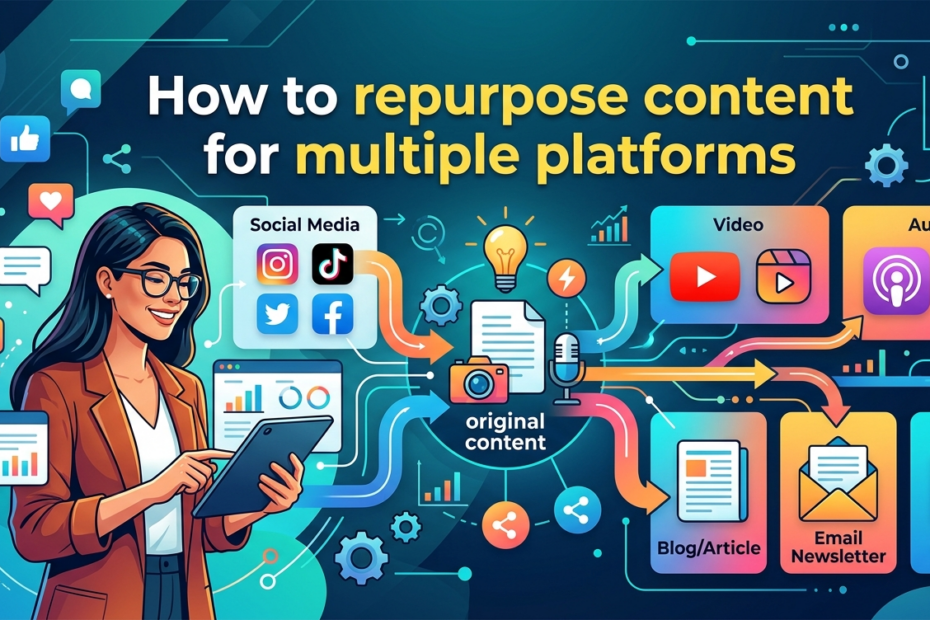
Consistently creating fresh content is one of the biggest challenges faced by marketers, bloggers, and businesses today. Audience demand for regular updates, combined with limited time, resources, and creative energy, often leads to content fatigue and inconsistent publishing schedules.
Producing high-quality content from scratch for every platform can quickly become expensive and unsustainable, especially when each platform has different format and engagement requirements.
This is where learning how to repurpose content for multiple platforms becomes a powerful solution. Content repurposing allows you to extend the value of existing content by adapting it into new formats that suit different channels, such as social media, email marketing, video, or podcasts.
Instead of starting over each time, you strategically reuse proven ideas to increase visibility, maximize return on investment (ROI), and connect with diverse audience segments wherever they prefer to consume content.
What Is Content Repurposing?
Content repurposing is the strategic process of reusing existing content by transforming it into new formats that are tailored to different platforms, audiences, and distribution channels.
Rather than creating entirely new content for every platform, content repurposing focuses on extracting value from what already exists and presenting it in ways that align with how users consume information on each channel.
Importantly, content repurposing is not about copying and pasting content verbatim across platforms. Each platform has its own audience behavior, content length preferences, and algorithmic priorities.
Effective repurposing involves adapting the core message, restructuring the format, and adjusting the tone or delivery to suit the platform. This approach ensures originality while maintaining consistency in messaging.
For example, a single in-depth blog post can be repurposed into a series of social media posts highlighting key points, a short video explaining the main ideas, a podcast discussion expanding on the topic, or an email newsletter summarizing actionable insights.
By doing so, content creators can increase reach, improve engagement, and maximize the lifespan of their content without sacrificing quality or relevance.
Benefits of Repurposing Content for Multiple Platforms
Repurposing content across multiple platforms offers measurable advantages that support both growth and efficiency. By adapting existing content to fit different channels, brands and creators can amplify their impact without continuously starting from scratch.
Increased Content Lifespan
Repurposing extends the life of your content by giving it multiple opportunities to perform. A single piece of evergreen content can continue generating traffic and engagement when shared in new formats over time, rather than becoming obsolete after one publication.
Improved SEO Performance
When content is repurposed strategically, it creates additional entry points for search engines to index your brand. Optimizing each version with relevant keywords, internal links, and platform-specific metadata helps increase visibility, strengthen topical authority, and drive consistent organic traffic.
Consistent Brand Messaging
Repurposing allows you to reinforce the same core message across multiple channels while adapting the delivery to suit each platform. This consistency builds brand recognition and trust, ensuring your audience receives a unified message regardless of where they engage with your content.
Time and Cost Efficiency
Creating new content from scratch requires significant time, effort, and budget. Repurposing reduces production costs by maximizing the value of existing content, enabling teams to maintain a steady publishing schedule without overextending resources.
Higher Engagement Across Platforms
Different audiences prefer different content formats. Repurposing enables you to meet users where they are—whether through videos, emails, social posts, or podcasts—resulting in higher engagement, better retention, and improved overall performance across platforms.
By leveraging these benefits, content repurposing becomes a scalable strategy for increasing reach, efficiency, and long-term content performance.
Identify High-Performing Content to Repurpose
Not all content delivers the same results, which is why identifying high-performing assets is a critical step in an effective content repurposing strategy. By analyzing performance data, you can focus on content that has already proven its value and is more likely to succeed across multiple platforms.
Start by reviewing page views to determine which blog posts or pages attract consistent traffic. High page views often indicate strong search intent alignment and ongoing audience interest, making these pieces ideal candidates for repurposing.
Next, evaluate engagement rates, including metrics such as time on page, comments, likes, and shares. Content that encourages interaction typically resonates well with audiences and can be adapted into formats designed to spark similar engagement on social media, video platforms, or email campaigns.
Social shares provide insight into how often your content is being distributed organically by users. Frequently shared content suggests strong relevance and authority, increasing its potential reach when repurposed into bite-sized or visual formats.
Finally, analyze conversion data to identify content that drives measurable actions, such as sign-ups, downloads, or purchases. Repurposing high-converting content helps reinforce messaging that directly supports business goals.
Prioritize evergreen content—topics that remain relevant over time and are not tied to trends or short-term events. Evergreen assets offer long-term value, making them ideal for repeated adaptation and sustained performance across multiple platforms.
How to Repurpose Content for Different Platforms
Repurposing content effectively requires adapting it to match the format, audience behavior, and algorithm of each platform. Below is a platform-specific approach to ensure your content remains relevant, engaging, and optimized wherever it is published.
a. Blog Posts
Long-form blog content can be repurposed into multiple written assets without losing its core value. Break comprehensive articles into shorter, focused posts that address specific subtopics or user questions. This approach improves readability and creates additional opportunities to target related search queries. Updating statistics, refreshing examples, and optimizing with new or secondary keywords also helps maintain SEO relevance and improve rankings over time.
b. Social Media Platforms
Blog content can be transformed into concise, engaging social media formats. Extract key points, statistics, or quotes and convert them into carousels, threads, or short-form posts. Each platform requires a tailored approach—professional and insight-driven content works well on LinkedIn, concise and timely updates suit X, while visual storytelling performs best on Instagram and Facebook. Adapting tone, length, and format ensures higher engagement and platform alignment.
c. Video Content
Written content can be repurposed into short videos or reels that capture attention quickly. Highlight key ideas, step-by-step processes, or actionable tips from articles and present them in a visual format. Including captions improves accessibility, increases watch time, and enhances engagement, especially for users who consume video content without sound.
d. Email Marketing
Repurpose existing content into email newsletters or drip campaigns to nurture your audience over time. Summarize blog posts into digestible insights, highlight practical takeaways, and link back to the full content for deeper engagement. This approach keeps your audience informed while driving repeat traffic to your website.
e. Podcasts and Audio Content
Blog posts can also serve as a foundation for podcasts or audio discussions. Expand on key themes, share personal insights, or invite guest experts to discuss the topic in greater depth. This format allows you to reach audiences who prefer audio content and strengthens your presence across multiple content consumption channels.
By adapting content strategically for each platform, you can maximize reach, improve engagement, and ensure consistent performance across your entire content ecosystem.
Best Practices for SEO-Friendly Content Repurposing
To ensure content repurposing enhances search visibility rather than harming it, SEO best practices must guide every adaptation. Strategic optimization helps maintain originality, improve rankings, and deliver a consistent brand experience across platforms.
Avoid Duplicate Content Through Rewriting and Reformatting
Search engines prioritize original content, so it is essential to avoid copying content word for word. When repurposing, rewrite key sections, adjust structure, and change the format to suit each platform. This approach preserves the core message while ensuring each version remains unique and compliant with SEO standards.
Optimize Each Version With Platform-Specific Keywords
Different platforms attract different search behaviors. Conduct keyword research for each channel and optimize repurposed content accordingly. Blog posts may target long-tail keywords, while social media content benefits from trending terms and hashtags. Tailoring keywords improves discoverability and relevance across platforms.
Use Internal Linking to Connect Repurposed Content
Internal linking strengthens SEO by helping search engines understand content relationships. Link repurposed assets back to the original content and to related resources on your site. This improves crawlability, distributes link equity, and encourages users to explore more of your content.
Maintain Consistent Branding and Messaging
While formats and tones may vary, your brand voice, values, and core messaging should remain consistent. Consistency reinforces brand recognition and trust, ensuring users receive a cohesive experience regardless of the platform they engage with.
Applying these best practices allows content repurposing to support long-term SEO growth while maximizing reach and maintaining content quality.
Tools That Make Content Repurposing Easier
The right tools can significantly streamline the content repurposing process, allowing you to scale distribution while maintaining high quality. By automating repetitive tasks and providing data-driven insights, these tools help maximize efficiency without compromising effectiveness.
Content Scheduling Tools
Content scheduling tools simplify the process of distributing repurposed content across multiple platforms. They enable you to plan, organize, and publish content consistently from a single dashboard. This reduces manual effort, ensures timely posting, and helps maintain a steady content cadence that supports audience engagement and algorithmic visibility.
Video Editing Software
Video editing tools make it easier to transform written or long-form content into engaging video formats. These platforms allow you to create short clips, add visuals, captions, and transitions, and adapt content for different video-first platforms. Efficient editing workflows ensure professional-quality output without the need for extensive production resources.
Analytics Tools
Analytics tools play a critical role in identifying which content performs best and where optimization is needed. By tracking metrics such as engagement, traffic sources, and conversions, these tools help refine your repurposing strategy. Data-driven decisions ensure resources are focused on content that delivers the highest return.
AI-Assisted Content Optimization Platforms
AI-powered platforms enhance content repurposing by assisting with keyword optimization, content restructuring, and performance analysis. These tools help adapt content for different platforms more quickly while maintaining originality, relevance, and SEO compliance.
When used strategically, these tools enable faster content production, smarter optimization, and consistent quality—making content repurposing a scalable and sustainable marketing approach.
Common Mistakes to Avoid in Content Repurposing
While repurposing content can save time and expand reach, certain missteps can reduce its effectiveness or even harm your brand’s performance. Avoiding these common mistakes ensures your repurposed content remains engaging, relevant, and SEO-friendly.
Copy-Pasting Content Across Platforms
Simply copying and pasting content from one platform to another can hurt both engagement and search rankings. Each platform has its own audience behavior, format requirements, and algorithmic priorities. Failing to adapt content leads to low engagement and potential duplicate content penalties from search engines.
Ignoring Audience Preferences
Different platforms attract different audiences with unique preferences. Ignoring these differences—such as tone, length, or content type—can result in low engagement. Always tailor content to fit the expectations and consumption habits of the target audience on each platform.
Over-Automating Without Personalization
Automation tools can streamline repurposing, but over-reliance without personalization can make content feel generic or robotic. Adding a human touch—through voice, storytelling, or platform-specific context—ensures content resonates and drives meaningful interaction.
Neglecting SEO Optimization
Repurposed content must still be optimized for search engines. Neglecting keyword research, internal linking, or meta updates reduces discoverability and limits the potential traffic gains from your repurposed assets. Each version should be treated as a unique opportunity to improve SEO performance.
Avoiding these mistakes allows content repurposing to be both efficient and impactful, maximizing reach, engagement, and long-term value.
Conclusion: Build a Sustainable Content Strategy
Learning how to repurpose content for multiple platforms is a powerful way for businesses and creators to grow sustainably. By adapting existing content into different formats, you can extend its lifespan, reach new audiences, improve SEO performance, and maximize the return on your content investment.
A sustainable content strategy begins with auditing your existing content to identify high-performing, evergreen pieces that can be transformed for other channels. From blog posts to social media, videos, podcasts, and email campaigns, repurposing allows you to maintain a consistent publishing schedule without constantly starting from scratch.
By approaching content repurposing strategically, you not only save time and resources but also increase visibility, engagement, and overall impact across platforms. Start small, experiment with different formats, and gradually build a scalable system that keeps your content relevant, discoverable, and valuable for your audience over the long term.
Frequently Asked Questions
How to repurpose content across platforms?
Repurposing content across platforms is one of the smartest ways to maximize your reach without constantly creating new material from scratch. The idea is simple: take one core piece of content and transform it into multiple formats suited for different platforms and audiences.
Start with a “pillar” piece of content. This could be a blog post, YouTube video, podcast episode, or long-form article. From this single piece, you can extract smaller, bite-sized content. For example, a blog post can be broken into short tips for social media, quotes for graphics, or even scripts for short videos.
Each platform has its own style and audience behavior, so your repurposed content should match that. A long YouTube video can be trimmed into short clips for TikTok, Instagram Reels, or YouTube Shorts. Key points from the same video can become a Twitter (X) thread or LinkedIn post. You can also turn written content into visual formats like infographics or carousels.
Another effective method is content layering. This means presenting the same idea in different formats—text, video, audio, and visuals. Some people prefer reading, others prefer watching or listening. Repurposing ensures you reach all types of audiences.
Consistency is important. While the format may change, your message and branding should remain the same. This helps build recognition and trust with your audience.
Repurposing also saves time and energy. Instead of constantly brainstorming new ideas, you focus on expanding and reusing what already works. Analyze your best-performing content and repurpose that first.
Finally, plan your content strategically. Create a system where one piece of content feeds multiple platforms over time. This not only increases visibility but also reinforces your message, making it more memorable.
What is the 5 3 2 content rule?
The 5-3-2 content rule is a simple social media strategy designed to keep your content balanced, engaging, and not overly promotional. It helps maintain audience interest while still allowing you to market your brand effectively.
The rule suggests that out of every 10 posts you share:
Five posts should be curated content. This means sharing valuable content from other sources, such as articles, videos, or insights from industry experts. The goal is to provide value to your audience without always talking about yourself. It positions you as someone who is knowledgeable and helpful.
Three posts should be original content. This is where you showcase your own ideas, expertise, or brand personality. It could be educational tips, behind-the-scenes content, or storytelling. These posts help build your authority and connect with your audience on a deeper level.
Two posts should be promotional. These are posts where you directly promote your product, service, or offer. By limiting promotional content, you avoid overwhelming your audience and reduce the chances of them losing interest.
The strength of the 5-3-2 rule lies in balance. Many people make the mistake of posting too much promotional content, which can feel pushy. Others post only entertaining content without ever promoting their business. This rule ensures you do both effectively.
It also builds trust. When your audience sees that most of your content is valuable or engaging rather than sales-focused, they are more likely to pay attention when you do promote something.
You can adjust the rule slightly depending on your goals or platform, but the core idea remains the same: provide more value than you ask for.
What are the 10 examples of repurpose?
Repurposing content can take many forms, and having practical examples makes it easier to apply. Here are ten effective ways to repurpose content:
First, turn a blog post into multiple social media posts by extracting key tips or quotes. Each tip can become a standalone post.
Second, convert a long video into short clips for platforms like TikTok or Instagram Reels. Focus on the most engaging moments.
Third, transform a podcast episode into a written article or blog post. This helps reach people who prefer reading.
Fourth, create an infographic from data or key points in your content. Visual content is highly shareable.
Fifth, turn a webinar into a series of short videos or email content. Break it down into smaller, digestible parts.
Sixth, compile social media posts into an ebook or guide. This adds value and can be used as a lead magnet.
Seventh, turn customer testimonials into graphics or short videos. This builds trust and credibility.
Eighth, reuse live stream recordings by editing them into polished content for other platforms.
Ninth, convert written content into audio format for a podcast. This expands your reach to audio audiences.
Tenth, create carousel posts from step-by-step guides or lists. These perform well on platforms like Instagram and LinkedIn.
These examples show that one piece of content can be reused in many creative ways. The goal is to extend its lifespan and reach new audiences without starting from scratch each time.
How do you tailor content for different platforms?
Tailoring content for different platforms is essential because each platform has its own audience behavior, format, and expectations. Simply posting the same content everywhere rarely works.
Start by understanding the purpose of each platform. For example, Instagram focuses on visuals, TikTok emphasizes short, engaging videos, LinkedIn is more professional, and Twitter (X) thrives on short, concise updates. Knowing this helps you adapt your content accordingly.
Next, adjust your format. A long-form blog post won’t work on TikTok, but you can turn its key points into a short video. Similarly, a detailed explanation might perform better as a LinkedIn article than a short caption.
Tone and style also matter. On LinkedIn, a professional and informative tone works best. On TikTok or Instagram, a more casual and entertaining style is often more effective. Your message can stay the same, but how you deliver it should change.
Pay attention to content length. Short-form platforms require quick, attention-grabbing content, while platforms like YouTube or blogs allow for deeper explanations.
Use platform-specific features. For example, use hashtags on Instagram, threads on Twitter, and carousels on LinkedIn. These features are designed to boost engagement.
Timing and posting frequency can also vary by platform. What works on one platform may not work on another, so testing and analyzing performance is important.
Ultimately, tailoring content is about meeting your audience where they are and delivering your message in the way they prefer to consume it.
What is the 3 3 3 rule in marketing?
The 3-3-3 rule in marketing is a simple framework used to structure content and messaging for better engagement and clarity. While there are different variations, a common interpretation focuses on capturing attention, delivering value, and driving action.
The first “3” refers to the first three seconds. This is the time you have to grab your audience’s attention. Whether it’s a headline, hook, or opening line, it needs to be compelling enough to stop someone from scrolling.
The second “3” refers to the next thirty seconds. This is where you deliver your core message or value. You explain your idea, share insights, or provide useful information. The goal is to keep the audience interested and engaged.
The final “3” refers to the next three minutes (or the conclusion phase). This is where you deepen the message and guide the audience toward a specific action, such as liking, sharing, subscribing, or making a purchase.
Another variation of the 3-3-3 rule focuses on content creation: three types of content (educate, entertain, inspire), three formats (video, text, visual), and three platforms. This approach helps diversify your strategy while keeping it manageable.
The main advantage of the 3-3-3 rule is simplicity. It provides a clear structure that helps you create content that is engaging, valuable, and action-driven.
By applying this rule, you can improve how your audience interacts with your content and increase the chances of achieving your marketing goals.
What type of content works best on each platform?
Each social media platform has its own unique style, audience behavior, and content preferences. Understanding what works best on each platform helps you get better engagement and results without wasting effort.
On Instagram, visual content performs best. This includes high-quality photos, carousels, and short-form videos like Reels. Content that is aesthetic, relatable, or educational in a quick format tends to do well. Behind-the-scenes posts, lifestyle shots, and tips presented visually are very effective.
TikTok thrives on short, engaging, and entertaining videos. Content that grabs attention within the first few seconds performs best. Trends, storytelling, tutorials, and relatable content work extremely well here. Authenticity is more important than perfection.
LinkedIn is ideal for professional and value-driven content. Posts that share insights, personal experiences, industry tips, and career advice tend to perform well. Thought leadership and storytelling with a lesson or takeaway are especially effective.
Twitter (X) works best with short, concise, and impactful content. Threads, opinions, quick tips, and trending conversations perform well. It’s a fast-paced platform, so clarity and timing are key.
YouTube is best for long-form video content. Tutorials, reviews, educational videos, and storytelling content perform well. Consistency and value are important for building an audience here.
Facebook supports a mix of content types, but community-driven content works best. Posts that encourage discussion, storytelling, and relatable content tend to get more engagement.
The key takeaway is to adapt your content to fit the platform rather than posting the same thing everywhere. Each platform rewards content that aligns with how its users consume information.
What is the 30 30 30 rule for social media?
The 30-30-30 rule is a content strategy designed to balance different types of posts so your audience stays engaged without feeling overwhelmed or bored.
The first 30% of your content should be educational. This includes tips, tutorials, how-to guides, and valuable insights. The goal is to teach your audience something useful and position yourself as an authority in your niche.
The second 30% should be engaging or entertaining. This type of content is meant to connect with your audience on a personal level. It could include stories, humor, trends, or relatable situations. This builds emotional connection and keeps your audience interested.
The third 30% should be inspirational or personal. Share your journey, experiences, wins, and even challenges. This humanizes your brand and helps people relate to you.
The remaining 10% is reserved for promotional content. This is where you sell your product, service, or offer. By keeping promotional content limited, you avoid coming across as too salesy.
The strength of the 30-30-30 rule is balance. It ensures that your content provides value, builds relationships, and still allows room for marketing. It also helps maintain consistency and variety, which are key to keeping your audience engaged over time.
What items can you easily repurpose?
Many types of content can be easily repurposed, especially if they contain valuable information or insights. The key is to identify content that can be broken down, reformatted, or expanded into different formats.
Blog posts are one of the easiest to repurpose. You can turn them into social media posts, infographics, email newsletters, or video scripts. Each section of a blog can become its own piece of content.
Videos are also highly versatile. A single long video can be cut into multiple short clips, turned into quotes, or transcribed into written content. This makes it perfect for multiple platforms.
Podcasts can be repurposed into blog posts, social media snippets, or audiograms. You can extract key points and share them in different formats.
Webinars and live streams are another great source. They can be edited into smaller videos, turned into guides, or used as email content.
Quotes and key insights can be turned into graphics or carousel posts. These are highly shareable and easy to create.
Customer testimonials and reviews can also be repurposed into posts, videos, or case studies. They add credibility and trust.
Presentations and slides can be converted into social media carousels or short videos. This is especially useful for educational content.
Even old content can be refreshed and reused. Updating outdated information and reposting it can give it new life.
The goal is to maximize the value of what you already have rather than constantly creating new content from scratch.
What is the 5 5 5 rule for social media?
The 5-5-5 rule is a simple engagement strategy that helps you grow your presence and build relationships on social media. It focuses more on interaction than just posting content.
The first “5” refers to engaging with five posts from other people. This means liking, commenting, or sharing content from your network or target audience. It helps increase your visibility and shows that you’re active.
The second “5” is about commenting on five posts. Meaningful comments (not just “nice post”) can start conversations and attract attention to your profile. This is one of the most effective ways to grow organically.
The third “5” is about connecting with five new people. This could mean following them, sending a message, or engaging with their content. Building relationships is key to long-term growth.
This rule is especially useful for platforms like LinkedIn and Instagram, where engagement plays a big role in visibility. Instead of just posting and waiting for results, you actively participate in the community.
The 5-5-5 rule works because social media is built on interaction. The more you engage with others, the more likely they are to engage with you.
Is repurposing cheaper than buying new?
Yes, repurposing content is significantly cheaper than creating new content from scratch. In fact, it is one of the most cost-effective strategies in content marketing.
Creating new content often requires time, effort, and sometimes money for tools, equipment, or outsourcing. Repurposing, on the other hand, uses content you have already created, reducing the need for additional resources.
It also saves time. Instead of starting from zero, you build on existing ideas. This allows you to produce more content in less time, which increases your overall output and consistency.
Repurposing also improves return on investment. A single piece of content can generate multiple outputs across different platforms, maximizing its value. This means you get more results from the same effort.
Another advantage is consistency. When you repurpose content, your message remains consistent across platforms, which strengthens your brand identity.
It also reduces creative burnout. Constantly coming up with new ideas can be exhausting. Repurposing allows you to focus on refining and expanding existing ideas instead.
While creating new content is still important, repurposing ensures that no valuable content goes to waste. It’s a smarter, more efficient way to grow your presence without increasing your costs.
Related