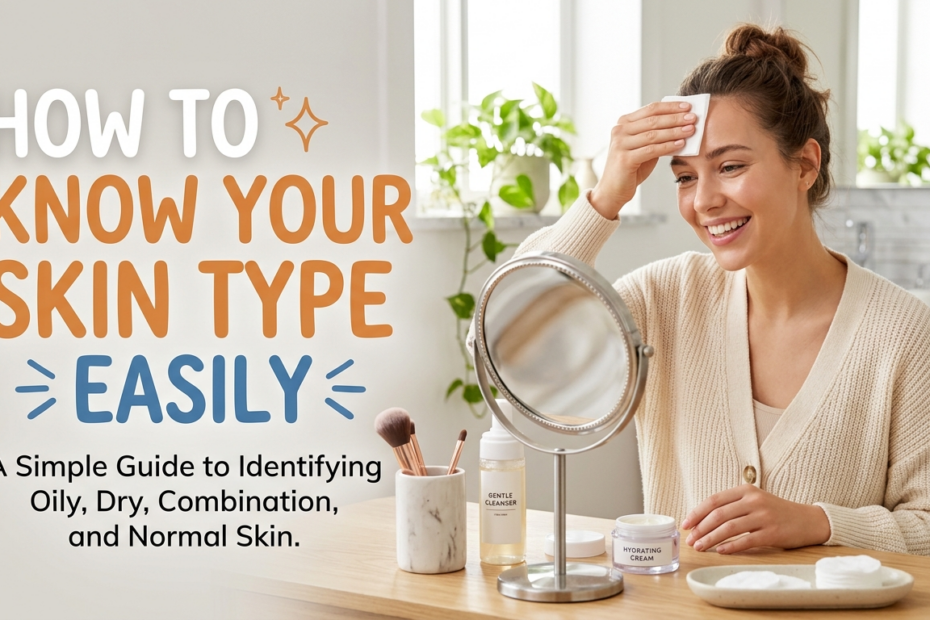
Do you struggle to find skincare products that actually work for your skin? The first step to effective skincare is knowing your skin type. Understanding your skin type is essential because it helps you choose the right products, avoid irritation, and achieve healthier, glowing skin.
Whether your skin is oily, dry, combination, or sensitive, using products that match your skin’s needs can make a huge difference in your daily routine.
Learning how to know your skin type easily doesn’t require expensive tests or complicated tools—it only takes a few simple observations and techniques you can do at home. By identifying your skin type, you can build a skincare routine that truly works for you, saving time, money, and frustration.
Why Knowing Your Skin Type Matters
Knowing your skin type is the first step to a successful skincare routine. When you understand your skin, you can avoid irritation caused by products that are too harsh or not suited for your needs.
Choosing the right products becomes much easier. You’ll know whether to use lightweight moisturizers, rich creams, or gentle cleansers. This helps in choosing effective products that actually work.
Understanding your skin type also improves your overall skin health and appearance. Your skin will feel balanced, look radiant, and stay protected against dryness, breakouts, or sensitivity. By taking a few simple steps to identify your skin type, you can save time, money, and stress while achieving the glowing, healthy skin you’ve always wanted.
Simple Methods to Determine Your Skin Type
Identifying your skin type doesn’t have to be complicated. Here are three easy methods you can try at home.
A. The Bare-Face Test
-
Wash your face using a gentle cleanser.
-
Pat your skin dry and wait for about 1 hour without applying any products.
-
Observe how your skin feels and looks:
-
Oily: Shiny areas and visible pores, especially on the forehead, nose, and chin.
-
Dry: Tight, flaky, or rough patches on the skin.
-
Combination: Oily in the T-zone (forehead, nose, chin) and dry on the cheeks.
-
Normal: Balanced, smooth skin without noticeable dryness or shine.
-
B. The Blotting Paper Method
-
Gently press a blotting paper on different parts of your face.
-
Check the amount of oil on the paper:
-
Oily: Large areas of oil residue.
-
Dry: Little to no oil visible.
-
Combination: Oil appears only in certain areas like the T-zone.
-
C. The Sensitivity Check
-
Apply a small amount of moisturizer or gentle cream to your skin.
-
Observe your skin’s reaction over a few hours:
-
Redness, itching, or irritation may indicate sensitive skin.
-
These simple tests help you quickly understand your skin type and choose products that work best for you.
Tips for Each Skin Type
Once you know your skin type, you can tailor your skincare routine to meet its specific needs. Here are some quick tips for each type:
-
Oily Skin: Use a gentle, foaming cleanser to remove excess oil. Opt for non-comedogenic products that won’t clog pores. Light moisturizers or gel-based formulas work best.
-
Dry Skin: Hydrating creams and rich moisturizers help lock in moisture. Avoid harsh soaps or products with alcohol, as they can make dryness worse.
-
Combination Skin: Treat different areas of your face differently. Use lightweight products on the T-zone to control oil and richer creams on dry areas like the cheeks.
-
Sensitive Skin: Always patch-test new products before full application. Avoid harsh chemicals, fragrances, or strong exfoliants that can trigger irritation.
Following these simple tips ensures that your skincare routine works effectively and keeps your skin healthy and balanced.
Conclusion
Knowing your skin type is the foundation of any effective skincare routine. When you understand whether your skin is oily, dry, combination, or sensitive, you can choose the right products, prevent irritation, and maintain healthy, glowing skin.
Don’t wait to start caring for your skin the right way. Try these simple methods today and discover your skin type easily. Once you know your skin type, you can build a routine that truly works, saving time, money, and frustration while keeping your skin balanced and radiant.
Frequently Asked Questions
What is the 4 2 4 rule in skincare?
The 4-2-4 rule is a simple guideline in skincare routines designed to structure the timing of product application for maximum effectiveness. This rule primarily applies to layering different skincare products like toner, serum, and moisturizer.
The numbers represent minutes: four minutes to let your toner or first product absorb, two minutes for a lightweight serum, and four minutes for a heavier moisturizer or cream.
Following this timing helps ensure that each product penetrates the skin properly without mixing prematurely or reducing its effectiveness. Many people struggle with layering products too quickly, which can reduce absorption or cause pilling, where the products roll off the skin.
By following the 4-2-4 rule, you allow each layer to work effectively, leading to better hydration, treatment of skin concerns, and overall skin health. It’s particularly useful for sensitive or combination skin, which can react poorly if too many products are applied at once.
While not mandatory, this rule can be a helpful guide for beginners who want to optimize their skincare routine and get the best results from their products.
Which skin is better, oily or dry?
Neither oily nor dry skin is inherently better; each type has its advantages and challenges. Oily skin tends to produce more sebum, which can help maintain natural moisture and may reduce the appearance of wrinkles over time.
However, it is prone to acne, blackheads, and a shiny complexion, which some people find undesirable. Dry skin, on the other hand, can feel tight, rough, and prone to flaking or irritation.
While it is less prone to acne, it can age faster and requires more consistent hydration and protection. The “better” skin type depends largely on personal preference, lifestyle, and how well the skin is cared for.
With the right products and routine, both oily and dry skin can look healthy and radiant. The key is understanding your skin’s needs, selecting appropriate skincare products, and maintaining a consistent routine.
Which skin type is rarest?
The rarest skin type is considered sensitive skin, although some sources also identify normal skin as less common. Sensitive skin reacts easily to external factors like skincare products, climate changes, or stress. It can show redness, irritation, or dryness with minimal triggers.
People with sensitive skin often need to be careful with product choices, avoiding harsh chemicals, fragrances, or aggressive exfoliants. Normal skin, which is balanced, neither too oily nor too dry, is less frequently observed because many people naturally fall somewhere on the spectrum of oily, dry, or combination skin.
Both sensitive and normal skin require specific care to maintain health, though sensitive skin demands more attention to prevent adverse reactions and maintain comfort.
What is the Korean 7 skin method?
The Korean 7 Skin Method is a hydration-focused skincare technique where toner or essence is applied seven times in layers to maximize moisture absorption. The concept is simple: instead of applying a thick layer once, you apply multiple thin layers, allowing the skin to gradually absorb hydration.
This method improves the skin’s moisture barrier, enhances plumpness, and prepares it for subsequent products like serum and moisturizer. While the standard is seven layers, beginners may start with three or five layers and gradually increase as the skin adjusts.
It works for all skin types, especially dry or combination skin, because it avoids overloading the skin with heavy creams while ensuring deep hydration. Many users report softer, smoother skin, and a more radiant complexion with consistent practice. The method emphasizes patience and layering rather than using stronger, more concentrated products.
What is the 1% rule in skincare?
The 1% rule in skincare refers to the principle of introducing active ingredients gradually, usually starting with 1% concentration, to minimize irritation and allow the skin to adjust.
This is especially important for potent actives like retinol, acids, or vitamin C. Applying too strong a concentration initially can lead to redness, peeling, or sensitivity.
The 1% rule encourages slow progression: start low, monitor skin response, and increase concentration over time. It’s a safe, effective approach for people with sensitive, dry, or reactive skin, ensuring that their skin benefits from active ingredients without adverse reactions. Following this rule also promotes long-term consistency, which is often more important than quick results in skincare.
Do whiteheads mean oily skin?
Whiteheads are a type of acne that forms when pores become clogged with oil, dead skin cells, and bacteria. While they are more common in oily skin due to excess sebum production, having whiteheads does not automatically mean your skin is oily.
People with combination or even dry skin can experience whiteheads if their pores become blocked or if skincare products trap debris on the skin’s surface.
Oily skin naturally produces more sebum, which can mix with dead skin cells to clog pores and create whiteheads, but environmental factors, hormonal changes, diet, and hygiene also play a role.
Using products that are too heavy, applying insufficient exfoliation, or failing to remove makeup can all contribute to whitehead formation regardless of skin type.
It’s essential to focus on a balanced skincare routine, including gentle cleansing, exfoliation, and non-comedogenic products, rather than assuming the presence of whiteheads defines your skin type.
Which type of skin is best?
There isn’t a universally “best” skin type because each has advantages and challenges, and all require care. Normal skin is often considered ideal because it is naturally balanced, neither too oily nor too dry, and is less prone to acne, sensitivity, or irritation.
People with normal skin typically have fewer skincare concerns and can tolerate a wider variety of products. However, well-cared-for oily, dry, or combination skin can look equally healthy and radiant.
The key factor is how well you maintain your skin, rather than the type itself. Healthy skin involves proper hydration, protection from sun damage, gentle cleansing, and using products suited to your skin’s specific needs. With consistent care, any skin type can appear smooth, glowing, and resilient.
Does oily skin heal faster?
Oily skin tends to have faster healing in certain situations due to higher sebum production. Sebum contains natural lipids and antimicrobial properties that can protect the skin and maintain moisture levels, which can support faster recovery from minor cuts, scratches, or irritation.
Additionally, oily skin is less prone to dehydration, so the skin barrier remains stronger and more resilient during healing. However, this does not mean oily skin is immune to issues.
Acne, clogged pores, or inflammation can delay healing, and excessive oil can sometimes exacerbate skin problems rather than aid recovery. Healing also depends on overall skin health, lifestyle, nutrition, and proper skincare practices. While oily skin may show advantages in moisture retention and barrier protection, proper care remains essential for optimal healing.
What’s the prettiest skin color?
Beauty in skin color is subjective and influenced by cultural, social, and personal preferences. There is no universally “prettiest” skin color, as every skin tone can be beautiful when healthy, radiant, and well-cared-for.
The appearance of the skin, such as even tone, smooth texture, and glow, often matters more than color itself. Taking care of your skin through hydration, sun protection, and balanced nutrition enhances its natural beauty regardless of shade.
Social perceptions of beauty vary widely around the world, and embracing your natural skin tone with confidence is considered the healthiest approach. Healthy, well-maintained skin will always appear attractive, whether fair, medium, tan, or dark.
Can stress affect my skin type?
Stress does not change your skin type permanently, but it can significantly affect how your skin behaves. During stress, the body produces more cortisol, a hormone that can increase oil production in the skin.
This may lead to breakouts, clogged pores, or a shiny complexion in those prone to oily or combination skin. Stress can also reduce hydration and impair the skin barrier, causing dryness, sensitivity, or irritation.
People with sensitive skin may notice redness, itching, or flare-ups during stressful periods. Long-term stress can exacerbate skin conditions like acne, eczema, or psoriasis.
While stress doesn’t transform your basic skin type, it influences your skin’s behavior and appearance, highlighting the importance of managing stress for overall skin health.
What is the darkest skin type?
The darkest skin type is typically classified as Fitzpatrick Type VI on the Fitzpatrick skin scale, which dermatologists use to categorize skin based on tone and response to sun exposure. Type VI skin is deeply pigmented and rarely burns, but it can still be sensitive to certain skin conditions, hyperpigmentation, and scarring.
Darker skin tones have higher melanin levels, providing natural protection against UV radiation, which reduces the risk of sunburn and premature aging. However, this does not make it immune to skin concerns such as acne, dryness, or irritation.
Proper skincare, including hydration, gentle exfoliation, and sun protection, remains important. Hyperpigmentation and dark spots can appear more prominently on darker skin, so targeted treatments often focus on evening skin tone and maintaining barrier health while preserving the natural richness of the skin tone.
How do Korean girls have clear skin?
Korean girls are often admired for their clear, radiant skin due to consistent, preventive skincare practices rather than genetics alone. Their routines typically include multiple steps emphasizing cleansing, hydration, protection, and gentle treatment.
Double cleansing is common—first with an oil-based cleanser to remove makeup and sunscreen, followed by a water-based cleanser for impurities. They use toners and essences to balance pH levels and deeply hydrate the skin.
Layering lightweight products, as seen in methods like the Korean 7 Skin Method, ensures optimal moisture without irritation. Sun protection is crucial, with daily use of SPF to prevent damage and pigmentation.
Korean skincare also prioritizes healthy lifestyle habits such as balanced diets, sufficient sleep, and stress management. Avoiding harsh products and using gentle, targeted treatments helps maintain clarity and even skin tone over time. Consistency and patience are the key factors in achieving the clear, dewy skin often associated with Korean beauty.
What is the #1 Korean skincare brand?
While multiple Korean skincare brands are globally recognized, Sulwhasoo is often considered one of the top brands due to its luxury formulations that blend modern science with traditional Korean herbal medicine.
Sulwhasoo products are known for targeting anti-aging, hydration, and skin nourishment. The brand emphasizes natural ingredients such as ginseng, licorice, and green tea to improve skin health and appearance.
Other highly popular Korean brands include Laneige, Innisfree, and Dr. Jart+, which focus on hydration, brightening, and innovative formulations. The ranking of the “#1” brand may vary depending on consumer preference, region, and product category, but Sulwhasoo is widely recognized for its premium quality, effectiveness, and iconic status in the global skincare market.
How do Koreans apply toner?
Koreans apply toner as a key step to balance the skin’s pH, hydrate, and prepare it for subsequent products. The application is typically gentle and methodical.
First, a small amount of toner is poured into the palms or onto a cotton pad. When using hands, the toner is gently pressed into the skin, starting from the center of the face and moving outward.
Patting motions, rather than rubbing, are preferred to enhance absorption and prevent irritation. Many also use the “7 Skin Method,” layering the toner multiple times to deeply hydrate without heaviness.
When using a cotton pad, toner is swiped softly across the face to remove residual impurities. The focus is on hydration and preparation rather than exfoliation or cleansing at this stage. Consistency and gentle application are considered essential for maintaining clear, healthy skin in Korean skincare routines.
Which two serums cannot be used together?
Certain serums should not be used together because their active ingredients can interact negatively, reduce effectiveness, or irritate the skin. A common example is vitamin C and retinol.
Vitamin C works best in acidic environments, while retinol functions optimally at a neutral pH; using them together may reduce their potency and increase the risk of irritation.
Another example is combining benzoyl peroxide and retinol, which can neutralize each other’s effects and cause excessive dryness or redness. It’s important to read product instructions, separate these actives by using them at different times of the day (e.g., vitamin C in the morning, retinol at night), or alternate days to maintain effectiveness.
Understanding ingredient interactions is crucial for safe and effective skincare, ensuring that each product delivers its intended results without compromising skin health.
What is the #1 skincare in the world?
Determining the “#1 skincare” in the world depends on criteria such as sales, popularity, or effectiveness. Globally, Estée Lauder is often cited as one of the leading skincare brands due to its wide range of high-quality products that target multiple concerns, including anti-aging, hydration, and brightening.
Its Advanced Night Repair serum is particularly renowned for improving skin texture, reducing fine lines, and enhancing radiance. Other globally recognized brands include Lancôme, Clinique, and La Mer, each offering innovative formulations backed by research.
While no single product suits everyone, the best skincare brands share common qualities: consistent results, safety, broad appeal, and the ability to address specific skin needs. Choosing skincare depends on your skin type, concerns, and lifestyle rather than just brand reputation.
What is the 3 second rule in skincare?
The 3-second rule in skincare refers to the practice of applying products immediately after cleansing or toning to prevent moisture loss. After washing your face, the skin begins to lose hydration almost instantly.
By applying a serum, moisturizer, or essence within three seconds, you help lock in water and nutrients, improving product effectiveness. This method is particularly important for dry or sensitive skin, which can experience rapid dehydration.
The 3-second rule emphasizes speed and precision, ensuring that the skin’s natural barrier retains hydration. While not strictly necessary for all skin types, it is a useful technique for maximizing the benefits of hydrating and treatment products in any skincare routine.
What pulls blackheads out immediately?
Blackheads occur when pores are clogged with sebum and dead skin cells. While no method completely removes blackheads immediately without some risk, certain approaches can effectively extract them.
Comedone extractors are professional tools used by dermatologists to remove blackheads safely without causing scarring. At home, gentle exfoliation with chemical exfoliants like salicylic acid can loosen debris inside pores.
Clay masks or charcoal masks can temporarily draw out excess oil and impurities, making blackheads less noticeable. It’s important to avoid aggressive squeezing or picking, which can damage the skin and lead to infection or scarring. Consistent cleansing, exfoliation, and using non-comedogenic products prevent new blackheads from forming over time.
What naturally kills acne?
Several natural ingredients can help reduce acne by targeting inflammation, bacteria, and excess oil. Tea tree oil is a well-known natural antimicrobial that reduces acne-causing bacteria.
Aloe vera soothes irritated skin and promotes healing, while honey has antibacterial and anti-inflammatory properties that support acne management. Green tea extract contains antioxidants that calm inflammation and reduce oil production.
Although these remedies are effective for mild acne, they may not replace medical treatments for severe or cystic acne. Combining natural remedies with a consistent skincare routine—including cleansing, moisturizing, and sun protection—can improve skin clarity while minimizing irritation. It’s important to patch-test natural ingredients to ensure your skin does not react negatively.
Should I pop whiteheads or not?
Popping whiteheads is generally discouraged because it can lead to infection, inflammation, and scarring. When a whitehead is squeezed improperly, bacteria and debris can push deeper into the skin, worsening the condition.
Instead, whiteheads should be treated gently using proper skincare techniques. Regular cleansing, exfoliation with chemical exfoliants like salicylic acid, and non-comedogenic moisturizers help prevent their formation.
If extraction is necessary, it’s safest to seek a dermatologist or licensed esthetician, who can remove them using sterile tools without damaging the skin. Over time, consistent care and patience are far more effective and safer than attempting to pop whiteheads at home.