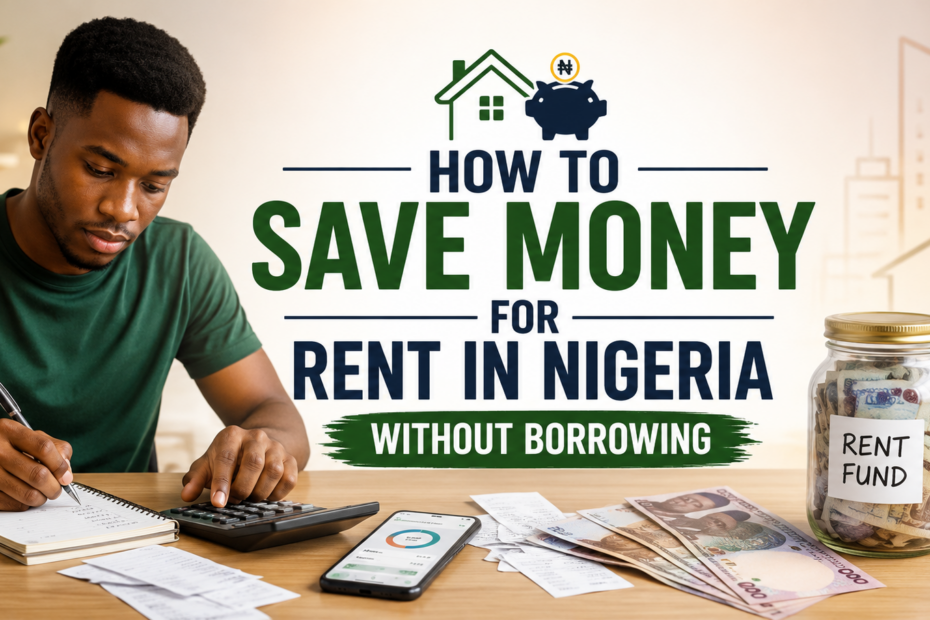
Rent is one of the biggest financial responsibilities for many Nigerians. Unfortunately, when rent is due, many people find themselves under serious pressure.
Salary may not be enough, business sales may be slow, customers may owe money, and the landlord may already be calling or sending reminders. In this situation, borrowing can seem like the fastest solution.
Some people borrow from friends and relatives, collect money from cooperative societies, use loan apps, or even sell important belongings just to renew their rent.
However, borrowing money for rent can create another financial problem after the rent has been paid.
The debt still has to be repaid, while daily expenses such as food, transport, electricity, school fees, data, medical bills, and family responsibilities continue. This can leave a person struggling from month to month and unable to save for the next rent payment.
The good news is that it is possible to save money for rent in Nigeria without borrowing, even if you earn a small salary, run a small business, work as a freelancer, or have an irregular income.
It requires early planning, a clear savings target, better spending habits, and sometimes an extra source of income. This guide explains practical ways to build a rent-saving plan, protect your savings, and reduce the stress that comes when rent is due.
Why You Should Start Saving for Rent Immediately
One of the smartest things you can do after paying your current rent is to begin saving for the next one immediately.
Many people make the mistake of relaxing after rent has been paid because they believe they still have many months before the landlord asks for money again. However, time moves quickly, and before they know it, rent is due in a few months with little or no money saved.
Rent should not be treated as a sudden emergency because most tenants already know when it will be due. Whether you pay yearly rent or have an agreement with your landlord, the renewal date is usually predictable.
Starting early gives you enough time to save gradually without putting too much pressure on your salary, business income, or daily expenses.
For example, if your annual rent is ₦240,000, you can save ₦20,000 every month for 12 months. By the time your rent is due, you will have the full amount ready without borrowing from friends, family members, loan apps, or cooperative societies.
However, if you wait until six months before rent is due, you may need to save ₦40,000 every month. For many people, especially those earning a small salary or running a small business, saving ₦40,000 monthly may be difficult.
Starting early also allows you to divide your rent savings into smaller weekly or daily amounts. Instead of struggling to find a large amount at once, you can save ₦5,000 weekly or set aside small amounts from daily sales.
A trader, freelancer, artisan, salary earner, or small business owner can save based on how they receive income.
When you begin immediately, rent becomes a planned expense rather than a source of fear and panic.
Even if you cannot save a large amount at first, starting with what you can afford will help you build the habit and reduce pressure as the rent renewal date gets closer.
How to Calculate Your Rent Savings Target
Before you begin saving for rent, you need to know exactly how much money you will need.
Many people only think about the main house rent, then later discover that there are other expenses to pay before they can renew their rent or move into a new apartment. This can create pressure and force them to borrow money at the last minute.
Your rent savings target should include every cost connected to your accommodation. Apart from the yearly house rent, you may need to consider agreement fee, caution fee, service charge, estate dues, agent fee, moving expenses, repairs, electricity bills, water bills, security fees, and other utility costs.
The exact expenses may be different depending on your location, landlord, estate, or type of apartment, but it is better to plan for more than to be surprised later.
Start by writing down the amount you expect to pay for rent and every additional cost.
For example, your annual rent may be ₦240,000, while service charge, minor repairs, utility bills, and other expenses may bring the total amount to ₦300,000. Once you know the full amount, divide it by the number of months remaining before your rent payment date.
If your total rent target is ₦300,000 and you have 10 months before the money is due, you should aim to save ₦30,000 every month.
This amount may seem easier to manage than trying to find ₦300,000 at once when the landlord is already asking for payment.
If saving ₦30,000 monthly feels difficult, break it into smaller targets. You can save about ₦7,500 weekly or around ₦1,000 daily.
A salary earner may save immediately after receiving salary, while a trader, freelancer, artisan, or small business owner can save from daily sales or every payment received.
Having a clear rent savings target gives you direction. Instead of saving randomly, you will know how much you need, how long you have, and what amount you should set aside regularly. This makes it easier to track your progress and reduces the risk of borrowing when rent is due.
Create a Separate Account for Your Rent Savings
One of the easiest ways to protect your rent money is to keep it separate from the account you use for daily spending.
Many people save money in the same bank account they use for food, transport, airtime, data, electricity, subscriptions, online shopping, and other regular expenses.
The problem is that when rent money is mixed with spending money, it becomes easy to withdraw small amounts whenever there is a need.
A person may take ₦2,000 for transport today, ₦5,000 for food tomorrow, and another ₦10,000 for an emergency later in the week.
These withdrawals may seem small at the time, but they can slowly reduce the money meant for rent. Before the rent renewal date arrives, the person may discover that the savings are no longer complete.
To avoid this problem, create a separate place for your rent savings. You can open another bank account that is used only for rent, use a dedicated savings wallet, save through a cooperative society, or use a trusted savings platform that allows you to keep money aside.
The important thing is that the account should not be used for everyday transactions.
When you receive your salary, business profit, freelance payment, or daily income, transfer your rent savings immediately into this separate account.
Treat the money as if it has already been paid to your landlord. This mindset can help you avoid using it for things that are not urgent.
If you know that you are likely to spend money impulsively, make access more difficult. You can avoid carrying the ATM card for that account, remove the account from your main banking app if possible, or choose a savings option that does not allow quick withdrawals.
You can also set a personal rule that the money should only be touched when it is time to pay rent.
Keeping your rent savings separate gives you better control and helps you see your progress clearly. It also reduces temptation, protects your money from unnecessary spending, and makes it more likely that you will have enough money ready when rent is due.
Save Small Amounts Consistently
Many people delay saving for rent because they believe they need to have a large amount of money before they can begin.
They may tell themselves that they will start saving when their salary increases, when business becomes better, or when they receive a big payment.
The problem with this approach is that the right time may keep moving forward, while the rent renewal date continues to get closer.
You do not need to save a huge amount at once before you can make progress. Small savings can become meaningful when they are done consistently.
If you earn daily income, you can save ₦500, ₦1,000, or ₦2,000 on good business days. A small trader, food vendor, artisan, dispatch rider, or service provider can decide to put aside a fixed amount from daily profit before spending the rest.
Even when income is low, the habit of saving something regularly can reduce the pressure of trying to raise all your rent money at once.
Salary earners can make rent saving part of their payday routine. Once salary enters your account, transfer a fixed amount or percentage into your separate rent savings account before using the rest for food, transport, bills, and other expenses.
For example, someone earning ₦100,000 monthly may decide to save 10% or 20% of their salary toward rent, depending on their rent target and other responsibilities.
Traders and business owners can save from daily sales or profit. Instead of waiting until the end of the month to see what remains, they can set aside a small amount after each profitable day.
Freelancers can also save a percentage from every payment received. For instance, if a freelancer receives ₦30,000 for a job, they can immediately move ₦3,000, ₦5,000, or more into their rent fund before spending the balance.
Students and young workers who live with family can also prepare for future accommodation by saving part of their allowance, internship payment, salary, or side-hustle income. This may help them build a financial cushion before they need to rent their own apartment.
The most important thing is to choose a saving method that matches how you earn money.
Do not compare your savings pattern with someone else’s. Whether you save daily, weekly, monthly, or after every payment, consistency will help you build your rent fund gradually and reduce the need to borrow when rent is due.
Cut Unnecessary Expenses and Redirect the Money to Rent
Saving for rent does not always mean that you must stop enjoying life or remove every comfort from your daily routine.
However, it does require you to pay attention to the areas where your money is going without giving you much long-term value. Many people struggle to save for rent because small daily expenses keep taking money that could have been added to their rent fund.
Start by checking your spending for one month. Look at how much you spend on frequent food delivery, eating out, unnecessary data subscriptions, airtime, betting, impulse buying, expensive outings, and buying clothes or gadgets on credit.
You may also notice that transport costs are taking too much of your income because you often use more expensive options when a cheaper and safe alternative is available.
The goal is not to cut every expense at once. Instead, choose a few spending habits that you can reduce without making life difficult. For example, if you spend ₦3,000 several times a week on food delivery, you may decide to cook more meals at home and reduce delivery to once a week.
If you pay for data subscriptions that you hardly use, you can cancel or reduce them. If you often buy items because of online promotions or pressure from friends, give yourself time before making a purchase.
Every amount you save should have a clear destination. Do not simply spend less and leave the remaining money in your everyday account, because it may disappear on another unplanned expense. Transfer the money directly into your separate rent savings account as soon as you save it.
For instance, if you decide not to spend ₦5,000 on an outing, move that ₦5,000 into your rent fund immediately. If you save ₦2,000 by cooking at home instead of ordering food, transfer it to your rent account.
These small transfers may not look like much at first, but they can grow into a meaningful amount over several months.
Cutting unnecessary expenses becomes more effective when you connect every sacrifice to your rent goal. Instead of feeling like you are denying yourself, you can see that each amount saved is helping you avoid borrowing, loan app pressure, and last-minute panic when your rent is due.
Increase Your Income Before Rent Is Due
Saving money is important, but it may not be enough for everyone, especially when income is low, family responsibilities are high, or rent has increased.
If your current salary, business profit, or daily earnings cannot comfortably cover your rent-saving target, finding an extra source of income can make a major difference.
The goal is not necessarily to start a large business immediately. It is to create an additional stream of money that can support your rent plan before the payment date arrives.
Choose an income idea that matches your skills, available time, location, and starting capital. For example, you can sell snacks, cooked food, drinks, or small groceries in your neighbourhood or workplace.
You may offer errand-running services, laundry services, cleaning services, tutoring, or weekend work. People with small capital can consider data reselling, thrift clothing sales, perfume oil sales, phone accessories, or a small POS service where it is suitable and legally permitted.
If you have digital skills or access to a smartphone and internet connection, you can also explore online freelancing, graphic design, writing, social media management, virtual assistance, affiliate marketing, online tutoring, or helping small businesses promote their products online.
You do not need to do every side hustle at once. Start with one option that you can manage well and improve gradually.
The most important rule is to separate your extra income from your normal spending money.
If you earn ₦10,000 profit from selling food, completing a design job, tutoring a student, or doing weekend work, avoid using it immediately for airtime, outings, clothes, or other personal expenses. Transfer the money directly into your rent savings account.
You can even make a personal decision that all profits from one particular side hustle will be used only for rent until you reach your target.
For example, your regular salary may handle food, transport, and bills, while your earnings from laundry services, tutoring, freelance work, or thrift clothing sales go straight into your rent fund.
This approach gives your rent savings a stronger boost and reduces the amount you need to remove from your main income. With a clear target and consistent effort, a small extra income can help you pay rent with less stress and avoid borrowing when the landlord asks for payment.
Rent Saving for People With Irregular Income
Saving for rent can feel more difficult when you do not receive a fixed monthly salary. Many Nigerians earn income based on daily sales, completed jobs, commissions, customer payments, or the number of clients they serve.
Traders, freelancers, artisans, dispatch riders, small business owners, commission workers, and self-employed people may earn well in one week and struggle in another. Because income is not always predictable, a strict monthly savings plan may not work perfectly for everyone.
The good news is that you can still save for rent without earning the same amount every month. The key is to save according to your income pattern and take advantage of good weeks.
When business is moving well, customers are paying, or you receive a larger job, avoid spending all the extra money immediately. Instead, move a larger portion into your rent savings account while you have the opportunity.
You can begin by setting a minimum amount that you will save whenever you earn money. For example, a trader may decide to save at least ₦1,000 on slow business days.
On days when sales are better, that same trader may save ₦5,000, ₦10,000, or more, depending on profit and other responsibilities.
A freelancer can save a percentage from every payment received, while an artisan can save part of the money earned from each completed job.
This approach is more realistic than forcing yourself to save the same amount every month when your income changes. Some months may be stronger than others, and that is normal. What matters is that you continue adding money to your rent fund whenever income comes in.
It is also helpful to keep a simple record of your savings. You can use a notebook, notes app, spreadsheet, or savings wallet to track how much you have saved and how much is left. Seeing your progress can motivate you to save more during profitable periods.
Your goal is not to follow a perfect rent-saving plan every month. Your goal is to build the rent fund gradually before the payment date arrives. By saving small amounts during slow periods and larger amounts during good periods, you can reduce rent pressure and avoid borrowing when it is time to pay.
How to Avoid Touching Your Rent Money
Talk to Your Landlord Early If You May Have Difficulty Paying
If you notice that you may not be able to complete your rent payment before the due date, do not wait until your rent has expired or until your landlord begins calling repeatedly.
Speak with your landlord as early as possible. Early communication shows responsibility and gives both of you more time to discuss a realistic solution.
Many tenants avoid these conversations because they are afraid, embarrassed, or hoping that they will somehow raise the money at the last minute.
However, keeping quiet can make the situation worse. A landlord may feel ignored or assume that you do not intend to pay. This can damage trust and make it more difficult to request extra time when you truly need it.
When you speak with your landlord, be respectful and honest. Explain your situation briefly without making promises you cannot keep. If you have already saved part of the rent, let the landlord know what amount you can pay and when you expect to complete the balance.
Some landlords may agree to give a short extension or accept a temporary payment arrangement, especially if you have a good payment history and have always communicated properly.
For example, if your rent is due in one month but you know that your business has been slow or your salary has been delayed, you can speak to your landlord before the deadline.
You may be able to agree on a short extension or pay part of the amount first while working toward the balance. This is usually better than waiting until the rent has expired and then trying to borrow money under pressure.
However, talking to your landlord should not become a replacement for planning ahead. Communication can reduce tension, but it does not remove the responsibility of paying rent.
The main goal should still be to start saving early, keep rent money separate, and build a complete rent fund before the payment date arrives.
When you combine early communication with consistent savings, you can reduce misunderstandings with your landlord, protect your reputation as a tenant, and lower the chances of borrowing money when rent is due.
Common Mistakes Nigerians Make When Saving for Rent
Many people want to save for rent, but certain money habits make it difficult to reach their target before the payment date. Recognising these mistakes early can help you make better decisions and avoid the pressure of borrowing when your landlord asks for rent.
One common mistake is waiting until the last minute. Some tenants only begin thinking seriously about rent when there are one or two months left. At that point, the amount needed may be too large to save from a normal salary, daily income, or small business profit.
Starting immediately after paying your current rent gives you more time to save smaller amounts and reduces the pressure of finding a large sum at once.
Another mistake is using rent money for business without a clear repayment plan. A person may believe that using the money to buy more goods, restock a shop, or fund a business opportunity will bring quick profit.
Sometimes this works, but business can be unpredictable. Sales may be slow, customers may delay payment, goods may not sell, or an unexpected expense may occur. If you use rent money for business, you may later struggle to replace it before the rent deadline.
Relying too much on loan apps is also risky. Loan apps may appear to solve an urgent rent problem, but they can add interest, repayment pressure, and stress to an already difficult situation.
After paying rent with borrowed money, you may still need to repay the loan while handling food, transport, electricity, school fees, and other responsibilities.
Spending heavily during festive periods is another issue. Christmas, New Year, weddings, birthdays, celebrations, and family gatherings can encourage people to spend beyond their income.
Enjoying special occasions is not wrong, but using money meant for rent can create serious problems later. It is important to set a spending limit and protect your rent fund during these periods.
Small daily expenses can also quietly damage rent savings. Frequent food delivery, unnecessary data subscriptions, betting, impulse buying, expensive transport choices, and unplanned outings may not seem serious individually. However, when added together over several months, they can become money that could have gone into your rent account.
Some people save without a clear target. They put money aside occasionally but do not calculate how much rent will cost, how much time is left, or how much they need to save each month.
Without a target, it is easy to save too little and discover the shortage when rent is due. Others assume that relatives or friends will always help them. While support can be valuable during a genuine emergency, depending on it every year can strain relationships and leave you disappointed.
Rent borrowing can easily become a cycle. A person borrows money to pay rent, then spends the next few months repaying the debt.
Because much of their income goes into repayment, they have little left to save for the next rent. When the next renewal date comes, they borrow again and repeat the same pattern.
Breaking this cycle requires early planning, consistent savings, controlled spending, and discipline. When you start saving immediately, protect your rent fund, and avoid depending on debt, you give yourself a better chance of paying rent with confidence and financial peace.
Conclusion: Make Your Next Rent a Plan, Not a Panic
Paying rent without borrowing may not happen overnight, especially if you earn a low income, run a small business, work on commission, or receive money irregularly.
However, you do not have to wait until you earn a large salary before you begin preparing. The most important step is to start early and save from the money you currently have, no matter how small the amount may be.
When you calculate your total rent target, you know exactly how much you need to raise before the payment date. Opening a separate rent savings account can also help you protect the money from daily spending, family requests, impulse buying, and unnecessary withdrawals.
Whether you save daily, weekly, monthly, or from every business sale or freelance payment, consistency can gradually build a meaningful rent fund.
It is also important to reduce expenses that are taking money without adding much value to your life.
Small changes, such as cutting down on unnecessary food delivery, expensive outings, betting, impulse purchases, and unused subscriptions, can create extra money for your rent savings. Instead of allowing the money to disappear into another expense, transfer it directly into your rent account.
If saving from your main income is not enough, consider finding a practical side hustle or extra source of income. You may sell food, offer services, do weekend work, resell products, tutor students, manage social media pages, or use any skill that can bring in extra money.
You can decide that profits from that side hustle will go directly into your rent fund until you reach your target.
Rent can feel overwhelming when you wait until the last minute, but it becomes easier to manage when you divide it into smaller savings over several months. Your next rent should be a plan, not a panic.
Start saving from the money you have today, and give yourself a better chance of paying your rent without borrowing.
Frequently Asked Questions
How to Save Rent Money?
Saving rent money becomes easier when you treat rent as a monthly priority instead of waiting until the due date is close. Start by calculating the full amount of rent you need to pay, including any agency fee, service charge, caution fee, electricity deposit, or agreement fee if they apply.
Divide the total amount by the number of months before your rent is due. For example, if your yearly rent is ₦240,000, you need to save about ₦20,000 every month.
If you earn weekly or daily income, break it down further. Saving around ₦5,000 weekly or a smaller amount daily can reduce pressure.
Create a separate place for your rent savings. This can be a different bank account, a savings wallet, or a trusted cooperative account that is not connected to your everyday spending money.
The goal is to make it difficult to withdraw the money for food, transport, airtime, or impulse purchases. Once you receive income, move the rent portion immediately before spending on other things.
People with irregular income can save rent money from every sale, job, or payment they receive. Instead of waiting for a large amount, choose a percentage such as 10%, 15%, or 20% of every income.
A trader who makes ₦8,000 profit in a day can set aside ₦1,000 or ₦1,500 for rent. Small consistent deposits can become a meaningful amount over several months.
What Are Seven Ways to Save Money?
One practical way to save money is to track your spending. Write down everything you spend for at least one month, including transport, food, data, snacks, subscriptions, betting, airtime, and small daily purchases.
Many people discover that their money is not disappearing through one big expense but through several small expenses they do not notice.
Another useful method is to create a simple budget. Decide how much money should go to food, transport, bills, savings, family support, business needs, and personal spending.
A budget does not mean you cannot enjoy your money. It simply helps you spend with direction.
You can also save by cooking more meals at home, reducing unnecessary transport costs, buying items in bulk when it is cheaper, avoiding impulse buying, and comparing prices before paying. Cancelling subscriptions you rarely use can also free up money every month.
Finding an extra source of income is another powerful saving method. This may include selling products online, offering a service, freelancing, tutoring, running errands, data reselling, baking snacks, or doing weekend work. Extra income can be directed fully into savings instead of being mixed with daily expenses.
What Is the 30-Day Rule to Save Money?
The 30-day rule is a simple method for controlling impulse spending. When you want to buy something that is not urgent, do not purchase it immediately.
Write down the item, its price, and the date you wanted to buy it. Then wait for 30 days before making the purchase.
After 30 days, ask yourself if you still need the item, whether you can afford it without borrowing, and whether the money could serve a more important purpose.
In many cases, the excitement around the item reduces after a few days or weeks. You may realize that you wanted it because of pressure, social media, boredom, or seeing someone else with it.
The 30-day rule works well for expensive clothes, phones, gadgets, furniture, shoes, beauty products, home decorations, and other non-essential purchases. It gives you time to compare prices, look for better alternatives, or save gradually instead of borrowing money.
This rule does not mean you should delay urgent needs such as food, medical care, rent, school fees, transport for work, or repairs that affect your safety. Its purpose is to help you separate real needs from temporary wants and protect your money from emotional spending.
How Much Do You Need to Save for Rent?
The amount you need to save for rent depends on your yearly rent, the extra charges attached to the house, and how many months remain before payment is due.
Your target should not be only the basic rent amount. Include possible costs such as agreement fees, service charges, utility bills, moving costs, repairs, and emergency money.
For example, if your annual rent is ₦300,000 and you expect to spend another ₦50,000 on related costs, your full rent target is ₦350,000. If you have 12 months to prepare, you should save about ₦29,200 monthly.
If you have six months left, you need around ₦58,400 monthly. Breaking the amount into weekly or daily targets can make it feel more manageable.
A good rent-saving plan should also include a small buffer. If your rent is ₦300,000, aiming for ₦330,000 or ₦350,000 can protect you from unexpected charges or a temporary drop in income.
This is especially important for self-employed people, freelancers, traders, commission workers, and anyone whose income changes from month to month.
How to Save Money in an Apartment?
Living in an apartment can become expensive when electricity, food, water, internet, transport, repairs, and household items are not managed carefully. Start by reducing electricity waste.
Switch off lights, fans, televisions, and appliances when they are not in use. Use energy-saving bulbs where possible, avoid leaving devices plugged in all day, and plan how you use high-power appliances such as pressing irons, electric cookers, heaters, and air conditioners.
Food is another major area where apartment residents can save money. Plan meals before shopping, cook in larger portions when possible, store food properly to prevent waste, and avoid buying food outside every day.
Buying staples such as rice, beans, garri, noodles, cooking oil, and toiletries in bulk can sometimes reduce costs, especially when shared with a trusted roommate or neighbour.
You can also save by setting a monthly household budget. Separate money for rent, electricity, food, cleaning items, transport, data, and emergencies. Avoid using rent money to solve small daily problems. If you live with others, agree clearly on shared bills and payment dates so one person does not carry all the responsibility.
Saving money in an apartment is not about living without comfort. It is about making intentional choices so your home remains affordable, peaceful, and financially manageable.