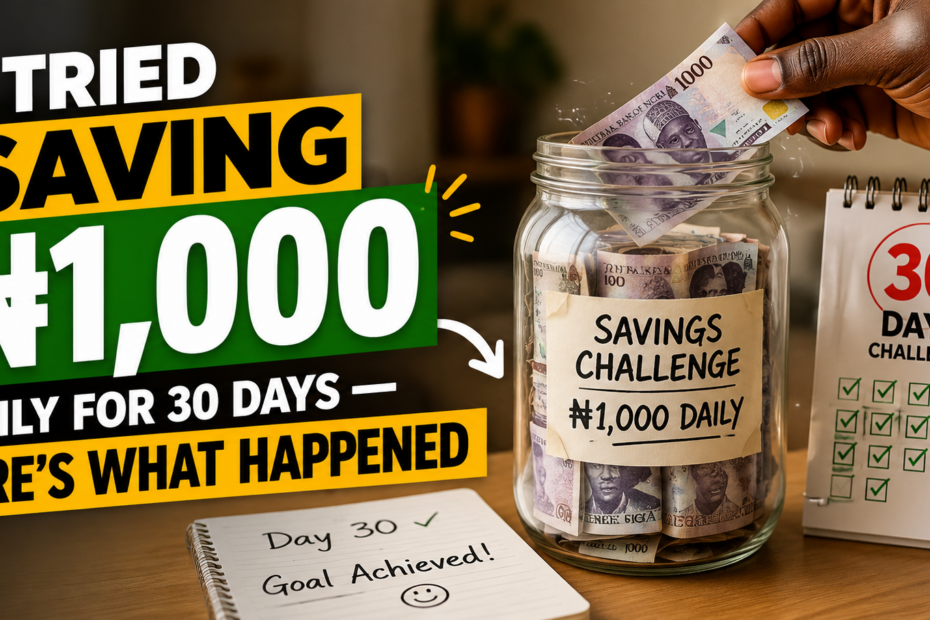
Saving money can feel difficult, especially when prices keep increasing and daily expenses seem to take every naira that comes in.
Many people believe they need a big salary before they can start saving, but I wanted to find out if that was really true. So, I decided to try saving ₦1,000 every day for 30 days.
At first, ₦1,000 did not seem like a serious amount of money. It can easily disappear on transport, snacks, data, or small unplanned spending.
However, when I calculated it, I realised that saving ₦1,000 daily for 30 days could give me ₦30,000. That amount could help with groceries, electricity bills, school needs, emergency expenses, data subscriptions, or even small business capital.
This challenge helped me see whether small daily savings could truly make a difference.
The Rules I Set for My ₦1,000 Daily Savings Challenge
Before I started the challenge, I knew I needed clear rules to avoid spending the money along the way. My goal was simple: save ₦1,000 every day for 30 days without skipping any day.
I decided to keep the money in a separate savings wallet so it would not mix with the money I used for transport, food, data, and other daily expenses.
I also made it a rule to save the ₦1,000 early in the morning before spending money on anything else. This helped me treat saving like an important bill that had to be paid first.
If I waited until evening, there was a higher chance that I would have spent the money on small things without noticing.
Another important rule was that I would not touch the savings unless there was a serious emergency. Unexpected expenses can happen at any time, especially when you have family needs, health issues, transport problems, or urgent bills.
However, I wanted to build discipline, so I avoided withdrawing the money for normal wants such as snacks, unnecessary shopping, or outings. My aim was to reach the end of the 30 days with ₦30,000 saved.
The Challenges I Faced While Saving ₦1,000 Daily
Saving ₦1,000 every day sounded simple when I first started, but I quickly realised that consistency was the hardest part. There were some days when saving felt easy, especially when I had planned my expenses well or received money early.
On those days, I transferred the ₦1,000 to my savings wallet in the morning and continued with my day without worrying about it.
However, other days were more difficult. Transport costs increased unexpectedly, food prices were higher than I planned, and there were times when I needed to buy extra data for work, communication, or important online activities.
Some days, an urgent bill came up or someone close to me needed financial help. These situations tested my decision to keep saving even when money felt tight.
I also noticed that small daily spending habits could easily affect my savings plan. Buying snacks, soft drinks, unnecessary data, or making small online purchases did not seem like a big problem at first.
But when I added them together, I realised they could easily take the ₦1,000 I wanted to save. Going out with friends was another challenge because it was easy to spend money just because others were spending.
This challenge taught me that saving money is not only about how much you earn. It is also about being more careful with small expenses and making better decisions before spending. Every time I avoided an unnecessary purchase, I was able to protect my ₦1,000 savings goal.
The Practical Changes I Made to Save ₦1,000 Daily
To make the ₦1,000 daily savings challenge work, I had to make a few practical changes to the way I spent money. I realised that I could not continue spending carelessly and still expect to save consistently.
The first habit I worked on was impulse buying. Instead of buying snacks, soft drinks, or other small items whenever I felt like it, I started asking myself whether the item was truly necessary.
I also tried to carry food or snacks from home whenever possible. This helped me reduce the amount of money I spent on food outside, especially on days when I was busy or travelling.
Although it may seem like a small change, avoiding unnecessary food purchases gave me more control over my daily spending.
Another change I made was reducing unnecessary outings. There were times when I wanted to go out with friends simply because I did not want to miss out.
However, I learned that every outing usually came with transport costs, food, drinks, and other expenses. By choosing my outings more carefully, I was able to protect my savings goal.
I also became more careful with data usage. Instead of buying extra data because I spent too much time streaming videos or scrolling online, I tried to manage my data better and use Wi-Fi when available.
I also planned my transport money ahead of time so that unexpected transport expenses would not affect my ₦1,000 savings.
This challenge showed me that saving money is not always about earning more. Sometimes, it is about becoming more intentional with the money already coming in. Small changes in daily habits can create enough space to save, even when income is limited.
The Final Result of My ₦1,000 Daily Savings Challenge
At the end of the 30-day challenge, I successfully saved ₦30,000. Seeing the full amount in my savings wallet made me feel proud because it showed that small daily actions can produce meaningful results.
At the beginning of the challenge, ₦1,000 did not seem like a lot of money. It was an amount I could easily spend on transport, food, snacks, data, or other small daily expenses without thinking twice.
However, after saving it consistently for 30 days, the money became something more useful. ₦30,000 may not solve every financial problem, but it can make a real difference.
It can help with groceries, electricity bills, emergency needs, school expenses, data subscriptions, or even provide small capital for a business idea.
The biggest result was not only the ₦30,000 I saved. It was the discipline I developed during the process. There were days when saving felt difficult, but I learned that being consistent matters more than being perfect.
I also realised that saving money does not always require a high income. It requires planning, self-control, and the willingness to make small sacrifices.
This challenge proved that progress can start with a small amount. Even if someone is unable to save ₦1,000 daily, they can begin with ₦200, ₦500, or any amount they can afford. What matters most is building the habit of saving regularly and staying committed to the goal.
What ₦30,000 Can Do
Saving ₦30,000 in 30 days showed me that small daily savings can have a real purpose.
The money may not be enough to solve every financial problem, but it can provide support when an important need comes up. Instead of spending the money immediately, I began to think about how ₦30,000 could be used wisely.
One useful option is to keep it as a small emergency fund. Unexpected expenses can happen at any time, such as medical needs, transport problems, electricity bills, phone repairs, or urgent family expenses. Having ₦30,000 saved can reduce the need to borrow money when an emergency happens.
The money can also help with everyday needs. It could be used to buy food items such as rice, beans, garri, noodles, cooking oil, and other groceries. It may also support rent payments, school materials, data subscriptions, electricity units, or household bills.
Another good use for ₦30,000 is starting a small side hustle. Depending on the business idea, it could be used to buy small business stock such as snacks, drinks, phone accessories, thrift clothing, cosmetics, foodstuff, or items to sell online. The money could also be added to other savings to build more capital for a bigger business.
The important lesson is that daily savings should have a clear purpose. When you know what you are saving for, it becomes easier to avoid spending the money carelessly.
₦1,000 saved every day may look small at first, but after 30 days, it can become money that supports your needs, protects you during emergencies, or helps you move closer to a financial goal.
Lessons I Learned From Saving ₦1,000 Daily for 30 Days
Trying to save ₦1,000 daily for 30 days taught me that saving money is more about discipline than having a large income. Before starting the challenge, I believed that saving would be easier when I earned more money.
However, this experience showed me that even a small amount can grow when it is saved consistently and protected from unnecessary spending.
One of the biggest lessons I learned was the importance of planning. When I planned my transport, food, data, and other daily expenses, it became easier to set aside ₦1,000 without struggling.
I also learned that saving should be treated like an important bill. Just as I would not ignore an electricity bill or transport need, I had to see my savings as money I owed myself.
The challenge also taught me patience and self-control. There were many times when I wanted to spend the ₦1,000 on snacks, outings, extra data, or other small things.
But each time I avoided unnecessary spending, I moved closer to my ₦30,000 goal. Those small decisions made a big difference by the end of the month.
Most importantly, I learned that anyone can begin saving with the amount they can afford. Not everyone may be able to save ₦1,000 every day, and that is okay. You can start with ₦200, ₦500, or ₦700 daily.
The amount may be small, but the habit can become powerful over time. Start with what you have, stay consistent, and give your savings a clear purpose. Small daily savings can gradually create financial confidence and help you prepare for future needs.
My ₦1,000 Daily Savings Progress
| Day | Amount Saved | Total Savings |
|---|---|---|
| Day 1 | ₦1,000 | ₦1,000 |
| Day 2 | ₦1,000 | ₦2,000 |
| Day 3 | ₦1,000 | ₦3,000 |
| Day 4 | ₦1,000 | ₦4,000 |
| Day 5 | ₦1,000 | ₦5,000 |
| Day 6 | ₦1,000 | ₦6,000 |
| Day 7 | ₦1,000 | ₦7,000 |
| Day 8 | ₦1,000 | ₦8,000 |
| Day 9 | ₦1,000 | ₦9,000 |
| Day 10 | ₦1,000 | ₦10,000 |
| Day 11 | ₦1,000 | ₦11,000 |
| Day 12 | ₦1,000 | ₦12,000 |
| Day 13 | ₦1,000 | ₦13,000 |
| Day 14 | ₦1,000 | ₦14,000 |
| Day 15 | ₦1,000 | ₦15,000 |
| Day 16 | ₦1,000 | ₦16,000 |
| Day 17 | ₦1,000 | ₦17,000 |
| Day 18 | ₦1,000 | ₦18,000 |
| Day 19 | ₦1,000 | ₦19,000 |
| Day 20 | ₦1,000 | ₦20,000 |
| Day 21 | ₦1,000 | ₦21,000 |
| Day 22 | ₦1,000 | ₦22,000 |
| Day 23 | ₦1,000 | ₦23,000 |
| Day 24 | ₦1,000 | ₦24,000 |
| Day 25 | ₦1,000 | ₦25,000 |
| Day 26 | ₦1,000 | ₦26,000 |
| Day 27 | ₦1,000 | ₦27,000 |
| Day 28 | ₦1,000 | ₦28,000 |
| Day 29 | ₦1,000 | ₦29,000 |
| Day 30 | ₦1,000 | ₦30,000 |
Would I Try This Challenge Again?
Yes, I would try this savings challenge again because it showed me that saving small amounts consistently can create a useful amount of money within a short time.
Saving ₦1,000 daily helped me become more careful with my spending and gave me confidence that I can reach financial goals through discipline.
In the future, I may continue saving ₦1,000 daily or increase the amount when my income improves. For example, I could try saving ₦1,500 or ₦2,000 daily for another 30 days.
However, I learned that increasing the amount is not as important as staying consistent. It is better to save an amount you can afford regularly than to set a high target that becomes difficult to maintain.
This challenge also encouraged me to give every savings goal a purpose. Instead of saving without direction, I can save for emergencies, rent, business capital, school expenses, food items, or other important needs. Having a clear reason makes it easier to stay committed.
Tips for Anyone Trying This Challenge
If you want to try saving ₦1,000 daily for 30 days, start by choosing an amount that is realistic for your income and daily expenses.
You do not have to force yourself to save ₦1,000 if it will leave you unable to pay for important needs. You can begin with ₦200, ₦500, or ₦700 and increase the amount gradually as your income improves.
Try to save early in the day before you begin spending money. This makes it less likely that you will use the money for transport, food, snacks, data, or other unplanned expenses.
Keeping the money in a separate savings account, wallet, or piggy bank can also help you avoid touching it unnecessarily.
It is also important to set a clear goal for your savings. You may be saving for food items, rent support, school materials, an emergency fund, a phone, or small business capital. When you know why you are saving, it becomes easier to avoid temptation and remain focused.
Finally, do not give up if you miss a day or face an emergency. Saving is a habit that improves with time. Continue from where you stopped, adjust your plan if necessary, and focus on building consistency rather than trying to be perfect.
Frequently Asked Questions
How to Make ₦1,000 Daily
Making ₦1,000 daily may sound small, but it can become a useful source of extra income when done consistently. In one month, ₦1,000 daily can add up to about ₦30,000.
One practical way to earn this amount is by selling everyday items people need regularly. You can sell snacks, drinks, recharge cards, data subscriptions, food items, thrift clothing, phone accessories, or small household products.
The goal is not always to make ₦1,000 profit from one customer. You can make smaller profits from several customers until you reach your daily target.
You can also offer simple services around your area. For example, you may help people with errands, laundry, cleaning, delivery, typing documents, printing, graphic design, social media posting, or online registration.
Students and job seekers can earn money by helping people create CVs, apply for jobs, fill online forms, or open accounts. If you have a smartphone and internet connection, you can promote your service through WhatsApp status, Facebook groups, and people around you.
How to Save $1,000 in 30 Days
Saving $1,000 in 30 days is a serious financial target because it means saving about $33.33 daily. For many people in Nigeria, this may be difficult if income is paid in naira, especially because exchange rates can change.
However, it can still be possible if you have a good income source, a business, freelance work, or money coming from a temporary project.
The first step is to calculate how much you need to save every day or every week. Instead of waiting until the end of the month, separate the money immediately after you earn it.
You may need to reduce unnecessary spending on eating out, impulse shopping, expensive subscriptions, betting, frequent transport costs, and borrowing money to others during that period.
You can also sell unused items, take extra jobs, offer services, or increase sales in your business. Keep the money in a separate dollar account, domiciliary account, or trusted savings option so you will not spend it carelessly.
How to Make ₦3,000 Daily in Nigeria
To make ₦3,000 daily, focus on a business or service that has enough demand and profit margin. Selling food is one of the easiest options because people eat every day.
You can sell cooked food, snacks, akara, noodles, fruits, drinks, pastries, or small chops. If you make ₦300 profit from ten customers, you can reach ₦3,000 in one day.
Another option is online work. You can offer writing, graphics design, video editing, voice-over, social media management, affiliate marketing, website services, or virtual assistance.
You may not earn ₦3,000 every day immediately, but as you gain customers and referrals, your income can grow. Consistency, good customer service, and promoting your work daily are important.
How to Make ₦2,000 Daily in Nigeria
Making ₦2,000 daily can begin with simple skills and small capital.
You can buy and resell items such as perfumes, hair products, phone accessories, slippers, thrift clothes, cosmetics, foodstuff, or snacks. Even if your profit per item is small, selling multiple items can help you reach your target.
If you have no capital, start with a service business. You can become a delivery assistant, cleaner, tutor, errand runner, social media promoter, or online vendor who connects buyers to sellers for commission.
Tell people clearly what you offer and post it regularly on WhatsApp. Many people need help but may not know you provide that service until you promote yourself.
How to Save Money Fast in One Week
Saving money fast in one week requires discipline and a clear reason for saving. Start by choosing a specific amount you want to save.
Then remove that amount from your spending money immediately. Avoid spending on things that are not urgent for seven days, including unnecessary snacks, drinks, subscriptions, fashion purchases, and expensive outings.
You can save faster by cooking at home, carrying water or food when leaving home, reducing transport costs where possible, and avoiding impulse buying.
You can also make extra money during the week by selling something you no longer use or doing a quick service for someone.
The most important thing is to keep the money separate from your normal spending account. When money is easy to access, it is easier to spend.
How to Save Money in 30 Days
Saving money in 30 days becomes easier when you stop treating it as something you will do only if money remains after spending.
A better approach is to decide your savings amount before the month begins and set it aside immediately whenever you receive income.
For example, if your target is ₦30,000 for the month, you can save ₦1,000 every day or ₦7,500 every week. The amount does not have to be large at first. What matters most is choosing an amount that fits your income and keeping to it consistently.
Create a simple 30-day savings plan by writing down your daily expenses, including food, transport, data, electricity, rent contributions, family support, and business costs.
Once you know where your money goes, it becomes easier to identify unnecessary spending. Many people lose money gradually through daily snacks, soft drinks, impulse purchases, betting, unnecessary subscriptions, and frequent borrowing. Reducing these expenses for one month can create room for savings.
Keep your savings in a separate account or wallet that you do not use for daily spending. You can also use a trusted savings platform or a bank account without an ATM card to reduce temptation.
At the end of each day, transfer your savings amount before spending the rest. If you miss a day, do not give up; add a little extra on another day. The goal is to finish the 30 days with progress, not perfection.
How to Earn ₦5,000 Per Day in Nigeria
Earning ₦5,000 per day in Nigeria is possible through a combination of selling products, offering services, and using digital skills.
The best option depends on your available capital, location, time, and experience. Food businesses can be profitable because people buy food every day.
You can sell breakfast items, snacks, drinks, cooked meals, fruits, pastries, noodles, akara, or small chops. If you make ₦500 profit from ten customers, you can reach ₦5,000 daily.
You can also earn ₦5,000 daily through services. Services usually require more effort than capital, making them useful for people starting with little money.
Examples include laundry, cleaning, delivery, tutoring, hair styling, makeup, barbing, phone repairs, graphic design, writing, social media management, printing, and helping people with online registrations.
The key is to offer a service people already need and promote it consistently through WhatsApp status, Facebook groups, referrals, and people in your area.
Online work can also help you reach this target over time. Freelance writing, virtual assistance, video editing, graphic design, affiliate marketing, and social media management can bring in income from clients.
It may take time to get your first customer, but building a portfolio and delivering quality work can increase your daily earning potential.
How to Make ₦1,000 Per Day
Making ₦1,000 per day can start with a small business or simple service. You may sell items such as snacks, cold drinks, recharge cards, data, thrift clothes, perfumes, phone accessories, cosmetics, or foodstuff.
You do not need to make ₦1,000 profit from one sale. You can make ₦100, ₦200, or ₦300 profit from different customers until you reach your target.
If you do not have money to start a business, focus on services. You can help people run errands, wash clothes, clean houses, type documents, design flyers, create CVs, teach students, or deliver items for a small fee.
You can also connect buyers to sellers and earn commission without owning the product yourself. Let people know what you do by posting regularly and speaking to people around you.
How to Make Fast Daily Money
Fast daily money usually comes from solving an immediate problem for people. Think about what people around you need urgently: food, transport help, deliveries, cleaning, repairs, data, printing, errands, or assistance with online tasks.
If you can provide one of these services quickly and reliably, you can earn money on the same day.
Avoid schemes that promise fast money without work, especially online platforms that ask you to pay before earning, recruit people aggressively, or promise unrealistic profits.
A safer method is to sell a useful product, offer a service, or work on commission. Fast income is possible, but it is more sustainable when it comes from real value and satisfied customers.
Seven Ways to Save Money
Saving money starts with having a clear reason for saving. You may be saving for rent, school fees, a business, an emergency, a phone, or a future goal.
When your reason is clear, it becomes easier to avoid spending money carelessly. Set a weekly or monthly target and track your progress.
You can save more by separating needs from wants. Needs include food, transport, rent, electricity, and important bills. Wants may include expensive outings, frequent snacks, unnecessary clothes, and impulse shopping.
Cutting down on wants does not mean you should never enjoy your money; it means you should spend with purpose.
Other useful saving habits include cooking more meals at home, reducing daily transport costs where possible, buying essentials in bulk, avoiding unnecessary debt, cancelling subscriptions you do not use, keeping emergency money separate, and earning extra income through a side hustle. Small changes can create meaningful savings when repeated every day for several months.