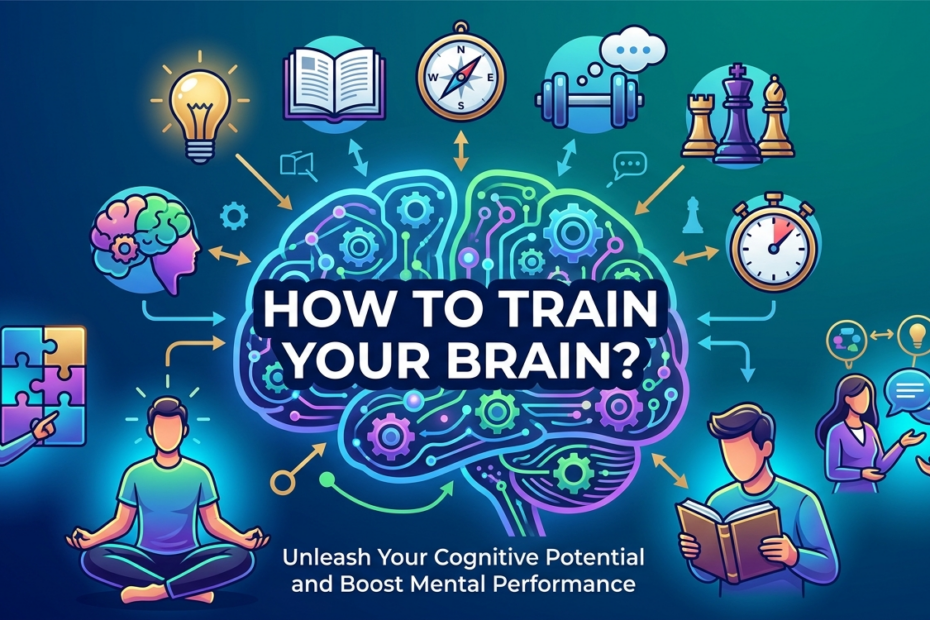
What it really means to “train your brain”
Training your brain is not about physical exercise in a literal sense, but about developing and reshaping your mind through a natural process called neuroplasticity. Neuroplasticity is the brain’s ability to change, adapt, and reorganize itself based on what you consistently think, learn, and practice.
This means your brain is not fixed. It is constantly being “rewired” by your experiences, habits, and environment.
How the brain forms new connections
Every time you learn something new or repeat a task, your brain creates and strengthens connections between nerve cells called neurons. These connections are known as neural pathways.
- When you repeat an action, the pathway becomes stronger and faster.
- When you stop using a skill or thought pattern, the pathway weakens over time.
- This is why new skills feel difficult at first but become easier with practice.
In simple terms, learning is the process of building stronger mental “roads” that your brain travels on.
Why habits shape intelligence and behavior
Habits are powerful because they determine what your brain repeats daily. Over time, repeated actions become automatic, meaning the brain no longer needs to think deeply before performing them.
- Good habits (reading, learning, planning) strengthen productive thinking patterns.
- Bad habits (procrastination, distraction, negative thinking) strengthen limiting patterns.
This is why intelligence is not only about natural ability, but also about the quality of your daily habits. Your behavior literally trains your brain to operate in a certain way.
How repetition strengthens memory and skills
Repetition is one of the most important tools in brain training. When you repeatedly practice or recall information:
- The brain stores it more permanently in memory
- Skills become faster and more automatic
- Thinking becomes more efficient and accurate
This is why professionals, athletes, and experts practice the same actions repeatedly — they are not just practicing skills, they are training their brains for mastery.
Improve Memory Through Simple Techniques
Improving memory is not about having a “special brain,” but about using smart and practical techniques that help your brain store and retrieve information more effectively. When you train your memory intentionally, you make learning faster, easier, and more reliable in everyday life.
1. Repetition (Reading or Practicing Regularly)
Repetition means going over information multiple times until it becomes familiar and stable in your memory. Each time you repeat something, you strengthen the neural pathway connected to that information.
- The more you repeat, the less effort your brain needs to recall it.
- This is why students revise topics instead of reading once.
Example:
If you want to remember a new word, reviewing it daily for a few minutes helps it stay in your long-term memory.
2. Association (Linking New Information to Familiar Things)
Association works by connecting new information to something you already know. The brain remembers relationships better than isolated facts.
- You turn unfamiliar information into something meaningful.
- It becomes easier to recall because it is “attached” to existing knowledge.
Example:
If you meet someone named “Rose,” you might imagine a rose flower to help you remember their name.
3. Chunking (Breaking Information into Small Parts)
Chunking is the process of dividing large or complex information into smaller, manageable groups. The brain naturally finds it easier to remember grouped data.
- It reduces mental overload.
- It improves speed of recall.
Example:
Instead of remembering a long number like 08123456789, you break it into chunks: 081 – 234 – 567 – 89. This makes it easier to remember.
4. Visualization (Creating Mental Images)
Visualization means turning information into pictures in your mind. The brain remembers images more strongly than plain words or numbers.
- It improves recall by making information more “real” in your imagination.
- It engages more parts of the brain at once.
Example:
To remember the word “apple,” you don’t just think of the word — you picture a red apple in your hand, its color, shape, and taste.
Final Insight
When you combine these techniques — repetition, association, chunking, and visualization — your memory becomes significantly stronger. You are not just storing information; you are organizing it in a way your brain naturally understands and retains.
Train Your Brain with Reading and Learning Daily
One of the most effective ways to train your brain is through continuous learning. The brain is not a static organ—it grows stronger, sharper, and more efficient when it is regularly challenged with new information and experiences. This is why daily learning is essential for long-term mental development.
Reading Books or Articles Daily
Reading is a powerful mental exercise because it forces the brain to process, interpret, and store new information. When you read consistently:
- Your vocabulary and understanding improve
- Your focus and attention span increase
- Your critical thinking becomes stronger
Books and articles expose your brain to new ideas, perspectives, and knowledge that expand how you think and solve problems.
Learning a New Skill (Language, Coding, Design, etc.)
Learning a new skill pushes the brain out of its comfort zone. It requires concentration, problem-solving, and repetition, all of which strengthen neural connections.
- Learning a language improves memory and communication skills
- Coding develops logical thinking and structure
- Design enhances creativity and visual thinking
Each new skill you learn forces your brain to build new pathways, making it more flexible and adaptable over time.
Watching Educational Content Instead of Only Entertainment
What you consume mentally shapes how your brain develops. Educational content trains your brain to think, analyze, and grow, while constant entertainment often keeps it passive.
- Educational videos improve understanding of complex topics
- Tutorials and lectures build practical knowledge
- Documentaries expose you to real-world issues and ideas
This doesn’t mean entertainment is bad, but balance is important. The more intentional your content consumption is, the more your brain benefits.
Final Point: The Brain Becomes Stronger the More You Challenge It
The brain follows a simple principle: use it or lose it. When you consistently challenge it with reading, learning, and problem-solving, it adapts by becoming stronger, faster, and more efficient.
Continuous learning is not just about gaining knowledge—it is about building a sharper, more capable mind that can handle complex tasks and future challenges with ease.
Practice Critical Thinking and Problem-Solving
Training your brain is not only about absorbing information—it is also about learning how to think clearly, question deeply, and solve problems effectively.
This is where critical thinking and problem-solving become essential. They “stretch” the brain by forcing it to go beyond surface-level understanding and engage in deeper mental processing.
Solve Puzzles (Sudoku, Chess, Riddles)
Puzzles are mental exercises that challenge logic, memory, and pattern recognition. When you regularly engage in them, your brain becomes more flexible and strategic.
- Sudoku improves logical reasoning and concentration
- Chess strengthens planning, foresight, and decision-making
- Riddles develop creative thinking and the ability to see hidden patterns
These activities train the brain to analyze multiple possibilities before choosing the best solution.
Ask Questions Instead of Accepting Information Blindly
Critical thinking begins with curiosity. Instead of accepting information immediately, you train your brain to question it.
- Why is this true?
- What evidence supports it?
- Are there other perspectives?
This habit helps you avoid misinformation, improves understanding, and builds independent thinking. Over time, your brain becomes more analytical rather than passive.
Analyze Situations Before Making Decisions
Good decision-making comes from thoughtful analysis, not quick reactions. Training your brain to pause and evaluate situations improves both intelligence and judgment.
- Identify the problem clearly
- Consider possible outcomes
- Weigh advantages and disadvantages
This process helps reduce mistakes and improves confidence in your choices, especially in real-life situations like finances, relationships, and career decisions.
Final Insight: This Improves Intelligence and Decision-Making
When you consistently practice critical thinking and problem-solving, your brain becomes more disciplined and efficient. You stop reacting emotionally or impulsively and start responding with logic and clarity.
In the long run, this not only improves intelligence but also strengthens your ability to make better decisions in every area of life.
Exercise, Sleep, and Nutrition for Brain Power
Training your brain is not only a mental activity—it is also strongly connected to how you take care of your body. The brain is a physical organ, and its performance depends heavily on your lifestyle choices. Exercise, sleep, and nutrition all play a direct role in how sharp, focused, and efficient your mind becomes.
Exercise Improves Blood Flow to the Brain
Physical exercise does more than strengthen the body—it also enhances brain performance. When you exercise, your heart pumps more oxygen and nutrients to the brain, improving its overall function.
- It increases alertness and mental energy
- It supports better focus and concentration
- It helps reduce stress and mental fatigue
Regular movement, even simple activities like walking, keeps the brain active and more responsive.
Sleep Helps Memory Consolidation
Sleep is one of the most important processes for brain training. While you sleep, your brain organizes and stores information from the day. This process is called memory consolidation.
- It strengthens what you have learned
- It clears mental fatigue and resets focus
- It improves problem-solving and creativity
Without enough sleep, the brain struggles to retain information and perform at its best.
Healthy Foods Support Brain Function
What you eat directly affects how your brain works. Nutrient-rich foods provide the energy and building blocks needed for strong mental performance.
- Nuts support memory and cognitive function
- Fish contains omega-3 fatty acids that improve brain health
- Fruits and vegetables provide antioxidants that protect brain cells
A balanced diet helps maintain stable energy levels and improves long-term brain performance.
Final Insight: A Healthy Body Builds a Strong Mind
The brain does not work in isolation—it depends on the body for fuel, rest, and oxygen. When you combine regular exercise, quality sleep, and proper nutrition, you create the best environment for your brain to grow stronger.
In simple terms, a healthy body produces a sharper, faster, and more powerful brain.
Build Strong Habits and Discipline
Discipline is one of the most powerful forms of brain training because it turns intention into action. In simple terms, discipline is brain training in real life—it is how you teach your brain to behave consistently, even when motivation is low.
When you build strong habits, you are not just changing your actions; you are reshaping how your brain responds to daily life.
Wake Up at Consistent Times
Waking up at the same time every day trains your brain’s internal clock, also known as your circadian rhythm. This creates mental stability and improves overall performance.
- Your brain becomes more alert at predictable times
- You reduce morning confusion and laziness
- You build a structured mental rhythm for the day
Consistency in waking time teaches your brain order, control, and stability.
Stick to Routines
Routines are repeated patterns that remove unnecessary decision-making from the brain. When your day follows a structure, your mind becomes more focused and less stressed.
- You save mental energy by reducing decision overload
- You improve productivity through repetition
- You train your brain to operate automatically in a productive way
Over time, routines turn effort into habit, and habit turns into identity.
Replace Bad Habits with Better Ones Gradually
The brain does not change overnight—it adapts slowly through repetition. Instead of trying to force sudden change, replacing bad habits step-by-step is more effective.
- Replace scrolling with reading
- Replace procrastination with small actions
- Replace negative thinking with constructive thoughts
This gradual shift allows the brain to adjust without resistance, making new behaviors more permanent.
Final Insight: Discipline Is Brain Training in Action
Every time you choose discipline over comfort, you are strengthening your brain’s control system. You are teaching it to prioritize long-term benefits over short-term pleasure.
In the long run, discipline builds a stronger, more focused, and more reliable mind—because a disciplined brain is a trained brain.
Learn Emotional Control (Mental Strength)
Training your brain is not complete without training your emotions. Emotional control is a major part of mental strength because it determines how you respond under pressure, stress, and unexpected situations. A well-trained brain is not only intelligent—it is also calm, stable, and in control.
Manage Stress Through Breathing or Meditation
Stress is a natural response, but how you manage it determines your mental strength. Simple techniques like controlled breathing or meditation help reset the brain and reduce emotional overload.
- Deep breathing slows down the nervous system
- Meditation improves focus and inner calm
- Both help the brain respond instead of panic
When you regularly practice calmness, your brain learns to stay balanced even in difficult situations.
Avoid Reacting Quickly in Anger
Quick reactions often come from emotional impulse rather than logic. Training your brain means learning to pause before responding.
- A short pause helps you think clearly
- It prevents regretful decisions or words
- It gives your brain time to choose a better response
This habit strengthens emotional intelligence and helps you stay in control rather than being controlled by emotions.
Practice Patience and Self-Control
Patience is a sign of a trained and disciplined mind. It helps your brain resist instant gratification and focus on long-term outcomes.
- You become more consistent in your goals
- You avoid impulsive decisions
- You build stronger mental endurance over time
Self-control is like a muscle—the more you practice it, the stronger it becomes.
Final Insight: Emotional Control Builds Mental Strength
When you train your brain to manage stress, control reactions, and practice patience, you develop true mental strength. You stop being controlled by emotions and start responding with clarity and intention.
In the long run, emotional control creates a stable, focused, and highly resilient mind that performs well under any condition.
Challenge Your Brain Regularly
One of the most important principles of brain training is that growth happens outside comfort, not inside it. The brain develops when it is forced to adapt, solve new problems, and handle unfamiliar situations.
When life becomes too comfortable and repetitive, the brain slows down its development because it is no longer being challenged.
Try New Experiences
New experiences expose the brain to unfamiliar situations, which forces it to think differently and build new connections. This strengthens mental flexibility and adaptability.
- Traveling to new places
- Meeting new people
- Trying new activities or hobbies
Each new experience pushes the brain to learn, adjust, and expand its understanding of the world.
Learn Difficult Skills
Difficult skills require effort, patience, and focus. This “struggle” is exactly what trains the brain to become stronger and more capable.
- Learning a complex subject
- Mastering a technical skill like coding or design
- Practicing advanced problem-solving
The harder the skill, the more the brain is forced to grow through repetition and problem-solving.
Step Out of Your Comfort Zone
The comfort zone feels safe, but it does not encourage growth. Staying too long in comfort reduces mental challenge and slows down brain development.
- Doing things that feel uncomfortable builds confidence
- Facing challenges improves resilience
- Taking risks strengthens decision-making skills
When you regularly step into discomfort, your brain becomes more adaptable and less afraid of change.
Final Insight: Comfort Slows Brain Growth
The brain is designed to grow through challenge. When everything becomes easy and predictable, it stops improving. But when you consistently push yourself into new and difficult situations, your brain develops strength, intelligence, and flexibility.
In the long run, discomfort is not a weakness—it is the fuel for mental growth and transformation.
Conclusion
Training your brain is not a one-time action, but a daily lifestyle of learning, focus, discipline, and healthy habits. It is the continuous process of challenging your mind, improving your thinking, and shaping your behavior through consistent effort.
When you commit to reading, learning new skills, practicing focus, building discipline, and taking care of your body and emotions, you are not just gaining knowledge—you are actively reshaping how your brain works.
In the long run, a trained brain becomes sharper, stronger, and more adaptable, helping you succeed in every area of life.