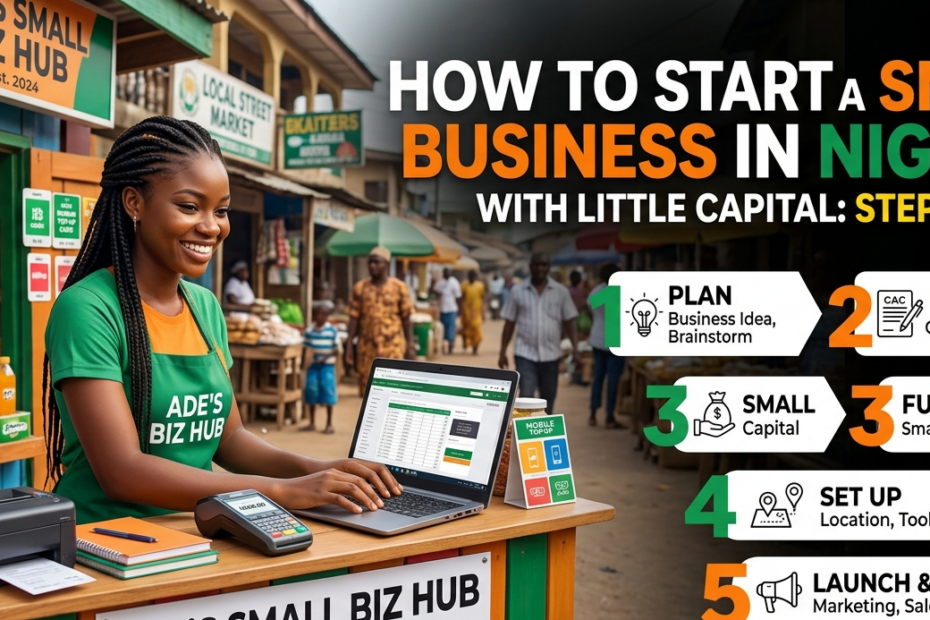
Starting a small business in Nigeria with little capital is not just a smart move—it is often the most practical way to build financial stability in today’s economy.
With rising unemployment, increasing cost of living, and limited access to large startup funds, many Nigerians are turning to small-scale businesses as a reliable source of income.
The good news is that you don’t need millions of naira to get started. What matters most is having the right idea, a clear plan, and the willingness to grow gradually.
Starting small allows you to reduce financial risk while learning how business works. Instead of borrowing money or investing heavily upfront, you can begin with what you already have—your skills, your smartphone, or even your network of friends and family. This approach makes it easier to test your business idea, understand your customers, and make improvements without facing major losses.
Another advantage of starting small in Nigeria is flexibility. You can run your business from home, online, or within your local community. Many successful entrepreneurs today started with very little capital but grew through consistency and smart decision-making. Small beginnings also encourage discipline, especially when it comes to managing money and reinvesting profits.
In a fast-changing economy like Nigeria’s, starting small is not a limitation—it is a strategy. It gives you the opportunity to build experience, confidence, and income over time, while positioning yourself for bigger opportunities in the future.
Step 1: Identify a Profitable Business Idea
Choosing the right business idea is the foundation of your success, especially when starting with little capital in Nigeria. A profitable business is not just about what you like—it must solve a real problem or meet a demand in your environment. Before you start anything, take time to observe what people around you need daily.
Look at your neighborhood, school, workplace, or online communities. Businesses that provide everyday needs like food, transportation, phone accessories, and essential services tend to perform well because people will always spend money on them.
Location also plays a major role in determining whether your business will succeed. What works in Lagos may not work the same way in a smaller town.
For example, a POS business might thrive in areas with limited banking access, while a food or snack business may do better in busy streets, near offices, or around schools. Understanding your environment helps you choose a business that fits your target market and increases your chances of making consistent sales.
Another important factor is your skills. Starting a business becomes easier and cheaper when you already have relevant skills. If you know how to bake, design graphics, write, or fix phones, you can turn that skill into a business without spending much money. Even if you don’t have a skill yet, you can learn one quickly online and start small.
In summary, a profitable business idea in Nigeria comes from the right mix of demand, location, and skills. When these three align, you increase your chances of building a sustainable business even with limited capital.
Step 2: Start With What You Have
One of the biggest mistakes many people make when starting a business in Nigeria is waiting until they have “enough” money or perfect conditions. In reality, successful small businesses often begin with the resources already available.
Starting with what you have helps you take action immediately instead of delaying your plans. It also reduces pressure and allows you to grow your business step by step.
Your smartphone is one of the most powerful tools you already own. With it, you can promote your business, communicate with customers, and even sell products online.
Platforms like WhatsApp, Facebook, and Instagram make it easy to reach potential buyers without spending money on advertising. You can post your products, share updates, and build trust with your audience right from your phone.
Your skills are another valuable resource. Whether it is cooking, writing, designing, teaching, or repairing items, you can turn what you already know into a source of income. Instead of spending money to learn everything at once, start offering simple services and improve as you gain experience. Many successful entrepreneurs in Nigeria began by monetizing basic skills and gradually expanded.
Space is also something you can use creatively. You don’t need to rent a shop immediately. You can start from home, use a small corner for production, or even operate entirely online. This helps you save costs while focusing on growing your customer base.
Starting with what you have is about being resourceful and intentional. It proves that you don’t need a lot of capital to begin—you just need to make smart use of the resources already around you.
Step 3: Low Capital Business Ideas in Nigeria
If you are starting with little capital, the key is to choose a business that requires low startup costs but has steady demand. In Nigeria, there are several small-scale businesses you can start quickly and grow over time. The goal is to begin small, generate income, and reinvest your profit to expand.
One popular option is the POS business. With a small investment, you can provide cash withdrawal, deposit, and transfer services in areas where banking services are limited. This business works especially well in busy streets and local communities where people need quick access to cash.
Mini importation is another profitable idea. You can start by ordering affordable products like fashion items, gadgets, or beauty products from international suppliers and resell them at a higher price locally. With the help of your smartphone and social media, you can promote your products and get customers without owning a physical shop.
Freelancing is perfect if you have digital skills like writing, graphic design, or social media management. You can offer your services to clients online and get paid without needing any physical inventory. All you need is your skill, internet access, and consistency.
A food or snacks business is also a great option because food is a daily necessity. You can start by selling items like small chops, pastries, or homemade meals within your area. This business requires minimal capital and can grow quickly with good quality and customer service.
Lastly, selling phone accessories such as chargers, earphones, and phone cases is highly profitable due to constant demand. You can start small, sell within your community, and gradually expand.
These low capital business ideas prove that you can start earning in Nigeria without a huge investment—what matters is taking action and staying consistent.
Step 4: Validate Your Business Idea
Before investing your limited capital into any business, it is very important to first test and confirm that your idea will actually work. Many small businesses fail not because the idea is bad, but because there was no proper validation. Validation simply means checking if people are truly interested in what you want to sell before you spend too much money on it.
One of the easiest ways to validate your business idea in Nigeria is to start small. Instead of buying large quantities of products, begin with a few items and see how customers respond.
For example, if you want to start a food business, cook in small batches and sell within your area. If people like it and demand increases, then you can expand. This approach helps you avoid waste and reduces the risk of losing money.
You can also test your idea using social media platforms like WhatsApp and Facebook. Post your product or service, share it with friends, and ask for feedback. Pay attention to how many people show interest, ask questions, or place orders. This gives you a clear idea of whether your business has potential.
Another effective method is to study your competitors. Look at others already doing the same business in your area. Observe their pricing, customer engagement, and what people like about their products. This will help you understand what works and how you can improve or stand out.
Validating your business idea helps you make smarter decisions. It ensures that you are not guessing, but building your business based on real demand. When you test before investing heavily, you increase your chances of success and reduce unnecessary financial risks.
Step 5: Register (Optional but Important)
Registering your business is an important step that adds credibility and long-term structure to what you are building, even though it may not be necessary when you are just starting small.
In Nigeria, many small business owners begin informally and only register when their business starts growing or when they want to work with larger clients. However, understanding when and why to register is very important for your business success.
Business registration becomes necessary when you want to build trust with customers, access bigger opportunities, or expand beyond your immediate community.
For example, if you plan to supply products to companies, work with government agencies, or open a formal business bank account, registration will often be required. It also helps protect your business name so that no one else can legally use it.
In Nigeria, business registration is done through the Corporate Affairs Commission. This agency is responsible for legally recognizing businesses and giving them official status. Once your business is registered, it becomes easier to open business accounts, apply for loans, and build stronger partnerships.
However, if you are just starting with little capital, you don’t need to rush into registration immediately. It is often better to first test your business idea, build customers, and start generating consistent income. Once your business begins to grow and you see long-term potential, that is the right time to formalize it.
In summary, business registration is not the first step, but it is a smart long-term move. Start small, prove your idea, and then register when your business is stable enough to expand and attract bigger opportunities.
Step 6: Promote Your Business for Free
Promotion is one of the most important parts of building a successful small business, especially when you have little capital. The good news is that you don’t need to spend money on ads to get started. In Nigeria today, free digital platforms give you the opportunity to reach thousands of potential customers if used correctly and consistently.
One of the most powerful tools for free promotion is WhatsApp. You can start by sharing your products or services with your contacts, posting updates on your status, and joining relevant groups where your target customers are active. Because WhatsApp feels personal, people are more likely to trust and respond to your offers.
Another effective platform is Facebook. You can post in local buying and selling groups, create a business page, and engage with comments and inquiries. Facebook also allows you to reach people within your area, making it easier to target customers who are more likely to buy from you.
Instagram is also very useful, especially if your business involves visuals like fashion, food, or products. By posting high-quality pictures and short videos, you can attract attention and build a strong brand presence over time. Using hashtags and consistent posting can help your business reach more people organically.
The key to successful free promotion is consistency. Posting once is not enough—you need to show up regularly, engage with your audience, and respond quickly to messages. Over time, people will begin to recognize your business and trust your brand.
In summary, free promotion is about using available platforms wisely, staying active, and building relationships with potential customers. With the right approach, you can grow your business without spending money on advertising.
Step 7: Manage Money Properly
One of the biggest reasons small businesses fail in Nigeria is not because they are not profitable, but because the money is not managed properly. Once your business starts generating income, how you handle that money will determine whether you grow or collapse. Proper money management is what turns a small hustle into a long-term, sustainable business.
The first rule is to separate your business money from personal money. Many beginners make the mistake of spending business profits on personal needs without tracking it. This makes it difficult to know if the business is actually making progress. Even if you are operating on a small scale, try to keep a simple record of daily sales, expenses, and profits. A notebook or a mobile note app is enough to start.
Budgeting is another important habit. Plan how much you will reinvest back into the business, how much you will save, and how much you can safely use for personal needs.
A simple rule many small business owners follow is reinvesting a portion of every profit to restock or improve their business. This helps the business grow steadily without needing external loans.
Reinvestment is especially important for growth. Instead of spending all your profit, use part of it to buy more stock, improve your services, or reach more customers. Small, consistent reinvestments can turn a very small business into something much bigger over time.
It is also important to avoid unnecessary expenses. As your income increases, you may be tempted to upgrade your lifestyle quickly, but discipline is key at the early stage. Focus more on growth than immediate comfort.
In summary, managing money properly means tracking your income, budgeting wisely, and consistently reinvesting in your business. These simple habits are what separate struggling businesses from successful ones.
Frequently Asked Question Section
What is the cheapest business to start in Nigeria?
The cheapest businesses to start in Nigeria are usually service-based or small trading businesses that do not require rent, staff, or heavy equipment. Examples include airtime/data reselling (VTU), POS agency (in very small form), small snacks production, laundry services, or digital services like CV writing and social media management.
Many of these can start with ₦5,000–₦20,000 depending on scale. For instance, VTU business allows you to resell airtime and data directly from your phone, making it one of the lowest-cost options available.
The key reason these businesses are cheap is that they rely more on skill, network, and consistency than physical infrastructure. In Nigeria’s economy, small daily-income businesses tend to survive better because people spend money on essentials every day, such as food, communication, and transport services.
Can I start a business with ₦10,000?
Yes, you can realistically start a business with ₦10,000 in Nigeria, but it will be a micro-scale startup. With this amount, you should focus on businesses that do not require shop rent or large inventory.
Good examples include selling airtime and data (VTU), home-made snacks like chin-chin or puff-puff in small batches, or buying small household goods for resale within your neighborhood.
Another option is digital freelancing services like typing, CV writing, or WhatsApp marketing, where your phone is your main tool. Studies and local business guides show that very low-capital businesses often rely on reinvesting small profits rather than expecting big returns immediately.
The most important factor is not the money size but how fast you can rotate that money. ₦10,000 can grow if you consistently reinvest profits daily or weekly.
Which business moves fast in Nigeria?
Fast-moving businesses in Nigeria are usually those that satisfy daily human needs. These include food businesses (snacks, rice sales, small chops), airtime/data resale, POS services, and fast-consumption retail items like water, drinks, and toiletries.
Food-related businesses move especially fast because people eat every day regardless of income level or economy. POS and mobile money services also move quickly due to high cash demand in many communities.
In addition, small logistics and delivery services are growing fast due to online shopping and social media selling.
The speed of a business depends on location, pricing, and customer access, not just the idea itself. A simple business in a busy area can outperform a complex business in a poor location.
Do I need CAC registration to start?
No, you do not need CAC registration to start a small business in Nigeria. You can begin informally and test your idea first. Many people start as individuals selling products or services before registering officially.
However, CAC registration (Corporate Affairs Commission) becomes important when your business starts growing. It helps you build trust, open a business bank account, access loans, and work with bigger clients or companies. For online businesses or serious trading, registration also improves credibility.
So the best approach is:
- Start small without CAC
- Test and validate your business
- Register when you begin to scale
This method reduces risk and helps you avoid wasting money on a business that may not work.
What business can one start with 20,000 naira?
With ₦20,000, you have more flexibility to start a small but real business in Nigeria. Some strong options include homemade snacks (chin-chin, puff-puff, plantain chips), mini importation of small goods, reselling thrift clothes (okrika), or starting a small detergent or liquid soap production business.
You can also start digital services like VTU, social media marketing, or WhatsApp-based product reselling. Many low-capital businesses in Nigeria are designed to start small and grow through reinvestment rather than big startup capital.
For example, food snack businesses can turn ₦20,000 into daily income within days if you sell consistently in busy areas or online.
The key is to focus on fast-selling products, low waste, and high demand, instead of trying to look for “big profit” immediately.
What business can I do with 300,000 naira?
With ₦300,000 in Nigeria, you can start several solid small to medium-scale businesses that have good chances of growth if managed properly. One of the most common options is a POS (agent banking) business, where you provide cash withdrawal, deposit, and transfer services. This is profitable in busy areas because people rely heavily on cash transactions. You can also start a mini restaurant or food business, selling everyday meals like rice, swallow, or fast foods to workers and students.
Another strong option is mini importation, where you buy cheap goods like phone accessories, fashion items, or household products from international suppliers and resell them locally at a higher price. You can also consider poultry farming, especially broilers or layers, which can generate returns within a few months if properly managed.
Other ideas include laundry services, barbing or salon business, or even a phone accessories shop in a busy area. The key advantage of ₦300,000 is that it allows you to combine capital for both equipment and initial stock. However, success depends more on location, demand, and customer service than just money. Proper planning is important so that you don’t lock all your capital into slow-moving stock.
What business gives daily income in Nigeria?
Businesses that generate daily income in Nigeria are usually those that deal with everyday needs or fast-moving services. The most popular one is POS agency banking, where you earn small commissions from every transaction. Because people withdraw and transfer money daily, cash flow is constant.
Another strong daily-income business is food sales, such as selling cooked meals, snacks, or drinks. People eat every day, so demand is steady. Similarly, water and beverage sales move quickly in busy areas like schools, motor parks, and markets.
You can also earn daily income from transport services, small trading of fast-moving goods like sachet water, airtime/data reselling (VTU), or even small-scale laundry services. Barbing and hairdressing also generate daily or weekly cash flow depending on customer traffic.
The important factor is not just the business type but location and customer flow. A POS operator in a busy street will earn more daily than one in a quiet area. Daily income businesses require consistency, good service, and reinvestment of profit to grow steadily over time.
What business can I do with 70k?
With ₦70,000, you can start small but practical businesses in Nigeria that can grow quickly if managed well. One good option is thrift clothing (okrika) business, where you buy fairly used clothes in bundles and resell them at a profit. This works well among students and low to middle-income earners.
You can also start a small snacks business, producing items like puff-puff, chin-chin, buns, or meat pies. These products sell fast in busy areas, schools, and offices. Another option is detergent or liquid soap production, which requires low capital but has high demand in homes and shops.
With ₦70,000, you can also try mini POS setup, especially if you already have some basic equipment or partner with a fintech agent. Alternatively, you can start phone accessories resale, buying chargers, earpieces, and screen guards in bulk and selling them individually.
The key is to choose a business that rotates money quickly. ₦70,000 is enough to start small, test the market, and reinvest profits for expansion instead of expecting immediate large returns.
What can I use 10,000 naira to invest in?
₦10,000 is small, but it can still be used to start micro-businesses or investment-style activities in Nigeria. One of the easiest options is airtime and data reselling (VTU business), where you buy data or airtime at a discount and resell to others with small profit margins.
You can also invest in small food production, such as making chin-chin or puff-puff in small quantities and selling within your neighborhood. Another option is reselling small items, like sachet water, sweets, or recharge cards.
If you are digital-savvy, you can invest ₦10,000 in basic online skills, such as learning social media marketing or freelancing tools, which can later generate income. The key idea is that ₦10,000 should not be seen as “big capital” but as a starting seed for learning and small profit rotation.
Success with this amount depends on consistency, not size. Many people grow ₦10,000 into larger capital by reinvesting profits daily or weekly.
What are the top 10 most profitable small businesses in Nigeria?
The most profitable small businesses in Nigeria are those that meet daily needs and have high demand. Here are ten strong ones:
- POS (agent banking services)
- Food and restaurant business
- Mini importation business
- Airtime and data reselling (VTU)
- Thrift clothing (okrika) sales
- Poultry farming
- Phone accessories business
- Laundry and dry cleaning services
- Barbing salon or hairdressing
- Transportation services (bike, keke, or delivery)
These businesses are profitable because Nigerians spend money daily on essentials like food, transport, communication, and personal care. The success of each business depends on location, customer service, and consistency.
For example, POS thrives in crowded areas, food businesses succeed where there are workers or students, and phone accessories sell well near markets and bus stops. The key to profitability is not only choosing the right business but also managing expenses and reinvesting profits wisely.
Which business can I start with 100,000 naira?
With ₦100,000 in Nigeria, you are in a strong position to start a small but scalable business that can generate steady income if managed well. One of the best options is mini POS agency business, especially if you already have access to a phone and a good location. With this capital, you can buy a POS machine, register with a fintech agent, and still have money for working float.
Another solid option is small food business, such as selling rice meals, snacks, or fast foods in a busy area like a school, junction, or office environment. Food sells daily, which makes cash flow faster compared to many other businesses.
You can also start thrift clothing (okrika) resale, buying fairly used clothes in small bales and reselling them individually for profit. Another good idea is phone accessories business, such as chargers, earpieces, screen protectors, and power banks, which move quickly in urban areas.
With ₦100,000, you should avoid businesses with high risk of spoilage or slow turnover. The goal is to focus on fast-moving goods or services, then reinvest profit to expand. Success depends more on location, pricing, and consistency than the amount of money alone.
How to make 5000 naira daily online in Nigeria without investment?
Making ₦5,000 daily online in Nigeria without investment is possible, but it requires skill, consistency, and time rather than money. One of the most realistic methods is freelance microtasks, such as writing short articles, typing documents, or helping people format CVs and resumes. Many clients pay small but consistent amounts per task.
Another method is social media management, where you help small businesses post content, reply customers, or manage their WhatsApp or Instagram pages. You can also make money through affiliate marketing, where you promote products and earn commissions when people buy through your referral link.
Content creation is another option. Posting helpful videos or tips on TikTok, Instagram, or Facebook can attract followers, and over time you can earn from brand deals or promotions. You can also do online tutoring if you are skilled in a subject like math, English, or tech skills.
The key challenge is that “no investment” does not mean “no effort.” You are investing time, learning, and consistency. To reach ₦5,000 daily, you must build trust, improve skills, and actively look for clients or opportunities every day.
What business can I start immediately?
Businesses you can start immediately are usually those that require little or no setup delay. One of the fastest options is reselling airtime and data (VTU business), which you can start with just a phone and registration on a platform. You can begin within minutes and start earning small commissions.
Another immediate option is food selling, such as puff-puff, buns, or roasted plantain. These require simple ingredients and can be started the same day. You can also start small trading, like selling recharge cards, bottled water, or snacks in your neighborhood.
If you have skills, you can start freelancing services immediately—typing, CV writing, or social media management. You only need your phone or laptop and internet access.
The main advantage of immediate businesses is speed of entry, but success depends on how fast you attract customers. You should focus on what people already buy daily instead of trying to create new demand.
What business can I start with 500k naira?
With ₦500,000 in Nigeria, you can start a more stable and scalable business with higher profit potential. One of the strongest options is a full POS and agency banking business, where you combine cash withdrawal, transfer services, and bill payments in a busy location. This can generate daily income if properly positioned.
You can also start a mini restaurant or fast-food business, which performs well in urban areas. Another strong option is mini importation business, where you import fashion items, electronics accessories, or household goods and resell them locally.
Other ideas include poultry farming, barbing salon + accessories shop combo, or even boutique business. With ₦500k, you can also afford a small shop space, which increases credibility and customer trust.
The key advantage at this level is that you can combine stock, equipment, and marketing. However, avoid over-investing in one area without testing demand first. Proper planning and location choice are critical for success.
How to turn 300k into 1 million?
Turning ₦300,000 into ₦1 million is possible, but it requires strategy, discipline, and reinvestment rather than quick spending. The first step is choosing a fast-moving business such as POS services, food sales, or phone accessories trading. These businesses generate daily or weekly cash flow, which is important for scaling.
Next, you must reinvest profits consistently instead of withdrawing everything. For example, if you make ₦10,000–₦20,000 profit daily or weekly, reinvesting it helps your capital grow faster over time.
Another important strategy is adding multiple income streams within the same business, such as combining POS with airtime sales or adding snacks to a retail shop. This increases customer traffic and revenue.
Marketing also matters. Even a small business can grow quickly if more people know about it. Word of mouth, social media, and location visibility all play a role.
Finally, avoid unnecessary expenses and focus on cash flow management. Turning ₦300k into ₦1 million is not about luck; it is about consistent sales, smart reinvestment, and scaling gradually over time.
Which business can I start without money?
Starting a business without money is possible in Nigeria, but it usually means you are starting with skills, time, and effort instead of capital. One of the most common zero-capital businesses is freelancing services, such as writing, typing, graphic design (using free tools), or social media management. You only need a phone or computer and internet access.
Another option is affiliate marketing, where you promote products and earn commission when people buy through your link. You don’t own the product, so there is no startup cost. You can also start reselling services, like helping people recharge airtime, pay bills, or connect customers to services and earning small commissions.
You can also try content creation on platforms like TikTok, Facebook, or Instagram. While it may take time, consistency can eventually lead to income from brand deals or monetization.
The key idea is that zero-capital businesses depend heavily on your ability to provide value, build trust, and reach people. Money is not the starting point—skills and consistency are.
What are the 7 types of businesses?
Businesses are commonly grouped into seven main types based on their activities and structure:
- Sole Proprietorship – Owned by one person (most common small business type)
- Partnership – Owned by two or more people sharing profit and responsibility
- Limited Liability Company (LLC) – A registered company with legal protection for owners
- Corporation – Large business owned by shareholders
- Franchise – Business using an existing brand name (e.g., fast-food chains)
- Cooperative – Owned and run by members for shared benefits
- Online/Digital Business – Businesses operating mainly on the internet (e-commerce, freelancing, etc.)
Each type has different levels of risk, profit, and legal requirements. Small entrepreneurs often start with sole proprietorship or online businesses before scaling.
What business has a 90% success rate?
No business has a guaranteed 90% success rate everywhere, but some industries have very high survival rates when done properly. These include food businesses, POS agency banking, and essential retail businesses.
Food is one of the safest because people must eat daily. POS businesses also perform well because cash transactions are constant in Nigeria. Similarly, selling essential goods like water, toiletries, and groceries tends to succeed because demand is stable.
However, success depends heavily on location, management, pricing, and customer service. A good business in a bad location can still fail. So instead of focusing only on “high success rate businesses,” it is better to focus on high-demand businesses with low competition and good execution.
In reality, no business is 100% safe, but these sectors are among the most reliable.
What are the 4 types of business?
The four main types of business structure are:
- Sole Proprietorship – Owned by one person who controls everything and takes all profits and risks
- Partnership – Two or more people share ownership, profits, and responsibilities
- Corporation (Company) – A legal entity separate from its owners, offering protection and larger growth potential
- Limited Liability Company (LLC) – A flexible structure combining elements of partnership and corporation, protecting owners from personal liability
These structures define how a business is owned, taxed, and managed. Small businesses in Nigeria often start as sole proprietorships because they are easier to set up, while bigger businesses register as LLCs for legal protection and credibility.
Choosing the right structure depends on your goals, capital, and long-term plans.
What is the cheapest successful business to start?
The cheapest successful businesses are those that require low capital but high demand and fast turnover. In Nigeria, some of the most successful low-cost businesses include:
- Airtime and data reselling (VTU business)
- Food/snack sales (puff-puff, chin-chin, buns)
- POS agency banking (small setup)
- Laundry services
- Thrift clothing (okrika) resale
- Social media management or freelancing services
These businesses can start with very little money—sometimes as low as ₦5,000–₦50,000—and still grow into sustainable income sources. The reason they succeed is because they solve daily problems people already pay for, such as food, communication, transport, and basic services.
The cheapest successful business is not about price alone but about high demand + low running cost + fast customer turnover.
Related