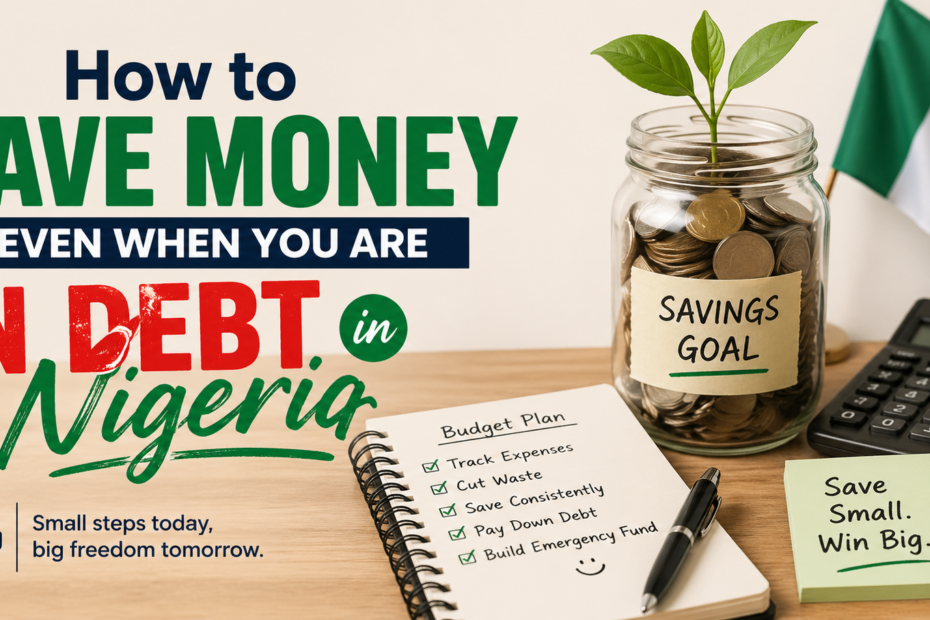
Debt has become a common part of financial life for many people in Nigeria. From bank loans and online lending apps to informal borrowings from friends, family, or daily credit purchases, it is easy for individuals to find themselves owing money at one point or another. Even “buy now, pay later” services and small business debts have added to the growing financial pressure many people face.
Living with debt often comes with a lot of stress. It is not just about repaying what is owed, but also about trying to meet daily needs like food, transport, rent, and family responsibilities at the same time. For many people, income feels like it disappears immediately because so much of it goes into settling debts and surviving each month.
Because of this pressure, many believe that saving money while in debt is impossible. The common thinking is that all available income should go into repayment, leaving nothing behind for savings. While it is important to reduce debt, this mindset can actually make financial recovery more difficult in the long run.
The truth is that saving is still possible, even when you are in debt—but it requires structure and discipline. Instead of choosing between saving and repaying debt, you can learn how to balance both in a smart and controlled way. Small, intentional savings alongside a clear repayment plan can help you regain financial stability faster than focusing on debt alone.
In this guide, you will learn practical ways to save money even while managing debt in Nigeria, without worsening your financial situation.
Can You Really Save While in Debt?
Yes, it is possible to save money even while you are in debt, but it requires a high level of discipline and proper financial structure. Many people assume that all extra income should go strictly into paying off debt, but in reality, a complete “all or nothing” approach can sometimes create more financial pressure.
The key is understanding the difference between small savings and full financial recovery. When you are in debt, your main priority should still be repayment. However, setting aside even a small amount regularly helps you build a safety cushion. This prevents you from going further into debt when unexpected expenses arise, such as medical bills, transport issues, or urgent needs.
Small savings do not mean ignoring your debt. Instead, they work alongside your repayment plan. For example, saving a small fixed amount while still paying off debt helps you avoid relying on borrowing again for emergencies. Over time, this small habit builds financial confidence and stability.
The most important factor is balance. Focusing only on debt without any savings can leave you vulnerable, while saving too much and ignoring debt can slow down your progress. A balanced approach ensures that you are reducing what you owe while also protecting yourself from new financial shocks.
In simple terms, saving while in debt is not about how much you save, but about consistency and control. With the right balance, you can gradually improve your financial situation without worsening your debt problem.
Step 1: Stop Creating New Debt
Before you can successfully save money while in debt, the most important step is to stop increasing the debt you already have. If new debts keep coming in, it becomes almost impossible to make progress financially.
Start by avoiding unnecessary borrowing. Many people fall into debt not because of emergencies, but because of lifestyle spending, impulse purchases, or borrowing for non-essential needs. While borrowing may feel like a quick solution, it often creates a cycle that becomes harder to escape over time.
You also need to control credit usage. This includes limiting how often you rely on loans, “buy now, pay later” services, or informal borrowing from friends and family. Every time you borrow without a clear repayment plan, you increase financial pressure for the future.
The goal is to break the debt cycle first. This means focusing on stability rather than convenience. When you stop adding new debt, you give yourself room to breathe, plan your repayments properly, and slowly begin to save even small amounts without making your situation worse.
In simple terms, you cannot build financial stability while constantly increasing what you owe. Stopping new debt is the foundation that makes both repayment and saving possible.
Step 2: Understand Your Total Debt Situation
Before you can effectively manage debt and still save money, you need to have a clear picture of exactly what you owe. Many people struggle financially because they do not fully understand the size and structure of their debt.
Start by listing all your debts in one place. This includes bank loans, online lending apps, money borrowed from friends or family, and any informal credit. Writing everything down helps you stop guessing and gives you a complete view of your financial obligations.
Next, identify the interest rates and repayment dates for each debt. Some debts grow faster than others due to high interest charges or strict repayment schedules. Understanding these details helps you know which debts are costing you more over time and which ones need immediate attention.
After that, you should prioritize urgent debts. These are debts with high interest rates, short repayment deadlines, or serious consequences if not paid on time. By focusing on the most pressing debts first, you reduce financial pressure and avoid penalties or additional charges.
In simple terms, knowing your total debt situation gives you control. Instead of feeling overwhelmed or confused, you can see clearly what you owe and create a realistic plan to manage it. This clarity is essential for balancing debt repayment and small savings effectively.
Step 3: Create a Strict Budget
When you are in debt, a strict budget is not optional—it is necessary. Without a clear structure, money disappears quickly and both repayment and savings become difficult to manage.
Start by clearly separating your needs and wants. Needs include essential expenses like food, rent, transport, and basic utilities. Wants include things like entertainment, eating out, fashion, and other lifestyle spending. When money is tight, needs must always come first, while wants should be reduced or paused.
Next, make sure you allocate money for debt repayment first before anything else. This is very important because debt does not wait. Once income comes in, a portion should be immediately set aside for repayment so you are consistently reducing what you owe. Treat debt repayment like a fixed bill, not an optional expense.
After handling debt and essential needs, you must also control lifestyle spending. This is where many people lose financial control. Small unnecessary expenses—like frequent outings, impulse shopping, or daily convenience spending—can quickly add up and reduce your ability to repay debt or save anything at all.
In simple terms, a strict budget helps you take control of your money instead of letting your money control you. When every naira has a clear purpose, it becomes easier to manage debt while still creating room for small, consistent savings.
Step 4: Save a Very Small Emergency Buffer
Even when you are in debt, it is still important to save a very small emergency buffer. This is not about building large savings, but about protecting yourself from falling deeper into debt when unexpected expenses arise.
You can start with something very small, such as ₦500–₦2,000 weekly or monthly, depending on your income level. The amount is not the focus—the habit is what matters. Consistency is what helps you slowly build financial stability over time.
Small savings still matter in debt situations because emergencies do not wait. Things like sudden illness, transport issues, or urgent family needs can appear at any time. Without even a small buffer, many people are forced to borrow again, which increases their total debt and makes repayment even harder.
Having a small emergency fund helps you prevent new borrowing for emergencies. Instead of taking another loan or asking for credit when something unexpected happens, you can rely on your small savings. This breaks the cycle of debt and gives you more control over your financial decisions.
In simple terms, saving while in debt is not about how much you save, but about protecting yourself from going deeper into financial trouble. A small buffer gives you stability, reduces stress, and supports your journey toward becoming debt-free.
Step 5: Increase Income Where Possible
When you are in debt, relying only on your current income can make repayment slow and stressful. One of the most effective ways to regain financial control is to find small but consistent ways to increase your earnings.
A good starting point is exploring side hustles. These are simple income-generating activities you can do alongside your main job or daily responsibilities. It could be selling small items, offering services in your community, or doing part-time work that fits your schedule. Even small extra income can make a difference when used for debt repayment and basic savings.
Another option is freelancing, especially if you have digital or creative skills. Skills like writing, graphic design, social media management, or basic tech services can be monetized online. Freelancing allows you to earn extra income without needing large capital, making it a flexible option for many people in debt.
You can also consider small trading or services. This may include reselling goods, offering home-based services, or supporting local needs in your environment. Many small businesses start with little capital but grow over time when managed consistently.
In simple terms, increasing your income gives you more room to breathe financially. It helps you pay off debt faster while also allowing you to maintain small savings, reducing long-term financial pressure.
Step 6: Use the Debt Snowball or Avalanche Method
When managing debt, having a clear repayment strategy is very important. Two common and effective methods you can use are the debt snowball and the debt avalanche approaches.
The debt snowball method involves paying off your smallest debts first while making minimum payments on larger ones. Once a small debt is cleared, you move to the next smallest. This method helps you build momentum quickly because you get small “wins” early, which reduces stress and keeps you motivated to continue.
On the other hand, the debt avalanche method focuses on paying off debts with the highest interest rates first. This approach may take longer to show visible progress, but it saves more money in the long run because you reduce the amount lost to interest over time.
Both methods are effective, and the best choice depends on your situation and personality. If you need motivation and quick progress, the snowball method may work better. If your goal is to minimize total repayment cost, the avalanche method is more efficient.
What matters most is consistency. By following either method, you create a structured plan that helps you stay focused, reduce financial pressure, and gradually eliminate your debts.
In simple terms, using a repayment strategy turns debt management into a clear step-by-step process instead of a stressful guessing game.
Step 7: Avoid Emotional Spending
One of the biggest reasons people remain stuck in debt is emotional spending. When finances feel tight, it is easy to make spending decisions based on stress, frustration, or temporary relief rather than actual need.
A common issue is the stress spending trap. Many people spend money to feel better after a stressful day or financial pressure. This might include ordering food, buying unnecessary items, or making impulse purchases. While it may provide short-term relief, it worsens financial problems in the long run.
Another challenge is social pressure and coping spending. In many environments, there is pressure to “fit in” with friends, colleagues, or family. This can lead to spending on outings, clothes, or events that are not affordable. People also sometimes spend to cope with personal or financial stress, even when they are already in debt.
To overcome this, you need to build financial discipline habits. This includes pausing before every purchase, asking whether it is a need or want, and sticking strictly to your budget. It also means learning to say no to unnecessary social spending and finding healthier ways to manage stress that do not involve money.
In simple terms, avoiding emotional spending helps you stay in control of your finances. When you stop spending based on feelings and start spending based on priorities, it becomes much easier to repay debt and gradually build small savings.
Common Mistakes to Avoid
When trying to save money while in debt, many people make avoidable mistakes that actually make their financial situation worse instead of better. Understanding these errors helps you stay focused and avoid unnecessary setbacks.
One major mistake is ignoring debt while trying to save big. Some people focus too much on building savings while leaving their debts unpaid or poorly managed. This is risky because interest and penalties may continue to grow, making the total debt even harder to clear. Saving is important, but it should not come at the expense of ignoring repayment responsibilities.
Another common issue is borrowing to repay other debts blindly. This happens when people take new loans to settle existing ones without a proper plan. While it may seem like a quick solution, it often leads to a cycle of debt where one loan replaces another, increasing overall financial pressure instead of reducing it.
A third mistake is not having a clear repayment plan. Without structure, debt repayment becomes random and inconsistent. People may pay small amounts without strategy, delay payments, or focus on the wrong debts first. This lack of direction slows down progress and increases stress.
In simple terms, these mistakes happen when there is no balance or planning. To successfully save while in debt, you need a clear strategy that prioritizes repayment, avoids unnecessary borrowing, and keeps your financial goals organized.
Conclusion
Being in debt does not mean your financial life is over. It simply means you are in a phase that requires more structure, discipline, and intentional decisions. With the right approach, it is still possible to regain control and gradually improve your financial situation.
The most important thing to remember is that small steps rebuild financial control over time. You don’t need to fix everything at once. By focusing on reducing debt, managing spending, and saving small amounts consistently, you slowly create stability. These small actions may seem insignificant, but they compound into meaningful progress.
What matters most is consistency, not perfection. Every time you make a repayment, avoid unnecessary spending, or save a small amount, you are moving closer to financial freedom. Over time, these habits help you break the cycle of debt and build a stronger financial foundation.
Now it’s time to take action. Don’t wait for the perfect moment. Start with what you have. Your simple challenge is: save ₦500 this week while also making progress on one of your debts. It may look small, but it is a powerful step toward regaining control of your money and your future.
Frequently Asked Questions
How can I save money if I have debt?
Saving money while in debt is challenging, but it is still possible with discipline and a clear financial structure. The first step is to understand your financial reality by listing all your debts, income, and essential expenses. This helps you see where your money is going and identify unnecessary spending. Many people in debt struggle because they try to “save first” without controlling spending, which leads to frustration.
A practical approach is the 70/20/10 rule adapted for debt situations. You can allocate around 70% of your income to essential needs like food, rent, and transport, 20% to debt repayment, and 10% to emergency savings. Even if the savings portion is small, consistency matters more than size. The purpose of saving while in debt is not wealth-building but financial stability for emergencies so you don’t fall deeper into debt when unexpected expenses arise.
Another strategy is to reduce lifestyle costs aggressively. This may include cooking at home instead of eating out, using public transport, and cutting subscriptions or non-essential services. Any money saved from these cuts should be redirected either to debt repayment or small savings.
It is also important to avoid taking new loans while trying to save. New debt cancels progress quickly. If possible, consider increasing your income through side hustles such as freelancing, small trading, or part-time work common in Nigeria’s informal economy.
Ultimately, saving money in debt is about balance and discipline. You are not trying to accumulate wealth immediately but to build financial breathing space while gradually reducing your debt burden.
How to be free from debt in Nigeria?
Becoming debt-free in Nigeria requires a combination of discipline, planning, and consistent action. The first step is to stop accumulating new debt. Many people remain stuck because they borrow to solve short-term problems while ignoring long-term consequences. Once borrowing stops, recovery becomes easier.
Next, list all your debts clearly, including informal loans from friends, cooperatives, or microfinance banks. Arrange them from smallest to largest or from highest interest to lowest. Two popular repayment strategies can be used: the “snowball method,” where you clear smaller debts first for motivation, or the “avalanche method,” where you focus on high-interest debts to reduce total cost.
Budgeting is critical. In Nigeria’s economic environment, where inflation can affect daily expenses, you need a strict budget that prioritizes essentials. Every extra income, including bonuses or side earnings, should go toward debt repayment.
Negotiation is also important. Many lenders are open to restructuring repayment terms if you communicate honestly. You may be able to reduce interest rates, extend payment periods, or agree on smaller installments.
Increasing income is equally important. Depending solely on one salary in Nigeria can slow progress, so side hustles like online work, small-scale trading, or skills-based services can accelerate debt repayment.
Finally, discipline and consistency matter most. Debt freedom is not an overnight process but a steady journey. With structured repayment, controlled spending, and additional income streams, becoming debt-free in Nigeria is achievable.
What are the 5 C’s of debt?
The 5 C’s of debt are key principles lenders use to evaluate a borrower’s creditworthiness. They help determine whether a person is likely to repay a loan successfully. Understanding them also helps individuals manage their finances better and improve their chances of accessing credit responsibly.
The first C is Character, which refers to your reputation for repaying debts. Lenders assess your credit history, trustworthiness, and how you have handled previous loans. If you have a record of late payments or defaults, your character rating is considered weak.
The second is Capacity, which measures your ability to repay debt based on your income and existing obligations. Lenders check whether your monthly income is sufficient to cover loan repayments after essential expenses.
The third is Capital, which refers to your personal financial investment or savings. Having some capital shows financial responsibility and reduces the lender’s risk because you are not entirely dependent on borrowed funds.
The fourth is Collateral, which includes assets you can offer as security for a loan, such as property, vehicles, or equipment. If you fail to repay, the lender can recover losses through these assets.
The fifth is Conditions, which involve external factors such as interest rates, inflation, or economic conditions in Nigeria that may affect repayment ability.
Together, these 5 C’s help lenders make informed decisions and also guide borrowers in improving their financial habits. Strengthening these areas increases your chances of getting loans with better terms.
Is it possible to save money while in debt?
Yes, it is possible to save money while in debt, but it requires careful planning and discipline. Many people believe they must completely finish paying debt before saving, but this approach can be risky. Without savings, any emergency—such as medical issues or urgent repairs—can force you to take more debt.
The key is balance. Even while repaying debt, you can set aside a small percentage of your income as emergency savings. This does not need to be large; even 5–10% consistently saved can build a financial cushion over time. The purpose is not wealth creation but financial protection.
However, your debt situation matters. If you have high-interest debt, like payday loans or expensive personal loans common in Nigeria, you may need to prioritize repayment more heavily while still keeping a very small emergency fund. This prevents financial setbacks while you aggressively reduce debt.
Another important strategy is budgeting. By tracking expenses, you can identify wasteful spending and redirect that money toward both savings and debt repayment. For example, reducing transport costs, eating at home, or cutting unnecessary subscriptions can free up extra funds.
Side income can also help. Even small additional earnings can be split between debt repayment and savings, accelerating financial recovery.
In summary, saving while in debt is not only possible but also financially wise when done correctly. It ensures stability while you work toward becoming debt-free.
How can I clear my debt without money?
Clearing debt without money sounds appealing, but in reality, debt cannot disappear without value exchange. However, there are practical strategies to reduce or eliminate debt even when you currently have little or no cash.
One effective method is negotiation. Many lenders, including informal lenders in Nigeria, may agree to reduce the total amount owed, waive interest, or restructure payments if you communicate honestly. Some may even accept partial settlement if they believe full repayment is unlikely.
Another approach is debt restructuring. This involves extending your repayment period to reduce monthly pressure, giving you time to generate income gradually. While it does not eliminate debt instantly, it makes repayment more manageable.
You can also focus on increasing income instead of relying on existing money. Even without upfront capital, you can take up small gigs, freelancing, tutoring, or commission-based work. The idea is to convert time and skills into money dedicated strictly to debt repayment.
Additionally, you may consider debt consolidation, where multiple debts are combined into one with a lower interest rate. This simplifies repayment and can reduce overall burden.
In extreme cases, legal or institutional options such as bankruptcy or formal debt relief may exist, but these come with long-term consequences and should be carefully considered.
Ultimately, while debt cannot be cleared magically without resources, it can be reduced or managed through negotiation, income generation, and strategic planning. The key is to shift focus from having no money to creating structured ways of generating repayment power over time.
What is the 3 6 9 rule of money?
The 3-6-9 rule of money is a simple personal finance guideline used to structure income, spending, saving, and investing in a disciplined way. While interpretations may vary, the most common version helps individuals create balance in their financial life by dividing income into three main time-focused priorities: short-term (3), medium-term (6), and long-term (9).
The “3” represents short-term needs, usually covering immediate expenses such as food, transport, rent, and daily living costs. This portion ensures survival and stability. The goal is to keep this category controlled so it does not consume all income.
The “6” represents medium-term financial goals. This includes debt repayment, emergency savings, and skill development. This stage is crucial because it helps you move from financial instability to control. In Nigeria, this may also include setting aside money for business capital or side hustles.
The “9” represents long-term wealth building, such as investments, retirement planning, or asset acquisition like land or property. This is the stage where money begins to work for you instead of just being spent.
The rule teaches financial discipline by encouraging a structured flow of money instead of random spending. It helps individuals prioritize survival, stability, and growth in a balanced way. However, it should be adjusted based on income level—especially for low-income earners where debt repayment may take priority over investment.
How to clear debt and save money?
Clearing debt while saving money requires a strategic balance between discipline, budgeting, and income management. The first step is to understand your full financial situation by listing all debts, income sources, and essential expenses. Without clarity, it is impossible to make progress.
Next, adopt a strict budgeting system. A common approach is prioritizing essential needs first, then allocating a fixed percentage toward debt repayment, and a small portion toward savings. Even if savings are small, consistency is more important than size. The goal is to build financial resilience while reducing debt.
A powerful method for debt clearance is the “debt avalanche” or “debt snowball” strategy. The avalanche focuses on high-interest debts first, while the snowball targets small debts for psychological motivation. Both methods help reduce financial pressure over time.
To save money while in debt, you must cut unnecessary expenses. This includes reducing eating out, limiting subscriptions, and avoiding impulse purchases. Every saved amount should be redirected toward debt or emergency savings.
Increasing income is also very important. Side hustles, freelancing, small trading, or digital skills can significantly speed up both debt repayment and savings growth, especially in Nigeria’s economic environment.
Ultimately, the key is balance: aggressive debt repayment, controlled spending, and small but consistent savings. This ensures you are not financially exposed while working toward becoming debt-free.
What is the 7 7 7 rule for collections?
The 7-7-7 rule for collections is a debt recovery guideline often used by collection agencies to structure follow-up communication with borrowers. It is designed to increase contact efficiency while maintaining pressure for repayment.
The first “7” refers to contacting the debtor within the first 7 days of missed payment. This early stage is usually a reminder phase where lenders or collectors notify the borrower about the overdue payment and possible consequences.
The second “7” refers to following up every 7 days if payment is not made. This consistent weekly contact is meant to maintain urgency and encourage repayment before the debt becomes long-term overdue. Communication may include calls, messages, or formal notices.
The third “7” refers to escalating actions after 7 weeks of non-payment. At this stage, the case may be transferred to more serious recovery processes, such as legal action, restructuring offers, or third-party debt recovery agencies.
The rule is not a universal law but a structured approach used in some debt collection systems to maintain discipline and recovery efficiency. It emphasizes consistency, pressure, and escalation over time.
For borrowers, understanding this rule is important because it highlights how quickly debts can escalate if ignored. Early communication with lenders can prevent aggressive collection actions and help negotiate better repayment terms.
Can you be jailed for debt in Nigeria?
In Nigeria, you cannot be jailed simply for owing a civil debt. The Nigerian Constitution and legal system generally prohibit imprisonment for inability to repay a loan or financial obligation. Debt is treated as a civil matter, not a criminal offense.
However, there are important exceptions. If debt is linked to fraud, false representation, or criminal intent, it can become a criminal case. For example, if someone intentionally deceives a lender or uses fraudulent documents to obtain a loan, that is no longer a civil debt issue and may lead to prosecution.
Also, while you cannot be jailed for debt itself, lenders can take legal action to recover their money. This may include court judgments, wage deductions, asset seizure, or freezing of accounts depending on the case.
In practice, some informal lenders or aggressive debt collectors may threaten imprisonment to intimidate borrowers. These threats are often misleading. What they can legally do is pursue recovery through the courts, not arrest you for owing money.
However, ignoring court orders or refusing to comply with legal rulings related to debt recovery can lead to legal consequences, which may include penalties.
In summary, owing money in Nigeria does not automatically lead to jail, but fraud-related debt or refusal to obey court decisions can create legal risks. Understanding your rights helps protect you from intimidation and illegal debt collection practices.
What happens after 7 years of not paying debt?
What happens after 7 years of not paying debt depends on the type of debt, the lender, and the legal system involved. In many financial systems, there is something called a “statute of limitations,” which sets a time limit on how long a lender can legally pursue debt through the courts. However, this does not mean the debt disappears automatically.
In some countries, after several years (often between 5–7 years), unpaid debts may no longer be enforceable in court. This means the lender may lose the legal right to sue you for repayment. However, the debt itself still exists, and creditors may still attempt to recover it through calls or negotiations.
In Nigeria, the situation is less strictly defined compared to some Western countries. Debts do not simply vanish after 7 years. Lenders or financial institutions may still pursue repayment, although enforcement may become more difficult over time depending on documentation and legal action taken earlier.
Another important factor is credit history. In systems where credit bureaus operate, unpaid debts can remain on your credit record for years, affecting your ability to access future loans, mortgages, or financial services.
Even after a long period, lenders may still contact you or offer settlement options where you pay a reduced amount to close the debt.
In summary, after 7 years of not paying debt, it may become harder for lenders to enforce legal action, but the debt does not automatically disappear. It can still affect your financial reputation and future borrowing ability.
How to pay debt with no income?
Paying debt with no income is difficult, but not impossible if you focus on survival strategies, negotiation, and income creation. The first step is to stop ignoring the debt.
Many people fall deeper into financial stress because they avoid communication with lenders. Instead, contact your creditors and explain your situation honestly. Some banks or informal lenders in Nigeria may offer temporary relief, restructuring, or reduced payment plans.
Next, look for any possible source of immediate income, even if it is small. This could include short-term work such as errands, freelance tasks, tutoring, small trading, or selling unused items at home. The goal is not to earn a full salary immediately but to generate “seed money” that can begin reducing the debt burden.
You should also prioritize essential survival needs first—food, shelter, and basic transport—before debt payments. At the same time, avoid taking new loans to pay old ones because this creates a debt cycle that is harder to escape.
If the debt is large, consider negotiating a settlement where you pay a reduced lump sum over time or agree on a longer repayment period with smaller installments. Many creditors prefer partial repayment over total default.
In extreme cases, support from family, cooperative groups, or community savings systems (ajo/esusu) can help temporarily stabilize your situation.
Ultimately, the fastest way to manage debt with no income is to combine communication, small income generation, and strict prioritization of basic needs while avoiding further borrowing.
What do banks consider when giving loans?
Banks evaluate several key factors before approving a loan to determine whether a borrower is likely to repay successfully. These factors are often used to reduce financial risk.
The first major consideration is income stability. Banks want to see a steady and reliable source of income, such as a salary, business revenue, or consistent cash flow. Irregular income makes approval more difficult unless other strong factors are present.
Second is credit history. This shows how you have handled previous loans. Late payments, defaults, or unpaid debts reduce your chances of approval.
Third is debt-to-income ratio (DTI). This measures how much of your income is already committed to existing debts. If your debts are too high compared to income, banks may reject your application.
Fourth is collateral. For secured loans, banks require assets such as property, vehicles, or savings as security. This reduces their risk if you fail to repay.
Fifth is character and trustworthiness, which includes your financial behavior, banking history, and relationship with the bank.
Finally, banks consider purpose of the loan. Some purposes, like business expansion or asset acquisition, are seen as lower risk compared to consumption loans.
Together, these factors help banks decide not just if you can borrow, but whether you can repay responsibly.
What are the 7ps of credit?
The 7Ps of credit are principles used by lenders to assess loan applications and manage credit risk. They help determine whether a borrower is reliable and capable of repayment.
The first P is Person, which refers to the borrower’s identity, reputation, and financial behavior. Lenders assess trustworthiness and credit history.
The second is Purpose, meaning why the loan is needed. Loans for productive uses like business or investment are viewed more favorably than luxury spending.
The third is Payment, which looks at how the borrower plans to repay the loan, including repayment structure and schedule.
The fourth is Protection, which refers to collateral or security that reduces the lender’s risk in case of default.
The fifth is Perspective, which involves analyzing future financial outlook, such as job stability or business growth potential.
The sixth is Profitability, which considers whether the loan will generate returns for the lender through interest.
The seventh is Policy, meaning the internal rules of the lending institution and external regulations that guide lending decisions.
Together, the 7Ps help banks make informed lending decisions while ensuring responsible borrowing practices.
How to get a 700 credit score in 30 days?
Achieving a 700 credit score in 30 days is very difficult, especially if your credit history is weak or has negative records. However, you can make rapid improvements if your credit profile is already moderate.
The first step is to pay down outstanding balances immediately, especially high credit card or loan utilization. Lowering your credit utilization ratio below 30% can significantly improve your score quickly.
Second, ensure all bills and loan payments are made on time. Even a single late payment can negatively affect your score, so consistency is critical.
Third, avoid applying for new loans or credit within this period. Each application creates a hard inquiry that can reduce your score temporarily.
Fourth, check your credit report for errors. Sometimes incorrect information like wrong balances or duplicated debts can lower your score unnecessarily. Disputing these errors can lead to quick improvements.
Fifth, keep older credit accounts open, even if unused, because credit history length matters.
However, it is important to be realistic. Moving to 700 in 30 days is only possible if you are already close to that range and simply need optimization. For most people, building a strong credit score is a gradual process that takes months of consistent financial discipline.
What is the fastest way to reduce debt?
The fastest way to reduce debt is to combine aggressive repayment strategies with increased income and strict spending control. The most effective method is the “debt avalanche,” where you focus on paying off debts with the highest interest rates first. This reduces the total cost of debt over time.
Another fast approach is the “debt snowball” method, where you clear smaller debts first. While it may not save as much interest, it builds psychological motivation and momentum.
Cutting expenses is equally important. You need to temporarily reduce non-essential spending such as eating out, entertainment, subscriptions, and luxury purchases. Every extra naira should go toward debt repayment.
Increasing income is the biggest accelerator. In Nigeria, side hustles such as freelancing, online work, small trading, delivery services, or skill-based services can significantly speed up repayment.
You should also consider negotiating with lenders. Some banks or informal lenders may agree to reduce interest, restructure loans, or accept lump-sum settlements.
Finally, avoid taking new debt while repaying existing ones. This is one of the most common reasons people remain stuck in debt cycles.
In summary, the fastest debt reduction comes from combining higher payments, lower spending, extra income, and smart repayment strategy.