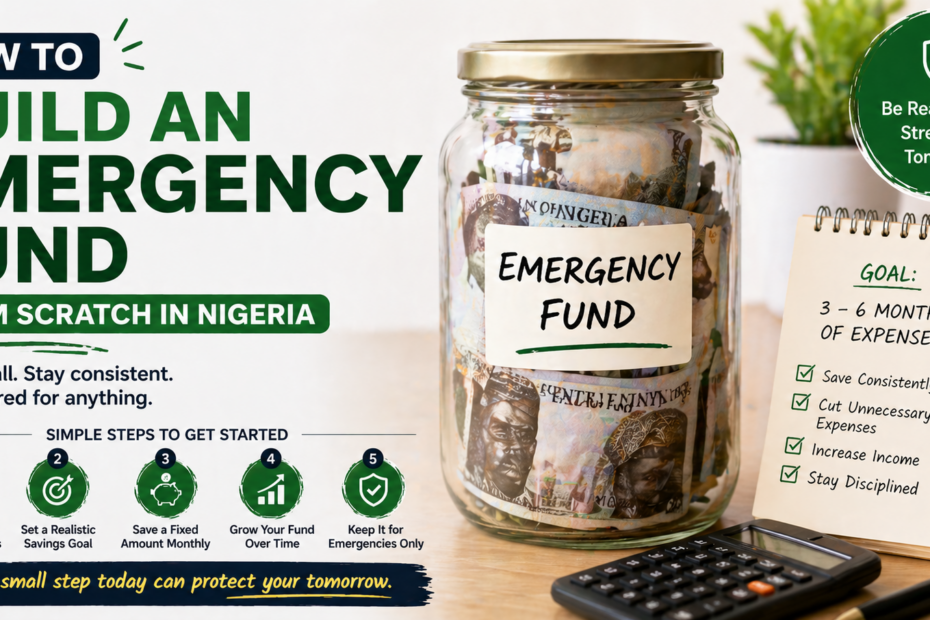
Life in Nigeria is full of uncertainties, and financial stability can change very quickly. One moment everything feels fine, and the next, unexpected situations like job loss, sudden illness, urgent family needs, or unplanned expenses can completely disrupt your finances. For many people, these situations don’t give any warning, and when they happen, they often come with immediate pressure to find money.
The reality is that most people are not financially prepared for emergencies. A large number of individuals live from one income cycle to the next, with little or no savings set aside for unexpected situations.
As a result, when emergencies arise, they are forced to borrow money, rely on others, or sell personal belongings just to survive. This creates stress and often leads to deeper financial struggles.
One of the main reasons this happens is because emergency planning is often ignored. Many people focus only on daily survival—food, transport, rent, and basic needs—without thinking about what would happen if income suddenly stopped or an urgent expense appeared. Because of this, even small financial shocks can feel overwhelming.
This is where an emergency fund becomes very important. An emergency fund is not just extra savings—it is a financial safety net designed to protect you during difficult and unexpected situations. It gives you peace of mind knowing that you have something to fall back on when life does not go as planned.
In this guide, you will learn how to build an emergency fund from scratch in Nigeria, even if you are starting with little or no savings.
What is an Emergency Fund?
An emergency fund is a dedicated amount of money you set aside specifically for unexpected and urgent financial situations. It is not money for daily spending, lifestyle enjoyment, or planned expenses. Instead, it is a financial backup that you only use when something serious and unplanned happens, such as medical emergencies, sudden job loss, urgent repairs, or family crises.
It is important to understand the difference between general savings and an emergency fund. Savings are usually flexible and can be used for planned goals like buying a phone, paying school fees, traveling, or starting a small business. An emergency fund, on the other hand, is strictly reserved for emergencies. It is more protected and should not be touched unless the situation is truly urgent and unavoidable.
Many people in Nigeria mix both together, which often leads to financial problems. When all savings are treated the same way, it becomes easy to spend money that was meant for emergencies on non-essential needs. This is why separating your emergency fund from your regular savings is very important for financial stability.
In the Nigerian economy, having an emergency fund is even more important due to the unpredictability of income and expenses. Prices of goods and services can change quickly, jobs are not always stable, and unexpected financial demands can arise at any time. Without a safety net, many people are forced to borrow money or fall into debt when emergencies occur.
In simple terms, an emergency fund acts as your financial protection. It ensures that when life becomes uncertain, you have something to rely on instead of starting from zero or going into debt.
Why You Need an Emergency Fund in Nigeria
Having an emergency fund is not just a financial “nice-to-have” in Nigeria—it is a necessity. Life can change quickly, and without warning, you may find yourself facing expenses that were never part of your monthly plan. An emergency fund helps you stay stable during these difficult moments without going into debt or relying completely on others.
One major reason is medical emergencies. Health issues can happen suddenly, and hospital bills in Nigeria can be expensive. Even minor treatments or medications can disrupt your budget if you are not prepared. An emergency fund ensures you can handle urgent medical situations without delay or financial stress.
Another important reason is job loss or income delay. Many people depend on monthly salaries or unstable income sources. If payment is delayed or a job is lost unexpectedly, having an emergency fund can help you survive for a few weeks or months while you figure things out.
You also need it for family responsibilities. In many Nigerian households, financial support is often shared among family members. Unexpected needs like helping a relative, contributing to urgent family issues, or covering emergencies at home can arise at any time.
Lastly, there are unexpected transport or rent issues. Transport fares can increase suddenly, or you may face urgent rent demands or relocation costs. Without backup funds, these situations can become very stressful.
In simple terms, an emergency fund protects you from life’s unpredictability. It gives you financial breathing room when things don’t go as planned, helping you stay in control instead of falling into crisis.
Step 1: Set a Realistic Emergency Fund Goal
The first step in building an emergency fund from scratch in Nigeria is not about saving a large amount immediately—it is about setting a realistic and achievable goal. Many people fail at saving because they aim too high from the beginning and quickly get discouraged when progress feels slow.
A better approach is to start small, especially if you are just beginning. You can set an initial emergency fund target between ₦20,000 and ₦100,000, depending on your income level. This first goal is not meant to cover everything—it is simply to help you build the habit of saving and create a basic financial cushion.
Once you are consistent with small savings, you can gradually increase your target over time. The long-term goal of an emergency fund is usually 3 to 6 months’ worth of living expenses. This means enough money to cover your basic needs like food, transport, rent, and data if your income suddenly stops. However, reaching this level takes time, so there is no need to rush.
The most important thing is to avoid setting unrealistic expectations at the beginning. If your goal is too large, you may feel overwhelmed and give up before you even build momentum. Starting small makes the process easier and helps you stay consistent.
In simple terms, a realistic emergency fund goal gives you direction without pressure. It allows you to start where you are, build discipline, and gradually grow your financial safety net over time.
Step 2: Start Small but Consistent
After setting a realistic emergency fund goal, the next step is to start saving regularly, even if the amount is small. The most important thing at this stage is not how much you save, but how consistently you do it.
You can begin with something simple like saving ₦500 to ₦2,000 weekly or monthly, depending on your income. If your income is irregular, even saving small amounts whenever money comes in is still effective. The idea is to make saving a regular habit, not a one-time effort.
Many people make the mistake of waiting until they have “enough money” before they start saving. The problem with this mindset is that there is never a perfect time. Expenses always come up, and the opportunity to save keeps getting postponed. Starting small removes that pressure and helps you begin immediately.
Consistency is what builds a strong emergency fund over time. For example, saving ₦1,000 every week may seem small, but over several months, it adds up significantly. What matters most is that you keep doing it without stopping, even when the amount feels insignificant.
At this stage, discipline is more important than speed. You are not trying to build a large fund overnight—you are building a habit that will support long-term financial stability.
In simple terms, starting small but staying consistent ensures that your emergency fund grows steadily, without stress or financial pressure, regardless of your income level.
Step 3: Open a Separate Savings Account
One of the most important rules when building an emergency fund is to keep it completely separate from your everyday spending money. If your emergency fund is mixed with your regular cash, it becomes very easy to dip into it for non-emergency expenses, which defeats its purpose.
The best approach is to open a separate savings account specifically for your emergency fund. This helps you clearly distinguish between money for daily needs and money reserved for emergencies. When funds are separated, you are less likely to spend them impulsively.
You can use a traditional bank savings account or digital savings platforms like PiggyVest and Kuda. These apps are especially useful because they are designed to help you save consistently and reduce the temptation to withdraw money unnecessarily. Some even offer features that allow you to lock your savings for a specific period, making it harder to access without intention.
The main goal of separation is protection. Your emergency fund should not be treated like regular spending money. It should be stored in a place that makes you think twice before touching it. This small barrier helps ensure that the money is only used for real emergencies, not everyday wants or impulses.
In simple terms, opening a separate savings account gives your emergency fund structure, safety, and discipline. It helps you stay focused on your financial goals and prevents accidental misuse of the money you are trying to build for future protection.
Step 4: Cut Unnecessary Expenses
If you want to build an emergency fund faster, you need to create extra room in your budget. One of the most effective ways to do this is by reducing unnecessary expenses and being more intentional about how you spend money.
Start by cutting down on lifestyle spending. This includes frequent eating out, impulse shopping, excessive entertainment costs, and other non-essential habits that quietly drain your money. These expenses may feel small individually, but over time they significantly reduce your ability to save.
Next, focus on the difference between needs and wants. Needs are essential expenses like food, transport, rent, and basic communication. Wants are things that improve comfort or enjoyment but are not necessary for survival. When you clearly separate the two, it becomes easier to decide what should be prioritized and what can be reduced or delayed.
Once you start saving money from reduced expenses, the next step is very important: redirect those savings directly into your emergency fund. Instead of allowing the extra money to get absorbed back into spending, intentionally move it into your savings account. This ensures that every adjustment you make in your lifestyle contributes directly to your financial safety.
Cutting expenses does not mean living an uncomfortable life. It simply means spending more wisely and avoiding wasteful habits. When you reduce unnecessary spending and channel that money into your emergency fund, you accelerate your progress without needing to increase your income.
In simple terms, this step helps you build your emergency fund faster by making better use of the money you already have.
Step 5: Automate Your Savings
One of the easiest ways to build an emergency fund consistently is to remove the stress of “remembering” to save. This is where automation becomes very powerful. Instead of relying on willpower every time you get money, you set up a system that saves for you automatically.
You can do this by setting up automatic transfers from your main account to your emergency fund account. Many banks and digital platforms allow you to schedule daily, weekly, or monthly transfers. This means a fixed amount is moved into your savings without you needing to take any action each time.
Another important habit is to save immediately after income arrives. Whether it is salary, business profit, or any form of income, the first thing you should do is separate your emergency fund portion before spending anything else. This is often called “paying yourself first,” and it ensures that saving is not delayed or forgotten.
The advantage of automation is that it removes emotional decision-making. When you depend on motivation, it becomes easy to skip saving on days when expenses feel high or when you feel tempted to spend. But when the process is automatic, consistency becomes much easier to maintain.
Over time, this system helps you build your emergency fund quietly in the background while you focus on daily life. You are not constantly forcing yourself to save—it just happens naturally.
In simple terms, automating your savings makes building an emergency fund easier, faster, and more consistent because it turns saving into a routine, not a decision.
Step 6: Only Use It for Real Emergencies
Building an emergency fund is only half of the process—the real discipline is knowing when not to use it. Many people successfully save money, but lose it quickly because they treat the emergency fund like regular savings. This defeats its purpose completely.
An emergency fund should only be used for true emergencies. These include situations like medical issues, where urgent treatment or hospital bills are needed. Health problems are unpredictable, and having funds available can prevent delays in getting proper care.
Another valid reason is job loss or income interruption. If your source of income suddenly stops, your emergency fund is what helps you survive while you figure out your next step. It gives you breathing room instead of forcing you into debt immediately.
You can also use it for urgent unavoidable expenses, such as critical repairs, sudden family emergencies, or essential needs that cannot be postponed. These are situations where delaying payment could cause bigger problems.
However, it is very important to understand what does not qualify as an emergency. Your emergency fund is not for wants or lifestyle spending. It should not be used for outings, shopping, upgrading gadgets, or covering planned expenses that were simply not budgeted properly.
The key idea is discipline. If you start using your emergency fund for non-emergencies, you weaken your financial safety net and reduce your protection for real crises.
In simple terms, your emergency fund is your financial backup plan, not extra spending money. Using it only for real emergencies ensures that it will be there when you truly need it most.
Common Mistakes to Avoid
Even when people successfully start building an emergency fund, many still fail to maintain it because of a few common mistakes. These errors may seem small, but they can completely weaken your financial safety net over time.
One major mistake is using the emergency fund for random spending. This happens when people treat it like extra savings instead of a strictly protected fund. Once you start using it for non-emergencies like outings, shopping, or unnecessary expenses, it loses its purpose and becomes difficult to rely on during real crises.
Another common mistake is not replenishing after withdrawal. Emergencies can happen, and sometimes you may need to use part of your fund. However, the problem comes when people withdraw money and never replace it. This leaves the fund empty or incomplete, which means you are unprotected when the next emergency occurs.
The third mistake is starting too big and quitting early. Many beginners set unrealistic targets like saving a large amount quickly, but struggle to keep up. When the goal feels too difficult, they lose motivation and stop completely. This prevents them from building consistency, which is the most important part of saving.
Avoiding these mistakes is essential if you want your emergency fund to actually work when you need it. The goal is not just to save once, but to build a system that stays strong over time. With discipline, realistic goals, and consistency, your emergency fund becomes a reliable financial backup instead of an unused or empty account.
Conclusion
At the end of the day, an emergency fund is not optional—it is something everyone needs, regardless of income level or financial situation. Life is unpredictable, and emergencies can happen when you least expect them. Having a financial backup gives you stability, reduces stress, and helps you handle difficult situations without falling into debt or panic.
The key takeaway from everything you’ve learned is that building an emergency fund is not about how much you earn, but how consistently you save. Small, regular contributions may look insignificant at first, but over time they create a strong financial safety net. What matters most is discipline, not speed.
Many people delay starting because they think they need a large amount of money before they can begin. In reality, the best time to start is now, even if it’s with very little. The habit you build today is what will protect you in the future.
You don’t need perfection to begin—you just need consistency. Once you commit to saving regularly, even small amounts start to add up and give you confidence in your financial life.
Now it’s time to take action. Don’t just read and move on—start building your safety net immediately. Your challenge is simple: start your emergency fund with ₦1,000 this week. It may seem small, but it is the first step toward real financial security.
Frequently Asked Questions
What is the 3 6 9 rule for emergency funds?
The “3 6 9 rule” for emergency funds is an informal financial guideline used to help individuals decide how much money they should save for unexpected situations. While it is not a strictly standardized global financial rule, it is based on the widely accepted idea of saving multiple months of living expenses to stay financially secure during emergencies like job loss, illness, or sudden financial shocks.
In this interpretation, the numbers 3, 6, and 9 represent different levels of financial safety depending on your income stability and lifestyle. The 3-month emergency fund is usually recommended for people with stable jobs or multiple income sources. It means you should save enough money to cover your essential expenses—such as food, rent, transport, and utilities—for at least three months.
The 6-month emergency fund is the most commonly recommended level. It provides a stronger financial cushion and is ideal for people with moderate income stability, freelancers, small business owners, or those in uncertain job environments. It ensures that even if income stops, you can survive comfortably for half a year without debt.
The 9-month emergency fund is the highest level in this informal rule. It is often recommended for people with highly unstable income, business owners in volatile markets, or individuals with dependents. It gives maximum financial protection and reduces stress during long periods of financial uncertainty.
The idea behind the 3-6-9 rule is flexibility. It allows people to choose a safety level based on their personal situation instead of following a strict one-size-fits-all approach. However, the foundation remains the same: multiply your monthly essential expenses by the number of months you want to prepare for.
In simple terms, this rule teaches financial preparedness. It ensures that no matter what happens—job loss, emergencies, or economic challenges—you have enough savings to stay afloat without relying on loans or debt.
What can I use 10,000 naira to invest in?
Investing ₦10,000 in Nigeria may seem small, but it can be a powerful starting point if used wisely. The key is to focus on low-capital, high-demand opportunities that can grow over time rather than expecting instant large profits.
One of the most practical options is small-scale trading. You can buy fast-moving goods such as snacks, sachet water, toiletries, phone accessories, or food items in small quantities and resell them for profit. For example, buying in bulk from wholesalers and selling in smaller units can help you double or gradually grow your money.
Another option is food reselling or mini food business. With ₦10,000, you can start selling items like akara, boiled eggs, popcorn, or bread and tea. These are everyday consumables with constant demand, especially in busy areas like schools, bus stops, or offices.
You can also invest in digital skills or learning. ₦10,000 can be used to buy online courses, data, or training materials to learn skills like graphic design, copywriting, social media management, or basic video editing. These skills can later generate consistent income.
Another growing option is mobile or digital micro-investments, such as savings apps or fintech platforms that allow small investments or savings plans. While returns vary, they help build discipline and grow money over time.
You could also consider service-based micro-businesses, such as laundry services, cleaning assistance, or phone charging services in areas with limited electricity access.
The most important thing is not the amount, but consistency and reinvestment. ₦10,000 is best used as seed capital to start something small that can grow gradually into a sustainable income source.
In summary, ₦10,000 can be invested in trading, food vending, digital skills, or small services. With patience and discipline, even a small amount can grow into a meaningful financial opportunity.
How to build an emergency fund step by step?
Building an emergency fund is one of the most important financial habits for long-term stability. It protects you from unexpected expenses like medical bills, job loss, or urgent repairs. The process is simple, but it requires consistency and discipline.
The first step is set a clear target amount. Most experts recommend saving at least 3 to 6 months of your essential expenses. For example, if your monthly needs are ₦50,000, your emergency fund target should be between ₦150,000 and ₦300,000. Having a clear goal helps you stay focused.
The second step is open a separate savings account. This should be different from your regular spending account so you are not tempted to spend the money. Keeping it separate creates mental discipline and reduces impulsive withdrawals.
The third step is start small but stay consistent. You don’t need a large income to begin. Even saving ₦500 or ₦1,000 daily or weekly can build up over time. The key is consistency, not the amount.
The fourth step is automate your savings if possible. Setting up automatic transfers ensures that a portion of your income goes directly into savings before you even spend it.
The fifth step is cut unnecessary expenses. Reduce spending on non-essential items like excessive data plans, snacks, or impulse purchases. Redirect those small amounts into your emergency fund.
The sixth step is increase contributions when income grows. If you receive extra money like bonuses, gifts, or side income, add a portion of it to your emergency savings.
Finally, only use the fund for real emergencies. This is not for shopping, entertainment, or wants. It should be strictly for urgent and unavoidable situations.
In conclusion, building an emergency fund is about discipline, patience, and consistency. Even small contributions grow into a strong financial safety net over time.
What is the 70/30/10 rule money?
The 70/30/10 money rule is a simple budgeting system that helps individuals manage income in a balanced and structured way. It is designed to ensure that you can cover your needs, save money, and still have flexibility for other financial responsibilities.
In this system, 70% of your income is used for living expenses. This includes rent, food, transportation, utilities, and other essential needs. The goal is to ensure that your basic lifestyle is fully covered without exceeding your income.
The next 30% is typically allocated to savings or investments. This portion is very important because it helps you build financial security over time. It can be used for emergency funds, business investments, or long-term savings goals.
Some versions of the rule also include a third category, where part of the savings is split further into investments or debt repayment depending on individual needs. However, the most common interpretation focuses on balancing spending and saving effectively.
The strength of the 70/30/10 (or similar variations) rule is its flexibility. It does not demand perfection but encourages structure. It helps people avoid overspending while still prioritizing financial growth.
This rule is especially useful for people with irregular income, such as freelancers or business owners, because it provides a simple way to divide money whenever income comes in.
In summary, the 70/30/10 rule is about balance: spending responsibly, saving consistently, and building financial discipline over time. It helps individuals avoid financial stress while still working toward long-term stability.
What is the formula for an emergency fund?
The formula for calculating an emergency fund is simple and widely used in personal finance. It is based on your monthly essential expenses and the number of months you want to prepare for.
The basic formula is:
Emergency Fund = Monthly Essential Expenses × Number of Months
Most financial experts recommend saving between 3 to 6 months of expenses, although some people choose up to 9 months depending on job stability and personal needs.
For example, if your monthly essential expenses are ₦80,000, then:
- 3-month emergency fund = ₦80,000 × 3 = ₦240,000
- 6-month emergency fund = ₦80,000 × 6 = ₦480,000
This formula ensures that you can survive without income for a specific period while still maintaining your basic lifestyle.
Essential expenses include rent, food, transportation, utilities, and any other unavoidable monthly costs. It does not include luxury spending like entertainment, luxury shopping, or non-essential subscriptions.
The reason this formula works is because it is personalized. Everyone has different income levels and spending habits, so the emergency fund is tailored to individual needs rather than a fixed amount.
In practical terms, the formula helps you set a clear savings goal and track your progress over time. It also gives peace of mind because you know exactly how much financial cushion you need.
In conclusion, the emergency fund formula is a simple but powerful tool that helps you prepare for financial uncertainty, reduce stress, and build long-term financial stability.
What is the 3 month savings rule?
The 3-month savings rule is a personal finance guideline that suggests you should save enough money to cover your essential living expenses for at least three months.
It is a simplified version of emergency fund planning and is designed to help individuals stay financially stable during unexpected situations such as job loss, illness, or sudden income disruption.
To understand it clearly, you first calculate your monthly essential expenses. These include rent, food, transportation, electricity, data, and other necessary costs you cannot avoid. Once you know your monthly spending, you multiply it by three. The result is the amount you should aim to save.
For example, if your monthly expenses are ₦100,000, then your 3-month savings target would be ₦300,000. This money should be kept separately from your regular spending account so you are not tempted to use it for non-emergencies.
The reason this rule is important is because many people live paycheck to paycheck without any backup plan. When emergencies happen, they are forced to borrow money or sell assets. The 3-month savings rule acts as a financial cushion that gives you time to recover without falling into debt.
It is especially useful for people with stable jobs or multiple income streams because they may not need a very large emergency fund. However, freelancers or business owners often extend it beyond three months due to income uncertainty.
In summary, the 3-month savings rule is about preparation and stability. It ensures that even if your income stops suddenly, you can still survive comfortably for a short period while you rebuild or find new income sources.
How to turn 10K into 100k quickly?
Turning ₦10,000 into ₦100,000 quickly is possible, but it is important to be realistic: it requires strategy, effort, consistency, and sometimes reinvestment. There is no guaranteed “fast money” method without risk or work, but there are practical approaches that can multiply small capital over time.
One of the most effective methods is small-scale trading. You can buy fast-moving goods like snacks, phone accessories, perfumes, or household items in small quantities and resell them at a profit. The key is choosing products with high demand and quick turnover, especially in busy areas like schools, bus stops, or offices.
Another option is food vending or mini food business. Items like akara, popcorn, bread and tea, or boiled eggs can be started with small capital and sold daily. Reinvesting profits consistently is how ₦10,000 can gradually grow into ₦100,000.
You can also use the money for service-based income. For example, offering services like laundry, phone charging, small delivery errands, or assisting business owners with simple tasks. These require more effort than capital but can scale quickly.
Another strong method is digital skills and online freelancing. ₦10,000 can be used to buy data, learn a skill (like graphic design or social media management), and start offering services online or locally. Once you get clients, your earnings can grow faster than physical trading.
Affiliate marketing or reselling digital products is also another route, where you promote products and earn commissions for each sale.
The most important principle is reinvestment. You should not spend your profit but keep cycling it back into your business until it grows.
In conclusion, turning ₦10,000 into ₦100,000 is not magic—it is a process of choosing the right opportunity, working consistently, and reinvesting profits wisely.
What is the safest investment with the highest return in Nigeria?
In Nigeria, there is no investment that is 100% safe and guarantees the highest return at the same time. Generally, safety and high returns move in opposite directions—the safer an investment is, the lower the return tends to be, and vice versa. However, there are still relatively safe investment options that offer reasonable returns.
One of the safest options is government-backed treasury bills and bonds. These are considered low-risk because they are issued by the government. They may not give very high returns, but they are stable and predictable over time.
Another relatively safe option is high-interest savings accounts or fixed deposit accounts in reputable banks or fintech platforms. These offer modest returns but are very low risk and suitable for capital preservation.
For slightly higher returns with moderate risk, money market funds are popular in Nigeria. They invest in safe instruments like treasury bills and commercial papers and typically offer better returns than regular savings accounts.
If you are willing to take moderate risk, real estate investment groups or cooperative societies can provide better long-term returns. However, you must carefully verify credibility to avoid fraud.
For higher returns (but higher risk), small business investments often outperform financial instruments. For example, investing in trading, agriculture, or food businesses can generate significant returns, but they require management and carry risk.
In summary, the safest investments in Nigeria include treasury bills, bonds, savings accounts, and money market funds. If you want higher returns, you must accept higher risk through business or alternative investments. The key is balancing safety and growth based on your financial goals.
Where can I invest my money and get monthly income?
Investing for monthly income requires choosing options that generate regular cash flow rather than long-term capital growth only. In Nigeria, there are several practical ways to achieve this depending on your capital and risk tolerance.
One common option is real estate rental income. Owning or co-owning rental properties allows you to earn monthly rent payments. While the initial investment is high, real estate remains one of the most stable sources of monthly income.
Another option is money market funds or fixed-income investments. Some financial institutions in Nigeria offer monthly or quarterly interest payouts depending on the product. These are relatively safe and require minimal management.
You can also invest in small businesses that generate daily or weekly sales, such as food vending, mini importation, laundry services, or transportation services (like bike or taxi investments). When properly managed, these can produce steady monthly income.
Dividend-paying stocks are another option. Some companies listed on the stock exchange pay dividends to shareholders periodically, which can serve as passive income. However, this depends on company performance.
For lower capital, digital or online income streams are becoming more popular. This includes affiliate marketing, content creation, and freelancing services that can generate monthly earnings once established.
Another practical approach is cooperative societies (ajo or esusu groups) that allow members to invest and receive returns or loan benefits periodically.
In conclusion, monthly income investments depend on your capital level. Real estate and businesses provide strong cash flow, while financial instruments offer stability. The best strategy is diversification—combining multiple income sources to reduce risk and increase consistency.
Where is the best place to put an emergency fund?
The best place to keep an emergency fund is somewhere safe, accessible, and separate from your regular spending money. The goal of an emergency fund is not to grow aggressively, but to be available instantly when unexpected situations arise.
One of the best places is a high-yield savings account. This keeps your money secure while earning small interest. It also ensures easy access when needed, which is very important for emergencies.
Another good option is a money market account or money market fund. These are low-risk financial instruments that offer slightly better returns than regular savings accounts while still allowing relatively quick withdrawal.
In Nigeria, many people also use trusted fintech savings platforms that offer locked or flexible savings options. These platforms often provide better interest rates than traditional banks, but it is important to choose well-regulated and reputable ones.
A key principle is that your emergency fund should NOT be invested in high-risk assets like stocks, crypto, or business ventures. While those may offer higher returns, they can also lose value quickly, which defeats the purpose of emergency savings.
It is also important to keep your emergency fund separate from your main bank account. If it is mixed with daily spending money, you are more likely to use it for non-emergencies.
In summary, the best place for an emergency fund is a safe, liquid, and low-risk account such as a savings account or money market fund. The focus should always be on safety and accessibility, not high returns.