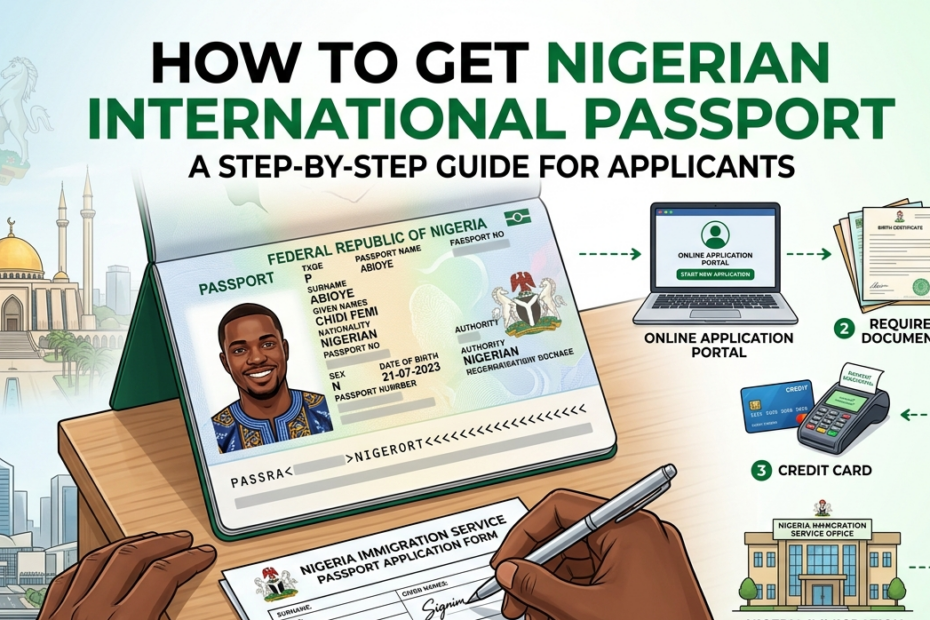
A Nigerian international passport is an official travel document issued by the Nigeria Immigration Service (NIS) that allows Nigerian citizens to travel abroad. It contains your personal information, photograph, and biometric data, making it a secure form of identification for international travel.
If you’re planning to travel outside Nigeria for business, study, or leisure, knowing how to get a Nigerian international passport is essential. This comprehensive guide will take you step by step through the application process, requirements, fees, and tips to ensure you obtain your passport without unnecessary delays.
Types of Nigerian International Passport
The Nigeria Immigration Service (NIS) issues several types of international passports to cater to different travel needs. Understanding the Nigerian passport types will help you choose the right one for your situation.
1. 32-Page Regular Passport
The 32-page passport is the standard option for most travelers. It is ideal for individuals who travel occasionally for business, tourism, or study. This passport contains 32 pages for visas and stamps and is usually valid for five years.
2. 64-Page Regular Passport
The 64-page passport is suitable for frequent travelers who need more pages for visas and entry stamps. Like the 32-page passport, it is valid for five years but offers double the page capacity, reducing the need for frequent renewals.
3. Official and Diplomatic Passports
Official and diplomatic passports are issued to government officials, diplomats, and individuals representing Nigeria abroad. These passports grant special privileges and are generally not available to the general public.
By understanding the different Nigerian passport types, you can select the one that best fits your travel needs and avoid unnecessary delays during application.
Eligibility Requirements for a Nigerian International Passport
Before applying, it’s important to know the eligibility requirements for a Nigerian international passport. Meeting these criteria ensures a smooth application process and reduces the risk of delays or rejection.
1. Nigerian Citizenship
Only Nigerian citizens are eligible to apply for a Nigerian international passport. Applicants may need to provide proof of citizenship through a birth certificate, National Identification Number (NIN), or other verified documents issued by the government.
2. Age Requirements
Applicants must meet the minimum age requirements set by the Nigeria Immigration Service. Generally, children under 16 require parental consent, while adults over 16 can apply independently.
3. Required Documents
To apply successfully, ensure you have the following verified documents:
-
Birth Certificate or Age Declaration – to confirm your date of birth and citizenship
-
National Identity Card or Voter’s Card – to verify your identity
-
Recent Passport-Sized Photographs – typically 2 to 4 copies
-
Proof of Residence – utility bills, tenancy agreement, or similar documents
-
Payment Receipt – proof of application fee payment
Providing accurate and verified documents is crucial. The Nigeria Immigration Service strictly checks all submissions, so errors or unverified documents can lead to application delays or rejection.
Step-by-Step Process to Get a Nigerian International Passport
Applying for a Nigerian international passport can seem complicated, but following these steps will make the process smooth and hassle-free.
Step 1: Create an Account on the Nigeria Immigration Service (NIS) Portal
Visit the official NIS portal or NIPOST website to create your application account. Make sure to use accurate personal information, as this will be used throughout the passport application process.
Step 2: Fill in the Application Form
Log in to your account and complete the online application form. Provide all required information, including personal details, passport type, and contact information. Double-check your entries to avoid errors that may cause delays.
Step 3: Book an Appointment at a Passport Office
Once your application is complete, schedule an appointment at your nearest passport office. Early booking is recommended to secure a convenient date and avoid long waiting times.
Step 4: Make Payment
Pay the application fee through the official portal. The fees vary depending on the passport type (32-page or 64-page). Ensure you use only verified payment methods to avoid scams.
Step 5: Attend Interview and Biometric Capture
Visit the passport office on your appointment date with all required documents. During the interview, your photograph, fingerprints, and signature will be captured for your passport.
Step 6: Collect Your Passport
After processing, you will be notified to collect your passport. Bring your receipt and identification to receive your Nigerian international passport.
Following these steps carefully ensures a smooth experience and helps you avoid unnecessary delays.
Passport Fees and Payment Methods
Knowing the correct fees and approved payment methods is crucial when applying for a Nigerian international passport. Paying through unofficial channels can lead to scams or delays.
Passport Fees
-
32‑page booklet (5‑year validity): ₦100,000.
-
64‑page booklet (10‑year validity): ₦200,000.
If you’re applying from abroad (diaspora), the fees remain:
-
32‑page: US$150
-
64‑page: US$230
Note: Fees may vary slightly depending on the passport office or updates by the Nigeria Immigration Service (NIS). Always confirm on the official NIS portal.
Official Payment Methods
To avoid fraud, use only official payment channels:
-
Nigeria Immigration Service (NIS) Online Payment Portal – using debit/credit cards or bank transfers
-
NIPOST Offices – where available, for cash payments
-
Bank Payment via Remita or designated partner banks
Never make payments to individuals or unofficial websites claiming to process passports.
Tips to Avoid Delays When Applying for a Nigerian International Passport
Applying for a Nigerian international passport can sometimes be delayed due to errors or incomplete documentation. Following these tips will help ensure a smooth and timely process:
1. Ensure All Documents Are Correct
Double-check that all required documents—birth certificate, ID, proof of residence, passport photos, and payment receipt—are accurate and verified. Incomplete or incorrect documents are the most common reason for application delays.
2. Arrive Early for Appointments
Arriving early at your passport office gives you enough time to complete any last-minute formalities. Late arrivals may have to reschedule, which can push back your passport collection date.
3. Avoid Third-Party Scams
Only use official channels such as the NIS portal, NIPOST, or authorized banks for applications and payments. Avoid intermediaries or “agents” who promise to speed up your application for a fee, as this can result in fraud or rejection.
4. Track Your Application (Optional but useful)
Some passport offices allow you to track your application status online. Monitoring your application helps you catch issues early and reduces anxiety about delays.
Following these tips will increase your chances of a fast, hassle-free passport application process.
Frequently Asked Questions
How long does it take to get a Nigerian international passport?
The processing time for a Nigerian international passport can vary depending on several factors, including the type of passport applied for, the completeness of your documentation, and the workload at the passport office.
Generally, a standard 32-page or 64-page passport takes between 3 to 6 weeks to be processed once all requirements have been submitted and the biometric data captured. For applicants using expedited services, some passport offices may complete processing in as little as 1 to 2 weeks, though this is often subject to availability and additional fees.
Several factors can influence delays. For instance, errors in the application form, incomplete or unverified documents, or discrepancies in personal information can lead to extended processing times.
Similarly, applying during peak travel seasons or in major cities where the passport offices receive higher volumes of applications may also add to the waiting period.
Applicants are therefore encouraged to submit their documents carefully and ensure all information matches official records such as birth certificates, National Identity Numbers, and voter cards.
Tracking the application online via the Nigeria Immigration Service portal is also an important step, as it provides real-time updates on the status of your passport.
Collecting biometric data and attending interviews promptly can prevent unnecessary delays. In rare cases, applications may be referred for further verification if there are questions about identity or citizenship, which could extend the processing timeline.
In summary, while the typical timeframe is 3–6 weeks for standard passports, careful preparation, accurate documentation, and adherence to official instructions are key to ensuring your passport is ready on time. Planning ahead and applying well before any planned international travel is highly recommended.
Can I apply online from abroad?
Yes, Nigerian citizens living abroad can apply for a Nigerian international passport online through the Nigeria Immigration Service (NIS) portal.
The online application process allows applicants to complete the necessary forms, upload required documents, and pay the passport fees from anywhere in the world. This service is particularly convenient for Nigerians residing in the diaspora who may not have easy access to a passport office in Nigeria.
The process begins with creating an account on the NIS portal and accurately filling out the application form. Applicants must ensure all personal details match official documents, such as birth certificates and National Identity Numbers.
Once the form is completed, a payment can be made online using approved methods such as debit or credit cards and certain partner banks that process international payments.
After payment, applicants are required to schedule an appointment at a designated Nigerian embassy or consulate abroad for biometric data capture. This typically includes fingerprinting, photographing, and verifying the submitted documents. Depending on the country and the volume of applications, the appointment may take several days to schedule, so early planning is recommended.
Once biometric data is collected, the application is processed similarly to those submitted within Nigeria. Applicants can track the progress of their passport through the NIS portal, and upon approval, the passport can either be collected in person at the embassy or consulate or delivered via secure courier, depending on the options available in the country of residence.
Applying online from abroad ensures that Nigerians living outside the country can access a secure and structured passport application process without having to travel to Nigeria unnecessarily.
What do I do if my passport application is rejected?
If your Nigerian international passport application is rejected, the first step is to identify the reason for the rejection. The Nigeria Immigration Service (NIS) usually provides a formal notice explaining the issue, which could range from incomplete documentation, discrepancies in personal information, unpaid fees, or failure to attend a scheduled appointment. Understanding the reason is critical to addressing the problem effectively.
Once the cause is identified, applicants should take corrective action immediately. This may involve obtaining or re-submitting verified documents, correcting errors in personal information, or settling outstanding fees. In cases where documents were deemed invalid, it is crucial to obtain official replacements or certified copies to meet the NIS standards.
After correcting the identified issues, applicants may re-submit their application either online or in person at the passport office. Some offices may require a new appointment or payment for a re-application, depending on the circumstances of the rejection.
It is advisable to contact the NIS customer service or visit the passport office directly to confirm the correct steps for re-submission, as different passport offices may have slightly varying procedures.
To prevent future rejections, carefully review the application before submission, double-check all supporting documents, and ensure compliance with all instructions from the NIS.
Keeping a copy of every submitted document and payment receipt is also essential for reference during any re-application process. Being proactive and attentive to detail significantly increases the likelihood of approval on the second attempt.
Can I pay in installments?
No, the Nigeria Immigration Service does not allow installment payments for Nigerian international passports. The full passport fee must be paid at the time of application to secure your appointment and ensure that your application is processed. Attempting to pay in installments or through unofficial channels may result in delays, rejection, or potential fraud.
Applicants must use only verified payment methods, such as the official NIS online portal, NIPOST offices where applicable, or partner banks designated to process passport fees.
Completing the full payment upfront guarantees that the application will be processed according to the standard timeline and prevents complications associated with partial payments.
While the inability to pay in installments may be inconvenient for some applicants, it ensures that the passport application system remains secure, transparent, and efficient. Planning ahead to cover the full fee before initiating the application is highly recommended to avoid unnecessary delays or frustration.
Are there discounts for students or frequent travelers?
No, the Nigeria Immigration Service does not offer discounts on Nigerian international passports for students, frequent travelers, or any specific group. The passport fees are standardized and apply equally to all applicants, regardless of age, occupation, or travel frequency. This uniform pricing ensures fairness, transparency, and consistent funding for passport processing across all applicants.
While it might be tempting to seek discounts through third-party agents, applicants should avoid unofficial offers, as these are often fraudulent and could lead to financial loss or rejection of the application.
Instead, students and frequent travelers are encouraged to plan ahead and budget for the official fees. Some universities or organizations may offer travel grants or allowances, but these are separate from the NIS passport fee structure and do not constitute a discount from the passport office itself.
The consistency in fees also reflects the costs involved in secure document production, biometric verification, and administration. By maintaining a standard fee structure, the NIS ensures that every applicant receives the same level of service and security in passport issuance, regardless of background or purpose of travel.
Conclusion
Applying for a Nigerian international passport doesn’t have to be complicated. By understanding the different passport types, meeting eligibility requirements, preparing all necessary documents, following the step-by-step application process, and paying the correct fees through official channels, you can avoid delays and complete your application smoothly.
Remember to double-check your documents, arrive early for appointments, and avoid unofficial intermediaries to ensure a hassle-free experience.
Take Action Today: Don’t wait until the last minute—start your application through the official Nigeria Immigration Service portal or your nearest passport office and take the first step toward traveling abroad with confidence.
How do I confirm my payment was successful?
Confirming that your payment for a Nigerian international passport was successful is a crucial step in ensuring that your application proceeds without delays. The Nigeria Immigration Service (NIS) provides multiple ways for applicants to verify that their payment has been properly processed and recorded.
When making payment through the official NIS online portal, you should receive an immediate confirmation on the screen once the transaction is completed. This confirmation usually includes a payment reference number, the amount paid, and the date of payment.
It is important to save this information, either by printing the confirmation page or taking a digital screenshot. This reference serves as proof of payment and is required during your appointment at the passport office.
If payment is made through a partner bank or authorized NIPOST office, you will receive an official receipt or payment slip. Check that all details on the receipt—your name, passport type, amount paid, and date—are accurate.
Keep this receipt safe, as it is considered official proof that your fee has been settled. Inaccurate or missing receipts can cause your application to be delayed or rejected.
For online payments, the NIS portal typically allows applicants to log in and view their payment history. This feature helps confirm that the payment has been successfully credited to your application.
If there is any discrepancy or the payment does not appear in the system after some time, it is important to contact NIS customer support immediately. Provide the payment reference number and any supporting documentation to resolve the issue quickly.
Additionally, it is advisable to reconcile your bank statement with the payment confirmation to ensure the amount has been debited correctly. This extra verification step helps prevent any disputes or delays caused by banking errors.
Applicants should never rely on unofficial confirmations or intermediaries claiming that payment has been received. Only receipts from the official NIS portal, authorized banks, or NIPOST offices are recognized for processing applications.
By following these steps and keeping all records organized, applicants can confidently proceed to schedule appointments, attend biometric capture, and complete their passport application without concerns about missing or unverified payments.
In summary, verifying your payment involves checking the online confirmation, keeping the official receipt, reviewing your payment history on the NIS portal, and ensuring the bank statement matches the amount paid. Taking these measures ensures that your Nigerian international passport application remains on track and avoids unnecessary delays.
How much does it cost to get an international passport in Nigeria now?
As of the most recent update by the Nigeria Immigration Service, the cost of obtaining an international passport in Nigeria has increased significantly.
Currently, the official price depends on the type of passport booklet you choose. A standard 32-page passport with 5-year validity costs about ₦100,000, while a 64-page passport with 10-year validity costs around ₦200,000.
These are the official government-approved fees, but in reality, applicants may spend slightly more due to additional charges such as bank processing fees or service-related costs. It is always advisable to budget a little above the official fee to avoid surprises during payment.
The increase in passport fees was introduced to improve service delivery and maintain the quality of Nigerian travel documents. While the price may seem high, the passport remains a critical document for international travel, identification, and access to global opportunities.
In summary, if you are planning to apply today, you should expect to pay between ₦100,000 and ₦200,000, depending on your preferred validity period and booklet size.
What are the requirements for a Nigerian international passport?
To apply for a Nigerian international passport, you must meet certain requirements set by the Nigeria Immigration Service. These requirements ensure that only eligible Nigerian citizens are issued passports.
For adults (18 years and above), the key documents include a completed passport application form, birth certificate or age declaration, and a valid means of identification such as a National Identity Number (NIN).
You will also need passport photographs, a guarantor’s form, and proof of citizenship, such as a certificate of origin or identification letter from your local government.
In addition, applicants are required to present evidence of payment and attend a biometric capture session at an immigration office. If you are married, you may also be asked to provide a marriage certificate.
For minors, the requirements are slightly different. They must provide a birth certificate, parental consent, and identification documents of their parents or guardians.
Overall, the process is straightforward but requires proper documentation. Ensuring that all your documents are complete and accurate will help you avoid delays or rejection.
How long does it take for an international passport to come out in Nigeria?
The processing time for a Nigerian international passport varies depending on the type of service you choose and how efficient the application process is. Generally, the standard processing time is about 4 to 6 weeks after completing your biometric capture.
However, in some cases, applicants may receive their passports earlier, especially if there are no issues with their documentation. Delays can occur due to high demand, incomplete applications, or technical issues within the system.
There is also an option for express or expedited processing, which can reduce the waiting time. While this may not always be officially guaranteed, some applicants receive their passports within a shorter period when they opt for faster processing services.
To avoid unnecessary delays, it is important to apply early, ensure all documents are correct, and attend your appointment on time. Proper planning can make a big difference in how quickly your passport is ready.
How much does it cost for a Nigerian citizen to get a passport?
For Nigerian citizens, the cost of getting a passport is the same as the standard fees set by the Nigeria Immigration Service. This means you will pay ₦100,000 for a 5-year 32-page passport or ₦200,000 for a 10-year 64-page passport if you are applying within Nigeria.
These costs apply whether you are applying for the first time or renewing your passport. However, additional expenses may arise depending on your situation. For example, you might pay extra for passport photographs, internet processing fees, or transportation to the immigration office.
It is also worth noting that Nigerians applying from outside the country pay in dollars instead of naira. But for residents within Nigeria, the naira-based fees remain the standard.
Ultimately, while the cost may seem high, it reflects the government’s effort to improve passport production and reduce delays. Planning your finances ahead of time will help you complete the process without stress.
Can I get a passport in one day in Nigeria?
Getting a Nigerian international passport in one day is generally not possible under the standard application process. The system is designed to include several stages, such as online application, payment, biometric capture, and final production, which typically take weeks to complete.
Although there are reports of faster processing in certain cases, these are not officially guaranteed. Even when express services are available, the process still requires some time for verification and printing. The official timeline still points to a few weeks rather than a single day.
It is important to be cautious of anyone promising a one-day passport, as this may involve unofficial or risky channels. The safest approach is to follow the official procedure through the Nigeria Immigration Service.
If you urgently need a passport, the best option is to apply early and ensure all your documents are complete. This increases your chances of faster processing without complications.