Teen years can be confusing—not just emotionally, but for your skin too. Acne breakouts, oily patches, and dry spots are common challenges many teens face daily.
While it might seem overwhelming to figure out which products to use, starting a simple skincare routine for teens doesn’t have to be complicated. With a few easy steps, you can keep your skin healthy, clear, and glowing, while building the confidence that comes from looking and feeling your best.
Why Teens Need a Skincare Routine
During adolescence, hormonal changes can cause your skin to act up. Increased oil production often leads to clogged pores, pimples, and blackheads. Some teens may also experience dryness or sensitivity, making it tricky to know how to care for their skin.
Having an easy skincare routine for teenage skin helps manage these changes effectively. A consistent, simple routine can prevent common issues like acne flare-ups and reduce the risk of long-term skin problems such as scarring or irritation. By starting early with the right steps, teens can maintain healthy, balanced skin while building confidence in their appearance.
The Basic Steps of a Simple Skincare Routine for Teens
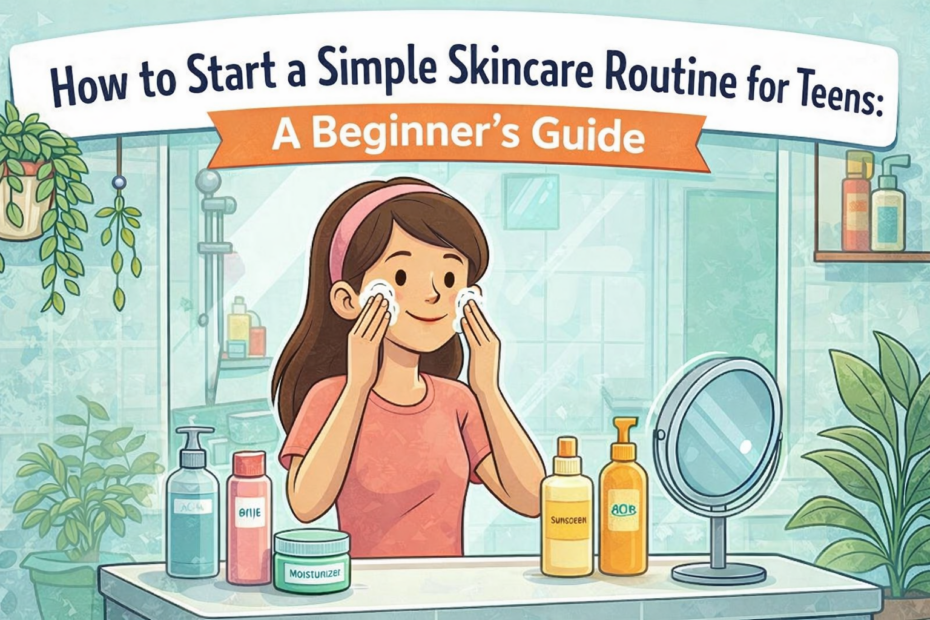
A simple skincare routine for teens doesn’t need to be complicated. By focusing on just a few essential steps, you can keep your skin healthy, clear, and protected.
Step 1: Cleansing
Start with a gentle, non-comedogenic cleanser twice a day—once in the morning and once at night. This removes dirt, oil, and impurities without stripping your skin. Avoid harsh soaps, as they can irritate sensitive teenage skin and make acne worse.
Step 2: Moisturizing
Even oily skin needs hydration. Choose a lightweight, oil-free moisturizer suitable for teen skin. Moisturizing helps balance your skin’s natural oils, prevents dryness, and keeps your skin soft and smooth.
Step 3: Sun Protection
Applying sunscreen daily is a must. Use SPF 30 or higher, even on cloudy days. Sun protection prevents acne scars from darkening and reduces premature aging. A broad-spectrum sunscreen keeps your skin safe from harmful UV rays while maintaining a healthy, glowing appearance.
Optional Add-Ons for a Teen Skincare Routine
Once you’ve mastered the basics, you can add a few optional steps to target specific skin concerns.
Spot Treatments for Acne
If you experience occasional pimples, consider using a spot treatment containing salicylic acid or benzoyl peroxide. These ingredients help reduce inflammation and clear breakouts faster. Apply only to affected areas to avoid over-drying the surrounding skin.
Exfoliation
Exfoliating 1–2 times a week helps remove dead skin cells, preventing clogged pores and promoting smoother skin. Be gentle—over-exfoliating can irritate teen skin and worsen acne.
Keep It Simple
The key to an effective teen skincare routine is simplicity. Avoid layering too many products at once. Sticking to a few essential steps ensures your skin stays healthy without becoming irritated or overwhelmed.
Tips for Teens to Stick to Their Skincare Routine
Consistency is key when it comes to skincare, especially for teens. Here are some practical tips to help you maintain your routine:
1. Keep Products Simple and Minimal
Focus on a few essential products rather than a long list. A cleanser, moisturizer, and sunscreen are enough to start with. This reduces the risk of irritation and makes it easier to stick to your routine.
2. Create a Morning and Night Schedule
Set specific times for your skincare routine, morning and night. Having a routine helps make it a habit, so you’re less likely to skip steps.
3. Avoid Picking or Squeezing Pimples
It can be tempting to touch or pop pimples, but this can lead to scars, infection, and longer-lasting breakouts. Let your skincare products do the work.
4. Be Patient
Results won’t appear overnight. Healthy, clear skin takes time, so stay consistent and give your routine at least a few weeks to show improvements.
Conclusion
When it comes to skincare, consistency matters more than the number of products you use. A simple, well-followed routine can keep your skin healthy, clear, and balanced without overwhelming your teen years with complicated steps.
Starting small and sticking to the basics is all you need to build a strong foundation for your skin’s health. Start your simple skincare routine for teens and enjoy healthy, glowing skin. By taking these easy steps today, you’re investing in your confidence and long-term skin health.
Frequently Asked Questions
How to make a skincare routine for teens?
Creating a skincare routine for teens requires simplicity, consistency, and the right products for adolescent skin. Teen skin is often affected by hormonal changes, which can lead to excess oil, acne, or sensitivity. The first step is to understand your skin type—whether it is oily, dry, combination, or sensitive—as this determines the type of products you should use.
Start with the basics: a gentle cleanser, a moisturizer, and sunscreen. A mild, non-comedogenic cleanser should be used twice daily, in the morning and at night, to remove dirt, excess oil, and impurities. Avoid harsh soaps or scrubs, as these can damage the skin’s natural barrier. Moisturizing is essential even for oily skin, as it balances oil production and prevents dryness or irritation. Opt for lightweight, oil-free moisturizers for oily or acne-prone skin and richer creams for dry skin.
Sun protection is often overlooked but is critical. Apply a broad-spectrum sunscreen with at least SPF 30 every morning, regardless of weather. This protects the skin from UV damage, prevents acne scars from darkening, and helps maintain an even skin tone.
Once the basics are in place, teens can consider optional add-ons like acne spot treatments, gentle exfoliation once or twice a week, and hydrating masks. However, it is important not to overcomplicate the routine. Using too many products can irritate the skin and make problems worse.
Consistency is key. A routine is only effective if it is followed regularly. Create a simple morning and night schedule and stick to it. Avoid touching or picking at pimples, as this can cause scarring. With patience, teens can maintain healthy skin and develop habits that will benefit them into adulthood.
How to start a skin care routine for beginners at home?
Starting a skincare routine at home for beginners is all about simplicity, understanding your skin type, and using safe, effective products. For beginners, it is important to start with the essentials: cleansing, moisturizing, and sun protection. Identify your skin type first—oily, dry, combination, or sensitive—because this will guide your product choices.
Begin with a gentle cleanser suited for your skin type. Cleansing removes dirt, oil, and impurities accumulated during the day. Wash your face twice daily—morning and night—but avoid over-washing, which can strip your skin of natural oils and cause irritation. After cleansing, apply a moisturizer appropriate for your skin type. Moisturizing helps maintain the skin’s barrier, prevents dryness, and balances oil production. Even oily skin needs hydration, so choose lightweight or gel-based moisturizers.
Sun protection is essential, even at home or on cloudy days. Use a broad-spectrum sunscreen with SPF 30 or higher daily to protect against harmful UV rays. This prevents premature aging, dark spots, and sun damage.
Beginners can gradually add other steps once they are comfortable with the basics. For example, a gentle exfoliator once or twice a week helps remove dead skin cells and promotes smooth skin. Spot treatments can be used to manage occasional breakouts. Avoid overwhelming your skin with too many products at once, as this can trigger irritation.
Finally, stick to a routine consistently and give products time to work. Results may take several weeks to appear. Document your routine, note what works for your skin, and adjust as necessary. Keeping the routine simple ensures it is easy to follow and sustainable in the long term.
What is the 4 2 4 rule in skincare?
The 4 2 4 rule in skincare is a simple guideline that helps manage how you apply products effectively for optimal results. This rule is primarily focused on timing and layering to ensure that your skin absorbs products properly without overwhelming it. The basic principle involves waiting four minutes after cleansing, applying two types of treatments, and allowing four minutes for absorption before moving on to the next step.
After cleansing, give your skin four minutes to rest and return to its natural pH level. This ensures that the skin barrier is ready to receive treatment products. Next, apply up to two targeted treatments, such as serums or spot treatments, depending on your skin concerns. Limiting to two treatments prevents product overload, which can irritate sensitive skin, especially for teens.
After applying treatments, wait another four minutes before layering moisturizer or sunscreen. This pause allows your skin to fully absorb the active ingredients, enhancing their effectiveness. The 4 2 4 rule simplifies skincare routines and promotes a mindful approach to product application.
This method is particularly useful for beginners and teens because it prevents rushing and over-applying products. It encourages patience and consistency, which are essential for seeing long-term results. Following this rule helps maintain healthy skin while minimizing irritation and ensures that each product can work to its full potential.
What should a 14 year old’s skincare routine be?
A 14-year-old’s skincare routine should be simple, gentle, and consistent, focusing on the basics rather than advanced treatments. At this age, skin is typically affected by hormonal changes, which can lead to oily patches, breakouts, or sensitivity. The primary goal is to maintain healthy skin without causing irritation.
Start with a gentle cleanser to remove dirt, oil, and impurities. Wash the face twice daily—morning and night—but avoid harsh soaps or scrubs that can damage the skin barrier. Next, use a lightweight, non-comedogenic moisturizer to keep the skin hydrated. Even if the skin is oily, moisturizing prevents overproduction of oil and reduces dryness.
Sun protection is crucial. A broad-spectrum SPF 30 or higher should be applied every morning to prevent sun damage, dark spots, and premature aging. For teens, this step is especially important because sun exposure can worsen acne scars.
Optional steps for a 14-year-old include spot treatments for pimples and gentle exfoliation once or twice a week. However, it is important not to overuse products. A consistent routine focusing on cleansing, moisturizing, and sun protection is sufficient at this age. Avoid using strong acne treatments or harsh chemicals unless recommended by a dermatologist.
Consistency and patience are key. Encourage a 14-year-old to follow the routine daily and avoid picking or squeezing pimples, which can cause scarring. A simple, steady routine establishes healthy habits that benefit the skin into adulthood.
Is CeraVe ok for 11 year olds?
CeraVe is generally considered safe for children, including 11-year-olds, because it is formulated to be gentle, non-comedogenic, and free from harsh ingredients. The brand is known for its use of ceramides, hyaluronic acid, and other skin-friendly compounds that help maintain the skin’s natural barrier and hydration.
For an 11-year-old, the focus should be on basic skincare: cleansing, moisturizing, and sun protection. CeraVe offers a range of gentle cleansers and moisturizers suitable for young, sensitive skin. The Hydrating Cleanser and Moisturizing Cream, in particular, are popular choices because they do not strip the skin of natural oils or cause irritation.
While CeraVe is safe, it is important to use age-appropriate products and avoid those with strong acne treatments, retinoids, or other active ingredients unless advised by a pediatric dermatologist. Applying products in moderation and following a simple routine ensures the child’s skin remains healthy and balanced.
For sun protection, CeraVe also offers SPF products suitable for young skin, providing broad-spectrum coverage without heavy or greasy formulations. Parents should supervise skincare routines at this age to ensure products are used correctly and consistently.
Starting with gentle, proven products like CeraVe helps establish good skincare habits early and prevents skin problems from developing in adolescence.
What are the 7 steps of skincare?
The 7 steps of skincare provide a structured routine to maintain healthy, balanced, and glowing skin. While some steps are optional depending on skin type and age, following these can optimize results. The steps are cleansing, exfoliating, toning, treating, moisturizing, eye care, and sun protection.
1. Cleansing: This is the foundation of any skincare routine. Cleansing removes dirt, oil, sweat, and impurities accumulated during the day. A gentle, non-comedogenic cleanser should be used twice daily—morning and night. Over-cleansing can damage the skin barrier, so avoid harsh soaps or scrubs.
2. Exfoliating: Exfoliation removes dead skin cells, promoting cell turnover and smoother skin. This step should be done 1–2 times per week depending on skin sensitivity. Over-exfoliation can cause irritation and dryness, so it’s important to use gentle exfoliants suitable for your skin type.
3. Toning: Toners help balance the skin’s pH level, remove any leftover impurities after cleansing, and prepare the skin for better absorption of treatments. Alcohol-free toners with soothing ingredients are recommended, especially for sensitive or teenage skin.
4. Treating: Treatments include serums, acne spot treatments, or other targeted solutions. Depending on your skin concerns—such as acne, dark spots, or dryness—treatments help address specific issues. Limit the number of treatments to avoid overwhelming the skin.
5. Moisturizing: Moisturizers maintain hydration, strengthen the skin barrier, and prevent dryness. Even oily or acne-prone skin benefits from lightweight, non-comedogenic moisturizers. Regular use ensures skin stays soft and balanced.
6. Eye Care: Eye creams or gels address concerns like puffiness, dark circles, or dryness. While optional for teens, this step becomes more important as the skin matures.
7. Sun Protection: Sunscreen is essential to protect the skin from harmful UV rays. Use a broad-spectrum SPF 30 or higher daily, even on cloudy days. Sun protection prevents premature aging, dark spots, and exacerbation of acne scars.
Following these seven steps consistently ensures skin remains healthy and resilient. For teens or beginners, starting with the basics—cleansing, moisturizing, and sun protection—is sufficient, and the other steps can be added gradually as needed.
Which skincare is best for teenagers?
The best skincare for teenagers focuses on simplicity, gentleness, and effectiveness. Teen skin is often oily, sensitive, or acne-prone due to hormonal changes, so using harsh products can worsen issues rather than improve them. The most important products include a gentle cleanser, a lightweight moisturizer, sunscreen, and optional treatments for breakouts.
Cleansers should be non-comedogenic and free from harsh sulfates or fragrances. Gel-based cleansers are ideal for oily or acne-prone skin, while creamy cleansers suit dry or sensitive skin. Cleansing twice daily helps remove dirt, excess oil, and impurities without stripping the skin.
Moisturizers maintain hydration and balance oil production. Lightweight, oil-free formulations are best for teens with oily skin, while cream-based options are suitable for dry skin. Moisturizing prevents irritation, flaking, and excessive oil production that can trigger breakouts.
Sunscreen is essential to protect against UV damage, dark spots, and acne scars. Broad-spectrum SPF 30 or higher should be applied every morning. For convenience, lightweight or gel-based sunscreens work well under makeup or daily routines.
Optional products include gentle exfoliants once or twice a week to remove dead skin cells and spot treatments with salicylic acid or benzoyl peroxide for occasional pimples. Teens should avoid strong retinoids or chemical peels unless advised by a dermatologist.
Overall, the best skincare for teenagers emphasizes consistency, minimalism, and age-appropriate products. This approach prevents irritation, promotes healthy skin habits, and supports long-term skin health.
How to get 100% clear skin?
Achieving 100% clear skin is challenging, as genetics, hormones, and environmental factors play a role in skin health. However, maintaining a consistent, gentle skincare routine, combined with healthy lifestyle choices, can significantly reduce breakouts and improve overall skin clarity.
Start with the basics: cleansing, moisturizing, and sun protection. Cleansing twice daily removes dirt, oil, and impurities that clog pores. Moisturizing maintains hydration and balances oil production, while sunscreen prevents UV damage and darkening of acne scars. Avoid harsh products, as these can trigger irritation and worsen breakouts.
Diet and hydration also impact skin health. Eating a balanced diet rich in fruits, vegetables, whole grains, and lean proteins supports skin regeneration. Limiting sugar, dairy, and processed foods may reduce acne flare-ups for some individuals. Drinking enough water helps maintain skin elasticity and flush out toxins.
Other strategies include avoiding touching or picking at pimples, changing pillowcases regularly, keeping hair clean and away from the face, and managing stress. Stress can increase hormone fluctuations, which may worsen acne.
For persistent or severe acne, consulting a dermatologist is important. Professional treatments such as topical or oral medications can help clear skin safely and effectively. Over-the-counter products with salicylic acid or benzoyl peroxide can also help manage mild breakouts.
While 100% clear skin is rare, these practices maximize skin health, reduce blemishes, and improve appearance over time. Patience is key, as results can take weeks or months to appear. Consistency, gentle care, and lifestyle management are the most effective ways to achieve clear, radiant skin.
What is the 1% rule in skincare?
The 1% rule in skincare refers to introducing only one active ingredient or new product at a time into your routine. This approach helps minimize the risk of irritation, allergic reactions, or overloading the skin. By focusing on one change at a time, it is easier to monitor results and determine which product works effectively for your skin.
For example, if you want to try a new acne treatment containing salicylic acid, follow the 1% rule by adding it alone to your existing routine. Avoid combining it immediately with other actives like retinol or glycolic acid, as this can cause redness, peeling, or sensitivity. Once your skin adapts to the first product, you can gradually introduce the next active ingredient.
This rule is particularly useful for teens and beginners who are just establishing a skincare routine. Teen skin can be sensitive and more prone to irritation due to hormonal changes, so slow and careful introduction of products ensures better tolerance. It also helps track improvements and identify the cause of any adverse reactions.
Applying the 1% rule encourages mindfulness in skincare and emphasizes the importance of patience. Many beginners make the mistake of using multiple new products at once, expecting rapid results, which often leads to frustration and worsening skin conditions. Following this rule ensures a safe, manageable approach to building a skincare routine.
What are the 5 basics of skin care?
The five basics of skincare are cleansing, moisturizing, sun protection, exfoliation, and treatment. These steps form the foundation for maintaining healthy, balanced skin and addressing common concerns.
1. Cleansing: Removing dirt, oil, and impurities twice daily is essential to prevent clogged pores and breakouts. Gentle, non-comedogenic cleansers are ideal.
2. Moisturizing: Hydration is critical for all skin types. Moisturizers help maintain the skin’s natural barrier, balance oil production, and prevent dryness or irritation.
3. Sun Protection: Daily use of sunscreen protects the skin from harmful UV rays, preventing dark spots, premature aging, and worsening of acne scars. Broad-spectrum SPF 30 or higher is recommended.
4. Exfoliation: Removing dead skin cells once or twice a week promotes smoother skin and prevents clogged pores. Gentle exfoliants suitable for your skin type are best to avoid irritation.
5. Treatment: Targeted treatments address specific concerns such as acne, pigmentation, or dryness. Use spot treatments, serums, or other solutions carefully, introducing one product at a time to avoid overloading the skin.
Following these five basics consistently ensures healthy, clear skin. For beginners or teens, focusing on cleansing, moisturizing, and sunscreen is sufficient, with exfoliation and treatments added as needed.