Internal linking is the practice of connecting one page of your website to another using hyperlinks. These links guide both users and search engines through your website, helping them discover related content and understand your site’s structure.
Learning how to build internal links to increase traffic is an essential strategy for any website owner or digital marketer. Proper internal linking not only improves user experience by making navigation easier but also enhances your SEO by distributing link equity across important pages.
When search engines can easily crawl and index your content, your chances of ranking higher in search results increase. Moreover, internal links keep visitors engaged longer by directing them to relevant articles or products, reducing bounce rates and boosting overall website performance.
In this guide, we’ll explore practical strategies to create an effective internal linking structure that drives more traffic and strengthens your site’s authority.
What Are Internal Links?
Internal links are hyperlinks that connect one page of your website to another page within the same domain. They are different from external links, which point to pages on other websites.
For example, if you run a blog about digital marketing and link a post about SEO strategies to another post on content marketing tips within your site, that is an internal link. Conversely, linking to a popular SEO tool’s website would be considered an external link.
Understanding and implementing internal links is crucial for both users and search engines. For visitors, these links improve navigation by guiding them to related or helpful content, keeping them engaged longer and encouraging exploration of your website.
For search engines, internal links enhance crawlability, allowing bots to discover and index your pages more efficiently. They also help distribute page authority, meaning pages with more internal links can gain higher ranking potential in search results.
By strategically linking content, you not only improve user experience but also boost your website’s SEO performance, making it easier to attract and retain traffic.
Why Internal Linking Boosts Traffic
Internal linking plays a fundamental role in helping search engines understand your website’s structure and the relationships between its pages. Search engine crawlers follow internal links to discover, index, and rank content across your domain.
Without a robust internal link network, some pages may remain undiscovered or be crawled infrequently, limiting their visibility in search results. Well‑placed internal links establish a clear site hierarchy, guiding crawlers efficiently through key pages and ensuring even deeper content is indexed and ranked more quickly.
Studies indicate that internal links can improve indexing efficiency by up to 40% and drive increases in page visits when implemented strategically.
Internal links also enhance user experience by guiding visitors to relevant content, which encourages longer session durations and exploration of additional pages.
When readers are directed from one article to another related post, they are more likely to stay on the site rather than leave — helping reduce the bounce rate. Some analyses show that a strong internal linking structure can decrease bounce rates by up to 25–35%.
Learning how to build internal links to increase traffic is therefore not just about SEO mechanics; it also improves engagement metrics that search engines interpret as signals of user satisfaction. More indexed pages, improved crawlability, and higher engagement collectively contribute to higher organic rankings and sustained traffic growth.
How to Build Internal Links Effectively
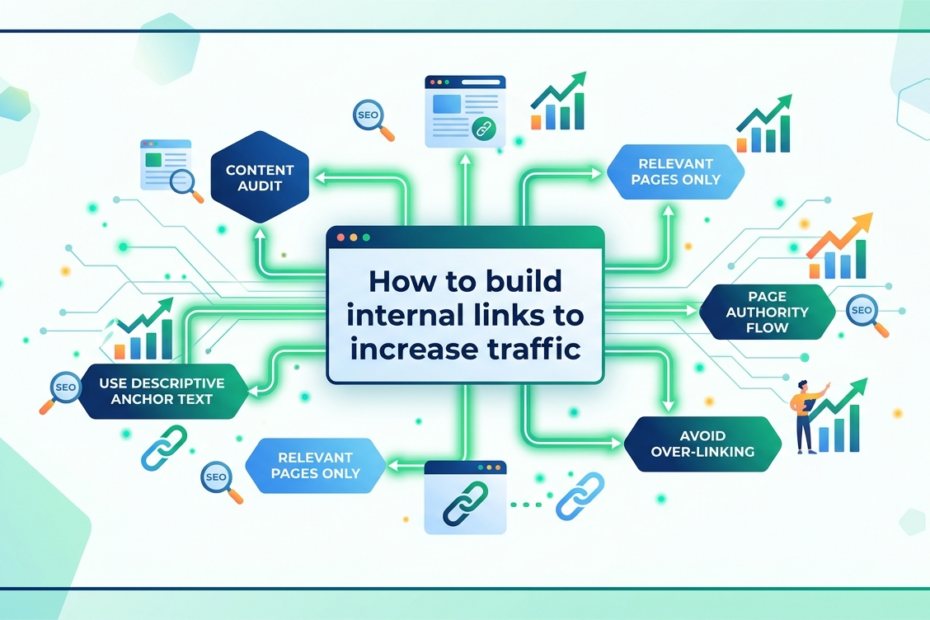
Internal linking is more than just adding random links to your pages. When done strategically, it boosts SEO, improves user experience, and increases traffic. Here are practical steps to build internal links effectively:
1. Audit Your Existing Content
Start by reviewing your website to identify pages that can be linked together. Look for older blog posts, product pages, or service pages that are underperforming in traffic. For example, if you have a blog post about “SEO Basics” and another on “Keyword Research Techniques,” linking them provides users with a seamless learning path and helps search engines understand the relationship between these pages. Tools like site crawlers or even a simple spreadsheet can help track your existing content and link opportunities.
2. Use Descriptive Anchor Text
Anchor text is the clickable text in a hyperlink. Using descriptive and relevant anchor text helps search engines understand the content of the linked page. Instead of generic phrases like “click here,” use text such as “advanced keyword research strategies” to link to the target post. This improves both SEO and user clarity, ensuring visitors know what to expect when they click.
3. Link Deep Pages, Not Just Homepage
While it’s common to link back to the homepage or main category pages, don’t neglect deeper pages on your website. Linking directly to blog posts, product details, or service pages spreads link equity across your site. For example, a post about “Content Marketing Tips” can link to a deeper guide on “Creating Viral Blog Posts” rather than just the homepage. This ensures important content gets the attention it deserves from both users and search engines.
4. Create a Content Hub
Organize related posts into a content hub by linking them together around a central topic. For instance, a “Digital Marketing Hub” could link to posts on SEO, email marketing, social media, and analytics. This not only improves site structure but encourages readers to explore multiple related articles, increasing session duration and reducing bounce rate.
5. Update Old Posts with New Links
Whenever you publish new content, revisit older relevant posts and add links to the new pages. For example, a new post on “AI in Marketing” can be linked from an older post about “Marketing Trends in 2025.” Updating old content ensures that it stays fresh and continues to provide SEO value.
6. Avoid Overlinking
While internal links are important, adding too many links on a single page can confuse users and dilute SEO value. Keep links natural and relevant. A good rule of thumb is to link only where it adds value for the reader and supports site navigation.
By following these strategies, you can create an effective internal linking structure that improves crawlability, boosts page authority, and drives more traffic to your website. Learning how to build internal links to increase traffic is a long-term investment in your site’s SEO and user experience.
Tools to Help You Build Internal Links
Using the right tools can make building internal links more efficient and effective. Here are some of the top tools to help you identify opportunities:
1. Ahrefs – Ahrefs offers a comprehensive site audit feature that shows which pages are linked internally and which are orphan pages (pages with no internal links). This helps you quickly identify content that needs links and track your overall internal linking structure.
2. SEMrush – SEMrush’s Site Audit tool highlights internal linking issues and suggests pages that could benefit from additional links. It also provides insights into anchor text usage, helping you optimize your links for better SEO.
3. Yoast SEO – Popular among WordPress users, Yoast SEO automatically suggests relevant internal links as you write or update content. This feature ensures you consistently connect related posts and pages.
4. Screaming Frog – Screaming Frog crawls your entire website and provides a detailed report of all internal links. You can identify broken links, redirect chains, and pages with few internal links, making it easier to improve your site structure.
Using these tools strategically ensures that your internal linking is optimized, helping you improve crawlability, page authority, and ultimately drive more traffic to your website.
Common Mistakes to Avoid
While internal linking is a powerful SEO strategy, certain mistakes can reduce its effectiveness. Being aware of these pitfalls ensures your efforts drive traffic rather than harm your site’s performance.
1. Broken Links – Linking to pages that no longer exist or have been moved can frustrate users and harm your SEO. Regularly audit your website to identify and fix broken links, ensuring a smooth navigation experience.
2. Using Generic Anchor Text – Phrases like “click here” or “read more” provide little context for both users and search engines. Instead, use descriptive anchor text that clearly indicates the content of the linked page, improving SEO and user understanding.
3. Linking Irrelevant Pages – Adding links to unrelated content can confuse visitors and disrupt the user journey. Always ensure internal links are contextually relevant to the topic of the page.
4. Ignoring Deep Pages – Many websites focus only on homepage or category links, neglecting deeper pages. Linking to deeper content spreads link equity and ensures important pages are discovered by both users and search engines.
By avoiding these common mistakes, you can create a more effective internal linking strategy that improves crawlability, boosts rankings, and keeps visitors engaged.
Conclusion
Internal linking is a crucial strategy for improving SEO, enhancing user experience, and driving more traffic to your website. By connecting relevant pages, you help search engines crawl and index your content more effectively while guiding visitors through your site, increasing engagement and reducing bounce rates.
Learning how to build internal links to increase traffic ensures that both new and older content receive the attention they deserve, boosting overall site authority.
Start by auditing your website, identifying linking opportunities, and strategically connecting pages. With consistent effort, a strong internal linking structure can significantly enhance your site’s performance and organic traffic.
Frequently Asked Questions
How to build internal links?
Internal linking is the process of connecting one page of your website to another page within the same domain. Building strong internal links starts with understanding your website structure and identifying your most important pages, often called “pillar pages” or “cornerstone content.” These are the pages you want search engines and users to find easily because they provide the most value or target your main keywords.
To build internal links effectively, begin by creating high-quality content consistently. As you publish new posts, look for opportunities to naturally link back to older but relevant articles.
For example, if you write about “email marketing strategies,” you can link to another post about “building an email list.” The key is relevance—links should always add value to the reader, not just exist for SEO purposes.
Another method is using contextual links within your paragraphs rather than only placing links in a navigation menu or footer. Contextual links carry more SEO value because they are embedded in meaningful content. You should also use descriptive anchor text instead of generic phrases like “click here.” For instance, use “SEO keyword research guide” instead of “read more.”
Additionally, you can audit your site using tools like Google Search Console or SEO plugins to identify orphan pages (pages with no internal links). These pages should be updated and connected to related content.
A strong internal linking structure improves user experience, helps search engines crawl your website efficiently, and distributes page authority across your site. Over time, this strategy strengthens your overall SEO performance and keeps visitors engaged longer, reducing bounce rates.
How to get 1000 visitors a day to your website?
Getting 1,000 daily visitors to a website requires a combination of consistent content creation, SEO optimization, and traffic diversification strategies. There is no overnight method, but with the right system, it is achievable for most niches.
First, focus on search engine optimization (SEO). This means targeting low-competition, long-tail keywords that people are actively searching for. Instead of trying to rank for highly competitive terms like “fitness,” target phrases like “home workout plan for beginners without equipment.” These are easier to rank for and can bring consistent organic traffic over time.
Second, publish high-quality content regularly. Aim for blog posts that solve specific problems, answer questions, or provide tutorials. Google rewards helpful content that satisfies search intent. Over time, as your content library grows, each post becomes a traffic source.
Third, leverage social media platforms such as Facebook, Pinterest, X (Twitter), or LinkedIn depending on your niche. Sharing content consistently can drive referral traffic while your SEO builds momentum.
Fourth, build an email list. Even if visitors don’t return immediately, an email list allows you to bring them back to your website repeatedly, increasing daily traffic.
Fifth, consider content repurposing. Turn blog posts into short videos, infographics, or carousel posts to reach different audiences.
Finally, analyze your performance using tools like Google Analytics. Identify which pages bring the most traffic and create more content around those topics.
Reaching 1,000 visitors daily is about consistency, patience, and strategy. Most websites achieve it by combining SEO traffic with social media and repeat visitors rather than relying on one source.
Do internal links improve SEO?
Yes, internal links significantly improve SEO when used correctly. They help search engines understand the structure of your website and determine which pages are most important.
When Google crawls your site, internal links act as pathways that guide it from one page to another. Without them, some pages may remain undiscovered or poorly indexed.
Internal links also distribute “link equity,” sometimes called ranking power, across your website. When a strong page links to another page, it passes some authority to that page, helping it rank better in search results. This is especially useful for newer pages that need visibility.
From a user experience perspective, internal links keep visitors engaged by guiding them to related content. For example, if someone is reading about “SEO basics,” linking them to “advanced SEO techniques” encourages them to stay longer on your site. Longer engagement signals to search engines that your content is valuable.
Internal linking also reduces bounce rate and increases pages per session, both of which are positive SEO signals. Additionally, it helps define content hierarchy, showing search engines which pages are cornerstone content and which are supporting articles.
However, internal linking must be done naturally. Overloading pages with irrelevant links or stuffing keywords into anchor text can harm SEO instead of improving it.
In summary, internal links are a foundational SEO strategy that improves crawlability, strengthens page authority, enhances user experience, and helps your website rank higher over time.
What are the 4 types of links?
The four main types of links used in SEO and web structure are internal links, external links, inbound links, and outbound links. Each plays a different role in how websites connect and rank on search engines.
Internal links are links that connect pages within the same website. For example, linking from a blog post about “digital marketing” to another page on “SEO tips” is an internal link. These help users navigate your site and improve SEO structure.
External links are links that point from your website to another website. For instance, if you reference a statistic and link to an authoritative source like a research site, that is an external link. These improve credibility and show search engines that your content is well-researched.
Inbound links, also called backlinks, are links from other websites that point to your website. These are extremely important for SEO because they act as votes of confidence. The more high-quality backlinks you have, the more authoritative your site appears to search engines.
Outbound links are links from your website to other websites. While similar to external links, outbound links are often discussed from your perspective as the site owner. They can improve trust and provide additional value to readers when used appropriately.
Understanding these four types of links helps you build a balanced SEO strategy. Internal links improve structure, outbound links improve credibility, and inbound links boost authority, while external links support content quality.
How many internal links per page for SEO?
There is no fixed number of internal links required per page for SEO, but best practices suggest focusing on quality and relevance rather than quantity. In general, most SEO experts recommend using between 3 to 10 internal links per 1,000 words of content, depending on the depth and structure of the article.
Google does not penalize pages for having many internal links, but overloading a page can reduce user experience and dilute link value. Each internal link should serve a purpose—either guiding the reader to related information, supporting a concept, or improving navigation.
Long-form content naturally allows for more internal links because there are more opportunities to reference related topics. For example, a 2,000-word guide may contain 10–20 internal links if each link is relevant and helpful.
It is also important to prioritize linking to important pages such as cornerstone content, service pages, or high-converting pages. This helps distribute authority effectively across your site.
Another key factor is link placement. Links placed within the main body content (contextual links) carry more SEO value than those in footers or sidebars. Anchor text should also be descriptive and natural.
Ultimately, instead of focusing strictly on numbers, aim for a user-first approach. Ask yourself: “Does this link help the reader understand more or find useful related content?” If the answer is yes, the link is valuable.
A well-balanced internal linking strategy improves SEO, enhances user experience, and strengthens your site structure over time.
What is the 80/20 rule for SEO?
The 80/20 rule in SEO, also known as the Pareto Principle, suggests that roughly 80% of your website results come from 20% of your efforts. In practical SEO terms, this means a small portion of your content, keywords, or pages will generate the majority of your traffic, rankings, and conversions.
For example, on many websites, only a few blog posts bring in most of the organic traffic from Google. These are usually well-optimized, evergreen, and targeted toward high-intent keywords. Instead of trying to optimize every single page equally, the 80/20 rule encourages you to identify and focus on the pages that already perform well or have the highest potential.
You can apply this rule by using tools like Google Analytics or Search Console to find your top-performing pages. Once identified, improve them further by updating content, adding internal links, improving titles, and refreshing keywords. These small improvements can produce significant traffic gains.
Another application is keyword strategy. Instead of targeting hundreds of random keywords, focus on the 20% of keywords that bring the most valuable traffic. These are often long-tail keywords with strong intent, such as “best budget smartphone for students” rather than just “smartphone.”
In summary, the 80/20 rule helps you work smarter in SEO by prioritizing high-impact actions instead of spreading effort too thin. It is a long-term strategy that improves efficiency, traffic growth, and ranking performance.
What are the 10 most used websites?
The most used websites globally are platforms that attract massive daily traffic due to their usefulness, entertainment value, or information access. While rankings can slightly change over time, the following websites consistently remain among the top:
- Google – The world’s largest search engine, used for finding information on almost anything.
- YouTube – A video-sharing platform for entertainment, education, and marketing.
- Facebook – A major social networking platform for communication and content sharing.
- Instagram – A visual-based social media platform for photos, reels, and branding.
- X (Twitter) – A platform for news updates, discussions, and real-time information.
- Wikipedia – A free online encyclopedia used for learning and research.
- Amazon – The largest e-commerce platform for buying and selling products online.
- TikTok – A short-form video platform that drives massive engagement and trends.
- Reddit – A discussion-based platform with communities (subreddits) on nearly every topic.
- Yahoo – A web portal offering news, email services, and search functionality.
These websites dominate global internet traffic because they solve everyday user needs such as searching for information, entertainment, shopping, and communication. For marketers and website owners, understanding these platforms is important because they also serve as powerful traffic sources depending on your strategy.
How many types of link building are there in SEO?
There are several types of link building in SEO, but they are generally grouped into a few major categories based on how the links are acquired. The main types include natural link building, manual outreach link building, self-created links, guest posting, and resource-based link building.
Natural link building happens when other websites link to your content without you asking. This usually occurs when your content is high-quality, informative, or unique enough to be referenced.
Manual outreach link building involves actively contacting website owners, bloggers, or journalists and requesting them to link to your content. This method is widely used in SEO campaigns and often includes strategies like broken link building or influencer outreach.
Self-created links are created by adding your website link on forums, blog comments, directories, or social profiles. While easy to create, they must be used carefully because low-quality self-created links can harm SEO.
Guest posting involves writing articles for other websites in exchange for a backlink to your site. This is one of the most effective and white-hat link building methods when done on reputable websites.
Resource-based link building focuses on creating valuable resources such as guides, tools, or research content that naturally attracts backlinks from others.
Overall, successful SEO strategies often combine multiple types of link building while prioritizing quality over quantity.
What are the 7 HTML tags?
HTML tags are the building blocks of web pages, used to structure content so browsers can display it correctly. The seven most commonly used HTML tags include:
<html>– This is the root tag that contains all HTML content on a webpage.<head>– This tag contains meta information like title, SEO tags, and scripts.<title>– Defines the title of the webpage shown in browser tabs and search results.<body>– Contains the visible content of the webpage, such as text, images, and links.<h1>– Represents the main heading of a page, important for SEO structure.<p>– Defines paragraphs of text and is used for writing content.<a>– Creates hyperlinks that connect one page to another, either internally or externally.
These tags form the basic structure of almost every website. While modern websites use many more HTML elements, these seven are essential for understanding how web pages are built.
For SEO purposes, proper use of these tags helps search engines understand content hierarchy, improves readability, and enhances indexing. For example, using a single <h1> per page helps define the main topic clearly.
Do internal links count as backlinks?
Internal links do not count as backlinks in SEO. A backlink specifically refers to a link that comes from another website pointing to your website. In contrast, internal links are links that connect pages within the same website domain.
For example, if Page A on your website links to Page B on the same site, that is an internal link. However, if another website links to your Page A, that is a backlink.
Even though internal links are not backlinks, they are still extremely important for SEO. They help search engines crawl your website more efficiently and distribute ranking power (also known as link equity) across your pages. Internal links also improve user experience by guiding visitors to related content.
Backlinks, on the other hand, are more powerful for increasing domain authority and improving search rankings because they come from external sources. Search engines see backlinks as votes of trust from other websites.
Both internal links and backlinks work together in a strong SEO strategy. Backlinks bring authority into your website, while internal links distribute that authority across your pages and improve structure.
In summary, internal links do not count as backlinks, but they play a crucial supporting role in overall SEO success by improving navigation, indexing, and content relevance.