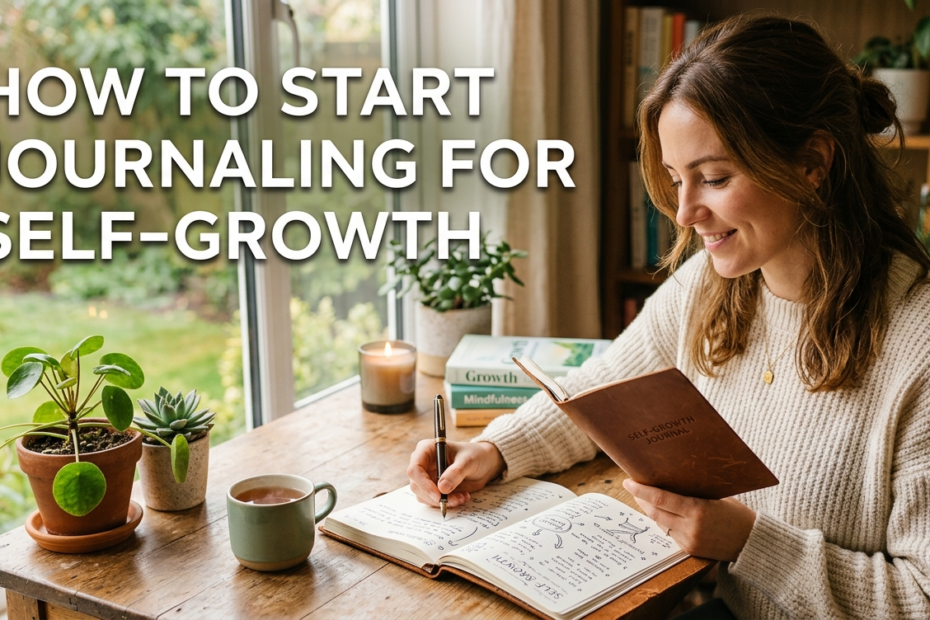
Journaling for self-growth is more than just putting pen to paper—it’s a transformative practice that helps you explore your thoughts, emotions, and goals with clarity. By taking a few minutes each day to reflect, you can boost your self-awareness, identify patterns in your behavior, and make more intentional choices in life.
Beyond mental clarity, journaling strengthens emotional intelligence, allowing you to process feelings, reduce stress, and navigate challenges with a calmer mindset.
It can also enhance productivity by helping you prioritize tasks, set meaningful goals, and track your progress over time. Whether you’re new to journaling or looking to deepen your practice, understanding how to use your journal effectively can set the foundation for long-term personal growth and self-improvement.
Why Journaling is Important for Self-Growth
Journaling for self-growth offers a range of psychological and emotional benefits that go far beyond simply recording daily events. One of the most well-documented benefits of journaling for personal development is stress relief. Writing about feelings and experiences helps release emotional tension and reduces the physiological impact of stress, promoting a calmer mindset.
In addition to stress relief, journaling enhances mental clarity by helping you organize and untangle complex thoughts. When you put your thoughts on paper, your brain gains psychological distance, making it easier to think clearly, identify patterns, and make better decisions.
Journaling also supports emotional processing and regulation. Regular reflection allows you to acknowledge and work through emotions constructively, fostering self-awareness and emotional intelligence—key components of lasting personal growth. Research shows that expressive writing can reduce symptoms of anxiety and depression while increasing emotional resilience and insight.
Overall, self-improvement through journaling helps you understand yourself more deeply, develop healthier coping strategies, and build habits that support continuous personal development.
How to Start Journaling for Self-Growth
Starting a journaling practice for self-growth may seem simple, but having a clear approach can make it far more effective. Here’s a step-by-step guide to help you begin and stay consistent:
Step 1: Choose the Right Journal
Selecting the right journaling tool sets the foundation for your practice. You can use a traditional physical notebook, which provides a tactile and distraction-free experience, or a digital journaling app for convenience and portability.
Consider your personal preferences and lifestyle when choosing the best journaling tools for self-growth, so that your journal becomes a habit you enjoy rather than a chore.
Step 2: Set a Journaling Routine
Consistency is key to experiencing the full benefits of journaling. Start with a manageable routine—five to ten minutes per session, either in the morning to set intentions for the day, or in the evening to reflect on your experiences. Establishing a journaling routine for personal growth ensures that journaling becomes a daily habit rather than an occasional activity.
Step 3: Decide on a Journaling Method
There are several methods to explore, each serving different goals. Free writing allows complete freedom of thought, while guided prompts provide direction for self-reflection.
Bullet journaling is excellent for tracking habits and tasks, and gratitude journaling cultivates a positive mindset. Choosing the right journaling techniques for self-development can help you focus on the areas of growth most important to you.
Step 4: Use Prompts to Reflect
Prompts can guide your thinking and make your journaling sessions more productive. Examples include: “What am I grateful for today?” or “What did I learn from my challenges?” Using self-growth journaling prompts helps you dig deeper into your thoughts, feelings, and personal goals, creating meaningful insights.
Step 5: Review and Track Your Progress
Regularly reviewing past entries allows you to identify patterns, track achievements, and reflect on lessons learned. By reviewing weekly or monthly, you can track personal growth through journaling and adjust your approach to continue evolving over time.
Tips for Consistency
Maintaining a journaling practice is easier when you keep it simple. Don’t overcomplicate your entries or feel pressured to write long, perfect reflections. Even a few sentences about your thoughts, feelings, or goals can be powerful for self-growth. This simplicity ensures your journaling sessions remain enjoyable and sustainable.
Pairing journaling with other positive habits can also strengthen your routine. For example, journaling after meditation or reading allows you to reflect on insights, track emotions, and integrate new knowledge into your life. Over time, these small daily practices compound, making your journaling habit more natural and rewarding.
Setting reminders or keeping your journal in a visible spot can further reinforce consistency. The key is to treat journaling as a personal ritual rather than a task to check off your to-do list. By following these journaling tips for self-growth, you can cultivate a lasting practice that supports reflection, self-awareness, and personal development.
With these strategies, you’ll have a clear roadmap for how to maintain a journaling habit that truly contributes to your self-growth journey.
Common Mistakes to Avoid
While journaling for self-growth is highly beneficial, certain habits can limit its effectiveness. One common mistake is being overly critical of your entries. Journaling is a space for honest reflection, not perfection, so avoid judging your thoughts or writing style too harshly.
Another pitfall is skipping days completely. Consistency, even in small amounts, is crucial for long-term personal development. Missing long stretches can disrupt your momentum and reduce the impact of your practice.
Finally, many people only write when feeling stressed or upset. While it’s natural to vent, journaling is most effective when used regularly to reflect on a wide range of experiences.
By being mindful of these journaling mistakes to avoid for personal development, you can create a more productive, consistent, and insightful journaling practice.
Conclusion
Starting journaling for self-growth today can set you on a path of lifelong personal development. You don’t need to write for hours or have perfect entries—small, consistent steps are enough to build a meaningful habit.
Reflect on your thoughts, track your progress, and explore prompts that inspire self-awareness. The key is to begin now, making journaling a daily practice that supports your emotional well-being, clarity, and personal growth.
Frequently Asked Questions
How to journal for self-growth for beginners?
Journaling for self-growth is one of the simplest yet most powerful personal development habits a beginner can adopt. At its core, journaling is the practice of writing down your thoughts, emotions, experiences, and reflections in a structured or unstructured way. For beginners, the key is not perfection but consistency and honesty.
To start, choose a medium that feels comfortable—this could be a physical notebook, a notes app on your phone, or a digital document. Then set a realistic goal, such as writing for 5–10 minutes daily or journaling three times a week. The goal is to build a habit, not to overwhelm yourself.
A helpful beginner method is guided journaling. Instead of staring at a blank page, use prompts such as: “What went well today?”, “What challenged me today?”, or “What did I learn about myself?”.
These questions encourage reflection, which is essential for self-growth. Over time, this reflection helps you identify patterns in your behavior, emotional triggers, strengths, and areas that need improvement.
Another important aspect is honesty. Journaling is not about writing what sounds good—it is about expressing what is true for you in that moment. You don’t need perfect grammar or structure.
As you continue, you may naturally progress into goal-setting, tracking habits, and problem-solving through writing. Many people also use journaling for gratitude practice, which helps shift focus toward positive experiences.
Ultimately, journaling for self-growth works best when it becomes a safe space for self-expression and reflection. With consistency, beginners often notice improved clarity, emotional awareness, and better decision-making over time.
Does journaling reduce blood pressure?
Journaling may indirectly help reduce blood pressure for some individuals, although it is not a medical treatment or replacement for prescribed care. Blood pressure is influenced by several factors, including stress levels, lifestyle habits, diet, sleep, and genetics. One of the key ways journaling may help is through stress reduction.
When a person writes down their thoughts and emotions, it can serve as a mental release. This process helps reduce emotional buildup, anxiety, and overthinking—factors that often contribute to elevated stress responses in the body. Since stress is closely linked to temporary spikes in blood pressure, reducing stress can have a positive effect on overall cardiovascular health.
Expressive writing, in particular, has been studied in psychological research and is often associated with improved emotional regulation. When emotions are processed instead of suppressed, the body may experience fewer stress-related physical reactions. This can support relaxation, which in turn may help maintain healthier blood pressure levels in some individuals.
However, it is important to be clear that journaling is not a cure or guaranteed method for lowering blood pressure. It should be viewed as a supportive wellness habit rather than a medical intervention. People with hypertension should continue following medical advice, including medication, diet adjustments, exercise, and regular monitoring.
Journaling works best as part of a broader lifestyle approach. Combining it with practices like deep breathing, physical activity, and adequate sleep can create a more balanced stress-management routine.
In summary, journaling may contribute to better emotional well-being, which can indirectly support healthier blood pressure levels, but it should always complement—not replace—professional healthcare guidance.
What is the 3 2 1 method of journaling?
The 3-2-1 journaling method is a simple structured reflection technique designed to make journaling easier and more focused, especially for beginners. It helps individuals quickly organize their thoughts and extract meaningful insights without feeling overwhelmed by long writing sessions.
In its most common form, the method is broken down like this:
- 3 things you are grateful for
- 2 things you learned or noticed today
- 1 goal or intention for tomorrow
The “3 gratitude points” help shift attention toward positive aspects of life. This practice has been linked to improved emotional well-being because it encourages the brain to recognize and appreciate good experiences, even during stressful periods. These do not need to be major events; even small things like a good meal, a kind message, or a productive moment count.
The “2 learnings” section encourages reflection. This is where you think about what the day taught you—this could be a skill, an emotional insight, or something you observed about your behavior or environment. This step supports personal growth by reinforcing awareness and learning from everyday experiences.
The final “1 intention” helps you plan forward with purpose. Instead of vague goals, you set a simple, actionable focus for the next day. This builds direction and helps improve productivity and consistency over time.
The 3-2-1 method is popular because it is quick, structured, and flexible. It can be completed in as little as five minutes a day, making it ideal for beginners or busy individuals. Over time, it can improve mindfulness, clarity, and emotional balance.
Is journaling good for schizophrenia?
Journaling can be a supportive tool for some individuals living with schizophrenia, but it must be approached carefully and should never replace professional psychiatric treatment.
Schizophrenia is a complex mental health condition that requires structured medical care, often including medication, therapy, and ongoing supervision by mental health professionals.
In some cases, journaling may help individuals organize their thoughts, track symptoms, and express emotions in a safe and private way. Writing can provide a sense of structure, especially when thoughts feel overwhelming or confusing. It may also help individuals identify triggers, notice patterns in mood or behavior, and communicate more effectively with healthcare providers.
However, journaling is not suitable for everyone with schizophrenia, especially during severe episodes of psychosis, hallucinations, or disorganized thinking. In such cases, writing may sometimes intensify distress or blur the line between reality and internal experiences. This is why professional guidance is essential before adopting journaling as a coping tool.
Mental health professionals may recommend structured journaling formats, such as symptom tracking or guided prompts, rather than free-form expressive writing. This helps keep the process grounded and focused.
It is also important that journaling is not used in isolation. It should be part of a broader treatment plan that includes therapy, medication adherence, and social support systems.
In summary, journaling may be helpful for some individuals with schizophrenia when used under professional guidance, but it is not a treatment on its own. Its effectiveness depends heavily on the person’s condition, stability, and clinical recommendations.
What is the dark side of journaling?
While journaling is widely promoted as a positive self-improvement tool, it does have potential downsides that are often overlooked. Understanding these limitations is important for maintaining a healthy and balanced approach.
One possible downside is rumination. Instead of helping someone process emotions, journaling can sometimes lead to overthinking or repeatedly focusing on negative experiences. When a person continuously writes about distressing events without resolution or perspective, it may reinforce negative thought patterns rather than relieve them.
Another concern is emotional overwhelm. Journaling encourages honesty, which can bring suppressed emotions to the surface. For some individuals, especially those dealing with trauma or anxiety, this emotional exposure can feel intense and may temporarily increase distress.
There is also the issue of privacy concerns. Journals often contain deeply personal thoughts. If not stored securely, there is a risk of others accessing sensitive information, which could lead to discomfort or trust issues.
In addition, journaling can sometimes become a substitute for action. A person may spend time writing about goals or problems without taking real-world steps to address them. This can create a false sense of progress without actual change.
Finally, perfectionism can affect journaling habits. Some people may feel pressured to write “correctly” or consistently, which can turn a helpful practice into a stressful obligation.
Despite these drawbacks, journaling remains a valuable tool when used mindfully. The key is balance—using it for reflection and clarity without letting it become a source of emotional overload or avoidance.
What is the 7 second trick to lower blood pressure?
The idea of a “7 second trick” to instantly lower blood pressure is often shared online, but it is important to clarify that there is no scientifically proven technique that can reliably and instantly reduce blood pressure in exactly seven seconds.
Blood pressure is regulated by complex systems in the body, including the heart, blood vessels, hormones, stress levels, and overall lifestyle. Because of this, it cannot be safely or permanently lowered through a single quick trick.
However, what people often refer to when they mention short “quick fixes” is usually a form of controlled breathing or relaxation technique. Slow, deep breathing can help activate the parasympathetic nervous system, which is responsible for calming the body.
When you slow your breathing, your heart rate may reduce slightly, and your body can enter a more relaxed state. This can lead to a temporary decrease in blood pressure readings in some situations.
For example, techniques like deep diaphragmatic breathing or paced breathing (inhaling slowly through the nose, holding briefly, and exhaling slowly through the mouth) are often recommended for stress management. These methods are not instant cures, but they can help reduce stress-related spikes in blood pressure when practiced consistently.
It is also important to understand that high blood pressure (hypertension) is usually a long-term condition influenced by diet, physical activity, weight, stress, alcohol intake, and genetics. Sustainable improvement typically requires lifestyle changes such as regular exercise, reduced salt intake, better sleep, and medical treatment when necessary.
In summary, while there is no true “7 second trick” to lower blood pressure permanently, slow breathing and relaxation techniques can help manage temporary stress-related increases. For long-term control, consistent healthy habits and medical guidance are essential.
What are the effects of journaling everyday?
Journaling every day can have several positive effects on mental, emotional, and even behavioral well-being when practiced consistently. One of the most significant benefits is improved self-awareness.
By writing daily, individuals begin to notice patterns in their thoughts, emotions, and reactions. This awareness can help people understand what triggers stress, what brings joy, and how they respond to different situations.
Another major effect is emotional regulation. Daily journaling provides an outlet for expressing feelings that might otherwise be suppressed. Writing about frustration, anxiety, or sadness can help reduce emotional intensity and provide clarity. Over time, this can lead to better emotional control and fewer impulsive reactions.
Journaling every day also supports mental clarity and decision-making. When thoughts are written down, they become more organized. This can make problems feel more manageable and help individuals think through solutions more logically rather than emotionally.
In addition, many people experience improved stress management. Regular journaling can act as a mental release valve, helping to reduce the buildup of daily stress. It can also improve gratitude and positivity when people consistently reflect on good experiences alongside challenges.
From a productivity perspective, daily journaling can improve goal setting and accountability. Writing down tasks, intentions, or reflections helps reinforce commitment and track progress over time.
However, the effects depend on how journaling is practiced. If done mindfully, it is highly beneficial. If done excessively or as a form of rumination, it may reinforce negative thinking instead of helping.
Overall, daily journaling is a powerful habit that can improve emotional balance, clarity, and personal growth when done with intention and consistency.
What is the 333 method of journaling?
The 333 method of journaling is a simple structured writing technique designed to make reflection easy, quick, and consistent. It is especially useful for beginners or people who struggle with long journaling sessions. While variations exist, the core idea is to break journaling into three focused sections, each containing three points.
A common version of the 333 journaling method includes:
- 3 things you are grateful for
- 3 things you did well today
- 3 things you want to improve or focus on tomorrow
The first section, gratitude, helps shift attention toward positive aspects of life. This encourages a mindset of appreciation and reduces focus on stress or negativity. These do not need to be major events; small daily positives are enough.
The second section, achievements or wins, encourages self-recognition. Many people overlook their progress, so writing down even small accomplishments helps build confidence and motivation. It reinforces the idea that progress is happening, even if it feels slow.
The third section, improvement focus, is about growth. It is not meant for self-criticism but for identifying one or two areas where you can improve. This could include habits, productivity, communication, or emotional responses.
The strength of the 333 method lies in its simplicity. It removes pressure from journaling by providing a clear structure, making it easier to stay consistent. It usually takes only a few minutes per day, which makes it sustainable long-term.
Over time, this method can improve self-awareness, positivity, and personal development because it balances gratitude, reflection, and goal-oriented thinking in a structured format.
Is too much journaling bad for you?
Journaling is generally a healthy habit, but like most things, doing it excessively or in an unbalanced way can have drawbacks. “Too much journaling” is not harmful in itself, but the way it is done can sometimes create unintended negative effects.
One possible issue is overthinking or rumination. Instead of helping you process emotions, excessive journaling—especially when focused heavily on problems—can lead to repeatedly revisiting negative thoughts. This can make stress or anxiety feel more intense rather than reducing it.
Another concern is emotional exhaustion. Journaling requires mental and emotional energy. Writing deeply about difficult experiences for long periods every day may leave some people feeling drained, especially if they do not balance it with relaxation or positive activities.
There is also the risk of avoidance behavior. Some individuals may use journaling as a substitute for taking real-world action. For example, instead of solving a problem, they may continuously write about it without moving toward a solution. This can create a sense of productivity without actual progress.
Additionally, journaling too much can sometimes turn into a form of self-criticism loop, where a person becomes overly focused on flaws or mistakes rather than growth and balance.
However, it is important to note that these issues depend on how journaling is practiced, not the act itself. Healthy journaling includes balance—mixing reflection with gratitude, solutions, and forward-looking thoughts.
In summary, journaling is not inherently bad when done frequently, but it should be guided, balanced, and intentional. When used properly, it remains a powerful tool for mental clarity and self-growth.
What is the 3 3 3 rule for stress?
The 3-3-3 rule for stress is a simple grounding technique used to help people manage anxiety and bring their attention back to the present moment. It is especially useful during moments of panic, overthinking, or emotional overwhelm.
The method works by engaging your senses and surroundings in three steps:
- Name 3 things you can see
- Name 3 sounds you can hear
- Move 3 parts of your body
The first step, identifying three things you can see, helps shift your focus away from internal worries and toward your external environment. This could include objects like a chair, a window, or a tree.
The second step, noticing three sounds, encourages auditory awareness. This might be birds, distant conversations, or even the sound of your own breathing. It helps anchor your mind in the present moment.
The third step, moving three body parts, brings physical awareness back into focus. You might wiggle your fingers, rotate your shoulders, or move your feet. This physical engagement helps break the cycle of anxious thinking by reconnecting the mind with the body.
The 3-3-3 rule is effective because it interrupts stress loops and redirects attention to immediate reality. It is not a cure for anxiety disorders, but it is a helpful coping tool for managing sudden stress.
It is also easy to use anywhere, making it practical for daily life situations such as work pressure, public speaking anxiety, or emotional distress. Over time, practicing grounding techniques like this can improve emotional regulation and resilience.
What to avoid when journaling?
Journaling is meant to be a helpful tool for clarity and emotional growth, but certain habits can reduce its effectiveness or even make it emotionally draining. One of the main things to avoid is over-criticism of yourself. Journaling is not a performance exercise, so writing in a harsh or judgmental tone can reinforce low self-esteem instead of helping you grow.
Another thing to avoid is rumination without reflection. There is a difference between expressing emotions and repeatedly cycling through the same negative thoughts. If journaling becomes only a space to rehash problems without exploring solutions or insights, it can increase stress instead of reducing it.
You should also avoid inconsistency driven by pressure. Forcing yourself to write long entries every day when you are not mentally ready can turn journaling into a chore. This reduces its natural therapeutic value. Short, honest entries are better than forced long writing.
Another common mistake is comparing your journaling style to others. Everyone processes thoughts differently, so there is no “perfect” way to journal. Comparison can create unnecessary pressure and discourage consistency.
Lastly, avoid sharing highly sensitive journals without caution. While sharing can sometimes be helpful, your journal is primarily a private space for honest reflection.
When used correctly, journaling should feel like a safe, supportive habit—not an obligation or a source of stress.
What type of journaling is best?
There is no single “best” type of journaling because the most effective style depends on your personality, goals, and emotional needs. However, some journaling methods are more widely used because they are flexible and easy to maintain.
One of the most popular is free-writing journaling, where you write whatever comes to mind without structure. This is especially helpful for emotional release and creativity because it allows thoughts to flow naturally without restriction.
Another effective type is gratitude journaling, where you regularly write things you are thankful for. This method is known for improving positivity and shifting focus away from stress or negativity.
For people focused on productivity, goal-oriented journaling is highly effective. This includes writing tasks, tracking habits, and reviewing progress. It helps improve discipline and clarity.
There is also reflective journaling, which focuses on analyzing daily experiences, decisions, and emotions. This is great for self-awareness and personal growth.
For emotional processing, therapeutic or expressive journaling is often recommended. It helps individuals explore deeper feelings and life experiences in a structured emotional way.
Ultimately, the best journaling type is the one you can maintain consistently. Many people combine different styles depending on their mood or purpose. Flexibility is more important than perfection.
What is shadow journaling?
Shadow journaling is a reflective writing practice based on the concept of the “shadow self,” which comes from psychology. The shadow self represents the hidden or suppressed parts of your personality—traits, emotions, or thoughts that you may not fully acknowledge or express in daily life.
Shadow journaling involves writing honestly about these hidden aspects of yourself in order to understand and integrate them better. It often includes exploring uncomfortable emotions such as jealousy, anger, fear, insecurity, or guilt without judgment.
For example, instead of ignoring a feeling of jealousy toward someone else, shadow journaling encourages you to ask: “Why do I feel this way?” or “What does this reveal about my needs or insecurities?”
The goal is not to eliminate negative traits but to become aware of them and understand their origin. This process can lead to greater emotional maturity, self-acceptance, and personal growth.
Shadow journaling can be powerful because it helps uncover patterns that influence behavior unconsciously. However, it should be done with care. Since it involves deep emotional reflection, it may bring up strong feelings, so pacing and self-compassion are important.
When practiced mindfully, shadow journaling can improve emotional awareness and help individuals build a more balanced and authentic sense of self.
What are the 7 types of journals?
There are several journaling styles, but seven commonly recognized types include:
- Personal Journal – A general space for writing thoughts, daily experiences, and emotions. It is unstructured and flexible.
- Gratitude Journal – Focuses on writing things you are thankful for, helping improve positivity and mental well-being.
- Bullet Journal – A structured system for tracking tasks, goals, habits, and plans using short bullet points and symbols.
- Reflective Journal – Used to analyze experiences, decisions, and emotions in order to gain deeper self-awareness.
- Dream Journal – Used to record dreams immediately after waking up, often for memory tracking or psychological insight.
- Travel Journal – Documents travel experiences, memories, observations, and reflections during trips.
- Goal or Success Journal – Focuses on tracking achievements, progress, and long-term goals to improve motivation and discipline.
Each type serves a different purpose, and many people combine multiple styles depending on their needs. For example, someone might use a bullet journal for planning while also keeping a gratitude journal for emotional balance.
The best approach is not choosing just one type permanently, but experimenting to see which combination supports your lifestyle and mental clarity best.
How to journal when you’re not okay?
Journaling when you are not emotionally okay can be challenging, but it can also be one of the most helpful times to write. The key is to approach it gently, without pressure or expectations. You do not need perfect sentences or deep insights—just honesty.
Start by acknowledging how you feel in simple words. For example, “I feel overwhelmed,” or “I feel sad and confused.” Naming emotions is important because it helps reduce their intensity and makes them easier to process.
If writing freely feels difficult, use simple prompts like: “What is bothering me right now?” or “What do I need at this moment?” These questions guide your thoughts without overwhelming you.
It is also helpful to keep your writing short. Even a few lines can be enough. The goal is not to fix everything immediately, but to release what is inside your mind.
Another useful approach is combining journaling with grounding statements. For example, you can write both your feelings and a reminder like, “This feeling is temporary,” or “I am doing my best right now.”
Avoid judging what you write. When you are not okay, journaling is not about solutions—it is about expression and relief. You can always reflect later when you feel calmer.
Most importantly, be kind to yourself during the process. Journaling during emotional distress should feel like support, not pressure. Over time, this practice can help you better understand your emotions and build resilience in difficult moments.
Do and don’ts of journaling?
Journaling can be a powerful tool for self-awareness, emotional balance, and personal growth, but it works best when approached in a healthy and intentional way. Understanding what to do—and what to avoid—helps you get the most benefit from the habit.
Do be consistent, but flexible. Journaling works through regular practice, but that does not mean you must write every day without exception. Some days may be long entries, while others may be just a few sentences. What matters is maintaining a steady habit without pressure.
Do write honestly. Your journal is a private space, so there is no need to filter your thoughts. Expressing real emotions helps you understand yourself better and reduces mental clutter.
Do focus on reflection, not just description. Instead of only writing what happened, try to include how you felt and what you learned. This turns journaling into a tool for growth rather than just record-keeping.
Don’t judge yourself harshly. Avoid turning your journal into a place of self-criticism. The goal is understanding, not punishment.
Don’t overthink structure. Your writing does not need to be perfect, organized, or grammatically correct. Overthinking can make journaling feel stressful.
Don’t use it only to dwell on negativity. While it is important to express emotions, try to balance negative thoughts with reflections, lessons, or small positives.
In summary, journaling works best when it is honest, consistent, and balanced—not rigid or judgmental.
What are the disadvantages of a journal?
Although journaling has many benefits, it also comes with some potential disadvantages depending on how it is used. One of the main drawbacks is rumination, where a person repeatedly writes about negative experiences without moving toward resolution. Instead of feeling better, they may end up reinforcing stress or anxiety.
Another disadvantage is emotional overload. Journaling encourages deep reflection, which can sometimes bring buried emotions to the surface. For individuals who are not emotionally prepared, this can feel overwhelming or distressing.
There is also the risk of dependency on journaling for emotional relief. Some people may rely solely on writing to cope with problems instead of taking real-world action or seeking support from others. This can limit personal growth if not balanced properly.
Privacy concerns can also be an issue. Journals often contain very personal thoughts, and if they are not kept secure, there is a risk of unwanted exposure, which can lead to discomfort or trust issues.
Additionally, journaling can sometimes create a sense of false productivity. A person might feel like they are making progress simply by writing about goals or problems, even if they are not taking practical steps to change their situation.
Lastly, if done excessively, journaling can become time-consuming or mentally draining, especially when it is used without structure or balance.
Despite these disadvantages, journaling remains beneficial when used mindfully and in moderation.
How to be honest when journaling?
Being honest when journaling is one of the most important parts of the practice, but it is also something many people struggle with at the beginning. True honesty in journaling means writing without filtering your thoughts to impress, protect, or judge yourself.
A helpful way to start is by reminding yourself that your journal is completely private. There is no audience, no evaluation, and no right or wrong way to express your thoughts. This mindset reduces the pressure to “write well” and makes it easier to be truthful.
Another key step is writing in the first moment of emotion. Instead of waiting until you feel more composed, try writing when your feelings are still fresh. This makes your entries more genuine and less edited by logic or self-censorship.
It also helps to use simple, direct language. Instead of trying to sound wise or structured, focus on basic statements like “I feel angry,” “I feel confused,” or “I don’t understand why this happened.” Simplicity often leads to deeper honesty.
You should also avoid self-editing while writing. Many people stop themselves mid-thought because they worry about how it sounds. Letting thoughts flow freely first, then reviewing later (if needed), improves authenticity.
Finally, practice self-compassion. Honesty does not mean being harsh. You can acknowledge flaws or mistakes without attacking yourself.
Over time, honest journaling builds self-awareness, emotional clarity, and a stronger understanding of your inner world.
Can journaling stop depression?
Journaling cannot “stop” or cure depression on its own, and it should never be considered a replacement for professional mental health treatment. Depression is a complex medical condition influenced by biological, psychological, and environmental factors, and it often requires therapy, medication, or both depending on severity.
However, journaling can be a supportive tool in managing depressive symptoms for some people. One of its main benefits is helping individuals express emotions that may feel difficult to say out loud. Writing can provide a safe outlet for feelings like sadness, hopelessness, or frustration.
Journaling can also help with thought organization. Depression often involves overwhelming or negative thought patterns. Writing these thoughts down can make them easier to identify and challenge. This process can support cognitive clarity and reduce mental confusion.
Another benefit is self-awareness. Journaling may help individuals notice triggers, patterns in mood changes, or situations that worsen their emotional state. This awareness can be useful when working with a therapist or counselor.
However, there is also a caution. If journaling focuses only on negative thoughts without balance, it may reinforce rumination and deepen low moods. That is why many mental health professionals recommend combining emotional expression with gratitude, reflection, or solution-focused writing.
In summary, journaling does not stop depression, but it can be a helpful complementary practice when used alongside proper treatment and support.
Related