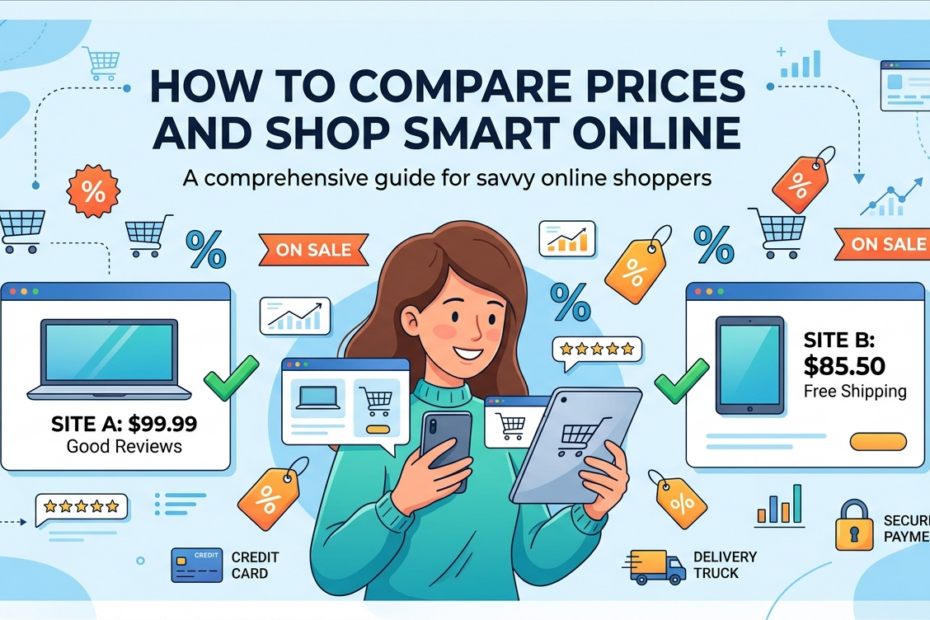
Online shopping has never been easier, but with thousands of options just a click away, it’s easy to feel overwhelmed. Prices for the same product can vary drastically between websites, and without careful comparison, you might end up overpaying or even falling for misleading deals.
Learning how to compare prices and shop smart online can save you money, help you make informed decisions, and avoid scams, making your online shopping experience both safe and cost-effective.
Why Comparing Prices Matters
When shopping online, the same product can have very different prices across various websites. A laptop listed for $800 on one store might cost $750 on another, and without comparing prices, you could easily overspend. Even small differences add up, especially if you shop frequently.
It’s also important to consider hidden costs. Shipping fees, taxes, and handling charges can significantly increase the total price. Some sites may offer a low product price but add high shipping costs, while others include discounts or free shipping that make the deal much better.
For example:
-
Electronics: A smartphone might be cheaper on one site, but if the warranty is only offered on another, the overall value differs.
-
Fashion: Clothing items may have seasonal discounts, but shipping could make the cheaper option more expensive.
-
Groceries: Daily essentials might appear cheaper on one app, but delivery fees or minimum order requirements could change the real cost.
By comparing prices and factoring in these additional costs, you ensure that you’re truly getting the best deal and shopping smart online.
Tools and Apps to Compare Prices
To truly compare prices and shop smart online, using the right tools can save you time and money. Here are some of the most effective options:
1. Price Comparison Websites
Websites like Google Shopping and PriceGrabber allow you to quickly compare prices across multiple online stores. Simply enter the product name, and these platforms show you where it’s cheapest, along with ratings and shipping details.
2. Browser Extensions
Extensions like Honey and CamelCamelCamel automatically find discount codes, track price drops, and alert you when an item’s price decreases. They work in the background while you shop, ensuring you never miss a deal.
3. Mobile Apps for Deals and Discounts
Apps like ShopSavvy and Flipp help you compare prices, find local deals, and even scan barcodes in-store to check if online prices are cheaper. Many apps also allow you to set price alerts for your favorite products.
By combining these tools, you can ensure you’re getting the best price every time, making online shopping smarter, faster, and more cost-effective.
Tips to Shop Smart Online
Shopping online can be overwhelming, but a few smart strategies can help you save money and make better choices. Here are some essential tips to compare prices and shop smart online:
1. Sign Up for Newsletters
Many online stores offer exclusive discounts and promotions to subscribers. Signing up for newsletters can give you early access to sales, special coupons, or limited-time offers.
2. Check for Coupon Codes Before Checkout
Before completing any purchase, search for valid coupon codes. Websites like RetailMeNot or browser extensions like Honey automatically apply discounts for you, ensuring you never miss a deal.
3. Read Reviews and Ratings
Checking product reviews and customer ratings helps you avoid low-quality items. Look for consistent feedback about product performance, durability, and delivery experiences to make informed decisions.
4. Set Price Alerts for Desired Items
Many apps and websites allow you to set alerts for specific products. When the price drops, you get notified immediately, so you can buy at the best possible price.
5. Consider Cash-Back Programs
Cash-back platforms like Rakuten or TopCashback give you a percentage of your purchase back. This is an easy way to save money on products you were planning to buy anyway.
By following these tips, you can make every online purchase smarter, more affordable, and stress-free.
Avoid Common Mistakes When Shopping Online
Even with all the tools and tips available, online shopping can still lead to wasted money if you’re not careful. To compare prices and shop smart online, avoid these common mistakes:
1. Impulse Buying
It’s easy to click “buy now” when an item catches your eye, but impulse purchases often lead to overspending. Take a moment to compare prices, read reviews, and decide if you truly need the product.
2. Falling for Fake Discounts
Some websites advertise huge discounts that aren’t real. Always check the original price and compare it across multiple stores to ensure the deal is genuine.
3. Ignoring Shipping Costs
A product may appear cheap, but high shipping fees can make it more expensive than alternatives. Always factor in shipping, taxes, and handling before finalizing your purchase.
4. Not Checking Return Policies
Before buying, review the store’s return or refund policy. A great deal isn’t worth it if returning the product is difficult or costly.
Avoiding these pitfalls will make your online shopping experience safer, smarter, and more cost-effective.
Step-by-Step Guide: How to Buy a New Laptop Without Overpaying
To put the tips into practice, let’s walk through a simple example of buying a laptop online while saving money.
Step 1: Identify the Laptop You Want
Decide on the model, specifications, and features that meet your needs. For example, a mid-range laptop with 16GB RAM, 512GB SSD, and an Intel i5 processor.
Step 2: Compare Prices Across Stores
Check multiple websites like Amazon, Best Buy, and Newegg. Note down the prices:
-
Amazon: $850 + $15 shipping
-
Best Buy: $870 with free shipping
-
Newegg: $840 + $20 shipping
Step 3: Check for Discounts and Coupons
Use browser extensions like Honey or look for online coupon codes. Suppose Amazon has a 5% off coupon, reducing the price to $807.50 + $15 shipping = $822.50 total.
Step 4: Consider Reviews and Return Policies
Read reviews to ensure the laptop meets your expectations. Check the return policy—Amazon offers a 30-day return window, which adds peace of mind.
Step 5: Make Your Smart Choice
Based on price, shipping, reviews, and return policies, buying from Amazon with the coupon is the smartest option, saving money without sacrificing convenience or protection.
By following these steps, you can confidently compare prices and shop smart online, ensuring every purchase gives you the best value.
Conclusion
Online shopping offers convenience, but it can also lead to overspending if you don’t take the time to compare prices and shop smart. By using price comparison tools, browser extensions, and mobile apps, checking reviews, looking for discounts, and avoiding common mistakes, you can save money and make informed buying decisions.
Next time you shop online, remember to compare prices, factor in shipping and taxes, and take advantage of coupons and cash-back programs. Smart shopping doesn’t just save you money—it gives you confidence that you’re getting the best deal possible. Start applying these tips today and make every online purchase a smart one!
Frequently Asked Questions
What’s the best website to compare prices?
The best website to compare prices depends on the region, product type, and features you are looking for. Globally recognized platforms include PriceGrabber, Shopzilla, Google Shopping, and CamelCamelCamel for electronics, consumer goods, and online retail products. These websites aggregate prices from multiple sellers, allowing users to quickly identify the lowest prices for a specific product.
For specialized items, such as groceries, travel tickets, or insurance, there are niche comparison websites. For example, Skyscanner and Kayak are preferred for flights, while Traveloka or Booking.com excel in hotel price comparisons. In Nigeria, local platforms like Jumia, Konga, and PricePadi help compare electronics, clothing, and household items.
The ideal price comparison website should provide updated pricing, include shipping or additional costs, offer reliable seller information, and allow filtering by features, brands, and ratings.
User reviews, price history charts, and notifications for price drops are additional features that improve decision-making. By selecting the most comprehensive and reliable platform for your needs, you can save money and make informed purchase decisions efficiently.
How can I compare prices effectively?
Effective price comparison requires a systematic approach to ensure you are making the best financial decision. First, identify the exact product or service specifications. Small variations in features, sizes, or versions can affect pricing significantly. Ensuring you are comparing identical items prevents inaccurate conclusions.
Next, check multiple sources. Use online marketplaces, official stores, and dedicated comparison websites to get a broad range of prices. For larger purchases, consider checking local physical stores as well, since promotions or discounts may differ.
Factor in additional costs such as shipping, taxes, handling fees, and warranty. A lower base price may not always translate to overall savings if extra charges apply. Pay attention to return policies and delivery times as well, since convenience and security can affect the true cost.
Finally, track price trends. Tools like CamelCamelCamel or browser extensions can help monitor fluctuations and identify the best time to buy. Combining careful research, attention to detail, and price monitoring enables you to compare prices effectively and make informed, cost-efficient choices.
How to use price comparison websites?
Using price comparison websites effectively involves a series of steps to ensure accurate and beneficial results. First, select a reputable platform relevant to the product you want to purchase. Enter the product name or specific details into the search bar. Most sites allow filtering by brand, specifications, or seller ratings, which helps narrow down options.
Next, examine the list of results carefully. Pay attention not only to the base price but also shipping costs, estimated delivery times, return policies, and seller credibility. Some platforms provide price history charts or alerts for price drops, which are useful for making decisions over time.
You can also set up notifications if the platform allows. This ensures you are informed when prices change or when promotions become available. Finally, once a suitable option is identified, double-check the seller’s official website or platform to confirm availability and final price before completing the purchase. Using price comparison websites in this structured way helps you save money while avoiding hidden costs and ensuring product reliability.
Which is cheaper, online shopping or store?
Whether online shopping is cheaper than physical stores depends on several factors, including product type, promotions, and convenience costs. Online shopping often offers lower prices due to competition among sellers, bulk discounts, and reduced overhead costs. Websites frequently run flash sales, coupon codes, and cashback offers that may not be available in stores.
However, online shopping may include shipping fees, delivery charges, or taxes, which can increase the total cost. Additionally, some local stores may offer in-person discounts, seasonal sales, or negotiation opportunities that online platforms cannot match. For items like groceries, where freshness and immediate availability are important, local stores may be more convenient and cost-effective.
In general, online shopping tends to be cheaper for electronics, fashion, and durable goods, while physical stores may offer competitive prices on groceries, perishable goods, and products where negotiation is possible. Comparing both options using price research tools ensures the best deal.
How to use Google to compare prices?
Google can be an effective tool for comparing prices using Google Shopping and search functions. Start by entering the exact product name in the Google search bar and navigate to the “Shopping” tab. This will display prices from various online retailers along with product specifications, reviews, and delivery options.
You can refine the results using filters for price range, seller location, brand, and ratings. Google also allows users to compare total costs, including shipping and taxes, which provides a more accurate assessment of affordability.
Additionally, using specific search terms like “best price for [product] + [location]” or “compare prices for [product] online” can lead to price comparison websites and local store promotions. Utilizing Google Alerts or price tracking browser extensions can help monitor fluctuations and notify you when the product reaches your target price.
By combining Google’s search and shopping features with careful filtering, you can efficiently identify the most cost-effective purchase options.
Which comparison site is most reliable?
The reliability of a comparison site depends on accuracy, frequency of updates, transparency, and coverage. Globally, Google Shopping, PriceGrabber, and Shopzilla are recognized for their credibility because they aggregate verified prices from multiple sellers, include shipping details, and provide user reviews.
In Nigeria, platforms like PricePadi, Jumia, Konga, and PayPorte are considered reliable for electronics, household items, and fashion. These sites regularly update prices, highlight promotional deals, and include seller ratings, which reduce the risk of misinformation or scams.
Reliable comparison sites are transparent about data sources, display full pricing details including delivery, and provide consistent tracking over time. Checking multiple sites for the same product can confirm accuracy and reliability, ensuring informed purchasing decisions.
What are the 7 C’s of pricing?
The 7 C’s of pricing are a framework used in marketing and business strategy to determine the optimal price for a product or service. They include:
-
Cost – Understanding production and operational costs to ensure profitability.
-
Customer – Considering the target audience’s willingness and ability to pay.
-
Competition – Analyzing competitors’ pricing strategies to remain competitive.
-
Channel – Considering distribution methods and associated costs.
-
Company objectives – Aligning pricing with the business’s financial goals and brand positioning.
-
Communication – Ensuring price reflects the perceived value through marketing and promotions.
-
Consistency – Maintaining uniformity across products, channels, and customer segments to avoid confusion or distrust.
By evaluating these seven factors, businesses can set prices that attract customers, maintain profitability, and achieve long-term sustainability.
Can AI do price comparison?
Yes, AI can perform price comparison efficiently and often more accurately than manual methods. Artificial intelligence algorithms can scrape data from multiple online retailers, analyze pricing trends, detect discounts, and predict future price changes. AI can also account for shipping costs, taxes, stock availability, and customer reviews, providing a comprehensive comparison.
Some AI-powered apps and tools can automate alerts for price drops, recommend cheaper alternatives, and even optimize purchases based on historical trends. Retailers themselves use AI to adjust dynamic pricing in real time, ensuring competitive positioning in the market.
By leveraging AI, consumers save time, reduce human error, and make better-informed purchasing decisions. It also enables large-scale comparisons that would be impractical manually, especially across hundreds or thousands of products.
What is the 3-3-3 rule for groceries?
The 3-3-3 rule for groceries is a simple budgeting strategy designed to minimize overspending while ensuring efficient use of food resources. It suggests buying groceries in three categories: 3 days of fresh produce, 3 types of staple foods, and 3 indulgent or optional items per shopping trip.
The fresh produce segment ensures a steady supply of fruits and vegetables for health and balanced meals. Staple foods like rice, pasta, or beans provide essential nutrients and long-term storage capability. Indulgent items allow flexibility and satisfaction, such as snacks or treats, without compromising the overall budget.
This method promotes structured shopping, prevents impulse purchases, and encourages careful planning. Over time, applying the 3-3-3 rule reduces food waste, keeps grocery spending predictable, and aligns with a disciplined budgeting strategy.
How to create a price comparison site?
Creating a price comparison site involves several key steps. First, identify the niche or product category you want to focus on, such as electronics, travel, groceries, or fashion. Next, research and gather data sources, including affiliate programs, retailer APIs, or web scraping techniques to collect real-time pricing information.
Then, design a user-friendly website with search functionality, filters, product details, and sorting options. Ensure that the platform displays accurate pricing, shipping costs, availability, and seller ratings to provide value to users.
Integrate backend features such as a database, content management system, and automated price updates. Consider adding alerts, price history charts, and comparison tools to enhance usability. Implement SEO strategies and marketing campaigns to attract visitors, and consider monetization options such as affiliate commissions or sponsored listings.
Regular maintenance, testing, and updates are crucial to ensure the site remains accurate, reliable, and competitive in the marketplace. A successful price comparison site combines accurate data, usability, and trustworthiness to attract and retain users.
Is it safe to buy from price comparison sites?
Buying through price comparison sites can be safe if you take certain precautions. Most reputable platforms aggregate prices from verified sellers and provide accurate product information, making them reliable for finding competitive deals.
However, the site itself often does not handle the transaction; it directs you to the retailer or seller. Therefore, safety depends on the credibility of the linked seller.
Before purchasing, check if the retailer is well-known, has secure payment methods (HTTPS encryption, trusted gateways), and offers clear return or refund policies. Reading reviews and ratings from previous buyers can also indicate reliability. Avoid sites that appear suspicious, display inconsistent prices, or ask for unusual payment methods.
Additionally, ensure that the price comparison site updates its information regularly, as outdated prices or promotions can mislead buyers. Using reputable comparison platforms like Google Shopping, PriceGrabber, or region-specific trusted sites reduces risk. Combining these precautions ensures a safe and efficient shopping experience while leveraging the benefits of price comparison.
What is the best way to compare two products?
The best way to compare two products is through a structured evaluation based on key factors. Start with specifications and features, ensuring both items meet your essential requirements. Create a checklist including performance, durability, size, warranty, and compatibility.
Next, consider pricing. Compare the total cost, including shipping, taxes, and additional fees. Evaluate the long-term value rather than just the upfront price, as higher-quality products may save money over time.
Customer reviews and expert opinions provide insights into real-world performance, reliability, and user satisfaction. Look for consistent patterns in feedback rather than isolated complaints or praise.
Finally, consider after-sales support, return policies, and warranty coverage. A product with reliable customer service can be more valuable than one with a lower price but limited support. By systematically comparing these factors, you can make an informed decision that balances cost, quality, and usability.
What is the cheapest online shopping site?
The cheapest online shopping site depends on the product category and region. Globally, platforms like AliExpress, Amazon, and eBay often offer highly competitive prices for electronics, fashion, and household goods. AliExpress, in particular, is known for extremely low-priced items due to direct-from-manufacturer shipping.
In Nigeria, websites like Jumia, Konga, and PayPorte are popular for affordable electronics, clothing, and groceries. These sites often run promotions, discounts, and flash sales that reduce prices further.
When looking for the cheapest options, consider shipping costs, delivery times, and return policies, as these can affect the overall cost. Using price comparison tools alongside these platforms ensures you find the most cost-effective purchase without sacrificing quality or reliability.
Why do Gen Z prefer online shopping?
Gen Z prefers online shopping due to convenience, variety, and digital fluency. Growing up in a technology-driven environment, they are accustomed to smartphones, apps, and instant access to information. Online shopping allows them to purchase products anytime and anywhere, avoiding the limitations of store hours or location.
Variety and personalization are also key factors. Online platforms provide extensive choices across brands, styles, and price ranges. Algorithms suggest products based on browsing history, creating a personalized shopping experience. Social media influences, reviews, and influencer recommendations further guide purchase decisions.
Additionally, Gen Z values efficiency, price comparison, and quick access to deals. The ability to compare prices, read reviews, and track orders digitally makes online shopping more appealing than traditional retail. Environmental and social considerations, such as sustainable brands or ethical practices, are also easier to research online, influencing their purchasing choices.
What is the 99 store?
The 99 Store is a retail concept where all items are priced at a fixed, low amount, typically 99 cents or the local equivalent. It is similar to a dollar store and focuses on offering affordable products to consumers, ranging from household goods, stationery, cleaning supplies, to snacks and personal care items.
The concept emphasizes accessibility and value for money. By standardizing prices, customers know exactly what to expect and can make bulk purchases without worrying about cost fluctuations. These stores are particularly popular in urban areas where budget-conscious shoppers seek convenience and low-cost alternatives.
The 99 Store model works on high turnover and low-profit margins, relying on volume sales rather than high individual profits. For consumers, it provides a simple, predictable, and affordable shopping experience.
What is the best website to compare prices?
The best website for price comparison depends on the products and location. Globally, Google Shopping, PriceGrabber, and Shopzilla are highly regarded for electronics, appliances, and consumer goods. They aggregate prices from multiple retailers, include shipping information, and provide user reviews.
For specialized products, niche platforms such as Skyscanner for flights, Booking.com for hotels, and CamelCamelCamel for Amazon price tracking are excellent. In Nigeria, Jumia, Konga, PricePadi, and PayPorte are trusted for electronics, clothing, and household items.
A reliable comparison website should offer updated data, transparent pricing, filters for specifications, and clear seller information. Checking multiple sites can help ensure accuracy and find the best deals efficiently.
How to compare two prices?
Comparing two prices effectively involves analyzing the total cost and value of each option. Start by calculating the full price, including shipping, taxes, or service fees. Consider the quality, warranty, and durability of the items, as a lower price does not always mean better value.
Evaluate additional benefits such as customer service, delivery speed, and return policies. If available, examine price history or trends to determine if a current discount is genuine.
Finally, create a simple comparison table listing all factors, including features, pros, cons, and total cost. This visual representation helps identify the better option based on both price and value, enabling a rational, informed decision.
Is QuoteWizard safe?
QuoteWizard is generally considered safe as an online platform that aggregates insurance quotes for auto, home, and health policies. It connects users with licensed insurance providers, and the site itself does not issue policies or handle insurance contracts directly.
Safety depends on providing personal information responsibly. QuoteWizard uses standard data encryption protocols to protect user details, but users should verify the credentials of any insurance provider before finalizing a policy. Reading reviews and confirming coverage details ensures that the quotes and providers are legitimate.
As with any financial platform, exercising caution, checking for HTTPS security, and understanding terms and conditions is essential for safe use.
What are the 5 C’s of pricing?
The 5 C’s of pricing are a framework used in business to determine a strategic and competitive price for a product. They include:
-
Cost – The total cost of producing and delivering the product.
-
Customer – Understanding customer demand, willingness to pay, and price sensitivity.
-
Competition – Evaluating competitors’ pricing to position the product effectively.
-
Channel – Considering distribution costs and the impact of intermediaries on price.
-
Company objectives – Aligning pricing with the company’s goals, such as market penetration, profit maximization, or brand positioning.
Using the 5 C’s ensures pricing decisions are balanced, competitive, and aligned with both market conditions and internal objectives.
What is the 30% rule in AI?
The 30% rule in AI is not a universally defined concept but often refers to allocation strategies or productivity guidelines in artificial intelligence projects. One common interpretation is that 30% of AI project resources should be allocated to research, 30% to development, and 40% to implementation and monitoring.
This rule emphasizes balanced planning: dedicating sufficient time and resources to experimentation and model training while ensuring that practical deployment and optimization are prioritized. It helps organizations avoid over-investing in one stage while neglecting others, which can compromise performance, scalability, or ROI.
In other contexts, the 30% rule may refer to ethical or adoption thresholds, such as ensuring AI recommendations impact no more than 30% of decisions without human oversight to reduce risk. Regardless of interpretation, it generally promotes balance and strategic allocation in AI projects.